Blog

More White-tailed eagles to be released in Ireland to bolster reintroduction project

Press release from National Parks & Wildlife Service, Ireland (26 June 2020)

The eagles have landed in latest phase of reintroduction of the species in Ireland

A group of young White-tailed Eagles have arrived in the south west, landing today at Kerry Airport from Norway.

The White-tailed Eagles are being released again in Munster by the Department of Culture, Heritage and the Gaeltacht’s National Parks and Wildlife Service (NPWS) as part of a Phase Two project to bolster the small existing breeding population in Ireland.

The new release phase aims to build on the successful re-establishment of this once extinct species over a three-year period (2020-2022) by releasing young eagles at three sites, including Lough Derg, the lower Shannon estuary and Killarney National Park.

The mission involved moving the young eagles – who had been monitored for a number of months – from Norway. They were taken to a waiting chartered flight at Trondheim Airport, for transport to Kerry Airport on a journey of four hours 20 minutes, and arrived this afternoon.

Minister of Culture, Heritage and the Gaeltacht Josepha Madigan, TD, welcomed the new arrivals: “This latest operation, under Phase Two of the conservation project, was an incredible team effort between the wildlife personnel both here and in Norway.

Thanks to their logistical work, bringing the latest influx of White-tailed Eagles to these shores, the future is positive for the eagle, which had been extinct in Ireland for over a century. The latest conservation intervention cements the work already done in bringing these graceful birds back to our skies, and I would like to express my appreciation for all involved in lending this hand to nature.”

In 2020 it is planned to release 10 young eagles collected this summer in Norway split between the three Irish sites. These birds from this second release phase will provide an additional boost to the small Irish breeding population when they reach maturity.

Previously, 100 young White-tailed Eagles were released in Killarney National Park in County Kerry between 2007 and 2011. Birds from these releases subsequently dispersed widely throughout Ireland with first breeding in 2012 on Lough Derg, County Clare. Since then a small breeding population of eight to ten pairs have successfully fledged 26 chicks with an additional six chicks likely to fledged into the wild in Munster in the next few weeks.

Some Irish-bred eagles are now reaching maturity and starting to breed in the wild. However, a scientific review of the reintroduction project indicated the small population is still vulnerable to mortality factors such as illegal poisoning and the breeding population was negatively impacted by Avian Influenza in 2018 and storm Hannah in 2019. Thus it was decided to carry out this supplementary release to bolster the existing population.

Young eagles were collected under licence in June 2020 by the Norwegian Institute for Nature Research (NINA) and co-workers. Birds will be held at the sites in Munster before release in early to mid-August. They will be tagged before release to allow the project to monitor their progress and their integration into the existing Irish breeding population.

An important aspect of any such releases is cooperation with the farming communities in the release areas and where birds settle to breed. During the first phase of the release project, managed by the NPWS and the Golden Eagle Trust, a good relationship was established in the release and breeding areas with the farming community, so much so that farmers helped monitor birds and nests at some sites. The Phase Two release hopes to build on this relationship into the future to ensure that farming and eagles continue to coexist to their mutual benefit.

As well as bringing biodiversity and ecosystem benefits,  restoring this flagship species can deliver potential economic benefits. The re-establishment of breeding White-tailed Eagles at sites like Lough Derg and Killarney has proven hugely popular with local residents.

The positive economic benefits of ecotourism was experienced in Mountshannon, County Clare, when the first breeding pair nested within sight of the village in 2012, attracting thousands of visitors over the next few years. In 2020, a year when physical tourism has been non-existent due to the Covid-19 restrictions, live streaming of a White-tailed Eagle nest in Glengarriff, County Cork, has proven to be a huge virtual nature attraction, even making the recent BBC list of top 20 virtual nature attractions in the world. This programme and further reintroduction is a critical project in terms of Ireland’s biodiversity – reintroducing an iconic wild species that was exterminated by man – and will contribute significantly to the economic, tourism and local communities and indeed to human wellbeing. We are particularly grateful to the Norwegian authorities and colleagues for their generous cooperation.

The Irish White-tailed Sea Eagle Reintroduction Programme is a long-term initiative to re-establish a population of this extinct species in the Republic of Ireland managed by the National Parks and Wildlife Service (NPWS) of the Department of Culture, Heritage and the Gaeltacht and in collaboration with others, including in particular the Golden Eagle Trust.

Releases of birds (Phase One) saw 100 young eagles released over five years (2007-2011) in Killarney National Park, County Kerry. As Sea Eagles breed at about five years old it was expected that the first Irish nesting attempts would be in 2012/2013. In 2012 the first nesting attempt occurred in County Clare, the first breeding in the wild in over 100 years. In 2013, the first wild-bred chicks fledged successfully from a nest in County Clare. To date, 26 chicks have fledged from nests in Kerry, Cork, Clare and Galway with an additional six chicks anticipated to fledge from nests in Kerry, Cork and Tipperary in July 2020.

A live streaming nest camera was set up in 2020 at a nest in Glengarriff, County Cork, by the National Parks and Wildlife Service in collaboration with the Office of Public Works (OPW). This is available for viewing at: https://www.glengarriffnaturereserve.ie/sea-eagle-webcam/

ENDS

Cairngorms National Park Authority statement on hen harrier persecution

Hen harrier persecution is a National Wildlife Crime Priority and the population in Scotland has suffered a 27% decline in the last 12 years. Losing over a quarter of the population in such a short period is a significant conservation concern and as such, we expect a strong response from the authorities whenever these crimes are exposed.

Earlier this month we learned that two satellite-tagged hen harriers (Wildland hen harrier 1 and Wildland hen harrier 2) had ‘disappeared’ in suspicious circumstances on two grouse moors in September 2019, one within the Cairngorms National Park and one right on the Park boundary (see here). We don’t recall seeing any statement from the Cairngorms National Park Authority.

Yesterday we learned that two more satellite-tagged hen harriers, Hoolie and Marlin, had both ‘disappeared’ in suspicious circumstances from grouse moors in the Cairngorms National Park in April 2020 (see here). We also learned that they both vanished on exactly the same grouse moors from where two other satellite-tagged hen harriers had also disappeared without trace (Hen harrier ‘Lad‘ in 2015 and Hen harrier Marci in 2019).

It’s bad enough that these birds continue to be persecuted even though they’ve had legal protection in the UK for 76 years, but when this keeps happening inside a so-called National Park and nobody is ever held to account, you have to wonder, in terms of species conservation, what’s the point of National Park status?

We asked Grant Moir, CEO of the Cairngorms National Park Authority, for a statement about these latest two suspicious disappearances and this is what he provided this afternoon:

It’s a strong statement in as much as the CNPA CEO recognises and fully accepts that these wildlife crimes continue in some areas of the National Park, which is in stark contrast to statements made by the grouse shooting industry reps today (more on this later) but it doesn’t offer a solution. It’s more of an exasperated shrug of the shoulders and a heavy reliance on the Scottish Government to respond well to the Werritty Review.

Is that it, then? Is the CNPA so impotent it can do nothing more than bemoan the persistent criminality within its boundary? This has been going on since 2002 (the Park wasn’t formally established until 2003 but we’ve included 2002 data as the area had been mapped by then). This list includes just the crimes we know about. How many more went unreported/undiscovered? How many more will we have to read about before the criminals are held to account?

ILLEGAL RAPTOR PERSECUTION INCIDENTS CAIRNGORMS NATIONAL PARK

2002

Feb: 2 x poisoned buzzards (Carbofuran) + rabbit bait. Tomintoul (No prosecution)

Mar: 2 x poisoned buzzards (Carbofuran) + 2 rabbit baits. Cromdale (No prosecution)

2003

Apr: 3 x poisoned buzzards (Carbofuran) + 2 grey partridge baits. Kingussie (No prosecution)

Jun: Attempted shooting of a hen harrier. Crannoch (Successful prosecution)

2004

May: 1 x poisoned buzzard (Carbofuran). Cuaich (No prosecution)

Nov: 1 x poisoned red kite (Carbofuran). Cromdale (No prosecution)

Dec: 1 x poisoned buzzard (Carbofuran). Cromdale (No prosecution)

2005

Feb: 1 x poisoned buzzard (Carbofuran). Cromdale (No prosecution)

Feb: 1 x poisoned buzzard (Carbofuran). Cromdale (No prosecution)

Mar: 3 x poisoned buzzards, 1 x poisoned raven (Carbofuran). Crathie (No prosecution)

2006

Jan: 1 x poisoned raven (Carbofuran). Dulnain Bridge (No prosecution)

May: 1 x poisoned raven (Mevinphos). Grantown-on-Spey (No prosecution)

May: 1 x poisoned golden eagle (Carbofuran). Morven [corbett] (No prosecution)

May: 1 x poisoned raven + 1 x poisoned common gull (Aldicarb) + egg bait. Glenbuchat (No prosecution)

May: egg bait (Aldicarb). Glenbuchat (No prosecution)

Jun: 1 x poisoned golden eagle (Carbofuran). Glenfeshie (No prosecution)

2007

Jan: 1 x poisoned red kite (Carbofuran). Glenshee (No prosecution)

Apr: Illegally set spring trap. Grantown-on-Spey (No prosecution)

May: Pole trap. Grantown-on-Spey (No prosecution)

May: 1 x poisoned red kite (Carbofuran). Tomintoul (No prosecution)

May: Illegally set spring trap. Grantown-on-Spey (No prosecution)

Jun: 1 x poisoned buzzard (Carbofuran) + rabbit & hare baits. Grantown-on-Spey (No prosecution)

Jun: 1 x poisoned buzzard (Carbofuran) + rabbit bait. Grantown-on-Spey (No prosecution)

Jul: 1 x poisoned raven (Carbofuran). Ballater (No prosecution)

Sep: 1 x shot buzzard. Newtonmore (No prosecution)

Sep: 1 x shot buzzard. Grantown-on-Spey (No prosecution)

Dec: 1 x poisoned buzzard (Alphachloralose). Grantown-on-Spey (No prosecution)

Dec: 1 x poisoned buzzard (Carbofuran) + rabbit bait. Grantown-on-Spey (No prosecution)

2008

Jan: 1 x poisoned buzzard (Alphachloralose). Nr Grantown-on-Spey (No prosecution)

Mar: 1 x poisoned buzzard (Carbofuran). Nr Grantown-on-Spey (No prosecution)

Dec: 1 x poisoned buzzard (Alphachloralose). Nr Grantown-on-Spey (No prosecution)

2009

May: 2 x poisoned ravens (Mevinphos). Delnabo (No prosecution)

Jun: rabbit bait (Mevinphos). nr Tomintoul (No prosecution)

Jun: 1 x shot buzzard. Nr Strathdon (No prosecution)

Jun: 1 x illegal crow trap. Nr Tomintoul (No prosecution)

2010

Apr: Pole trap. Nr Dalwhinnie (No prosecution)

Jun: 1 x pole-trapped goshawk. Nr Dalwhinnie (No prosecution)

Jun: Illegally set spring trap on tree stump. Nr Dalwhinnie (No prosecution)

Sep: 2 x poisoned buzzards (Carbofuran) + rabbit bait. Glenlochy (No prosecution)

Oct: 2 x poisoned buzzards (Carbofuran) + rabbit bait. Nr Boat of Garten (No prosecution)

2011

Jan: 1 x shot buzzard. Nr Bridge of Brown (No prosecution)

Mar: 1 x poisoned golden eagle (Carbofuran). Glenbuchat (No prosecution)

Apr: 1 x poisoned buzzard (Carbofuran & Aldicarb). Nr Bridge of Brown (No prosecution)

May:  1 x poisoned buzzard (Carbofuran) + rabbit bait. Glenbuchat (No prosecution)

May: 1 x shot short-eared owl, found stuffed under rock. Glenbuchat (No prosecution)

Jun: 1 x shot peregrine. Pass of Ballater (No prosecution)

Aug: grouse bait (Aldicarb). Glenlochy (No prosecution)

Sep: Satellite-tagged golden eagle ‘disappears’. Nr Strathdon

Nov: Satellite-tagged golden eagle ‘disappears’. Nr Strathdon

2012

Apr: 1 x shot short-eared owl. Nr Grantown-on-Spey (No prosecution)

Apr: Peregrine nest site burnt out. Glenshee (No prosecution)

May: Buzzard nest shot out. Nr Ballater (No prosecution)

2013

Jan: White-tailed eagle nest tree felled. Invermark (No prosecution)

May: 1 x shot hen harrier. Glen Gairn (No prosecution)

May: Satellite-tagged golden eagle ‘disappears’. Glenbuchat

2014

Apr: Satellite-tagged white-tailed eagle ‘disappears’. Glenbuchat

May: Armed masked men shoot out a goshawk nest. Glen Nochty (No prosecution)

2015

Sep: Satellite-tagged hen harrier ‘Lad’ found dead, suspected shot. Newtonmore (No prosecution)

2016

May: 1 x shot goshawk. Strathdon (No prosecution)

Jun: Illegally set spring traps. Invercauld (No prosecution)

Aug: Satellite-tagged hen harrier ‘Brian’ ‘disappears’. Kingussie

2017

Mar: Satellite-tagged golden eagle #338 ‘disappears’. Glenbuchat

Aug: Satellite-tagged hen harrier ‘Calluna’ ‘disappears’. Ballater

2018

May: Satellite-tagged white-tailed eagle Blue T ‘disappears’. Ballater

Aug: Satellite-tagged hen harrier ‘Athena’ ‘disappears’. Nr Grantown on Spey

Aug: Satellite-tagged hen harrier ‘Margot’ ‘disappears’. Nr Strathdon

Sept: Satellite-tagged hen harrier ‘Stelmaria’ ‘disappears’. Ballater

2019

April: Satellite-tagged hen harrier ‘Marci’ ‘disappears’. Nr Strathdon

April: Four geese poisoned and Carbofuran bait found on an estate nr Kingussie (no prosecution)

August: Golden eagle photographed with a spring trap dangling from its foot, nr Crathie, Deeside

September: Satellite-tagged hen harrier Wildland 1 ‘disappears’ on a grouse moor nr Dalnaspidal

September: Satellite-tagged hen harrier Wildland 2 ‘disappears’ on a grouse moor at Invercauld

2020

April: Satellite-tagged hen harrier Hoolie ‘disappears’ on grouse moor nr Newtonmore

April: Satellite-tagged hen harrier Marlin ‘disappears’ on grouse moor nr Strathdon

In addition to the above list, two recent scientific publications have documented the long-term decline of breeding peregrines on grouse moors in the eastern side of the National Park (see here) and the catastrophic decline of breeding hen harriers, also on grouse moors in the eastern side of the Park (see here).


39 hen harriers ‘missing’ or confirmed killed since 2018

It’s getting to that time of year when the grouse shooting industry pumps out its patently misleading propaganda relating to hen harrier conservation in the UK. The aim is to hoodwink the public in to believing that the industry loves hen harriers and is doing all it can to protect and nurture the tiny remnant breeding population (but conveniently forgetting to mention that the breeding population is only in such dire straits because the grouse shooting industry has been ruthless in its maniacal intolerance of this supposedly protected species).

And the industry’s pursuit of the hen harrier is not simply ‘historical’ or indicative of past behaviour, as some would have us believe. It is on-going, it is current, and it is relentless.
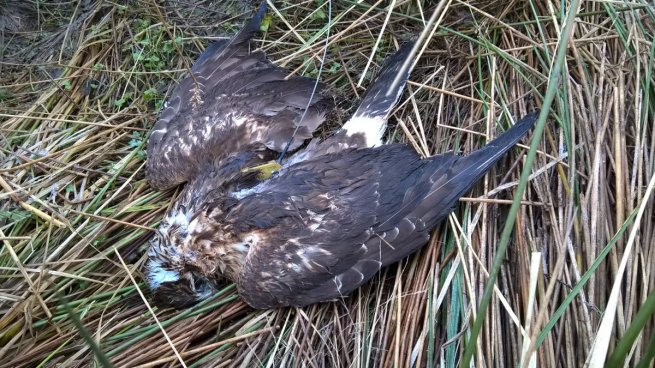
To illustrate this fact, we intend to keep a running tally of all the hen harriers that we know (because most of these victims had been fitted with a satellite tag) to have either ‘disappeared’ in suspicious circumstances or have been confirmed as being illegally killed since 2018.

Why only since 2018 when we know that hen harriers have been a persecution target for years and years and years? Well, 2018 is the year that the grouse shooting industry ‘leaders’ would have us believe that the criminal persecution of hen harriers had stopped and that these birds were being welcomed back on to the UK’s grouse moors (see here).

This assertion was made shortly before the publication of a devastating new scientific paper that demonstrated that 72% of satellite-tagged Hen Harriers were confirmed or considered likely to have been illegally killed, and this was ten times more likely to occur over areas of land managed for grouse shooting relative to other land uses (see here).

We only started compiling this list of dead / missing hen harriers two weeks ago when we learned that all five of last year’s brood meddled hen harrier chicks were ‘missing’, presumed dead (see here). Having just learned yesterday that two more satellite-tagged hen harriers have ‘disappeared’ in suspicious circumstances on grouse moors in the Cairngorms National Park during the Coronvirus lockdown (see here), it’s time to update the death list, which now stands at 39. Nobody has been prosecuted for any of these cases. We have every expectation that this list will be updated again in the near future.

For now, here are the 39:

February 2018: Hen harrier Saorsa ‘disappeared’ in the Angus Glens in Scotland (here). The Scottish Gamekeepers Association later published wholly inaccurate information claiming the bird had been re-sighted. The RSPB dismissed this as “completely false” (here).

5 February 2018: Hen harrier Marc ‘disappeared’ on a grouse moor in Durham (here)

9 February 2018: Hen harrier Aalin ‘disappeared’ on a grouse moor in Wales (here)

March 2018: Hen harrier Blue ‘disappeared’ in the Lake District National Park (here)

March 2018: Hen harrier Finn ‘disappeared’ near Moffat in Scotland (here)

18 April 2018: Hen harrier Lia ‘disappeared’ in Wales and her corpse was retrieved in a field in May 2018. Cause of death was unconfirmed but police treating death as suspicious (here)

8 August 2018: Hen harrier Hilma ‘disappeared’ on a grouse moor in Northumberland (here).

16 August 2018: Hen harrier Athena ‘disappeared’ on a grouse moor in Scotland (here)

26 August 2018: Hen Harrier Octavia ‘disappeared’ on a grouse moor in the Peak District National Park (here)

29 August 2018: Hen harrier Margot ‘disappeared’ on a grouse moor in Scotland (here)

29 August 2018: Hen Harrier Heulwen ‘disappeared’ on a grouse moor in Wales (here)

3 September 2018: Hen harrier Stelmaria ‘disappeared’ on a grouse moor in Scotland (here)

24 September 2018: Hen harrier Heather ‘disappeared’ on a grouse moor in Scotland (here)

2 October 2018: Hen harrier Mabel ‘disappeared’ on a grouse moor on the edge of the Yorkshire Dales National Park (here)

3 October 2018: Hen Harrier Thor ‘disappeared’ next to a grouse moor in Bowland, Lanacashire (here)

26 October 2018: Hen harrier Arthur ‘disappeared’ on a grouse moor in the North York Moors National Park (here)

10 November 2018: Hen harrier Rannoch ‘disappeared’ on a grouse moor in Scotland (here). Her corpse was found nearby in May 2019 – she’d been killed in an illegally-set spring trap (here).

14 November 2018: Hen harrier River ‘disappeared’ on a grouse moor in the Nidderdale AONB (here). Her corpse was found nearby in April 2019 – she’d been illegally shot (here).

16 January 2019: Hen harrier Vulcan ‘disappeared’ in Wiltshire close to Natural England’s proposed reintroduction site (here)

7 February 2019: Hen harrier Skylar ‘disappeared’ next to a grouse moor in South Lanarkshire (here)

22 April 2019: Hen harrier Marci ‘disappeared’ on a grouse moor in the Cairngorms National Park (here)

11 May 2019: An untagged male hen harrier was caught in an illegally-set trap next to his nest on a grouse moor in South Lanarkshire. He didn’t survive (here)

7 June 2019: An untagged hen harrier was found dead on a grouse moor in Scotland. A post mortem stated the bird had died as a result of ‘penetrating trauma’ injuries and that this bird had previously been shot (here)

5 September 2019: Wildland Hen Harrier 1 ‘disappeared’ on a grouse moor nr Dalnaspidal on the edge of the Cairngorms National Park (here)

11 September 2019: Hen harrier Romario ‘disappeared’ on a grouse moor in the Cairngorms National Park (here)

14 September 2019: Hen harrier (Brood meddled in 2019, #183704) ‘disappeared’ in North Pennines (here)

23 September 2019: Hen harrier (Brood meddled in 2019, #55149) ‘disappeared’ in North Pennines (here)

24 September 2019: Wildland Hen Harrier 2 ‘disappeared’ on a grouse moor at Invercauld in the Cairngorms National Park (here)

10 October 2019: Hen harrier Ada ‘disappeared’ on a grouse moor in the North Pennines AONB (here)

12 October 2019: Hen harrier Thistle ‘disappeared’ on a grouse moor in Sutherland (here)

18 October 2019: Member of the public reports the witnessed shooting of an untagged male hen harrier on White Syke Hill in North Yorkshire (here)

November 2019: Hen harrier Mary found illegally poisoned on a pheasant shoot in Ireland (here)

January 2020: Members of the public report the witnessed shooting of a male hen harrier on Threshfield Moor in the Yorkshire Dales National Park (here)

1 April 2020: Hen harrier (Brood meddled in 2019, #183703) ‘disappeared’ in unnamed location, tag intermittent (here)

5 April 2020: Hen harrier Hoolie ‘disappeared’ on a grouse moor in the Cairngorms National Park (here)

8 April 2020: Hen harrier Marlin ‘disappeared’ on a grouse moor in the Cairngorms National Park (here)

21 May 2020: Hen harrier (Brood meddled in 2019, #183701) ‘disappeared’ on a grouse moor in Cumbria shortly after returning from wintering in France (here)

To be continued……..

Anybody still wondering why the grouse shooting industry wants us to stop fitting satellite tags?

Two more satellite-tagged hen harriers ‘disappear’ on grouse moors in Cairngorms National Park

Press release from RSPB Scotland (25 June 2020)

Two rare hen harriers disappear in suspicious circumstances

RSPB Scotland is calling on the Scottish Government to move quickly to introduce the licensing of grouse shooting, following the disappearance of two more satellite-tagged hen harriers on moors in the Cairngorms National Park revealed on BBC Scotland’s Landward this evening. 

As detailed in the programme, Marlin, a young male, fledged from a nest at the National Trust for Scotland’s Mar Lodge Estate in Aberdeenshire in 2018, while Hoolie, another male, came from a nest in Easter Ross in the same year.  

Before they left their nests, both birds were fitted with a satellite tags as part of the EU Hen Harrier LIFE project which have allowed experts to track their movements ever since. Marlin flew south after fledging and spent the last two winters in North Yorkshire. Hoolie crossed the sea to Ireland, returning there for the last two winters, where his movements have been closely followed by Irish ornithologists. 

In March 2020 Hoolie returned to Scotland, most likely with a view to finding a mate and raising chicks of his own. However, a month later his tag suddenly stopped transmitting. His last transmitted location was on 5 April and showed he was over an area of moorland intensively managed for grouse shooting near Newtonmore, in the Cairngorms National Park. He disappeared close to where another tagged hen harrier Lad was found dead, with injuries consistent with being shot, in 2015. 

[Hen harrier Hoolie, photo by RSPB Scotland]

Just three days later, on 8 April, Marlin’s tag also stopped suddenly. He too had returned to Scotland, and his last transmitted position was over a driven grouse moor near Strathdon, West Aberdeenshire, in the Cairngorms National Park. Last April, another Mar Lodge hen harrier, Marci, also disappeared suspiciously, less than a kilometre away, on the same grouse moor.  

[Hen harrier Marlin, photo by Shaila Rao]

When a tagged hen harrier dies of natural causes the tag continues to transmit its location allowing for the body to be recovered. Police Scotland carried out searches for the birds but neither the tags or the bodies were found, and neither tag has transmitted further data.  

Ian Thomson, RSPB Scotland’s Head of Investigations, said:

 “Scotland had only just been put into lockdown in early April and yet protected birds of prey equipped with highly reliable technology have disappeared on land managed for driven grouse moors. The fact that these two birds have disappeared very close to where other similar incidents have occurred only heightens suspicions that these birds can be added to the very long list of protected birds of prey killed on grouse moors. 

The Scottish Government’s independent review of grouse moor management, published at the end of last year accepted the need for regulation of grouse shooting but proposed a five year probationary period to allow populations of hen harriers and other birds of prey on or near grouse shooting estates to recover to a ‘favourable’ conservation status. We believe that this approach is unworkable in practice and urge the introduction of a licensing scheme as soon as possible.” 

ENDS 

More on this news tomorrow.

New paper documents history of eagles in Wales

An important new scientific paper has just emerged documenting the history of golden and white-tailed eagles in Wales.

Published in the journal Conservation Science & Practice, this new paper builds on the earlier, painstaking work of the much missed Richard Evans who, along with colleagues (see here), mapped the historical distribution of eagles across Britain and Ireland.

This latest paper, authored by Cardiff University PhD student Sophie-lee Williams et al, thoroughly evaluates the evidence for both species in Wales and maps their likely core distributions. The authors conclude there is strong evidence that both species were widespread across Wales but fell victim to persecution and haven’t bred there for over 150 years.

This paper is open access which means it is freely available to everyone.

Download it here: Williams et al 2020_Past distribution eagles Wales

The significance of this paper relates to a proposed reintroduction of golden and/or white-tailed eagles to Wales. Many blog readers will recall that this prospect has been on the table for a while and whilst there is still a lot more work to complete before licence applications are submitted, understanding the species’ past historical ranges is important.

Some blog readers may recognise some of the names involved in this latest research. They are part of the Eagle Reintroduction Wales Project (ERWP) (website here) who we blogged about last year when news emerged that a different team was also contemplating an eagle reintroduction in Wales, but apparently without the careful research assessment being undertaken by the Cardiff University team (see here). Fortunately, so far, that alternative approach hasn’t advanced very far (see here and here).

Hopefully it won’t be too long before we see more research results from the ERWP that’ll take us another step closer to restoring these eagles back to Wales.

Natural England silent on suspicious failures of hen harrier breeding attempts

Guy Shorrock from the RSPB Investigations Team published a fascinating blog last week about what he describes as the ‘suspicious failure of two hen harrier nesting attempts near the 2019 brood management site’ (see here).

Unfortunately the locations of these failed nesting attempts are not given, other than them being within 5km of the brood meddled hen harriers, which we believe were on the Swinton Estate in Nidderdale, North Yorkshire.

[An un-meddled hen harrier nest, photo by Mark Hamblin]

The circumstances of the two 2019 suspicious nesting failures are a mystery although Guy reports that the RSPB had been told that one of the breeding males had been shot by a gamekeeper from a neighbouring estate, but without evidence this alleged victim can’t be added to the list of 37 other hen harriers that have either been found illegally killed or have ‘disappeared’ in suspicious circumstances since 2018 (see here).

What’s interesting about Guy’s blog is that the news of these two nesting attempts which failed in suspicious circumstances wasn’t publicised by Natural England or DEFRA or any of the other supporters of the ludicrous hen harrier brood meddling scheme. Instead we got a public statement from DEFRA and Natural England (here) pretending that the grouse shooting industry had had an epiphany and was now championing the return of the species it had previously attacked to the verge of extinction as a breeding species in England.

Needless to say, several months later we learned that all five of the 2019 brood meddled hen harriers were ‘missing’ presumed dead, and only one of those was considered to have died of natural causes (see here). And we only found out about their fates because we’d chased Natural England for the info.

There’s more to come on what else Natural England has been hiding….

Raptor thief Lendrum held in prison facing extradition to Brazil

Article from the Middle East National (22 June 2020)

Notorious wildlife thief loses bid for freedom

A serial criminal notorious for smuggling rare bird eggs to the Middle East has lost a bid to be released from a UK prison.

Jeffrey Lendrum, 59, is eligible for release from jail after serving part of a 37-month sentence for trying to smuggle 19 eagle and kestrel eggs into Britain.

Each of the eggs could have fetched up to £8,000 (Dh36,273/$9,877) on the black market.

[Lendrum with raptor eggs strapped to his body in a sling at Heathrow Airport in June 2018, photo Crown Prosecution Service]

A judge told Lendrum that he must remain in prison because he faces another sentence of four and a half years in Brazil after being caught trying to take eggs from Sao Paulo to Johannesburg in 2015.

He fled the country after his conviction and Brazilian prosecutors are now seeking his extradition so that he could serve his sentence. He also has convictions in Canada and Zimbabwe.

Police believe that the ultimate destination for chicks and eggs smuggled by Lendrum was the Middle East, where they are highly prized in the falcon market.

Called the Pablo Escobar of the egg trade, he is as notorious for the extent of his global crimes as he is for his incompetence in evading capture.

Lendrum was arrested in London in June 2018 after security staff at Heathrow became suspicious of the heavy coat he was wearing on a warm day.

Seven years earlier, the Irish passport holder was arrested at Birmingham Airport when he went into the showers in the Emirates business class lounge but did not use any water.

A cleaner raised the alarm fearing that he was a terrorist.

Lawyers for Lendrum were preparing an appeal when he fled Brazil in 2015. He claimed that he was running out of money and “suffering from spider bites that needed medication”.

Refusing him bail, Mr Justice Fordham told London’s High Court that that Lendrum was a professional criminal who was responsible for a “pattern of unabated offending in the context of wild bird eggs and their export”.

“That is a serious and lucrative crime,” Mr Fordham said.

He said there were serious grounds to believe that if the applicant were released he would commit another offence on bail.

ENDS

For more background on Lendrum’s crimes see here, here, here

High Court grants permission for Wild Justice to pursue legal challenge against mass gamebird release

Wild Justice’s application for judicial review of the impacts of vast releases of non-native gamebirds on sites of high nature conservation importance has been granted.

The Hon Mr Justice Kerr has scrutinised Wild Justice’s application and has agreed that there is a substantive case for DEFRA to answer, and that case should be made in court by the end of October 2020.

Wild Justice is represented by Carol Day and Tessa Gregory, solicitors at Leigh Day, in this legal case.

Carol said “Defra was prompted to launch a review into the release of gamebirds on protected sites following the threat of legal action by Wild Justice in 2019 and on the issue of proceedings sought to argue the case is academic and premature. In granting permission for Judicial Review and ordering a hearing before the end of October, the Judge has clearly recognised the importance and urgency of this case, which will now be given a full and proper airing in Court.

This legal challenge is already fully funded by those who chose to support a Wild Justice crowdfunder last year.

For more information on this case and other Wild Justice legal challenges, both current and forthcoming, check out the Wild Justice blog (here) and subscribe to the free Wild Justice newsletter (here).

Scottish Parliament votes to protect mountain hares

HUGE congratulations to Scottish Greens MSP Alison Johnstone this evening after her amendment calling for protected status to be given to mountain hares (and thus effectively ending the slaughter of 26,000 on grouse moors every year) was passed, 60 votes for, 19 against.

Full credit to Environment Minister Mairi Gougeon for supporting the amendment.

More on this when the official report is published, and more on the finer details of the Animals & Wildlife Bill.

A lot of people have put in a massive effort on this issue over the years. For now, though, lets raise a glass to the late Professor Adam Watson whose meticulous five-decade research on the mountain hare has provided the evidence which finally led to this tangible and hard-fought-for conservation win.

UPDATES:

Report of the meeting of Parliament, 17 June 2020 here: Report of meeting of Parliament 17June2020

New taskforce to consider increased powers for SSPCA (sound familiar?)

The Scottish Government’s Environment Minister, Mairi Gougeon, has announced a commitment to establish an independent taskforce to consider an extension of powers for the SSPCA which could lead to them being allowed to investigate a wider remit of wildlife crime than at present, including raptor persecution.

This announcement is a result of yet another strong amendment made by the Scottish Greens on the Animals and Wildlife Bill currently passing through Parliament. Mark Ruskell MSP proposed further powers for the SSPCA at Stage 2 during an evidence session of the Environment, Climate Change & Land Reform (ECCLR) Committee on 26 May 2020. Mairi Gougeon persuaded him to withdraw the proposed amendment on the basis that she’d consider establishing a taskforce. You can read their discussion here: ECCLR 26 May 2020_discussion SSPCA increased powers_Ruskell_Gougeon

Mairi Gougeon has now confirmed her commitment to establishing an ‘independent’ taskforce this summer, with a view to seeing it report in the New Year as long as Covid19 and Brexit shenanigans don’t disrupt. You can read her confirmation letter to the ECCLR (and her correspondence with a seemingly very grateful SSPCA) here: Gougeon correspondence to ECCLR SSPCA on proposed taskforce

[The Scottish Government published this on social media last night]

Sounds good, right? We’re all sick of the raptor killing criminals getting away with it so announcing a taskforce to consider extending the SSPCA’s powers so that its officers can investigate a wider remit of wildlife crime (instead of being restricted to investigating crimes that only include live animals, as at present) must be brilliant news, surely.

But is it, really?

For those of you with long memories, you’ll know that the issue of increased powers for the SSPCA to tackle more wildlife crime has been around for many, many years. Since 2011, in fact. It has been debated and consulted to death and yet has gone absolutely nowhere, despite six (yes, six) Environment Ministers presiding over it (Roseanna Cunningham, Stewart Stevenson, Paul Wheelhouse, Aileen McLeod, Roseanna Cunningham [again, but this time as Cabinet Secretary] and now Mairi Gougeon).

For those new to this, here’s a quick recap of how the Scottish Government has dealt with this issue so far:

February 2011: Increased powers for the SSPCA was first suggested by former MSP Peter Peacock as an amendment during the Wildlife & Natural Environment (Scotland) Bill debates. The then Environment Minister Roseanna Cunningham rejected it as an amendment but suggested a public consultation was in order.

September 2011: Seven months later Elaine Murray MSP (Scottish Labour) lodged a parliamentary motion that further powers for the SSPCA should be considered.

November 2011: Elaine Murray MSP (Scottish Labour) formalised the question in a P&Q session and the next Environment Minister, Stewart Stevenson MSP, then promised that the consultation would happen ‘in the first half of 2012’.

September 2012: Nine months later and nothing had happened so we asked Paul Wheelhouse MSP, as the new Environment Minister, when the consultation would take place. The response, in October 2012, was:

The consultation has been delayed by resource pressures but will be brought forward in the near future”.

July 2013: Ten months later and still no sign so we asked the Environment Minister (still Paul Wheelhouse) again. In August 2013, this was the response:

We regret that resource pressures did further delay the public consultation on the extension of SSPCA powers. However, I can confirm that the consultation document will be published later this year”.

September 2013: At a meeting of the PAW Executive Group, Minister Wheelhouse said this:

The consultation on new powers for the SSPCA will be published in October 2013“.

January 2014: In response to one of our blog readers who wrote to the Minister (still Paul Wheelhouse) to ask why the consultation had not yet been published:

We very much regret that resource pressures have caused further delays to the consultation to gain views on the extension of SSPCA powers. It will be published in the near future“.

31 March 2014: Public consultation launched.

1 September 2014: Consultation closed.

26 October 2014: We published our analysis of the consultation responses here.

22 January 2015: Analysis of consultation responses published by Scottish Government. 233 responses (although 7,256 responses if online petition included – see here).

We were told a decision would come from the new Environment Minister, Dr Aileen McLeod MSP, “in due course”.

1 September 2015: One year after the consultation closed and still nothing.

25 February 2016: In response to a question posed by the Rural Affairs, Climate Change & Environment Committee, Environment Minister Dr Aileen McLeod said: “I have some further matters to clarify with the SSPCA, however I do hope to be able to report on the Scottish Government’s position on this issue shortly“.

May 2016: Dr Aileen McLeod fails to get re-elected and loses her position as Environment Minister. Roseanna Cunningham is promoted to a newly-created position of Cabinet Secretary for the Environment.

12 May 2016: Mark Ruskell MSP (Scottish Greens) submits the following Parliamentary question:

Question S5W-00030 – To ask the Scottish Government when it will announce its decision regarding extending the powers of the Scottish SPCA to tackle wildlife crime.

26 May 2016: Cabinet Secretary Roseanna Cunningham responds with this:

A decision on whether to extend the investigatory powers of the Scottish SPCA will be announced in due course.

1 September 2016: Two years after the consultation closed and still nothing.

9 January 2017: Mark Ruskell MSP (Scottish Greens) submits the following Parliamentary question:

Question S5W-05982 – To ask the Scottish Government by what date it will publish its response to the consultation on the extension of wildlife crime investigative powers for inspectors in the Scottish SPCA.

17 January 2017: Cabinet Secretary Roseanna Cunningham responds:

A decision on whether to extend the investigatory powers of the Scottish Society for the Prevention of Cruelty to Animals will be announced in the first half of 2017.

31 May 2017: Cabinet Secretary Roseanna Cunningham rejects an extension of powers for the SSPCA ‘based on legal advice’ and instead announces, as an alternative, a pilot scheme of Special Constables for the Cairngorms National Park (here). It later emerged in 2018 that this pilot scheme was also an alternative to the Government’s 2016 manifesto pledge to establish a Wildlife Crime Investigation Unit as part of Police Scotland – a pledge on which it had now reneged (see here).

November 2019: The pilot scheme of Special Constables in the Cairngorms National Park was an absolute failure as a grand total of zero wildlife crimes were recorded by the Special Constables but plenty were reported by others (see here).

So here we are again, nine years on and the latest Environment Minister has announced a taskforce. Given the unimpressive history, it’s really difficult to be excited by this announcement. That’s no reflection on Mairi Gougeon’s commitment to the issue – her integrity is not in doubt – but this Government’s appalling track record of constant can-kicking on SSPCA powers, on tackling wildlife crime and particularly on raptor persecution within the game-shooting industry, is wearing very thin indeed.

Perhaps a more optimistic perspective would be to say that even after all these years of debate, delays, parliamentary questions, delays, reviews, delays, consultation, delays, alternative schemes, delays, this issue simply refuses to go away, as do those of us determined to hold this Government to account and insist that everything possible is done to bring the raptor killing criminals to justice.

Kudos to the Scottish Greens and especially to Mark Ruskell MSP who has maintained the pressure on this particular issue for all these years.