Blog

Peregrine eggs taken from three nest sites in Peak District

From the BBC News website (16 June 2020)

Peregrine falcon eggs taken from three sites in Peak District

Eggs from peregrine falcon nests at three different sites in the Peak District were taken in early spring, Derbyshire Police has revealed.

The force said there could be a number of individuals or groups responsible as part of a “black market trade”.

Derbyshire Wildlife Trust said the eggs may have been removed while volunteers – who patrol the White Peak area – were forced into lockdown in late March.

Rural crime officer PC Karl Webster said the eggs would be worth a lot.

“We believe they’re taking them to hatch,” he said.

“There’s a lucrative Middle Eastern falconry market allied to this country, an investigation two to three years ago confirmed that.”

The birds of prey, which were heavily persecuted in the 1960s and suffered from the impact of pesticides, have recovered in numbers in recent years.

However, they are still illegally killed and targeted for their eggs and chicks, according to the RSPB.

David Savage, from Derbyshire Wildlife Trust, said the taking of eggs was “sickening”.

“We began the season with great hopes and tried to keep an eye on them as much as we could, but unfortunately when we couldn’t watch them 24 hours a day, they were taken,” he said.

“It has been difficult to monitor the site in lockdown – the end of March and early April was when our volunteers were indoors.”

In May, the RSPB said it had been “overrun” by reports of birds of prey being illegally killed since the lockdown across the UK.

ENDS

Original article on BBC website here

UPDATE 7th November 2020: Man charged in relation to alleged theft of peregrine eggs in Derbyshire Peak District (here)

UPDATE 17th November 2020: Derbyshire man due in court in February for alleged theft of peregrine eggs in Peak District (here)

UPDATE 20th February 2021: Trial date set as man pleads not guilty to theft of peregrine eggs in Peak District (here)

UPDATE 26th May 2022: Derbyshire Police criticised as prosecution collapses against alleged peregrine egg thief in Peak District National Park (here)

Scottish gamekeepers desperate to keep slaughtering mountain hares on grouse moors

The Scottish Gamekeepers Association (SGA) has come out all guns blazing to try and prevent the Scottish Parliament from voting to protect the mountain hare in tomorrow’s debate on Stage 3 of the Animals and Wildlife Bill.

Scottish gamekeepers are terrified that they’ll no longer be able to enjoy what everyone else sees as a grotesque bloodbath.

SGA Chairman Alex Hogg has penned a typically deluded letter to MSPs in which he claims to be ‘a representative of the people of all of Scotland‘ (eh?) and how stopping the mass slaughter of mountain hares on grouse moors ‘will affect human beings’ lives’ (er…) and ‘worsen the conservation status of the mountain hare‘. Really?

Oh, and further justification for the slaughter is the protection of walkers, ramblers and mountain bikers from the perils of Lyme disease:

Of course, it’s not the first time the SGA has been accused of making ‘misleading’ and ‘greatly exaggerated’ claims’ about mountain hares (see here and here).

Meanwhile back on planet humanity, support is growing for MSP Alison Johnstone’s amendment to increase protection for the mountain hare that would effectively end the mass killing on grouse moors (see here and here).

The RSPB has published a good blog in support (here), as has animal welfare charity OneKind (here), and the signatures on the Scottish Green’s petition calling for support has now passed 12,000 in just a few days. If you’d like to sign it, please visit HERE.

Please keep writing to your MSPs – we know that mail bags have been inundated on this topic and it’ll be of great interest to see who votes in support of this amendment in tomorrow’s debate.

Parliamentary questions on lead ammunition & medicated grit on grouse moors

The Scottish Greens just keep piling on the pressure.

Some interesting Parliamentary questions from Mark Ruskell MSP on the toxic hazard of lead ammunition and the use of medicated grit on grouse moors:

Question S5W-29820, Date Lodged: 09/06/2020

To ask the Scottish Government what proportion of the active ingredient in the medicated grit that is used on managed grouse moors is excreted by the birds. [Expected answer date 24/6/2020]

Question S5W-29821, Date Lodged: 09/06/2020
To ask the Scottish Government what assessment SEPA has made regarding the wider environmental impacts of the medicated grit that is used on grouse moors. [Expected answer date 24/6/2020]
Question S5W-29822, Date Lodged: 09/06/2020
To ask the Scottish Government what testing is carried out on the levels in the human food chain of the active ingredient in the medicated grit that is used on grouse moors. [Expected answer date 24/6/2020]
Question S5W-29823, Date Lodged: 09/06/2020
To ask the Scottish Government when it expects the use of lead ammunition to be entirely phased out on (a) public and (b) private land. [Expected answer date 24/6/2020]
Question S5W-29824, Date Lodged: 09/06/2020
To ask the Scottish Government what level of lead from shot gameboards [sic] is present in the human food chain, and what regular analysis it carries out of this. [Expected answer date 24/6/2020]
The Scottish Government is going to struggle not to look completely incompetent and/or wholly unconcerned about the unregulated toxic hazards that feature on driven grouse moors. This can be stated with confidence because the answers to Mark’s questions are already known.
The active ingredient in medicated grit is Flubendazole, a drug that has been identified as ‘an emerging environmental contaminant of acute and chronic toxicity’ and has been shown to be particularly toxic to aquatic organisms. Previous Freedom of Information requests submitted by this blog have revealed that the Scottish Government is not monitoring the impact of medicated grit, even though it’s known that some in the industry are using a super-strength dose up to twenty times the original dose! Surveillance undertaken by the Veterinary Medicines Directorate (VMD), responsible for the national (UK) monitoring of veterinary drugs in food products, has been woefully inadequate, and that’s being kind. In a country that shoots an estimated three quarters of a million red grouse each year, the VMD proposed to test just ten birds in 2018 (see here).
The use of lead ammunition to shoot gamebirds in the UK is unregulated, despite the well-documented high toxicity of this metal and the consequential health implications of consuming it. With most of the previously significant sources of lead in the environment now having been eliminated decades ago (e.g. lead-based paints and leaded petrol), lead-based ammunition is the most significant unregulated source of lead deliberately emitted in to the environment. It’s a poison, it’s as simple as that.
If that wasn’t bad enough, the most jaw-dropping revelation is that all gamebirds (including red grouse) appear to be exempt from statutory testing for lead shot, in sharp contrast to other meat types destined for human consumption. Research (here) has shown that shot red grouse destined for the food chain may contain excessive amounts of toxic poisonous lead (over 100 times the lead levels that would be legal for other meat)!
Talk about vested interests! The law makers of the day clearly put their own pleasure and convenience above the health and welfare of the general public and the environment. It’s an absolute shocker that this continues.
The game shooting industry knows that time is up on this issue and earlier this year we saw a high profile media campaign suggesting that the industry supported a ‘voluntary ban’ on the use of lead ammunition (yeah, because this industry’s adherence to voluntary restraint is legendary, right?) and wanted to see it phased out within five years. Unfortunately, not everybody in the industry was singing from the same hymn sheet and it turned in to a bit of a car crash when the Scottish Gamekeepers Association refused to sign up (see here).
It’ll be interesting to see how the Scottish Government responds to Mark’s questions.
For those who want to find out more about the use of medicated grit and lead ammunition, download fully referenced summary report (here) from Revive, the coalition for grouse moor reform.
UPDATE 13 July 2020: Disingenuous parliamentary answers from Scot Gov on toxic hazards of grouse moor management (here)

YOUR vote to end mass slaughter of mountain hares on Scottish grouse moors

As you know, Scottish Greens MSP Alison Johnstone has recently lodged an amendment to the Animals & Wildlife Bill, which would make mountain hares a protected species, effectively ending the mass slaughter on grouse moors (see earlier blog here).

An estimated 26,000 mountain hares are killed on grouse moors every year. Here’s one of them, shot and left to rot on Glenogil Estate in the Angus Glens. Photo by OneKind:

Alison’s amendment is due to be debated and then voted upon by the Scottish Parliament on Wednesday 17 June 2020.

There has been a LOT of activity on social media since the amendment was announced, with many constituents contacting their MSPs and asking for an indication of how they intend to vote on this issue.

As a further demonstration of public support for the amendment, the Scottish Greens have launched a public petition where YOU can have your say. It has gathered over 7,000 votes in the last two days. If you’d like to sign it, please click HERE

For those who want to learn more about the mass killing of mountain hares on Scottish grouse moors, this 2017 report (here) provides a good introduction, as does this video:

Infamous Kildrummy Estate sold to new owners

The Kildrummy Estate in Aberdeenshire is infamous for a number of reasons.

Firstly, its gamekeeper became the UK’s first (and so far, the only gamekeeper) to receive a custodial sentence for raptor persecution in 2014 after his conviction on four counts, including the illegal killing of a trapped goshawk which he clubbed to death on the estate in 2012 (see here and here).

Secondly, a vicarious liability prosecution against the gamekeeper’s supervisor/employer wasn’t possible because the police were unable to establish the identity of the management hierarchy because the details of land ownership were concealed in an offshore holding (see here, here and here).

Today it’s been reported on various websites that Kildrummy Estate has been sold for a cool £11 million and the new owners, Americans Chris & Camille Bently, are described as being supporters of ‘animal rights’. For example, see this article on the Insider website, which incidentally also discusses the criminal conviction of the former Kildrummy estate gamekeeper but mistakenly reports he was sentenced to ‘four years for laying poisoned bait’ – that’s wishful thinking, it was only four months and we’re not aware of poisoned baits being laid on this estate.

Blog readers may be interested in reading the sales particulars for Kildrummy Estate, which provide a fascinating insight in to a location that has previously been shrouded in secrecy.

Download the sales document here: Kildrummy Estate sales particulars June 2020

Good luck to the Bentlys – let’s hope their vision for this estate is one centred on rewilding and conservation and not exploitation and criminality.

UPDATE: This blog post was picked up by The Herald 6 July 2020 here

37 hen harriers ‘missing’ or confirmed killed since 2018

It’s getting to that time of year when the grouse shooting industry pumps out its patently misleading propaganda relating to hen harrier conservation in the UK. The aim is to hoodwink the public in to believing that the industry loves hen harriers and is doing all it can to protect and nurture the tiny remnant breeding population (but conveniently forgetting to mention that the breeding population is only in such dire straits because the grouse shooting industry has been ruthless in its maniacal intolerance of this supposedly protected species).

And the industry’s pursuit of the hen harrier is not ‘historical’ or indicative of past behaviour, as some would have us believe. It is on-going, it is current, and it is relentless.

To illustrate this fact, we intend to keep a running tally of all the hen harriers that we know (because most of these victims had been fitted with a satellite tag) to have either ‘disappeared’ in suspicious circumstances or have been confirmed as being illegally killed since 2018.

Why only since 2018 when we know that hen harriers have been a persecution target for years and years and years? Well, 2018 is the year that the grouse shooting industry ‘leaders’ would have us believe that the criminal persecution of hen harriers had stopped and that these birds were being welcomed back on to the UK’s grouse moors (see here).

Having just learned that all five of last year’s brood meddled hen harrier chicks are now ‘missing’ and presumed dead (one, #55147, probably dead from natural causes during a sea crossing so is not classed as ‘suspicious’ but the other four ‘missing’ in highly suspicious circumstances in the UK’s uplands – see here), it’s time to update the death list, which currently stands at 37. We have every expectation that this list will be updated again in the near future.

For now, here are the 37:

February 2018: Hen harrier Saorsa ‘disappeared’ in the Angus Glens in Scotland (here). The Scottish Gamekeepers Association later published wholly inaccurate information claiming the bird had been re-sighted. The RSPB dismissed this as “completely false” (here).

5 February 2018: Hen harrier Marc ‘disappeared’ on a grouse moor in Durham (here)

9 February 2018: Hen harrier Aalin ‘disappeared’ on a grouse moor in Wales (here)

March 2018: Hen harrier Blue ‘disappeared’ in the Lake District National Park (here)

March 2018: Hen harrier Finn ‘disappeared’ near Moffat in Scotland (here)

18 April 2018: Hen harrier Lia ‘disappeared’ in Wales and her corpse was retrieved in a field in May 2018. Cause of death was unconfirmed but police treating death as suspicious (here)

8 August 2018: Hen harrier Hilma ‘disappeared’ on a grouse moor in Northumberland (here).

16 August 2018: Hen harrier Athena ‘disappeared’ on a grouse moor in Scotland (here)

26 August 2018: Hen Harrier Octavia ‘disappeared’ on a grouse moor in the Peak District National Park (here)

29 August 2018: Hen harrier Margot ‘disappeared’ on a grouse moor in Scotland (here)

29 August 2018: Hen Harrier Heulwen ‘disappeared’ on a grouse moor in Wales (here)

3 September 2018: Hen harrier Stelmaria ‘disappeared’ on a grouse moor in Scotland (here)

24 September 2018: Hen harrier Heather ‘disappeared’ on a grouse moor in Scotland (here)

2 October 2018: Hen harrier Mabel ‘disappeared’ on a grouse moor on the edge of the Yorkshire Dales National Park (here)

3 October 2018: Hen Harrier Thor ‘disappeared’ next to a grouse moor in Bowland, Lanacashire (here)

26 October 2018: Hen harrier Arthur ‘disappeared’ on a grouse moor in the North York Moors National Park (here)

10 November 2018: Hen harrier Rannoch ‘disappeared’ on a grouse moor in Scotland (here). Her corpse was found nearby in May 2019 – she’d been killed in an illegally-set spring trap (here).

14 November 2018: Hen harrier River ‘disappeared’ on a grouse moor in the Nidderdale AONB (here). Her corpse was found nearby in April 2019 – she’d been illegally shot (here).

16 January 2019: Hen harrier Vulcan ‘disappeared’ in Wiltshire close to Natural England’s proposed reintroduction site (here)

7 February 2019: Hen harrier Skylar ‘disappeared’ next to a grouse moor in South Lanarkshire (here)

22 April 2019: Hen harrier Marci ‘disappeared’ on a grouse moor in the Cairngorms National Park (here)

11 May 2019: An untagged male hen harrier was caught in an illegally-set trap next to his nest on a grouse moor in South Lanarkshire. He didn’t survive (here)

7 June 2019: An untagged hen harrier was found dead on a grouse moor in Scotland. A post mortem stated the bird had died as a result of ‘penetrating trauma’ injuries and that this bird had previously been shot (here)

5 September 2019: Wildland Hen Harrier 1 ‘disappeared’ on a grouse moor nr Dalnaspidal on the edge of the Cairngorms National Park (here)

11 September 2019: Hen harrier Romario ‘disappeared’ on a grouse moor in the Cairngorms National Park (here)

14 September 2019: Hen harrier (Brood meddled in 2019, #183704) ‘disappeared’ in North Pennines (here)

23 September 2019: Hen harrier (Brood meddled in 2019, #55149) ‘disappeared’ in North Pennines (here)

24 September 2019: Wildland Hen Harrier 2 ‘disappeared’ on a grouse moor at Invercauld in the Cairngorms National Park (here)

10 October 2019: Hen harrier Ada ‘disappeared’ on a grouse moor in the North Pennines AONB (here)

12 October 2019: Hen harrier Thistle ‘disappeared’ on a grouse moor in Sutherland (here)

18 October 2019: Member of the public reports the witnessed shooting of an untagged male hen harrier on White Syke Hill in North Yorkshire (here)

November 2019: Hen harrier Mary found illegally poisoned on a pheasant shoot in Ireland (here)

January 2020: Members of the public report the witnessed shooting of a male hen harrier on Threshfield Moor in the Yorkshire Dales National Park (here)

1 April 2020: Hen harrier (Brood meddled in 2019, #183703) ‘disappeared’ in unnamed location, tag intermittent (here)

21 May 2020: Hen harrier (Brood meddled in 2019, #183701) ‘disappeared’ on a grouse moor in Cumbria shortly after returning from wintering in France (here)

To be continued……..

No prosecution for shooting of a hen harrier in Bowland

On 18 October 2019 a member of the public witnessed what he believed to be the shooting of an adult male hen harrier near White Syke Hill in the Forest of Bowland Area of Outstanding Natural Beauty (AONB).

North Yorkshire Police (whose force area covers that tiny part of Bowland) put out an appeal for information five months later (see here).

A few days later, North Yorkshire Police announced that an arrest had been made in this investigation and the suspect had been released pending the results of a forensic analysis (see here).

Unfortunately the police have now concluded there is insufficient evidence to proceed with a prosecution.

Inspector Matt Hagen of North Yorkshire Police’s Rural Task Force said: “This case is an all too familiar scenario where we have information from a credible source, but unfortunately the evidence is not strong enough to meet the threshold where we would ask the Crown Prosecution Service to make a charging decision, even after the arrest and interview of a suspect.

I would like to take this opportunity to encourage anyone with any information regarding any individuals who are involved in raptor persecution to come forward and report it to the police and assure them they will be taken seriously and the matter will be investigated.”

This is a disappointing result, of course, but as many blog readers will know, securing sufficient evidence in these cases is notoriously difficult. Full credit to North Yorkshire Police for giving it a go. This case didn’t fail for lack of effort and at least that suspect will now be on their radar.

As far as we’re aware, North Yorkshire Police are still investigating the alleged shooting of another hen harrier on another Yorkshire grouse moor (see earlier blog here) so fingers crossed for a prosecution on that one.

Now that the Bowland investigation has ended, part of the eyewitness report of the hen harrier being shot and removed from the moor has been published by the RSPB (see here) and it makes for a disturbing read.

Scottish Parliament to vote on banning mass slaughter of mountain hares on grouse moors

Press release from the Scottish Greens (10 June 2020)

Parliament to vote on mountain hare mass killing ban

The controversial practice of mass killing of mountain hares may finally end thanks to a proposal from Scottish Green MSP Alison Johnstone, who has lodged an amendment to the Animals and Wildlife Bill. The amendment would make mountain hares a protected species, effectively ending recreational killing and mass killing on grouse moors.

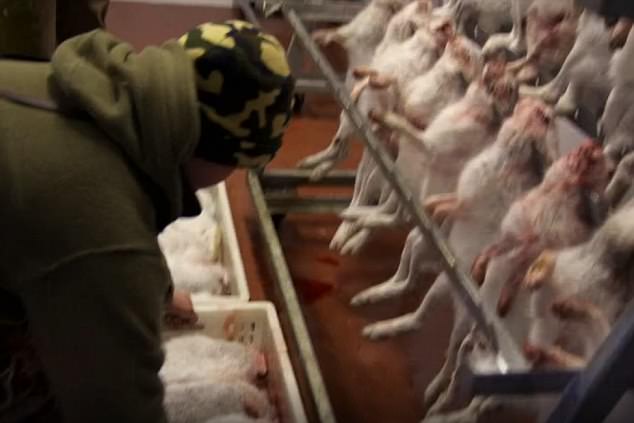
[Shot mountain hares strung up in a chilling larder, screen-grabbed from a controversial feature on Countryfile (2018) showing mountain hares being shot on a Scottish grouse moor]

The Lothians MSP has a proposed member’s bill to end the killing of the iconic animal but will seek to introduce the protections sooner in stage 3 of the Animals and Wildlife (Penalties, Protections and Powers) (Scotland) Bill.

Alison Johnstone said: “Mountain hares are iconic animals, native to the Highlands. Yet rather than being treasured they are barely protected by the Scottish Government, and persecution and mass killings are rife. This is our chance to end the killing and protect this species for future generations.

In 2019 the conservation status of the mountain hare was downgraded to ‘unfavourable’ after new data published by the EU revealed populations have experienced a major decline [see here]. This followed shocking evidence of large-scale killing on shooting estates [here] apparently to increase the numbers of grouse available.

Mountain hares are routinely being killed in huge numbers on grouse moors in particular, with an average of 26,000 killed every year. Efforts to get shooting estate managers to practice voluntary restraint has failed.

I hope that the SNP and other parties will ignore special pleading from the shooting lobby and do the right thing next week. Either this amendment passes and mountain hares are protected, or Parliament turns a blind eye to the continued slaughter of a native species

ENDS

Stage 3 of the Animals & Wildlife Bill will take place next Wednesday and MSPs will vote on Alison Johnstone’s amendment to make the mountain hare a protected species.

If you’d like to encourage your MSP to support this amendment, please contact them now. If you’re not sure who your MSP is, you can find out by typing in your postcode here.

Poisoned hen harrier ‘Mary’ – open letter calls for action

A young hen harrier named Mary that hatched on the Isle of Man in 2019 and had been satellite-tagged by the RSPB’s Hen Harrier LIFE Project was found poisoned on a pheasant shoot in Co Meath in Ireland in November 2019. Tests revealed she had consumed the banned poison Carbofuran which was found on a pigeon bait and on other meat baits next to her corpse.

We blogged about the illegal killing of this hen harrier earlier this year (see here) and it was quite evident from the press statements from both BirdWatch Ireland and the RSPB that there were concerns that the National Parks and Wildlife Service (NPWS) and the Gardai (Irish Police) could be doing more in terms of investigation, enforcement and liaison.

[Hen harrier Mary found illegally poisoned on a pheasant shoot, photo by BirdWatch Ireland]

Seven months on from her death, those early concerns appear to have been justified.

Have a look at this open letter, written by Manx BirdLife (Isle of Man) and addressed to the National Parks & Wildlife Service (Irish Republic) calling for transparency about any criminal investigation which may, or may not, have taken place in to the illegal killing of this hen harrier.

This is a really interesting, and welcome, move by Manx BirdLife. It’s an indication of the growing frustration around the ongoing illegal killing of hen harriers (and other raptors) and demonstrates an unwillingness just to sit back and watch it happen time and time again without anyone being held to account.

For all we know the NPWS may have conducted a thorough investigation and been thwarted by the usual problems of finding sufficient evidence for a prosecution, but that information should certainly be made public because otherwise it looks like they just don’t care and sends a message to other would-be criminals that this sort of offence will go unpunished.

It’ll be interesting to see what sort of response, if any, Manx BirdLife receives from the NPWS.

Essex Police investigate shooting of buzzard last week

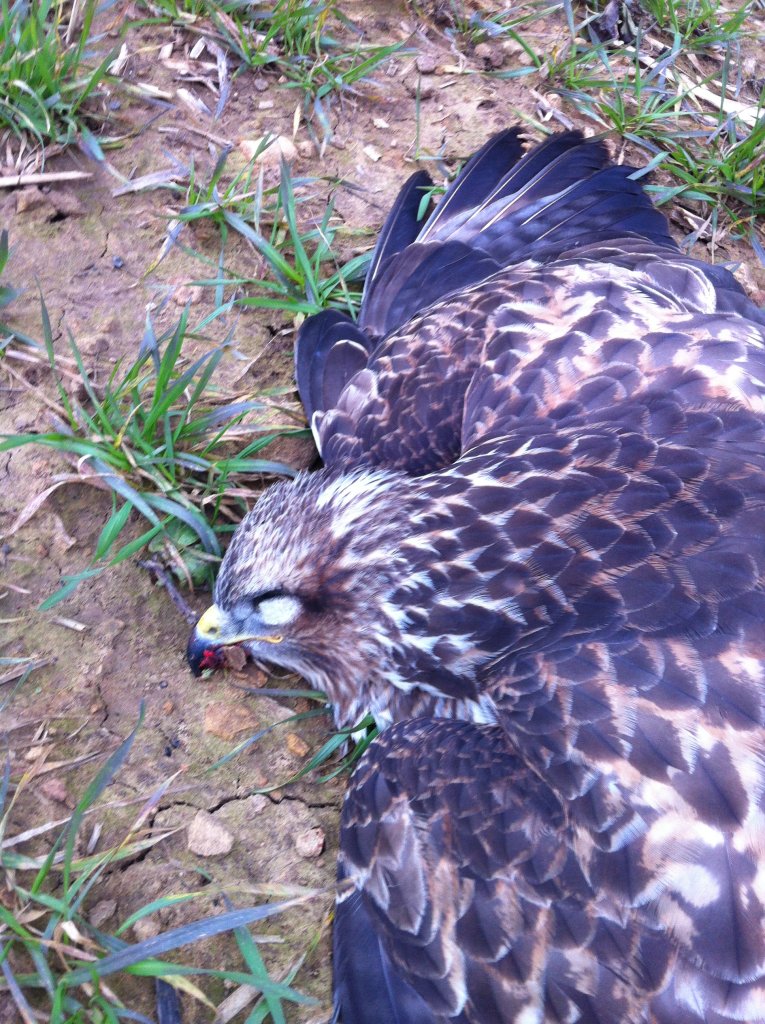
A buzzard was shot and killed last week near Weeley, in Essex, according to PC Andy Long on twitter.

We’ve been unable to find any further details about this incident.

We’ve asked PC Long if he can provide more information on date, location, type of gunshot, crime reference etc. Will publish here is any more info emerges.

UPDATE 10 JUNE 2020: PC Andy Long has been in touch this morning (thanks!) and provided the following information:

Crime Ref number: 42/82646/20

Buzzard found 2 June 2020 at Weeley Hall Wood, Clacton Road, Weeley, Essex.

Awaiting x-ray to determine ammunition used.