Thanks to the blog reader who pointed us to this welcome parody.
Whoever created it, well done and thank you!
Thanks to the blog reader who pointed us to this welcome parody.
Whoever created it, well done and thank you!
At the end of May we blogged about how Natural England had just issued another licence to permit hen harrier brood meddling on grouse moors again this year (see here).
For new blog readers, hen harrier brood meddling is a conservation sham sanctioned by DEFRA and carried out by Natural England, in cahoots with the very industry responsible for the species’ catastrophic decline in England. For more background see here.
[Photo of an UNMEDDLED hen harrier, by Laurie Campbell]

We had a number of concerns about this second licence being issued on 20 May 2020, not least the complete lack of transparency about the fate of the five hen harrier chicks that had been brood meddled in 2019. The last we’d heard three of the five had ‘disappeared’ on grouse moors in northern England in autumn 2019 (here) although then one came back online (here) and it then became apparent that some of the satellite tags used last year were different to the tags used previously and were not as reliable (see here).
On 28 May we asked Natural England for information about the status of these five birds (amongst other things). Natural England Director Rob Cooke has provided the following information to us this afternoon:

So there we have it. All five birds considered to be ‘missing’. One of the disappearances could be attributed to natural causes (#55147, assumed dead during a sea crossing from France to the UK) but the other four all look highly suspicious.
We do know that the GPS Lotek tags have proven to be unreliable on this species (see here) but the longer the tag silence continues, the worse it looks. (We’ve got more info on these tags and will blog separately about the decision to use this particular tag type for this ‘trial’).
[The five brood meddled hen harrier chicks in 2019, now all ‘missing’]

And questions on tag unreliability aside, the ‘missing’ status of these five is hardly a surprise – it’s a pattern that we’ve seen for years, that’s been confirmed by rigorous scientific analysis (of Natural England’s own bloody data, see here) and a pattern that continues even after the grouse shooting industry has the brass neck to pretend that it’s cleaned up its act – 33 ‘missing’ or confirmed killed HH in last two years alone, and that total does not include the brood meddled hen harriers – see here.
What’s more astonishing than anything is the fact that Natural England has issued another brood meddling licence this year, knowing full well the status of last year’s brood meddled birds, and wrote a blog celebrating the so-called ‘success’ of last year’s trial (see here)!
It simply beggars belief.
Last autumn when two of the brood meddled hen harriers were reported as ‘missing’ in suspicious circumstances, we asked Natural England what was its exit strategy and when would it pull the plug on this ludicrous five-year ‘trial’ (see here)?
Natural England said it would ‘take in to account the results to date’ when considering whether to issue another licence for this year (see here).
It looks like the results have been taken in to account and summarily dismissed.
Today Mark Avery wrote that he is still waiting to hear about another court date to have his appeal against brood meddling heard (along with the RSPB’s legal challenge). He provides a useful time line of what’s happened to date (see here).
Meanwhile, somewhere on a grouse moor in northern England, a brood of hen harriers will be being targeted (if they haven’t already been taken)……
[Illustration by Gerard Hobley]

While the news sinks in that yet another two young hen harriers have ‘disappeared’ in suspicious circumstances on driven grouse moors (see here), making a total of at least 33 that have either vanished or been found illegally killed in the two years since the grouse shooting industry would have us believe it has cleaned up its act (see here), writer Jim Crumley reminds us that this industry has wiped out hen harriers before and it can / will do it again unless the authorities get a grip.
[Hen harrier photo by Laurie Campbell]

Published in The Scots Magazine, under the heading ‘Hypnotic Hen Harriers’, Crumley writes:
‘There are certain places in Scotland that have a track record for making birds of prey disappear, up to and including eagles – almost always in parts of the country obsessed with grouse shooting.
They protest every time some wildlife organisation or other goes public about the demise of one more harrier. They’ll tell you that when satellite tags suddenly stop working, it could be because the tag failed – they hardly ever do – and there’s no proof the bird has been illegally killed. That is often true as it’s rare that the corpse is ever found – they have become adept at disposing of dead harriers and eagles.
But in the case of the hen harrier, the weight of circumstantial evidence is huge and it’s also historic. Making hen harriers disappear is nothing new‘.
Read his article in full here
News has emerged that another two satellite-tagged hen harriers have ‘disappeared’ in suspicious circumstances on two separate grouse moors, one in the Cairngorms National Park and one right next to it.
The source of this news is unusual, in that it isn’t in the form of a police appeal for information, it doesn’t come from the RSPB’s Hen Harrier LIFE Project and nor does it involve hen harriers tagged by Natural England south of the border.
This time the news is from an organisation called Wildland (see website here). This is a collection of estates in the Cairngorms and Sutherland, bought by the Polvsen family and being managed with an impressive vision for conservation. Wildland is also a pivotal partner in the wider conservation project called Cairngorms Connect (see website here) which ambitiously aims to restore ecological processes, habitats and species across an enormous area of the National Park.
Wildland has been involved with satellite-tracking golden eagles for a while now, and last year it also fitted tags to hen harriers that had hatched on its estates. In a beautifully-produced blog that was published on Friday, the fates of three of those hen harriers have now been publicised.

You can read the blog here
Anyone who knows anything about hen harriers in the UK uplands will not be surprised to learn that two of the three young hen harriers have since ‘disappeared’ and the last known transmission locations of the tags were both on driven grouse moors – one at Dalnaspidal on the SW edge of the National Park (last signal on 5 September 2019) and the other one at Invercauld, Royal Deeside, on the east side of the park (last signal on 24 September 2019). Regular blog readers may be familiar with these areas.
The third hen harrier didn’t disappear in suspicious circumstances over a grouse moor – this one was found dead in a field in Aberdeenshire although the cause of death has not been published.
[An overview of the movements of the three satellite-tracked hen harriers and their last known locations]

Interestingly, the Wildland blog also provides information about the functionality of the three tags with details given about the tags’ battery status (all working perfectly well) – this is a key indication that the ‘sudden stop no malfunction’ scenario of the two tags/hen harriers that vanished is indeed suspicious and not simply a predicted engineering malfunction, which researchers can identify by a steady decline in battery charge (e.g. see here).
The Wildland blog doesn’t provide any information about a police investigation in to the suspicious disappearances of the two young hen harriers, and nor have we seen any publicity about these disappearances even though the birds vanished nine months ago in September 2019. That’s disappointing, especially as the RSPB was publishing information about a suspected shot hen harrier and two others that had vanished on Scottish grouse moors in autumn 2019 (see here).
Nevertheless, now the news is out we can add these two Wildland hen harriers to the ever-expanding list of hen harriers (at least 33 now) believed to have been illegally killed since 2018, the year when grouse shooting industry reps would have us believe that hen harriers were welcomed back on the grouse moors:
February 2018: Hen harrier Saorsa ‘disappeared’ in the Angus Glens in Scotland (here). The Scottish Gamekeepers Association later published wholly inaccurate information claiming the bird had been re-sighted. The RSPB dismissed this as “completely false” (here).
5 February 2018: Hen harrier Marc ‘disappeared’ on a grouse moor in Durham (here)
9 February 2018: Hen harrier Aalin ‘disappeared’ on a grouse moor in Wales (here)
March 2018: Hen harrier Blue ‘disappeared’ in the Lake District National Park (here)
March 2018: Hen harrier Finn ‘disappeared’ near Moffat in Scotland (here)
18 April 2018: Hen harrier Lia ‘disappeared’ in Wales and her corpse was retrieved in a field in May 2018. Cause of death was unconfirmed but police treating death as suspicious (here)
8 August 2018: Hen harrier Hilma ‘disappeared’ on a grouse moor in Northumberland (here).
16 August 2018: Hen harrier Athena ‘disappeared’ on a grouse moor in Scotland (here)
26 August 2018: Hen Harrier Octavia ‘disappeared’ on a grouse moor in the Peak District National Park (here)
29 August 2018: Hen harrier Margot ‘disappeared’ on a grouse moor in Scotland (here)
29 August 2018: Hen Harrier Heulwen ‘disappeared’ on a grouse moor in Wales (here)
3 September 2018: Hen harrier Stelmaria ‘disappeared’ on a grouse moor in Scotland (here)
24 September 2018: Hen harrier Heather ‘disappeared’ on a grouse moor in Scotland (here)
2 October 2018: Hen harrier Mabel ‘disappeared’ on a grouse moor on the edge of the Yorkshire Dales National Park (here)
3 October 2018: Hen Harrier Thor ‘disappeared’ next to a grouse moor in Bowland, Lanacashire (here)
26 October 2018: Hen harrier Arthur ‘disappeared’ on a grouse moor in the North York Moors National Park (here)
10 November 2018: Hen harrier Rannoch ‘disappeared’ on a grouse moor in Scotland (here). Her corpse was found nearby in May 2019 – she’d been killed in an illegally-set spring trap (here).
14 November 2018: Hen harrier River ‘disappeared’ on a grouse moor in the Nidderdale AONB (here). Her corpse was found nearby in April 2019 – she’d been illegally shot (here).
16 January 2019: Hen harrier Vulcan ‘disappeared’ in Wiltshire close to Natural England’s proposed reintroduction site (here)
7 February 2019: Hen harrier Skylar ‘disappeared’ next to a grouse moor in South Lanarkshire (here)
22 April 2019: Hen harrier Marci ‘disappeared’ on a grouse moor in the Cairngorms National Park (here)
11 May 2019: A male hen harrier was caught in an illegally-set trap next to his nest on a grouse moor in South Lanarkshire. He didn’t survive (here)
7 June 2019: A hen harrier was found dead on a grouse moor in Scotland. A post mortem stated the bird had died as a result of ‘penetrating trauma’ injuries and that this bird had previously been shot (here)
5 September 2019: Wildland Hen Harrier 1 ‘disappeared’ on a grouse moor nr Dalnaspidal on the edge of the Cairngorms National Park (this post)
11 September 2019: Hen harrier Romario ‘disappeared’ on a grouse moor in the Cairngorms National Park (here)
24 September 2019: Wildland Hen Harrier 2 ‘disappeared’ on a grouse moor at Invercauld in the Cairngorms National Park (this post)
10 October 2019: Hen harrier Ada ‘disappeared’ on a grouse moor in the North Pennines AONB (here)
12 October 2019: Hen harrier Thistle ‘disappeared’ on a grouse moor in Sutherland (here)
18 October 2019: Member of the public reports the witnessed shooting of a male hen harrier on White Syke Hill in North Yorkshire (here)
November 2019: Hen harrier Mary found illegally poisoned on a pheasant shoot in Ireland (here)
January 2020: Members of the public report the witnessed shooting of a male hen harrier on Threshfield Moor in the Yorkshire Dales National Park (here)
There are two more satellite-tagged hen harriers (Tony & Rain) that are reported either confirmed or suspected to have been illegally killed in the RSPB’s Hen Harrier LIFE Project Report but no further details are available.
And then there were last year’s brood meddled hen harrier chicks that have been reported ‘missing’ but as they’re carrying a new type of tag known to be unreliable it’s not known if they’ve been illegally killed or if they’re still ok. For the purposes of this mini-analysis we will discount these birds.
So that makes a total of at least 33 hen harriers that are known to have either ‘disappeared’ in suspicious circumstances or have been witnessed being shot or have been found illegally killed in the last two years. And still we’re expected to believe that everything’s perfect, that the grouse shooting industry is not riddled with armed criminals and that hen harriers are doing just fine, thriving even, according to the shooting industry’s propaganda.
Article from The Southern Star (Co Cork) (2 June 2020)
Bait trays are found after buzzard killed in Kealkil
By Kieran O’Mahony
TRAYS containing contaminated meat laid out as bait may be responsible for the killing of a buzzard in the Kealkil area earlier this month.
[One of the meat trays submitted for toxicology analysis]

The National Parks & Wildlife Service (NPWS) were recently notified of the discovery of the dead buzzard by a family who were out walking their dog in the area.
This is the second incident in West Cork this year where buzzards, protected species, have been deliberately killed. It follows the discovery of 23 buzzards on farmland between Bandon and Timoleague in January. In this case, they were poisoned using the banned insecticide, carbofuran. It is not clear if these two incidents are connected.
“NPWS staff are involved in an ongoing investigation into whether this was a persecution incident as they have found several trays, which contained meat which would appear to have been laid out as bait,” said a NPWS spokesperson.
The dead buzzard, the meat and the trays, have been sent to the State laboratory for further analysis to determine if there was poison involved.
The trays were placed along a track, which local people use for walking and other recreational activities.
“Any poison bait or any meat-based poison, laid out in this way is illegal and indiscriminate. A dog either ingesting the poison or eating another animal that is sick or dead as a result of the bait, is likely to get seriously ill or die.”
The spokesperson also said that children are at risk if they pick up or handle contaminated material.
NPWS is asking any member of the public who has information about the incident or who sees anything suspicious – meat-based poison bait, which might be on a carcass or meat laid out in the open – to contact them or the gardaí immediately.
ENDS
It’s hard to imagine why trays of meat might be laid out other than to poison something, but perhaps there is a legitimate reason? However, if these do turn out to be trays of poisoned meat, the brazenness of the person who placed them would be astonishing.
Other recent poisoning incidents in this region include the killing of 23 buzzards with the banned pesticide Carbofuran (here) and the suspected poisoning of a search and rescue dog (here).
This blog passed another milestone yesterday, reaching six million views.
It averages approx one million views per year and is currently attracting over 100,000 views per month.
We post this photograph every time we reach another million views because it’s what motivates us to keep going. This is a golden eagle that was found dead in the Cairngorms National Park in 2006 (photo by RSPB). It had been illegally poisoned. It epitomises everything in its pitiful, poignant, senselessness.

The photo could just as easily have been taken this morning, as the killing continues, although these days the eagle is more likely to have been shot as the criminals change tactics in an attempt to avoid detection.
Thank you to everyone who supports and contributes to this blog. It isn’t a pleasure to write it but it is enormously rewarding to see its increasing reach, and to be part of a wider group who are helping to build pressure on this issue.
We’re not going away anytime soon.
The Search and Rescue Dog Association (SARDA) has announced the death of one of its trainee dogs after consuming what is believed to have been a poisoned bait.
SARDA posted the following statement on social media yesterday:

Tragic news in the last few days, as Bonnie, a SARDA Ireland Trainee Trailing Dog died after she ate poison that had been deliberately put out on the hill with the intention of targeting wildlife. She and her handler Jim O’Brien were training in the foothills of the Knockmealdowns when the incident occurred.
Bonnie was a beautiful and talented dog who no doubt would have become one of our first SARDA Ireland Trailing Dogs. A tragic loss for Jim, who has lost his beloved pet, and a huge loss to the SARDA Ireland Trailing Dog Team.
There have also been reports in the media, such as this from Tipp FM:

Investigations are underway following the poisoning of a Search and Rescue Dog in Tipperary.
Bonnie – a Labrador/Collie cross – was being trained by a member of the Search and Rescue Dogs Association of Ireland.
The incident happened last Sunday week in woods on the foothills of the Knockmealdown Mountains near Clogheen. Sadly Bonnie passed away a few days later.
There are just 6 qualified dogs in the country with 4 of them part of the South Eastern Mountain Rescue Association.
Gerry Tobin is a dog handler with SARDA – he says there have been other incidents of poisoning reported in the area.
“There are certain individuals who for whatever reason are putting out poisoned baits and targeting wildlife – buzzards, peregrines, badgers you know any animals like this are potentially going to be at risk of poisoning.
And you’re also in a situation where you could have a family dog being exercised on a Sunday afternoon along the Blackwater Way and the following day that family dog could be dead.”
ENDS
The type of poison hasn’t been disclosed in this case but only a few weeks ago we learned that the banned pesticide Carbofuran had been used for the mass poisoning of 23 buzzards in neighbouring County Cork (see here).
Placing poisoned baits to target birds of prey is not only illegal, but it’s also barbaric and indiscriminate. Only last month we heard of the suspected poisoning of two dogs in the notorious raptor-killing hell hole of Nidderdale, a so-called protected area designated as an Area of Outstanding Natural Beauty (AONB) in North Yorkshire. One of those dogs subsequently died (see here).
If you see what you believe is a poisoned bait, DON’T TOUCH IT but call the police immediately.
Press release from Greater Manchester Police and RSPB (4 June 2020)
Buzzard found shot twice in Peak District National Park
Greater Manchester Police and the RSPB are appealing for information after a buzzard was found shot near Diggle, in the Peak District National Park, on 11 May 2020.
[The shot buzzard had to be euthanized due to the extent of its injuries. Photo by Peak District Raptor Monitoring Group]

A member of the public found the bird dying on the ground and contacted the RSPB. However it had to be euthanized at a vets the next morning due to the extent of its injuries.
The body of the bird was x-rayed, and found to contain six pieces of lead shot. Further post-mortem analysis revealed that the bird had also been shot at an earlier occasion, but survived.

All birds of prey are protected by the Wildlife and Countryside Act 1981. To intentionally kill or injure one is a criminal offence and could result in an unlimited fine or up to six months in jail.
However the northern Peak District is a known hotspot for the shooting, trapping and poisoning of birds of prey. Nearby In 2018, a climber witnessed a red kite being shot out of the sky near Saddleworth, the same year that a tawny owl and a short-eared owl were found shot near Wessenden Head.
The RSPB’s Investigations Team recently reported a surge of potential and confirmed incidents of bird of prey persecution since lockdown. It is believed that the absence of visitors and raptor workers from key parts of the countryside may have served as an invitation to some to increase their efforts to kill birds of prey.
Jack Ashton-Booth, RSPB Investigations Officer, drove the dying bird to the vets. He said:
“To hold the body of a bird in your hands that’s been riddled with lead shot, knowing that you probably can’t do anything to save it, is devastating. That is the reality of raptor persecution.
We are grateful to the member of the public who reported this incident. If you find a bird of prey dead or injured in suspicious circumstances, please report it to the police. We’re certain that more birds will be killed than we ever find or hear about.”
A spokesperson for Greater Manchester Police, said: “Shooting a bird of prey is an offence under the Wildlife and Countryside Act and I would appeal to hear from anyone with information.”
If you have any information relating to this incident, call Greater Manchester Police on 101.
If you find a wild bird of prey which you suspect has been illegally killed, contact RSPB Investigations on 01767 680551 or fill in the online form here
ENDS
This is the buzzard that was featured in the BBC Look Northwest programme on Weds night (see here)
Last night BBC Look Northwest had an excellent feature on the continued killing of birds of prey in the UK. It included interviews with Howard Jones from the RSPB Investigations Team, and everyone’s favourite persecution denier, Duncan Thomas from BASC.
The clip can be viewed here (starts 18.10 mins) but is only available until 7pm this evening (Thurs 4 June 2020). We’ve reproduced the transcript below:

BBC studio presenter: “The RSPB says it’s been overrun with reports that birds of prey have been illegally killed since lockdown began. It’s thought the quieter countryside has made it easier for criminals to target them. A recent case involved a buzzard which had been shot near Saddleworth. Here’s our environment correspondent Judy Hobson.”
Judy Hobson: “A buzzard, found in the Peak District three weeks ago. This x-ray shows it had been shot. It was found here on Saddleworth Moor. The RSPB say since lockdown began there’s been a 400% increase in the illegal killing of birds of prey”.
[The shot buzzard and its x-ray. Photo by Peak District Raptor Monitoring Group]


Howard Jones, RSPB: “Lochdown has kind of emboldened the criminals out there who want to kill birds of prey so they think with the restrictions that have been imposed there’ll be less people out in the countryside and there’s less chance of being caught”.
Judy Hobson: “Two birds were found dead in Cumbria last month, other birds targeted include hen harriers, peregrine falcons and red kites. It’s an issue that’s plagued the countryside for years and the RSPB has consistently pointed the finger at gamekeepers protecting young grouse”.
Howard Jones: “In two thirds of the prosecutions that have ended up in court for bird of prey persecution since 1990, two thirds of those have been gamekeepers”.
Judy Hobson: “The charity says the number of birds found dead since lockdown began equates to a bird being killed every single day”.
Duncan Thomas, BASC: “I really dispute these figures. I would love to have a proper investigation in to exactly where they’re coming from. The RSPB are using birds of prey as a cash cow. It’s not proportionate, effective investigation, we must let the police get on with their job. We will expel anybody who is convicted of a wildlife crime of this nature”.
Judy Hobson: “The RSPB says it stands by its figures and says the police are investigating every single incident. Campaign groups such as Wild Justice also believe more birds have been targeted since lockdown. But a row over figures perhaps distracts from an inherent problem which shows no sign of going away”.
Howard Jones: “These are majestic birds of prey and creatures that people come out in to the countryside to see and despite 65 years of legal protection they are still being targeted”.
ENDS
UPDATE: Comment posted on blog 4/6/20 by Mark Thomas, RSPB Head of Investigations: ‘Whilst there has been 56 confirmed/potential raptor persecution offences during lockdown – RSPB did not make or recognise the 400% comment made by the presenter in this piece. We have sought clarification from the BBC‘.
Norfolk Constabulary’s Rural Crime Team has posted this on Twitter today:

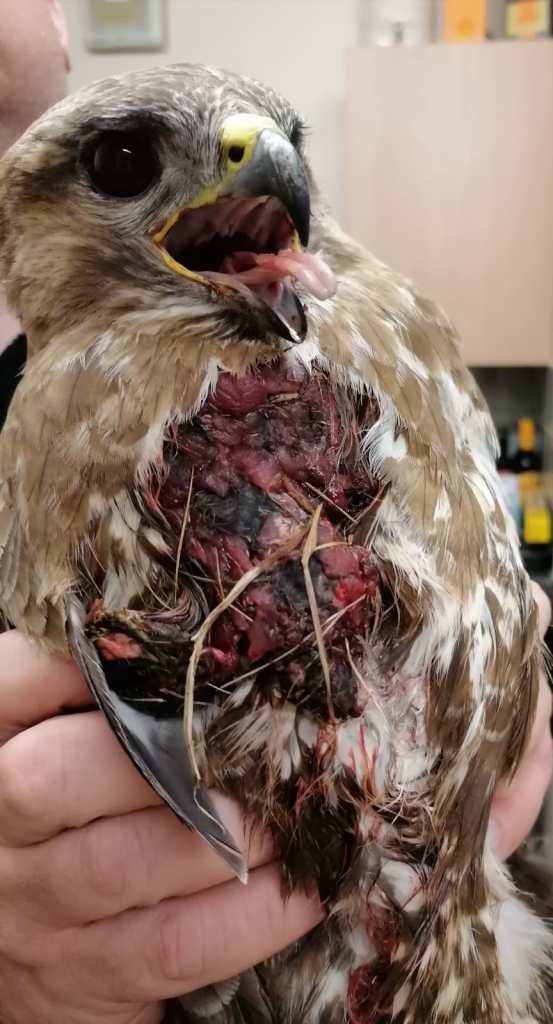
We haven’t been able to find any further published information – status of the bird, crime ref number etc.
Here’s a map of the location: