Peregrine found shot in Doncaster – Police appeal for information

Press release from South Yorkshire Police (25 January 2024)

APPEAL FOLLOWING PEREGRINE FALCON FOUND SHOT IN DONCASTER

We are appealing for information alongside the RSPB for information after a juvenile Peregrine Falcon was found with life-threatening injuries in Doncaster.
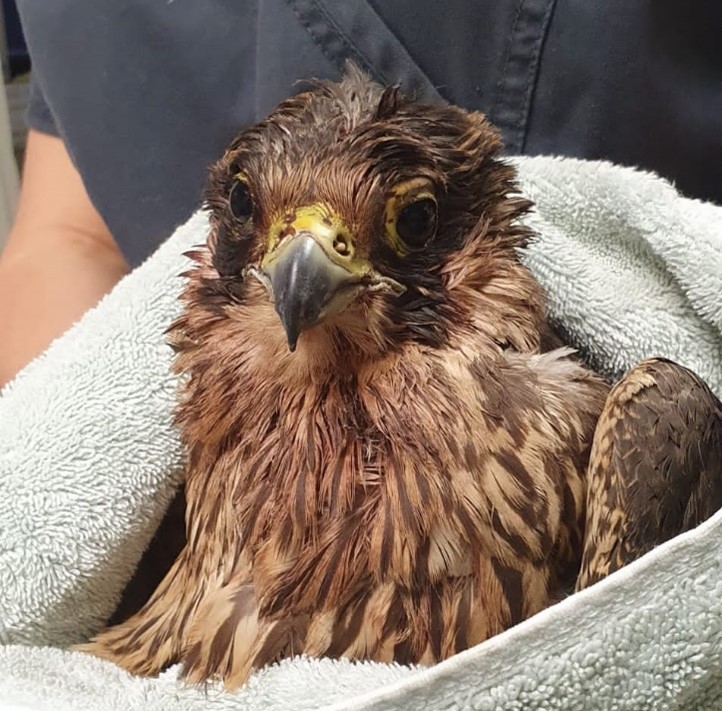
The shot peregrine. Photo via South Yorkshire Police

On 11 December 2023, an injured Peregrine Falcon was found on a school playing field at Littlemoor Infant Academy in Askern – a school which backs onto open countryside.

The bird, which had suffered shotgun injuries, was taken to a rehabilitation centre, where it received expert veterinary care at the Ryedale Wildlife Rehabilitation Centre.

X-rays revealed that the bird had two shotgun pellets embedded in its leg and a dislocated coracoid bone, which prevented the bird from flying. The location of the pellets and the nature of the injuries sustained suggest that the bird was probably flying when it was shot.

We are urging anyone with information to come forward and speak to us.

Peregrine Falcons are the fastest animal on the planet, capable of speeds in excess of 100 miles per hour. Pairs will nest on coastal cliff-edges, in quarries and in urban areas on buildings and industrial sites.

Although fully protected and recovering across the UK, illegal persecution is impacting Peregrine numbers. In the UK, the RSPB has recorded 173 incidents of Peregrine persecution over the last 20 years, with a minimum of 195 Peregrines either dying or sustaining injuries as a result of these criminal activities.

In the last five years alone, 29 Peregrines have been illegally persecuted in England with almost a quarter of these incidents taking place in Yorkshire. Data shows that nationally a significant proportion of raptor persecution incidents are linked to land managed for gamebird shooting.

Having suffered injuries which prevented sustained flight, the Peregrine was taken to Ryedale Wildlife Rehabilitation Centre in North Malton, where it received expert care with the support of Battle Flatts Veterinary Clinic.  After a month of rehabilitative care the Peregrine was released back into the wild on 13 January 2023.

Jean Thorpe, Ryedale Wildlife Rehabilitation Centre: “When a bird has suffered in this way it’s difficult to know if they’ll survive. The stress alone can be too much for them, and rehabilitation can be really challenging.

“We were lucky with this one. It’s a real privilege to have the opportunity to encounter one of these incredible birds but I just wish it was under different circumstances.

 “This isn’t the first shot Peregrine I’ve had to care for, and I doubt it will be the last. These crimes are happening right under our noses, it’s unforgivable.” 

Inspector Peter Heginbotham, from South Yorkshire Police Wildlife and Rural Crime Team, said: “To know that a protected Peregrine Falcon has been intentionally shot with a shotgun and found in Doncaster is extremely concerning, but unfortunately not unique. Sadly, Peregrine Falcons are still being shot, trapped and poisoned in northern England.

“We will thoroughly investigate this crime and would encourage anyone who can assist us with our investigation to please come forward and help us tackle and prevent these crimes from happening.” 

If you have any information, please contact us online, via live chat or by calling 101 quoting incident number 576 of 13 December 2023.

Alternatively, to get in touch anonymously, call the RSPB’s dedicated Raptor Crime Hotline on 0300 999 0101 or Crimestoppers on 0800 555 111.

ENDS

There’s an article about the rehabilitation and a video showing the release of this peregrine on BBC news website (here).

The story is apparently going to feature on BBC Look North this evening. Perhaps South Yorkshire Police will explain why it took six weeks to publish an appeal for information.

Well done and thanks, yet again, to the remarkable Jean Thorpe and her colleagues at Battle Flatts Vets.
Decision to defer Wildlife Management Bill Stage 2 amendments unconvincingly based on ‘weather’

Further to yesterday’s blog about the suddenly-announced two week delay to the Rural Affairs Committee’s deliberations over the Stage 2 amendments of the Wildlife Management & Muirburn Bill (here), an explanation for this delay has now been provided.

And it’s pretty unconvincing, to be honest.

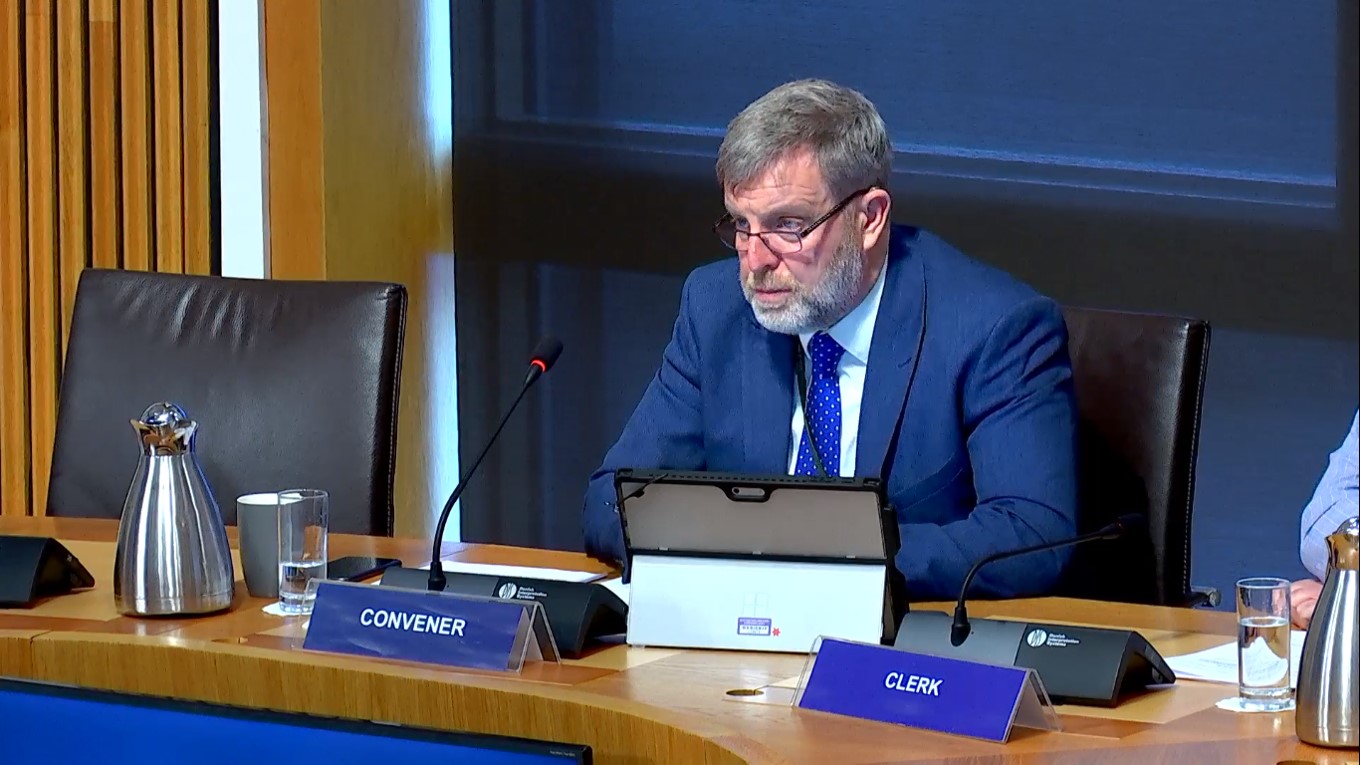
The Convenor of the Rural Affairs & Islands Committee, Finlay Carson MSP (Scottish Conservatives) opened this morning’s meeting by explaining to Committee members that he’d taken the decision to defer due to ‘the weather’.

He felt that as one or two Committee members weren’t able to attend in person, he didn’t want to risk running a hybrid meeting (where members who couldn’t attend in person could attend online) because of the ‘challenges and risks’ that would bring to proceedings.

Committee Convenor Finlay Carson MSP explaining his decision this morning. Screengrab from Scottish Parliament TV.

This explanation was seen as unsatisfactory by two SNP Committee members, Alasdair Allan MSP and Jim Fairlie MSP, who spoke about how hybrid meetings had become common practice since Covid, and indeed that other Committees have managed to handle Stage 2 proceedings perfectly well using this system.

Both SNP members chose their words carefully and clearly wanted it on record that the decision to defer for two weeks was not made by the Committee, but by Finlay Carson alone, as is his prerogative as Convenor. Indeed, both SNP members said the decision had come as a surprise to them and registered their dissatisfaction with the decision.

Alasdair Allan asked for the decision to be taken to a vote by the whole Committee:

“Can I suggest we move to a vote on whether we revert to the original agenda or not?“

Finlay Carson replied:

“That’s not competent. Thank you. We’ll move on…“

That was the end of the discussion and proceedings moved on to an entirely different topic.

If you want to watch this four minute discussion you can see it on the Rural Affairs Committee’s slot on Parliamentary TV (here), starts at 9.06am.

It was interesting to note that as far as I could see, just two Committee members weren’t present at the meeting – Beatrice Wishart MSP (Liberal Democrats & Deputy Convenor of this Committee) and Rachael Hamilton MSP (Scottish Conservatives).

Rural Affairs & Islands Committee attendees this morning

Beatrice Wishart hasn’t played an especially prominent role in this Bill’s proceedings to date but blood sports enthusiast Rachael Hamilton has, and, like her fellow Conservative MSP Finlay Carson, has not been reticent about expressing her fundamental objection to the general principles of the Bill. Indeed, I’d argue she’s been one of the Bill’s fiercest critics (as is her right), at least on this Committee.

Hmm.

Was this huge disruption to Parliamentary proceedings triggered by Rachael’s unavailability? I do wonder.

The good news about this two-week delay is that next week, REVIVE, the Scottish Raptor Study Group and the RSPB are holding a joint reception in the Scottish Parliament which will provide an excellent, and timely, opportunity for MSPs to receive further briefings from those of us who support this Bill and who want some of the more potentially damaging amendments voted down.

Nice.

Political shenanigans with Stage 2 of Wildlife Management Bill – back on tomorrow?

Earlier this evening I blogged about a two week deferral of voting on the Stage 2 amendments of the Wildlife Management & Muirburn Bill (here).

This deferral decision was made at very short notice and no reason was given for it.

As the evening’s worn on, I’ve heard from a number of people inside the Scottish Parliament who have indicated that political shenanigans may be at play.

To protect confidences I’m not at liberty to say any more at the moment, other than you might want to watch the proceedings of the Rural Affairs & Islands Committee tomorrow morning at 9am (this is the Committee that was due to begin its considerations of the Stage 2 amendments tomorrow). The meeting’s current agenda is here.

The Stage 2 amendments may be returned to the agenda tomorrow morning, or if not, it may become clear why they’ve been removed from tomorrow’s agenda…

Regardless of whether or not deliberations begin tomorrow, it’s quite clear that the Committee’s consideration of the Stage 2 amendments will need to take place over a number of sessions/weeks given the number of lodged amendments so far.

As it stands at the moment (Stage 2 amendments not due to even begin to be considered until 7 February), this goes against a Parliamentary motion passed just last week, ‘That the Parliament agrees that consideration of the Wildlife Management and Muirburn (Scotland) Bill at stage 2 be completed by 9 February 2024‘.

The Rural Affairs & Islands Committee opens for business at 9am tomorrow (Weds 24 Jan) and should be available for viewing on Scottish Parliament TV (here).

UPDATE 24 January 2024: Decision to defer Wildlife Management Bill Stage 2 amendments unconvincingly based on ‘weather’ (here)

Extent of burning on Scottish peatlands, including many grouse moors, is why regulation is needed urgently

Just before Christmas a new scientific paper was published by experts from Leeds University, revealing that burning on deep peat is widespread on many Scottish grouse moors, and that, surprise surprise, land managers were ignoring the new (voluntary) Muirburn Code which suggests burning on peatland should be avoided (see here).

Muirburn on an Aberdeenshire grouse moor in 2022. Photo by RPUK blog reader

Today, one of the study’s authors, Dominick Spracklen, Professor of Biosphere-Atmosphere Interactions at the University of Leeds has written an easy-to-understand blog about the study to help the public (and I daresay politicians engaging with the Wildlife Management & Muirburn Bill) understand the importance of minimising the extent of these peatland fires.

It’s well worth a read – here.

Stage 2 of Wildlife Management & Muirburn (Scotland) Bill deferred for two weeks

The Scottish Government’s Wildlife Management & Muirburn (Scotland) Bill is making its way through the parliamentary process. For new readers, this is proposed new legislation to regulate grouse shooting and its associated management practices by way of licensing schemes, introduced because of the continued illegal persecution of birds of prey on many Scottish grouse moors.

Poisoned golden eagle next to a poisoned bait found on a grouse moor in Cairngorms National Park. Photo by RSPB Scotland

The Rural Affairs and Islands Committee was due to scrutinise and vote on the Stage 2 amendments tomorrow but a notice has just gone around that this has now been delayed until Wednesday 7 February 2024 (no reason for the delay was provided).

This also means that more amendments are now allowed to be lodged, up until 12 noon on Thursday 1st February 2024.

So far, the lodged amendments are predictable with no real surprises (e.g. see here for commentary on some earlier ones).

Let’s see what else gets lodged between now and 1st February and I’ll try and provide an overview shortly afterwards.

UPDATE 22.15hrs: Political shenanigans with Stage 2 of Wildlife Management Bill – back on tomorrow? (here)

Trial continues in Scotland for falconer charged with welfare offences relating to 90 eagles

The trial of prominent falconer and eagle breeder Andrew Knowles-Brown from Elvanfoot, Scotland continued at Lanark Sheriff Court last week where leading international avian vet Neil Forbes DipECZM(Avian), FRCVS was called as an expert witness for the prosecution.

This is the second trial Knowles-Brown has faced – in February 2023 he was cleared of all charges at Lanark Sheriff Court in relation to the alleged mistreatment of ten imported White-bellied sea eagles at the Scottish Eagle Centre (see here).

The current trial is separate to the first one and is concerned with alleged welfare offences relating to 90 eagles kept at Knowles-Brown’s breeding facility in Scotland. Knowles-Brown has denied all the charges.

Golden eagle photo by Pete Walkden

Knowles-Brown is a prominent figure in the falconry world, having served as the Chair of the Scottish Hawk Board and Vice-Chair of the UK Hawk Board. The Hawk Board, which includes a representative from the Countryside Alliance, represents falconers, hawk-keepers and falconry clubs and provides welfare guidelines for those keeping raptors in captivity. It also engages in political lobbying (e.g. it was against the Scottish Government’s decision to afford the Mountain Hare full legal protection) and Knowles-Brown himself has provided evidence to the Scottish Parliament’s Rural Affairs Committee when it was considering its draft Protection of Wild Mammals (Scotland) Bill.

This second trial began last summer (see here) and looks set to continue for some time. The next expert witness for the prosecution is due in court on 27 February 2024.

Please note: as the case is still live, comments won’t be accepted on this blog until proceedings have concluded. Thanks for your understanding.

UPDATE 15 October 2024: Prominent falconer & eagle breeder Andrew Knowles-Brown guilty of welfare offences relating to approx 90 eagles in Scotland (here)

Peregrine suspected shot in Essex – Police appeal for information

Essex Police are appealing for information after the discovery of an injured peregrine in the Highwood area of Chelmsford on 15th January 2024.

The wounded bird was admitted to the South Essex Wildlife Hospital and on examination is believed to have been shot.

I’ve asked for information about the peregrine’s condition and asked whether an x-ray had confirmed the bird had been shot. I’ll update this post when I hear.

Anyone with information is asked to contact Essex Police on Tel 101.

This latest raptor persecution victim is the 9th in Essex in recent years, following the shooting of a buzzard in December 2023 (here), the shooting of another buzzard in January 2023 (here), the shooting of a red kite in September 2022 (here), the shooting of another red kite in November 2021 (here), another red kite found dead in suspicious circumstances in November 2021 (here), the shooting of another three buzzards in 2020, one in Dec (here), one in September (here) and one in June (here), and the suspected shooting of a Hobby in August 2020 (here).

Woodcock shot and dumped in Cheshire

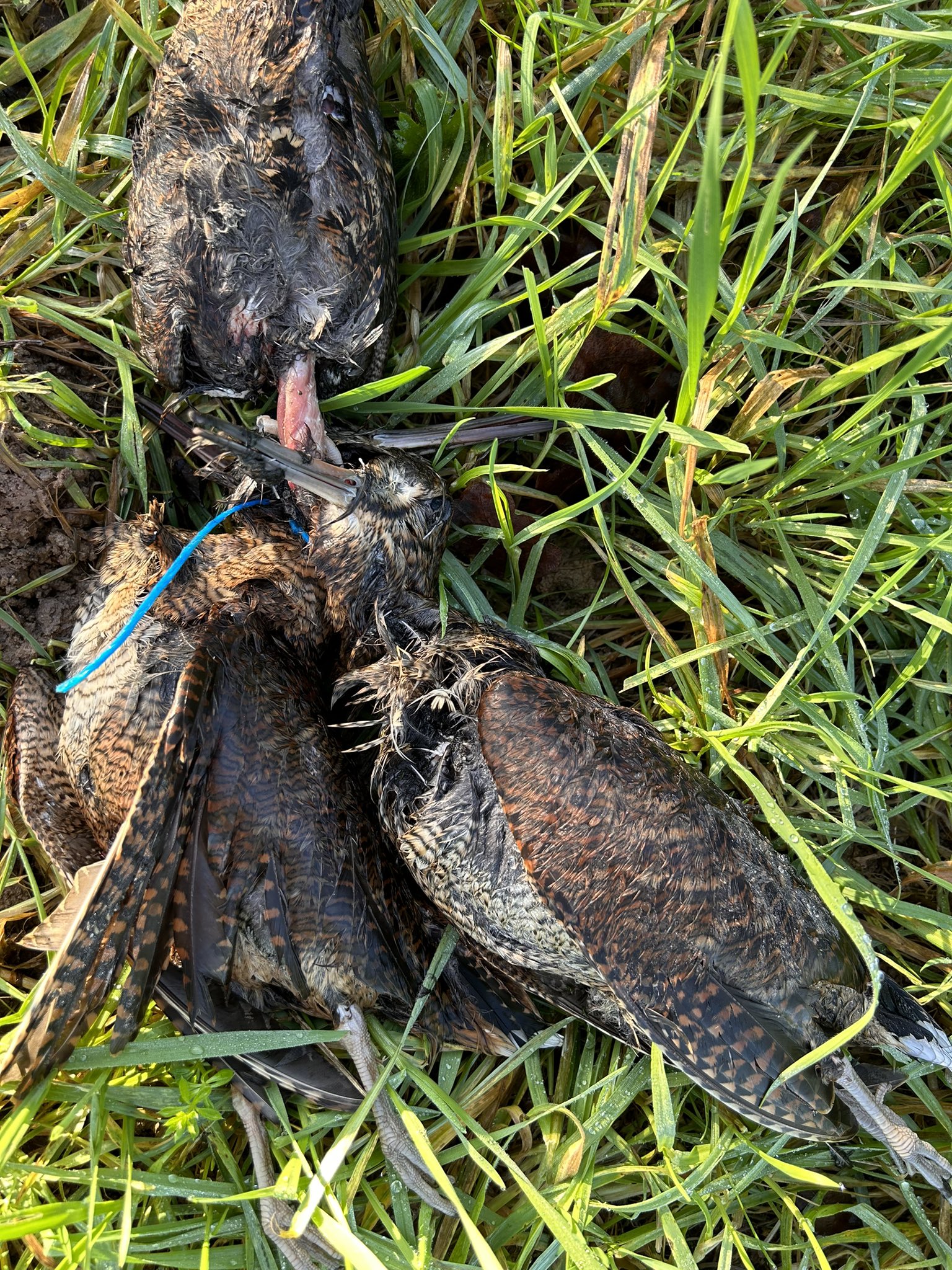
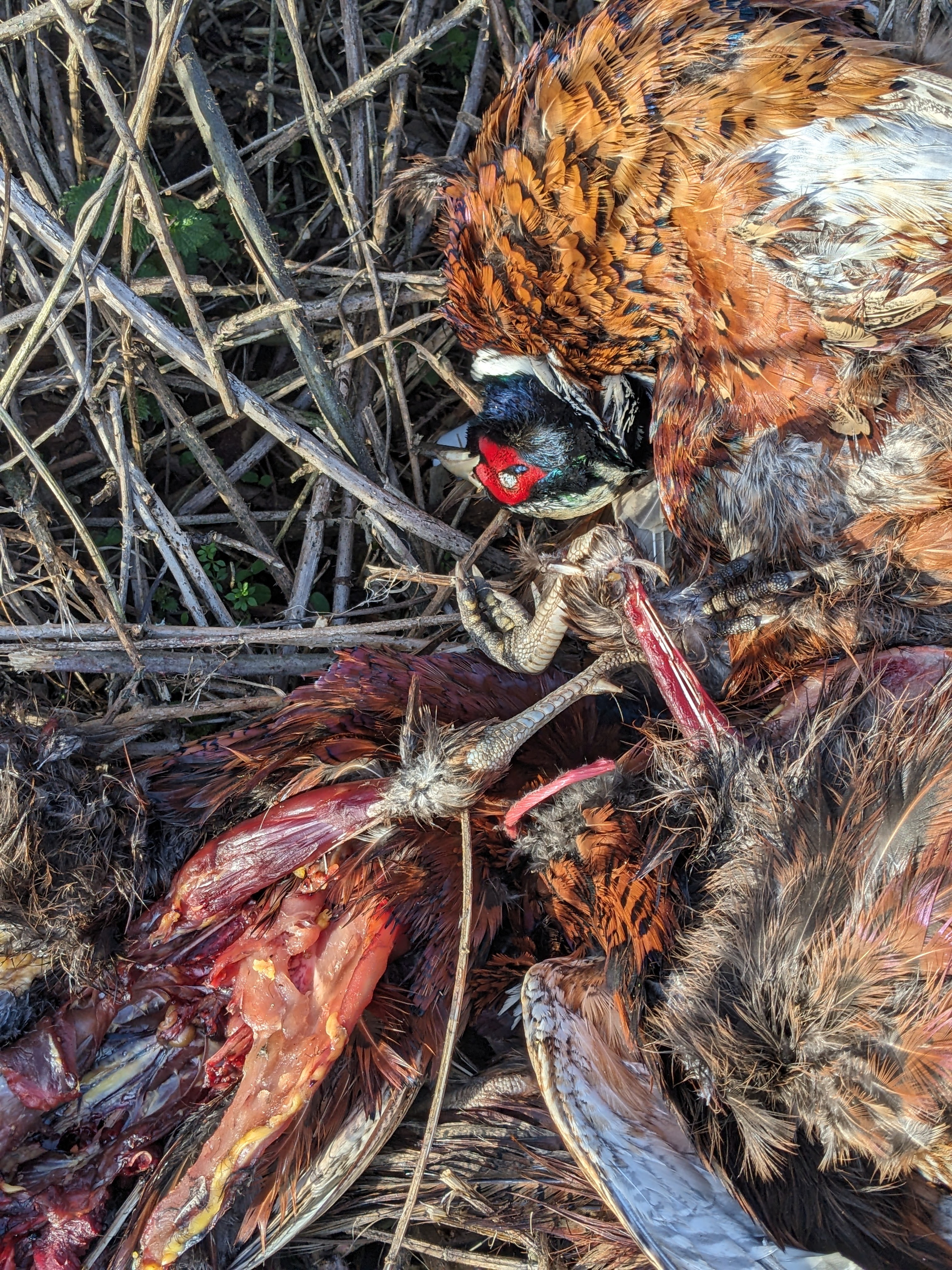
In response to yesterday’s blog where I wrote about the latest reported incident of the illegal fly-tipping of shot gamebirds (pheasants in Gloucestershire – here), blog reader Paul Bray posted the following image on Twitter:

Shot & dumped Woodcock, photo by Paul Bray

These are shot Woodcock that were found dumped in Crowton, Cheshire two weeks ago by Paul and his colleagues in the group Cheshire Against Blood Sports as they sabbed the Cheshire Forest Hunt.

Woodcock, although red listed on the UK Birds of Conservation Concern, are still classed as ‘gamebirds’ and they can be shot between 1st October (1st September in Scotland) and 31st January, although Wild Justice has been campaigning to shorten this to protect the declining resident population (see here).

It’s contemptible that introduced, non-native pheasants and red-legged partridge are shot and then dumped but to do that to Woodcock seems even more obscene.

What was the point of shooting these Woodcock if they were then going to be thrown away?

More shameful fly-tipping of shot pheasants – Gloucestershire this time

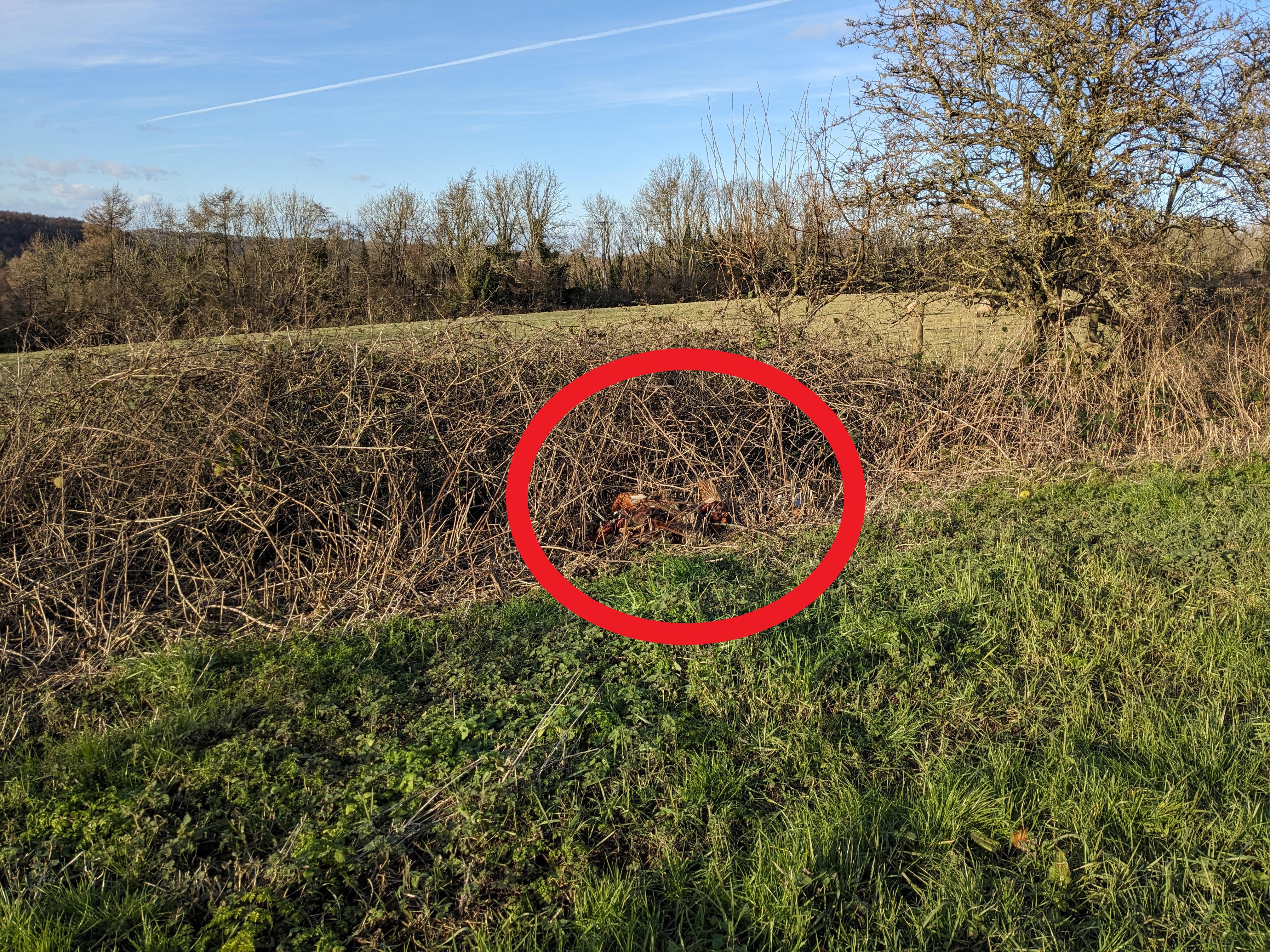
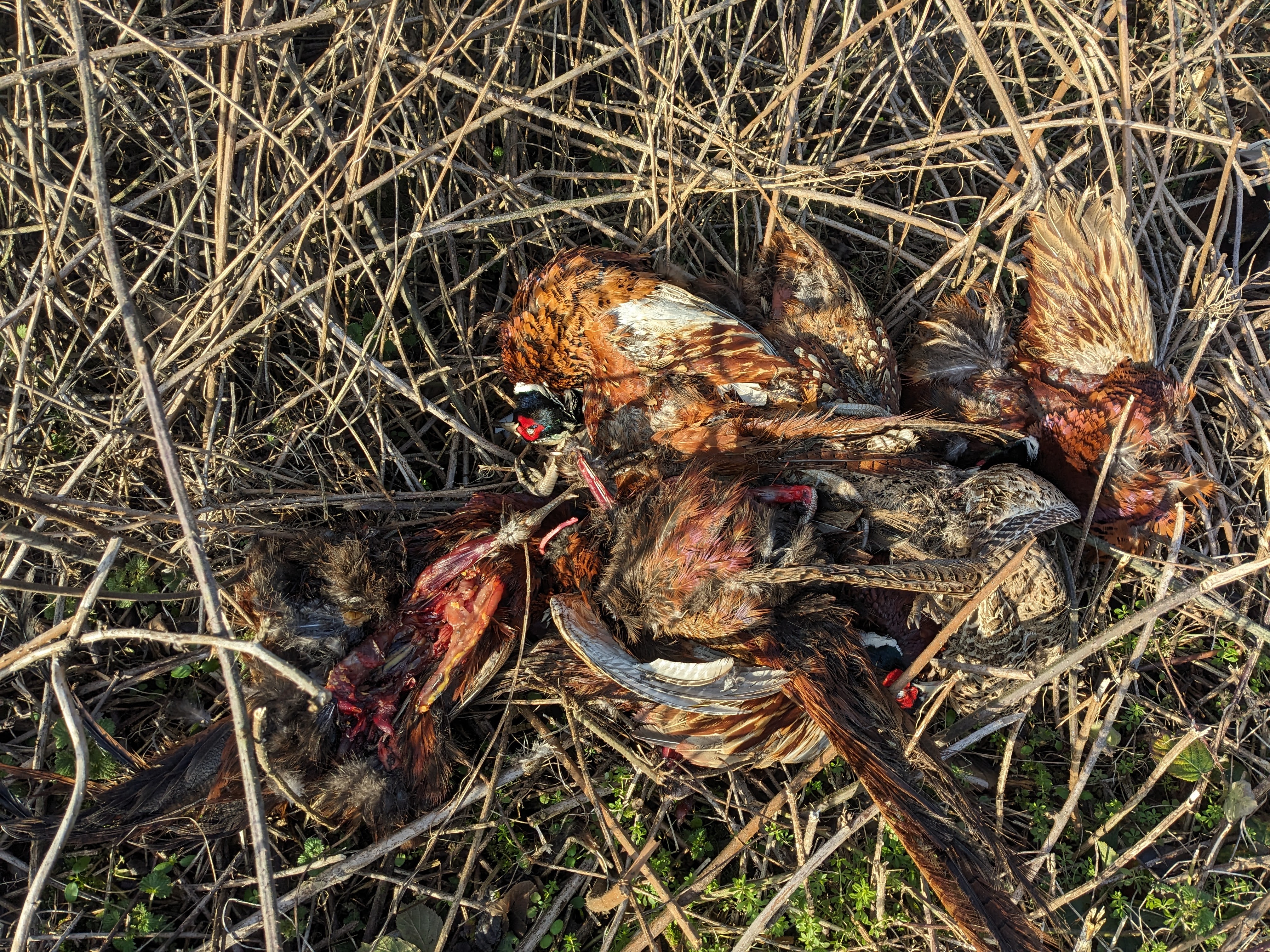
More shot pheasants have been found dumped by the side of the road, this time thrown into a hedge next to a lay-by on Old London Road, near Wotton-Under-Edge, Gloucestershire.

This latest shameful fly-tipping incident was discovered on Monday 15th January 2024 and has been reported to Stroud Council.

Thanks to the blog reading dog walker who sent in these photos:

Regular blog readers will know that this is a common and widespread illegal practice.

Previous reports include dumped birds found in Cheshire (here), Scottish borders (here), Norfolk (here), Perthshire (here), Berkshire (here), North York Moors National Park (here) and some more in North York Moors National Park (here) and even more in North Yorkshire (here), Co. Derry (here), West Yorkshire (here), and again in West Yorkshire (here), N Wales (here), mid-Wales (here), Leicestershire (here), Lincolnshire (here), Somerset (here), Derbyshire’s Peak District National Park (here), Suffolk (here), Leicestershire again (here), Somerset again (here), Liverpool (here), even more in North Wales (here) even more in Wales, again (here), in Wiltshire (here) in Angus (here), in Somerset again (here), once again in North Yorkshire (here), yet again in West Yorkshire (here), yet again in mid-Wales (here), even more in mid-Wales (here), and more in Derbyshire (here).

Ironically, I see the Countryside Alliance has been expressing its concern and ‘alarm’ over fly-tipping crimes:

‘Fly-tipping and littering must not be seen as a victimless crime: it is a scourge on our natural environment and a blight on the farms these criminals still too often target‘.

and

‘We have long campaigned on this issue and will be calling on all parties in the run up to the election to take this crime seriously’.

I look forward to seeing the Countryside Alliance draw attention to the criminal fly-tipping activities of those in the game-shooting industry.

Wildlife Management & Muirburn Bill – will it properly protect peatlands?

A blog reader who works as an upland peatland specialist has written the following blog.

With the Wildlife Management and Muirburn Bill passing through the Scottish Parliament we are soon to see a tightening of the regulation around grouse shooting and burning in the Scottish uplands. This is long overdue, but welcome, nonetheless. So many have fought for so long to get to this point; but the Bill is not over the line yet, with changes possible over the coming weeks.

A recent post on this blog highlighted some of the sorts of changes that could be made by pointing to the amendments lodged by Edward Mountain MSP and one of those jumped out as important. It seems innocuous and inconsequential but the suggestion to change the definition of peat depth from 40cm to 60cm does have implications.

Why does that matter so much? It matters because the Bill is designed to offer protection to peatlands and amendments such as this would weaken that protection.

Under the terms of the Bill, an owner or occupier of land will have to apply for a licence to undertake muirburn, but they can only burn for specific reasons and these reasons are different on different types of land. Where the land is peatland, the owner or occupier may apply for a licence for the purpose of restoring the natural environment, preventing or reducing the risk of wildfires, or research. Where the land is not considered to be peatland, they can apply for a licence to burn for sporting, farming, conservation, wildfire management or research purposes. In effect, burning on peatlands is restricted; land managers will not be able to burn on peatlands for sporting or farming purposes.

Peatland burning on a driven grouse moor. Photo: Ruth Tingay

Consequently, since the Bill is structured to treat peatlands differently, the definition of what is, and what is not, a peatland, really matters. It determines where different sets of rules apply.  

At present the Bill defines ‘peatland’ as “land where the soil has a layer of peat with a thickness of more than 40 centimetres” (where “peat” means soil which has an organic content of more than 60%).

In one way this definition does represent an improvement on the status quo because the current Muirburn Code refers to 50cm and the lower the threshold the larger the area that is considered to be peatland where the restricted rules apply. But, more fundamentally, these depth thresholds can have perverse consequences because they create artificial thresholds that don’t really exist. The consequence of this definition is that extensive areas of shallow peat of a depth less than 40cm will effectively be treated as ‘not peatland’, despite the fact that they are functionally part of a peatland and actually the most vulnerable areas. The IUCN Peatland Programme calls these areas the ‘lost peatlands’:

Despite these areas containing substantial carbon stores and often being vital to the wider ecology and hydrological function of connected deeper peat deposits, we, for the bureaucratic purpose of setting rules around burning, say that they are not peatlands. The result is that, under the terms of the Bill, a land manager will legitimately be able to burn on shallow peat for grouse shooting or farming purposes.  

The crux of the issue is that the legislation is clearly designed to try and protect peatlands by treating them differently, but at the same time the definition of a peatland limits the benefit.

If we look again at the Edward Mountain suggestion to change the depth definition from 40cm to 60cm, the effect would be to reduce the area that is considered peatland and so reduce the area where the greater restrictions apply. Conversely it would increase the area where burning for sporting and farming purposes would be possible. This would seem to run counter to the intention of the legislation.

Arguably, the best option would be to just stop defining peatlands (for the purposes of burning) by depth and say that we shouldn’t be burning on peat/peaty soil for sporting and farming purposes (noting, of course, that burning for the purpose of nature restoration, wildfire prevention and research would still be allowed). At the time of writing there is still time for this reasonable approach to be taken forward through amendments at Stage 2 or possibly later at Stage 3, so it remains to be seen whether the rhetorical importance that our politicians give to peatlands translates into real decisions in law.