Channel 4 bats away shooting industry hysteria

On Monday evening Channel 4 News included an explosive piece about grouse shooting in the North York Moors National Park and its association with the illegal killing of birds of prey.

Fronted by veteran war correspondent Alex Thomson, it was a follow-up to an item that was broadcast back in May where Alex had again focused on the illegal killing of birds of prey on grouse moors in the North York Moors National Park as well as in the Nidderdale AONB (see here).

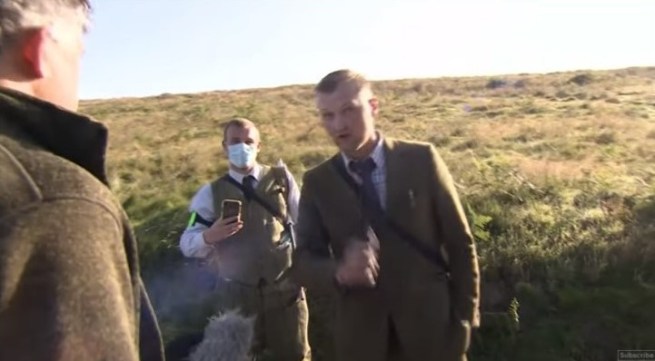
Monday’s piece was car-crash viewing if you were a member or supporter of the grouse shooting industry, in what was an extraordinary display of arrogance, denial and entitlement from a number of individuals involved with a grouse shoot. All those previous media campaigns, carefully-crafted to showcase this industry to the general public in the best possible light, shot down in tatters during a prime time viewing slot before our very eyes. If you missed it, this six minute film is well worth your time.

Predictably, since the programme aired some members of the shooting industry (which, remember, professes a ‘zero tolerance‘ for raptor persecution) have been in an absolute rage on social media, angrily shouting about how unfair it all was, how dare a high profile journalist question anybody involved in this noble ‘sport’ for their views on illegal raptor persecution, spitting blood that there wasn’t an alternative opinion given (conveniently forgetting that the Moorland Association was given the opportunity to comment, but didn’t).

They were also probably furious that several members of the local community were filmed, dispelling quite a few myths and debunking the propaganda often painted of a moorland community in harmony – a rural idyll where local residents are deliriously enthralled by the activities of the local grouse moor managers and thankful for the boost that grouse shooting brings to the local economy, without which the local community would apparently collapse. Nah, these Goathland residents weren’t having any of it. Kudos to them for standing their ground.

Don’t be surprised to see the launch of a campaign /petition calling for Alex Thomson’s dismissal from Channel 4  –  this thuggish industry has a well-deserved reputation for trying to shoot the messenger, usually by generating a nasty little smear campaign to undermine the integrity of those who dare to speak out against the industry’s criminality and environmental destruction.

Meanwhile, several individuals have already been making complaints about the programme directly to Channel 4. Channel 4 is having none of it. Here’s the standard response that has been sent back:

Brilliant! If you’d like to send Channel 4 a message of support for (a) broadcasting the footage during its main evening news schedule and (b) having the balls to stand up to the resulting howling hysteria of the grouse shooting industry, you can use this form (here) to show your support and appreciation.

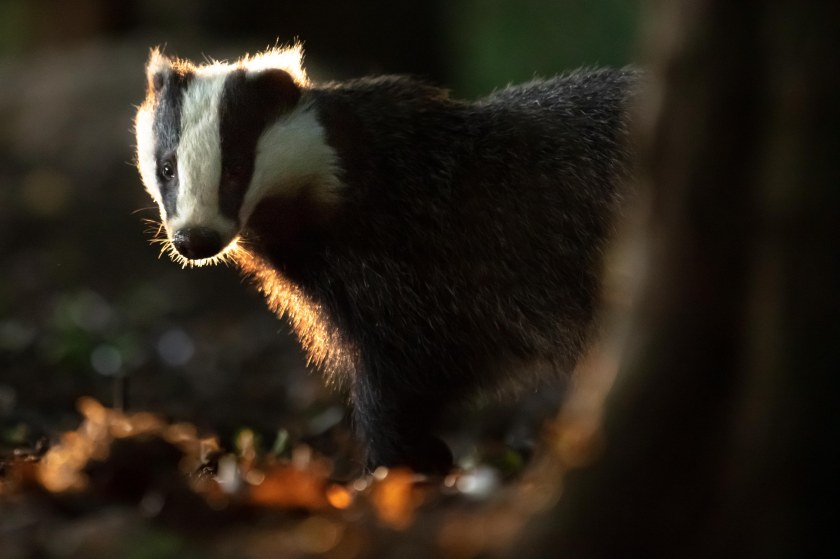
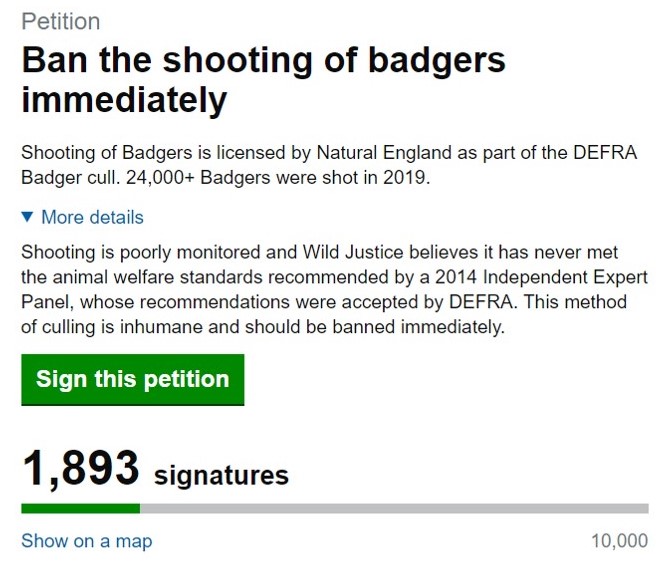
Ban the shooting of badgers: new petition from Wild Justice

Wild Justice has just launched a new petition calling for a ban on the shooting of badgers.

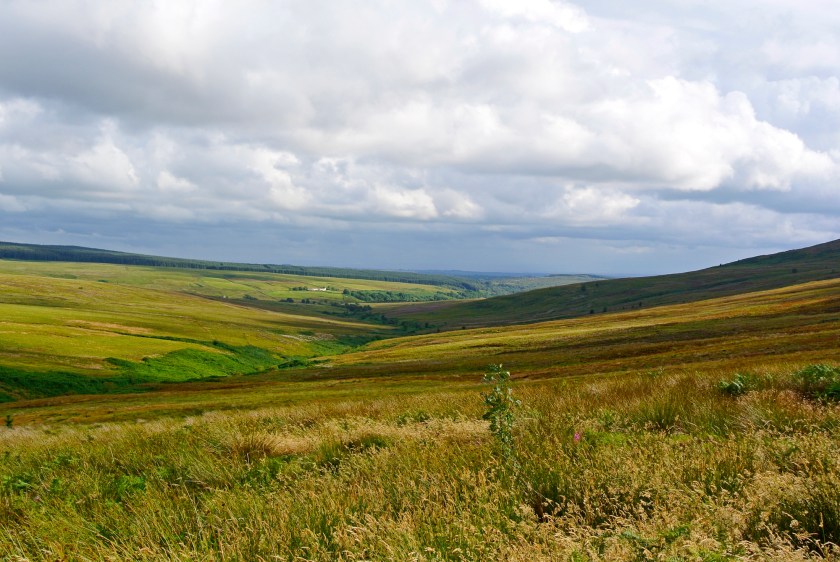
[Photo by Chris Packham]

Wild Justice is taking a legal challenge against what it believes is the inhumane shooting of badgers that has been licensed as part of DEFRA’s grotesque badger cull. Permission for judicial review was recently refused but Wild Justice is appealing that decision and has been allocated a court date in October.

This petition, if widely supported, will add additional pressure on the Westminster Government to rethink its approach to tackling bovine tuberculosis.
The petition can be viewed and signed HERE
At 10,00 signatures the Government has to respond with a statement. At 100,000 signatures the issue will be considered for a debate in Westminster Hall.
The petition has only been live for about an hour and already it’s attracting a lot of support.
If you can help it on its way, please SIGN IT and SHARE IT.
Thank you

Langholm Moor Community Buyout secures more funding

Press release from the Langholm Initiative (24th September 2020)

£300,000 game-changer for southern Scotland’s biggest community buyout as deadline looms

A “game-changing” £300,000 has boosted a small community’s attempt to secure southern Scotland’s biggest community land buyout – bringing its funding total to £3.1 million – as a 31 October deadline looms.

The Langholm Moor Community Buyout – led by the award-winning Langholm Initiative charity – aims to buy 10,500 acres of moorland, jointly valued at £6.4 million, from Buccleuch Estates to create the Tarras Valley Nature Reserve.

The charity and Buccleuch Estates also have an agreement for a smaller option, with the community purchasing around 5,200 acres of land, including six properties, jointly valued at £4.2 million. Discussions are ongoing. 

[Langholm Moor. Photo by Tom Hutton]

With the community facing a race against time to raise the money for either deal, the Garfield Weston Foundation – a family-founded grant-making Trust that supports charities across the UK – has pledged £300,000 towards the buyout.

This generous support from the Garfield Weston Foundation could well be a game-changer for the Langholm Moor Community Buyout. All the signs are that momentum is now building towards a successful outcome,” said Margaret Pool, Chair of the Langholm Initiative.

Just months ago we had a daunting mountain to climb, but the summit is now in sight. It’s still going to be hard work to get there, and the clock’s ticking. We’re asking people to help achieve something special by supporting our crowdfunder, and for major funders to get in touch.”

The purchase – whether for 10,500 or 5,200 acres – would be South Scotland’s biggest community buyout in land value and area so far, and would lead to the creation of a vast nature reserve. Peatlands and ancient woods would be restored, native woodlands established, and a haven provided for the area’s remarkable wildlife – including hen harriers, the UK’s most persecuted bird of prey.

Philippa Charles, Director of the Garfield Weston Foundation, said: “Our Trustees are delighted to pledge support as they recognise the important environmental value of this land, and they were also impressed with the ‘never give up’ attitude of the community and those involved in the project. We hope others are inspired to help at this crucial final stage.”

After the Scottish Land Fund awarded the project £1 million in June – hugely welcome but a third of the amount requested, and with the condition the purchase be completed by 31 October – the buyout appeared at serious risk. The community was left with weeks to raise the remaining millions.

Although the Land Fund has now changed its condition from a purchase being fully completed to all necessary funds for a purchase being raised, the Fund’s 31 October deadline remains.

But the buyout has continued to receive wide support due to its vision of tackling climate change, restoring nature, and supporting community regeneration by bringing jobs and visitors to the area.

In August, the Dunblane-based Carman Family Foundation pledged £500,000, and in early September, the South of Scotland Enterprise Agency announced up to £1 million financial support.

The public crowdfunding appeal at gofundme.com/langholm-moor-buyout has now passed the £130,000 mark, with donations made by some 2,500 people from around the world. Another £80,000 of direct public donations has been made, and the John Muir Trust has donated £100,000.

The buyout is supported by leading charities including the John Muir Trust, Borders Forest Trust, Rewilding Britain, RSPB Scotland, Trees for Life, and The Woodland Trust.

Buccleuch Estates announced its decision to sell some 25,000 acres of its Borders Estate last year. The landowner has not set a hard deadline for the buyout, and is working with the community to achieve a positive outcome.

The Langholm Initiative was formed in 1994, as one of south Scotland’s earliest development trusts. It facilitates projects that make a lasting difference to the local area and local people.

 To find out more and to support the crowdfunding appeal, visit langholminitiative.org.uk.

ENDS

Large police operation investigating raptor persecution near proposed release site for hen harriers

Press release from Wiltshire Police (23 September 2020)

One arrest made after operation into bird of prey persecution in Wiltshire

A teenager has been arrested today following two warrants executed in East Wiltshire.

Led by the Wiltshire Rural Crime Team but supported by local officers, officers from Hampshire Constabulary, South West Forensics, the Royal Society for the Protection of Birds (RSPB), the National Wildlife Crime Unit, Natural England and the Wiltshire Fire and Rescue Service, warrants were executed at locations in the Pewsey and Beckhampton areas.

A 19-year-old man was arrested on suspicion of raptor persecution under the Wildlife and Countryside Act.

Firearms were seized as part of ongoing enquiries, and the carcasses of a number of birds of prey, including red kites and buzzards, were located at the location in Beckhampton.

PC Marc Jackson, Wiltshire Police Rural Crime Team, said: “Following an extensive search of both locations, we have recovered the remains of a number of birds of prey, including red kites and buzzards.

The recovery of these remains presented a number of complex challenges and we are grateful for the support from other agencies.

Our enquiries continue into how these birds were killed and disposed of. If anybody has any information that they think could support our investigation, please contact us on 101.”

Inspector Liz Coles, Tactical Lead for Rural Crime in Wiltshire, said: “Today’s warrant shows that we take all aspects of rural crime seriously and we will proactively work with partners to protect wildlife and our rural communities.

“Last week saw the introduction of the new dedicated rural crime officers to the team, and this is a prime example of how they will help us moving forward.

“We continue to develop more intelligence-led policing in relation to prevention, detecting criminal activity and proactive operations“.

Wiltshire Police are part of the national initiative called Operation Owl. The initiative sets out to raise awareness of raptor persecution, encouraging the public to be vigilant for signs of this criminal activity, and to report suspicious activity to the police.

ENDS

Well now this doesn’t look good for Natural England’s ridiculous project to ‘reintroduce’ hen harriers to southern England, does it? And after all that work they’ve done trying to convince potential donor countries that raptor persecution is no longer an issue in southern England (e.g. see here and here).

[RPUK map showing proximity of Natural England’s ludicrous hen harrier reintroduction site to the area where a large police investigation in to raptor persecution is underway]

UPDATE 7th May 2022: Wiltshire gamekeeper due in court to face multiple raptor persecution charges (here)

UPDATE 12th May 2022: Wiltshire gamekeeper facing multiple charges of raptor persecution is named (here)

UPDATE 20th May 2022: Court case delayed against Wiltshire gamekeeper Archie Watson (here)

UPDATE 2nd June 2022: Gamekeeper Archie Watson convicted of raptor persecution & firearms offences on Wiltshire pheasant shoot (here)

Proposed golden eagle reintroduction in Wales: interesting commentary from last night’s event

Further to yesterday’s blog (see here) about the proposed reintroduction of golden eagles to Wales and the two very different approaches being taken by two ‘competing’ organisations (see here), one of our blog readers attended last night’s public consultation event being hosted by Dr Paul O’Donoghue of Wilder Britain.

Many thanks to that blog reader who has provided us with a set of questions he asked and the short but extraordinary answers he says were provided by Paul O’Donoghue, as follows:

Question: On a scale of 1-10 how confident are you that this will take place next year?

Answer: Nine

Question: Why not follow IUCN guidelines and get birds from the nearest population?

Answer: Golden eagles in Scotland are not breeding enough to take any away, the numbers are in decline. IUCN guidelines say that you shouldn’t impede donor populations.

Question: Who are you working with in Norway? Have you entered in to dialogue with DEFRA for an import and export licence?

Answer: No dialogue with DEFRA yet. Vets lined up ready for disease risk assessment. We have a very good environmental lawyer working with us by the name of Susan Shaw.

Question: When did you last talk to Lorcan O’Toole? [Golden Eagle Trust, Ireland]

Answer: End of last year.

Question: Are you still confident in an 80% survival rate, when Ireland only works on around 30%?

Answer: Ireland’s success rate is a lot higher than 30%, I am confident at 80%, I wouldn’t be surprised if they all survived.

Question: Have you completed a Habitats Regulations Assessment?

Answer: Yes.

Question: What assessment are you conducting in respect of ecological damage to protected species?

Answer: That’s part of the Habitats Regulations Assessment.

Question: Golden eagles are not a Schedule 9 species. What licence do you need?

Answer: Will only need a licence to hold the birds in aviary before release.

Question: Why just release ten birds? Any plans to top up? Is it just a test population?

Answer: We might apply to top up if we feel the need. It’s not a trial though.

Question: Why is Snowdonia an ideal habitat? Even better than Scotland?

Answer: Scotland is less productive and barren. There is much more diverse habitat in Snowdonia, forests, mountains, moorlands, lowlands etc.

Question: You said feasibility studies were complete. Aren’t these consultation supposed to be part of those studies?

Answer: We have completed the ecological studies, these consultations are part of the social/economic study.

Question: Why do RSPB, BTO and North Wales Wildlife Trust appear to be distancing themselves from you?

Answer: That is up to them, we have asked them to be involved. We don’t need them anyway.

Question: Why favour golden eagle over white-tailed eagle?

Answer: White-tailed eagles are in conflict with farmers in Scotland and have much more impact on red listed species. If another organisation suggested white-tailed eagle we would strongly object.

Question: What is your estimated budget for this project?

Answer: That is something we are still working on.

Question: How much have you raised so far?

Answer: I can’t say but it is more than enough.

Question: Who are your main donors?

Answer: Not at liberty to say, they want to remain anonymous.

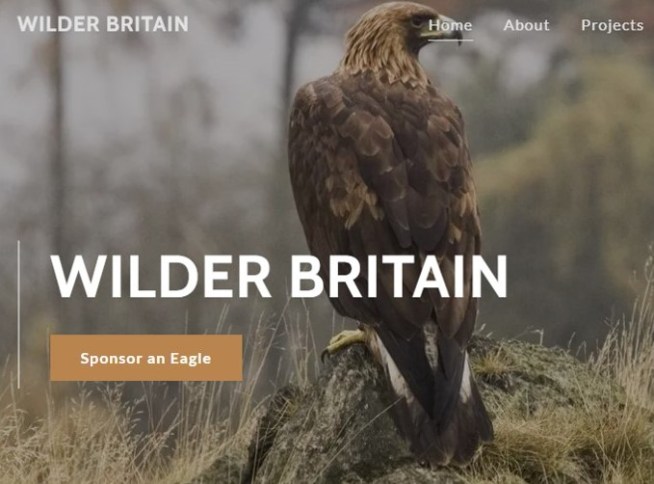
The answers Dr O’Donoghue is reported to have given about his fundraising activities are quite interesting. If he has already raised ‘more than enough’ funds for the project, presumably his ‘sponsor an eagle’ fundraiser on the Wild Britain website’s home page will be removed without further delay:

Although, if, as is reported, he’s ‘still working on’ what the project’s budget might be, how would he know whether he’d raised ‘more than enough’ funding already? It’s all very bizarre.

Our blog reader reported that ‘about twelve people’ attended last night’s public consultation, which doesn’t sound like very many. We’re told that one member of the audience pointed out the low attendance, possibly due to Covid, and suggested that O’Donoghue should consider putting on an online event so more people could attend. O’Donoghue is reported to have agreed with this suggestion and said he would look in to setting up a Zoom meeting.

We’re told that the audience included a few disgruntled farmers and some members of the public who were unhappy that the event wasn’t bi-lingual, with mutterings of ‘colonialism’. Somebody asked how many landowners had agreed to participate in the proposed reintroduction and the answer was ‘two on board at the moment’ but a conviction that more would soon join in and there’d be no shortage of potential release sites.

One member of the audience apparently called him a ‘crackpot’. O’Donoghue is said to have claimed there’d be no Great Bustards in the UK if it wasn’t for him.

A third public consultation event is due to take place in Caernarfon but the date has not yet been released. Hopefully the online event suggested by a participant at last night’s event will also take place.

Many thanks to the blog reader who provided the above information.

You have to feel for the other organisation that’s interested in restoring both eagle species to Wales. The Cardiff University-based Eagle Reintroduction Project Wales has, for the last three years, quietly undertaken scientifically-rigorous feasibility studies for the potential reintroduction of golden and white-tailed eagles to Wales. They’ve already published some of their findings in a peer-reviewed journal, with more to come, and they’ve been developing widespread partnerships, working towards putting forward a well-evidenced and widely endorsed case for a potential reintroduction if their scientific analyses support such a move.

If you’d like to help them please visit their crowdfunder (here), donate if you can or simply spread the word.

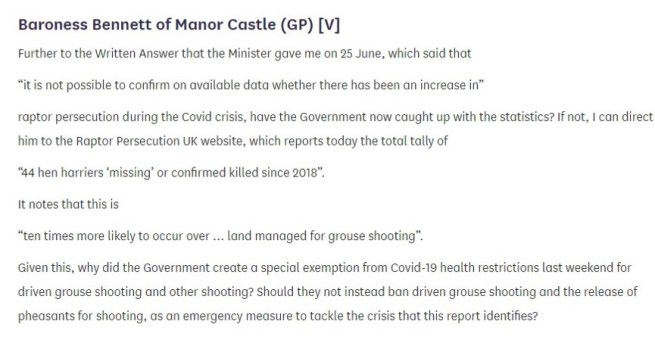
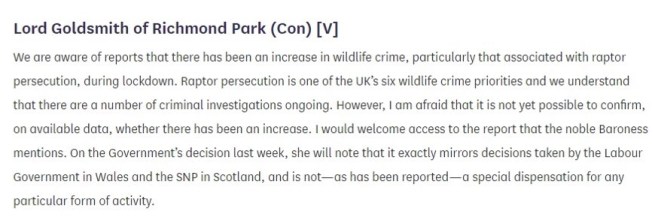
Raptor persecution highlighted in House of Lords

Natalie Bennett is a long-time supporter of the campaign for grouse moor reform and particularly against the illegal killing of birds of prey – she’s been a familiar spokesperson at many Hen Harrier Day events over the last few years.

Now Baroness Bennett of Manor Castle, she is using her position in the House of Lords to keep up the pressure.

Here’s a question she posed to DEFRA Minister The Rt Honourable Lord Zac Goldsmith on 16th September 2020 (text from Hansard):

Here is Zac’s response:

Zac said, “I would welcome access to the report that the noble Baroness mentions“.

Here you go, Zac, the report, documenting the 44 hen harriers that have either vanished in suspicious circumstances or have been confirmed illegally killed, most of them on or close to driven grouse moors, since 1 January 2018, can be read here

But that report is now out of date. The running total now stands at 45 hen harriers that have either vanished in suspicious circumstances or have been confirmed illegally killed, most of them on or close to driven grouse moors, since 1 January 2018 (see here for details).

For completeness, although as a DEFRA Minister you must surely already be aware of this, the peer-reviewed science, based on Natural England’s own data, that demonstrates that 72% of satellite-tagged hen harriers in England were ten times more likely to ‘disappear’ or be illegally killed on or close to British grouse moors, can be read here.

The question now is, what do you intend to do about it?

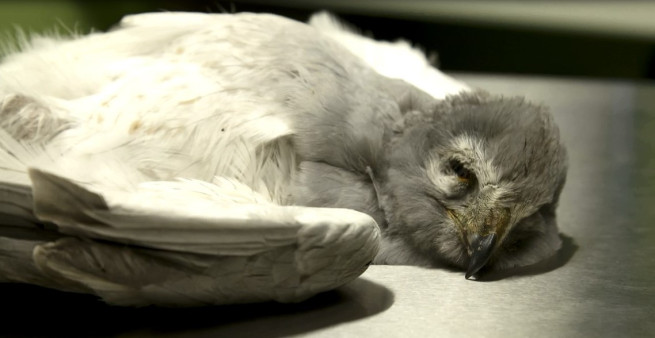
[An illegally killed hen harrier. Photo by Ruth Tingay]

Proposed golden eagle reintroduction in Wales: another public meeting & more controversy

Regular blog readers will know there are currently two ‘competing’ organisations working on a potential reintroduction of golden eagles to Wales.

One of the groups, called the Eagle Reintroduction Wales Project and affiliated with Cardiff University, is taking a well-considered and thoroughly-evidenced approach to evaluate the feasibility of reintroducing golden and white-tailed eagles to Wales. They have an active crowdfunder at the moment to help support their ongoing research (see here)

The other organisation is called Wilder Britain and its sole director, Dr Paul O’Donoghue, appears to be quite good at media soundbites but has been less forthcoming, so far, about the actual details of his grand plan.

Previous blogs that might be informative can be found here, here, here, here, here, and here.

Earlier this month Wilder Britain held the first of several planned public consultation events hosted by Paul O’Donoghue (see here).

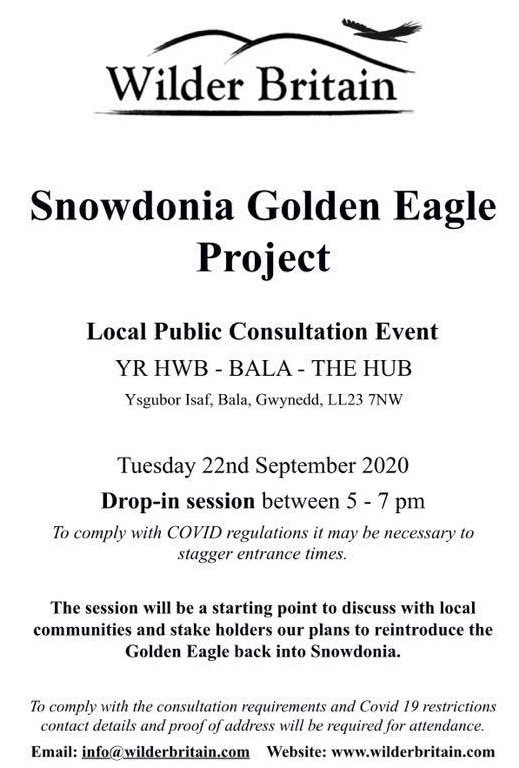
The second such event is due to take place this evening:
This evening’s event comes after some unfavourable commentary about the proposed reintroduction in the media and inside the Senedd, the Welsh Parliament.

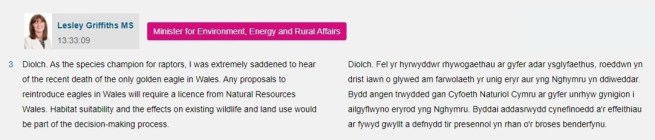
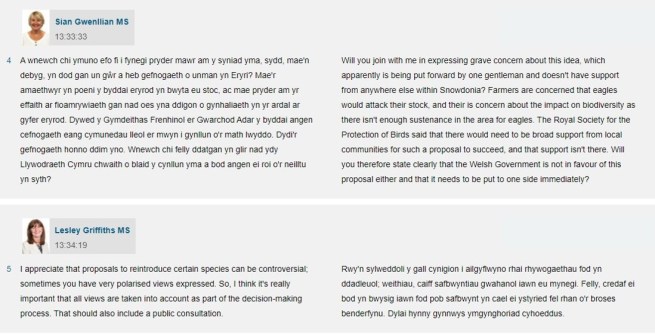
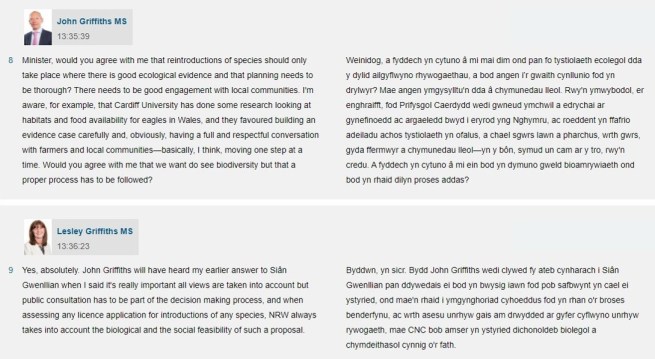
Last week, Welsh politician Sian Gwenllian raised the issue with Lesley Griffiths, the Minister for Environment, Energy and Rural Affairs (and also the Species Champion for Raptors in Wales).

Their conversation went as follows:

This was then followed up by unfavourable press coverage in The Bangor Aye, which read as follows:
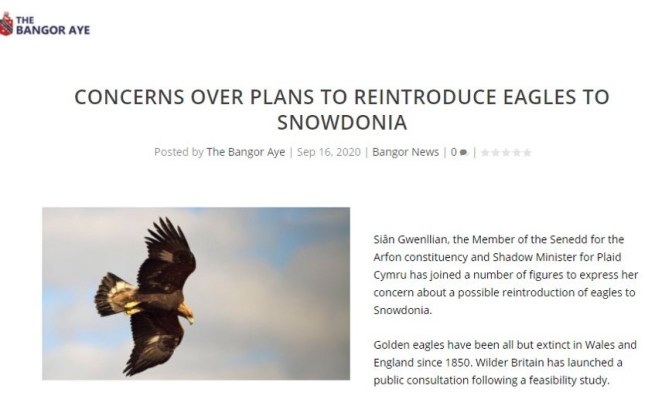
Siân Gwenllian, the Member of the Senedd for the Arfon constituency and Shadow Minister for Plaid Cymru has joined a number of figures to express her concern about a possible reintroduction of eagles to Snowdonia.

Golden eagles have been all but extinct in Wales and England since 1850. Wilder Britain has launched a public consultation following a feasibility study.

In 2019, Cardiff University researchers said Wales was home to “large expanses of potentially suitable eagle habitat” but reintroduction was not likely to happen “for some time”.

Siân Gwenllian MS has said: “There are many reasons to oppose this plan, but the interests of local farmers are undoubtedly a priority.

“I have been in discussions with local farmers, and with the local branch of the FUW, and I share their concerns that these plans could pose an additional danger to local agriculture, an industry which is already facing countless challenges.

“The likely reason that the species disappeared from the area in the first place is insufficient subsistence in the Snowdonia area. This could mean that if reintroduced, local farmers’ lambs would be easy prey for them. That is very worrying. ”

Wilder Britain, the organisation calling for the reintroduction of eagles to Wales, held a public meeting to discuss the plans in Betws-y-Coed in early September.

There is concern that Wilder Britain is interfering with the rigorous research project carried out by the Eagle Reintroduction Wales (ERW) project, led by Cardiff University. That project undertakes careful and detailed research into the environmental and ecological impact of eagle reintroduction.

Siân Gwenllian MS added: “Dr Paul O’Donoghue, director of Wilder Britain, claims that eagles in Snowdonia were culled, but there is ground to believe that their disappearance was due to lack of subsistence for the species.

“This could be a major threat to the area’s wildlife and agricultural stock. We know that eagles can carry the weight of other animals, putting Snowdonia’s biodiversity at risk. ”

Siân Gwenllian raised the issue in a plenary session of the Senedd today with Lesley Griffiths MS, Minister for the Environment, Energy and Rural Affairs. Ms Gwenllian asked the minister to ‘state clearly that the Welsh Government will not support these recommendations, and that they need to be put aside as soon as possible.’

Lesley Griffiths MS responded by saying that she appreciated that such proposals were ‘controversial’ and that there were polarised views’, and she noted that all points of view on the issue needed to be considered.

Siân Gwenllian MS said: “It is important that we listen to the voices of farmers who are expressing great concern about this scheme.

“I appreciate RSPB Cymru’s statement that any proposed reintroduction of the species would have to come following thorough research, local consultation, and widespread support from local communities.

“According to my conversations with the FUW, there is reason to believe that that local support does not exist.”

ENDS

It seems that Sian Gwenllian is not a big fan of any proposed eagle reintroduction as she seems to think that golden eagles ‘would put Snowdonia’s biodiversity at risk‘. It’s probably fair to say, based on that statement alone, that Ms Gwenllian’s comprehension of what biodiversity actually is is quite limited, but that’s not necessarily an unsurmountable problem that couldn’t be addressed by some gentle education.

However, it appears that Ms Gwenllian is using the approach of Wilder Britain as reason enough to dismiss any thought of a reintroduction. That was always the danger of having two conflicting groups taking different approaches, and is what we feared might happen as a result.

Thankfully, Environment Minister Lesley Griffiths seems a lot better informed and has a sensible approach to how a proposed reintroduction will be assessed by the Government. In that sense, the Cardiff University-based Eagle Reintroduction Wales Project looks set to tick all the right boxes in terms of its background research, ecological feasibility studies, partnership development and planned public consultations.

Incidentally, in mid-August an FoI was submitted to the Welsh Government’s statutory nature conservation agency, Natural Resources Wales, to find out what correspondence had been received from Wilder Britain about a proposed eagle reintroduction. NRW’s response is now overdue.

Channel 4 News re-visits the grouse moors of the North York Moors National Park

The illegal killing of birds of prey on the grouse moors of North Yorkshire was firmly back in the news headlines this evening with another excellent piece fronted by Alex Thomson of Channel 4 News.

You may remember an earlier piece from Alex back in May this year (here) which featured various police investigations in Nidderdale AONB and the discovery of five dead buzzards stuffed into a hole on a Bransdale grouse moor in the North York Moors National Park during lockdown – four were later confirmed to have been shot (here).

This time the TV crew filmed a grouse-shooting party near Goathland in the North York Moors, where earlier this year film footage emerged purporting to show an individual killing a trapped goshawk on the Queen’s grouse moor in May (see here and here).

In this latest film there’s some hilarious footage of various members of the shooting party denying all knowledge of the alleged goshawk incident and providing a display of arrogance that the general public doesn’t often get to see, usually hidden as it is behind carefully-worded propaganda pieces.

Speaking of the alleged goshawk incident, Alex said,

The police told us, a gamekeeper will soon be prosecuted for killing the goshawk“.

The Duchy of Lancaster says if there is a successful prosecution, the sporting tenant, BH Sporting, may lose its lease.

Interesting times.

Here’s the six minute video that appeared on Channel 4 News this evening:

UPDATE 24th September 2020: Channel 4 bats away shooting industry hysteria (here)

Police appeal for information following reports of raptor persecution in Dorset

Press release from Dorset Police (21 September 2020)

Appeal for information following reports of raptor persecution in North and East Dorset

Dorset Police has been working alongside Natural England and the RSPB following two raptor persecution incidents in North and East Dorset.

Raptor persecution – which is one of the UK wildlife crime priorities and involves birds of prey – includes poisoning, shooting, trapping, habitat destruction and nest destruction or disturbance.

The laying of poisoned bait is illegal. All birds are protected by law in the UK, with the Wildlife & Countryside Act 1981 being the primary legislation protecting the wildlife and their environment.

In April 2020 it was reported that several buzzards were found dead within close proximity to each other in the Ashmore Wood area near Blandford. These birds were sent for testing and enquiries remain ongoing.

The birds were found near to public access routes on land owned by more than one landowner.

In August 2020 officers received a report from an animal rescue centre that a number of dead and sick animals from the Verwood area were bought in to them. The animals included buzzards, an owl and a rabbit. These animals were all sent for testing.

Two of the buzzards involved in the Verwood incident survived and have been tended back to health by staff at the rescue centre.

[Photos via Dorset Police]


Police Constable Rob Hammond, of North Dorset police, said: “It is very concerning to see these harrowing incidents occurring in our area and an investigation is underway into each of the reports.

I would like to warn members of the public that this poison could be harmful to anything or anyone that comes into contact with it.

There is a real danger that persecution can affect any kind of bird. More common species such as kites, which have recently returned to our area and are making good progress, and buzzards can come to harm. Tragically it will also have an impact on rarer birds of prey such as ospreys, which have recently been reintroduced to the Poole harbour area and roam for miles, and hen harriers, which are almost extinct in this country.

Always be careful if you see a dead bird of prey or a group of them together – do not touch them, especially if it can be clearly seen that they have white or blue matter in any open wound.”

If you come across a dead raptor, or group of dead raptors, please report this to Dorset Police by taking a photograph and marking the location of the incident using a grid reference or an app, such as What3words. Please also report this to the Wildlife Incident Investigation Scheme (WIIS) hotline on 0800 321600.

The RSPB can be contacted for advice or information, but the matter must be reported to Dorset Police and the WIIS for an investigation to be carried out.

Anyone with information is asked to contact Dorset Police at http://www.dorset.police.uk, via email 101@dorset.pnn.police.uk or by calling 101, quoting occurrence number 55200052754 for the Ashmore Wood incident and 55200131382 for the Verwood incident. Alternatively, to stay 100 per cent anonymous, contact the independent charity Crimestoppers online at Crimestoppers-uk.org or call Freephone 0800 555 111.

ENDS

Natural England denies cocking up police investigation at Whernside hen harrier site

Earlier this month the RSPB published a blog (here) detailing an incident that was witnessed by a Natural England fieldworker at a hen harrier nest site in Whernside, Cumbria during this year’s breeding season and Natural England’s subsequent refusal to publicise the details.

The alleged incident involved an armed man sitting near a tethered eagle owl that had been placed within the territory of a pair of breeding hen harriers in an area where controversial brood meddling was taking place.

Here’s what the RSPB wrote about the incident:

‘…..a Natural England fieldworker was monitoring a hen harrier nest on moorland near Whernside, Cumbria, when he saw a man wearing camouflage carrying a firearm and a live bird of prey, believed to be an eagle owl about 300m from the hen harrier nesting area. He tethered the bird and sat a short distance away with his gun. In the circumstances there seems little doubt the intention was to draw in raptors, presumably the hen harriers, to shoot them. The use of a tethered live bird as a decoy to kill or take a wild bird is in itself illegal, but a method that seems to be increasingly used for targeting raptors. This was no doubt a highly stressful situation, we understand the fieldworker took some video footage and made himself visible. This eventually had the desired effect, and the suspect, realising he was under observation, left. It was reported to the police but due to evidential issues around establishing the identity of the suspect, it was not possible to take the matter forward to court. The RSPB would like to place on record our thanks to Cumbria Constabulary and the CPS for their determined efforts to progress this investigation. We firmly consider that this incident and the video should now be put in the public domain’.

A few days later we published a blog about an allegation we’d heard from a number of sources, that the police investigation couldn’t progress because a Natural England staff member had contravened the Police & Criminal Evidence Act by phoning up the alleged gunman and asking whether he’d been present at the alleged crime scene (see here).

Two days later, Natural England published a blog (here), written by Dave Slater, Natural England’s Director for Wildlife Licensing and Enforcement Cases, in which he claimed to want to ‘clarify Natural England’s position on raptor persecution and recent media coverage’.

The Natural England blog (here) is well worth a read and when you’ve done that, have a look at Mark Avery’s dissection of it (here) in which Natural England’s contortions are laid bare.

The one part of the NE blog that Mark didn’t address was this bit, which looks like a response to the allegations made on RPUK that Natural England had cocked up the police investigation at that hen harrier site at Whernside:

The statement of interest here is the middle paragraph. Natural England reckons the failed police investigation ‘was not related to anything our field worker had done‘ but NE carefully avoided mentioning the allegation that an NE staff member had phoned up the suspect and had thus compromised the police investigation by breaching the requirements of the Police and Criminal Evidence Act.

Is Natural England denying that a staff member phoned up the suspect? If so, it would be useful for Natural England to put that in writing.

It would also be useful if the Crown Prosecution Service (CPS) and/or Cumbria Police released the legal advice that was given by the CPS to Cumbria Police on this particular case.

It would also be helpful if Natural England would publish the video evidence of an armed man, sitting with a tethered eagle owl, in the territory of a pair of breeding hen harriers at one of this year’s brood meddling locations. It’s not like there’s anything to hide, is there?

In related news, if you want further evidence of Natural England’s absolute ineptitude when it comes to the conservation of birds, have a read of this (here), published today by Mark Avery. It’s shocking.

UPDATE 20 January 2021: Confirmation that hen harrier brood meddling estate was under police investigation (here)