
In a typically desperate attempt to undermine and deflect from the stark findings published by the RSPB in its excellent Patterns of Persecution report earlier this week, the shooting industry has apparently rolled out its genius division to try to pick apart the statistics presented in the report.
The following statement has appeared on various social media pages in recent days, apparently attributed to Scotland’s Regional Moorland Groups but bearing a striking similarity to the official statement published by Scottish Land & Estates on its website. As ever, the lines are blurred between the so-called ‘grassroots’ organisations and those who present themselves as official representatives of the industry:
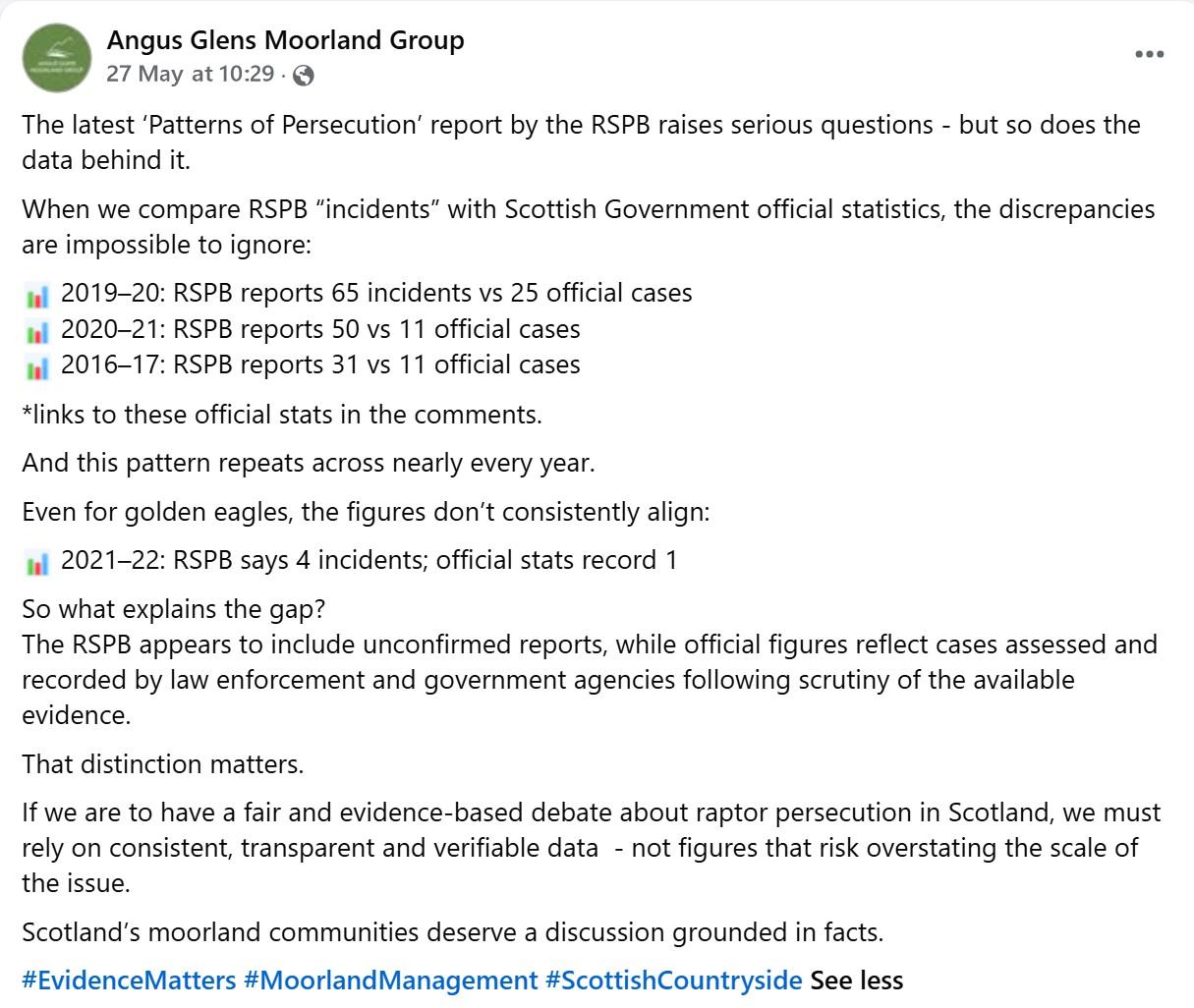
On the face of it, the RSPB data presented are portrayed as being misleading – this is exactly what the shooting industry wants you to believe, but as ever, it’s always worth a closer look…
It appears that whoever did this ‘analysis’ found what they call the “official” figures in the raptor persecution section of the Scottish Government’s latest report, Wildlife Crime in Scotland, published in February this year, to compare with the RSPB’s data.
This government report states that there were 117 recorded raptor persecution offences in Scotland over the 6-year period 2019-20 to 2024-25:
25 recorded offences in 2019-20;
11 recorded offences in 2020-21;
24 recorded offences in 2021-22;
22 recorded offences in 2022-23;
14 recorded offences in 2023-4 ;
21 recorded offences in 2024-25.
But wait a minute…
If you look at the Ministerial foreword to the Scottish Government’s 2020 wildlife crime report it clearly says that it uses “recorded statistical data from the 2019-2020 financial year”. In other words, 6 April 2019 – 5 April 2020.
The 2021 report makes a similar statement about the data used in that report being based on the financial year, and although I’ve not been able to find similar statements in the Scottish Government’s subsequent reports, it’s reasonable to assume they follow the same method because they’d have said if the method had changed.
The RSPB didn’t include the original source data in its Patterns of Persecution report, and nor did it mention annual figures, so it’s not clear to me where SLE/the Scottish Regional Moorland Groups found the RSPB figures they cite for 2019-2020 (65 incidents), 2020-2021 (50 incidents), and 2016-2017 (31 incidents), but perhaps these stats are from previous RSPB annual BirdCrime reports? If so, why present them now as a critique of the RSPB’s latest report, Patterns of Persecution?
Anyway, regardless of that, the best source to look at for these figures is the RSPB’s online Bird of Prey Persecution Map Hub which currently details confirmed bird of prey persecution incidents in the UK from 2007-2024.
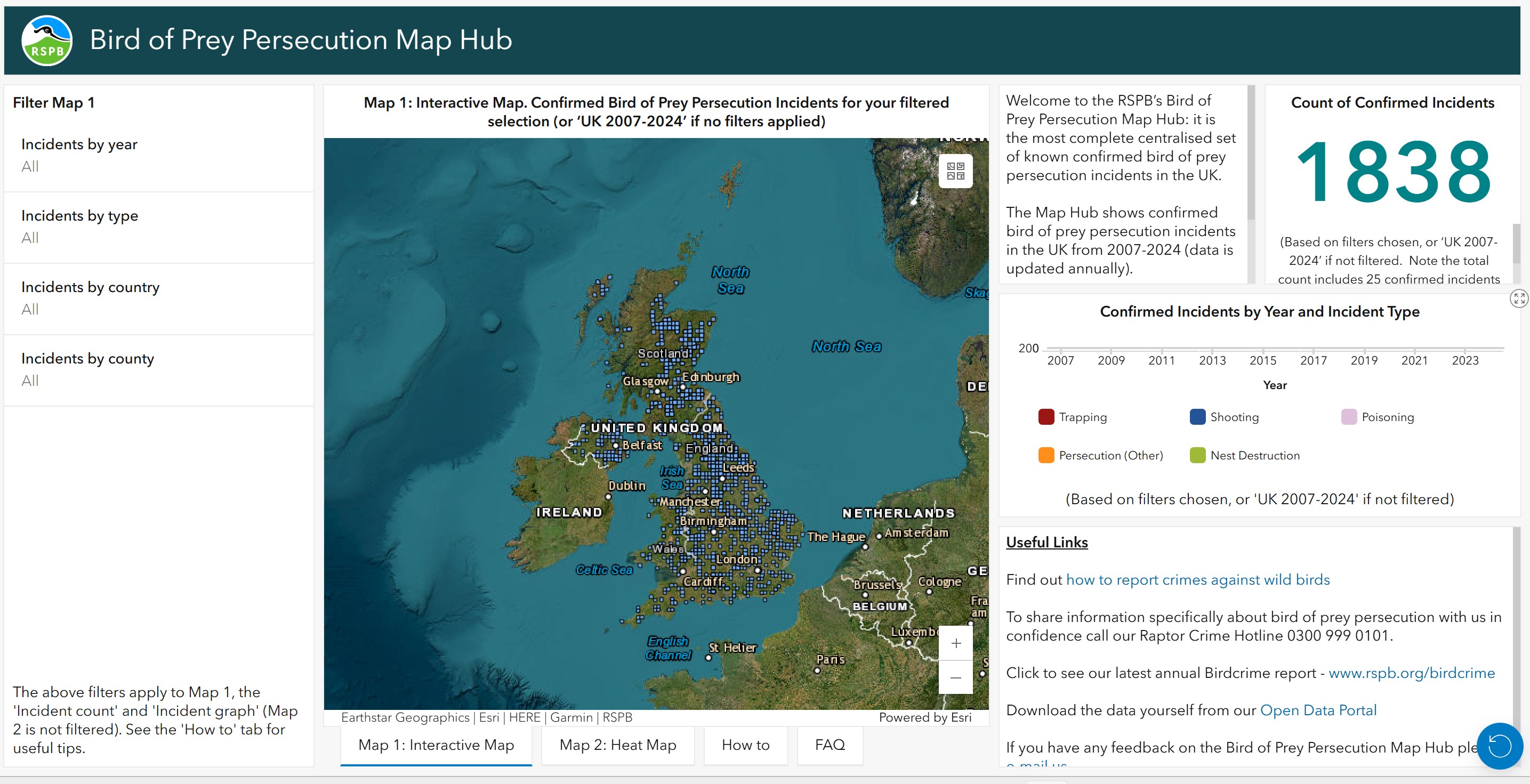
If you use the filters on this persecution map hub, you can select a country and/or years, so I looked at ‘Scotland’ and ‘2019’ and ‘2020’. That came up with a count of 32 and 33 confirmed incidents, respectively. Add them together and you get 65 confirmed incidents, the same figure quoted by SLE/the Scottish Regional Moorland Groups, although SLE and the SRMG are presenting the data as only covering one year (2019-2020), not two separate years worth of data (2019 AND 2020).
Then I looked at ‘2020’ and ‘2021’, which showed 33 and 17 confirmed incidents respectively, which when combined makes 50 confirmed incidents, again the same figure cited by SLE and the Scottish Regional Moorland Groups.
And a search for ‘2016’ and ‘2017’ gave 14 and 17 confirmed incidents respectively, which when combined gives 31 confirmed incidents, again, the same number cited by SLE and the Scottish Regional Moorland Groups.
Bingo.
So whoever did this ‘analysis’ for SLE and the Scottish Regional Moorland Groups has compared two full calendar years worth of RSPB data, with one financial year’s worth of data from the Scottish Government. Surprise, surprise, the numbers are quite different! And not because the RSPB are trying to mislead anyone, it’s entirely down to SLE/Scottish Regional Moorland Groups misinterpretation of the data and not having an understanding of how those data are collected and subsequently reported.
As those who came up with this completely irrelevant, flawed comparison said in the Regional Moorland Group’s Facebook post, “the discrepancies are impossible to ignore”. Aren’t they just!
Can we now expect a full retraction and apology from SLE and the Scottish Regional Moorland Groups for their error? No, thought not.


To compare the Regional Moorland Groups to genuine “grassroots” community groups is like comparing the stuffed foxes, curlews, grouse and stoat taxidermy specimens that they cart around with them to real living animals.
And whatever view you might take of the RSPB as an entire organisation (I am not a member, but do chip in to RSPB Investigations fund), they at least have a governing structure which is known and accounts that are published, and a management hierarchy that is identifiable and answerable to criticism as are their scientists and researchers. On the other hand – the identities of the puppet-masters who pump their money and channel other people’s money into the Regional Moorland Groups* – are currently still officially unknown and unaccountable to scrutiny!
They are hiding behind their gamekeepers – as ever, who not only do all the “necessary work” on their land, but who are now also travelling around with stuffed animals doing the PR for them, dressed up and sweating – front & centre of the gazebos!
*which must cost a fair bit to run, just looking at their paraphernalia, and the merchandise they hand out to the kids – never mind the wages of their employees/co-ordinators
Shocked, shocked I am…..
Great detective work, Ruth, thank you!
A shooting industry astroturf operation mangles figures to suit its purposes?
Well, that’s a new one on me…
Next they’ll be having some ex-cricketer, who just happens to own a grouse shooting moor, pop up to tell us how shooting is actually good for wildlife.