
Press release from the RSPB (27 May 2026)
UK LEGISLATION CONTINUES TO FAIL BIRDS OF PREY AS WIDESPREAD ILLEGAL KILLING CONTINUES
- 921 confirmed incidents of bird of prey persecution were recorded in the UK from 2015-2024, involving 18 protected species. Shockingly, these figures represent only a fraction of the true number of these crimes.
- 55% of all confirmed incidents (2015-2024) were associated with land managed for gamebird shooting with two thirds of individuals convicted linked to the gamebird shooting industry.
- These latest findings prompt renewed calls for tougher regulation of the gamebird industry through the introduction of licensing for all gamebird shooting in the UK.
Although all birds of prey have been protected under UK laws for over 60 years, a new RSPB report, Patterns of Persecution reveals that these protected species are being illegally targeted and killed across the UK. Between 2015 and 2024, 921 confirmed incidents were recorded across the UK. Of these, 48% were shooting related.
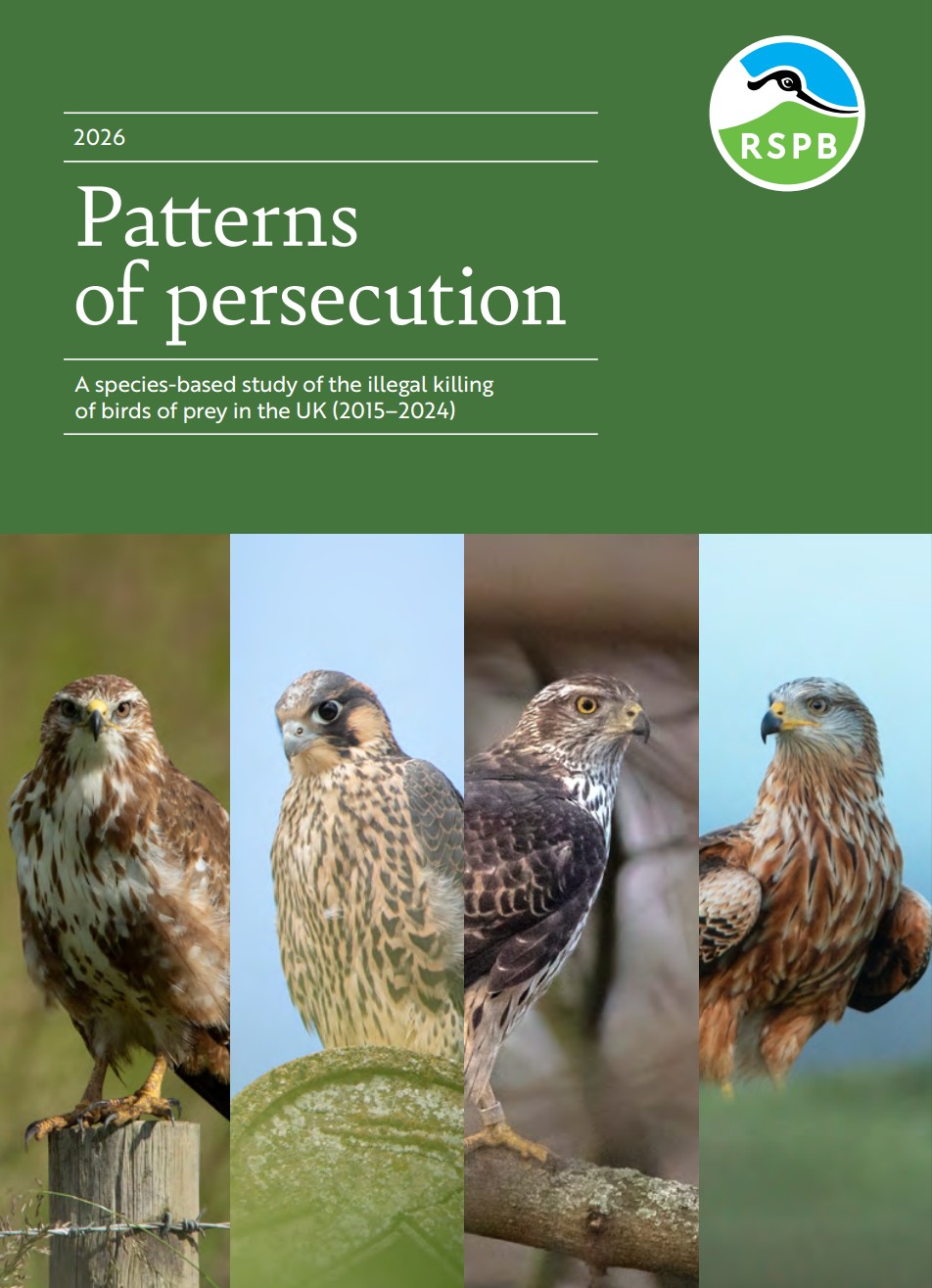
In this ten-year period 18 protected bird of prey species, including many reintroduced and recovering species of conservation concern, fell victim to these crimes. Buzzards were the hardest hit with 319 confirmed incidents recorded, followed by Red Kites (157 confirmed incidents) and Peregrines (97 confirmed incidents).
Concerningly, as these crimes take place predominantly in remote and often inaccessible areas of the countryside, not all are detected. These figures therefore represent only the tip of the iceberg.
Evidence, including police investigations, intelligence reports, eye-witness accounts and covert footage have shown that bird of prey persecution is significantly linked to the gamebird shooting industry. 55% of confirmed incidents (2015-2024) were linked to land managed for gamebird shooting (21% grouse shooting, 28% pheasant and/or partridge shooting, and 6% mixed gamebird shooting).
On some shooting estates birds of prey are being illegally shot, trapped or poisoned, nests and eggs destroyed, and chicks killed before they have fledged the nest. These often-brutal crimes are committed in an attempt to prevent any perceived threat to gamebird stocks, in an effort to maximise the number of gamebirds available to be shot.
Despite hundreds of confirmed incidents of bird of prey persecution being recorded in recent years, if there is no substantive evidence which links a person to the crime these incidents go unchallenged and unpunished. Between 2015 and 2024, despite hundreds of incidents being recorded, only 24 individuals were convicted of bird of prey persecution-related offences. Two thirds were associated with the gamebird industry, and more than half were working as gamekeepers at the time.
This latest report shows that these crimes continue to detrimentally impact Hen Harrier recovery in England and Scotland. This iconic and threatened Red-listed species has been persecuted for decades, resulting in their population being suppressed to a fraction of their natural capacity. Between 2015 and 2024, 49 confirmed Hen Harrier persecution incidents were recorded in the UK. The majority of these incidents took place on or near land managed for grouse shooting. In the same ten-years 100 satellite tagged Hen Harriers disappeared in suspicious circumstances on or near grouse moors. They were suspected to have been illegally killed.
To provide a meaningful deterrent and effectively challenge the illegal killing of birds of prey, the RSPB is supporting the introduction of a licensing scheme for all gamebird shooting in the UK. Under a civil burden of proof, licences could be suspended or revoked where evidence indicates bird of prey persecution has occurred on licensed land. The system would promote best practice, penalising only those who break the law while respecting the rights of responsible estates. Under this legislation, birds of prey would have the effective protection they desperately need.
In 2024, Scotland took significant steps, introducing mandatory licensing of grouse shooting under the Wildlife Management and Muirburn (Scotland) Act 2024. Now it is time for these protections to be extended across the UK, for all gamebirds shooting.
James Robinson, the RSPB’s chief operating officer: “As this report shows, existing UK laws continue to fail to protect our magnificent birds of prey. Without a meaningful deterrent, these crimes will continue. eagles will be poisoned, Hen Harriers shot and Buzzards beaten to death in traps. All of these crimes are unacceptable.
“Frustratingly, under existing laws, those committing these crimes have been able to do so with little fear of retribution. This needs to change.
“Regulation in the form of a licensing system is the most appropriate and fair way to achieve this, providing an effective and meaningful deterrent to those willing to commit these crimes and finally give these incredible species the protection they urgently need.”
If you notice a dead or injured bird of prey in suspicious circumstances, call the police on 101 and fill in the RSPB’s online reporting form: https://www.rspb.org.uk/birds-and-wildlife/advice/wild-bird-crime-report-form/
If you have information about anyone killing birds of prey which you wish to report anonymously, call the RSPB’s confidential Raptor Crime Hotline on 0300 999 0101.
ENDS
The new RSPB report and its appendices can be downloaded here:
UPDATE 29 May 2026: Shooting industry’s flawed analysis of RSPB raptor persecution data (here)


I see that the predictable response has come first from BASC with the headline ” Wildlife crime needs enforcement, not gamebird licensing” Pretending that this is a solution, it isn’t, however much enforcement there is, and yes we need far more of it, it still won’t solve the problem. Wildlife crime is committed when the culprit (s) are as sure as they can be there are no witnesses. Witness free wildlife crime is the norm including in this report, such crimes are very very difficult to impossible to show who did it usually to the point of nobody being charged or appearing in court ( that currently is the exception) BASC and their membership and supporters well know this, as do all the other game lobby groups and that it seems is the way they want it to stay, with their crocodile tears and “zero tolerance” BS. Zero Tolerance of getting caught more like. As long as the status quo remains they and others will claim, however preposterous the knowledgeable know it is, “it’s a few bad apples” or “most shoots and employees obey the law.” I’ve nearly 60 years birding experience in the uplands of England, and my experience says not all but the majority ” are at it” to some degree. It looked in the eighties when shoot values were much lower and shooting briefly less popular that it was persecution reducing but with the increase in popularity and increasing shoot values that all changed for the far worse and BASC must know this.
Licensing of shoots, estates and release of alien game birds to my mind is the only option short of a ban that will go a long way to solve the problem with of course the civil burden of proof. Despite what BASC claim” Catch the criminals. Don’t punish the countryside.” a licensing system will punish nobody but the guilty. The legitimate and law abiding have absolutely nothing to fear, for them nothing will change bar the cost of the licence.
Experience says anything else is trying “pissing into the wind.” if we truly want to bring all shooting into being law abiding with an end to routine, yes it is routine, persecution of our protected birds and mammals.
I’m struggling to think of what BASC have ever done pro-actively on raptor persecution. They have a fair bit of money and they recently gave £40k to the NWCU to support teaching police about poaching.
This BASC point about “catching the criminals, not punishing the countryside” is quite amusing. In the (very real) battle to stop rural thefts and poaching and other bad stuff usually done by “outsiders” , quite a few rural areas have “Farmwatch” or similar schemes of police and locals partnering up. One aspect of this involves in my experience “police approved” farmers, keepers, landowners & good old boys parking / hiding discreetly at strategic intersections of minor roads overnight. They notice a car travelling through at daft o’clock that they(!) judge to be suspicious – they radio down to the police car that is patrolling around where these minor roads meet the A roads. The police pull the “dodgy” car, and basically do a Stop & Account or a Stop & Search. It has been done to me twice over about 20yrs. I don’t particularly mind but my point is that I have never heard anything other than the heartiest support from the likes of BASC on these initiatives which have screamingly obvious issues. The difference in these cases: who the suspected offenders are, where they come from and who they work for…and who is the person pointing the finger? A birder, an RSPB, a “townie” (all outsiders) – or one of the locals / good old boys.
I am about half way through the RSPB’s report on illegal persecution and it makes for sobering reading as well as making my blood pressure rise with each page read; I don’t think so far any convicted keepers have actually been jailed and I sincerely think that unless these people are actually incarcerated, then there will never be any real reason for them to stop the killing, either that or ban the “sport” outright; j
Just a thought, the actual hunting of foxes was banned in 2004 with foxhunters having to resort to trail hunting (whether successfully or not is for another day), but the only creatures harmed were the foxes, but here we have the shooting of birds which involves the widespread killing of many other species, including foxes, yet no ban, why can’t the shooters adapt and stick to clays?