
The ‘tip of the iceberg’ is a phrase often used by researchers and conservationists when describing the scale and extent of illegal raptor persecution in the UK, meaning that what is known or can be seen is only a small fraction of what is actually happening under the surface.
Killing birds of prey is an offence in the UK, and has been for over 70 years, so the people committing these crimes will often go to great lengths to hide the evidence (e.g. here), which is quite easy to do if the offender is a gamekeeper working under the cover of darkness on a privately-owned estate in a remote area with few witnesses around.
Satellite tagging has done much to help us understand the scale of these crimes in recent years, particularly on grouse moors where Golden Eagles (here) and Hen Harriers (here and here) are targeted, and now new modelling research is about to blow the lid on the whole sorry story.
If you thought that 149 dead or ‘missing’ Hen Harriers in the UK since 2018 was shocking, most of them on or close to grouse moors, it’s clear we don’t know the half of it. Prosecutions are rare, as demonstrated earlier this year when Yorkshire Dales gamekeeper Racster Dingwall became the first person ever convicted in England for Hen Harrier persecution, despite hundreds of confirmed persecution incidents recorded since the 1980s.
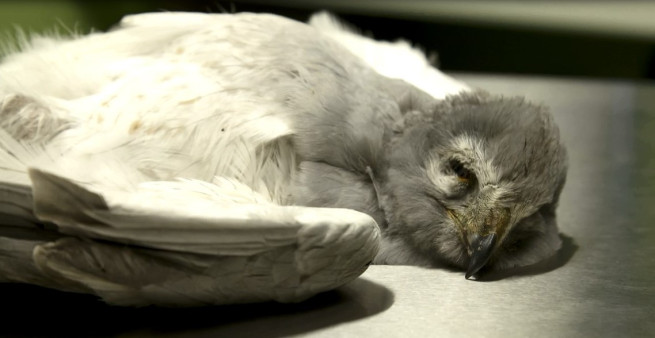
At a recent British Ornithologists’ Union (BOU) conference earlier this year, new research was presented suggesting that there are around 400 Hen Harrier ‘persecution events’ across different life stages (e.g. nest, adult, 1yr and 2yr old birds) and that only 0.5 – 10% are detected.
This research was presented as a poster rather than a spoken presentation, and has not yet been published in a peer-reviewed scientific journal, so caveats are needed at this stage but it is anticipated that the publication process is underway.
The Hen Harrier research is part of a wider PhD study, also examining ‘tip of the iceberg’ modelling scenarios for Golden Eagles, Peregrine Falcons and Red Kites – species that are long known to be the victims of illegal persecution on UK grouse moors.
The research is being undertaken at the Fitzpatrick Institute of African Ornithology at the University of Capetown, South Africa, as part of the research portfolio of Associate Professor Arjun Amar, well known for his studies linking the illegal persecution of raptors to driven grouse shooting in the UK, including the detrimental effects this can have at a population scale, particularly on Red Kites, Peregrines and Hen Harriers.
The research abstract submitted for the conference is as follows:
TIP OF THE ICEBERG: ESTIMATING THE TRUE EXTENT OF RAPTOR PERSECUTION ASSOCIATED WITH GROUSE SHOOTING
Arjun Amar, Koi Pillay, Rob Thomson, Steven Ewing.
Despite decades of legal protection, raptors continue to be persecuted in the UK, particularly in the uplands where red grouse shooting conflicts with raptor conservation. Detecting persecution associated with this conflict is challenging due to its illegality and the remoteness of grouse moors, meaning official crime records likely represent only the ‘tip of the iceberg,’ with many incidents remaining hidden as ‘dark figures.’ Here, we attempt to estimate the persecution levels and population data for Hen Harriers, Peregrine Falcons, Red Kites, and Golden Eagles. We then compare these estimates to recorded crime figures for the same species, period, and regions. Our findings suggest the actual scale of persecution is substantially greater than detected cases, underscoring the importance of recognising and accounting for ‘dark figures’ to avoid underestimating the severity of this threat to raptor populations.
I’m looking forward to seeing this research published in due course.


Front page outright lies from the Daily Mosley today. No evidence, no examples, just unsupported claims from all the usual suspects (MA etc). Check out Guy Shrubsole on LBC at about 11:50 this morning.
Available for the next six days….
https://www.globalplayer.com/catchup/lbc/uk/46vyD81/
well it’s hardly surprising – the moors enormous, the keepers aggressive, it’s a miracle and a huge credit to RSPB that anyone is ever caught.
But don’t forget that in 2012 persecution came within just one pair of Hen Harrier extinction in England – and that sole pair was protected by Kielder Forest