Ross-shire Massacre: Police Scotland, see what you’ve done?

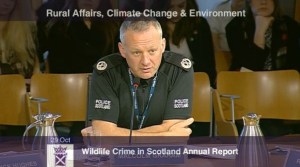
Last Friday, Police Scotland put out an idiotic press release stating that they could now CONFIRM that the 22 raptors illegally poisoned in the Ross-shire Massacre seven months ago “were most likely not deliberately targeted“. It was an astonishing statement, not least because they had ruled out criminal intent before they’d even got a suspect, and despite the fact that those birds are known to have been killed with a banned poison. We blogged about it here and we’ll be blogging further on this shortly, following the grilling that senior police officers received during yesterday’s Scot Gov RACCE Committee hearing (see here).

Following that Police Scotland press statement, Tim (Kim) Baynes of Scottish Land & Estates wrote a letter to the Herald complaining about media speculation and stating (falsely) that raptor persecution crimes had declined (see here).

In response to that letter, yesterday Duncan Orr-Ewing of RSPB Scotland set out the facts about the increase in raptor persecution crimes (see here).

Today, another letter has appeared in the Herald, in response to Duncan Orr-Ewing’s letter. This letter was tweeted by the SGA this morning, with the following statement: “Herald letter from Ayrshire reader on the legal concept of innocent until proven guilty”.

Here’s the letter:

Thursday 30 October 2014

RSPB has its own agenda

DUNCAN Orr-Ewing, Head of Species and Land Management for RSPB Scotland, does not let the facts get in the way of his argument (Letters, October 29).

I would remind Mr Orr-Ewing that he stated in this very journal that a crime had been committed with the poisoning of raptors on the Black Isle and he then proceeded to promote his agenda against gamekeepers and shooting estates. Police Scotland has stated that no crime was committed, but that has not stopped RSPB advocating regulation which would allow it to attempt to criminalise legal businesses.

Rather than being a positive, the involvement of RSPB in police investigations creates a massive question about impartiality. This underlines the danger of allowing bodies with their own agendas to be involved in criminal investigations. They appear willing to ignore the fact that in this country we are all innocent until proven guilty.

David Stubley,

22 Templeton Crescent, Prestwick.

So Mr Stubley thinks that the Ross-shire Massacre was not a crime. This is precisely why Police Scotland should never have issued their press statement. Although their press statement did say: “The criminal investigation into their deaths is still ongoing”, those seeking to diminish this crime as something ‘accidental’ have been given the perfect fodder to perpetuate their ignorant claims which many average members of the public will likely believe.

As for the SGA re-tweeting this letter, with no mention that the Ross-shire Massacre was indeed a crime, well that speaks volumes, doesn’t it?

Mr Stubley is no stranger to muddying the water about the Ross-shire Massacre. In May he wrote another letter to the Herald about this crime:

Wednesday 21 May 2014

Falling prey to an accident?

I NOTE that immediately after the discovery of several dead raptors on the Black Isle many people jumped to the conclusion that they had been poisoned by a gamekeeper, even though there was not a shred of evidence to back up this assumption.

Several weeks later and despite a large reward being offered no-one has been charged. I have a suggestion for a possible cause of the poisoning.

Those responsible for the reintro­duction of red kites and other birds set up feeding sites where the birds know they will be fed and therefore congregate in large numbers. The birds are fed on agricultural beasts which have been killed, roadkill or, during the shooting season, gamebirds which cannot be sold. Could one of those food sources have been exposed to poison by accident? This would surely explain the concentration of dead birds and the lack of anyone to blame.

David Stubley,

22 Templeton Crescent, Prestwick.

We wonder if Mr Stubley is a member of the SGA? Just sayin’……

Police Scotland’s media strategy about this high profile crime has been appalling. They complained yesterday during the RACCE Committee hearing that media speculation hadn’t been helpful. They could easily have alleviated that speculation by publishing clear, timely and precise information about this crime, without jeopardising their criminal investigation.

More on this shortly.

Killing with impunity: Birdcrime 2013 published

Birdcrime 2013The RSPB has published its latest annual report on crimes against birds in the UK in 2013.

Their press release here.

The killing goes on, with impunity.

76 individual birds & other animals were confirmed illegally poisoned in 2013. This is more than double the figure from 2012 (29 confirmed victims).

Poisoning victims in 2013 included 30 buzzards, 20 red kites, 1 golden eagle and 1 white-tailed eagle.

68 confirmed incidents involved the shooting or destruction of birds of prey. Victims included two hen harriers, two marsh harriers and 5 peregrines.

These are just the confirmed incidents. A total of 338 incidents were reported to the RSPB in 2013, with North Yorkshire once again being the worst location. There’s also a worrying number of incidents from Powys in South Wales, seemingly relating to poisoned baits.

Birdcrime 2013 is a thoroughly depressing read. The RSPB calls on the shooting industry, again, to clean up its act. Judging by the contents of this report, that’s a seemingly futile request.

Well done and thanks to the RSPB for not only compiling these thorough statistics but importantly, for sharing them in the public domain.

Download Birdcrime 2013: Birdcrime 2013

Hen harrier Bowland Betty, found shot dead on a grouse moor in North Yorkshire. (Photo by Natural England).

Bowland Betty

Ross-shire Massacre: SLE complains about media speculation

A letter has been published in the Herald today, penned by Tim (Kim) Baynes of Scottish Land and Estates:

Speculation around bird of prey deaths has become more hysterical

The announcement by Police Scotland that the 20 raptors found poisoned in March near Conon Bridge were “not deliberately targeted” raises number of serious matters.

Despite the trend of crimes against birds of prey having gone down in the last 3-5 years, particularly by poisoning, the speculation around each case has become more hysterical; the RSPB even tried to link the Conon Bridge incident to grouse moor management. There are now websites and bloggers and organisations involved in police investigations who are not slow to feed information to the media and promote speculation.

This speculation is having a corrosive knock-on effect on many other aspects of land management, severely straining the relationship between land managers and conservation bodies.

This also brings into focus the new measure whereby General Licences to control pest birds may be withdrawn where there is only a suspicion of wildlife crime, rather than it being proven in court.

Any deliberate killing of a bird of prey is illegal and is to be condemned but it is not in anyone’s interests that various activists and organisations can leap to conclusions without any evidence to support their point of view which in turn is afforded political and media credence. It would be a major step forward if government and other interested organisations were to take a lead in ensuring that reckless speculation should be discouraged. If everyone sticks to the facts and works more constructively together then the interests of conservation will be better served.

Tim Baynes,

Scottish Moorland Group,

Scottish Land & Estates,

Stuart House,

Eskmills Business Park,

Musselburgh.

So our Kim wants everyone to “stick to the facts”. His own track record on sticking to facts isn’t very impressive (e.g. see here, here, here).

His latest letter was written in response to Police Scotland’s outrageous announcement last Friday that the illegal poisoning of 22 raptors at Conon Bridge seven months ago was “not deliberately targeted” (see here). That idiotic statement was pure speculation – is Kim complaining about that?

Earlier this year, Jamie McGrigor MSP speculated, during a televised parliamentary debate, that the Ross-shire Massacre could have been the result of accidental food contamination at the Tollie Red Kite feeding station (see here). Did Kim complain about that?

Kim & Co had better batten down the hatches – speculation is bound to be rife when Police Scotland consistently fail to provide timely, and accurate, updates about such appalling crimes.

Understandably, Kim and his mates would probably prefer everyone to just shut up about raptor persecution crimes. It’s a bit too late for that.

Oh, and by the way, Kim, seeing as how you love facts, here’s one: It was twenty two dead raptors at Conon Bridge, not twenty. And here’s another fact: the Government’s 2013 wildlife crime report showed an increase in raptor persecution crimes. And guess what? The 2014 figures will also show an increase, because the ‘Conon Bridge 22’ will be included in those stats.

In other news, tissue sales are set to increase in Musselburgh.

There’s also an article in the Herald, based around the content of Kim’s letter and how he thinks that the speculation has ‘sullied’ the reputation of SLE members (here).

Ross-shire Massacre: unbelievable press release from Police Scotland

RK7Following the mass poisoning of raptors (16 red kites & 6 buzzards) at Conon Bridge, Ross-shire, seven months ago, Police Scotland has this evening put out the following press release:

Appeal for information in relation to death of raptors

Police Scotland has issued a further appeal for information relating to the deaths of raptors in various locations across the Ross-shire/Black Isle area earlier this year.

Following investigation Police Scotland can now confirm that the birds, 12 red kites and four buzzards, were most likely not targeted deliberately but instead were the victims of pest control measures. The raptor deaths occurred over March and April this year.

The criminal investigation into their deaths is still ongoing and Police Scotland continues to work closely with partners.

Detective Superintendent, Colin Carey, said:

“Investigations into the suspicious deaths of wildlife and especially raptors can be difficult and prolonged. The areas covered can be vast and it is seldom immediately apparent why a bird may have died.

“We work closely with partners to identify and thoroughly investigate all wildlife crime. The death of the raptors in Ross-shire remains an on-going investigation during which we are endeavouring to establish all of the circumstances around this crime. We would ask anyone who may have further information to come forward.”

A significant reward is being offered for witnesses or further information.

Partner agencies would seek to remind members of the public that if anyone finds any further dead birds or animals in the area they are asked to make a note of its location and inform the police on 101. Under no circumstances should anyone touch or attempt to recover any dead animal.

If anyone has any information regarding this matter please contact Dingwall Police Station, telephone 101.

END

This police statement is staggering. Pay close attention to the second paragraph: Police Scotland can now CONFIRM…..

How can they possibly CONFIRM this, without a full confession from the person who laid out the poison baits? Does this CONFIRMATION mean that they’ve got the poisoner? That he/she has been arrested? That he/she has been charged?

The truth of the matter is, they haven’t got the poisoner, so they cannot possibly CONFIRM whether the poisoner meant to target raptors or meant to target a legitimate ‘pest’. Besides, the only legitimate method of poisoning ‘pests’ is by the controlled use of rodenticides. We already know that the poison(s) involved in this case included a banned poison – the police said so months ago. According to the Vice President of the RSPB, the poison used was Carbofuran. We don’t know that for sure because Police Scotland has refused to say, and the Government toxicology lab who would normally publish this information has mysteriously chosen not to on this occasion. We also know that poisoned baits were picked up at the crime scene – as reported here and here. How can this possibly be classified as a ‘non-deliberate’ poisoning?! It’s illegal to even possess these banned poisons, let alone to use them!

What on earth are Police Scotland playing at? This press statement is a disgrace. If we applied their logic to every other raptor that has been poisoned by a banned poison over the last ten years, then they’ve all been accidental! An unfortunate mistake by someone carrying out pest control measures! What sort of message does this police statement send to those who continue to use banned poisons to kill wildlife? ‘Ah don’t worry lads, we know you didn’t mean to deliberately target that golden eagle/red kite/buzzard with your illegal poisoned bait’.

WTF?

Somebody needs to be asking questions about this. It’s pointless us trying to ask Police Scotland – we’ll just get the stock response of “It’s a live investigation so we can’t comment”. So much for police accountability, eh? All this guff about how the SSPCA shouldn’t be given extra powers because they’re ‘unaccountable’ – Jesus.

So seeing as we have no confidence in Police Scotland to be (a) accountable, (b) competent or (c) trustworthy about this case, how about we ask the partner agencies “working closely” with the police on this case, whether they agree with Police Scotland’s CONFIRMATION that this incident was accidental?

Let’s ask Ian Thomson, Head of Investigations at RSPB: ian.thomson@rspb.org.uk and let’s ask Mark Rafferty, Head of Special Investigations Unit at SSPCA: mark.rafferty@scottishspca.org We’re not asking them to reveal any confidential information about the case, just whether they agree with Police Scotland’s assertions that these poisoned birds were not deliberately targeted, and if so, on what basis has the assertion been made?

Ross-shire Massacre: seven months on

It’s been seven months since 22 birds of prey (16 red kites and six buzzards) were illegally killed in a mass poisoning incident near Conon Bridge, Ross-shire.

Here’s an imaginary update from the police:

No arrests.

No charges.

No prosecution.

No justice.

Previous posts on the Ross-shire Massacre here.

Highland red kite shot in the head

According to a local journalist, a dead red kite was found on a railway line in Inverness-shire in early July.

It was collected and sent for a post-mortem, which revealed it had been shot in the head.

We don’t know whether the kite was shot at another location and then dumped on a railway line to disguise its cause of death as an accidental collision with a train, or whether it was actually shot on or close to the railway line. Either way, it was illegally killed.

Needless to say, more than three months later and it would appear that Police Scotland haven’t issued any press statement or appealed for information.

Why not?

Enough is enough

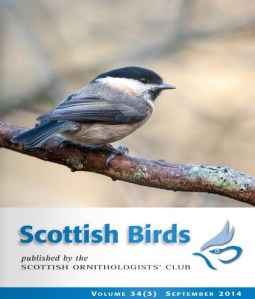
SOCThe latest edition of the Scottish Ornithologists’ Club journal, Scottish Birds, dropped through the letterbox the other day. It contains an interesting article from Ian Thomson, Head of Investigations at RSPB Scotland:

Raptor Persecution in Scotland: July 2014 update

The last article on the illegal killing of birds of prey in Scotland written for Scottish Birds (33:1) appeared at the beginning of 2013, a year designated “The Year of Natural Scotland” by the Scottish Government.

The year had dawned with some optimism. For the fourth consecutive year, we had seen detected cases of illegal poisoning decline, and although, again it is important to reiterate that these only represent what was actually found, the apparent reduction in these indiscriminate crimes was welcomed universally. In saying that, yet again, a Golden Eagle was one of the victims, with a satellite-tagged bird found dead in Lochaber in March. But, the year ended with the news that a young pair of White-tailed Eagles from the east Scotland re-introduction scheme had built a nest in an Angus glen, the first breeding attempt in the east of the country for a hundred years.

Within days of the New Year beginning, however, it was discovered that the tree had been deliberately felled, and the nest destroyed. Realism returned quickly. A police investigation was launched. The site was five miles from the nearest public vehicle access. The tree felled was the only one in the whole plantation. Full cooperation from the estate where the nest was felled was assured. Surely it would be easy to identify the culprit?

No. The police requests for information were met with “no comment” responses across the board, from all those employed in the area concerned. While the right to decline to answer questions is enshrined in Scots Law, few would agree that this amounts to “full cooperation”. But, with no suspect identified, that would ostensibly mean the end of the investigation.

Of course, this sad example was not the first time this has happened. Indeed, when it comes to the persecution of raptors, no-one ever seems prepared to say a word that may assist in the identification of the perpetrator.

In late May 2013, two members of the public witnessed the organised “hunt” of a pair of hen harriers that had just started nest-building on an Aberdeenshire estate. For almost three hours, two armed men stalked the protected raptors, guided to where they were perched or flying by a third man, communicating with those on the hill by radio. As darkness fell, four shots rang out, and the men were seen and heard celebrating the killing of the male harrier.

Of course, the killer did not leave the body lying around to be found, but at least there were the two other individuals he was with, fully aware that he had committed the crime. Again the police investigated; again, nobody was prepared to identify the criminal. Again, a raptor killer escaped justice.

This latest case was one of several, including the killing of another harrier, the poisoning of a red kite and shooting of another; and the shooting of four buzzards in other incidents, which led to the Scottish Government Minister for the Environment and Climate Change, Paul Wheelhouse MSP, to announce further measures to combat these crimes. This included a review of sentences given for convicted wildlife criminals, and instructing Scottish Natural Heritage to implement a means of restricting the use of General Licences (a legislative tool that allows an “authorised person” to kill certain species under specific circumstances eg. allows a gamekeeper to shoot a carrion crow, that would otherwise be protected).

It is perhaps ironic, that just a few weeks earlier, the SOC had been part of a delegation that met with the Minister to handover a petition, officially endorsed by the Club, that contained almost 23,000 names, collected in just over two weeks, calling on him to ensure that Buzzards continued to have full legal protection, and to resist calls made by some in the game-shooting sector to allow licences to control them.

Sadly, despite the Minister’s robust comments, this did not seem to deter those who seem intent on continuing to kill some of our rarest protected birds with further shootings of a red kite and several buzzards. But, on a positive note, a second pair of white-tailed eagles did manage to breed in the east of Scotland, successfully fledging a male chick.

Unfortunately, The Year of Natural Scotland ended, as inauspiciously as it had began, with the poisoning of yet another golden eagle in the Angus glens, just the latest incident of a litany of recent raptor persecution cases in this area.

2014 has been no better, with the massacre of birds of prey on the Black Isle grabbing a great deal of media attention. Twenty-two dead raptors – six buzzards and sixteen red kites – were found dead in a small area of farmland near Conon Bridge. Thus far, fifteen of these have been confirmed to have been the victims of poisoning as a result of consuming bait laced with a banned pesticide.

This incident, quite rightly, attracted universal condemnation, lead to the establishment of a reward fund and resulted in an unprecedented public demonstration in Inverness town centre. But, it is important to put this case into context. It was highly unusual in that it was on lowland farmland, close to a town and in an area frequently and easily accessed by members of the public.

The vast majority of raptor persecution incidents still happen away from the public gaze, in upland areas where visitors are few and where the chances of evidence of the crimes being found is very slim. These incidents may not be seen, the bodies may not be found, but the evidence is clear time and time again – large swathes of Scotland’s uplands managed intensively for driven grouse shooting continue to see virtually no raptors breeding successfully.

It is for this reason that RSPB Scotland is now calling for a robust system of licencing for grouse moors. The grouse-shooting industry has had decades to put its house in order, but has singularly failed to demonstrate that it can operate in harmony with protected birds of prey. Licenses should have sanctions for wrongdoers, with repeat offenders losing their license and thus the right to shoot all gamebirds for set periods. Estates that do practise sustainable management, and obey the law should have nothing to fear.

The one light that had shone from the gloom of 2013 was that first white-tailed eagle chick to fly from a nest in east Scotland for 200 years. It thrived and survived the challenges of its first winter. But that light too was extinguished, when the satellite-tagged bird “disappeared” on a grouse moor in upper Donside. At the same location, four tagged golden eagles have similarly vanished. The only eagle body recovered confirmed it had died due to illegal poisoning.

Enough is enough.

Full reference: Thomson, I. (2014). Raptor persecution in Scotland: July 2014 update. Scottish Birds 34(3): 232-233.

Ross-shire Massacre: six months on

rk5It’s been (just over) six months since 22 raptors were poisoned in a single incident at Conon Bridge in Ross-shire.

So far, we know that 16 of those birds (12 red kites + 4 buzzards) were killed by ingesting “an illegally-held poisonous substance”. We know that the name of the poison has been redacted from official government documents in the public domain. We know that nobody has been arrested.

That, in a nutshell, is about the sum total of the ‘official’ information that is available about one of the most high-profile wildlife crimes in recent years.

Isn’t that amazing? Six months on and that’s all there is?

However, if you’d been sitting in Lecture Marquee #3 at the Rutland Birdfair on Saturday 16th August, you’d have heard that the poison used to kill all those birds was Carbofuran, and that the perpetrator is known. Indeed, the (alleged) perpetrator was virtually named and anyone sitting in that marquee who had any local knowledge of Conon Bridge would know exactly who was being implicated.

It was an astonishing talk delivered by Sir John Lister-Kaye, who introduced himself as a Vice-president of RSPB. It was astonishing both in the level of detail about the case that was delivered, but also in the level of inaccuracy about raptor persecution in general. For someone with Lister-Kaye’s credentials, the content of that talk left our jaws hanging open.

Given the wholly inaccurate statements he made about raptor persecution in general (including a claim that Carbofuran could be used under licence to treat seed crops (!!) and that raptor killing in Scotland has never really been widespread until very recently and then only as the landowners’ angry backlash following the introduction of vicarious liability), his statements about the Ross-shire Massacre need to be treated with caution.

Nevertheless, whilst he deserves to be pulled up on his shoddy research skills, he deserves credit for standing up in that marquee and giving more information in 20 minutes than Police Scotland has managed in six months.

Previous blogs about the Ross-shire Massacre here

Suspected poisoning of red kite & buzzard in Herefordshire

A dead red kite and a dead buzzard have been found in Herefordshire in what looks suspiciously like a poisoning incident.

According to an article in the Western Daily Express (here), the carcasses were discovered on farmland at Pontrilas, south Herefordshire, close to a dead pheasant. The farmer took the corpses to a vet but the vet couldn’t find any obvious sign of injury or disease.

The RSPCA is appealing for information, but strangely, the article doesn’t say whether the corpses have been submitted for toxicology analyses. Given the position of the two dead raptors and their proximity to a dead pheasant (commonly used as bait), it seems quite plausible that this could have been an illegal poisoning incident.

Let’s hope the RSPCA contacts the RSPB Investigations team for advice.

Red kite photograph by Drew Buckley.

Petition for increased SSPCA powers handed in to Holyrood

Goddard petition Wheelhouse august 2014A petition calling for increased investigatory powers for the SSPCA was handed over to Environment Minister Paul Wheelhouse last week, with over 6,000 signatures.

The petition was launched several months ago by Andrea Goddard, a volunteer at the Tollie Red Kite Feeding Station, following the illegal poisoning of 22 raptors (16 red kites and 6 buzzards) in March at nearby Conon Bridge – an incident we’ve termed the Ross-shire Massacre. Five months on, nobody has been charged for this appalling crime.

Great effort, Andrea. Story in the Press and Journal here.

The petition coincided with the long-awaited government-led public consultation on whether the SSPCA should be given additional powers to investigate a wider suite of wildlife crimes. The consultation closes next Monday (1st September) and the consultation responses will be published on the Scottish Government’s website by 11th October. Following the government’s decision-making, a full report (on the consultation) has been promised although a time-frame for this has not been provided.

We’d encourage as many of you as possible to contribute to this consultation. If the proposal is accepted, we believe it will bring significant improvement to the enforcement of wildlife crime legislation in Scotland, leading to many more offenders being brought before the courts – see here for our reasoning.

If you’d like to take part, please click here.