Two red kites poisoned in south Scotland: tests awaited on third

From BBC Scotland today:

Kirkcudbright red kites were poisoned, tests reveal

Tests have confirmed that two out of three red kites found dead in southern Scotland last month were illegally poisoned. The birds were discovered near Kirkcudbright in early May. Post mortem examinations have shown illegal pesticides were used to kill two of the birds with results on the third still awaited.

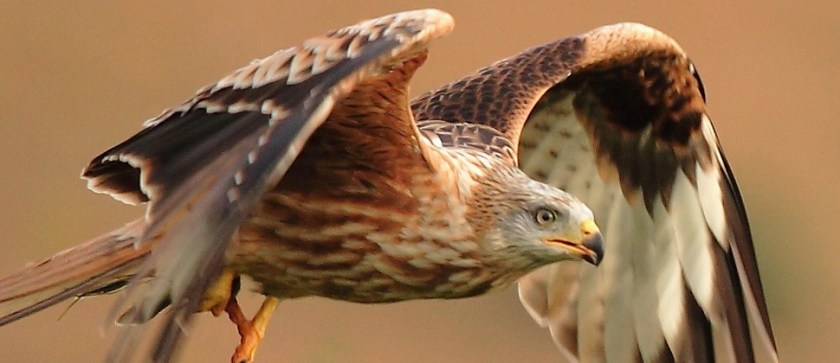
[Red kite photo from Scottish Raptor Study Group]

Police said an investigation was ongoing and have asked for help from the public with information.

Det Con Gary Story said they were working closely with the Scottish SPCA and Science and Advice for Scottish Agriculture. “What we have established is that illegal pesticides have been used to kill two of the birds,” he said. The pesticides identified have been banned in the UK for many years but despite this there would still appear to be those who leave out poisoned bait, whether that is to target crows, foxes, raptors or other wildlife.

The use of such poisoned bait is illegal and totally unacceptable and those responsible should understand that their unlawful activities not only serve to have devastating consequences on their intended targets but also on various other forms of wildlife.”

He said they were “absolutely determined” to put a stop to the deaths and were working with landowners and farmers and RSPB Scotland as part of their investigation.

We have also carried out a number of land searches in the vicinity of where the birds have been located with a view to trying to locate poisoned bait at these locations,” he said. “It is anticipated that further land searches will take place in the near future.”

Scottish SPCA inspector Paul Tuchewicz said two dead red kites had been found within 50 yards of one another near Kirkcudbright on 10 May. “One of the birds had a tracker and we were able to check the last known location of the kite, which was a nest,” he said. “The nest was being used by ravens when we found it. After post mortem, the birds were found to have been poisoned with a banned substance.”

The third bird was found within 100 yards of the same location on 15 May.

A red kite trail in Dumfries and Galloway is reckoned to be worth millions of pounds to the local economy.

A study in 2017 said the Galloway Kite Trail had generated more than £8.2m since it was launched in 2003.

ENDS

These poor kites are the latest victims in a spate of illegal poisonings in south Scotland.

Between January and May 2018 four red kites and buzzards were illegally poisoned in Dumfries & Galloway (see here).

There was also the poisoned peregrine found in the Pentlands in May 2018 (here).

And then in December 2018 a buzzard was found poisoned near Mauchline (here).

Now we learn that at least two red kites have been found poisoned in May 2019 and potentially another one, test results pending.

So much for SNH’s claim in August 2018 that they were “reassured that raptor persecution is not an issue” in this region. Idiots.

It’s good to see strong statements of condemnation from Police Scotland and the SSPCA and confirmation that land searches have taken place and more are anticipated.

Let’s see how Scottish Ministers respond to this news. They said nothing about the recent illegal poisoning of birds in the Cairngorms National Park – are they also going to ignore more poisoning crimes in south Scotland?

Cairngorms National Park Authority finally issues statement on illegally poisoned birds

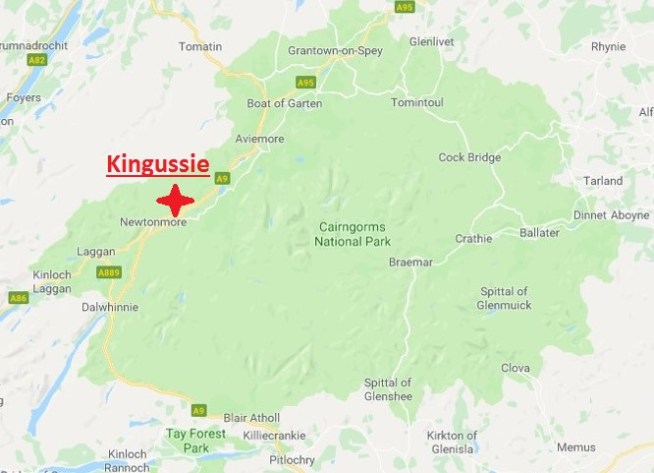
At the end of May we learned, via a Police Scotland statement, that four dead geese had been discovered in April 2019 by estate workers on the Pitmain Estate, nr Kingussie, in the Cairngorms National Park.

Subsequent post-mortem examination of the birds found that they died as a result of ingesting a banned pesticide.

On 25 May 2019, a week after the news broke, we reported that the response to this latest wildlife crime and the use of a deadly poison that is so dangerous that it’s actually an offence to possess it, let alone use it, was as follows:

Cairngorms National Park Authority – silence

Grant Moir, Chief Executive Cairngorms National Park Authority – silence

Roseanna Cunningham, Cabinet Secretary for the Environment – silence

Mairi Gougeon, Minister for Rural Affairs and Natural Environment – silence

Kate Forbes MSP, in whose constituency the poisoned birds were found – silence

PAW Scotland – silence

Scot Gov Greener, ‘the official Twitter channel of the Scottish Government covering the environment and rural economy’ – silence

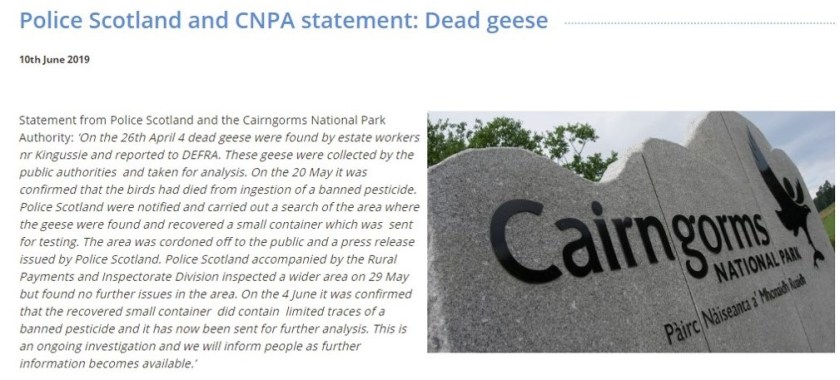
However, on Monday 10th June 2019 the Cairngorms National Park Authority (CNPA) finally released a joint statement with Police Scotland that was posted on the CNPA website and was also tweeted from the CNPA twitter account:

‘Illegally poisoned geese’ would have been a stronger headline than simply ‘dead geese’ but nevertheless, it’s good to see the CNPA finally alerting its website readers and social media followers to this crime.

It’s also interesting that a small container was found and that it had traces of the banned poison on it or in it. We await further updates.

In the meantime, has the CNPA decided to do anything else to warn the public about the immediate threat to life in this part of the National Park? Have they distributed posters and flyers in the local community in and around Kingussie? Put up warning signs in car parks and on paths near to where the poisoned birds were found? Put warning notices in places frequented by visiting tourists who may not be avid readers of the news section of the CNPA website?

If not, why not?

The North Pennines AONB recently did all of this and more in response to the discovery of two shot buzzards on their patch (see here) – it was a brilliant response and should be the blueprint for how all these so-called ‘Protected Area’ Boards and Partnerships need to respond to such criminality.

There can be no more excuses. Stop shielding the criminals.

Raven found poisoned on Ruabon Moor, the ‘grouse capital’ of North Wales

RSPB press release (31/5/19)

(Links have been added by RPUK)

RAVEN FOUND POISONED ON RUABON MOOR

  • The dead bird was found on the same estate near Wrexham, where two satellite-tagged hen harriers recently vanished.
  • Police are now appealing for information from the public. 

A dead raven found on Ruabon Moor, near World’s End, North Wales, has been confirmed as deliberately poisoned – triggering a police investigation.

The bird was found dead on 28 August 2018 by a man who had been out photographing birds.

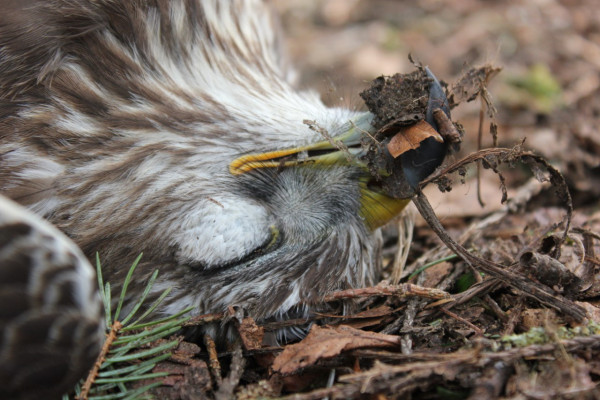
He said: “I was coming home from Wrexham when I noticed the bird on the ground, away from the road in a little clearing of grass. It was upside down, its eyes sunken, and its feet in the air. It didn’t look like it had been dead for long.”

Thinking it may have been shot, he contacted the RSPB’s Investigations Unit. Following liaison with the North Wales Police, Welsh Government arranged for toxicology tests on the bird. This revealed that the raven had been deliberately poisoned with the highly toxic insecticide bendiocarb which had been most likely been applied to a bait. Police enquiries in the area have failed to identify anyone responsible.

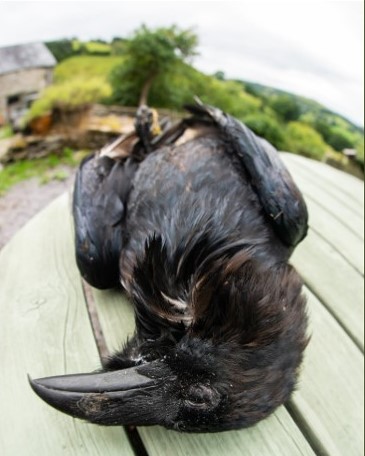
[The illegally poisoned raven, photo from @RSPBBirders]

Ravens are protected under the Wildlife and Countryside Act 1981. Killing one is a criminal offence and could result in an unlimited fine or up to six months in jail.

Ruabon Moor holds a significant proportion of the Welsh black grouse population and is an area managed for red grouse shooting. In 2018, two rare hen harriers named Heulwen and Aalin went off the radar in this general area. The birds had been fitted with satellite-tracking devices as part of the EU-funded Hen Harrier LIFE project.

Jenny Shelton, RSPB Investigations, says: “It would seem that ravens and birds of prey are not welcome in this area, and naturally people will be asking why. There is a history throughout the UK of birds of prey and ravens being targeted on areas managed for intensive grouse shooting, due to the perceived threat these natural predators pose to the grouse. However, the law is plain: killing birds of prey and ravens is illegal.

On top of this, placing poison in a public area is hugely irresponsible. Many people will be bringing their families to places like this as the weather warms up. To think that a child or a family pet could have found this bird is outrageous. These crimes must stop before someone is seriously harmed.

Jenny continues: “Ravens are beginning to recover in the UK after decades of persecution, and Wales is a key stronghold for these impressive birds. Spring – the start of the bird breeding season – is sadly a key time for the illegal killing of birds of prey and ravens. If you notice a bird of prey dead on the ground in suspicious circumstances, call the police right away.”

North Wales Police are now appealing for information.

Rob Taylor, North Wales Police Rural Crime Team manager said “The deliberate killing of a bird by poisoning is a serious risk to humans and other animals such as certain birds of prey who frequent the area. We are continuing our investigation and we ask members of the public who have information to contact us or ring Crimestoppers anonymously.”

If you have any information relating to this incident, call North Wales Police on 101.

If you find a wild bird of prey which you suspect has been illegally killed, contact RSPB investigations on 01767 680551 or fill in the online form.

Or, to speak in confidence about bird of prey persecution taking place in your area, call the confidential Raptor Crime Hotline: 0300 999 0101. This number is for bird of prey-related matters only.

ENDS

It’s not clear why it’s taken nine months for this news to emerge. Hopefully North Wales Police were more vocal in the local community at the time, warning the public about the presence of this deadly poison.

Let’s hope they’re also alerting locals and visitors alike that this part of North Wales is earning the reputation of being a wildlife crime hotspot, just like so many other grouse shooting areas across the UK.

The placement of warning signs at these locations is the very least we should be expecting from the authorities.

Political silence in response to wildlife crime in Cairngorms National Park

Nine days ago we learned that yet another satellite tagged hen harrier (‘Marci’) had vanished in suspicious circumstances on an unnamed grouse moor near Strathdon, an area of the Cairngorms National Park previously identified as a raptor persecution hotspot.

[Hen harrier Marci, photo by Shaila Rao]

Hen harrier persecution is a National Wildlife Crime Priority and the population in Scotland has suffered a 27% decline in the last 12 years. As such, we expected a strong response from the authorities.

We’ve trawled websites and Twitter feeds and this is what we’ve found:

Cairngorms National Park Authority – silence

Grant Moir, Chief Executive Cairngorms National Park Authority – silence

Roseanna Cunningham, Cabinet Secretary for the Environment – silence

Mairi Gougeon, Minister for Rural Affairs and Natural Environment and Hen Harrier Species Champion – silence

Alexander Burnett MSP, in whose constituency Marci ‘disappeared’ – silence

PAW Scotland – silence

Scot Gov Greener, ‘the official Twitter channel of the Scottish Government covering the environment and rural economy’ – silence

And then seven days ago we learned that four geese had been found poisoned by a highly toxic banned pesticide on the western side of the Cairngorms National Park. Police have been searching an area on the Pitmain Estate near Kingussie after estate workers reportedly alerted them to the corpses.

Given the seriously high risk to humans, wildlife, domestic stock and pets, and the Scottish Government’s previous comments about having a zero tolerance policy for illegal poisoning, we expected a strong response from the authorities.

We’ve trawled websites and Twitter feeds and this is what we’ve found:

Cairngorms National Park Authority – silence

Grant Moir, Chief Executive Cairngorms National Park Authority – silence

Roseanna Cunningham, Cabinet Secretary for the Environment – silence

Mairi Gougeon, Minister for Rural Affairs and Natural Environment – silence

Kate Forbes MSP, in whose constituency the poisoned birds were found – silence

PAW Scotland – silence

Scot Gov Greener, ‘the official Twitter channel of the Scottish Government covering the environment and rural economy’ – silence

So what’s the deal, here?

Don’t they care?

They do care but they’re too embarrassed to comment?

They’ve commented on so many other similar incidents that there’s nothing new to be said?

They know they’re impotent to stop it happening again and again and again?

Keep quiet and hope it all goes away?

Compare and contrast this silence with the recent response of the North Pennines AONB Partnership to the illegal shooting of two buzzards within the protected area – Strong public statement, posters put up on public noticeboards, fliers distributed to shops and pubs in the area and lots of coverage on social media.

The Scottish authorities couldn’t even manage a tweet between them!

And then compare and contrast this silence with the recent sentencing of wildlife poisoners in Spain – Two years and eight months in prison AND a five year & four month disqualification from the management of hunting reserves and the right to hunt AND a fine of 67,538.65 Euros AND to been told to ‘take measures to recover the damage caused’.

The last prosecution for an alleged wildlife poisoning case in Scotland (that we’re aware of) involved the poisoning of three buzzards on a game shooting estate in Perthshire. Despite pleas from Police Scotland, the Crown Office decided to drop the prosecution and didn’t provide an explanation for this decision.

Is anybody still wondering why wildlife crime is still so prevalent in Scotland?

Birds killed after ingesting banned poison nr Kingussie in Cairngorms National Park

Police Scotland has issued the following statement (dated 24 May 2019):

We can confirm that enquiries are ongoing following the deaths of four geese, which were reported to the Police by concerned estate workers who had found the birds on their land near Kingussie in late April 2019.

Subsequent post-mortem examination of the birds found that they died as a result of ingesting a banned pesticide.

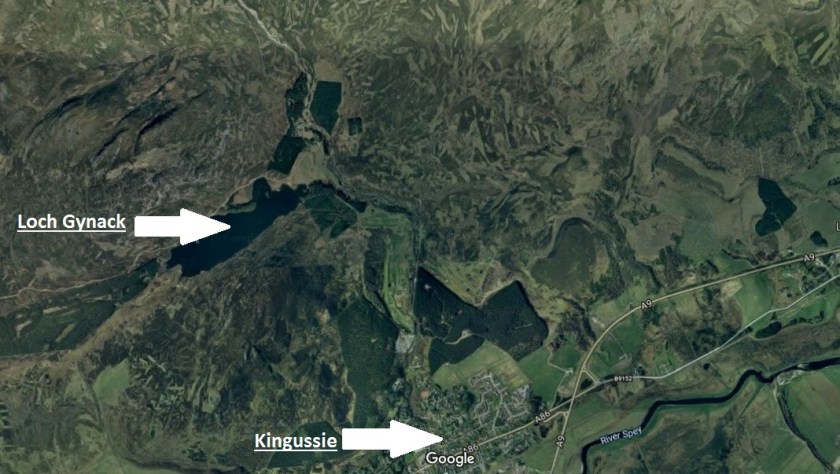
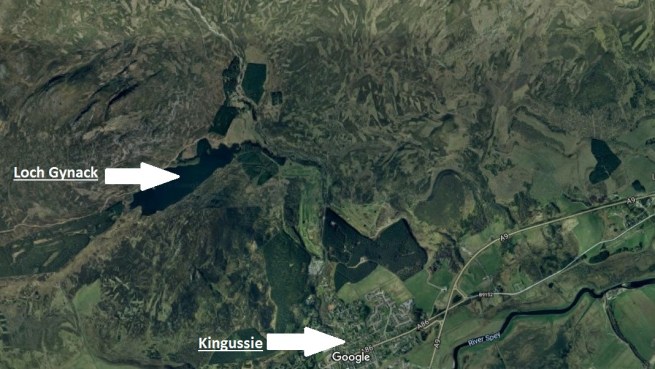
Searches by Police Scotland officers have been carried out in the area around Loch Gynack near Kingussie.

Officers are advising any members of the public or dog walkers who use the area recreationally to be aware and to consider their safety – or that of their pet – if walking in the area.

Inspector Vince Tough, Highlands and Islands Wildlife Crime Coordinator, said:

We do not wish a member of the public, a dog or any other animal to become unwell where it can be avoided’. Our enquiries are ongoing to establish the full circumstances of this incident. In the meantime I would urge anyone who walks their dogs in the area to be aware as a precaution.

Anybody who has information is asked to contact Police Scotland immediately on 101, using reference NM1041/19, or call Crimestoppers anonymously on 0800 555 111.”

ENDS

According to Andy Wightman’s Who Owns Scotland website, which provides details of estate boundaries, Loch Gynack, the location of the police search area, is on the Pitmain Estate close to Kingussie, although that does not mean that’s where the geese ingested the banned poison. Depending on which poison was used and how much was ingested, the geese may have died within minutes of ingestion or may have been able to fly a short distance. There are a number of sporting and non-sporting estates whose boundaries converge around Kingussie, some with dodgy reputations, some with impeccable credentials, so it would be unwise to assume anything without further information from the police, although we do know that of 219 poisoning offences recorded in Scotland between 2005-2014, a staggering 81% were on land used for game-shooting (57% on grouse moors, 24% on lowland pheasant shoots).

The police have not named the banned poison* [see update below] but it will be one of the eight listed on The Possession of Pesticides (Scotland) Order 2005. These eight substances are considered to be so lethally toxic it’s an offence just to be in possession of any of them, let alone use any of them to bait and kill wildlife:

Aldicarb
Alphachloralose
Aluminium phosphide
Bendiocarb
Carbofuran
Mevinphos
Sodium cyanide
Strychnine

[*UPDATE: The banned pesticide has since been confirmed by the WIIS as Carbofuran and the poisoned geese identified as Greylags]

So once again we have a wildlife crime reported inside the Cairngorms National Park.

It was only three days ago that we were blogging about this so-called “Jewel in the Scottish and UK landscape” (ahem) following the suspicious disappearance of satellite-tagged hen harrier Marci on a grouse moor in the raptor persecution hotspot that is the eastern side of the Cairngorms National Park.

In that blog we’d included a long list of reported crimes against raptors since the Park’s inauguration in 2003. You can see that illegal poisoning was prevalent during the 2000s but then the criminals switched tactics and shooting and trapping became much more prominent. The last known use of illegal poison in the Park, at least that we’re aware of, was reported in 2011.

It’ll be interesting to see whether the Cairngorms National Park Authority bothers to issue a statement about this latest poisoning crime. As far as we can tell, they didn’t bother publishing anything on their website about missing hen harrier Marci.

They’d do well to take a leaf out of the North Pennines AONB’s book. Prepare some leaflets, stick them up on public noticeboards, deliver fliers to pubs and shops, write a damning statement of condemnation for the Park’s website, etc etc.

It’s 2019 for god’s sake. Why are we still seeing banned poisons used inside a National Park to kill wildlife, and potentially any resident or visitor or their pet unfortunate enough to stumble across it? And why is the Park Authority so impotent to act against it?

For that matter, why is the Scottish Government still so impotent to act against it?

This latest crime happened in the constituency of Kate Forbes MSP (SNP: Skye, Lochaber & Badenoch). If you’re one of Kate’s constituents, please contact her and ask her what she intends to do about it. (Remember, she probably didn’t lay the bait and this is probably the first she’ll have heard about the crime – please be polite but be clear that doing nothing is not an option).

If you’re not a constituent of Kate’s, you can contact her on Twitter (@KateForbesMSP) and ask the same question (again, politely, please).

UPDATE 31 May 2019: Political silence in response to wildlife crime in Cairngorms National Park (here)

UPDATE 13 June 2019: Cairngorms National Park Authority finally issues statement on illegally poisoned birds (here)

UPDATE 24 October 2025: BBC’s Highland Cops programme features investigation into shot out Goshawk nest in Cairngorms National Park (here)

Another massive penalty for raptor poisoning in Spain

Once again, the Spanish authorities have shown their utter contempt for those who illegally poison birds of prey.

They have just handed out the country’s highest ever penalty in relation to the illegal poisoning of 138 raptors and 4 crows in 2012. The victims included red kites, black kites, marsh harriers, Egyptian vultures and Griffon vultures.

Two hunting ground ‘presidents’ and a guard have been sentenced to two years and eight months in prison AND a five year & four month disqualification from the management of hunting reserves and the right to hunt AND a fine of 67,538.65 Euros AND to been told to ‘take measures to recover the damage caused’.

According to this roughly translated report from SEO Birdlife, the authorities used ‘wiretaps’ to obtain some of the ‘incriminating evidence’, which is presumably why it took so long to secure the convictions.

[One of the poisoned kites, from SEO Birdlife]

This isn’t the first time that the Spanish authorities have come down hard on raptor poisoners. We’ve blogged about two previous cases (here and here) where custodial sentences, massive fines and an extended disqualification from hunting have all been part of the sentencing package.

As we’ve written before, Spain is one of several European countries way ahead of the game when it comes to tackling raptor persecution. Amongst other measures, they have a dedicated dog unit that utilises specialist sniffer dogs trained to detect poison and poisoned baits. These dogs are so good they can even detect the location where a poisoned bait has been laid previously but has since been removed. These dog units are not just deployed to a site of a suspected incident; they are routinely deployed to undertake spot checks wherever they want and whatever time they want. There’s none of this ‘you need landowner permission’, or ‘you need a warrant’ or ‘that video camera placed out in the middle of a remote grouse moor infringes the owner’s privacy rights’.

Now THIS is what ‘we’re taking raptor persecution seriously’ really means.

Please take note, Westminster & Scottish Environment Cabinet Secretaries and Ministers. Your constant fiddling around at the edges, undertaking review after review after review (Scotland), or just flat out denials that it’s a problem (England) just doesn’t cut it anymore.

Perhaps we should crowdfund to send Ministers Gove, Coffey, Cunningham and Gougeon on a fact-finding trip to spend time with their Spanish counterparts and see how it can be done.

Former Edradynate Estate head gamekeeper cleared of crop poisoning charges

David Campbell, the former head gamekeeper of Edradynate Estate in Perthshire, has been cleared of all charges relating to the poisoning of game crops on the estate in April 2017.

It had been alleged that David Campbell had maliciously damaged game crops by spraying them with an unknown substance which caused them to rot and perish. At the time of the alleged offences, Campbell was no longer an employee of the estate, having worked there since 1983 but after falling out with the landowner, millionaire city financier Michael Campbell (no relation), his employment was terminated in February 2017.

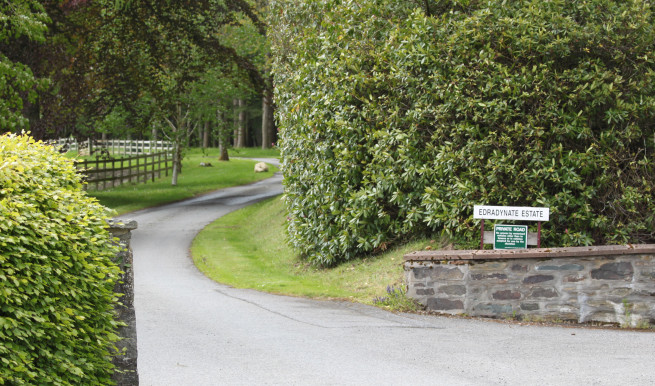
[Edradynate Estate, photo by Ruth Tingay]

Michael Campbell had told the court that he believed his former employee had caused the damage ‘in revenge’ and said he could identify David Campbell on CCTV by his distinctive “mutton chop” facial hair. Various witnesses had told the court that David Campbell had been “upset” at having to leave his long-term employment at Edradynate Estate.

Last week, David Campbell’s defence solicitor had argued that the case against his client should be dropped because there was a lack of evidence to show his client was the person caught on the covertly-filmed CCTV. Sheriff Gillian Wade had rejected the argument and said the court had been presented with sufficient evidence for the case to proceed.

However, at Tuesday’s court hearing Sheriff Wade cleared David Campbell after ruling the case against him had not been proved beyond reasonable doubt.

This latest failed prosecution is one of several linked to the Edradynate Estate, although the majority of the previous allegations have related to the alleged illegal poisoning of birds of prey, rather than alleged crop poisoning. Despite at least 22 police investigations over several decades (according to former Tayside wildlife crime officer Alan Stewart), nobody from Edradynate Estate has ever been successfully prosecuted for any of these alleged wildlife crimes.

[A poisoned buzzard at Edradynate in 2015, photo RPUK]

We’ve blogged about this estate a lot over the years (see links here), and most recently in relation to the alleged poisoning of two buzzards in 2015 and the Crown Office’s decision in 2017 not to prosecute one of the Edradynate gamekeepers (un-named), despite Police Scotland urging otherwise (see here).

Edradynate Estate is currently serving a three year General Licence restriction, imposed in Sept 2017 and which we believe relates to the alleged buzzard poisonings in March 2015.

Last year three dogs and two more buzzards were reported to have been “deliberately poisoned” in the area but nobody has been charged (see here) and we are not aware of any suggested link between these poisonings and any current employee of Edradynate Estate.

‘Eagles are being slaughtered as part of serious organised crime’

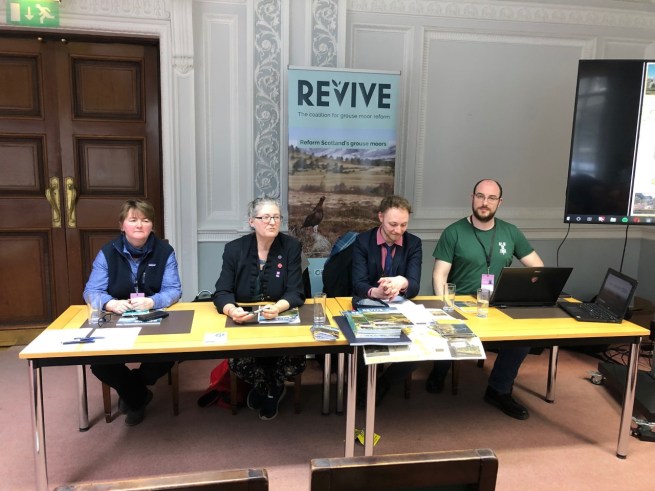
Revive, the coalition for grouse moor reform held its first ever fringe event at a party political conference yesterday, at the Scottish Labour conference in Dundee.

The event was chaired by Claudia Beamish MSP and three speakers from Revive joined the panel (Dr Ruth Tingay of RPUK, Max Wiszniewski, Revive Campaign Manager, and Dr Craig Dalzell, Head of Policy & Research at Common Weal) with another coalition member (Dr Richard Dixon, Director of Friends of the Earth Scotland) in the audience.

[Photo by Louise Robertson]

Each speaker gave a ten minute presentation followed by approx 20 minutes of questions from the floor.

It was brilliant to see a number of journalists in the audience, resulting in some good coverage in the papers today.

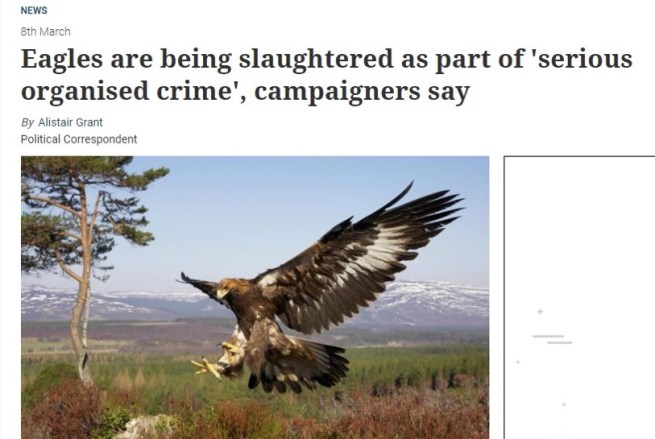
The Herald focused on the illegal persecution of golden eagles and hen harriers on or close to driven grouse moors and journalist Alistair Grant got the message loud and clear that, in our opinion, the extent of this persecution on many driven grouse moors is such that it amounts to serious organised crime. [Definition by the National Crime Agency: ‘Serious crime planned, coordinated and conducted by people working together on a contuining basis. Their motivation is often, but not always, financial gain‘]

Here’s the text from The Herald article:

GOLDEN eagles and other protected birds of prey are being illegally slaughtered in what amounts to “serious organised crime”, a leading expert has said.

Dr Ruth Tingay of Raptor Persecution UK said birds are being killed on or near grouse moors across Scotland before the evidence is then removed to avoid prosecution.

She spoke out during a fringe meeting at the Scottish Labour conference in Dundee.

Claudia Beamish MSP, the party’s environment spokeswoman, said it backed strict new rules for estate owners – including a total ban on the use of lead shot and the large-scale cull of mountain hares.

She said: “In order for grouse moors to continue, if indeed they do, there needs to be very robust licensing.”

Labour delegates heard grouse moors cover almost a fifth of Scotland, with estates handed more than £300,000 a year in public subsidies.

Revive, a coalition of organisations calling for change, insisted estates should be stripped of this cash as part of a crackdown aimed at encouraging radical land reform.

It said the intensive land management associated with driven grouse shooting causes environmental damage.

Meanwhile, there is evidence scores of birds have been illegally killed on or near estates, it said.

Dr Tingay, a leading raptor ecologist, said: “My argument is that what we are seeing here – not just with golden eagles but with other birds of prey, particularly hen harriers, which are also persecuted on driven grouse moors – is serious organised crime.

If the Government accepted this, we would see a lot more resources coming in to deal with this issue.”

She said some estimates suggest 50 eagles a year are disappearing.

Revive is made up of Raptor Persecution UK, Friends of the Earth Scotland, animal charity Onekind, the League Against Cruel Sports Scotland and think tank Common Weal.

Craig Dalzell, head of policy and research at Common Weal, said estates should be opened up to other uses.

He said grouse moors in Scotland had an annual economic impact of £32 million and were responsible for around 2,640 jobs.

In comparison, forestry boasts an annual economic impact of £973m and creates 26,000 jobs, he said.

ENDS

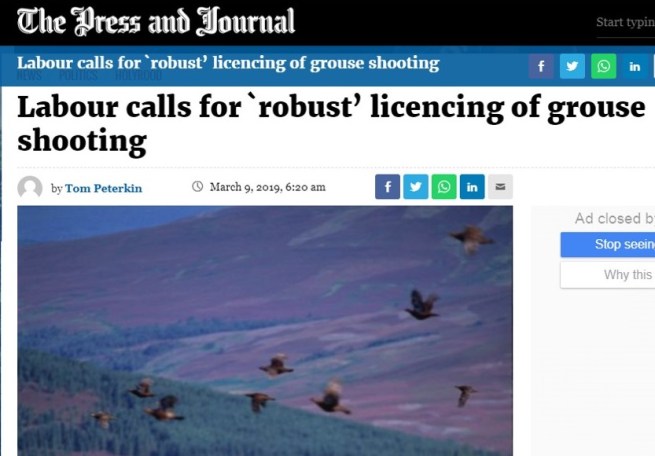
The Press & Journal also covered this fringe event and journalist Tom Peterkin headlined with this:

Here’s the text of the P&J article:

Labour has said there should be robust licencing of grouse shooting amid claims that illegal wildlife killing on sporting estates amounted to “serious organised crime”.

The call was made by Shadow Environment Secretary Claudia Beamish at a Labour conference fringe meeting where she cast doubt on the survival of the pastime in the long-term.

The meeting was hosted by Revive, an organisation campaigning for the reform of the country sport and whose agenda includes stripping grouse moor landowners of public subsidies.

Speaking at the meeting, Ms Beamish said it would be “valid” for a licencing system to take into account issues raised by Revive.

Ms Beamish said: “I think that in order for grouse moors to continue – if indeed they do – there needs to be very robust licencing and robust monitoring.”

Ms Beamish made her remarks after campaigners claimed grouse moors only supported 3,000 jobs on an average salary of £11,500 despite accounting for almost one fifth of Scottish land.

Ruth Tiingay of Raptor Persecution UK, drew attention to golden eagles killed on Scottish moors, arguing it was “serious organised crime”.

Max Wiszniewski of Revive said his organisation was “not going for a ban” on grouse shooting “however understandable that would be”.

Rather Revive’s focus was to reform it as much as possible, including an end to government subsidies, heather burning limits, a lead ammunition ban, a ban on snares and more action against wildlife crime.

He said: “The question may come about if the industry can’t survive after the necessary reforms, it possibly has to reflect on itself.”

ENDS

This was a very worthwhile event. Revive signed up more supporters to its pledge for grouse moor reform (you can sign online here if you haven’t already done so), it was an opportunity to interact with a number of politicians who were keen to learn more about the Revive campaign and the media was interested in what we had to say.

Well done to Max (Revive Campaign Manager) for organising this event and many thanks to Claudia Beamish MSP for her interest and support.

Revive will be at other party political conferences later this year.

Buzzard shot and poisoned in East Yorkshire: police renew appeal for info

Press release from Humberside Police (20 Feb 2019)

Poisoned buzzard East Yorkshire, renewed appeal for information

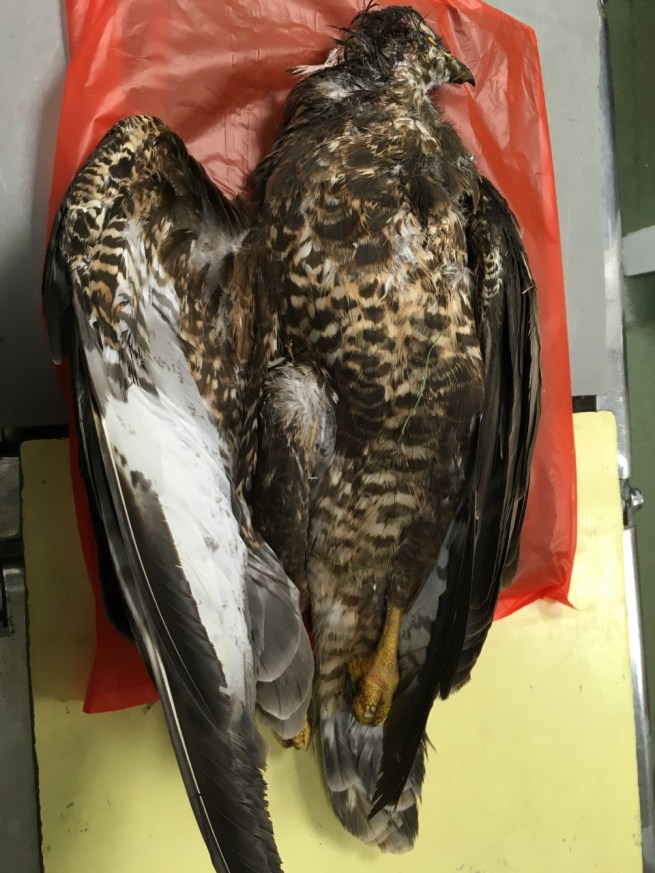
On the 2nd October 2018 Humberside Police appealed for information regarding the discovery of a dead Common Buzzard, which x-rays showed as having three shotgun pellets within its body [Ed: see RPUK blog here]. These were old injuries but the bird also had more recent injuries to its head, which at that time were suspected to have possibly come about by having been confined within a cage trap.

A detailed examination of the body and its food content has now revealed that the Buzzard had ingested food containing the highly toxic pesticide aldicarb. This substance has been banned for use and possession for over 10 years. It is one of several highly toxic pesticides which are abused by adding them to a bait like a dead rabbit to kill scavengers such as crows and foxes. Carrion eating birds such as Red Kites and Buzzards often become victims.

Several birds of prey including Red Kites and Buzzards have been recorded as being killed by the use of aldicarb in previous years at various locations within the East Riding of Yorkshire including near Market Weighton and Pocklington.

The bird involved in this incident during 2018 was discovered between Millington and Huggate in the East Riding of Yorkshire which is very popular with walkers. The exact circumstances of the bird’s death and how exactly it sustained all its injuries are unclear which is often the case with these offences. What is clear is that it had been shot previously and then ingested a banned toxic substance at a later date. Offences such as this are crimes under the Wildlife and Countryside Act 1981 which are punishable by up to 6 months imprisonment, an unlimited fine or both.

Wildlife and Rural Crime lead Chief Inspector Paul Butler said: ”Enquiries have so far failed to identify who is responsible for this particular crime but are ongoing. The continued use of these chemicals is highly irresponsible and there is no excuse for it whatsoever. Anyone undertaking any form of pest or predator control should ensure they operate within the law and best practice guidance. Those disregarding it for whatever reason should be aware that it is not acceptable and that my Wildlife Crime Team officers are actively seeking them out”.

Anyone with information about who is using these chemicals or involved in the persecution of birds of prey by any means are encouraged to come forward with this information which will be treated with the utmost confidentiality. Raptor persecution is a national wildlife crime priority which Humberside Police takes very seriously and works alongside other agencies to investigate offences.

If you think you have found a poisoned victim or bait do not touch them, cover them over if possible, warn others to keep away, note the exact location, take photos and report it to the police straight away.

Guy Shorrock, Senior Investigations Officer at the RSPB, stated: “There have been a number of incidents in the East Riding area involving the poisoning of buzzards by this highly toxic banned pesticide. We are grateful for police enquires into this latest case and would urge anyone with information to contact them. You can also contact the RSPB in strictest confidence on 0300 999 0101 if you have any information about birds of prey being illegally killed in your area”.

Anyone with information regarding this investigation should call Humberside Police on the non-emergency number 101 quoting investigation number 16/99978/18 which is being dealt with by WCO PC 1529 Day.

ENDS

The RSPB has also written a blog about this case, here

Heap of poisoned ravens found on Welsh/English border

Press release from RSPB (19 February 2019)

Ravens found poisoned on farmland

West Mercia Police undertook an investigation after ten dead ravens, a dead crow and parts of a dead lamb were found close together on farmland near Vron Woods, Beguildy on the Wales/Shropshire border.

The birds were reported to the RSPB and collected by Natural England in April 2018, who sent the birds to be tested. Government toxicology tests on five of the ravens, the crow and the lamb confirmed the presence of Diazinon. This is a veterinary product, used legally for sheep dip, but which is known to have been used illegally to poison wildlife. It is believed the lamb carcass was deliberately laced with Diazinon for this purpose.

[Poisoned raven, photo by Ed Blane, Natural England]

[Photo of the ten ravens and one crow bagged up for removal, by Ed Blane, Natural England]

Birds of prey and ravens are protected by the Wildlife and Countryside Act 1981. To kill or injure one is a criminal offence and could result in an unlimited fine or up to six months in jail. Police interviewed a local person under caution but, due to lack of evidence, the case could go no further.

Ravens are a recovering species which breed mainly in Wales, Scotland, and Western and Northern England.

Jenny Shelton from RSPB Investigations said: “Shropshire has a history of Diazinon abuse for the purpose of illegally targeting birds of prey and other protected species. We are grateful to Natural England and the police for investigating this matter, which poses a serious threat to wildlife and people. Ravens are incredibly intelligent creatures, able solve problems and form memories similar to our own. These once-scarce birds are gradually starting to recover after persistent persecution at the hands of humans, so it’s disturbing to hear of incidents like this still taking place.

This area is also a stronghold for red kites – another bird making a comeback after disappearing entirely from England due to persecution. Poison baits pose a danger to these birds too.”

If you have any information relating to this incident, call West Mercia Police on 101.

The RSPB is urging people to be vigilant and report dead birds of prey or ravens this spring – a key time of year for illegal poisoning to take place. If you find a dead bird of prey or raven beside a carcass that could be a poison bait, contact the government hotline on 0800 321600. Alternatively contact the police on 101 or RSPB investigations on 01767 680551.

Note: These investigations take time, as do the toxicology tests, and we realise there has been some delay in publicising this. But we feel this is an important story to tell.

ENDS