Case against Bleasdale Estate gamekeeper James Hartley: part 4

Legal proceedings continued today in the case against James Hartley, a gamekeeper from the Bleasdale Estate in Bowland who is accused of a number of offences in relation to the alleged killing of two peregrines in April 2016 (see first court report for details here). Mr Hartley has pleaded not guilty to the alleged offences.

A case management hearing earlier this month focused on legal argument relating to the admissibilty of evidence.

Today at Preston Magistrates Court, District Judge Goodwin delivered judgement on the admissibility of evidence specific to this case.

Due to reporting restrictions imposed at a previous hearing, until the case concludes we are unable to publish the specifics of the legal argument, or even comment on today’s admissibility ruling.

A further hearing has been scheduled for 10 April 2018.

PLEASE NOTE: given the legal sensitivity surrounding this case we won’t be accepting comments on this particular blog post. Thanks.

Peregrine confirmed poisoned in North Wales

From North Wales Police Rural Crime Team:

Case against Bleasdale Estate gamekeeper James Hartley: part 3

Legal proceedings continued yesterday in the case against James Hartley, a gamekeeper from the Bleasdale Estate in Bowland who is accused of a number of offences in relation to the alleged killing of two peregrines in April 2016 (see first court report for details here). Mr Hartley has pleaded not guilty to the alleged offences.

Yesterday’s case management hearing focused on legal argument relating to the admissibilty of evidence. Due to reporting restrictions imposed by District Judge Goodwin at a previous hearing, we are unable to publish the specifics of the legal argument until the case concludes.

District Judge Goodwin reserved judgement at yesterday’s hearing and is expected to deliver judgement to the court on 26 March 2018.

PLEASE NOTE: given the sensitivity of this case we won’t be accepting comments on this particular blog post. Thanks.

National peregrine survey results: illegal persecution on grouse moors affecting distribution

Periodically there are synchronised national surveys for a number of raptor species in the UK, which help to build a picture of national and regional population trends.

In 2014 a national peregrine survey was undertaken, to follow up on the previous survey completed in 2002. The results of the 2014 survey were published yesterday in the journal Bird Study.

The full paper can be read here

A press release from the BTO (whose scientists led the study) can be read here

If you read beyond the superficial headline (‘World’s fastest bird making a comeback’) you’ll see that although peregrines are doing fantastically well in the lowlands and in many urban environments, all is not well for peregrines in the uplands, and particularly in areas intensively managed for driven grouse shooting.

This will come as no surprise to regular blog readers. It’s not exactly news to learn that illegal persecution on driven grouse moors is affecting the distribution and abundance of peregrines on a national scale, just as it is affecting the national popuation of golden eagles and hen harriers.

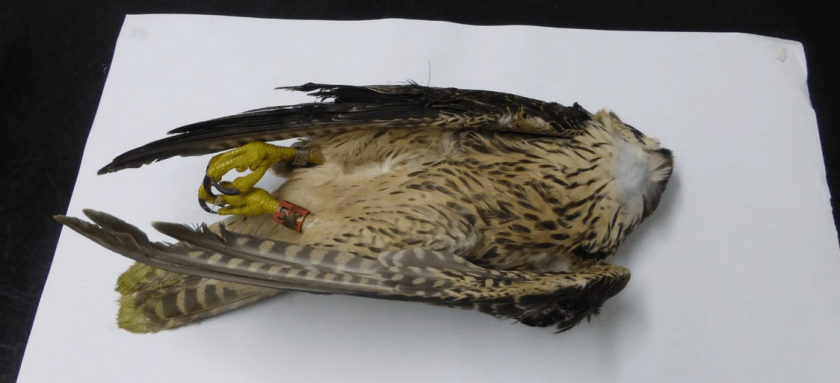
Photo of a dead peregrine that was found shot next to a grouse moor in the Peak District National Park in 2016 [RSPB photo]
An excellent paper by Arjun Amar and colleagues, published in 2011, examined 1081 peregrine nest histories across northern England between 1980-2006 and found that productivity of peregrines on grouse moors was 50% lower than pairs breeding on non-grouse moor habitat. This was attributed to illegal persecution rather than to prey constraints.

Another paper by the North East Scotland Raptor Study Group, published in 2014, demonstrated an on-going decline in the breeding population of peregrines on driven grouse moors on the eastern side of the Cairngorms National Park, a trend that has persisted since 1991.

Anecdotal information suggests a continuing decline in the number of breeding peregrines on the driven grouse moors of Bowland in Lancashire.

And last year, further information was published by the Peak District Bird of Prey Initiative documenting the continuing decline of breeding peregrines in the Dark Peak area of the Peak District National Park, an area dominated by driven grouse moors.

The results of the 2014 national peregrine survey don’t tell us anything we didn’t already know, they simply confirm what has been known for years.

The question is, what, if anything, will the statutory authorities do about it? Continued wilful blindness is no longer an option.


Diverting attention from the illegal killing of peregrines on grouse moors

One of the many criticisms about the proposed reintroduction of hen harriers to southern England is that if a population does manage to become established, the grouse-shooting industry will use it to divert attention from the on-going eradication of this species on intensively managed driven grouse moors. ‘Look, hen harriers are doing just fine in the lowlands, the species’ conservation status has improved, everything’s fine, there’s nothing to worry about anymore’.

If you don’t think that that’s what will happen, just take a look at this letter from the Countryside Alliance, published in The Times yesterday:

PEREGRINE’S SUCCESS

Sir, your report that the peregrine falcon is “now seeking sanctuary in cities as it comes under threat” fails to provide vital context (“Prized peregrine falcons falling prey to greed“, News, Jan 9). The peregrine falcon population reached a low of about 150 pairs in the 1960s as a result of the impact of toxic agricultural chemicals such as DDT in the food chain as well as illegal persecution. However, improved legislation and protection has helped the peregrine falcon to expand its range and numbers. The latest estimates place the number of peregrines at a historic high of 1,500 pairs, and has led to the peregrine having its conservation status declared “secure”. The species, like other raptors such as the buzzard and red kite, is an undoubted conservation success.

ENDS

No mention then, of how illegal persecution on the north of England grouse moors is suppressing local peregrine populations (see here).

No mention then, of how the preliminary results of the 2014 national peregrine survey show a sharp decrease in peregrine occupation in the UK’s uplands, especially in areas intensively managed for driven grouse shooting (see here).

No mention then, of how illegal persecution has led to the continuing decline of peregrines in the grouse moor areas of north east Scotland, particularly on the eastern side of the Cairngorms National Park (see here).

No mention then, of how illegal persecution has led to the continuing decline of the peregrine’s breeding population on the grouse moors of Bowland.

No mention then, of how illegal persecution has led to the continuing decline of the peregrine’s breeding population on the grouse moors of the Dark Peak in the Peak District National Park (see here).

Funny, that.

Photo of a dead peregrine that was found shot next to a grouse moor in the Peak District National Park in 2016 (RSPB photo)

Case against Bleasdale Estate gamekeeper James Hartley: part 2

Today we attended Preston Magistrates Court in anticipation of listening to a case hearing in relation to the prosecution of James Hartley, a gamekeeper from the Bleasdale Estate in Bowland who is accused of a number of offences in relation to the alleged killing of two peregrines in April 2016 (see first court report for details here).

Photo by RPUK

Mr Hartley has pleaded not guilty to the alleged offences and today’s hearing had been initiated for the court to hear legal arguments from both the prosecution and defence before the onset of a potential trial.

At some point between the first hearing in September 2017 and today’s hearing, this case has been elevated to be heard by a District Judge rather than by magistrates. We don’t know the reason for this.

Legal arguments were not heard in court today, and a further date for those arguments to be heard has been set for 14th March 2018.

In addition, defence barrister Justin Rouse QC requested that District Judge Goodwin direct, under the Contempt of Court Act 1981, Section 4(2), “no publication of preliminary interests“, due to what he described as “inappropriate reporting of the previous hearing“. No details of the alleged inappropriate reporting were given in court.

District Judge Goodwin agreed with Mr Rouse’s concerns and, in the interest of avoiding the substantial risk of prejudicing the case, she directed that “nothing pertaining to the legal arguments may be published prior to the conclusion of this case“.

At the end of today’s hearing we asked District Judge Goodwin for clarification on this point and she told us that as of today we may not publish anything about the specific legal arguments that are due to be heard on 14th March (although we can report on these legal arguments at the conclusion of this case), but we were free to report that today’s hearing took place and we are free to report on the trial (if it proceeds) as long as that reporting is fair and accurate – the usual caveats for reporting on legal proceedings.

Given this direction from District Judge Goodwin, we will not be publishing any blog readers’ comments on this particular case until it has concluded.

Depending on the outcome of the legal arguments to be heard on 14th March 2018, and District Judge Goodwin’s judgement (which she said would be ‘reserved’ – which means she won’t make a judgement on the day of the hearing but will take time to consider the legal position and announce her judgement at a later date), a preliminary trial date has been set for 23 April 2018 and is expected to conclude on 30 April 2018.

New report reveals widespread raptor persecution in Northern Ireland

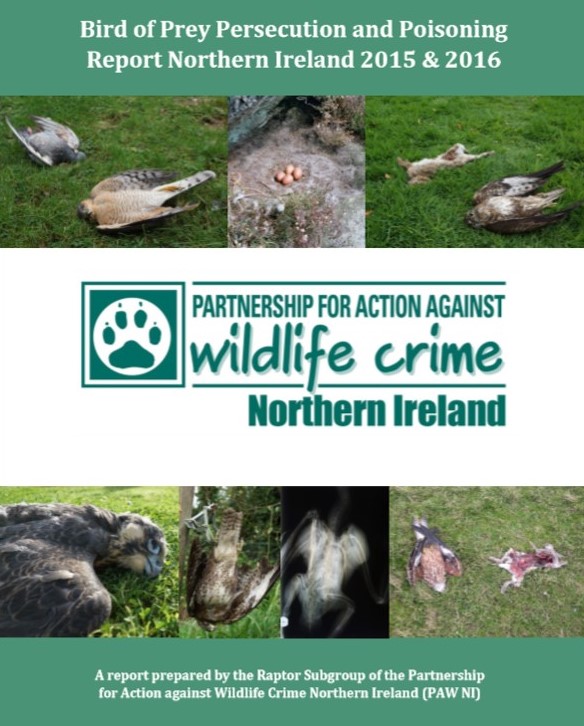
The Partnership for Action against Wildlife Crime Northern Ireland (PAW NI) has today published its latest report on bird of prey persecution 2015-2016.

The report reveals that there were five confirmed illegal persecution incidents reported in 2015 and a further six in 2016, involving the killing of 12 protected birds of prey in Northern Ireland (6 x buzzards, 5 x peregrines, 1 x sparrowhawk). As with every other annual raptor persecution report these figures are probably just the tip of the iceberg.

The report’s lead author, Dr Eimear Rooney (Raptor Officer for the Northern Ireland Raptor Study Group) commented: “This latest persecution report helps us all to understand the scale and distribution of the problem. It is particularly shocking to see new areas appear on the hot-spot maps, showing the issue of raptor persecution to be widespread. It is heart-breaking to think of the deaths of these protected birds but it is particularly shocking to see the continued usage of highly toxic Carbofuran. The PAW NI group will continue to take action to tackle raptor persecution and it is encouraging to see all the partners proactively working together on this report.”

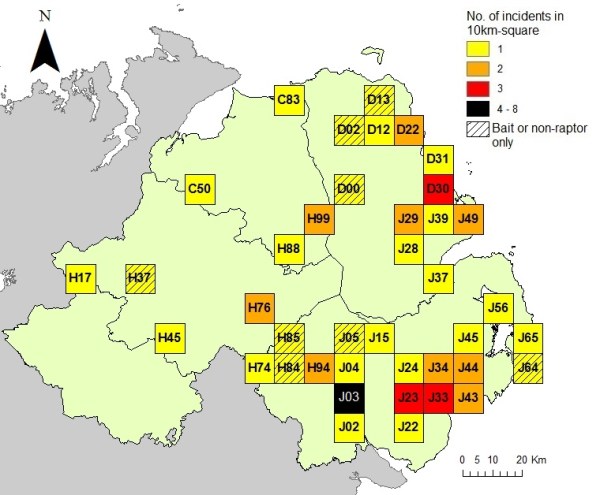
Hotspot map of confirmed incidents of raptor persecution, and poisoned baits & wildlife, reported in Northern Ireland from January 2009-December 2016.

Download the PAW NI report here

Read the PAW NI press release here

On the subject of illegal raptor persecution in Northern Ireland, a 13-year old boy named Dara MacAnulty is doing a 45km sponsored trek in January 2018 to help raise funds for a new raptor satellite-tagging project in Northern Ireland.

Dara is a pretty special young man, passionate about the environment, especially raptors, and he has an exceptional talent for expressing his thoughts – have a read of his blog and you’ll be constantly questioning how a thirteen year old can possibly write so well!

Dara’s fundraising project is off to a good start but he needs more support. If you’ve got a few quid to spare, please consider supporting his efforts HERE. Thanks.

Peregrine found shot in Cambridge

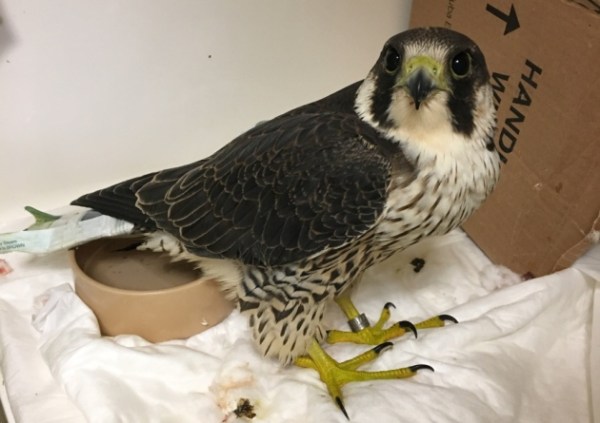
Police are appealing for information after the discovery of a shot peregrine on the outskirts of Cambridge.

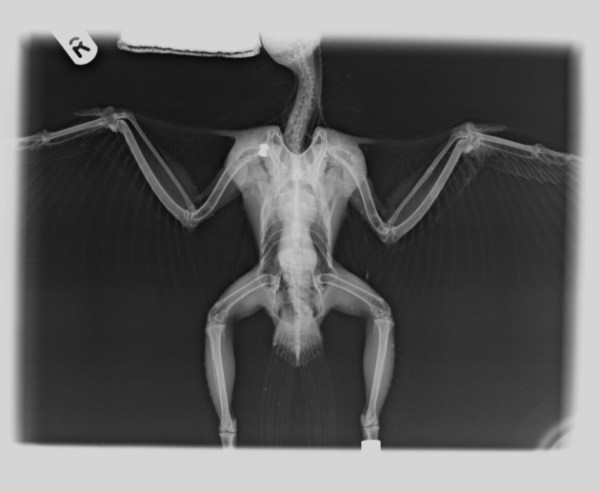
The young bird was discovered injured on 18 September 2017 and was reported to the Raptor Foundation. A veterinary x-ray revealed a pellet from an air rifle lodged in its shoulder and a metal fragment also lodged in its wing, preventing the bird from flying. Vets believe the bird could have been shot up to 10-14 days earlier based on its low weight.

Information from the peregrine’s leg ring revealed this bird fledged from a nest on the outskirts of Cambridge earlier this year.

The peregrine is currently receiving expert care at the Raptor Foundation but it’s not yet known whether it will recover sufficiently to be released back to the wild.

PC Alun Bradshaw of Cambridgeshire Police is urging anyone with information to come forward. Tel 101 and use incident reference number CF0539270917.

Media coverage:

Cambridge Independent News here

BBC News here

RSPB Investigations blog here

ITV news here

Raptor persecution in Peak District National Park – BBC 1 this evening

Tonight’s BBC’s Inside Out programme will feature an investigation in to raptor persecution that’s taking place in the Peak District National Park.

This is a regional programme (BBC East Midlands) starting at 7.30pm but will be available on iPlayer shortly afterwards (see here).

To coincide with this programme, the Derbyshire Wildlife Trust has today called the low number of raptors in the National Park “a national disgrace” and blamed activities relating to the driven grouse shooting industry (see BBC news article here).

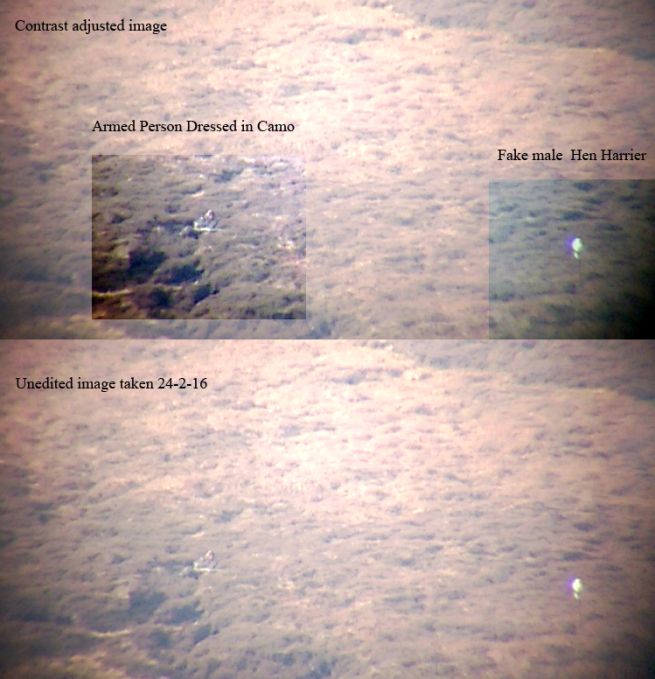
The article also mentions the footage that we published in April 2016 appearing to show an armed man sitting close to a hen harrier decoy on a National Trust-leased grouse moor within the National Park. This resulted in the National Trust terminating the grouse shooting lease four years early and searching for a new tenant. The National Trust has come under increasing public pressure not to lease the moor for grouse shooting and the campaigners are expected to be included in tonight’s Inside Out programme.

Part of the Peak District National Park (mostly the grouse moors of the Dark Peak area) has been recognised as a raptor persecution hotspot for many years (e.g. see RSPB ‘Peak Malpractice‘ reports here and here). As a result of the ongoing concerns, in 2011 the National Park began hosting a Bird of Prey Initiative where ‘partners’ are supposed to have been ‘collaborating’ to increase bird of prey populations. It has failed miserably. In 2015 it was announced that none of the project targets had been met (here) but that the Iniative was going to continue with “renewed commitment” and “new rigour and energy“. Strangely, we haven’t heard any more results from this so-called partnership initiative since then, although Rhodri Thomas, an ecologist with the Peak District National Park Authority gave a very honest presentation at the Sheffield raptor conference in September 2016. His opening words were:

“Has the Initiative worked? Well, we’ve not met the targets that we’d set for 2015, we’ve not met them by a fairly substantial amount in some cases, so I think the answer from that point of view is a fairly clear no“.

Meanwhile, cases of confirmed illegal raptor persecution have continued to emerge (e.g. a shot peregrine that was found critically injured next to a Peak District grouse moor in September 2016. It didn’t survive its injuries).

Don’t forget – BBC 1 (East Midlands) Inside Out tonight at 7.30pm.

Sticking with the Peak District National Park and alleged wildlife crime, did anyone see yesterday’s news that the Crown Prosecution Service has decided there will no charges relating to the alleged snaring of badgers that was filmed by the Hunt Investigation Team on the Moscar Estate earlier this year? Interesting.

Also of interest, to us, was the name of the spokesman for Moscar Estate who was cited in the article: Ian Gregory. Surely not the same Ian Gregory of You Forgot the Birds notoriety?

Bleasdale Estate gamekeeper denies killing two peregrines in Bowland

A 34-year old gamekeeper, James Hartley, appeared at Preston Magistrates Court today to face a series of charges relating to the alleged killing of two peregrines on the Bleasdale Estate, Bowland, in April 2016.

The charges read out in court were as follows:

  1. Killing a Schedule 1 wild bird. On 13 April 2016 at Bleasdale in the county of Lancashire, intentionally killed a wild bird included in Schedule 1 to the Wildlife & Countryside Act 1981, namely a peregrine falcon, contrary to sections 1(1)(a), 1(4) and 21(1) of the Wildlife & Countryside Act 1981.
  2. Disturb the nesting site of a Schedule 1 wild bird. On 13 April 2016 at Bleasdale in the county of Lancashire, intentionally or recklessly disturbed a wild bird included in Schedule 1 to the Wildlife & Countryside Act 1981, namely a peregrine falcon, while it was in, on or near a nest containing eggs or young, contrary to sections 1(5)(a) and 21(1) of the Wildlife & Countryside Act 1981.
  3. Killing a Schedule 1 wild bird. On 13 April 2016 at Bleasdale in the county of Lancashire, intentionally killed a wild bird included in Schedule 1 to the Wildlife & Countryside Act 1981, namely a peregrine falcon, contrary to sections 1(1)(a), 1(4) and 21(1) of the Wildlife & Countryside Act 1981.
  4. Set trap / gin / snare etc to cause injury to wild bird. On 13 April 2016 at Bleasdale in the county of Lancashire, set in position a trap which was of such a nature and so placed as to be calculated to cause bodily injury to any wild bird coming in to contact with it, contrary to sections 5(1)(a) and 21(1) of the Wildlife & Countryside Act.
  5. Take a Schedule 1 wild bird. On 13 April 2016 at Bleasdale in the county of Lancashire, intentionally took a wild bird included in Schedule 1 to the Wildlife & Countryside Act 1981, namely a peregrine falcon, contrary to sections 1(1)(a), 1(4) and 21(1) of the Wildlife & Countryside Act 1981.
  6. Possess live / dead Schedule 1 wild bird or its parts. On 13 April 2016 at Bleasdale in the county of Lancashire, had in your possession or control a dead wild bird included in Schedule 1 to the Wildlife & Countryside Act 1981, namely a peregrine falcon, contrary to sections 1(2)(a), 1(4) and 21(1) of the Wildlife & Countryside Act.
  7. Possess an article capable of being used to commit a summary offence under section 1 to 13 or 15-17. On 13 April 2016 at Bleasdale in the county of Lancashire, for the purpose of committing an offence, namely killing a Schedule 1 wild bird, namely a peregrine falcon, under section 1(1)(a), 1(4) and 21(1) of the Wildlife & Countryside Act 1981, had in your possession a firearm which was capable of being used for committing the offence, contrary to section 18(2) of the Wildlife & Countryside Act 1981.
  8. Possess an article capable of being used to commit a summary offence under section 1 to 13 or 15-17. On 12 April 2016 and 27 April 2016 at Bleasdale in the county of Lancashire, for the purpose of committing an offence, namely killing a Schedule 1 wild bird, namely a peregrine falcon, under section 1(1)(a), 1(4) and 21(1) of the Wildlife & Countryside Act 1981, had in your possession hammer, trap and knife which were capable of being used for committing the offence, contrary to section 18(2) of the Wildlife & Countryside Act 1981.
  9. Cause unnecessary suffering to a protected animal – Animal Welfare Act 2006. On 12 April 2016 and 15 April 2016 at Bleasdale in the county of Lancashire, caused unnecessary suffering to a protected animal, namely a peregrine falcon, by an act, namely trapping and leaving for a number of hours, and you knew or ought reasonably to have known that the act would have that effect or be likely to do so.

Mr Hartley denied all charges.

The following commentary has been compiled from notes we took during the hearing:

The lawyer from the Crown Prosecution Service then summarised the prosecution case. She said the Crown’s case is that the defendant is responsible for the destruction of two birds at their nest site. She said the matter came to light when the RSPB sited a camera within the boundary of Bleasdale Estate to monitor nesting peregrines. The Crown alleges that camera footage captures an individual in a camouflage suit attending the nest site. The individual remained there for a number of minutes setting what is believed to be a trap. The female peregrine is seen to leave the nest and four shotgun discharges are heard and the female does not return. The male peregrine remained at the site all day, believed to be trapped in the device set earlier. Later in the evening a person is seen to attend the nest site and remove something.

She went on to explain that the defendant is the gamekeeper for this particular ‘beat’ on the Bleasdale Estate and during a police search of his property a bag was seized containing a number of tools. A forensic analysis showed that a wooden-handled hammer and an orange-handled knife both contained peregrine DNA. The defendant gave a ‘no comment’ interview.

The defence lawyer, Tim Ryan, told the court that his client did not carry out the offences and is not the person shown in the video footage. He said part of his defence case would be to question the admissibility of video evidence under section 78 of the Police & Criminal Evidence Act.

The next hearing will take place on 11 January 2018 which is expected to deal with legal arguments about the admissibility of video evidence. Depending on the outcome of that hearing, a preliminary trial date was set to begin on 12 February 2018 and is expected to last for five days.

PLEASE NOTE: Comments are welcome but contributors are reminded that the offences are only alleged at this stage and it is up to the court to determine innocence or guilt. Please consider your words carefully as libellous commentary could interfere with the progression of this case! Thanks.

UPDATE 10 January 2018: Case against Bleasdale Estate gamekeeper James Hartley: part 2 (here)