Pair of breeding peregrines suspected poisoned, 3 chicks rescued

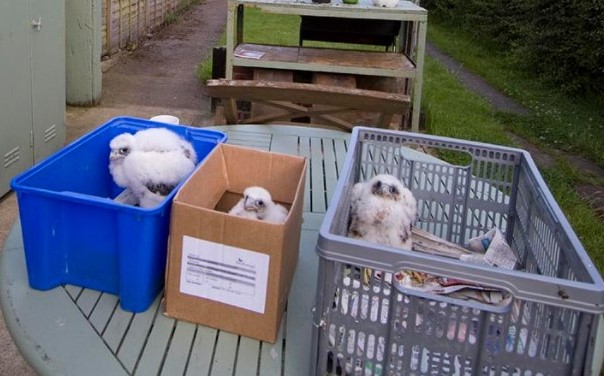
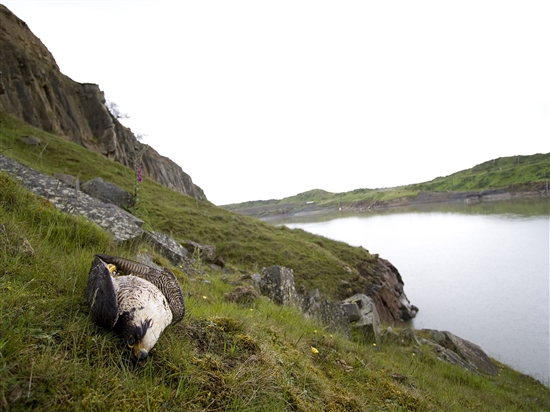
A pair of breeding peregrines has been found dead at a quarry in Clee Hill, Shropshire, leaving three vulnerable chicks in the nest.

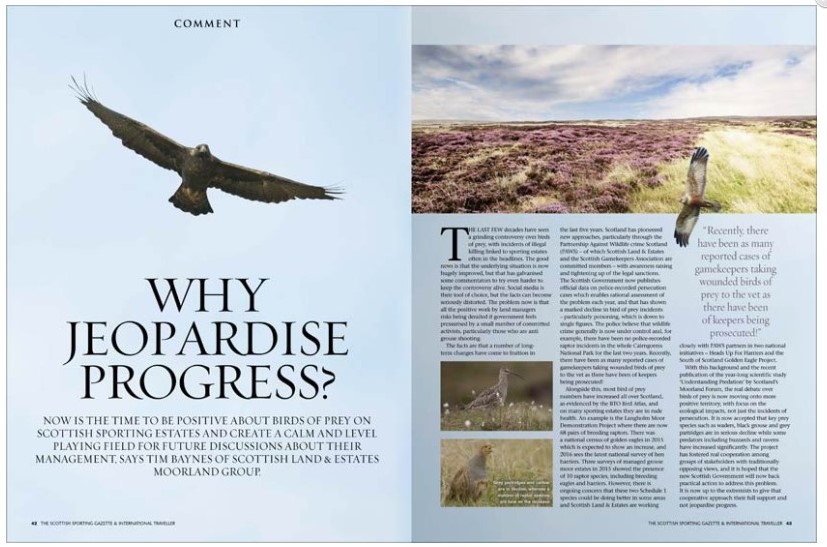
Thanks to the swift actions of the Shropshire Peregrine Group, the RSPB and others, the three chicks have been rescued and are currently receiving expert care from the amazing Jean Thorpe. It is hoped they will be placed in foster nests early next week.

RSPB Investigations Officer Tim Jones has written a blog about this case here

Clee Hill is a notorious blackspot for raptor persecution. Two peregrines were poisoned here in 2010, another was found poisoned in 2011 and another was found poisoned in 2015 (see here). Tests revealed all four had been illegally poisoned with Diazinon.

Photos from the latest incident (RSPB)

Peregrine found shot in Ninfield, East Sussex

Press statement from Sussex Police, 25 May 2017:

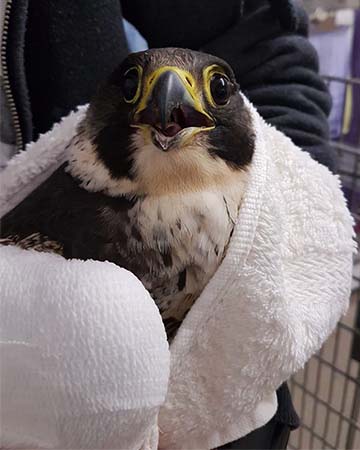
A protected peregrine falcon has been found shot in Ninfield, East Sussex, sparking an investigation by police and the RSPB.

The bird – a female – was discovered alive but injured by woods at Lunsford Cross on 10 May, and staff from East Sussex Wildlife Rescue & Ambulance Service were called to recover the bird.

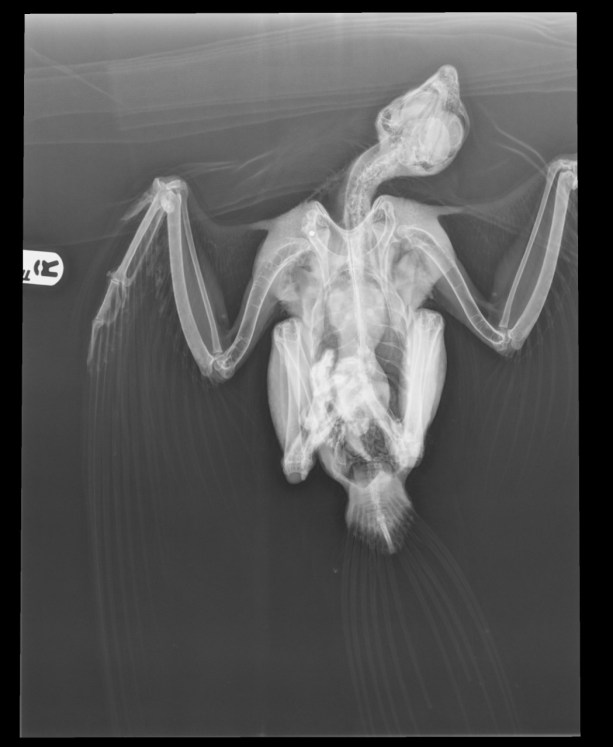
An X-ray revealed a recent fracture to its right wing consistent with a shot injury. While undergoing examination, a further three shot gun pellets were discovered: two in the bird’s stomach and one in its left wing. These were considered historic and the vet concluded that the bird had also been shot at an earlier date.

The peregrine has undergone surgery and is recovering at the rescue centre.

Daryl Holter, Wildlife and Heritage Officer for Sussex Police, has urged anyone with information about the incident to come forward.

He said: “Peregrine falcons are a protected species under Schedule 1 of the Wildlife and Countryside Act. It is an offence to intentionally take, injure or kill a peregrine. To shoot it in this way was a vile and senseless act. Had the injured bird not been found it would almost certainly have faced a lingering death, possibly through starvation.”

Chris Riddington from East Sussex Wildlife Rescue said: “The bird is incredibly lucky to have been found and we are liaising with experts with regards to its care. It is still uncertain whether the fracture will heal, but our vets are happy with its progress. It’s hard to believe anyone would shoot a bird – but this is becoming far too common in today’s society. These birds are shot and left to suffer and we have to pick up the pieces.”

Jenny Shelton, RSPB investigations liaison officer, said: “It is appalling to hear that someone has shot a peregrine falcon – a bird which is already of conservation concern in the UK. Peregrines are magnificent, agile birds and will be breeding at this time of year, so taking out this young female may impact her chances of producing young this year.

This incident is part of an ongoing problem with raptor persecution in the UK. This is the fifth report of a peregrine with shotgun wounds we have received already this year, but as yet no-one has been brought to account. This, as most people would agree, is simply not acceptable.”

If you have any information relating to this incident, contact Sussex Police online, email 101@sussex.pnn.police.uk or phone 101, quoting serial 420 of 19/05. Alternatively contact Crimestoppers anonymously on 0800 555 111.

If you find a wild bird which you suspect has been illegally killed or harmed, contact police or RSPB investigations on 01767 680551, or fill in the online form here

Shot peregrine successfully rehabilitated & returned to wild

In March we blogged about the discovery of a shot peregrine that had been found in Hampshire (see here). This was a bird that had hatched from a nest ledge on Salisbury Cathedral in 2014.

Following the shooting in March, the peregrine, ‘Peter’, was taken to the Hawk Conservancy Trust near Andover where he began a period of expert veterinary care and rehabilitation for a fractured wing caused by gunshot.

A few days ago, Peter was successfully released and returned to the wild. Fantastic work by all involved! The full story can be read on the Hawk Conservancy Trust website here.

The photo of Peter being released is by James Fisher.

UPDATE 22 July 2018: Salisbury peregrine ‘Peter’ – shot last year, Dad this year (see here)

Suspected peregrine nest robbery: NWCU appeals for info one year on

The National Wildlife Crime Unit (NWCU) and Cheshire Police are appealing for information about a suspected peregrine nest robbery in May 2016.

The following press release was posted on the NWCU website yesterday:

Peregrine falcons have regularly nested on property owned by Railtrack at Dutton Viaduct in Cheshire.  However, nesting attempts have failed for 9 successive years.  Human interference has been suspected on a number of occasions.

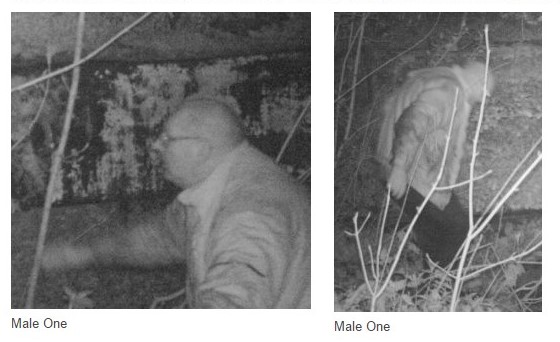
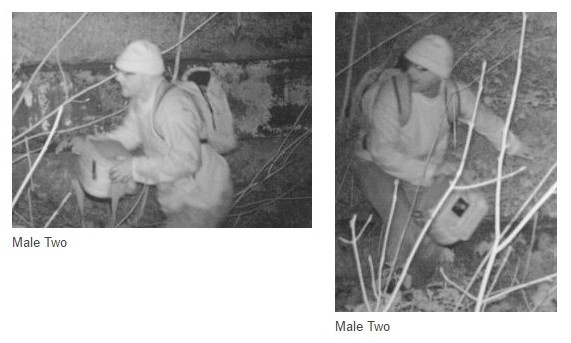
Overnight 1st to the 2nd May 2016 (please note this is 2016) the nest failed.  On this occasion, the images of three men were captured on a trail camera that had been placed on land owned by Railtrack near to the nest.  In the early hours of the morning of 2nd May 2016 the three men were pictured heading up towards the nest site.  A short time later the same men triggered the camera as they headed back down the same route.

There is no public right of access and there seems no legitimate reason why these men should be at the location.

Cheshire Police and the National Wildlife Crime Unit would like to speak to the men shown in the images below in order to ascertain whether they have any information relating to the failure of the nest.


Peregrine falcons, their nests and eggs receive the highest level of protection and it is an offence to take, kill or injure the bird, take or possess their eggs or to disturb them whilst they are in or near a nest containing eggs or dependent young.

Anybody with any information should contact the Police on 101 or Crimestoppers on 0800 555 111

ENDS

It’s not clear why there has been an interval of one year before this appeal for information was made.

This case, along with the theft of gull eggs from Poole Harbour, featured on yesterday’s edition of Countryfile (available on iPlayer for the next 29 days here). The use of covert camera surveillance on raptor nests was mentioned as “a vital tool” in catching egg thieves red-handed.

They didn’t mention that camera surveillance was also pretty good for catching raptor killers red-handed, but if the footage was filmed on land being used for game bird shooting then every legal obstacle possible would be put in the way of it being used as evidence in court. Funny that.

Three dead peregrines in Forest of Dean

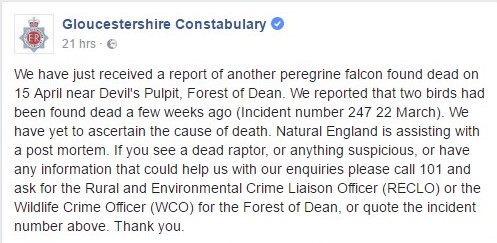
In March 2017, news emerged of two dead peregrine falcons that had been found dead near the Devil’s Pulpit in the Forest of Dean, Gloucestershire. We didn’t blog about these birds as we were waiting for the Police to publish the findings of a post mortem examination. We are still awaiting those results.

However, yesterday Gloucestershire Constabulary issued another statement about a third dead peregrine found in the same area on 15 April 2017:

Three dead peregrines found in the same area within a month sounds pretty suspicious, especially as there has been a spate of confirmed peregrine persecution incidents in England over the last few months (see here for recent RSPB Investigations blog on these crimes).

Let’s hope the post mortem results on the Gloucestershire peregrines are completed and published without any further delay.

Peregrine photo by Megan Lorenz

Peregrine found shot in Devon

News of yet another shot peregrine, this time in Devon.

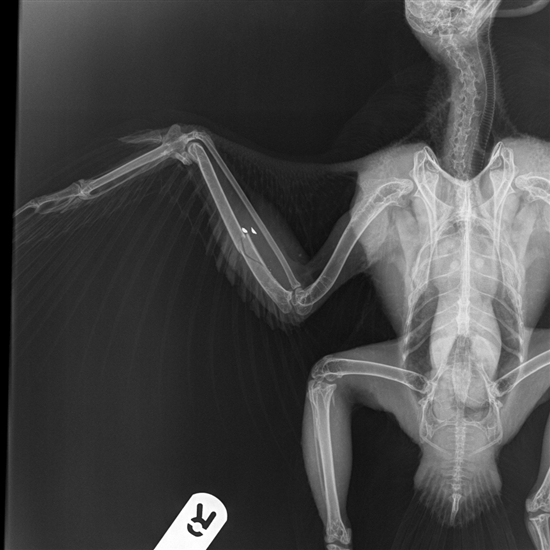
The female bird was found on 6 March 2017 next to Milton Abbot primary school in Tavistock. She was taken to a vet where an x-ray revealed a piece of shot lodged in her right shoulder (x-ray & photo courtesy Westmoor Veterinary Hospital, Tavistock).

The peregrine is currently being cared for by a local falconer.

Further details of this incident, and several other shot peregrines that have been found this year, on the RSPB’s Investigations Team blog here

Peregrine found shot in Hampshire

The RSPB’s investigations team is reporting the discovery of a shot peregrine in Hampshire.

The bird, which hatched on Salisbury Cathedral in 2014, was found in King Somborne, Hants, on 11 March 2017, unable to fly.

It was taken to the Hawk Conservancy Trust in Andover where an x-ray revealed it had a fractured wing with gunshot fragments lodged next to the fracture site.

The peregrine is currently undergoing rehabilitation at the Hawk Conservancy Trust.

For further details see the RSPB Investigations Team blog here, which also lists some of the other peregrines that have been found so far this year, either shot or found dead in suspicious circumstances.

Meanwhile, the Police Service of Northern Ireland (PSNI) has joined forces with the Northern Ireland Raptor Study Group to proactively protect peregrine breeding sites throughout the region. Real partnership working – good for them. More information can be found on the NIRSG website here.

UPDATE 25 May 2017: Shot peregrine successfully rehabilitated and returned to the wild by Hawk Conservancy Trust (see here).

UPDATE 22 July 2018: Salisbury peregrine ‘Peter’ – shot last year, Dad this year (here)

Dead peregrine in Cumbria: x-ray reveals historical lead shot fragments

Cumbria Constabulary have launched an investigation after the discovery of a dead peregrine, according to the Westmorland Gazette.

The bird was found by walkers on a public footpath in Bove Wood, Newbiggin but the article doesn’t say when the corpse was found.

The peregrine was submitted for a post mortem and although the cause of death couldn’t be established, an x-ray revealed the bird was carrying three fragments of lead shot, thought to be historical.

PC Sarah Rolland said: “It is quite apparent that the peregrine recovered from Newbiggin had been shot at some stage in its life. However, the post mortem indicates the fragments of shot may be historic and were not the direct cause of its death. It is therefore difficult to establish when or where the bird was shot“.

As an aside, it’s interesting that Cumbria police accept that the x-ray clearly shows the peregrine had been shot, and yet an equally clear x-ray of hen harrier Rowan’s leg, containing metal shot fragments, wasn’t deemed to be clear and only resulted in the Cumbria police statement, ‘Rowan was likely to have been shot‘. Fascinating.

Scarecrow placed at peregrine breeding site on Northumberland grouse moor

An interesting case highlighted in the latest edition of the RSPB’s Legal Eagle newsletter:

Notorious egg thief on the run

jeffrey-lendrumJeffrey Lendrum, a notorious international falcon egg thief, has gone on the run in Brazil and there are fears he may well turn up back in the UK this year to go after peregrine eggs.

In January 2016 Lendrum, 55, was sentenced to four and a half years in jail after being convicted of being in possession of rare falcon eggs at Sao Paulo airport, enroute from Chile to Dubai (see here). However, he had recently appealed his sentence and the Brazilian authorities released him on bail pending his appeal.

He has since disappeared.

Lendrum has a string of previous convictions for falcon egg smuggling, dating back as far as 1984 in Zimbabwe. In 2002 he was arrested in Canada for stealing peregrine and gyrfalcon eggs. In 2010 he was sentenced to 30 months imprisonment in the UK (reduced to 18 months on appeal) after being caught with 14 peregrine eggs at Birmingham Airport. He’d stolen them from nests in south Wales and was enroute to Dubai (see here).

If you’re involved with monitoring peregrine sites in the UK, keep an eye out for this face.