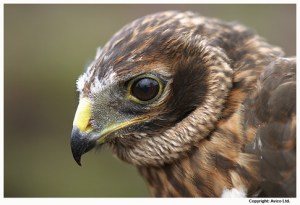
English hen harriers flying around in invisible cloaks

‘Given the population of hen harriers in Europe, it is wrong to talk of “extinction”‘ [in relation to the single hen harrier breeding attempt in England this year], claims Alasdair Mitchell in his latest article for Shooting Times. He goes on to say, “To talk in emotive terms about “a second extinction” is a tad over the top“.

I don’t think there’s anything emotive or over the top about stating that England’s HH breeding population is on the verge of extinction – it’s a biological fact! With only one known nesting attempt in 2012 (and rumours circulating that the attempt has failed), the species is most definitely on the brink of an extinction as an English breeding species. What else would you call it? Birds-now-wearing-invisible-cloaks?

The term ‘extinction’ is a valid, scientific term that can be used to describe the loss of a species (in this case a breeding species) at a local, regional, national or international level. In this case, the first three levels are applicable. Perhaps Mitchell objects to the word because he knows it is a word the general public can understand far more easily than other scientific terms such as ‘population decline’, which just infers a loss but doesn’t explain the extent of that loss. The public understands that ‘extinction’ means curtains, lights out, elimination, end of the line. This is probably of concern to the game-shooting industry as they realise there’ll be no place to hide once the public understands the full impact of all that illegal killing.

Mitchell points to the hen harrier’s international conservation status as a species of ‘least concern’ to support his view and says: “There are many thousands flying around Western Europe – including several hundred pairs breeding happily in Scotland“. What he (deliberately?) fails to mention is that Scotland’s breeding HH population fell by more than 22% between the 2004 and 2010 national surveys (633 pairs recorded in 2004; 489 pairs recorded in 2010) (see here). He also fails to comprehend the concept of biological diversity and it’s importance on various scales, including, again, local, regional, national and international scales. It’s illogical to ignore the loss of local, regional and national biodiversity just because the species’ international status is still ok. Yeah, let’s kill all our native wildlife – we don’t need it ‘cos it’s all doing fine in other parts of Europe.

Mitchell is a hill farmer in Northumberland. In addition to his weekly column for Shooting Times (under the heading ‘Sharpshooter’) he has also written for the National Gamekeepers’ Organisation as well as acting as their media advisor. In May 2012 (see here) Mitchell was appointed as the Northern Regional Director for BASC (British Association for Shooting and Conservation). That potted bio probably explains Mitchell’s failure to grasp the principles of biodiversity conservation, although to give him his due, he ends his article by saying:

I am not pretending that illegal persecution has not had an impact, over the years, on the hen harrier population. It has – and that’s bad. We need to find ways of hosting more hen harriers but without destroying the commercial grouse shooting that actually pays for their moorland habitat“.

It’s certainly refreshing to hear someone from the shooting industry admit that persecution has affected HHs – it’s usually just outright denial, and it’s also encouraging to hear him calling for more hen harriers, although that now seems an unlikely prospect without formal government intervention. In the meantime, while we all argue about the semantics of extinction, the UK’s breeding hen harrier population continues to fade.

Mitchell’s full column can be read on the Shooting Times website (although it appears that this one hasn’t yet been posted).

George Monbiot: a journalist who says it like it is

George Monbiot is fast becoming my favourite journalist (and not just because he uses this blog as a source of information!).

In his latest article, due to be published in the Guardian tomorrow but released on his website tonight (see here), Monbiot digs a little deeper inside the #buzzardgate debacle and uncovers some fascinating information.

In addition to #buzzardgate he also discusses the scandalous state of the English hen harrier population. He is one of very few authors willing to state, categorically and without caveats or apologies, that the missing English hen harriers [approx 329 pairs] ‘have been shot or poisoned by grouse-shooting estates’. There’s no dilution or ‘maybes’ or ‘possiblys’ in the name of so-called ‘partnership building’ – English hen harriers have been wiped out by grouse-shooting estates and Monbiot is not afraid to say so.

If you read Monbiot’s biography  (here) you’ll see that the thing he fears is ‘other people’s cowardice’.

We can all learn from him.

Would jubilee’ve it: hen harriers finished in England?

We’ve been hearing rumours that the last remaining pair of hen harriers attempting to breed in England have now failed. We don’t yet have confirmation but several (usually reliable) sources are telling us the same thing.

In a recent BBC news article (here), a spokesman from the National Gamekeepers’ Organisation said:

We are unaware of any instance of human interference with hen harriers in England in recent years“.

Yeah, of course you are. Just like Bashar al-Assad is unaware of any instance of government troops massacring the Syrian people?

So, while the country celebrates ’60 glorious years’, take a moment to reflect on the effects of 60 years of raptor persecution.

Yet another golden eagle mysteriously ‘disappears’

Last month we blogged about the ‘disappearance’ of a satellite-tagged golden eagle (see here). Now 22 days later we’re blogging about another one. Isn’t it strange how many UK satellite-tagged raptors go ‘missing’; not just golden eagles, but white-tailed eagles, hen harriers and red kites too. Wonder how these figures compare with tagged raptors in other parts of the world?

The last signal from the latest young golden eagle (#32857) to go ‘missing’ was received on May 11, just to the north-east of the Cairngorms National Park (see here).

Was it just a satellite tag failure and the eagle is still alive and well? Possibly.  Did it die of natural causes? Possibly. Was it poisoned? Possibly. Was it shot? Possibly. Was it caught inside a crow cage trap and bludgeoned to death? Possibly. Will we ever find out? Possibly. If it is found to have been killed illegally, will the perpetrator be brought to justice? Probably not (see here for the ever-growing list of dead and/or missing eagles in recent years for which nobody has ever been prosecuted).

Somebody asked a question the other day and we’ve still not been able to provide an answer:

What does it take to secure a conviction for killing an eagle in the UK?”.

We’ve heard all the excuses in the book, some valid, some not:

(i) The discovery of a poisoned eagle on a sporting estate isn’t enough to secure a conviction because either it could have been poisoned elsewhere and then flown to die at that location, or, it could have been ‘planted’ on the estate by the anti-game-shooting lobby (according to claims made by various gamekeepers over the years although without any actual evidence).

(ii) The discovery of a poisoned eagle lying next to a poisoned bait on a sporting estate isn’t enough to secure a conviction because it’s virtually impossible to identify which individual gamekeeper laid the bait, especially when they all deny it.

(iii) The discovery of a poisoned eagle and a stash of the same poison found on premises on the same sporting estate, and an admission from an individual gamekeeper that he had sole access to the poison isn’t enough to secure a conviction because….well, we don’t know the answer to that one, you’d have to ask COPFS.

(iv) The discovery of a poisoned eagle and a stash of the same poison found in vehicles and traces of it on knives and gamebags on the same estate isn’t enough to secure a conviction because….we don’t know the answer to that one either – ask COPFS.

(v) What if somebody was filmed laying out a poisoned bait and was then later filmed returning to remove the eagle poisoned by that bait? The film evidence would probably be ruled inadmissable because the cameraman was operating ‘covertly’ (i.e. without the landowner’s permission!).

(vi) What if a gamekeeper was found with a dead eagle in the back of his vehicle, and the eagle had injuries consistent with being caught in an illegal spring trap (e.g. broken legs) and having had its head caved in with a blunt object (e.g. smashed skull)? This wouldn’t be enough to secure a conviction because the keeper would probably claim he had just found the dead bird and was taking it home to report it to the authorities. At best he’d be charged with ‘possession’.

The shocking truth is, there has never been a successful prosecution for the illegal killing of an eagle in the UK, in spite of the sometimes overwhelmingly compelling evidence in some cases. So, just what does it take for someone to be convicted of killing an eagle in the UK?

Hen harriers, again

Last week we mentioned that Mark Avery had come out fighting on behalf of hen harriers (see here). Today he’s back on the same subject, knocking at Natural England’s door to try and find out what has happened to 119 hen harriers that have been radio and satellite-tagged since 2002 (see here).

He’s not the only one who’s been asking questions of Natural England about missing hen harriers. Last November we blogged about a satellite-tagged hen harrier from the Langholm Project that had mysteriously ‘disappeared’ (see here). Natural England are in charge of the hen harrier satellite tag data from Langholm. In December, MSP Elaine Murray asked Scottish Environment Minister Stewart Stevenson how much he knew about all of the missing hen harriers that had been satellite tagged at Langholm. His response was vague (here) and didn’t shine any light on what might have happened (notably he failed to mention that the last known signals of many of these young birds just happened to come from grouse moors).

‘Ah’, cried the grouse shooting lobby, ‘but no dead birds were discovered so you can’t assume that they died on a grouse moor’. Of course no dead bodies were discovered. The Langholm Project protocol for investigating the disapearance of their young tagged harriers was to first call up the landowner where the last signal had come from and ask permission to visit the estate to search for the bird! That’s as stupid as a police commander phoning up a suspected drug dealer and telling him the police are coming to search his house later that day so he’d better be ready!

It’s interesting that Natural England were put in charge of all the hen harrier satellite tag data from the Langholm Project (a project that is based in Scotland). Why was that? Was it perhaps because they’d done so well in protecting (keeping secret) all the hen harrier satellite tag data in England since 2002? Both projects have received a considerable amount of public funding – why are we not entitled to read the results?

It’s worth re-visiting something we blogged about at the end of March (here) concerning the UK parliamentary audit on wildlife crime. It included a statement from the Moorland Association (pro-grouse shooting crowd) about hen harriers:

The scale of crime against the hen harrier and its impact on the hen harrier population has been overstated and is misleading. A lack of breeding success on grouse moors does not automatically mean that laws have been broken. There are many, many more birds in England than four successfully nesting pairs, which can be seen over grouse moor during migration and at winter roost sites.

Until a full set of special rules allowing the positive management of hen harriers breeding on grouse moors is forthcoming from the Environment Council’s Hen Harrier Dialogue, moorland owners are within their rights and the law to deter the birds from settling on their moors to breed.”

That kind of says it all, doesn’t it?

Bits and blogs

Some sad news from the Irish Republic – the white-tailed eagle pair who were the first sea eagles to attempt to breed in Ireland for over 100 years (see here) has failed. The birds abandoned their nest on Tuesday evening. In a double blow, the remains of a young satellite-tagged sea eagle have been discovered in County Mayo. The cause of death is still being investigated (see here for a report in the Irish Examiner).

In other news…Mark Avery has come out fighting over the English hen harrier debacle. This morning’s blog (here) focuses on Natural England’s lack of transparency over the results of their ten-year hen harrier satellite tracking project. Good for him, and much stronger than the blog he wrote on Monday (here) where he discussed the poisoned red kites found in the Chilterns. He asked readers to connect the dots but when they did, he claimed he couldn’t see the same picture. Perfectly understandable of course but totally improbable that Mark hadn’t joined the dots within about five seconds flat.

There’s another blogger in town. Stuart Housden is the Director of RSPB Scotland and has kicked off his own [RSPB] blog this month. It was pleasing to see that his third post was about wildlife crime sentencing in Scotland (see here). We’re waiting to see whether he blogs about this weekend’s inaugral Scottish Birdfair. As RSPB Scotland Director, it was probably Stuart’s ill-informed decision to co-host the event at Hopetoun; we’ve blogged before about this incredible lack of judgement (see here and here).

If anyone is attending the Scottish Birdfair this weekend, you might want to pay a visit to the Scottish Land and Estates table (the Scottish landowners’ representative body) and ask them whether any of the following are (a) members of their organisation and (b) signed up the Wildlife Estates Initiative:

Aswanley Estate, Auch Estate, Blythe Farm, Breconside Farm, Culter Allers Farm, Dunecht Estate, Edradynate Estate, Farr and Kyllachy Estate, Glenbuchat Estate, Glenlochy Moor Estate, Glenogil Estate, Glenturret Estate, Innes House Estate, Invercauld Estate, Inverinate Estate, Lawesknow Farm, Leadhills Estate, Lindertis Estate, Lochindorb Estate, Millden Estate, Morvich Estate, Moy Estate, Raeshaw Estate, Redmyre Estate, Seafield Estate, Skibo Estate, Sluie Estate….

Why these particular estates? Oh no special reason, just randomly selected from across the country…If the SLE is unable to give you a credible answer you could always ask them to explain why the organisation supports government-issued licences to kill buzzards.

English hen harriers right on the brink

The RSPB has issued a press release warning that the future for England’s most threatened raptor – the hen harrier – is looking perilous as the species teeters on the brink of extinction as a breeding bird.

Early reports suggest that only one pair is showing signs of nesting in England this year, down from the heady heights of four known breeding pairs last year.

The reason? Well you already know it – persecution. For the persecution deniers,  the government-funded report that spells it out can be found here.

RSPB press release here

Head, sand, buried

Yesterday we blogged about the availability of the written evidence submitted to the UK parliament’s audit on wildlife crime (see here).

Today we’ve read all the written evidence and our expectations of who might have said what were fully met. Although there’s no substitute for reading things for yourself and drawing your own conclusions, there were a few things that stood out…

One common theme was the use of RSPB vs NWCU (National Wildlife Crime Unit) raptor persecution statistics, with groups such as the National Gamekeepers’ Organisation and the Moorland Association claiming that only the NWCU figures should be used to determine the ‘true scale’ of the problem. The Countryside Alliance goes one step further and says that it objects to what it calls ‘scene-of-the-crime involvement of third party campaigning organisations and charities such as the RSPB’ and calls for urgent guidance to clarify ‘that all crimes and suspected crimes should be reported to the police’. No great surprises there – it’s the usual knee-jerk reaction to the RSPB, but what is interesting is that they forgot to mention just how unrepresentative the NWCU figures actually are! Why are they unrepresentative? Well according to the written evidence of the Association of Chief Police Officers (ACPOS), not all police forces submit their wildlife crime data to the NWCU, and even if data have been submitted, it’s not always possible to identify which incidents were wildlife crimes as they are not allocated to a specific code! So yes, it is easy to see why these groups want to get rid of the RSPB stats and replace them with the NWCU figures!

Another point of interest was a statement from the Moorland Association on hen harriers. We thought the second paragraph contained particularly sinister undertones:

The scale of crime against the hen harrier and its impact on the hen harrier population has been overstated and is misleading. A lack of breeding success on grouse moors does not automatically mean that laws have been broken. There are many, many more birds in England than four successfully nesting pairs, which can be seen over grouse moor during migration and at winter roost sites.

Until a full set of special rules allowing the positive management of hen harriers breeding on grouse moors is forthcoming from the Environment Council’s Hen Harrier Dialogue, moorland owners are within their rights and the law to deter the birds from settling on their moors to breed.”

We assume that ‘positive management’ in this context refers to either killing or otherwise removing (translocating) any harriers that are considered ‘surplus’ to an agreed acceptable number (known as a ‘ceiling’). We understand that the Environment Council is seriously considering a ‘ceiling’ on hen harrier numbers for grouse moors; a controversial and long-running argument that we’ll write about another time. But what does the Moorland Association mean when it says ‘moorland owners are within their rights and the law to deter birds from settling on their moors to breed’?

The other comment we found particularly interesting was one made by the Countryside Alliance:

The recent publication of out of date research into the breeding success of peregrine falcons on grouse moors is a further example of counterproductive allegations against shooting which resulted in misleading coverage in the media. As a result of this, the National Wildlife Crime Unit circulated a clarification to all Police Wildlife Crime Officers in the UK, and to all Partnership for Action Against Wildlife Crime members, in which it was drawn to the attention of those studying the research paper that the data used was out of date, and that in using such information there was a clear danger that the research paper might be misunderstood as representing the current situation, which it did not.”

The publication being referred to is the recent paper by Amar et al (2011) which showed that the breeding productivity of peregrines nesting on grouse moors in Northern England was 50% lower than the productivity of peregrines breeding on non-grouse moors (see here for earlier blog on this). Now, why would the NWCU feel it necessary to send an email to wildlife crime police officers and other PAW partners about how to interpret this paper? Did they think that these people were so stupid that they couldn’t read and understand the paper for themselves? Why did the NWCU think that the data used in the paper (collected between 1980-2006 from 141 nesting ranges) were unrepresentative of the current situation? Has the NWCU collected and analysed more recent data to demonstrate that the current situation is different? How does sending this email fit in with the NWCU’s stated primary role of ‘assisting in the prevention and detection of wildlife crime’? What sort of message does this email give to those involved with the fight against raptor persecution? Here is a peer-reviewed scientific publication in a prestigious journal that points directly to the significant relationship between grouse moors and raptor persecution. Isn’t this exactly the sort of publication that the NWCU’s Charlie Everitt was referring to in his speech at the recent wildlife crime conference when he said: “We’ve also been looking to the use of science to try and benefit from what science can deliver to us”?

The thing is that the data used in the paper were part of a long-term data set that clearly showed a trend in poor productivity (i.e. not a snap shot but a long-term picture over 26 years), and this trend also mirrored that of other studies that have shown a clear relationship between low raptor survival and grouse moors (go and read some of the golden eagle papers that have been produced over the last ten years). The NWCU appear to have missed this point in their scrabble to appease the grouse-shooting lobby; so much for their intelligence-led approach to combating raptor persecution, eh?

All the written evidence submitted to the audit committee so far can be read here.

UK parliamentary audit on wildlife crime: evidence available for viewing

In February we blogged about the forthcoming UK parliamentary audit on wildlife crime (see here). Some of the (uncorrected) oral evidence that was presented to the audit committee (including that from RSPB, RSPCA and National Gamekeepers Organisation) is now available to view on the audit committee’s website, as well as a lot of written evidence from these and many other interested parties.

Although some of the oral evidence provides some cause for optimism (i.e. the RSPCA’s success rate for animal welfare prosecutions), other parts of the oral evidence are deeply depressing. Particularly the evidence concerning hen harrier persecution, which focused on the lack of prosecutions for hen harrier persecution since 2006, which was then used as an indication that persecution is not an issue for this species!!

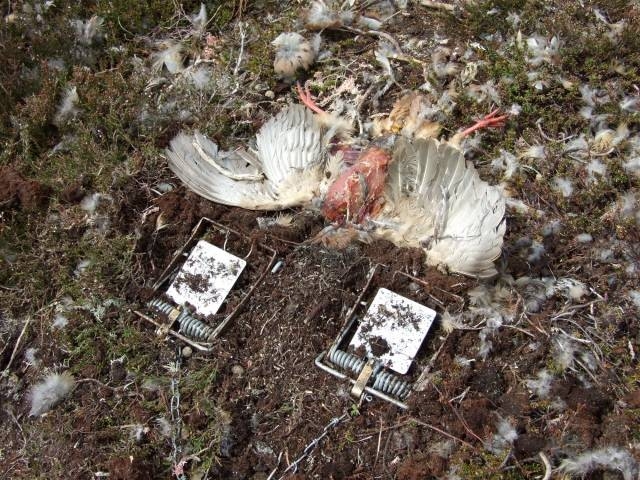
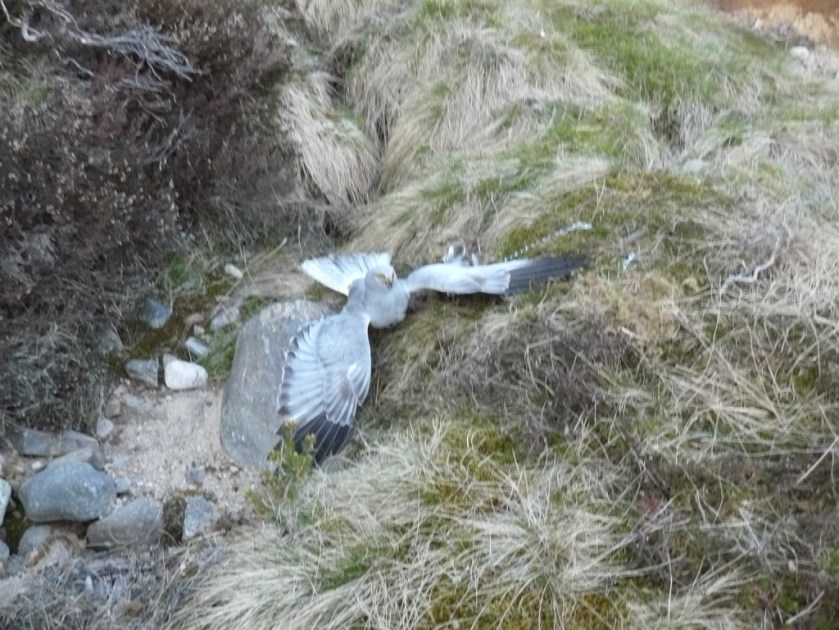
There was a lot of discussion during the oral evidence about how difficult it is to detect the perpetrators of certain wildlife crimes, which is why it’s so bloody frustrating that when investigators do find evidence of hen harrier persecution (e.g. the harrier that was found caught in an illegally-set spring trap on Moy Estate in 2010), no charges were forthcoming.

Uncorrected oral evidence to the UK parliamentary environmental audit committee on wildlife crime available to view here

Written evidence from many individuals and organisations available to read here

The government’s 2011 report that identifies illegal persecution as one of the main problems for hen harriers here

Hen harriers thriving on Orkney but in trouble elsewhere

The hen harrier, considered by many to be the UK’s most persecuted raptor, has reached a twenty-year high on Orkney, according to the latest study.

New figures have revealed 100 breeding females, producing more than 100 chicks, following a steep population decline there during the 1980s and 1990s. The cause of that particular decline was believed to be related to the high number of grazing sheep that reduced the amount of available rough grassland (and thus voles) that Orkney harriers depend on during the breeding season. Once the sheep numbers were reduced (with the help of agricultural support payments) the habitat was allowed to regenerate (and thus vole abundance increased) which was obviously beneficial to the harriers.

We have searched online to find this ‘latest study’ but only found this paper: ‘Long-term impact of changes in sheep densities on the breeding output of the hen harrier‘, authored by Amar et al. This was actually published in February 2011 (see here) but seems to be the one that is being referred to in today’s press releases. This paper only documents hen harrier breeding success up until 2008 though, so perhaps these new figures of 100 breeding females refer to the 2011 breeding season. That could have been made clearer in the news releases. 

RSPB press release about the latest study here; STV news article here; BBC news article here

Unfortunately, in other areas of the UK the hen harrier is doing anything but thriving, especially in northern England where it is on the verge of becoming extinct as a breeding species. A national UK hen harrier survey carried out in 2010 showed an overall decline of more than 22% over just a six-year period (see here and here). In Scotland, the population fell to 489 pairs (from 633 in 2004). Last year in England, there were just four breeding pairs, all on a single estate in Lancashire. Scientists have estimated that there is suitable habitat in England to support over 300 breeding pairs.

The cause of the hen harrier decline? You all know the answer to that by now – illegal persecution, particularly associated with driven grouse moors. We’ve blogged endlessly about it – see here, here, here, here, here….

For anyone who missed it, here’s the government’s official 2011 report on the conservation status of the UK’s hen harriers and the reasons behind their demise (here).