Hen Harrier ‘Susie’, whose chicks were stamped to death in 2022, has been found dead on a North Pennines grouse moor with gunshot injuries

If ever there was an example demonstrating the high level of persecution faced by Hen Harriers on UK grouse moors, the lack of consequences for the offenders, and the lack of justice for the victims, the short life of a Hen Harrier called ‘Susie’ illustrates it all.

Hen Harrier (photo by Pete Walkden)

Susie hatched in Cumbria in 2020 and was satellite-tagged by Natural England on 21 July 2020. She first bred in Bowland in 2021, and the following year she moved up to a grouse moor near Whernside in the Yorkshire Dales National Park where she produced four chicks.

The Whernside nest was being monitored (nest camera) by Natural England as part of the ludicrous Hen Harrier Brood Meddling Trial. On 20 June 2022, NE researchers noticed that Susie’s satellite tag was unexpectedly and abruptly shown tracking approximately 35km away from her nest. An adult female should be attentive and close to her nest during this period. Her sudden exit from the nest area was worrying.

The following day, Natural England field staff visited the nest and made the grim discovery of three dead Hen Harrier chicks.

Reviewing the nest camera footage, they saw that after dark, at 9.54pm on 15 June 2022, the camera showed the nest site appeared normal with Susie settled in the nest with her chicks. However, at 9.59pm a sudden irregular ‘whiteout’ of the camera occurred, blinding the camera.

The camera used was movement-activated, and it was not triggered again until the following morning when footage captured apparently dead chicks in the nest and Susie attempting to feed them.

She could be seen removing her dead chicks from the nest. Three of these were found just outside the nest, and it is not known where she deposited the fourth.

Post-mortem examinations of the three chicks were subsequently conducted and showed that each suffered with multiple fractured bones including the humerus in one chick, both femurs in the second chick, and in the third chick, the humerus and a crushed skull. The fractures were complete and showed a considerable trauma had taken place for each chick.

It’s quite clear that ‘someone’ had visited the nest, disabled the camera, and stamped the chicks to death.

Six months later (!), in December 2022, North Yorkshire Police laid out the evidence and issued an appeal for information (see here).

Representatives from the grouse shooting industry responded by trying to manipulate the narrative of this brutal and sadistic crime (see here) and of course, nobody came forward with any information that could identify the person / people responsible.

The following year, in 2023, the story featured in a three-episode podcast by The Guardian, called ‘Killing the Skydancer’ (here, here and here). Meanwhile, Susie bred successfully (unknown location) and fledged five chicks. It was to be her last breeding season.

In April 2024, Natural England published its latest update on the fate of its satellite-tagged Hen Harriers. It did so quietly, without any publicity whatsoever. Susie’s entry on that spreadsheet read,

Last known transmission 12 February 2024, Northumberland. Found dead. Site confidential. Recovered, awaiting post mortem’.

Nothing more was heard about Susie’s fate until a year later, in another spreadsheet update in April 2025. Susie’s entry now read:

Ongoing police investigation, final transmission location temporarily withheld at police request‘. 

Again, there was no publicity about Susie, or about any of the other Natural England-tagged Hen Harriers that had either ‘vanished’ or had been found dead in suspicious circumstances.

Over one and a half year’s after Susie was found dead, the details have finally emerged, and once again Natural England has slipped them out quietly, without fanfare or commentary, in its October 2025 spreadsheet update. Susie’s entry now reads:

Found dead 12 February 2024, Northumberland, Grid reference NY759585. Confirmed dead, had been victim of shooting. When found dead remains would not allow determination of whether the bird died as a result of being shot. Bird died between 25 November 2023 and 12 February 2024‘.

Susie’s corpse was found on a grouse moor in the North Pennines National Landscape (a so-called protected landscape, formerly known as the North Pennines Area of Outstanding Natural Beauty, AONB), and the grid reference places her on what I believe to be the Whitfield Estate:
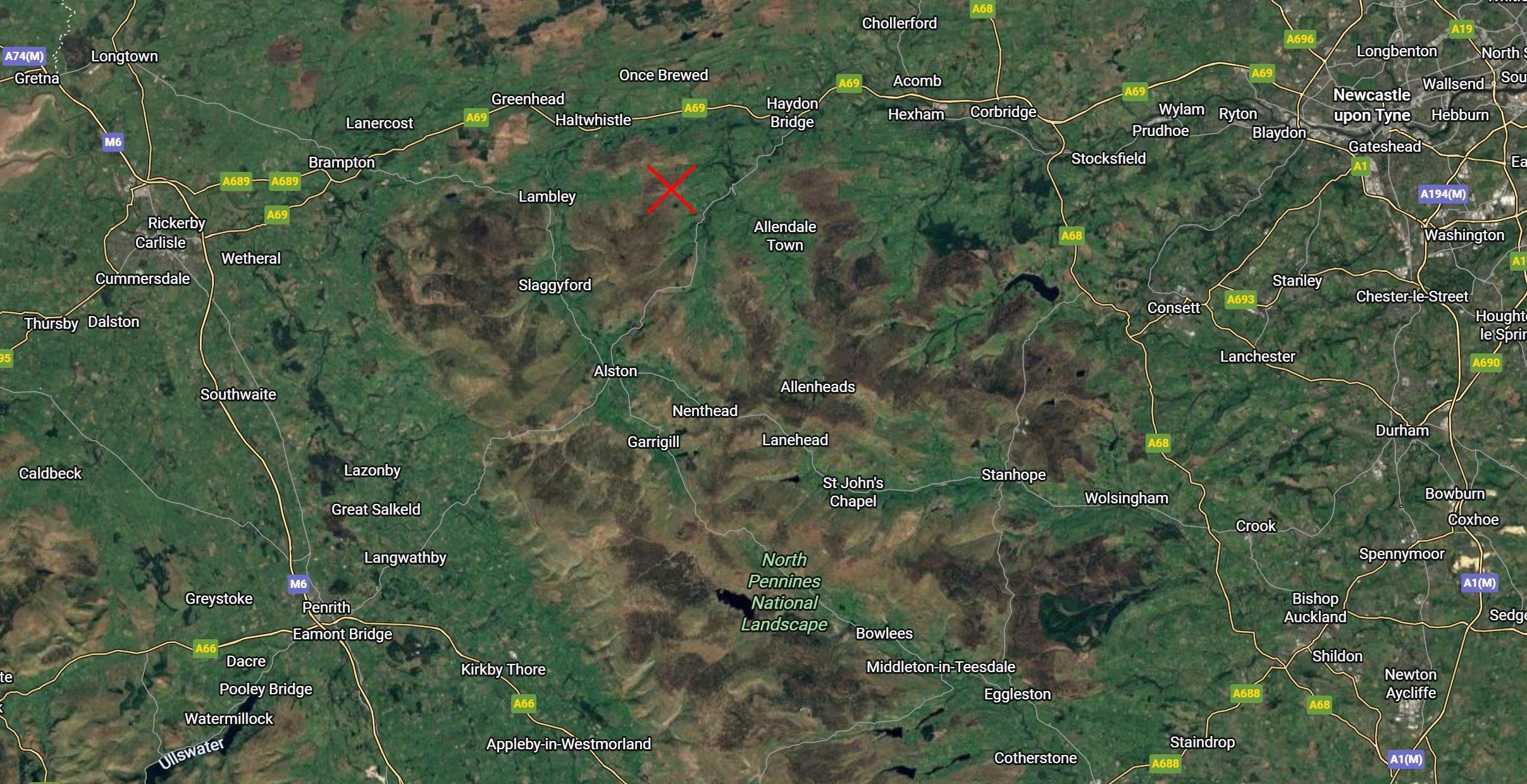
Susie had been shot at some point, but where, and when, is not known.

There is no suggestion that she was shot and killed on the Whitfield Estate – she could have been shot many months earlier and survived for a while before succumbing to her injuries. Without seeing the post mortem and x-ray results (which have not been published), it’s impossible to know whether her gunshot injuries caused any broken bones that could have impeded her ability to fly any distance.

That Susie was the victim of at least two separate persecution incidents (that we know about) during her three-and-a-half-year life, illustrates the severity of threat this species still faces in the UK. This should come as no surprise to anybody who has been following this blog for any length of time, nor to those who may have read the RSPB’s damning 2025 report, Hen Harriers in the Firing Line.

These appalling crimes continue because hardly anyone is ever brought to justice. There is rarely any consequence for the offenders, which gives them the green light to carry on.

There has been a change in tactics by the raptor killers in recent years, as we saw in the RSPB’s covert footage in Oct 2024 where three individuals were caught plotting, and then apparently shooting, a Hen Harrier on a grouse moor in Grassington in the Yorkshire Dales National Park. They specifically targeted the Hen Harrier that was not carrying a ‘box’ (a satellite tag) because they thought that by doing so their crime would be undetected. A gamekeeper is standing trial in January 2026 for his alleged involvement – he denies it – it will be up to the court to decide whether he was involved or not.

That case is a very uncommon prosecution, reliant on evidence provided by the RSPB’s excellent Investigations Team.

There won’t be a prosecution for the shooting of Hen Harrier Susie because there’s no evidence (that I’m aware of) that links an identified individual to that crime. Just as there was no prosecution of the person(s) responsible for stamping her chicks to death in their nest in 2022.

We all get it – finding sufficient evidence to prosecute those responsible for committing crimes in remote landscapes is incredibly difficult, but the investigating authorities could, and should, be doing much more to publicise these offences to raise awareness and help the general public spot suspicious activity.

The police’s appeal for information about the chick-stamping crime in the Yorkshire Dales National Park came six months after the event – that’s pathetic.

I haven’t seen ANY police appeal or press release about the shooting of Susie or the discovery of her corpse in Northumberland in February 2024. Not a single word.

Where is the publicity from the National Wildlife Crime Unit-led Hen Harrier Taskforce? The specialist group set up explicitly to tackle the ongoing illegal killing of Hen Harriers. Not a single word.

Where is the publicity from the police-led Raptor Persecution Priority Delivery Group (RPPDG), one of whose functions is apparently ‘awareness raising‘ and ‘raising the profile [of illegal raptor persecution] via media exposure‘? Not a single word.

Natural England has remained tight-lipped, as it always does, claiming that it requires the go-ahead from the police to issue any media. Why? Sure, in the early stages of a police investigation keeping quiet is often necessary to avoid alerting the perpetrator who may take the opportunity to remove/hide evidence before the police turn up. But 18+ months of silence, about a crime that relates to a publicly-funded project, and then to quietly slip out the information buried deep inside a spreadsheet?

Honestly, this needn’t be so bloody difficult.

Trial of Scottish gamekeeper accused of killing Goshawk now delayed until March 2026

The trial that was due to start at Perth Sheriff Court yesterday, relating to a Scottish gamekeeper accused of killing a Goshawk, has been delayed.

The case didn’t call yesterday due to another trial over-running. The next available court date is not until March 2026.

Perth Sheriff Court (photo by Ruth Tingay)

This case relates to the alleged killing of a Goshawk on a shooting estate near Blairgowrie on 12 February 2024.

For background details, see here.

NB: As this case is live, comments are turned off until legal proceedings have ended.

UPDATE 17 March 2026: Scottish gamekeeper Russell Mason pleads guilty to battering a Goshawk to death on shooting estate in Perthshire (here)

Trial begins today for Scottish gamekeeper accused of killing a Goshawk on a Perthshire shooting estate

A trial begins today at Perth Sheriff Court for a Scottish gamekeeper accused of killing a Goshawk on a Perthshire shooting estate.

The alleged incident took place on 12 February 2024 on a shooting estate near Blairgowrie.

Goshawk with a Pheasant. Photo by Ronnie Gilbert.

Police Scotland, with the assistance of partners from the RSPB and Scottish SPCA, executed a search warrant on the estate on 29 February 2024, leading to the arrest of a 47-year-old gamekeeper and subsequent charge (see here).

He has pleaded not guilty.

NB: As this case is live, comments are turned off until legal proceedings have ended.

UPDATE 12 November 2025: Trial of Scottish gamekeeper accused of killing Goshawk now delayed until March 2026 (here)

Scottish Govt fiddles while grouse moors burn

Earlier this month the Scottish Government announced a delay, for the second time, of the implementation of muirburn licensing after caving in to pressure from aggressive lobbying by the grouse shooting industry (see here).

The very same day this announcement was made, prescribed muirburn, started (legally) by gamekeepers on a grouse moor in the Cairngorms National Park, got out of control and developed in to a wildfire, causing damage to the neighbouring Muir of Dinnet National Nature Reserve (see here and here).

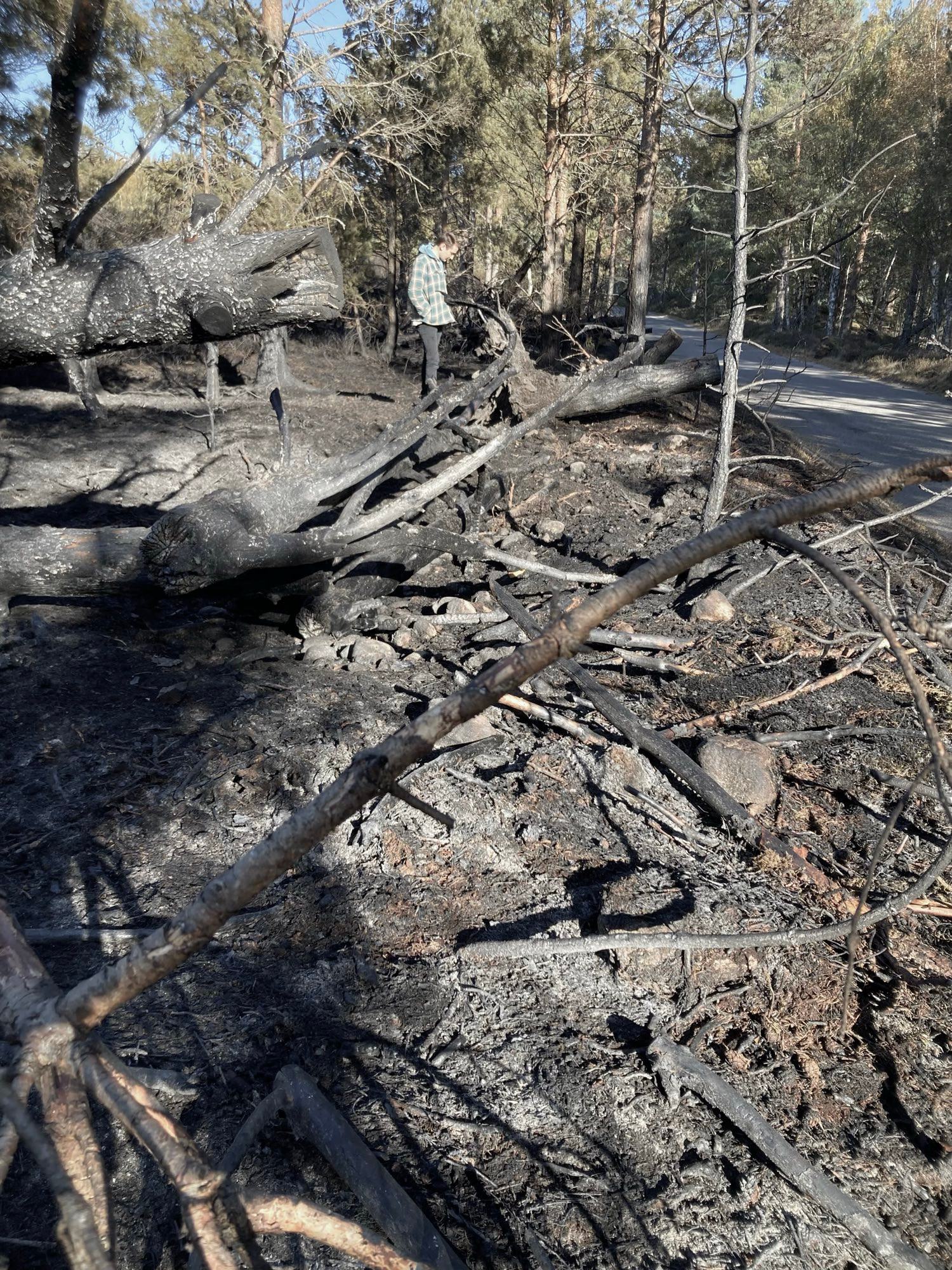
A blog reader has sent in this photo of the aftermath of that fire, showing part of the torched moorland and an ‘information’ board that stands nearby, apparently produced by the Grampian Moorland Group (gamekeepers) and endorsed with the logos of a number of shooting industry organisations, as well as the Cairngorms National Park Authority. I doubt it’s meant to be ironic, but it is.

The text on that ‘information’ board deserves close attention, so here’s a zoomed-in version for your amusement:

Many other grouse moors have also been torched this month – standard practice at this time of year and set to continue for the next six months until the muirburn season ends on 31 March 2026.

Imagine that! Six months of setting fire to one of the most sensitive and important habitats for carbon sequestration, in the middle of a climate emergency, with the blessing of a Government that is ignoring the will and intent of the Scottish Parliament by delaying the implementation of the Wildlife Management & Muirburn (Scotland) Act 2024. And all because it doesn’t want to upset wealthy landowners. It’s astonishing.

Grouse moor set alight on Invercauld Estate, Cairngorms National Park, Oct 2025 (photo from blog reader)
Grouse moor set alight in the Monadhliaths, Oct 2025 (photo from another blog reader)

Had the Scottish Government adhered to the will of Parliament, the torching of grouse moors, carried out to increase the number of Red Grouse available for shooting, would not be happening.

Muirburn licensing, which would only permit the fires under very limited circumstances (and not for the purpose of increasing Red Grouse stocks for shooting), was supposed to have been in place by the start of the 2025/2026 muirburn season on 15 September 2025, following the Scottish Parliament voting in favour of it 18 months previously.

However, in June 2025 the Scottish Government announced it was delaying implementation until 1 January 2026 because the grouse shooting industry had laughably argued that it wasn’t practical or fair for the licences to begin in September 2025 (see here).

Since then, the grouse shooting industry has continued its lobbying and now wants the licences dropped altogether because of what it calls the ‘need’ for muirburn to ‘control the fuel load’ – the amount of combustible vegetation which could influence the intensity and spread of wildfires. The lobbying was successful, leading to Minister Jim Fairlie’s announcement earlier this month that licensing would now be delayed until the start of next year’s muirburn season in autumn 2026.

But as Scottish Greens MSP Ariane Burgess pointed out,

During the scrutiny of the Wildlife Management and Muirburn Act we took detailed evidence on the role of muirburn in wildfire risk. There is very little credible evidence to support the hunting and shooting lobby’s ridiculous claim that these practices have any role in preventing wildfires“.

This theme continues today in another excellent blog written by Professor Douglas MacMillan and posted on the Parkswatchscotland website. Professor MacMillan shows compelling evidence that ‘the practice of muirburn actually made no difference to the extent of the Dava mega-fire‘.

Well worth a read – here.

BBC’s Highland Cops programme features investigation into shot out Goshawk nest in Cairngorms National Park

The BBC’s Highland Cops programme has entered its third series and episode 2 features the police investigation in to an active Goshawk nest that had been shot out on a sporting estate near Kingussie, on the western side of the Cairngorms National Park.

This investigation took place in June 2024 – see here for the police’s appeal for information at the time.

Screengrab from BBC Highland Cops programme

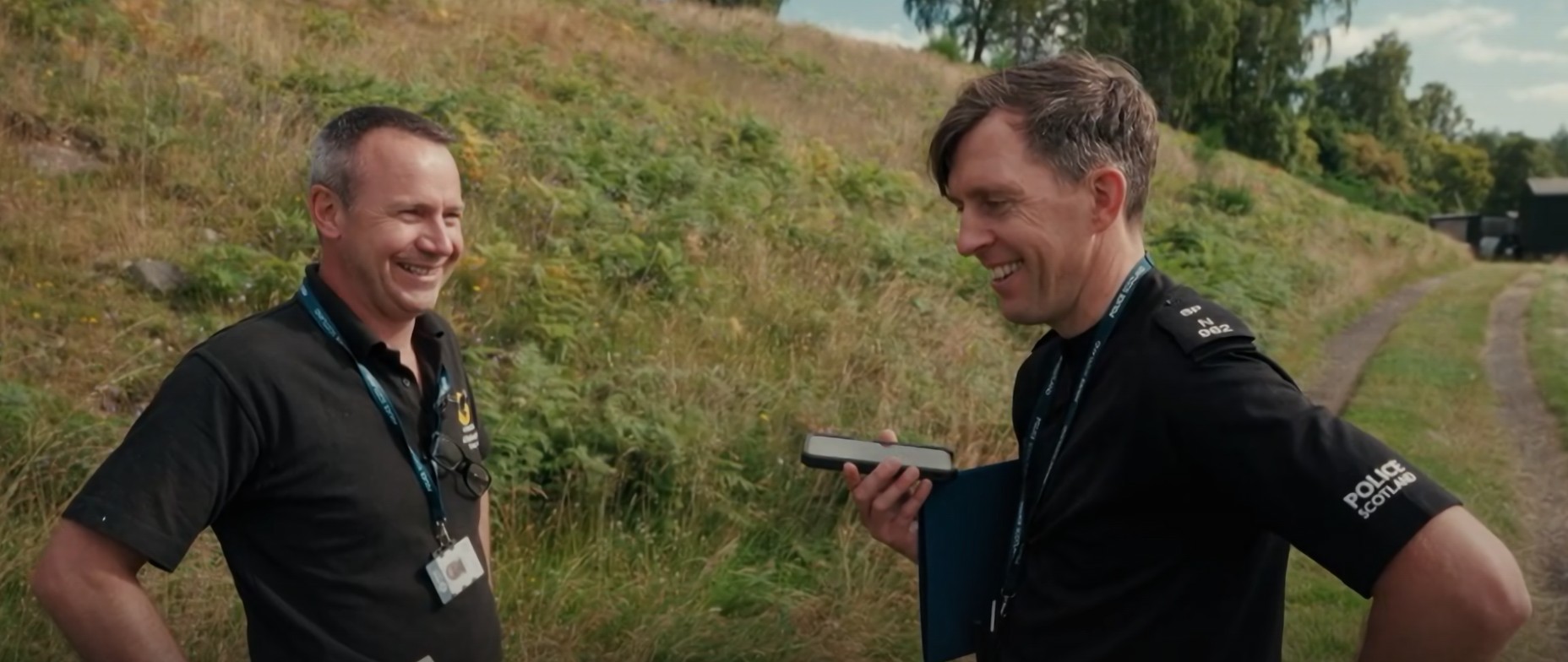
Officers had received a report of the active Goshawk nest being found abandoned in suspicious circumstances in a forest near Loch Gynack, and the programme follows experienced wildlife crime officer PC Dan Sutherland throughout his investigation.

The commentary from Dan is excellent – he speaks calmly and with authority about the link between illegal raptor persecution and gamebird shooting estates, and how the criminals have been getting away with their crimes for so long. That’s not opinion or conjecture, it’s based on factual evidence, and I applaud him for being prepared to say it on camera, knowing full well that it will attract vicious retaliation from some within the gamebird shooting industry, including, I have no doubt, official letters to his superior officers demanding punitive action against him.

Dan visits the abandoned Goshawk nest where he finds empty shotgun cartridges at the base of the tree and a shotgun wad is found lodged in the bottom of the nest.

The nest is removed for forensic examination, along with several nearby tree branches. They’re taken to the Kincraig Wildlife Highland Park for x-rays, which reveal a large number of shotgun pellets:

As Dan says, the evidence is damning.

He then teams up with PC Gavin Ross from the National Wildlife Crime Unit (NWCU) and they set out to visit all the people who legally own shotguns in the area, to either rule them out of the enquiry or to see if they can provide assistance.

The first person they visit is a gamekeeper who lives on the estate. They knock at his house and a woman speaks to them through a crack in the door, telling them he’s not in. As the officers leave to go and visit the next person on their list, Dan gets a phone call from a solicitor who tells him that none of his clients will be talking to the police without him being present.

“It’s the nature of the beast”, says Dan.

Dan and Gavin comment to one another that the speed of the solicitor’s phone call is probably some kind of record – coming in less than ten minutes after they’d knocked on the gamekeeper’s door. Their wry smiles tell you this is a common occurrence and was not unexpected. It puts a halt to their investigation until they can organise a time to meet with the shotgun owners and their legal representative.

PC Gavin Ross & PC Dan Sutherland take a call from the gamekeeper’s solicitor (screengrab from BBC Highland Cops).

If someone had shot out a Goshawk nest on my land, potentially killing any adults or chicks present on the nest, and the police knocked on the door to see if I could assist, I’d be welcoming them in with open arms, breaking out the tea and posh biscuits and offering up all the assistance I could muster to help them find the culprit, especially if there was evidence that armed criminals had been active on my property. I certainly wouldn’t be calling in my attack dog solicitor to warn off the cops. Why would I?

At the end of the programme there’s an update on the case – the police did meet with the shotgun owners and their solicitor. The text on the screen says:

However, with no new leads the case has been closed‘.

I guess it was probably the usual ‘no comment’ interviews, then.

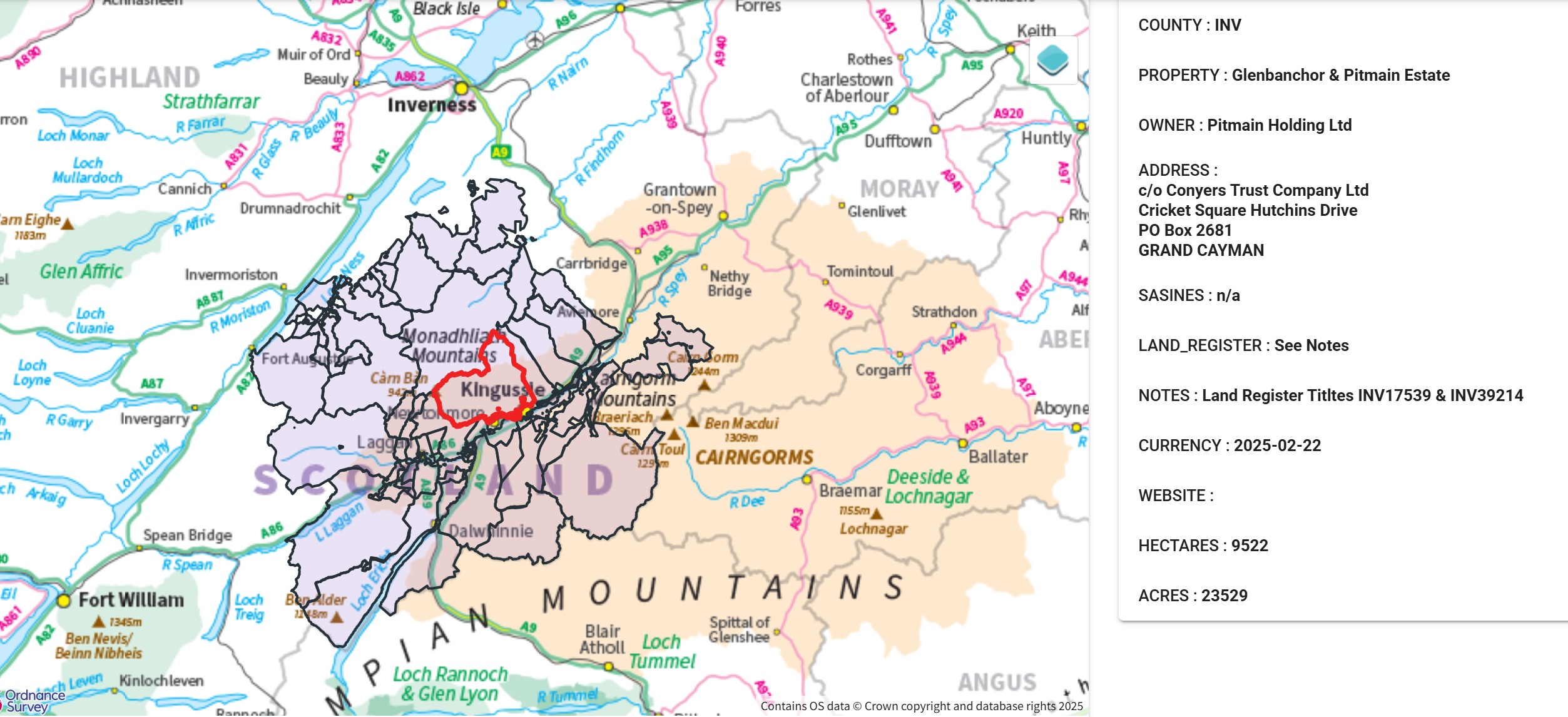
According to Andy Wightman’s excellent Who Owns Scotland website, Loch Gynack is situated on the Glenbanchor & Pitmain Estate, whose owner, Pitmain Holding Ltd, is registered in Grand Cayman:

It’s not the first time a police investigation has taken place there in relation to suspected wildlife crime. In 2019, four Greylag Geese were found poisoned at Loch Gynack – toxicology results showed they’d ingested the banned pesticide Carbofuran, so dangerous that it’s an offence to even possess this chemical in Scotland, let alone use it.

The birds had been found by estate workers who reported the incident to the police. There wasn’t any information about whether poisoned bait had been discovered and so no information about where they’d come in to contact with the Carbofuran, although given how fast-acting it is and the fact the geese were found dead together in one place, I’d think it unlikely they’d been poisoned far away.

Nobody was charged and the estate was not subject to a General Licence restriction.

Back to the Goshawk case…

The police were first notified about the abandoned Goshawk nest on 8 June 2024. This was after the enactment of the Wildlife Management & Muirburn (Scotland) Act 2024 on 30 April 2024, which introduced a licence for grouse shooting in Scotland.

I don’t know whether the Glenbanchor & Pitmain Estate applied for a grouse shooting licence in 2024. I don’t even know if they still shoot Red Grouse there (they certainly have done previously – e.g. see here and here) or whether they’ve switched to Red-legged Partridges and Pheasants as alternative quarry due to low grouse stocks, in which case they’d be exempt from needing a grouse shooting licence because the Scottish Government refused to include the shooting of RLPs and Pheasants as part of the requirement for a grouse shooting licence, despite being warned about this massive loophole.

It would be interesting to know whether (a) Pitmain Estate did apply for a grouse shooting licence in 2024, (b) if so, did NatureScot grant them a licence even though this wildlife crime investigation was ongoing, and (c) if the estate does have a five-year grouse shooting licence, will the licence be withdrawn following this incident or was the Goshawk nest beyond the area where the licence applicant indicated Red Grouse are ‘taken or shot’ (yet another loophole)?

Aside from the questions around a potential grouse shooting licence, I’ve been interested in whether NatureScot would impose a General Licence restriction following the police investigation in to the shot out Goshawk nest.

In June this year I submitted an FoI to NatureScot to ask about the status of any pending General Licence restriction decisions. My main focus was on the case concerning a Golden Eagle called ‘Merrick’ who had been shot and killed whilst she was sleeping in the Scottish Borders in October 2023.

You’ll already know that NatureScot has still not made a decision on whether to impose a General Licence restriction as a result of that crime, two years after it happened (see here).

But as well as asking about the Merrick case, I also asked how many other cases were pending.

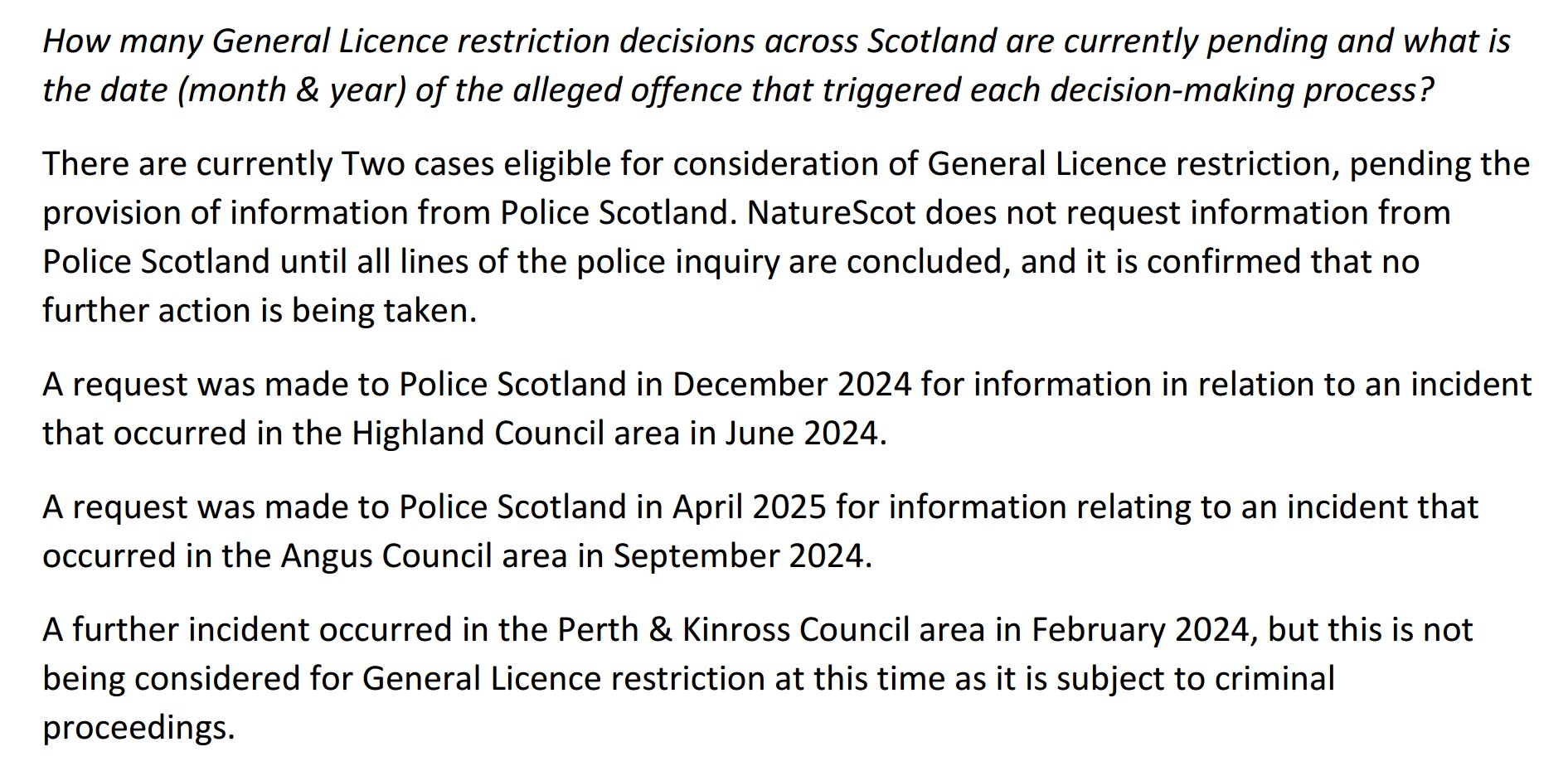
NatureScot wrote back to me in July and said this:

You can see that the case involving the shot out Goshawk nest is included on the list (‘an incident that occurred in the Highland Council area in June 2024‘).

NatureScot says it asked Police Scotland in December 2024 for the information package NS would need to begin the process of considering whether to impose a General Licence restriction.

Seven months on, in July 2025 when NatureScot responded to my FoI, Police Scotland hadn’t provided the information to NatureScot.

The Highland Cops programme demonstrates the evidential difficulties faced by the police when investigating suspected wildlife crimes, particularly those that take place on privately-owned gamebird shooting estates, and the lengths the police will go to to find out who was responsible. It was the very reason that the Scottish Parliament introduced grouse shoot licensing as part of the Wildlife Management & Muirburn (Scotland) Act 2024.

The efforts made by PC Dan Sutherland and his colleagues were exemplary in this case. But someone, somewhere, has dropped the ball in the later stages of the enforcement process by not providing an information package in a timely manner. That’s just not good enough.

The Highland Cops episode (series 3, episode 2) is available on the BBC iPlayer here. It’s well worth an hour of your time.

“Act boldly, without delay and introduce game shoot licensing” – open letter to Defra Ministers from Northern England Raptor Forum Chair

The Northern England Raptor Forum (NERF) is the representative body of voluntary raptor fieldworkers across the north of England, including in many of the raptor persecution hotspots in this region.

NERF is a well-respected organisation in conservation circles and has been at the forefront of the fight against the illegal killing of birds of prey, with its members often the first to raise the alarm to the police when suspected raptor persecution incidents have been uncovered.

NERF has also been involved in the many ‘partnership’ efforts over the last few decades that have tried, but failed, to tackle these pervasive crimes.

The group has standing, experience, and real skin in the game.

Steve Downing, NERF Chair, is a man who doesn’t mince his words. He’s written an open letter to Defra Ministers, including the newly-appointed Secretary of State for the Environment, Emma Reynolds, laying out previous Government failures to get on top of this issue and telling her that enough is enough, the time for talking is over.

It’s well worth a read – here.

If Steve’s letter resonates with you, it wouldn’t hurt for you to write to your own MP in support of NERF’s stance. There’s nothing to lose and everything to gain. Politicians won’t act if they don’t know that illegal raptor persecution is an issue of concern amongst their constituents.

If you haven’t written to your MP before, why not give it a go? If you’re not sure who your MP is, you can find out here.

North Wales Police investigation launched after snares found set next to Ruabon Moor, two years after ban

Press release from Green Britain Foundation (23 October 2025)

LANDMARK: FIRST FORMAL ILLEGAL SNARE-USE INVESTIGATION SINCE BANS IN WALES/SCOTLAND

Footage obtained by Green Britain Foundation shows alleged snare-setting at a stink pit near Ruabon Moor, North Wales

Green Britain Foundation (GBF) has obtained undercover footage prompting what is believed to be the first formal police investigation in either Wales or Scotland into suspected snare use since the bans came into force. The footage shows individuals checking and setting snares at a stink pit* on the edge of Ruabon Grouse Moor in North Wales, within Llandegla Forest. The footage has been supplied to North Wales Police and a formal investigation is now underway.

*A “stink pit” is a bait site where dead animals (“carcasses”) are piled specifically to attract wildlife, typically predators, towards surrounding snares.

Snares are illegal in Wales (since 2023) and banned in Scotland (since 2024). Offences include setting a snare and permitting snares to be set on one’s land.

Snare set next to stink pit next to Ruabon Moor (photo copyright Green Britain Foundation)
Dead Red-legged Partridges chucked on the stink pit (photo copyright Green Britain Foundation)

Dale Vince, Founder, Green Britain Foundation, says:

Snares are medieval cruelty. Wales and Scotland banned them for good reason. This footage shows people ignoring the law, continuing to use snares to kill wild animals in support of the bloodsport business. Snares are indiscriminate, killing all kinds of wildlife in the most hideously cruel way. The police are investigating, and that’s welcome. Landowners are complicit in this, snares are used to kill wildlife in support of bird breeding as part of the business – shooting birds for sport and for money. Labour should make good on its pre-election pledge and ban snares in England – without further delay.”

What the footage shows

28 June 2025 – live snares documented ~20m inside the Llandegla Forest boundary, arranged around a “stink pit” (carcasses used to attract predators).

30 June – 15 August 2025 – Covert cameras record multiple visits by several individuals believed to be engaged in gamekeeping; apparent checking/adjusting of snares and servicing of the site.

25 July 2025 – Carcasses of red-legged partridges logged at the stink pit.

25 August 2025 – Police notified; officers attended, documented the scene, and removed snares as evidence.

Status: North Wales Police have commenced a formal investigation.

Why it matters

  1. Landmark enforcement moment: Believed to be the first formal police investigation into suspected snare use in a UK nation after the bans in Wales and Scotland—an early indicator of how enforcement will work in practice.
  2. Purpose on shooting estates: Snares are commonly deployed as “predator control” to maximise numbers of grouse and other gamebirds for commercial and recreational shoots—in short, a tool to ensure those who shoot birds for fun can shoot more of them.
  3. Indiscriminate by design: Snares cannot select species—they can and do catch non-target wildlife (such as badgers) and have been known to catch pet cats and dogs.
  4. Landowner responsibility: We understand Llandegla Forest is linked to estates associated with the Church Commissioners for England. GBF calls for full cooperation and compliance audits across relevant holdings.
  5. England’s policy gap: England has not yet introduced a snaring ban. With workable bans in Wales and Scotland, GBF urges the Labour Government to make good on its pledge and implement a ban in England as a priority.

ENDS

This is interesting on several levels.

First of all, as the press release points out, this is believed to be the first police investigation into alleged snaring offences since snaring was banned in Wales two years ago. Given the high quality close footage provided to North Wales Police, there shouldn’t be any of the usual problems of not being able to identify the individuals seen attending the site.

Secondly, the location of the alleged offence is next to Ruabon Moor, the only grouse-shooting estate in North Wales. Ruabon Moor has been at the centre of a number of police investigations in recent years, including the suspicious disappearance of a number of satellite-tagged Hen Harriers, the discovery of a poisoned Raven, and the suspected use of a trap to capture Goshawks. In addition, a couple of years ago another group, called Wildlife Guardian, documented some strange behaviour on Ruabon Moor (here)

Nobody has been convicted of any offences at Ruabon Moor. A prosecution against a gamekeeper (for alleged use of a trap to take a wild bird) was abandoned last year after the Crown Prosecution Service determined that it was not in the public interest to continue – a decision that was challenged by the RSPB, North Wales Police and the National Wildlife Crime Unit (see here).

The third point of interest is the group that has brought the latest alleged offences to the attention of North Wales Police. As far as I’m aware, this is the first foray into wildlife crime investigations by the Green Britain Foundation. They’ve managed to get wide press coverage, including on the BBC News website. Excellent work.

I look forward to seeing how this case progresses.

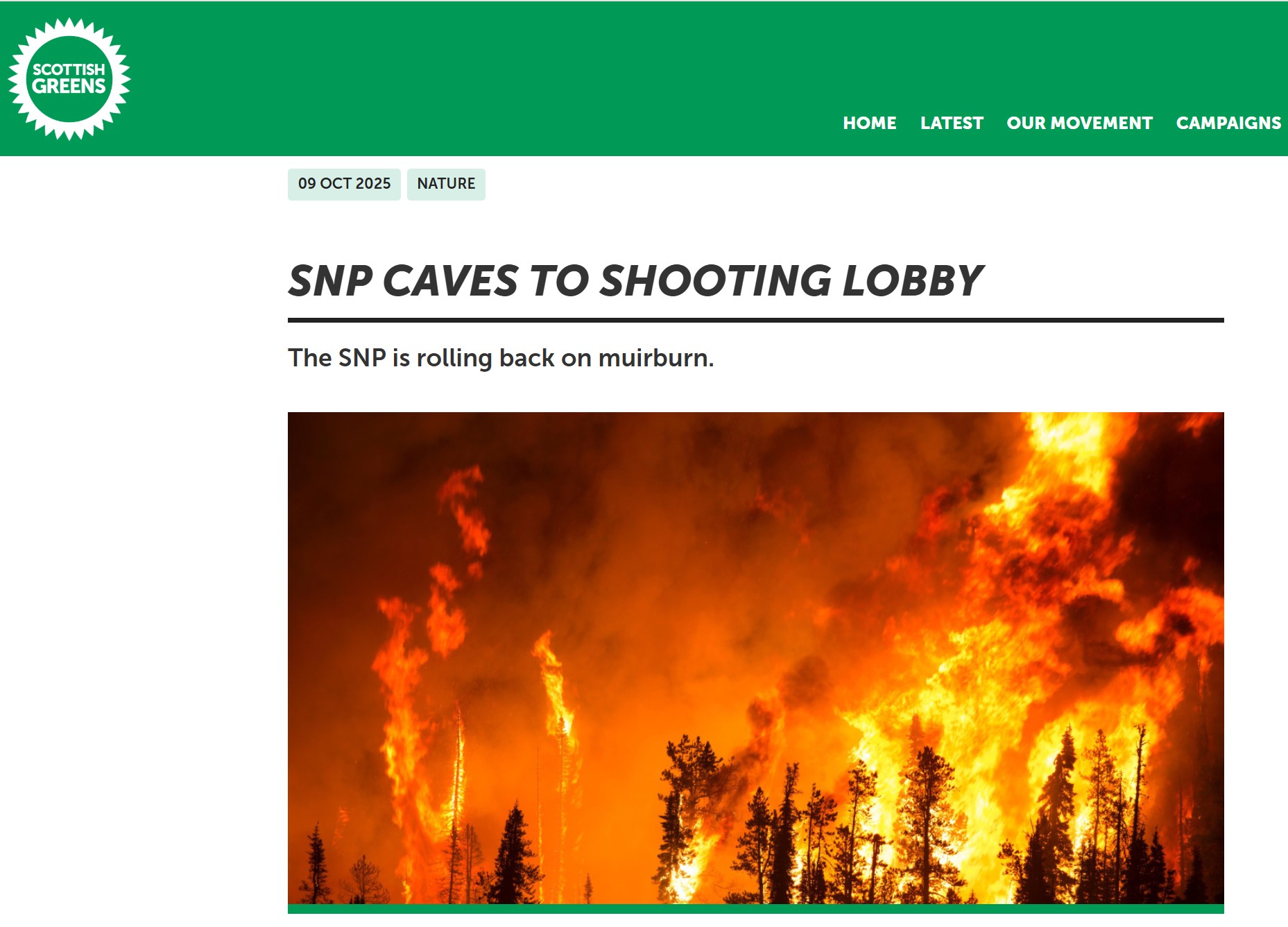
“SNP caves to shooting lobby” – reactions to Scottish Government’s decision to delay muirburn licensing (again)

As expected, the Scottish Government’s announcement on Thursday that it has delayed the implementation of muirburn licensing (for the second time) has been met with anger.

Scottish Greens MSP Ariane Burgess said the Scottish Government has ‘caved to the shooting lobby‘ and accused Ministers of putting the interests of wealthy landowners ahead of environmental protection and public safety.

She is calling for the immediate implementation of muirburn licensing, proper investment in emergency services, and a supported shift away from land management practices that fuel ecological degradation.

Ariane continued:

This is deeply disappointing. We have just had a summer of devastating wildfires across Scotland, and it is vital that we act rather than backtracking. Yet again, the SNP is bending to the demands of wealthy landowners.

During the scrutiny of the Wildlife Management and Muirburn Act we took detailed evidence on the role of muirburn in wildfire risk. There is very little credible evidence to support the hunting and shooting lobby’s ridiculous claim that these practices have any role in preventing wildfires“.

RSPB Scotland has also published a blog in reaction to the Government’s decision, saying ‘Scotland’s wildlife can’t afford any more delays to muirburn legislation’.

RSPB Senior Land Use Policy Officer Andrew Midgley said it was “a huge disappointment to those of us who wish to see this potentially damaging and often risky activity properly regulated. This is the second time it has been kicked down the road. 

On the very same day, in a sadly ironic twist, muirburn that was reported as being conducted on a grouse moor in Aberdeenshire got out of control and started a wildfire. The wildfire spread onto a neighbouring National Nature Reserve managed by the Government agency NatureScot, and burnt into woodland that is part of our network of internationally important nature conservation sites. That this occurred is no cause for gloating. It’s a tragic lesson in why regulation is needed without further delay. 

It’s now nearly six years since an independent group recommended that the regulation of burning in the hills be strengthened and it’s eighteen months since the legislation was passed in the Scottish Parliament. It was acknowledged that muirburn is a high-risk land management activity that should be carefully managed and that regulation would help. This latest delay is further evidence that the Government and NatureScot are failing to properly get a grasp of this issue“.    

The out-of-control muirburn that was started on a grouse moor in the Cairngorms National Park on Thursday, just a few hours after the Scottish Government’s announcement, is thought to have had a 3km wide front and has burned approximately 200ha.

Local sources have reported that the fire burned approximately 5ha of the Muir of Dinnet National Nature Reserve before the Scottish Fire & Rescue Service were able to get it under control.

A scene from the aftermath, from @kredp.bsky.social

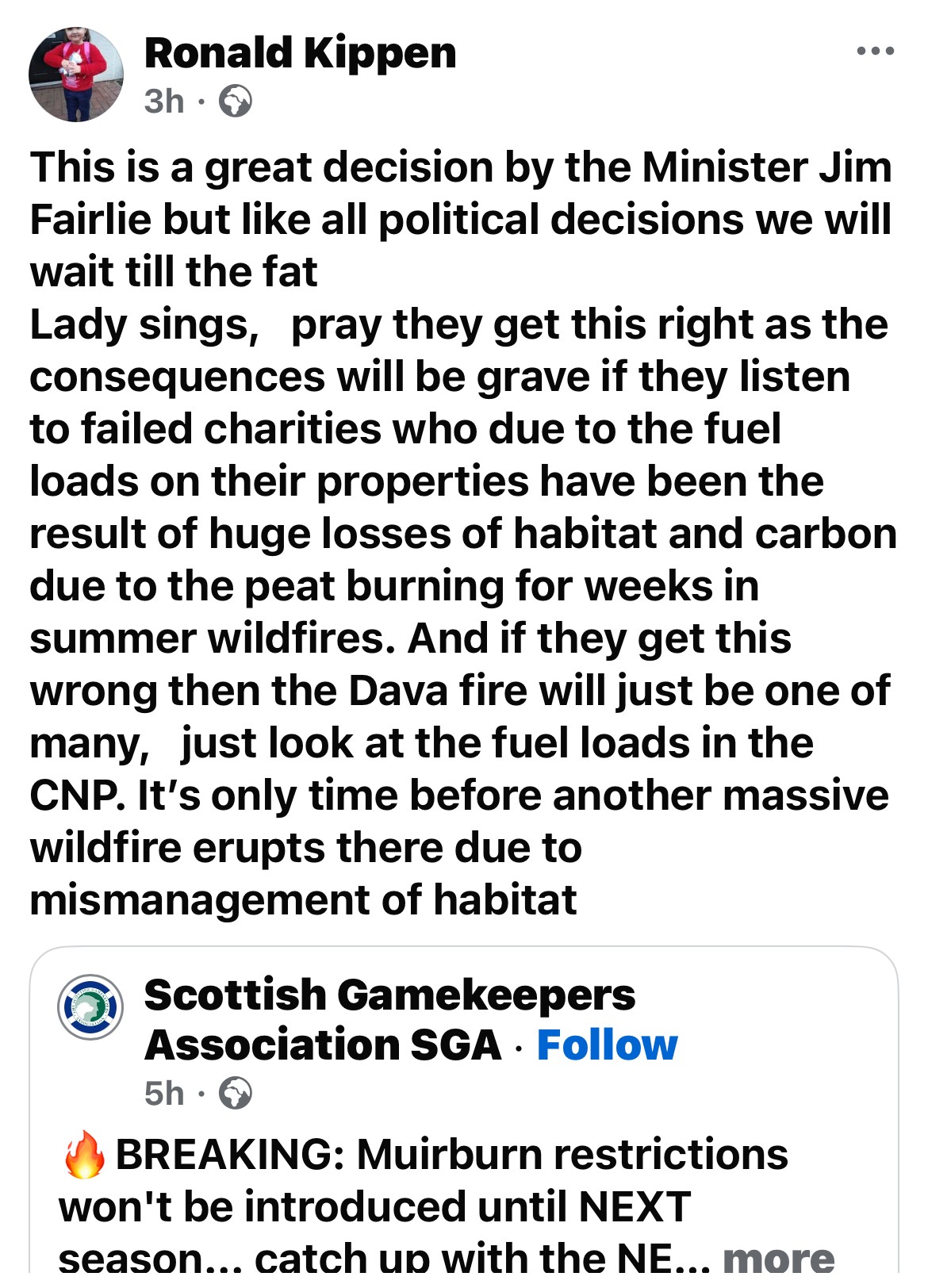
Why on earth gamekeepers were lighting fires under conditions known to present a high risk factor remains to be answered. But in a masterclass of irony, SGA Committee member Ronnie Kippen posted this on the same day:

You’re dead right, Ronnie, it was only a matter of time (just a few hours, in fact) before another massive wildfire erupted in the Cairngorms National Park ‘due to mismanagement of habitat’.

Strangely, I haven’t seen any of the usual suspects shouting about the Dinnet wildfire – in complete contrast to the publicity they’ve given to other wildfires this year where grouse moor management wasn’t thought to be implicated.

Meanwhile, the Scottish Gamekeepers Association (SGA) has welcomed the Government’s decision to delay muirburn licensing, describing it as “common sense“.

No surprise really, this is the same organisation that thinks White-tailed Eagles could eat small children, that “strongly believe the goshawk never was indigenous to the United Kingdom and there is absolutely no hard evidence to suggest otherwise” (here), that think it’s “unfair to accuse gamekeepers of wildlife crime” (here) and plenty of other examples of assorted nonsense.

The SGA’s statement in response to the muirburn licensing delay concludes with this statement:

The SGA supports the Minister’s move and looks forward to making future changes more workable, drawing on our members’ centuries of knowledge in this area“.

“Making future changes more workable”? That suggests that the SGA is willing to accept the principle of muirburn licensing, albeit with “future changes“.

However, if you look closely at the list of amendments put forward to Stage 3 of the Land Reform Bill (due to be debated at the end of this month), you’ll see that Tim Eagle MSP (Scottish Conservative, Highlands & Islands) has lodged an amendment to repeal muirburn licensing altogether:

I doubt very much whether Mr Eagle has lodged this amendment without the lobbying, encouragement and support of the land management sector – I wonder whether the SGA has been part of that lobbying effort?

It’s good to see another amendment, lodged by Ariane Burgess MSP, calling for peatland to be redefined as that having 30cm depth instead of 40cm depth, which would bring it in line with the new definition in England.

UPDATE 13 October 2025: ‘The problem, which the Scottish Government is willfully ignoring, is that muirburn is responsible for a large number of wildfires’ (here)

UPDATE 30 October 2025: Scottish Govt fiddles while grouse moors burn (here)

29 ‘missing’ Hen Harriers & nearly 40 birds of prey poisoned, trapped or shot in Yorkshire Dales National Park since 2015

Media attention has been drawn to the Yorkshire Dales National Park this week, following the RSPB’s press release on the suspicious disappearance of a satellite-tagged Hen Harrier named ‘Sita’.

When it comes to the illegal killing of birds of prey, the Yorkshire Dales National Park is rarely out of the news, and that’s hardly surprising when 29 satellite-tagged Hen Harriers have gone ‘missing’ there and 39 other raptors have been found poisoned, trapped or shot there since 2015, including Peregrines, Hen Harriers, Red Kites and Buzzards.

Yorkshire Dales National Park. Photo by Ruth Tingay

Given these appalling figures, the RSPB has described the Yorkshire Dales National Park as a ‘no-fly zone for birds of prey’.

High profile cases within the National Park have included the conviction of a gamekeeper who was filmed shooting two Short-eared Owls on a grouse moor and then stamping the corpse of one of them into the peat and shoving the other one inside a drystone wall (here); a gamekeeper filmed on a grouse moor using a tethered Eagle Owl to attract Buzzards that he then shot and killed from close range (here); the stamping to death of four Hen Harrier chicks in a nest on a grouse moor (after obscuring the camera pointing at the nest, here); the grisly death of a Hen Harrier caused by his head and leg being pulled off whilst he was still alive (here); and three individuals caught on camera on a grouse moor discussing the shooting and killing of a Buzzard and a Raven before apparently shooting and killing a Hen Harrier (here) – one gamekeeper has been charged with conspiracy to kill a Hen Harrier, he has pleaded not guilty and his case will proceed to trial in January 2026 after his barrister failed in his attempt to have the case thrown out on a legal technicality.

The Yorkshire Dales National Park Authority has also long recognised the extent of this criminal activity and has responded to public concern (e.g. see here and here). Earlier this year the Park Authority terminated its five-year ‘partnership’ with the grouse shooting industry to tackle these crimes, after recognising the futility of this endeavour. Two conservation organisations (the RSPB and the Northern England Raptor Forum) had already walked away from the sham in 2023 and 2024 respectively.

In an article published a couple of days ago by the Craven Herald & Pioneer, Mark Corner, a member of the Yorkshire Dales National Park Authority is quoted saying the continued illegal killing of raptors in the Park was “a crying shame“.

He added: “As the member champion for the natural environment, I’m personally embarrassed that we are the worst spot in the country in terms of the illegal killing of birds.”

In the same article, there’s an hilarious quote from the Yorkshire Dales Moorland Group, which is one of a number of regional groups set up in 2015 to represent local grouse moor owners and their gamekeepers in an attempt to counter the bad publicity about ongoing illegal raptor persecution. I think that members of most of these regional moorland groups have been, or still are, the subject of police investigations into illegal raptor persecution.

A spokesperson for the Yorkshire Dales Moorland Group reportedly told the reporter that ‘hen harrier numbers were at a 200-year high across the uplands’.

That’s simply not true – Hen Harrier breeding attempts on grouse moors across the north of England have been in sharp decline over the last two years – the only areas where they remain stable is on land managed for conservation rather than for Red Grouse shooting.

According to its FaceBook page, the Yorkshire Dales Moorland Group claims to have “around 100,000 acres of managed uplands here in the Dales where the estates are members of this group (virtually all of the moors)“.

Why is it then, there were only two Hen Harrier breeding attempts in 2025 across the whole of the Yorkshire Dales and neighbouring Nidderdale? I’d like the Moorland Group to provide a plausible explanation for these absences.

The Yorkshire Dales Moorland Group also told the Craven Herald reporter:

Our keepers have and will always assist the police in searches for missing persons, lost dogs or missing birds. Tag failure is rare but not unheard of.

The default accusation that persecution is responsible is regrettable. The conservation work undertaken by moor keepers is commendable as can be seen by the abundance of raptors and other rare species in the Dales“.

What “abundance of raptors” are those then? All the dead ones? Or just the ones that are allowed to breed because they don’t pose any threat to Red Grouse stocks?

And if these grouse shooting estates are so keen to help the police, how many of them signed the letter last year agreeing to allow the police to enter the land and use equipment for the purposes of crime prevention and detection? Did any of them sign it?

And if these gamekeepers are so keen to help police investigations, how many of them have given ‘no comment’ responses when interviewed about suspected raptor persecution crimes on these moors? Maybe it’d be quicker to count how many gamekeeper didn’t give a ‘no comment’ interview.

The article also quotes Alex Farrell, Head of Uplands at BASC:

As a committed conservation organisation, we are taking progressive steps with our partners to oversee the continued recovery of hen harriers.

Figures released by Natural England today show that collaborative effort resulted in 106 fledged hen harrier chicks in England this year – up from 80 last year“.

What “progressive steps” is BASC taking?

Oh, and those figures released by Natural England show that the small increase in Hen Harrier fledging rates are in spite of, not because of, any so-called ‘collaborative effort’ from the grouse shooting industry.

The data couldn’t be any clearer (see here).

17 months (& waiting) for NatureScot to make decision on General Licence restriction relating to ‘shooting & killing’ of sleeping Golden Eagle called Merrick

The Scottish Government’s nature advisory agency, NatureScot, has been now been procrastinating for 17 months on whether to impose a sanction on an estate in relation to the ‘shooting and killing’ of a sleeping Golden Eagle called Merrick.

Merrick was a young satellite-tagged Golden Eagle, released in south Scotland in 2022 as part of the South Scotland Golden Eagle Project, a lottery-funded conservation initiative which translocated young Golden Eagles from various sites across north Scotland to boost the tiny remnants of the Golden Eagle breeding population in south Scotland that had previously been decimated by illegal persecution and had become isolated by geographic barriers.

Camera trap photo of golden eagle Merrick in 2022, from South Scotland Golden Eagle Project

A year after her release, which had seen her fly around south Scotland and down into northern England and back, on 12 October 2023 Merrick’s satellite tag suddenly and inexplicably stopped transmitting from a roost site in the Moorfoot Hills in the Scottish Borders where she’d been sleeping overnight.

A project officer from the South Scotland Golden Eagle Project went to her last known location where he found Merrick’s feathers and blood directly below her roost tree. Police Scotland later determined from the evidence that she’d been ‘shot and killed’ and that someone had then ‘removed her body and destroyed her satellite tag’ (see here).

There was limited scope for anyone to be charged and prosecuted for killing this eagle unless someone in the know came forward with sufficient evidence to identify the individual(s) responsible. In addition, the prospect of an estate having its grouse-shooting licence withdrawn as a consequence of this crime was zero, given that this offence took place prior to the enactment of the Wildlife & Muirbun (Scotland) Act 2024.

That just left a General Licence restriction as a possible sanction. Not that I’d describe a GL restriction as an effective sanction, for reasons that have been explored previously on this blog (e.g. here and here). Nevertheless, it’s still something and, given the high-profile of Merrick’s death, you might think that making a decision on whether to impose a GL restriction would be a high priority for NatureScot.

I wrote about NatureScot’s procrastination on this case in August (see here), after receiving a response to a Freedom of Information request I’d lodged in June 2025. That response confirmed that NatureScot had received an information package from Police Scotland, on which it would base its GL restriction decision, in April 2024.

Seventeen months on and we’re now at the end of September 2025 and there’s still no sign of a decision from NatureScot.

What’s the hold up? Why hasn’t this decision been a priority for NatureScot?

What sort of message does NatureScot’s procrastination send out to others who might be thinking of ‘getting rid’ of a Golden Eagle in south Scotland, or any other part of Scotland for that matter?

The consequences became very clear yesterday when it was announced that two more satellite-tagged Golden Eagles from the South Scotland project had ‘disappeared’ in suspicious circumstances.