
Ever since that poisoned golden eagle was found in Glen Orchy in June 2009, we’ve been assured by the authorities (including in an email from a spokeswoman of the former Environment Minister, Roseanna Cunningham) that, despite our concerns to the contrary, the alleged wildlife crime uncovered that day was being ‘dealt with’.
We’ve had to wait for almost three years to find out that, according to a statement in The Herald attributed to RSPB investigator Ian Thomson, nobody has been charged with poisoning that golden eagle (see Herald article here).
It’s just the latest in a long line (21 eagles in six years!) of both confirmed and suspected eagle deaths for which nobody has ever been prosecuted.
In fairness, some of the 21 examples shown below may not be a result of criminal behaviour (i.e. the bodies of seven of the eagles listed have never been recovered so foul play, whilst suspected, cannot be verified, but neither can it be ruled out). However, there have been 14 confirmed eagle deaths (13 poisoned and one shot), that we know about, for which nobody has been charged. There are probably more confirmed deaths that we don’t know about because for some reason, some confirmed deaths are not being publicly reported. And without a shadow of a doubt, there are other deaths that are attributable to criminal behaviour that never see the light of day.
Here’s the list of the ones we do know about:
 MAY 2006: A dead adult golden eagle was found on the Dinnet & Kinord Estate, near Ballater, Aberdeenshire. Tests revealed it had been poisoned by the illegal pesticide, Carbofuran. Grampian Police launched an investigation. Five years and 11 months later, nobody has been prosecuted.
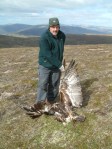 JUNE 2006: A dead golden eagle was found on Glen Feshie Estate in the Cairngorms. Tests revealed it had been poisoned by the illegal pesticide, Carbofuran. Northern Constabulary launched an investigation. Five years and ten months later, nobody has been prosecuted.
 AUGUST 2007: A dead adult female golden eagle was found on an estate near Peebles in the Borders. She was half of the last known breeding pair of golden eagles in the region. Tests revealed she had been poisoned by the illegal pesticide, Carbofuran. Lothian & Borders Police launched an investigation. Four years and eight months later, nobody has been prosecuted.
 AUTUMN 2007: Tayside Police received a detailed tip-off that a young male white-tailed eagle (known as ‘Bird N’) had allegedly been shot on an estate in Angus. The timing and location included in the tip-off coincided with the timing and location of the last-known radio signal of this bird. Four and a half years later, the bird has not been seen again. With no body, an investigation isn’t possible.
 MAY 2008: A one year old male white-tailed eagle hatched on Mull in 2007 and known as ‘White G’ was found dead on the Glenquoich Estate, Angus. Tests revealed he had been poisoned by an unusual concoction of pesticides that included Carbofuran, Bendiocarb and Isofenphos. A police search in the area also revealed a poisoned buzzard, a baited mountain hare and 32 pieces of poisoned venison baits placed on top of fenceposts on the neighbouring Glenogil Estate. Laboratory tests revealed the baited mountain hare and the 32 poisoned venison baits contained the same unusual concoction of highly toxic chemicals that had killed the white-tailed eagle, ‘White G’. Three years and 11 months later, nobody has been prosecuted.
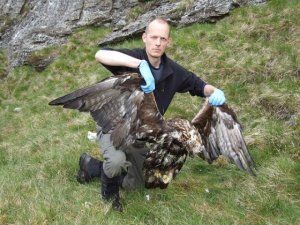
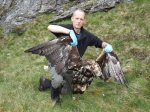 JUNE 2009: An adult golden eagle was found dead at Glen Orchy, Argyll, close to the West Highland Way. Tests revealed it had been poisoned by the illegal pesticide, Carbofuran. Strathclyde Police launched a multi-agency investigation. Two years and ten months later (April 2012), Tom McKellar pled guilty to possession of Carbofuran stored in premises at Auch Estate, Bridge of Orchy. Nobody has been prosecuted for poisoning the golden eagle.
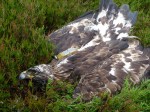 JULY 2009: A two year old female golden eagle known as ‘Alma’ was found dead on the Millden Estate, Angus. Tests revealed she had been poisoned by the illegal pesticide, Carbofuran. Alma was a well-known eagle – born on the Glen Feshie Estate in 2007, she was being satellite-tracked and her movements followed by the general public on the internet. Tayside Police launched an investigation. Two years and nine months later, nobody has been prosecuted.
 AUGUST 2009: A young white-tailed eagle was found dead on Glenogil Estate, Angus. Tests revealed it had been poisoned by the illegal pesticide, Carbofuran. Tayside Police were criticized in the national press for not releasing a press statement about this incident until January 2010. Two years and 8 months later, nobody has been prosecuted.
 MAY 2010: Three dead golden eagles were found on or close to Skibo Estate, Sutherland. Tests revealed they had been poisoned; two with Carbofuran and one with Aldicarb. Northern Constabulary launched a multi-agency investigation. One year later (May 2011), Sporting Manager Dean Barr pled guilty to possession of 10.5 kg of Carbofuran stored in premises at Skibo Estate. One year and 11 months later, nobody has been prosecuted for poisoning the three golden eagles.
 JUNE 2010: Leg rings with unique identification numbers that had previously been fitted to the legs of four young golden eagles in nests across Scotland were found in the possession of gamekeeper James Rolfe, during a multi-agency investigation into alleged raptor persecution at Moy Estate, near Inverness. It is not clear how he came to be in possession of the rings. The bodies of the eagles from which the rings had been removed were not found. No further action was taken in relation to the discovery.
 JUNE 2010: A golden eagle and a white-tailed eagle were found dead on an estate near Farr, Inverness-shire. Tests revealed they had been poisoned by the illegal pesticide, Carbofuran. Northern Constabulary apparently did not search the property until July 2011. One year and ten months later, nobody has been prosecuted.
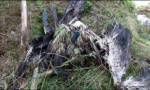 DECEMBER 2010: A decomposing carcass of a white-tailed eagle was found and photographed on Logie (Lochindorb) Estate, Morayshire. It was reported to Northern Constabulary. By the time the police arrived to collect it, the carcass had disappeared. The police said they couldn’t investigate further without the body.
 MARCH 2011: The body of a young golden eagle was discovered on North Glenbuchat Estate, Aberdeenshire. Tests revealed it had been poisoned by the illegal pesticide, Carbofuran. Grampian Police launched an investigation and raided the property in May 2011. One year and one month later, we are not aware of any pending prosecutions.
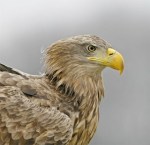 APRIL 2011: The body of a white-tailed eagle was found at the base of cliffs on Skye. The person who discovered it (a professional medic) considered it to have been freshly shot with a rifle, decapitated with a sharp implement and thrown from the cliff top. He took photographs and alerted Northern Constabulary and RSPB. There was a delay of two weeks before the now probably decomposed carcass was collected. A post-mortem was inconclusive. This incident was not made public until one year later after a tip off to this blog. We are not aware of any pending prosecutions.
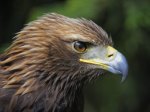 NOVEMBER 2011: The signal from a satellite-tracked young golden eagle (hatched in 2010) stopped functioning when she was at a location in the Monadhliaths, a well-known raptor persecution black spot in the Highlands. Her last known location was checked by researchers but there was no sign of the bird. Another ‘disappearance’ in suspicious circumstances or a technical malfunction of the satellite transmitter?
 More and more news reports are emerging following the conviction yesterday of Tom McKellar of
  Here we go….
 This is the second blog in the series focusing on presentations made at the recent police wildlife crime conference in Scotland. This time we look at what the new head of the National Wildlife Crime Unit, Nevin Hunter, had to say. (For background info on Nevin, see
  Erm, now you can’t, you can’t actually get a picture of a black hole but one of the issues that people regularly, sort of regularly flag to me up that, er, the last several weeks the feeling at times that, that the National Wildlife Crime Unit can be seen as a bit of a black hole in that lots of things come in to us but you guys and girls out there are dealing with things operationally on the ground what you see come out from us. Now that doesn’t mean that we’re not working hard, you know, I, I know how hard the people in the unit worked, I worked really closely with Brian and the team over the last few years, erm, they all work incredibly hard, erm, dealing with a number of priority areas but I’m very conscious that your perception of us out there may not be as good as it could be in terms of where we’re delivering at a UK level. We really do deliver at an international level, that’s quite clear. Erm, and I want to look at, focus about, erm, perhaps things that we ought to be looking at, now these are my perceptions and some of them are my views so please, erm, I hope I’m not going to insult anybody but I think you need to think about these things.
 The 2012 annual police wildlife crime conference took place a couple of weeks ago. Quite a few of this year’s presentations were relevant to raptor persecution so we’ll be commenting on these in due course. To start off the series we’ll focus on what Charlie Everitt had to say. Charlie is the Scottish Investigative Support Officer at the UK National Wildlife Crime Unit (NWCU). See
 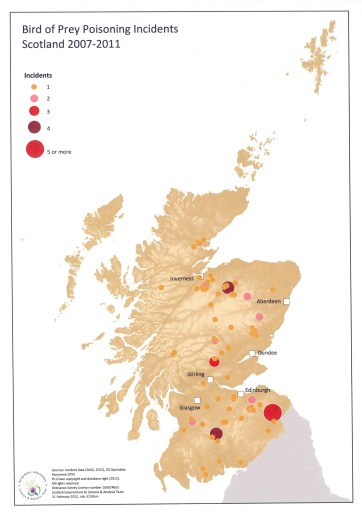 The Scottish Government has today published the 2011 poisoning map (otherwise known as Scotland’s map of shame).
 But let’s suppose, just for a minute, that the latest map IS an accurate representation of all raptor poisoning incidents that took place in 2011. Should we then accept that shooting estates are cleaning up their act and they’ve all suddenly decided, after over 100 years of persecution, that raptors are actually ok and shouldn’t be killed? The only way to measure that will be to look at LONG-TERM TRENDS of poisoning incidents as well as LONG-TERM TRENDS of raptor populations. We’ve blogged about this before (see
  An article in today’s Scotsman has criticised the RSPB’s decision to hold the first-ever Scottish Bird Fair at Hopetoun House near Edinburgh in May.
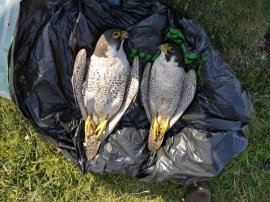 In a bid to tackle increasing levels of wildlife crime, Devon & Cornwall Police have teamed up with the RSPB to launch ‘Operation Wilderness’, a new scheme that will see 24 hr nest cameras installed at vulnerable sites across the region.
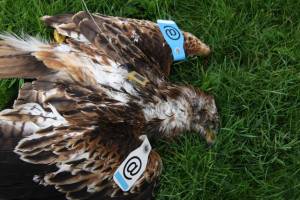 Following the successful release of red kites during the summer in Dublin and Wicklow, it is with disappointment that we report further recent kite deaths in Fingal. Since the release in July, this year, a total of eight (8) kites have now been recovered dead in Fingal since November.
 The substance used to kill the other four kites that have been discovered since November has yet to be confirmed – toxicology tests are on-going. It’s possible they were also unintentionally killed by secondary rat poison, but it’s equally possible that they have been deliberately (and illegally) killed by other poisons. For example, at the beginning of November 2011, it was reported that a red kite and a buzzard had been illegally poisoned in County Wicklow by alphachloralose (see
