
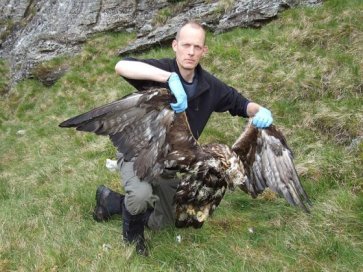
Glen Orchy case concludes: call this justice?

So, three years and three months later, the infamous Glen Orchy case has concluded. Tom McKellar, previously described as a gamekeeper but curiously now described as a farmer, has been fined £1,200 for possessing the banned pesticide, Carbofuran.

The Crown Office press release (here – NB, link no longer works, copy of press release at foot of blog) doesn’t mention anything of the poisoned golden eagle that was found in Glen Orchy and prompted the search of McKellar’s house, which led to the discovery of the Carbofuran. Although it does mention how he was previously given a 300-hour community service order for the possession of illegal handguns (instead of the mandatory five-year prison sentence), also found during the search of his house.

Of course, McKellar wasn’t charged with laying poisoned baits (even though he reportedly admitted to doing so during an interview), and nor was he charged with poisoning that golden eagle, because even though he had this rare, banned poison in his house, and lived just down the road from where the dead eagle had been found, and he’d previously admitted to laying out poisoned baits, there apparently wasn’t enough evidence to link him to the poisoned eagle.

But this story doesn’t end there. There are other things that went on (or more to the point, didn’t go on) in this investigation and we’ll be discussing those in due course, including the failure to charge a second person….

Meanwhile, we’ll add this poisoned golden eagle to the growing list of illegally-killed eagles for which nobody has ever been (nor will be) prosecuted. Justice?

RSPB press statement here (NB: link no longer available, copy of RSPB statement at foot of blog)

UPDATE 11 Sept 2012: Glen Orchy, a hollow victory (here)

Previous blogs on this case here, here, here, here, here,here here, here

COPY OF CROWN OFFICE PRESS RELEASE:

7 September 2012

FARMER FINED £1,200 FOR POSSESSING BANNED SUBSTANCE

An Argyll farmer was today fined for possessing the banned substance carbofuran.

Tom McKellar, 50, from Bridge of Orchy, Argyll, pled guilty on 18 April at Oban Sheriff Court. Today he was fined £1,200 for the offence.

Carbofuran is a highly toxic pesticide and a single grain the size of a poppy seed can kill a bird.  A quarter of a teaspoonful can be fatal to humans.

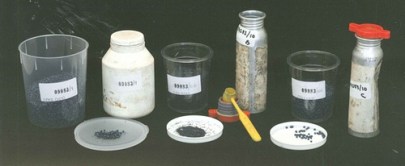
Following a search of his property by police on 17 June 2009, McKellar was found to have quantities of Carbofuran in three separate containers and traces of it within a syringe.  When interviewed by police, he indicated that he had, in the past, placed it on meat for foxes to eat.

Craig Harris, Head of the Wildlife and Environmental Crime Unit (WECU) at COPFS, said:

“Carbofuran is an extremely toxic pesticide and even the tiniest amounts can be fatal to our wildlife.

“Possession of carbofuran is illegal and those who unlawfully retain stocks can expect to be brought before the court.

“This conviction and sentence should serve as a warning to anyone who thinks about keeping this substance.

“We remain committed to ensuring carbofuran is removed from the countryside and we will continue to work with our PAW partners to find the best way to achieve this.”

Notes to Editors

Tom McKellar pled guilty at Oban Sheriff Court on 18 April 2012 to possessing Carbofuran, an unauthorised pesticide, under section 15A of the Wildlife and Countryside Act 1981.

McKellar previously pled guilty at the High Court in Glasgow on 5 November 2010 to four charges relating to the illegal possession of a Webley revolver and a Browning pistol, recovered during police enquiries on 17 June 2009.  On 3 December 2010 he was sentenced to a Community Service Order of 300 hours.

Products containing Carbofuran as an active ingredient were formerly used in the U.K. as insecticides to control agricultural pests in crops.  Their use was restricted to farmers or contractors providing services to farmers for drilling into the ground.  Approval for the use of Carbofuran was withdrawn in 2001 and its possession is now illegal in terms of the Wildlife and Countryside Act 1981, Section 15A and the Possession of Pesticides (Scotland) Order 2005/66, Article 2 and Schedule 1.

Carbofuran is one of the most toxic pesticides.  In the granular form a single grain the size of a poppy seed can kill a bird.  A quarter teaspoon (1 millilitre) can be fatal to humans.

Carbofuran poisoning has been identified as the cause of death in over 240 incidents submitted to the WIIS scheme in Scotland since 1988 (this system records incidents of specific chemicals to provide feedback for regulations).  At least 95% of these incidents were attributed to the illegal abuse of a pesticide to poison non-target animals.  The most frequent casualties were birds of prey, with the remainder comprising corvid species, cats and dogs.  In the last decade, Carbofuran formulations appear to have become the poison of choice for individuals involved in illegal poisoning activities in Scotland.

PAW Scotland is the Partnership for Action Against Wildlife Crime in Scotland.  PAW Scotland partners include a wide range of bodies committed to tackling wildlife crime including conservation, land management, shooting and law enforcement organisations.

ENDS

COPY OF RSPB STATEMENT:

7 September 2012

Farm manager convicted of poison possession after Golden Eagle is killed near Bridge of Orchy

A farm manager has today (7th September) been convicted of possessing an illegal poison, following a police-led enquiry into the death of a golden eagle.

Earlier at Oban Sheriff Court, Tom McKellar pled guilty to possession of the banned pesticide Carbofuran and was fined £1200.

On 7th June 2009, a party of hillwalkers descending Beinn Udlaidh in northern Argyllshire, came across the body of the eagle, lying face down in the grass on a remote hillside near Bridge of Orchy.

The following day, the group contacted RSPB Scotland, who immediately notified Strathclyde Police.

That afternoon, the local police wildlife crime officer and RSPB Scotland investigations staff recovered the eagle carcass from the remote hillside.

It was photographed and seized as evidence by the police, meanwhile a post mortem by Scottish Government laboratories confirmed the bird had been poisoned with Carbofuran, a substance banned since 2001.

Further police investigations, including a search of land and buildings at Auch Estate, Bridge of Orchy,  recovered a quantity of carbofuran, a carbofuran-poisoned dead fox, and two handguns – found in the attic of a house occupied by estate employee Tom McKellar.

In subsequent days, the carcass of a sheep, laced with Carbofuran, was also found on a hillside in the area that the eagle had been found dead.

In December 2010, at the High Court in Glasgow, McKellar was convicted of possession of two hand guns, and was sentenced to 300 hours community service.

Commenting on today’s sentencing Ian Thomson, RSPB Scotland’s Head of Investigations, said:

“RSPB Scotland has invested considerable resources in assisting Strathclyde Police in the investigation of this significant case. We heartily commend the efforts of the police in their rigorous follow-up to the illegal poisoning of the golden eagle on Beinn Udlaidh, leading to this successful prosecution.

“We are very disappointed that, at the conclusion of the investigation, no-one has been charged with the poisoning of this golden eagle, one of our most vulnerable and iconic bird species, or with the laying out of poison baits in the open in our countryside.”

“While we welcome the conviction, yet again, we are dismayed that the final result of a high profile enquiry poses little in the way of a deterrent to those who continue to flagrantly disregard our wildlife protection laws. The illegal killing of protected birds of prey remains a persistent problem in some parts of Scotland, with, for example, six further golden eagles confirmed as illegally poisoned since this incident, including one in Lochaber earlier this year. We call upon the Scottish Government to urgently review the penalties imposed by the courts on those who break our wildlife laws.”

ENDS

UPDATE 6 May 2026: ‘Should I Marry a Murderer?’ New Netflix documentary provides sobering insight into brutal killing and burial of charity cyclist Tony Parsons by McKellar twins at Auch Estate, Glen Orchy (here)



Blundering Benyon gives evidence at wildlife crime inquiry

Everyone’s favourite Minister Richard Benyon has been giving evidence at the House of Commons Environmental Audit Committee’s inquiry into wildlife crime (see here, here and here for earlier blog posts about this inquiry).
Some of the topics on which Benyon was questioned included #buzzardgate, hen harriers, the introduction of vicarious liability in England, the legislation concerning possession of illegal poison, and the independence of Natural England.

So how did he do?

He started off badly when questioned about the need for legislation to criminalise the possession of certain poisons. The legislation is already in place in Scotland but a loophole in the English legislation means that ‘possession’ (rather than ‘use’) is still not an offence – see here for an RSPB press release last year on this very topic. Bungling Benyon suggested that the current legislation was adequate and didn’t require updating. He was picked up on this a bit later by the Committee Chair, who insisted on clarifying whether there was a difference between ‘possession’ and ‘use’ in the legislation. Benyon chose the safe option and asked whether he could make the clarification in writing at a later date, presumably to give himself time to actually go and read the legislation.

On the issue of whether to introduce vicarious liability legislation in England for raptor persecution crime, Benyon commented that there were no plans to introduce VL but he will watch the impact of it in Scotland. That’s fair enough. Why waste time and funds to introduce something that may be completely useless as a tool to combat raptor crime until you’ve seen whether it can make a difference in Scotland. It was suggested to Benyon that some might say the Scottish government takes wildlife crime more seriously than their English counterparts. Benyon rejected that and said there are wildlife crime measures that are making a difference and the legislation is adequate. Unfortunately he didn’t give any examples.

When asked about #buzzardgate, he basically said he loved buzzards but that some of the people protesting about the ‘study’ had misunderstood the research. Er, what was there to misunderstand? Benyon and his game-shooting cronies wanted to spend our money removing native buzzards from the wild, on private shooting estates, for the benefit of mass-introduced non-native species that are bred for the sole purpose of being killed for sport. “I recognise that it hit a wall of credibility“, said Benyon. Too bloody right it did.

When asked whether he was doing anything specific to protect the hen harrier, Benyon stated, “Yes, we are“. He said he was looking at the possibilty of a project that might work, but he didn’t want to provide any specific details because “it is at a very conceptual stage“. Hmm. Could this be the controversial plan to introduce a so-called ‘ceiling’ for hen harrier numbers, a concept that has been knocking around since 2008 (see here and here)? We’ll have to wait and see.

Benyon was then asked: To what extent are you satisfied that Natural England is making sufficient use of its civil enforcement powers in relation to SSSIs? Benyon’s response: “…….It is also very important that Natural England is an arm’s length body with the neccessary statutory basis that they have, and that they are able to operate the laws and sanctions that they have freely and unencumbered“. Now that’s an interesting statement! If you’ve been following Mark Avery’s superb analysis of what went on in the Walshaw grouse moor fiasco (see here for his 23rd blog entry on the subject), you’d be hard pressed to believe that Natural England acted “freely and unencumbered”. There’s still plenty more to be uncovered about what happened between Natural England and Walshaw Moor Estate but rest assured that Mark Avery will have a good go at getting to the bottom of it. Benyon’s statement may just come back to haunt him.

To read the full transcript of Benyon’s evidence to the Environmental Audit Committee, see here. Bear in mind that this is the uncorrected version; the corrected version should be posted shortly.

The EAC has now finished compiling the written and oral evidence in this inquiry and a report should be published in due course.

Glen Orchy farce continues

The Glen Orchy case against Tom McKellar continued at Oban Sheriff Court last Friday (27 July) with yet more legal argument.

You won’t be surprised to learn that sentencing has once again been deferred. Next court date is in early September.

Glen Orchy gamekeeper tries to change his plea

Here’s some insight into what is causing the delay in the sentencing of Tom McKellar in the Glen Orchy poison case. From yesterday’s Press & Journal:
An Argyll farmer is attempting to take back his plea of guilty to having a deadly poison which has been banned after being linked to the killing of birds of prey.

Tom McKellar, 50, of Fir Park Cottage, Auch Estate, Bridge of Orchy, originally pleaded guilty at Oban Sheriff Court to possessing the pesticide Carbofuran, a pesticide outlawed for more than 10 years, at his home in June 2009.

At a hearing in May his defence solicitor David McKie, in his plea in mitigation, said that his client did not realise the poison was Carbofuran.

Sheriff Douglas Small then queried if McKellar should be pleading guilty, and he continued the case for legal debate until yesterday [Wednesday 25 July 2012].

But when the case called yesterday McKellar had new legal representation in the form of solicitor Cameron Tait who sought permission from Sheriff Small to withdraw the guilty plea and replace it with a not guilty one.

This motion was “strenuously opposed” by fiscal Kate Fleming and a day-long legal debate took place.

Mr Tait said: “He advised police that he thought the poison was Wetex. He said he didn’t know what Carbofuran was. He had been supplied with it by the estate”.

Miss Fleming argued that this was not a defence. She said there was an absence of language such as “knowingly” possessing Carbofuran in the charge.

Sheriff Small adjourned the case until tomorrow [today, Friday 27 July 2012] to hear more legal arguments from the Crown and the defence.

It emerged at previous court hearings that police were investigating the death of a golden eagle in Glen Orchy in June 2009 when they obtained a search warrant for McKellar’s house. They found granules of Carbofuran in a game bag in his porch. Police also found the carcases of a sheep and a fox laced with Carbofuran.

Miss Fleming previously told the court that since 1988, there have been 240 fatal poisonings of wildlife by Carbofuran, mostly birds of prey.

The case resumes today. If the Sheriff accepts McKellar’s not guilty plea then presumably this case could go to trial at a later date.

For background information on this case, click on the ‘Glen Orchy’ tag at the top of this post.

Thank you to the contributor who sent us the Press & Journal clipping.

Glen Orchy sentencing update #2

Another delay….adjourned, again. Next hearing will be Friday (27 July).

Tick tock.

Glen Orchy sentencing update

It looks like McKellar’s sentencing has been delayed again. Now apparently scheduled for Wednesday (25th July).

Glen Orchy poison case: sentence due today

It’s been a long time coming. A very long time. Over three years. But today is the day Tom McKellar is sentenced for possession of Carbofuran, found at his house in June 2009 during a police investigation into the poisoning of a golden eagle (see here, here, here and here).
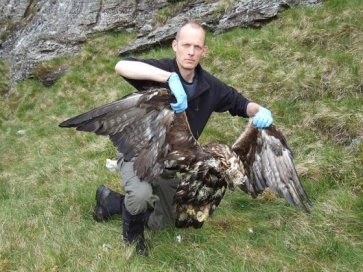
McKellar wasn’t charged in relation to the dead eagle, just for possession of a banned pesticide, to which he pleaded guilty. There’s a lot more to this case than has previously been reported, and once sentencing has finished we’ll have a few things to say.

So what do you think his punishment will be? Six hours on the naughty step?

Glen Orchy poisoner: sentence deferred ’til July

Tom McKellar, a gamekeeper/farmer at Auch Estate in Argyll who was convicted last month of possession of the banned pesticide Carbofuran (see here and here) was due to be sentenced today. Sentencing has now been deferred until 23 July (we don’t yet know the reason for this further delay).

The Carbofuran was discovered at McKellar’s place nearly three years ago in June 2009 during a police raid in connection with the discovery of a poisoned golden eagle at Glen Orchy on 7 June 2009 (see here). Toxicology results showed the dead eagle had been poisoned with Carbofuran. McKellar reportedly admitted during a police interview that he had previously laid out poison baits to kill foxes (see here) but he wasn’t charged with poisoning that golden eagle.

Also discovered during that police raid was a stash of illegal handguns in McKellar’s loft. On conviction at the High Court in Glasgow in December 2010, instead of receiving the mandatory five-year prison term he was given a sentence of 300 hours’ community service (see here).

There is a lot more to the Glen Orchy eagle-poisoning incident than meets the eye but we’re unable to disclose further information until McKellar has been sentenced. Rest assured, we’ll be writing more about this in due course.

Buzz off Benyon, & other news from the murky underworld of raptor persecution

There are no signs of the public’s outrage subsiding over #Buzzardgate. You only have to type in the words ‘buzzard’ and ‘DEFRA’ into a search engine and the strength of feeling against DEFRA’s outlandish plan is almost palpable.

The best article we’ve read, so far, is that written by George Monbiot in the Guardian (here). There’s also a good article by Michael McCarthy in the Independent today, entitled ‘Richard Benyon: The bird-brained minister (see here). Although McCarthy seems to think that the buzzard-nest destroyers will start their shotgun antics as of this Friday (1st June), presumably because that was the proposed start date in DEFRA’s research tender document (see here). However, the buzzard breeding season is well underway and many nests now contain small chicks and the DEFRA ‘study’ suggests that nests will be destroyed during ‘construction’; it doesn’t say anything about destroying active nests containing breeding adults, eggs and/or young (not that that would stop the trigger-happy nest destroyers, of course).

But perhaps the destructive parts of this study won’t start this Friday (if they ever start at all, depending on how loudly we all shout our objections). According to the June edition of ‘Modern Gamekeeping’ (which could just as easily have been called ‘Victorian Gamekeeping’ because nothing seems to have changed except for new bits of kit designed to help the ‘keeper kill more wildlife), the trial’s start date is not that clear:

Though DEFRA insists it is too early to comment on the finer details of the study, it is expected to launch some time this year. A spokesperson said: “The tender for the research project on management techniques to reduce the predation of pheasant poults by buzzards closed yesterday. We will announce the successful bid later in the summer“”.

Modern Gamekeeping isn’t available online (another example of its misnomer) but a photograph of its buzzard trial cover story can be found on Alan Tilmouth’s blog (here). Incidentally, Alan Tilmouth has been one of the most prolific tweeters on this issue and we know he was directly responsible for directing some ‘important’ people to this blog when we led on this story last week, so many thanks Alan, and good luck with your DEFRA FoI request to find out which Northumberland estates are involved; we’re all VERY interested in those results.

Another DEFRA FoI request has been lodged by ‘SWBirdWatch’ which can be followed on the public website ‘What Do They Know?’ (see here).

Since the buzzard trial story hit the news last week, several commentators on various blogs and websites have mentioned that the game-shooting lobby may have shot themselves in the foot over their latest attempt to get rid of raptors, because now the full glare of the spotlight has been turned onto their industry, with mainstream media taking a real interest. Mark Avery’s blog this morning (see here) focuses on some of the questions now being asked by a wider audience where previously they were just being asked by a smaller minority of special-interest groups. All good stuff.

For those who haven’t already done so, there are two main petitions to sign to show your disapproval of the buzzard trial – please, take a minute to sign both of them and let Mr Benyon feel the full force of our discontent:

https://raptorpersecutionscotland.wordpress.com/2012/05/24/add-your-name-to-petition-against-buzzard-management/

http://www.change.org/petitions/minister-for-wildlife-and-biodiversity-defra-stop-the-subsidy-for-buzzard-nest-destruction?utm_medium=facebook&utm_source=share_petition&utm_term=friend_inviter_action_box

In other news, Tom McKellar is due to be sentenced today (he’s the gamekeeper from Glen Orchy who was convicted in April of possessing the banned pesticide Carbofuran, although he didn’t face any charges over the dead golden eagle found at Glen Orchy which had been poisoned by er… Carbofuran – see here). We’ve received some further information about that poisoned eagle and we’ll discuss it once McKellar’s case has ended.

Another hearing opening today concerns the head keeper at Edradynate Estate in Perthshire. More on that case in due course…

Crow traps: what you should know part 2

Following on from our earlier blog – Crow traps: what you should know part 1 (here)

The following information concerns the use of crow cage traps in Scotland; they are also used in other parts of the UK although the terms of use differ slightly (see here for information on their use in England, here for Wales and here for Northern Ireland).

What is a crow trap and why should we be concerned about them?

There are various types of animal traps in use in the countryside but the two we focus on in this article are the ‘ladder’ and ‘funnel’ crow cage traps. These are large, walk-in traps usually constructed with a wooden frame and wire mesh netting. A decoy bird (often a carrion crow but certain other decoy species are also permitted) is placed inside the trap to attract corvids or other target species. Birds that are attracted to the trap can enter via the roof, either through the horizontal slots of the ‘ladder’ or via a ‘funnel’. Once inside the trap it is virtually impossible for the birds to escape unaided. These trapped birds are usually destined to certain death at the hands of the trap operator who is legally authorised to kill them, subject to certain conditions (discussed in Part 3). In some rare circumstances, raptor workers deploy temporary crow cage traps to capture buzzards for marking projects, such as wing-tagging etc. Obviously these buzzards are released as soon as they’ve been marked; they aren’t killed by the trap operator!

There are many concerns surrounding the use of crow cage traps (some we’ll discuss below) but the over-riding concern is the indiscriminate nature of these traps, which means that species other than the target species can be, and often are, caught by gamekeepers, e.g. buzzards, goshawks, golden eagles etc. It is not illegal to (accidentally) trap these non-target species, but it is an offence for the trap operator not to release them, unharmed, at the earliest opportunity. More on this in Part 3.

Crow trap use is governed by a general licence, issued annually by Scottish Natural Heritage (see here). These licences are issued for the purpose of either (a) the conservation of wild birds, (b) to prevent serious damage to livestock, foodstuffs for livestock, crops, vegetables and fruit, and (c) to protect public health, public safety and prevent the spread of disease. Trap operators need not ‘apply’ for an individual licence, hence the name ‘general’ licence. Each general licence is subject to strict conditions (discussed in Part 3). If the trap operator complies with all the conditions of the general licence then the use of the crow trap is legal. However, in practice some of these conditions are ambiguous at best, and this is recognised by SNH who undertake regular consultations aimed at clarifying the terms of use (e.g. see here for their latest consultation plans).

Before we get in to the nitty gritty of how to recognise a legal trap from an illegal trap it’s worth mentioning that the RSPB (and other groups such as OneKind) has long campaigned for a more thorough review of the legal framework concerning these general licences for crow traps, particularly in relation to potential breaches of European legislation, including the EC Birds Directive. For anyone interested in the RSPB’s position, this document from 2007 (here) is informative.

Other concerns include the fact that there isn’t any effective monitoring of the impact these traps have on both target and non-target species. Crow traps are in use across Scotland year-round but are especially associated with upland grouse moors. It isn’t known exactly how many crow traps are in operation in Scotland but a conservative estimate would be in the hundreds, but probably nearer the thousands. There is currently no requirement for trap operators to record and/or report the number of target and non-target species caught and killed inside a trap (and even if there was such a requirement, who would believe the submitted figures? No gamekeeper is going to admit to illegally killing a protected species!). So how can the regulatory body (SNH) monitor the impact of crow trap use when they haven’t got a clue just how many traps are in use and how many birds and of what species are being killed each year? The follow-on question is, how can these general licences still be issued when the regulatory body cannot justify, in quantifiable terms, the need for lethal control measures?

Some may argue that there is now a record of the number of traps in use because recent changes to the general licences now require that a sign is attached to each trap with a unique identifying code issued by the local police force. However, this unique code is not assigned to an individual trap or to an individual trap operator, but rather to a landowner (or occupier) such as a sporting estate or a farm. This means that an estate owner can use the same code for multiple traps on his/her land (e.g. they may have just one trap or they may have 50+ traps depending on the size of the estate); the point is that the authorities do not have any means of knowing how many traps are in use on a particular estate because they only issue one code per estate.

From a law enforcement perspective, this use of a single identifying code for multiple traps makes it almost impossible to prosecute an individual for illegal use of the trap. For example, if a golden eagle is found dead inside a trap, and it’s obviously been there for a long time, then an offence has probably been committed (because traps must be checked at least once in every 24 hour period – see Part 3). Investigators may attend the scene but find that the trap is located on a large estate that employs multiple gamekeepers. None of the gamekeepers admit responsibility, so how does the investigator identify the individual responsible? A prosecution cannot commence unless an individual suspect is identified. It’s the same loophole we’ve seen used so many times when poisoned bait has been found on a large estate; nobody admits responsibility for laying the bait and thus the perpetrator(s) escape justice. It is only when the trap is located on a smaller estate where a single gamekeeper is employed that there is any chance of a prosecution.

Talking of loopholes….we’ve touched on this briefly in previous posts….in 2008 a new condition was added to the terms of use of the general licences. That new condition was that anyone who had a previous wildlife crime conviction was not allowed to use the general licence unless their conviction was considered ‘spent’, i.e. after five years from conviction. (Although even if you did have a recent conviction you could still apply for use of the licence and each case would be considered on merit, so it’s not quite the draconian condition that some imply). However, in 2009 the condition (of being banned for five years) was modified and we don’t recall any consultation about the insertion of this modification! The new modification says that you can still use the general licence if the sentence you received for your wildlife crime was an ‘admonishment’. Talk about a get-out clause! You might think this modification was quite reasonable, after all, an admonishment (effectively a telling off) is only given for minor offences, right? WRONG!!! Because there aren’t any mandatory sentences for wildlife crime offences in Scotland, a sheriff can choose a sentence at will (within the boundaries of sentencing limits at a Sheriff court, of course). In 2010, a sheriff imposed an admonishment on Graham Kerr, a gamekeeper on the Redmyre Estate, for possession of the banned pesticides Carbofuran and Alphachloralose (see here). The maximum penalty available was a £5000 fine and/or a six month prison term, reflecting the gravity of this type of offence. Had Kerr not also been handed a £400 fine for shooting a buzzard on the Redmyre Estate, his admonishment would have allowed him to continue using the general licence to operate a crow cage trap. In our opinion this is outrageous. What’s the point of having a condition of a five-year ban for a wildlife criminal if that condition is modified based on the whim of a sheriff’s sentencing choice rather than the nature of the actual criminal offence committed? It’s total nonsense. Why was this modification added to the terms of the general licence and who instigated its inclusion in 2009 and who approved it? Was anyone given the opportunity to object to its inclusion? Perhaps a Freedom of Information request is called for here…

This leads on to another concern…who is actually monitoring the trap operators? How do we know that someone with a recent criminal conviction (who was given a stronger sentence than an admonishment) is not still operating a crow cage trap? We know that many estates don’t sack their gamekeepers following a wildlife crime conviction, and we know of at least one estate where a previously convicted gamekeeper (guilty of raptor persecution) is now employed as a ‘gardener’!!

The potential for the misuse of crow traps is well known amongst raptor workers.  Previous reports on this issue have been produced by the RSPB (e.g. see here). Although this 2004 report is now fairly dated and some of the report’s recommendations have since been implemented, there is still a great deal of concern that crow traps are still being deliberately used to target raptor species, particularly buzzards and goshawks and in some areas, golden eagles.

So what can we do about it? In Part 3 we’ll explain the basics of what makes a crow cage trap legal, what makes one illegal, and the blurred line in between the two. We’ll also explain what members of the public should and shouldn’t do if you find a crow trap that you suspect is being operated illegally.