
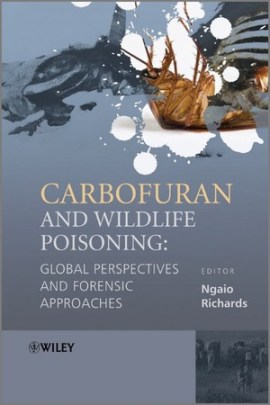
 A definitive reference book was published last month that provides a comprehensive guide to the use of the pesticide Carbofuran and its role in wildlife poisoning.
Written by a series of international contributors, this book includes detailed studies of how Carbofuran is made and applied, its acute toxicity to wildlife, how much and how long it takes to poison an animal, analytical methods of detection and strategies being implemented to prevent its use. It also contains a series of global case studies from Africa, India, Europe, Latin America, Canada and the United States. One chapter is devoted to the [illegal] use of Carbofuran to poison raptors in Scotland: ‘The effect of carbofuran poisoning and other illegal persecution methods on raptor populations in Scotland‘ (Ruth Tingay); ‘A landowner’s perspective on wildlife poisoning in Scotland’ (Douglas McAdam); ‘Monitoring carbofuran abuse in Scotland’ (Michael Taylor).
CARBOFURAN AND WILDLIFE POISONING: GLOBAL PERSPECTIVES AND FORENSIC APPROACHES. (2011). Editor: Ngaio Richards. Wiley-Blackwell, Oxford, UK.
ISBN 978-0-470-74523-6 (hardback)
From the publisher:
This cutting-edge title is one of the first devoted entirely to the issue of carbofuran and wildlife mortality. It features a compilation of international contributions from policy-makers, researchers, conservationists and forensic practitioners and provides a summary of the history and mode of action of carbofuran, and its current global use. It covers wildlife mortality stemming from legal and illegal uses to this point, outlines wildlife rehabilitation, forensic and conservation approaches, and discuss global trends in responding to the wildlife mortality.
The subject of carbofuran is very timely because of recent parallel discussions to withdraw and reinstate the insecticide in different parts of the world. Incidences of intentional and unintentional wildlife poisonings using carbofuran are undeniably on the rise, especially in Africa and India and gatherings of stakeholders are being organized and convened on a global basis. There is still a need to consolidate information on the different experiences and approaches taken by stakeholders. Carbofuran and Wildlife Poisoning is a comprehensive overview of global wildlife mortality, forensic developments and monitoring techniques and is a definitive reference on the subject.
It comprises of historical and current perspectives, contributions from key stakeholders in the issue of global wildlife poisonings with carbofuran, people on the ground who deal with the immediate and long-term ramifications to wildlife, those who have proposed or are working towards mitigative measures and solutions, those in contact with intentional or unintentional ‘offenders’, those who have adapted and developed forensic methodology and are gathering evidence.
Introduction and Table of Contents available here
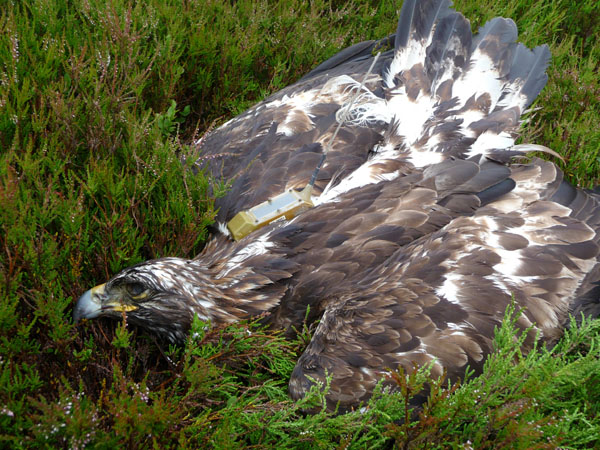 An article in today’s Telegraph reports that Millden Estate, where golden eagle ‘Alma’ was found poisoned in 2009, is no longer up for sale. The estate, owned by investment banker Richard Hanson, was reportedly put on the market earlier this year (see
  Earlier this year, a subsidised pesticide and biocide disposal scheme was set up for a three month period (Jan-Mar), so that gamekeepers, farmers, pest controllers etc could safely and cheaply get rid of certain redundant and/or illegal substances. The scheme was organised by the bafflingly-named Project SOE (Security in the Operational Environment) and was supported by government funding, which allowed collection and disposal for the bargain rate of £20 per application.
 Glen Esk is, of course, where golden eagle ‘Alma’ was found poisoned two years ago (see
 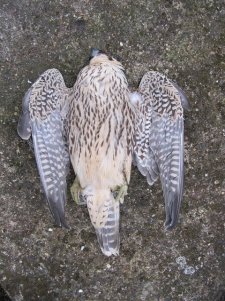 The BBC News website is running a story today about another poisoned peregrine. The young bird was apparently discovered three months ago at Whitecleaves Quarry near Buckfastleigh in Devon. The toxicology results, which have only just been released, indicate the bird was poisoned with the banned pesticides Carbofuran and Aldicarb.
 Well finally, on behalf of the Scottish Government, SASA (Science and Advice for Scottish Agriculture) has published the poisoning figures from the second quarter of 2011 (covering the period from April to June), and guess what? More raptors were illegally poisoned during this period. Seems a bit of a coincidence that these figures have been published four months late and on the very day that people were encouraged to make a Freedom of Information request to SASA to obtain the 2011 poisoning data. Nevertheless, the publication of these data is still welcome and provides us with cold hard facts about the continuing illegal poisoning of our native species.
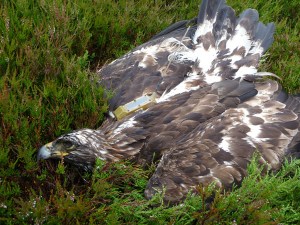 Millden Estate near Brechin, Angus has been put up for sale with a whopping £17.5 million price tag. If the estate is sold as a whole (as opposed to up to 13 Lots), it will become the most expensive Scottish country estate ever sold on the open market, according to Scotland on Sunday.
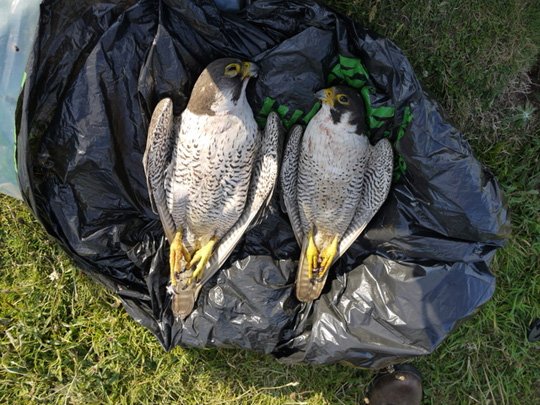 Devon & Cornwall Police, along with the RSPB, have just announced that two peregrines that were found dead on 21 July this year had been poisoned by the banned pesticide Carbofuran. The RSPB is offering a reward of £1000 for information leading to a conviction.
