 Today is the inglorious 12th, the start of the four-month grouse shooting season in the uplands of northern England and Scotland. Today, and for many days to come, ridiculously rich people will dress up in clownish outfits and head for the moors in the hope of shooting dead some birds. Many will pay an estimated average of £15,000 for the experience. I wonder how many of them will enjoy the sight of a hunting hen harrier or a golden eagle quartering across the moor? Very few, infact probably none of them because scientific evidence shows that hen harriers and golden eagles have been exterminated on most grouse moors in the UK, with just a few notable exceptions. Has anyone been convicted? One person was once convicted for killing a hen harrier, and that’s it. Nobody has ever been convicted for killing a golden eagle (someone was once taken to court a few years back but the case was dropped). Even though several dead eagles and the UK’s biggest stash of the poison they died from were all found on a sporting estate last year, still nobody has ever been convicted.
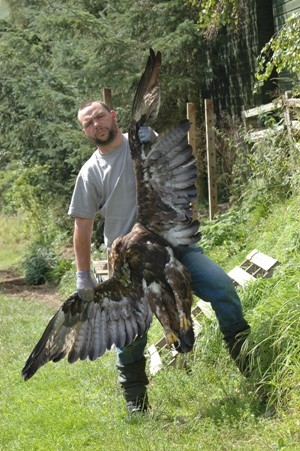
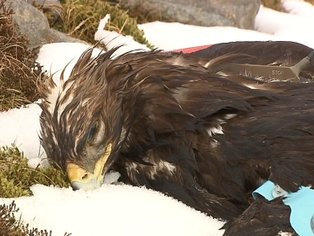
Four years ago today, this golden eagle (pictured) was found dead in Peebleshire. She was one half of the last breeding pair of golden eagles in the Borders. She had been poisoned by the banned pesticide Carbofuran and was found dead under her nest tree. Her death caused outrage and triggered the thematic inspection into the prevention, investigation and prosecution of wildlife crime in Scotland (read the resulting 2008 ‘Natural Justice’ report here). This report highlighted the problems that stand in the way of effective wildlife crime law enforcement in Scotland. Four years later, many of the same problems still exist. Nobody has been charged with the illegal killing of that female golden eagle in Peebleshire and according to a report by the Wildlife Incident Investigation Scheme, the case is now closed.
Since the year she was killed (2007), how many other protected raptors have suffered the same fate? The following have all been confirmed poisoned in Scotland over the last four years – the vast majority of them were found dead on grouse moors:
8 golden eagles, 3 sea eagles, 63 buzzards, 25 red kites and 8 peregrines.
These numbers do not account for birds that were trapped, shot, or had their heads smashed in with a shinty stick while their broken legs were pinned in an illegal spring trap. Nor do they account for the ‘missing’ birds – including over 2,000 hen harriers.
Today, the grouse-shooting industry will have filled the media with stories about how ‘great’ grouse moors are for conservation, how ‘great’ grouse shooting is for the economy, how ‘great’ grouse-shooting is for biodiversity. Fortunately, the general public are becoming wise to the propaganda.

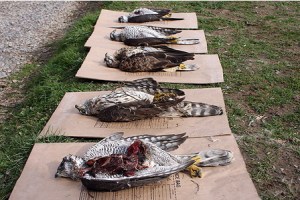
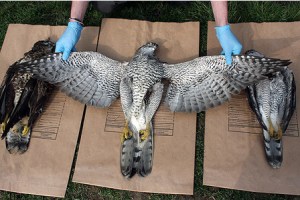 The RSPB has put up a reward of £1,000 for information about the deaths of four goshawks and one buzzard which have been found poisoned in Devon. They were discovered in Forestry Commission woods near to Exeter and had been poisoned with the bannned pesticide Carbofuran.
 Anyone with information about these crimes is urged to call Crimestoppers, in confidence, on: 0800-555-111, or email Devon & Cornwall Police Wildlife Crime Officer P.C. Josh Marshall directly: Joshua.MARSHALL2@devonandcornwall.pnn.police.uk
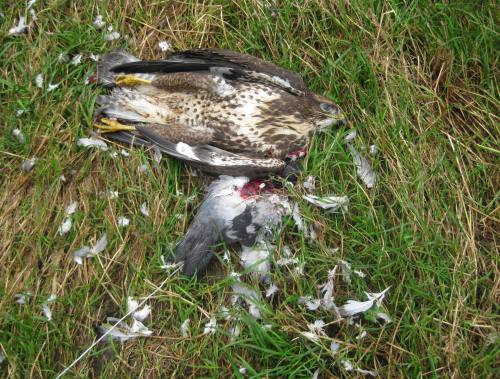 Two young buzzards and a sparrowhawk have been illegally poisoned in Ireland. The bait this time? Live pigeons, that were smeared with the banned pesticide Carbofuran, tethered to the ground with wire with their wings clipped.
 Today the Scottish government has published its latest report on animal poisoning in Scotland. The figures relate to recorded incidents in 2010 and demonstrate a sharp rise in the number of wildlife poisonings, including the widespread illegal poisoning of raptors. The report shows that 69% of all ‘abuse’ cases involved the poisoning of birds of prey, covering a wide area including Borders, Dumfries & Galloway, Highland, Lothian, Strathclyde and Tayside. The illegal pesticide Carbofuran was detected in half of these incidents. The raptors that tested positive for poisons included 40 buzzards, 4 golden eagles, 1 sea eagle, 1 kestrel, 5 barn owls, 2 tawny owls, 2 peregrines, 21 red kites and 11 sparrowhawks.
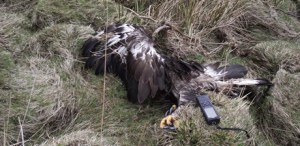 The latest figures detailing illegal animal poisoning incidents in the first quarter of 2011 have just been released by Science and Advice for Scottish Agriculture (SASA) on behalf of the Scottish Government.
 Two years ago in July 2009, Alma, a two-year golden eagle who had been satellite-tracked across Scotland from her birth place on the Glenfeshie Estate,
  We have received the following message from a member of the investigations team at the Scottish charity
 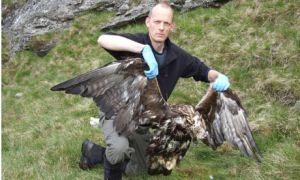 Two years ago today, this dead golden eagle was discovered by hill walkers in Glen Orchy, Argyll. Government tests later showed it had been poisoned by the illegal pesticide Carbofuran. This poisoning incident made the national press (e.g.
 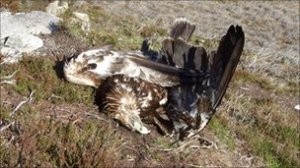 Despite this conviction, the Crown accepted he had ‘no part’ in the deaths of two poisoned golden eagles and a sparrowhawk (killed with Carbofuran)
