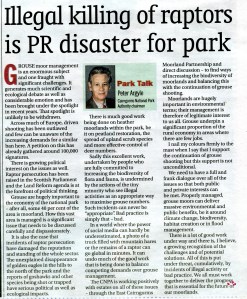
 Illegal raptor killing is a PR disaster for the Cairngorms National Park, says Peter Argyle, the current Convener of the Cairngorms National Park Authority.
He’s not wrong.
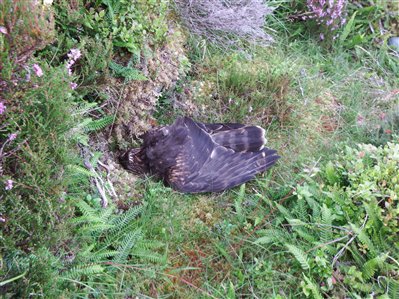
Since the Cairngorms National Park was established in 2003, there have been over 60 recorded incidents of illegal persecution (see here) and these are only the ones that have reported. There are likely to have been many, many more that have gone undiscovered.
Writing in a blog published on the CNPA website (here), and also published in the Strathspey and Badenoch Herald last week (see photo), Peter follows in the footsteps of his predecessor Duncan Bryden, who, two years ago, wrote to the then Environment Minister Paul Wheelhouse about how raptor persecution “threatens to undermine the reputation of the National Park as a high quality wildlife tourism destination” (see here).
Peter’s blog is fairly balanced; he acknowledges that there are some estates within the National Park who are engaged in on-going conservation efforts (Glenfeshie would be a good example) but he also recognises that illegal raptor persecution is undertaken by those seeking to maximise grouse numbers. And therein lies the problem.
Peter says, “Properly managed, grouse moors can deliver massive environmental and public benefits, be it around climate change, biodiversity, habitat creation or in flood management“. But what does “properly managed” actually mean? Presumably not the intensive management regimes currently in use on many grouse moor estates within the Park which most definitely are not delivering ‘massive environmental and public benefits’ – in fact the exact opposite (see here).
Peter also says, “I nail my colours firmly to the mast when I say that I support the continuation of grouse shooting but this support is not unconditional“. He wants to have “a full and frank dialogue over all of the issues so that both public and private interests can be met“. He doesn’t seem to have grasped the fact that years of dialogue have proven futile, resulting in Golden eagles poisoned, golden eagles ‘disappearing’, chronic golden eagle survival rates (here), white-tailed eagles ‘disappearing’, white-tailed eagle nests felled, hen harriers shot, breeding hen harriers in catastrophic decline (here), goshawks shot, goshawk nests being attacked, peregrines shot, peregrine nest sites burnt out, breeding peregrines in long-term decline (here), buzzards poisoned, buzzards shot, red kites poisoned, short-eared owls shot, poisoned baits laid out, illegally-set traps, and mountain hares massacred.
We’ve blogged before about how the Cairngorms National Park Authority can take steps to stop the illegal persecution of raptors within the Park boundary (here) and we’d remind Peter, not that he needs it as Park Convener, of the CNPA’s four aims, set out by Parliament:
- To conserve and enhance the natural and cultural heritage of the CNP;
- To promote sustainable use of the natural resources of the CNP;
- To promote understanding and enjoyment (including enjoyment in the form of recreation) of the special qualities of the CNP by the public;
- To promote sustainable economic and social development of the CNP’s communities.
These aims are to be pursued collectively. However, if there is conflict between the first aim and any of the others then greater weight must be given to the first aim (section 9.6 of the National Parks (Scotland) Act).
If you haven’t already, please consider participating in the CNPA’s current consultation process on the Park’s five-year management plan. This plan will help guide the CNPA’s work on the most pressing issues, one of which has been identified as grouse moor management. Let the CNPA know of your concerns about intensive grouse moor management within the Park boundary, about the environmental damage it is causing and how self-regulation has failed, repeatedly, since the Park was first established back in 2003. The consultation closes on 30 Sept and the documents can be accessed here.