Mass raptor poisoning in Wales: police respond but questions remain

Following on from yesterday’s blog (see here) about the illegal mass poisoning of raptors in the Powys region of Wales and our question about whether Dyfed-Powys Police had covered up this atrocity…..
Poisoned RK Powys

Chief Constable Simon Prince (head of Dyfed-Powys Police, Chair of the PAW UK Steering Group and ACPO lead on wildlife crime) sent us a tweet yesterday saying he would investigate our report and provide an update. He was as good as his word as this evening he sent us another tweet directing us to a statement that has just been added to the police website. In case it disappears, we’ve reproduced it here:

In response to blog by Raptor Persecution Scotland

Dyfed Powys Police take allegations of wildlife crime very seriously and investigates all incidents reported to us. Following information received in 2012 and 2013, relating to the deaths of raptors in Powys, a full investigation was carried out in partnership with the RSPB, the National Wildlife Crime Unit and the Wildlife Management Team in the Welsh Government.   During the investigation a number of search warrants under the Wildlife and Countryside Act were executed and two people were arrested in connection with the incidents. A file of evidence was subsequently submitted to the Crown Prosecution Service who advised that there was insufficient evidence to proceed with a prosecution.

END

We’re grateful to Chief Constable Prince for replying so promptly but this police statement leaves a lot to be desired and a lot of questions still unanswered.

The statement tells us that an investigation was undertaken, and this is further verified by a detailed blog written by one of the RSPB investigations team that has just appeared on the RSPB website (here). Good, we shouldn’t expect anything less. But, as is common in so many of these raptor persecution cases, the evidence was insufficient to proceed to a prosecution. That doesn’t mean that the mass poisoning didn’t occur – it clearly did – but it was not possible to identify a named suspect to face charges. We’re not going to criticise the police for that, especially after reading how pleased the RSPB investigator was with the police’s efforts during the investigation.

However, the focus of yesterday’s blog was whether Dyfed-Powys Police had embarked on a ‘cover-up’ of this mass raptor poisoning and that question still remains open. This crime has been described by the RSPB investigator as “the most significant wildlife poisoning case ever recorded from Wales, and the second highest recovery of poisoned birds of prey in any UK investigation during the last 40 years“. So why has Dyfed-Powys Police not made any public statement about it until we started asking questions yesterday? Surely it’s in the public interest to know about this?

In the recent past it has been standard practice for this police force, and other Welsh police forces, to make public statements about other (much smaller and thus less significant) poisoning/persecution incidents – e.g. see here, here, here, here and here. These statements can include an appeal for information and/or a warning to members of the public to be aware of dangerous toxic poisons in the local vicinity.

So just what is it about this mass poisoning crime that Dyfed-Powys Police has kept quiet about it for so long, even after the investigation had concluded?

You’ll note in the above police statement that the location has not been revealed. You’ll also note in the RSPB investigations blog that the location is given as a sporting (pheasant shooting) estate in the Brecon Beacons National Park, although the estate is still not named.

We think we’ve got a pretty good idea why this mass poisoning crime has not previously been made public (we’d call that covering it up). Since we published yesterday’s blog, several people have contacted us privately and each has named the same estate as being at the centre of the investigation. We’re not yet in a position to publish that estate name because we need to verify a few things first. But OH MY GOD. If it does turn out to be this estate, you’ll not struggle to put two and two together.

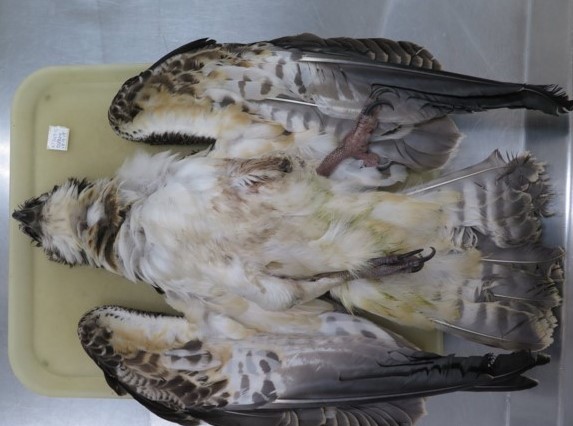
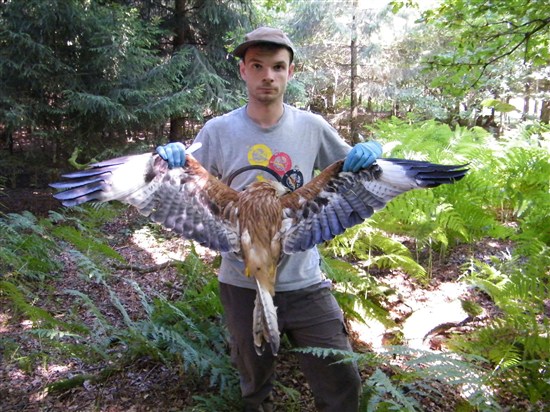
Photo of one of the poisoned red kites found on a pheasant shooting estate in the Brecon Beacons National Park, by Guy Shorrock (RSPB).
Ross-shire Massacre discussed at RACCE meeting

RK5Back to the Rural Affairs, Climate Change & Environment (RACCE) committee meeting in January….
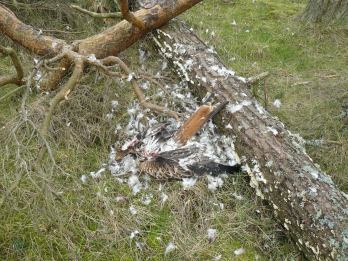
The topic of the Ross-shire Massacre was raised again. For new readers, the Ross-shire Massacre refers to the discovery of 22 dead raptors in a small area of Conon Bridge in the Highlands in March 2014. Sixteen red kites and six buzzards were found dead: 12 red kites and 4 buzzards have since been confirmed to have been poisoned by a ‘banned substance’. There have been no arrests to date. Our last update was on the 18 month anniversary (here) and we’ll be writing more when the two-year anniversary rolls around in March.

In the meantime, here’s the discussion from the RACCE committee meeting in January. In a nutshell, 22 months on from one of the biggest mass raptor poisonings uncovered in Scotland, the police have no progress to report:

Dave Thompson MSP (Skye, Lochaber and Badenoch) (SNP): This concerns the cases involving raptors up in Ross-shire. I have a couple of letters from Police Scotland in that regard, and I want to tease out one or two little points. One of the letters refers to the “consequence of a … use of a banned substance” and to the belief “that the raptors may not have been the specific target”. The second letter makes it very clear regarding one case that “there are limited opportunities to progress unless someone comes forward with information.”

You are probably aware that I have asked for some kind of interim report into the initial handling of that case. I was told in that letter that “Police Scotland does not produce ‘interim reports’ during a live investigation”. Given that the case in question could be live for the next 20 years, we are never going to get an opportunity to consider how things were initially handled in relation to the matter. There are concerns in the community and elsewhere that there was perhaps some unnecessary delay and so on. Given that there will be “limited opportunities to progress unless someone comes forward” with evidence, have you carried out, or do you plan to carry out, any internal investigation as to how the investigation itself was initially carried out? If so, have you learned any lessons from that? Will you able to make any of that public at any point?

Assistant Chief Constable Graham: We had a fairly lengthy discussion last year about the current state of the case at that stage. Some similar points were raised about the handling of the matter in the media—that was about press statements, if I remember correctly. There was a desire to review our approach.

At the heart of the letter to which you have referred is the point that having the police produce a report is not necessarily the best way to address the issues. However, I would be very happy to be involved in something in future with a range of organisations and interested parties, including yourself, whereby we are able to sit down and gather what the concerns are. We are aware of most of them. We could work through how we could do things differently in future, and we could achieve that even within the scope of a live investigation, which would not require the police to produce a report as such. As I say, producing a report might not be the most effective approach.

As I reported last year, we have done a number of things internally to review the investigation at senior detective level, which is unprecedented in a wildlife crime investigation. We had what we call a major investigation advisory group meeting, with a process around that. That has been subject to both peer and senior officer review, assessment and support. Notwithstanding all that, we have not arrived at a position where we have been able to solve the crimes, as it were, although that is not to say that we will not in the future.

Therefore, I would still be cautious in ensuring that we do not do anything to prejudice any potential future cases. A lot of information is still being received about the case. Much of that is statements or reports along the lines of, “Everybody knows who’s done it”, “We all know what’s gone on”, or “Everybody knows where the police should be looking.” I can assure the committee that we have followed up every statement in which we can identify the individuals involved. That includes people coming to us or people whom we have been made aware of who have made such statements publicly or privately.

The committee might have had feedback indicating that people are surprised when we have taken a statement from them after quite some time has passed. Unfortunately, in every single case, the statement has turned out to be without substance. We have spoken to everybody we possibly could and, although there is a general perception that everybody knows who did it, no one has been able to give us their names. Given the huge effort that has gone into—and continues to go into—the inquiry, we should have a caveat here because of public concern about perceived police inaction. The case is still sitting with the detective superintendent in Inverness, who is the lead investigator. I have been assured by him, as recently as last week, that there is still an active review and engagement on any potential lines of inquiry that come to light.

A short documentary was recently aired on the internet that interviewed a number of people. We picked up a number of lines from that, which were similar to previous statements in which people asserted that everybody knew who had done it. However, no one in the documentary knew who had done it, because we have spoken to them all.

Dave Thompson: You suggested a meeting between a range of bodies and parties, perhaps including myself. It would have to be before 23 March, because I am not standing again, although I am sure that my successor—whoever that is— would be happy to take part. Such a meeting would reassure people. Although the public accept that the police continue to look into the case and that they would dearly like to get any evidence that would allow them to conclude it, there are questions about how the police went about things at the beginning. Such a meeting would be really useful because frank discussions could take place and the issue could be talked through, without you having to divulge things that might prejudice the case. I would welcome such a meeting, if you are offering one.

Assistant Chief Constable Graham: I am, and I offer to do it before 23 March.

Head gamekeeper Simon Lester resigns from Langholm Moor Demonstration Project

Langholm moorThere had been rumours for a few days and now it’s confirmed: Simon Lester, the head gamekeeper at the Langholm Moor Demonstration Project has resigned.
A statement has appeared on the Langholm Project website and is reproduced as follows:

Simon Lester, the LMDP’s headkeeper, has resigned from the project and will be leaving at the end of March 2016. Simon has provided tireless leadership to the five-man keepering team which has undertaken the key management actions for the project. These have resulted in significant improvement of the heather habitat, the effective use of fiversionary feeding of hen harriers each summer and the management of parasites and predators. These measures have increased the numbers of red and black grouse, and breeding raptors, notably hen harriers. This mixture of traditional and novel management has been successfully demonstrated to hundreds of project visitors by Simon in collaboration with the project’s science team.

Despite a larger grouse population than at the start, the project has not been able to produce a sustainably large, harvestable surplus of driven grouse to economically underpin the management. LMDP is now close to its formal end point and the board is reviewing what can and should be achieved in the remaining term of the project. The project board would like to thank Simon for his exceptional contribution.

It’s an interesting time for him to go, eight years in to a ten-year project. The official statement doesn’t explain his reasons, and nor should it as they’re personal, but it will inevitably lead to speculation.

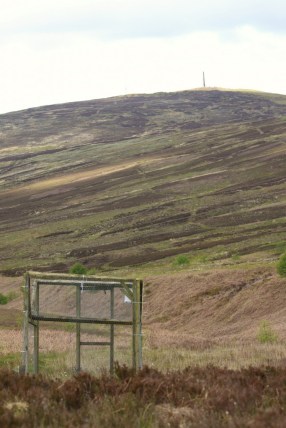
Perhaps it’s because there (supposedly) hasn’t been an opportunity to begin driven grouse shooting on the moor, which is one of the fundamental aims of this project, although it has been argued that the decision not to shoot has been a political one. Grouse densities at Langholm in 2014 had recovered to the same densities that had allowed driven grouse shooting to take place there in the early 1990s, so why the decision not to shoot now? Many of us think it’s so the grouse-shooting industry can claim that the Langholm Project has ‘failed’, in order for them to persist with their argument that driven grouse shooting can’t function with all those pesky raptors around, even though years of research at Langholm have not produced a scrap of scientific evidence to show raptor predation has a large impact on the red grouse population. According to Langholm Project director Mark Oddy (of Buccleuch Estates), what is required now is lethal raptor control at Langholm (see here). Ah, there’s that ‘local knowledge is just as important as scientific evidence’ piece of guff theory.

Given Simon Lester’s view on raptor culling (he thinks it should happen – see here and here), we thought he might have stuck around at Langholm to see his dreams fulfilled. Although perhaps he realises that the chances of licences being issued to kill buzzards, based on no scientific justification whatsoever, are limited.

Scrolling down the Langholm Project website, it’s fascinating to see what else has been mentioned, or more interestingly, what hasn’t been mentioned.

There’s a bit about one of the guest blogs that appeared on Mark Avery’s website (here) that reported on a presentation given at a GWCT seminar about the Langholm Project, but strangely, there’s no mention of the second guest blog (here) where Mark Oddy (Buccleuch Estates) proclaimed lethal raptor control as the next step forward in the Langholm Project. How odd!

Scroll down a bit further on the Langholm Project website and you’ll find a statement about the illegal shooting of hen harrier ‘Annie’, one of the Langholm-hatched birds. Strangely, there’s no mention of where Annie’s corpse was discovered other than “an area over 40km to the north west of Langholm Moor”. The statement is strangely quiet about the fact that Annie’s corpse was found on a grouse moor on, er, Buccleuch Estates, part of the same estate where the Langholm Project is based. Why so coy? Just because her corpse was found there doesn’t mean that’s where she’d been shot, so why exclude this important detail?

All very odd.

It’ll be interesting to see what happens next at Langholm. Will they employ a replacement head keeper and continue for the final two years, or will they decide to close the project early and declare it a failure?

More raptors illegally killed in Peak District National Park: police appeal 5 months later

Derbyshire Constabulary has today issued a press release appealing for information following the illegal killing of an Osprey (caught in a spring trap) and a buzzard (shot) that were discovered in the Peak District National Park last September. The RSPB is offering a £1,000 reward for information that leads to a conviction.

Here’s the press release:

Derbyshire Police and the RSPB are appealing for information following the illegal killing of two birds of prey near to Glossop, Derbyshire. A £1000 reward has been offered by the RSPB for information leading to a conviction.

On September 09, 2015, a dead osprey was found to the west of Derbyshire Level. A post mortem on the bird revealed that both its legs had been recently broken, injuries which were consistent with it being caught in a spring trap prior to its death. Ospreys are rare visitors to the Peak District and this one would have been on migration to West Africa.

On September 30, a buzzard was found shot dead close to Hurst Reservoir, only a short distance from where the osprey was found. This follows the shooting of another buzzard in the same area in March 2014.

Sergeant Darren Belfield from Derbyshire police said: “I would appeal to anyone who might have any information as to who may be responsible for these cruel acts to contact the police on 101. The continued persecution of birds of prey in the Peak District is totally unacceptable. If you suspect someone of committing any crimes against wildlife, act now. Your call will be dealt with in confidence. If you don’t feel you can talk to the police, pass the information to us through Crimestoppers by ringing 0800 555 111.”

RSPB Investigations Officer Alan Firth said: “Yet again, we are seeing the senseless killing of fantastic birds of prey in the National Park.”

Last year, the RSPB published its annual Birdcrime Report 2014, which revealed Derbyshire as one of the worst places in the UK for bird of prey persecution. In 2014, the RSPB received 16 reports of bird of prey incidents in the county including a shot buzzard, a shot sparrowhawk and an illegally trapped goshawk.

END

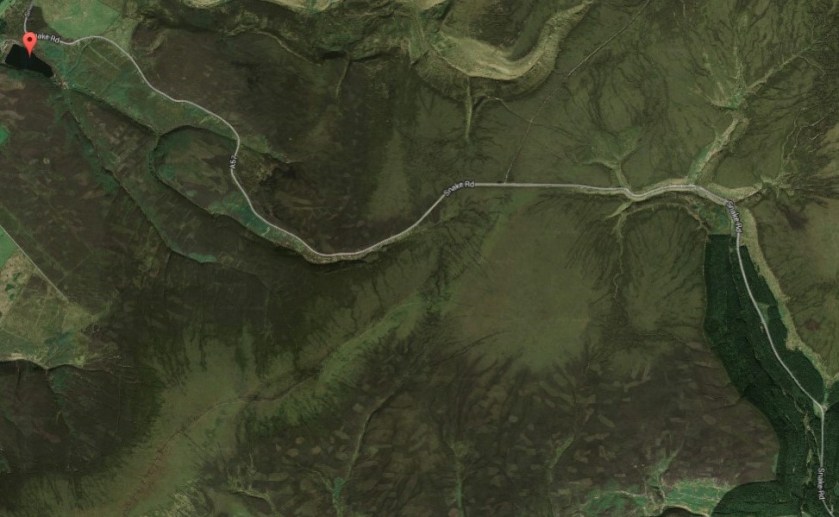
So these birds were found “close to Hurst Reservoir”. Have a look at this map and see what else is “close to Hurst Reservoir” (reservoir marked with the red pin). See those tell-tale rectangular strips of burnt heather to the south and south-east of the marker? Quelle surprise, it’s driven grouse moor country.

Hurst Reservoir - Copy

You may remember back in November we blogged about the failed ‘Bird of Prey Initiative’ in the Dark Peak region of this National Park. It was a five-year project aimed at restoring the populations of several raptor species in the area and involved various organisations: The Moorland Association, The National Trust, Natural England, Peak District National Park Authority, and the RSPB. None of the targets were met (see here). In response, the Moorland Association and the Peak District National Park Authority said they’d make ‘renewed commitment’ to protect raptors in the National Park (see here). Riiiiiight, that’s working well then.

Interestingly, the failed initiative was widely reported in the local press, including the Derbyshire Times, whose article on 26th November was entitled ‘Birds of prey killed and abused in Derbyshire’. In reponse to that article, Robert Benson, Chairman of the Moorland Association, penned the following letter:

I would like to emphatically state in response to your story, ‘Birds of prey killed and abused in Derbyshire’, on November 26th, that one single bird of prey killed illegally is one too many.

However, the Moorland Association was heartened to see RSPB’s latest bird crime figures show a dramatic cut across the UK. Significant reductions in the illegal trapping of birds of prey represent a 78 per cent drop since 2013, with just four confirmed incidents last year.

Of the 19 prosecutions for wild bird offences, three involved gamekeepers, but none were employed on moorland managed for grouse shooting.

Our members spend £52.5 million a year maintaining and conserving habitats which benefit all moorland wildlife. This year, grouse moor managers in England were praised for their part in the most successful hen harrier breeding season for five years.

Many other threatened species, such as lapwing, curlew, and golden plover – in serious decline elsewhere – are doing well on managed moorland. Not birds of prey, but wild, endangered and important nonetheless.

Wildlife crime is being successfully tackled. We already have a robust wildlife licensing system which needs to be used fairly to manage conflict between rapidly increasing bird of prey populations and legitimate and beneficial land use“. Robert Benson, Chairman, Moorland Association.

END

So there we have it. According to Robert, everything’s just rosy, grouse moors are great, and there are too many raptors so gamekeepers should be given licences to kill them legally.

The thing is, Robert Benson is not telling the whole story. He’s right to say that there were four confirmed illegal trapping incidents recorded in 2014, but what he ‘forgot’ to mention was that those four incidents were just a fraction of the 478 incidents of illegal raptor persecution recorded in 2014, including 179 reports of illegal shooting and destruction (of which 46 raptors were confirmed victims) and a further 53 confirmed victims of illegal poisoning. Doesn’t sound quite so rosy now, does it, Robert? He also ‘forgot’ to mention that Derbyshire was the 4th worst region in the UK for raptor persecution crimes in 2014. Oh, and he also ‘forgot’ to mention the quote from the National Wildlife Crime Unit:

Intelligence continues to indicate a strong association between raptor persecution and grouse moor management“.

One for you anagram fans: Moorland Association = A sad morons’ coalition.

Here are some photos of the latest victims (photos by RSPB)

An x-ray of the shot buzzard:

shot BZ PDNP Sep 2015 - Copy

The osprey alive, with two smashed up legs:

osprey springtrapped PDNP Sep 2015 - Copy

The osprey dead, with two smashed up legs:

osprey springtrapped 2 - Copy

The osprey’s smashed up right leg:

osprey right leg - Copy

Vicarious liability prosecution: Andrew Duncan (Newlands Estate) part 3

Criminal proceedings continued yesterday against Andrew Walter Bryce Duncan, who is alleged to be vicariously liable for the crimes committed by gamekeeper William (Billy) Dick in April 2014.

Gamekeeper Dick was convicted in August 2015 of killing a buzzard on the Newlands Estate, Dumfriesshire by striking it with rocks and repeatedly stamping on it (see here). Dick was sentenced in September 2015 and was given a £2000 fine (see here), although we understand he may be appealing his conviction.

Proceedings against Andrew Duncan, 71, who is believed to be responsible for the pheasant shoot on Newlands Estate, began in August 2015 and a provisional trial date was set for 23rd November 2015 (see here). However, at an intermediate diet hearing in October, the November trial date was dumped and a notional diet hearing was set for 18th January 2016 (see here).

A notional diet hearing is where an actual trial date may be set.

However, at yesterday’s hearing proceedings were adjourned again for another notional diet and a debate, to take place on 11th March 2016.

Vicarious liability in relation to the persecution of raptors in Scotland (where one person may potentially be legally responsible for the criminal actions of another person working under their supervision) came in to force four years ago, on 1st January 2012. To date there have been two successful convictions: one in December 2014 (see here) and one in December 2015 (see here).  One further case did not reach the prosecution stage due, we believe, to the difficulties associated with identifying the management structure on the estate where the crimes were committed (see here).

Appalling Police Scotland response to two suspected raptor crimes

BOPwildlifecrimeposter2015 - CopyRegular blog readers will know that we’ve frequently had cause to criticise Police Scotland’s response to suspected wildlife crimes that have been reported to them. Well, we’re about to do it again over their mishandling of two recently reported suspected wildlife crime incidents, one in Dumfries & Galloway and one in South Lanarkshire.
Before we get to the details of the latest fiascos, have a read of the following text that appeared in on page 32 of RSPB Scotland’s recently published 20-year review of raptor persecution:

After the initial finding or reporting of a potential wildlife crime incident, a rapid and properly-directed follow-up is essential to prevent any evidence being removed by the perpetrator, further wildlife falling victim to illegal poisons or traps, removal of victims by scavengers or decomposition of victims. Any of these factors can render obtaining forensic evidence or an accurate post-mortem impossible. In our experience, however, the speed and effectiveness of follow-up investigations and securing of evidence has been highly variable‘.

It is apparent, from the following two incidents, that Police Scotland is still failing to get the basics right.

Incident 1

A member of the public found a decomposing dead buzzard on a grouse moor in an area well-known for its history of raptor persecution. The corpse was found on Saturday 19th December 2015. It was reported to members of the local Raptor Study Group who went to the grid reference provided (just 150 yards from a main road) and confirmed it was indeed a dead buzzard. They reported it to Police Scotland on the morning of Monday 21st December and were told that an officer would attend to collect the corpse and send it for post mortem. Raptor workers went back to the site the next day (Tuesday 22nd) and the corpse was still there. They returned on Wednesday 23rd and the corpse was still there. They returned on Thursday 24th and the corpse was still there. They returned on Saturday 26th and the corpse was still there. They returned on Sunday 27th and the corpse was still there. They returned on Monday 28th December, one week after reporting it to the police, and the corpse had gone. Whether it had finally been collected by Police Scotland or whether it had been scavenged by an animal or removed by a gamekeeper, nobody knows.

Incident 2

On 28th December 2015 a member of the public found a freshly-dead buzzard in a wood, with no obvious cause of death. Previously, snares placed over the entrance of a badger sett had been found in this wood. The nearest grouse moor is approx 1.5 miles away. Because of the history of the location, the member of the public was suspicious and took the buzzard home and called Police Scotland on 101. The member of the public was told by the Police Scotland call operator that the police were unable to help. “In fact at one point he suggested that I take it to a vet or call the ‘RS bird people’. He said that the police could only help if they actually caught the offenders at the scene in which case they would be prosecuted for poaching“. Undeterred, the member of the public found an email address for the local police wildlife crime officer but got an out-of-office reply saying nobody was available until 17th January 2016. Fortunately, a local raptor worker was able to collect the corpse and got in touch with RSPB Scotland who organised for the bird to be sent for post mortem.

The Police Scotland response to both of these incidents was appalling. Now, it may well turn out that in both cases the birds died of natural causes and no crimes had been committed. However, it’s equally plausible, especially given the incident locations, that these birds had been killed illegally. The point is, it’s Police Scotland’s job to investigate these incidents and determine whether a crime has been committed. Their action (and inaction) in these two cases could have severely compromised the outcome.

You may remember a similar incident, not a million miles from these two locations, that happened in 2014. In that case, a dead peregrine had been found by a member of the public but Police Scotland again failed to attend the scene, saying it wasn’t a police matter (see here). The peregrine was collected by RSPB Scotland and the post mortem revealed it had been poisoned with the banned pesticide Carbofuran. Police Scotland’s failure to attend that incident caused quite a stir, with the story being covered in a national newspaper (here) and it also led to questions being asked in Parliament about Police Scotland’s failed response (see here). Police Scotland denied they’d done anything wrong!

In March last year, following the publication of a damning report on the police’s response to various types of wildlife crime incidents over several years, Police Scotland launched an all-singing-all-dancing Wildlife Crime Awareness Campaign, endorsed by the Environment Minister (see here). This campaign (which we welcomed – see here) focused on the six national wildlife crime priorities, including raptor persecution, and included the production of all sorts of campaign material (posters etc) designed to encourage members of the public to report suspected wildlife crimes. That’s all good, but what’s the point if Police Scotland then can’t get their act together to provide a professional response when members of the public report suspicious incidents?

Is it really so hard?

If they’re under-resourced, fine, then they should say so and should be supporting the move to increase the investigatory powers of the SSPCA, not trying to block it. Talking of which, when will Environment Minister Dr Aileen McLeod make a decision on the SSPCA’s powers? It’s now been 16 months since the public consultation closed. Getting to grips with wildlife crime is supposed to be a ‘key priority’ for the Scottish Government. In February, it’ll be five years since the consultation was first proposed!

More raptor persecution uncovered in the Scottish Borders

We’re still working our way through RSPB Scotland’s recently published twenty-year review (see here) and what a fascinating read it’s proving to be. We’ve already blogged about two things that caught our eye (see here and here), and now here’s the third.

On page 14 of the report, the following has been written:

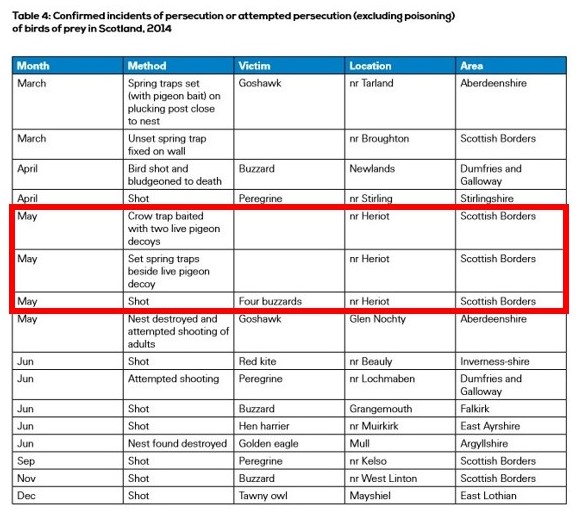
Lines 5, 6 and 7 of Table 4 describe the finding at one site, in an area intensively managed for driven grouse shooting, of a set crow trap, hidden within a small area of woodland, which was found to contain two feral pigeons indubitably being used as illegal lures to attract birds of prey. Under a tree, only a few metres away, were found the decomposed carcasses of four buzzards that had been shot, while a short distance from the crow trap a pigeon was found in a small circular cage, with four set spring traps set on the ground, hidden under moss, attached to the trap“.

Here’s a copy of Table 4, with lines 5, 6 and 7 highlighted:

Nr Heriot 2014

Also included in the report is a photograph of the pigeon inside a small cage with the four set spring traps hidden under moss:

Pigeon in trap Heriot 2014

So, according to the RSPB report, these offences were uncovered in May 2014 on a driven grouse moor in the Borders, with the location given as “nr Heriot“. Funny, we don’t remember seeing anything in the press about these crimes.

Hmm. Could these wildlife crimes be in any way related to SNH’s recent decision to serve a General Licence restriction order on parts of the Raeshaw Estate and Corsehope Estate (see here)? Both Raeshaw Estate and neighbouring Corsehope Estate can be described as being ‘nr Heriot’; indeed, the recorded property address for Raeshaw Estate is given as ‘Raeshaw House, Heriot, EH38 5YE’ (although the owner is only listed as Raeshaw Holdings Ltd., registered in the Channel Islands, natch), according to Andy Wightman’s excellent Who Owns Scotland website. And according to SNH, the General Licence restriction order on these two estates was served due to “issues about the illegal placement of traps” (see here). It’s possible that they’re connected, but it’s also possible that these crimes are unconnected with SNH’s General Licence restriction order on these two estates because Raeshaw isn’t the only grouse moor that could be described as being ‘nr Heriot’. Unfortunately, the (lack of) detail available in the public domain doesn’t allow us to be conclusive. Perhaps there’ll be some transparency once the legal arguments (see here) about the General Licence restrictions have concluded (which should happen fairly soon). Then again, perhaps there won’t.

If these crimes were not uncovered on either the Raeshaw or Corsehope Estates, we hope there’ll at least be a General Licence restriction order served on whichever grouse moor these traps were found because there’s been a clear breach of the General Licence rules – pigeons are not permitted as decoy birds in crow cage traps; set spring traps are not permitted out in the open; oh, and shooting buzzards is also illegal. There should also be a prosecution of course, but that’s highly improbable given the track record of non-prosecutions for raptor crimes uncovered in this part of the Borders.

There’s been a long history of raptor persecution “nr Heriot“, dating back to at least 2001. Here’s a list we’ve compiled of confirmed raptor persecution crimes, all listed within RSPB annual reports:

2001 May: poisoned buzzard (Carbofuran) “Heriot Dale”. No prosecution

2003 Feb: poisoned buzzard (Carbofuran) “Heriot”. No prosecution

2003 Mar: poisoned buzzard (Carbofuran) “Heriot”. No prosecution

2003 Apr: poisoned buzzard (Carbofuran) “Heriot”. No prosecution

2003 Nov: poisoned buzzard (Carbofuran) “Heriot”. No prosecution

2004 Feb: Carbofuran (possession for use) “Heriot”. No prosecution

2004 Feb: two poisoned buzzards (Carbofuran) “Heriot”. No prosecution

2004 Oct: poisoned buzzard (Carbofuran) “Heriot”. No prosecution

2005 Dec: poisoned buzzard & raven (Carbofuran) “Heriot”. No prosecution

2006 Sep: poisoned buzzard (Carbofuran) “Heriot”. No prosecution

2006 Oct: poisoned buzzard (Carbofuran) “Heriot”. No prosecution

2009 Mar: two poisoned buzzards (Carbofuran) “nr Heriot”. No prosecution

2009 Jun: poisoned red kite (Carbofuran) “nr Heriot”. No prosecution

2009 Jun: 4 x poisoned baits (2 x rabbits; 2 x pigeons) (Carbofuran) “nr Heriot”. No prosecution

2010 Nov: poisoned buzzard (Carbofuran) “nr Heriot”. No prosecution

2011 Jan: poisoned buzzard (Carbofuran) “nr Heriot” No prosecution

2013 Jun: shot + poisoned buzzard (Carbofuran) “nr Heriot”. No prosecution

2014 May: crow trap baited with two live pigeon decoys “nr Heriot”. Prosecution?

2014 May: four set spring traps beside live pigeon decoy “nr Heriot”. Prosecution?

2014 May: four shot buzzards “nr Heriot” Prosecution?

Not included in an RSPB annual report (because it happened this year): 2015 Jul: shot buzzard “found by side of road between Heriot and Innerleithen” according to media reports (see here). Prosecution?

Interestingly, also not included in the RSPB’s annual reports but reported by the Southern Reporter (here) and the Guardian (here), a police raid on Raeshaw Estate in 2004 uncovered nine dead birds of prey, including five barn owls, two buzzards, a kestrel and a tawny owl, described as being “poisoned or shot“. In addition, “a number of illegal poisons were discovered but no-one was ever prosecuted“. According to both these articles, during a further police raid on Raeshaw in 2009 ‘three injured hunting dogs were seized by the SSPCA on suspicion of involvement with badger baiting’. We don’t know whether that resulted in a prosecution.

Also not included in the above list is the sudden ‘disappearance’ of a young satellite-tagged hen harrier in October 2011. This bird had fledged from Langholm and it’s last known signal came from Raeshaw Estate. A search failed to find the body or the tag.

Fascinating stuff.

New report reveals hundreds of raptors illegally killed on game-shooting estates in Scotland

RSPB persecution review 1994 2014Yesterday the RSPB published its latest figures on illegal raptor persecution in Scotland.
Rather than their usual annual review, this time they’ve produced a 20-year review covering the period 1994-2014. This is a really useful exercise as it puts the scale of (known) persecution in to perspective. It’s a sobering read.

A total of 779 birds of prey were confirmed to have been illegally killed during this period, either by poisoning, shooting or trapping. The known victims included 104 red kites, 37 golden eagles, 30 hen harriers, 16 goshawks, 10 white-tailed eagles and 458 buzzards.

In addition to these confirmed victims, a further 171 incidents are documented where poisoned baits and/or non-birds of prey victims were found, including 14 pet cats and 14 pet dogs, and then a further 134 incidents where no victim had been found but clear attempts to target raptors had been uncovered (e.g. illegally-set traps).

The report includes a map showing the landholdings of all known persecution incidents during this period. As ever, it’s pretty revealing, with a handful on the west coast but the vast majority in the uplands of central, eastern and southern Scotland – areas dominated by driven grouse shooting.

RSPB persecution review 1994 2014 map

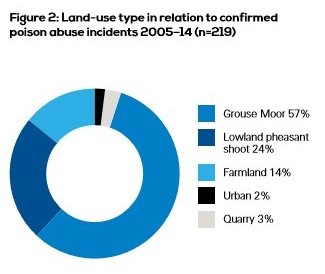
Drilling down in to the detail, there’s a useful analysis of land-use type of confirmed poisoning incidents between 2005-2014 (219 incidents). A shocking (or not) 81% of confirmed poisoning incidents during this nine-year period were on land used for game-shooting: 57% on grouse moors and 24% on land managed for lowland pheasant shoots. This tells us a great deal about who is responsible for the vast majority of illegal raptor poisoning. Despite their continued denials and protestations, and their increasingly-desperate attempts to minimise the scale of these crimes (“it’s just a few rogues”, “it’s just a small minority”), this graphic exposes the criminality at the heart of the game-shooting industry:

RSPB persecution review 1994 2014 land use

Further damning evidence, which isn’t needed by most of us but for the benefit of those who are still in denial of the bleedin’ obvious, is this graph showing the occupations of those convicted of raptor persecution between 1994-2014. Surprise, surprise, 86% of them were gamekeepers:

RSPB persecution review 1994 2014 occupation

RSPB Scotland is to be commended for publishing this exceptionally detailed and meticulously-researched report. There are a number of things in it that are of particular interest to us and we’ll come back to those in due course. For now though, particular recognition should go to the Investigations team – they may be small in number but their contribution to exposing the disgraceful continuation of illegal raptor persecution in Scotland is enormous. They, and their colleagues south of the border, are worthy of high acclaim. If anybody reading this is in a position to recognise excellence in the field of raptor conservation, e.g. a nomination for an award, this team should be at the top of your list.

So, how has the Environment Minister, Dr Aileen McLeod, responded to such an embarrassing report? She said: “There is no doubt that the figures in this report make for uncomfortable reading, but we have made progress in recent years with the new vicarious liability provisions, the publication of the report from the Wildlife Crime Penalties Review Group, new measures implementing restrictions on the use of General Licences and earlier this year the Scottish Government funded pesticide disposal scheme that removed over 700kg of illegally held poisons in Scotland“.

We have made progress…” Hmm. Let’s have a look:

Vicarious liability – introduced almost 4 years ago and only two successful convictions to date. A slow (but good) start, but we need to see many more convictions.

Wildlife Crime Penalties Review – Commissioned over two years ago, published last month. An excellent report calling for tougher sanctions but we’re waiting to hear whether the Environment Minister will act on the recommendations. Can only be defined as ‘progress’ if she agrees to act.

General Licence restrictions – available to be used against landholdings where raptor crimes committed/suspected from 1st January 2014. So far, only two restrictions have been implemented and those only lasted for six days each before they were suspended as legal arguments continue. A slow start, and the legal challenges were to be expected, but can’t be defined as ‘progress’ unless the restrictions are fully implemented. There should also be a lot more of them.

Pesticide disposal scheme –  implemented this year and resulted in the removal of some illegally-held poisons. That is progress, although it is tinged with frustration that the game-shooting industry was given yet another chance to avoid justice as this scheme (the second of its kind) comes 14 years after the pesticides were originally banned. It’s also interesting to note in the RSPB’s report (page 18) that evidence suggests a number of individuals have retained their illegal stocks. This is supported by more poisoning incidents that have taken place this year, after the disposal scheme ended.

So some progress has been made (and almost entirely due to the efforts of Dr McLeod’s predecessor, Paul Wheelhouse) but it is glacially slow and, so far, has not stemmed the occurrence of illegal persecution, as the damning figures in this report show all too clearly. Much, much more can and needs to be done before we’ll be convinced that Dr McLeod is having any sort of impact. She has, though, announced that tenders have just been invited for a review of game licensing practices in other countries (to inform a possible decision of introducing licensing to game-shooting estates in Scotland), and that’s a good thing, but again, the research needs to be done and then a decision made, which probably won’t happen for a number of years if past performance is anything to go by. She’d find herself with a lot more support if she got on with announcing increased investigatory powers for the SSPCA – the public consultation closed 1 year and 3 months ago – and still we await her decision as the criminals continue their rampage. It’s not impressive at all.

And what of the response of the game-shooting industry itself? Some didn’t bother to publish a statement (Scottish Gamekeepers’ Association), which ironically tells us quite a lot, although they are quoted in an article by STV (see media coverage below) where they revert to type and simply deny the evidence and slag off the RSPB instead. And remember, the SGA is a fully-paid up member of the Partnership for Action Against Wildlife Crime (cough).

Scottish Land and Estates (SLE), another PAW partner, did manage to issue a statement, via their Scottish Moorland Group (see media coverage below). Again, it’s the usual lamentable denial, characterised beautifully by this statement from Director Tim (Kim) Baynes:

Bird of prey deaths……have fallen dramatically over the last five years in particular“.

Er, here are some persecution figures that Kim might want to re-punch in to his calculator:

2012 – 18 confirmed deaths

2013 – 28 confirmed deaths

2014 – 37 confirmed deaths

There’s also this statement:

Our condemnation of wildlife crime is unquivocal...” All very touching but how is that “condemnation” manifested in the real world? It’s been brought to our attention that the current head gamekeeper on a Scottish grouse shooting estate has a (spent) conviction for shooting dead a raptor when he worked on another Scottish grouse moor. How does a criminal with a conviction like that (spent or not) remain employed in the game-shooting industry, let alone get a senior position on another Scottish grouse moor? Was he one of the posse of moorland gamekeepers recently invited to Holyrood to mingle with, and be applauded by, a number of MSPs, as part of the Gift of Grouse propaganda campaign? Surely not…

Download the RSPB report here

Media coverage

RSPB press release here

Statement from Environment Minister Dr Aileen McLeod here

Scottish Moorland Group statement here

BBC news here

STV article here

BBC Radio Scotland (Newsdrive) interview with Ian Thomson, Head of Investigations RSPB Scotland here (starts at 21.50, available for 29 days)

Guardian article here (a mis-leading headline but nevertheless good to see coverage in this paper)

Sporting agent on Cardross Estate convicted in latest vicarious liability case

Press release from the Crown Office:

A self-employed game farmer has pled guilty to wildlife offences, leading to the second conviction in Scotland by vicarious liability for wildlife crime against wild birds.

At Stirling Sheriff Court, Graham Christie was fined a total of £3,200 after admitting his liability for the crimes committed by James O’Reilly, a gamekeeper employed by him.

O’Reilly was previously sentenced to a community payback order after pleading guilty to intentionally trapping and injuring a buzzard, using an illegal gin trap, contrary to the Wildlife and Countryside Act 1981. Despite veterinary treatment for the severe injury caused to its leg, the buzzard required to be euthanised as it would never be suitable for release back to the wild. The buzzard had been in good condition otherwise.

Graham Christie leased part of the Cardross Estate in Stirlingshire to use for his business, Dunmhor Shooting. He had employed O’Reilly as head game-keeper with responsibility for pest control on this part of the estate.

The offences were committed more than a year after the introduction of the vicarious liability legislation.

The law placed responsibility on Christie unless he could show that he took all reasonable steps and exercised all due diligence to prevent O’Reilly from committing the offences.

When asked by police how he was able to see what was going on ensure everything was done properly and professionally, Christie stated;

“Well I can only tell that by the amount of pheasants that were shown on a shoot day and that he was very good to be fair”.

Helen Nisbet, Head of the Wildlife and Environmental Crime Unit said:

“These offences were committed well after the vicarious liability offence was introduced and the accused had ample time in which to take advice and put appropriate measures in place.

“He failed in his responsibilities and as a result stands convicted of the killing of a wild bird using an illegal gin trap.

“Anyone who seeks to injure or kill wild birds and anyone who employs or engages the services of such persons without taking appropriate precautions to prevent these offences being committed can fully expect to be brought to account before the courts.”

Notes To Editors

1. Section 18A of the Wildlife and Countryside Act 1981, the vicarious liability provisions, came into force on the 1st January 2012. They were created in an attempt to tackle raptor persecution by encouraging landowners, employers, and those with responsibility in connection with shooting to be diligent and proactive in countering wildlife crime.

2. James O’Reilly previously pled guilty to:

Intentionally injuring and taking a wild bird (a buzzard) by setting a gin trap (otherwise known as a leg hold trap) on open ground baited by a deer carcase contrary to section 1(1)(a); and,

Setting in position a trap, namely a gin trap (otherwise known as a leg hold trap) being of such a nature and so placed as to be likely to cause bodily injury to any wild birds contrary to section 5(1)(a) of the Wildlife and Countryside Act 1981.

3. Section 18A(2) makes the accused guilty of the original offence and is liable to be punished accordingly.

4. Wildlife and environmental crime is a priority for COPFS. The development of specialist prosecutors and the creation of the COPFS Wildlife and Environment Crime Unit (WECU) have been significant steps forward in tackling wildlife crime. Our close working relationship with police wildlife crime officers and other specialist reporting agencies has permitted a collaborative building of expertise which has already shown impressive results. In serious cases, prosecutors work with wildlife investigators at an early stage to ensure that cases are prepared and presented to the highest standard.

WECU began operating from 15 August 2011.

END

Dunmhor Sporting LogoThis is good news, after the disappointment of the recent failure to prosecute another vicarious liability case on the Kildrummy Estate (see here). The penalty in this latest case (£3,200) is a considerable improvement on the pathetic £675 penalty given in the first successful vicarious liability case (see here), although it still falls far below what it could be and the fine itself is unlikely to act as any sort of deterrent to other would-be raptor killers. When you also consider the penalty handed to Christie’s gamekeeper for the original horrific offence (240 hours unpaid work – see here) it’s hard to get away from the sense that, although technically justice has prevailed in this case, the penalties do not reflect the seriousness of the crime. Whether the reputation of Christie’s sporting agency, Dunmhor Sporting, will suffer as a consequence of his criminal conviction remains to be seen although that would be hard to measure. Let’s hope Environment Minister Dr Aileen McLeod gets on with accepting the recommendations of the recent Willdife Crime Penalties Review group (see here), which include raising the penalty for this type of offence to fines of up to £40,000 and a 12 month custodial sentence. It’ll also be interesting to see whether SNH  decides to slap a General Licence Restriction Order on the Cardross Estate.

In the meantime, huge congratulations to Fiscal Kate Fleming for a successful prosecution and to all those involved with the initial investigation, especially the SSPCA.

Photo of Graham Christie from Press & Journal.

Media coverage

BBC news here

STV news here

Press & Journal here

RSPB Scotland here

Stody Estate subsidy penalty confirmed

Following on from our blog five days ago about the subsidy penalty imposed against the Stody Estate as a result of their gamekeeper’s criminal poisoning activities (see here), the Rural Payments Agency has now clarified the actual size of the penalty:

RPA Stody Estate subsidy penalty - Copy

There’s something odd about this. Converting the penalty from Euros to Sterling using a currency converter app, the subsidy penalty amounts to £184, 745.08 (although the app used by Mark Avery has calculated the conversion to be £192, 160.63). Whatevs! Whichever calculation is accurate, it’s still a huge penalty and that’s good. And it still represents the highest known subsidy penalty imposed in the UK for cross-compliance breaches related to raptor persecution offences.

However, both of these amounts are considerably less than the amount we had calculated in our earlier blog five days ago.

We had previously calculated the penalty to be £221,946.75, which was 75% of the SPS subsidy that Stody Estate had received in 2014. We got the information about the amount of subsidy the Stody Estate had received in 2014 by doing a search on CAP Payments.

When you compare our first calculation of what the penalty was (£221, 946.75), with the amount the Rural Payments Agency now say the penalty is (£184, 745.08 OR £192, 160.63), it becomes clear that around £37,000 worth of potential subsidy penalty has apparently gone missing.

So either the data on the CAP Payments website are inaccurate, or the Rural Payments Agency has miscalculated and imposed a smaller penalty than they should.

Not sure we have the appetite for going back to the RPA to ask for clarification – it’s too much like hard work for a Friday afternoon. We’re quite content just to know that the penalty has finally been imposed and that the Stody Estate has had to suffer serious financial consequences as a result of the criminal actions of their gamekeeper. Good stuff.