Vicarious liability prosecution: Andrew Duncan (Newlands Estate) part 10

Criminal proceedings continued on 15 November 2016 against landowner Andrew Walter Bryce Duncan, who is alleged to be vicariously liable for the crimes committed by gamekeeper William (Billy) Dick in April 2014.

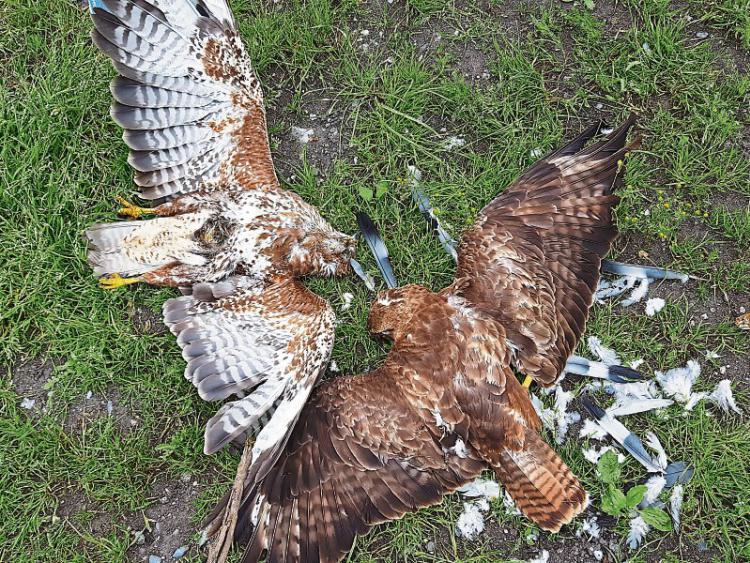
Gamekeeper Dick was convicted in August 2015 of killing a buzzard on the Newlands Estate, Dumfriesshire by striking it with rocks and repeatedly stamping on it (see here). Mr Dick was sentenced in September 2015 and was given a £2000 fine (see here). Mr Dick attempted to appeal his conviction but this was refused on 15 July 2016 (see here).

Here’s a quick review of the proceedings against Andrew Duncan so far:

Hearing #1 (18th August 2015): Trial date set for 23rd Nov 2015, with an intermediate diet scheduled for 20th Oct 2015.

Hearing #2 (20th October 2015): Case adjourned. November trial date dumped. Notional diet hearing (where a trial date may be set) scheduled for 18th January 2016.

Hearing #3 (18th January 2016): Case adjourned. Another notional diet & debate scheduled for 11th March 2016.

Hearing #4 (11th March 2016): Case adjourned, pending the result of gamekeeper Billy Dick’s appeal. Another notional diet scheduled for 4th April 2016.

Hearing #5 (4th April 2016): Case adjourned, pending the result of gamekeeper Billy Dick’s appeal. Another notional diet scheduled for 3rd June 2016.

Hearing #6 (3rd June 2016): Case adjourned, pending the result of gamekeeper Billy Dick’s appeal. Another notional diet scheduled for 17th June 2016.

Hearing #7 (17th June 2016): Case adjourned, pending the result of gamekeeper Billy Dick’s appeal. Another notional diet scheduled for 15th July 2016.

Hearing #8 (15 July 2016): Case adjourned. Another notional diet scheduled for 2 August 2016.

Hearing #9 (2 August 2016): Proceedings moved to trial. Intermediate diet scheduled for 15 November 2016 and provisional trial date set for 7/8 December 2016.

At hearing #10 on Tuesday (15 November 2016) the case was adjourned for another intermediate diet scheduled for 22 November 2016. A new trial date may be set depending on what happens during this hearing.

Vicarious liability in relation to the persecution of raptors in Scotland (where one person may potentially be legally responsible for the criminal actions of another person working under their supervision) came in to force over four and a half years ago on 1st January 2012. To date there have been two successful convictions: one in December 2014 (see here) and one in December 2015 (see here).  One further case did not reach the prosecution stage due, we believe, to the difficulties associated with identifying the management structure on the estate where the crimes were committed (see here).

Following gamekeeper Mr Dick’s failed appeal in July 2016 (see here), we posed a number of questions. These are still to be answered:

  1. Is/was criminal gamekeeper William (Billy) Dick a member of the Scottish Gamekeepers’ Association? The SGA refused to comment on Mr Dick’s membership status at the time, saying they ‘wanted to wait until the legal process had concluded’. Well, now Mr Dick’s criminal conviction for wildlife offences has been upheld, how about answering the question? Emails to: info@scottishgamekeepers.co.uk
  2. Will Scottish Land & Estates now expel the Newlands Estate from the ranks of SLE membership? SLE said at the time that Newlands Estate’s membership of SLE had been ‘voluntarily suspended’ pending on-going legal proceedings. Well, now the gamekeeper’s criminal conviction for wildlife offences has been upheld, how about answering the question? Emails to: info@scottishlandandestates.co.uk
  3. Will the Newlands Estate’s accredited membership of Wildlife Estates Scotland (WES) now be revoked? The conditions of membership of this scheme include: “the requirements to maintain best practice standards of animal welfare and comply with all legal requirements and relevant Scottish codes of practice”. At the time of Mr Dick’s conviction, a spokesperson for WES said the Newlands Estate’s membership and accreditation of WES had been ‘voluntary suspended’ pending the outcome of legal proceedings. Well, now the gamekeeper’s criminal conviction for wildlife offences has been upheld, how about answering the question? Emails to: info@scottishlandandestates.co.uk

We’ll also be watching closely to see whether the Newlands Estate will now be subject to a General Licence Restriction from SNH. If you recall, this restriction may be imposed by SNH where evidence of raptor crime is apparent and it has been available as a sanction for offences committed since 1 January 2014. Mr Dick killed the buzzard on Newlands Estate in April 2014. Although, even if the GL restriction is put in place, the estate can easily side-step it by applying for an ‘individual’ licence instead (e.g. see here).
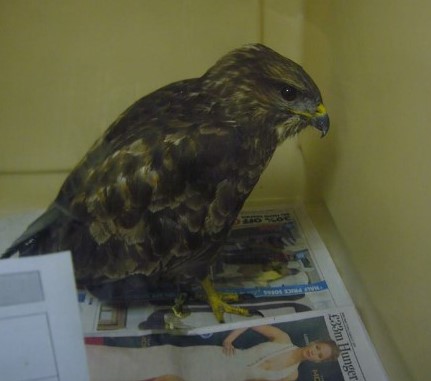
Buzzard with shotgun injuries found in Thirsk, North Yorkshire

A buzzard with shotgun injuries has been found in Thirsk, North Yorkshire, this week. It had a broken femur. The bird has undergone surgery and is currently in rehabilitation with the wonderful Jean Thorpe of Ryedale Wildlife Rehabilitation.

bz-thirsk-oct-2016shot

bz-thirsk-oct-2016-xray

A quote from Jean: “Amazing work once again by Mark Naguib of Battleflatts vets. The shot buzzard is stood square once again with shiny pins correcting the break. He looks so much better already. Long way to go yet but looking good so far“.

North Yorkshire Police have been informed.

North Yorkshire maintains its status as one of the worst places in the UK for the illegal killing of birds of prey. It’s a county where much of the landscape is dominated by grouse moors, particularly in the two National Parks: the North York Moors NP and the Yorkshire Dales NP, as well as a large number of pheasant and partridge shoots.

This year, other raptor persecution crimes uncovered in North Yorkshire have included several illegally spring-trapped buzzards, several shot buzzards, at least ten shot red kites, and a gamekeeper filmed setting three illegal pole traps on a grouse moor.

Time to stop demonising the Langholm buzzards

buzzard 3Raptors have long been accused of ‘eating too many’ red grouse, and none more so than at Langholm.

Sure, we all know that some raptors can eat a lot of grouse – during the Langholm 1 study it was shown that raptor predation reduced the autumn grouse abundance by 50%, leading to the cessation of driven grouse shooting (here). In other words, the ‘surplus’ birds from an artificially-high red grouse population were no longer available to be shot and the red grouse population dropped back to normal (natural) density. But we also know, through the work completed during the recent Langholm 2 study, that diversionary feeding of hen harriers has shown that the proportion of red grouse in the diet of diversionary-fed hen harriers was a negligible 0-4% (see here).

Seeing as (diversionary-fed) hen harriers could no longer be blamed, attention switched to blaming the buzzards. Simon Lester, the now former Head Keeper at Langholm is quoted in a 2014 book A Sparrowhawk’s Lament as follows:

I can put my hand on my heart and say that harriers aren’t a problem. Harriers aren’t limiting grouse at Langholm because diversionary feeding works. What’s stopping us shooting grouse is Buzzard predation“.

Unfortunately (for Simon), this claim of buzzard predation causing problems at Langholm is wholly unsupported by the scientific evidence. Research undertaken during three breeding seasons at Langholm 2 (2011-2013) showed the proportion of red grouse in the diet of buzzards was just 1-6% (see here and here).

‘Ah, but what about buzzard predation during the winter?’, cried the grouse shooting community. Well, that question has just been answered by the latest study, published last week. It turns out that not only aren’t Langholm buzzards taking many grouse during the breeding season, they’re also taking bugger all during the winter. Over a period of two years, red grouse formed 1.1% and 0.6% of prey items, and occurred in 3% and 2% of pellets from each winter, respectively. Small mammals were the main prey in both years, comprising 60–67% of items and occurring in 88–92% of pellets.

Despite such robust and compelling evidence, there are some who still want to pin the blame on the buzzards. Last November, Mark Oddy (Buccleuch Estates – one of the Langholm 2 project partners) suggested, “We now have to grasp the nettle and try and put forward a case, which probably in the first instance under licence, will allow some type of lethal control, ‘cos I don’t see what the future alternative is” (see here).

And in July this year, Tim (Kim) Baynes of Scottish Land & Estates wrote: “The confounding factor seems to have been the overall impact of buzzards, ravens and other raptor species predating adult grouse all year round, with harriers starting to overwinter on the moor, too“. He went on: “There were 80 pairs of raptors from seven species nesting on and around the moor at the last count, excluding ravens. Everyone involved now agrees that this level of multi-species raptor predation makes grouse-shooting unviable. Demonstrating this is a vital step in making the case for action to resolve it.

Eh? Can these people not understand simple scientific data? Or are they just choosing to ignore the evidence?

Give it up guys, Langholm buzzard dietary studies have been done to death: they’re not really in to eating red grouse.

Three poisoned buzzards found in Co Laois, Ireland

The National Parks and Wildlife Service in Ireland is appealing for information after the discovery of three poisoned buzzards.

The buzzards were discovered in a field in Cappakeel, Emo, County Laois over the August Bank Holiday weekend. Toxicology tests have revealed they’d been poisoned with Carbofuran.

Full details from the Leinster Express here

poisoned-buzzards-laois

Buzzard shot dead in Richmondshire, North Yorkshire

shot bz nyorksAug16North Yorkshire Police are appealing for information after the discovery of a buzzard that had been shot dead.

On 4th August 2016 a member of the public reported that a buzzard had been found dead near Manfield, North Yorkshire. The buzzard was recovered by the RSPB and taken to a vet in Leeds. An x-ray showed ten fragments inside the bird, consistent with being shot. It is not known how long the buzzard had been dead before it was found.

PC Rob Davies, of North Yorkshire Police’s Rural Taskforce, said: “Buzzards are fully protected under the Wildlife and Countryside Act 1981, making it a criminal offence to kill or injure them. The extent to which raptors are persecuted is completely unacceptable, so I am urging anyone with any information about this incident to get in touch with me without delay.”

Anyone who is aware of suspicious activity in the area, or has any information that could assist the investigation, is asked to contact PC Rob Davies at North Yorkshire Police by dialing 101 and selecting option 2, or via email rob.davies@northyorkshire.pnn.police.uk. Alternatively, contact Crimestoppers anonymously on 0800 555 111. Please quote reference number 12160140036.

North Yorkshire maintains its status as one of the worst places in the UK for the illegal killing of birds of prey. It’s a county where much of the landscape is dominated by grouse moors, particularly in the two National Parks: the North York Moors NP and the Yorkshire Dales NP, as well as a large number of pheasant and partridge shoots.

This year, other raptor persecution crimes uncovered in North Yorkshire have included several illegally spring-trapped buzzards, several shot buzzards, at least ten shot red kites, and a gamekeeper filmed setting three illegal pole traps in the vicinity of a hen harrier.

There’s still time to sign the e-petition calling for a ban on driven grouse shooting. Over 116,000 people have had enough – have you? Please sign here.

Buzzard found poisoned in Ayrshire

buzzard 3The SSPCA is appealing for information following the discovery of a young dead buzzard in Ayrshire.

A member of the public found the bird on farmland between Maybole and Patna in April. Toxicology results indicate it had been poisoned with a lethal pesticide. The SSPCA believes this was the result of “a deliberate act”.

SSPCA press release here


Vicarious liability prosecution: Andrew Duncan (Newlands Estate) part 9

Criminal proceedings continued on 2 August 2016 against landowner Andrew Walter Bryce Duncan, who is alleged to be vicariously liable for the crimes committed by gamekeeper William (Billy) Dick in April 2014.

Gamekeeper Dick was convicted in August 2015 of killing a buzzard on the Newlands Estate, Dumfriesshire by striking it with rocks and repeatedly stamping on it (see here). Mr Dick was sentenced in September 2015 and was given a £2000 fine (see here). Mr Dick attempted to appeal his conviction but this was refused on 15 July 2016 (see here).

Here’s a quick review of the proceedings against Andrew Duncan so far:

Hearing #1 (18th August 2015): Trial date set for 23rd Nov 2015, with an intermediate diet scheduled for 20th Oct 2015.

Hearing #2 (20th October 2015): Case adjourned. November trial date dumped. Notional diet hearing (where a trial date may be set) scheduled for 18th January 2016.

Hearing #3 (18th January 2016): Case adjourned. Another notional diet & debate scheduled for 11th March 2016.

Hearing #4 (11th March 2016): Case adjourned, pending the result of gamekeeper Billy Dick’s appeal. Another notional diet scheduled for 4th April 2016.

Hearing #5 (4th April 2016): Case adjourned, pending the result of gamekeeper Billy Dick’s appeal. Another notional diet scheduled for 3rd June 2016.

Hearing #6 (3rd June 2016): Case adjourned, pending the result of gamekeeper Billy Dick’s appeal. Another notional diet scheduled for 17th June 2016.

Hearing #7 (17th June 2016): Case adjourned, pending the result of gamekeeper Billy Dick’s appeal. Another notional diet scheduled for 15th July 2016.

Hearing #8 (15 July 2016): Case adjourned. Another notional diet scheduled for 2 August 2016.

At hearing #9 yesterday (2 August), the proceedings moved to trial. An intermediate diet is scheduled for 15 November 2016 (this is a short hearing where the court determines that both the prosecution and defence are prepared for trial). If the intermediate diet goes smoothly, the actual trial has been set for 7th & 8th December 2016.

Vicarious liability in relation to the persecution of raptors in Scotland (where one person may potentially be legally responsible for the criminal actions of another person working under their supervision) came in to force over four and a half years ago on 1st January 2012. To date there have been two successful convictions: one in December 2014 (see here) and one in December 2015 (see here).  One further case did not reach the prosecution stage due, we believe, to the difficulties associated with identifying the management structure on the estate where the crimes were committed (see here).

Following gamekeeper Mr Dick’s failed appeal in July 2016 (see here), we posed a number of questions. These are still to be answered:

  1. Is/was criminal gamekeeper William (Billy) Dick a member of the Scottish Gamekeepers’ Association? The SGA refused to comment on Mr Dick’s membership status at the time, saying they ‘wanted to wait until the legal process had concluded’. Well, now Mr Dick’s criminal conviction for wildlife offences has been upheld, how about answering the question? Emails to: info@scottishgamekeepers.co.uk
  2. Will Scottish Land & Estates now expel the Newlands Estate from the ranks of SLE membership? SLE said at the time that Newlands Estate’s membership of SLE had been ‘voluntarily suspended’ pending on-going legal proceedings. Well, now the gamekeeper’s criminal conviction for wildlife offences has been upheld, how about answering the question? Emails to: info@scottishlandandestates.co.uk
  3. Will the Newlands Estate’s accredited membership of Wildlife Estates Scotland (WES) now be revoked? The conditions of membership of this scheme include: “the requirements to maintain best practice standards of animal welfare and comply with all legal requirements and relevant Scottish codes of practice”. At the time of Mr Dick’s conviction, a spokesperson for WES said the Newlands Estate’s membership and accreditation of WES had been ‘voluntary suspended’ pending the outcome of legal proceedings. Well, now the gamekeeper’s criminal conviction for wildlife offences has been upheld, how about answering the question? Emails to: info@scottishlandandestates.co.uk

We’ll also be watching closely to see whether the Newlands Estate will now be subject to a General Licence Restriction from SNH. If you recall, this restriction may be imposed by SNH where evidence of raptor crime is apparent and it has been available as a sanction for offences committed since 1 January 2014. Mr Dick killed the buzzard on Newlands Estate in April 2014. Although, even if the GL restriction is put in place, the estate can easily side-step it by applying for an ‘individual’ licence instead (e.g. see here).
Had there been a gamebird licensing scheme in place, the Newlands Estate could now have been facing a temporary ban on pheasant shooting for a number of months/years. At the moment, no such licensing scheme exists, but a petition has recently been launched by the Scottish Raptor Study Group, asking the Scottish Government to introduce such a licensing scheme. You can sign the petition HERE

Natural England issues licence to kill buzzards to protect pheasants

BZ front coverNatural England has just issued a licence for someone to kill up to ten buzzards “to prevent serious damage to young pheasants”.

Here is their statement:

29 July 2016

Natural England issued a licence last night permitting the control of up to 10 buzzards to prevent serious damage to young pheasants.

The licence is time-limited with stringent conditions and is based on the law, policy and best available evidence. It follows rigorous assessment after other methods had been tried unsuccessfully over a 5-year period.

It is stipulated that the licence must be used in combination with non-lethal measures and only on buzzards in and immediately around the animal pens – not on passing birds. These conditions are designed to make the licensed activity both proportionate and effective and we will continue to work with the applicant to assess this.

Killing wild birds without a licence from Natural England is illegal.

END

We’ve been here before (in 2012, see here) when Natural England/DEFRA proposed a ‘trial’ to ‘control’ buzzards to protect pheasants but then Natural England/DEFRA did a u-turn after a huge public outcry (see here).

We’ve also been here before in 2013 (see here) when Natural England/DEFRA issued a licence to destroy buzzard eggs and nests to protect pheasants.

We’ve also been here before in 2014 (see here) when Natural England/DEFRA refused to issue a licence to kill buzzards to protect pheasants.

This time, Natural England/DEFRA have decided to issue a licence to kill buzzards, presumably based on the findings of last year’s Judicial Review which ruled that Natural England’s/DEFRA’s decision to refuse a buzzard-killing licence the previous year was unlawful (see here).

Natural England’s statement about this year’s buzzard-killing licence lacks transparency and detail. We assume (but it is only an assumption at this stage) that this licence has been issued to the same gamekeeper in Northumberland who has been applying for licences since 2012, with the support of the National Gamekeepers’ Organisation (see links above). We, and probably others, will be pressing Natural England for more detail in the coming days.

In the meantime, we urge you to voice your opposition by emailing Natural England and DEFRA (because Natural England is operating under guidance from DEFRA).

We know, according to 2011 figures, that over 50 MILLION non-native gamebirds (pheasants, red-legged partridge) are released into the countryside EVERY YEAR, so that those in the game-shooting industry can shoot them for fun. We also know that the buzzard is a native, protected species, still recovering (in some areas) from decades of illegal persecution. We also know that the game-shooting industry relies on criminality (the illegal killing of raptors) in order to provide for excessively large numbers of gamebirds to be shot. For fun.

Emails to Natural England: wildlife@naturalengland.org.uk

Emails to Andrea Leadsom, Secretary of State for Environment: andrea.leadsom.mp@parliament.uk

buzzard3

Horrifically injured buzzard found on grouse moor in North Yorkshire

The following words and images are from Jean Thorpe, a lady who runs Ryedale Wildlife Rehabilitation in North Yorkshire:

“Juvenile buzzard found at Westerdale, North Yorkshire grouse moors [in the North York Moors National Park], with a leg missing. Put to sleep, x-rayed, shotgun shot in the leg. This young bird barely out of the nest was targeted and maimed by shooting and caught in a Fenn trap. The bird had frantically tried to get free, badly abrading its flight and tail feathers, the leg was trapped at the joint and the bird was freed after severing its leg from the trap at the joint. This is the reality of grouse shooting in North Yorkshire”.

Westerdale BZ2

Westerdale BZ1

It’s not just the reality of grouse shooting in North Yorkshire. This is the reality of driven grouse shooting across northern England and Scotland. Inside the ‘safety’ of a National Park? It doesn’t matter. Remove all predators, by whatever means, and at any cost.

Its barbaric.

The grouse shooting industry is out of control. It needs closing down.

Please, sign the e-petition to ban driven grouse shooting HERE

Vicarious liability prosecution: Andrew Duncan (Newlands Estate) part 8

Criminal proceedings continued on 15 July 2016 against landowner Andrew Walter Bryce Duncan, who is alleged to be vicariously liable for the crimes committed by gamekeeper William (Billy) Dick in April 2014.

Gamekeeper Dick was convicted in August 2015 of killing a buzzard on the Newlands Estate, Dumfriesshire by striking it with rocks and repeatedly stamping on it (see here). Mr Dick was sentenced in September 2015 and was given a £2000 fine (see here). Mr Dick attempted to appeal his conviction but this was refused on 15 July 2016 (see here).

Here’s a quick review of the proceedings against Andrew Duncan so far:

Hearing #1 (18th August 2015): Trial date set for 23rd Nov 2015, with an intermediate diet scheduled for 20th Oct 2015.

Hearing #2 (20th October 2015): Case adjourned. November trial date dumped. Notional diet hearing (where a trial date may be set) scheduled for 18th January 2016.

Hearing #3 (18th January 2016): Case adjourned. Another notional diet & debate scheduled for 11th March 2016.

Hearing #4 (11th March 2016): Case adjourned, pending the result of gamekeeper Billy Dick’s appeal. Another notional diet scheduled for 4th April 2016.

Hearing #5 (4th April 2016): Case adjourned, pending the result of gamekeeper Billy Dick’s appeal. Another notional diet scheduled for 3rd June 2016.

Hearing #6 (3rd June 2016): Case adjourned, pending the result of gamekeeper Billy Dick’s appeal. Another notional diet scheduled for 17th June 2016.

Hearing #7 (17th June 2016): Case adjourned, pending the result of gamekeeper Billy Dick’s appeal. Another notional diet scheduled for 15th July 2016.

Hearing #8 (15 July 2016): Case adjourned. Another notional diet scheduled for 2 August 2016.

Vicarious liability in relation to the persecution of raptors in Scotland (where one person may potentially be legally responsible for the criminal actions of another person working under their supervision) came in to force four and a half years ago on 1st January 2012. To date there have been two successful convictions: one in December 2014 (see here) and one in December 2015 (see here).  One further case did not reach the prosecution stage due, we believe, to the difficulties associated with identifying the management structure on the estate where the crimes were committed (see here).