Mass raptor poisoning in Wales: location revealed

In March 2016, we blogged (see here) about the mass poisoning of raptors in 2012/2013 at an unnamed location in the Brecon Beacons National Park, Powys, Wales.

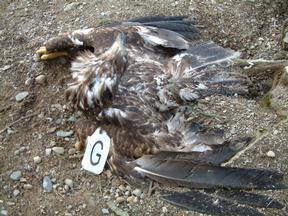
Our suspicions had been aroused when looking at raptor poisoning data published in two RSPB reports (Birdcrime 2012; Birdcrime 2013). We were very interested in a cluster of incidents (24, to be precise) during this period, all listed as ‘Powys’ and all involving the poison Bendiocarb. Those 24 incidents included nine poisoned baits and 15 poisoning victims, as follows:

9 x poisoned pheasant baits

2 x poisoned ravens

5 x poisoned red kites

8 x poisoned buzzards

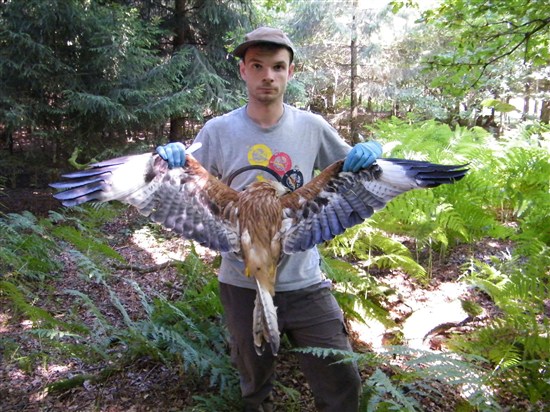
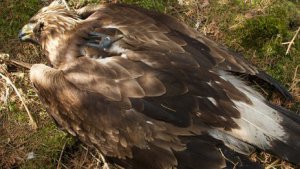
Poisoned RK Powys

An FoI was submitted to Dyfed-Powys Police to determine whether all these poisoning crimes had occurred at the same location (answer: yes) and whether any prosecution had been forthcoming (answer: no).

We were curious about why there had been no media coverage of this case, it being “the most significant wildlife poisoning incident in Wales and the second highest recovery of poisoned raptors in the UK in the last 40 years”, according to the RSPB (see here). We’d suggested that there had been a police ‘cover-up’, an accusation that Dyfed-Powys Police denied (see here). We still think there was some level of cover-up, not so much with the police investigation per se, but rather with the lack of any subsequent publicity about this case.

Naturally, we were interested in finding out the actual location of this mass raptor poisoning and we firmly believe it’s in the public interest that the location is named, but we didn’t have much to go on, other than it happened on a pheasant-shooting estate within the Brecon Beacons National Park. A number of blog readers from Powys did contact us privately and each named the same estate, but if we were to publish the estate name we needed much more conclusive evidence than that.

It’s taken us a while to get there, and we’re not going to reveal exactly how we got there because we know, from past experience, that as soon as we reveal information sources the authorities do their utmost to make access more difficult (e.g. by deliberately withholding data from official reports, see here) but after a series of FoIs and scrutiny of several indirect Government databases, we’re now in a position to name the location of the mass poisoning of raptors in 2012/2013 as the Glanusk Estate, Powys.

Glanusk logo

Glanusk Estate

Glanusk Estate is privately owned and run by Dame Elizabeth Shan Josephine Legge-Bourke, her son Harry Legge-Bourke and his wife Iona Legge-Bourke (see here).

Shan Legge-Bourke was appointed lady-in-waiting to Princess Anne in 1987, was High Sheriff of Powys in 1991, has been the Lord Lieutenant of Powys (the Queen’s personal representative) since 1998 and became Dame Commander of the Royal Victorian Order in the 2015 New Year Honours.

Shan Legge-Bourke’s daughter, Tiggy Legge-Bourke, was nanny to Princes William & Harry and worked as a personal assistant to Prince Charles between 1993-1999.

Shan Legge-Bourke’s son, Harry Legge-Bourke, is a partner in the management of Glanusk Estate and served on the Board of Natural Resources Wales (the Welsh statutory conservation agency) between 2012-2015 (the same time the mass poisoning of raptors was taking place on Glanusk Estate).

The Queen visited Glanusk Estate in 2012 as part of her Diamond Jubilee celebrations (see here).

Could these strong royal connections explain why Dyfed-Powys Police were so reluctant to publicise the criminal activities taking place on Glanusk Estate? Who knows? Interesting though, isn’t it?

Now, we’re not suggesting for one minute that the Legge-Bourke family was in any way involved with the mass poisoning of raptors on Glanusk Estate, although it’s more than likely that the family would have become aware of what was going on when the police raided the estate in 2013 armed with search warrants and arrested two people (see police statement here).

As far as we can tell, Glanusk Estate offers walked-up grouse shooting (only 3-4 brace at a time – see here) but, like many large, privately-owned estates, the more commercial pheasant shooting is not run by the estate but is managed by an independent company, in this case, Mark Coleman Sporting & Game.

Mark Coleman Sporting & Game

According to the Mark Coleman Sporting & Game website (here), which, incidentally, features the logos of GWCT, Countryside Alliance and the National Gamekeepers Organisation, Mark Coleman operates two pheasant shoots: one at Glanusk Estate and the other at Stoke Edith Estate in nearby Herefordshire.

Mark Coleman Sporting

Stoke Edith is a close neighbour of the Sufton Estate. Some of you may recognise that name. In 2010, an under-gamekeeper from the Sufton Estate was convicted of 17 wildlife crime offences, including the use of Bendiocarb to poison raptors (see here). In the same year, the Sufton Estate Head gamekeeper was convicted of running a cannabis factory on the estate and was sentenced to two years’ imprisonment (see here).

Amazingly, according to this article published in Fieldsports magazine: glanusk_fieldsport_article-1the Head gamekeeper now at Glanusk Estate, employed by Mark Coleman, is someone with the same name as that convicted Head gamekeeper from Sufton Estate. Imagine that! It surely can’t be the same person, because, as we’re so often told, criminal gamekeepers are not tolerated by the shooting industry, right?

But Mark Coleman employs another gamekeeper who also has a familiar name. According to this Fieldsports magazine article: stoke_edith_fieldsport_article-1a gamekeeper employed by Mark Coleman on the Stoke Edith Estate shares the same name as a gamekeeper convicted of killing raptors and badgers on a shooting estate in Herefordshire in 2008. Imagine that! It surely can’t be the same person, because, as we’re so often told, criminal gamekeepers are not tolerated by the shooting industry, right?

We are, of course, in no way suggesting that Mark Coleman or any of his employees had any involvement or knowledge of the mass poisoning of raptors at Glanusk Estate, although, just like the Legge-Bourke family, it’s probably fair to assume that Mr Coleman was made aware of these crimes when the police raided Glanusk Estate in 2013 and found the 15 poisoning victims very close to some pheasant pens.

We’d love to know whether the Glanusk Estate and/or Mark Coleman Sporting & Game and/or Dyfed-Powys Police made any effort to warn the 20k guests who visit the annual Green Man Festival at Glanusk Estate about the discovery of poisoned baits and birds found strewn around the grounds.

According to the statement issued by Dyfed-Powys Police (here), the Crown Prosecution Service decided against charging anybody for the mass poisoning of raptors at Glanusk Estate in 2012/2013 because there was insufficient evidence to identify an individual culprit. Whoever did it has got away with it, like so many of these raptor killers do.

But this wasn’t just any old raptor poisoning. This was a mass raptor poisoning, the most significant ever uncovered in Wales, and the second biggest discovery of poisoned raptors in the UK in the last 40 years. And it happened on a prominent estate, within the Brecon Beacons National Park, over the period of a year. How can someone get away with that? And how can the authorities get away with keeping quiet about it?

And what about a subsidy penalty for the estate? These poisoning crimes were obviously in breach of cross-compliance regulations, in the same way that the mass poisoning of raptors at Stody Estate (Norfolk) was also a breach, which resulted in a huge financial penalty for the estate, imposed by the Rural Payments Agency (see here).

We’ve done some digging about a potential subsidy withdrawal at Glanusk and we’ll be blogging about that shortly.

Photo of one of the poisoned red kites found on Glanusk Estate, by Guy Shorrock (RSPB)

UPDATE 2 July 2016: Statement from Glanusk Estate here

UPDATE 3 July 2016: Further statement from Glanusk Estate here

UPDATE 4 July 2016: No subsidy withdrawal for mass poisoning of raptors on Glanusk Estate here

Vicarious liability prosecution: Andrew Duncan (Newlands Estate) part 7

Criminal proceedings continued on 17th June against landowner Andrew Walter Bryce Duncan, who is alleged to be vicariously liable for the crimes committed by gamekeeper William (Billy) Dick in April 2014.

Gamekeeper Dick was convicted in August 2015 of killing a buzzard on the Newlands Estate, Dumfriesshire by striking it with rocks and repeatedly stamping on it (see here). Dick was sentenced in September 2015 and was given a £2000 fine (see here), although he is appealing his conviction.

Here’s a quick review of the proceedings against Andrew Duncan so far:

Hearing #1 (18th August 2015): Trial date set for 23rd Nov 2015, with an intermediate diet scheduled for 20th Oct 2015.

Hearing #2 (20th October 2015): Case adjourned. November trial date dumped. Notional diet hearing (where a trial date may be set) scheduled for 18th January 2016.

Hearing #3 (18th January 2016): Case adjourned. Another notional diet & debate scheduled for 11th March 2016.

Hearing #4 (11th March 2016): Case adjourned, pending the result of gamekeeper Billy Dick’s appeal. Another notional diet scheduled for 4th April 2016.

Hearing #5 (4th April 2016): Case adjourned, pending the result of gamekeeper Billy Dick’s appeal. Another notional diet scheduled for 3rd June 2016.

Hearing #6 (3rd June 2016): Case adjourned, pending the result of gamekeeper Billy Dick’s appeal. Another notional diet scheduled for 17th June 2016.

Hearing #7 (17th June 2016): Case adjourned, pending the result of gamekeeper Billy Dick’s appeal. Another notional diet scheduled for 15th July 2016.

For those interested in gamekeeper Billy Dick’s appeal, we blogged about it here.

Vicarious liability in relation to the persecution of raptors in Scotland (where one person may potentially be legally responsible for the criminal actions of another person working under their supervision) came in to force four and a half years ago on 1st January 2012. To date there have been two successful convictions: one in December 2014 (see here) and one in December 2015 (see here).  One further case did not reach the prosecution stage due, we believe, to the difficulties associated with identifying the management structure on the estate where the crimes were committed (see here).

Vicarious liability prosecution: Andrew Duncan (Newlands Estate) part 6

Criminal proceedings continued on 3rd June against landowner Andrew Walter Bryce Duncan, who is alleged to be vicariously liable for the crimes committed by gamekeeper William (Billy) Dick in April 2014.

Gamekeeper Dick was convicted in August 2015 of killing a buzzard on the Newlands Estate, Dumfriesshire by striking it with rocks and repeatedly stamping on it (see here). Dick was sentenced in September 2015 and was given a £2000 fine (see here), although he is appealing his conviction.

Here’s a quick review of the proceedings against Andrew Duncan so far:

Hearing #1 (18th August 2015): Trial date set for 23rd Nov 2015, with an intermediate diet scheduled for 20th Oct 2015.

Hearing #2 (20th October 2015): Case adjourned. Nov trial date dumped. Notional diet hearing (where a trial date may be set) scheduled for 18th January 2016.

Hearing #3 (18th January 2016): Case adjourned. Another notional diet & debate scheduled for 11th March 2016.

Hearing #4 (11th March 2016): Case adjourned, pending the result of gamekeeper Billy Dick’s appeal. Another notional diet scheduled for 4th April 2016.

Hearing #5 (4th April 2016): Case adjourned, pending the result of gamekeeper Billy Dick’s appeal. Another notional diet scheduled for 3rd June 2016.

Hearing #6 (3rd June 2016): Case adjourned, pending the result of gamekeeper Billy Dick’s appeal. Another notional diet scheduled for 17th June 2016.

For those interested in gamekeeper Billy Dick’s appeal, we blogged about it here.

Vicarious liability in relation to the persecution of raptors in Scotland (where one person may potentially be legally responsible for the criminal actions of another person working under their supervision) came in to force four and a half years ago on 1st January 2012. To date there have been two successful convictions: one in December 2014 (see here) and one in December 2015 (see here).  One further case did not reach the prosecution stage due, we believe, to the difficulties associated with identifying the management structure on the estate where the crimes were committed (see here).

The ‘secrets of the Angus Glens’ that Countryfile forgot to mention

On Sunday evening, Countryfile included a piece about the grouse moors of Invermark Estate in the Angus Glens and how it was “a haven for wildlife”.

It can be viewed on iPlayer here for the next 28 days (starts at 22 mins in).

Inane, vacuous and unquestioning, this piece was heralded in previews as ‘uncovering the secrets of the glen’.

Invermark is only one of several grouse moor estates in the Angus Glens. Here are some secrets of the wider Angus Glens that weren’t mentioned on Countryfile:

2004 May, near Edzell: long-eared owl and two short-eared owls starved to death in crow cage trap.  No prosecution.

2004 May, Invermark Estate: peregrine nest destroyed. No prosecution.

2006 March, Glenogil Estate: poisoned rabbit bait (Carbofuran). No prosecution.

2006 April, Easter Ogil: poisoned buzzard (Alphachloralose). No prosecution.

2006 April, Easter Ogil: poisoned tawny owl (Alphachloralose). No prosecution.

2006 May, Glenogil Estate: poisoned rabbit bait (Carbofuran). No prosecution.

2006 June, Glenogil Estate: poisoned woodpigeon bait (Carbofuran). No prosecution.

2006 June, Glenogil Estate: Traces of Carbofuran found in estate vehicles & on equipment during police search. No prosecution. Estate owner had £107k withdrawn from his farm subsidy payments. This was being appealed, but it is not known how this was resolved.

2006 July, Millden Estate; poisoned sheepdog (Lindane). No prosecution.

2007 November, Glenogil Estate: Disappearance of radio-tagged white-tailed eagle ‘Bird N’ coincides with tip off to police that bird allegedly been shot. No further transmissions or sightings of the bird.

2008 May, ‘Nr Noranside’: poisoned white-tailed eagle ‘White G’ (Carbofuran, Isophenfos, Bendiocarb). No prosecution.

2008 May, ‘Nr Noranside’: poisoned buzzard (Bendiocarb). No prosecution.

2008 May, ‘Nr Noranside’: poisoned mountain hare bait (Carbofuran, Isophenfos, Bendiocarb). No prosecution.

2008 May, Glenogil Estate: 32 x poisoned meat baits on fenceposts (Carbofuran, Isophenfos, Bendiocarb). No prosecution.

2008 October, ‘Glenogil Estate: poisoned meat bait on fencepost (Carbofuran). No prosecution.

2009 March, Glenogil Estate: poisoned buzzard (Carbofuran). No prosecution.

2009 March, Glenogil Estate: poisoned buzzard (Carbofuran). No prosecution.

2009 April, Millden Estate: poisoned buzzard (Alphachloralose). No prosecution.

2009 July, Millden Estate: poisoned golden eagle ‘Alma’ (Carbofuran). No prosecution.

2009 August, Glenogil Estate: poisoned white-tailed eagle “89” (Carbofuran). No prosecution.

2010 May, ‘Nr Noranside’: poisoned red kite (Carbofuran). No prosecution.

2010 September, Glenogil Estate: poisoned buzzard (Chloralose). No prosecution.

2010 October, Glenogil Estate: poisoned buzzard (Carbofuran). No prosecution.

2010 October, Glenogil Estate: poisoned pigeon bait (Carbofuran). No prosecution.

2010 October, Glenogil Estate: poisoned pigeon bait (Carbofuran). No prosecution.

2011 February, Airlie Estate: buzzard caught in illegal crow trap. (see below)

2011 March, Airlie Estate: 3 x buzzard caught in illegal crow trap. Prosecution (!) but dropped after statement from suspect given to SSPCA deemed inadmissible.

2011 April, Millden Estate: shot buzzard. No prosecution.

2012 April, ‘Nr Noranside’: Remains of buzzard found beside pheasant pen. Suspicious death.

2011 June, Rottal & Tarabuckle Estate: dead kestrel inside crow cage trap. No prosecution.

2012 February, ‘Nr Edzell’: spring-trapped buzzard. No prosecution.

2012 February, ‘Nr Bridgend’: remains of buzzard found under a rock. Suspicious death.

2012 May, Millden Estate: satellite-tagged golden eagle seemingly caught in spring trap, then apparently uplifted overnight and dumped on Deeside with two broken legs & left to die. No prosecution.

2012 May, Glen Esk: disappearance of sat-tagged red kite. No further transmissions or sightings of bird.

2013 January, Invermark Estate: white-tailed eagle nest tree felled. No prosecution.

2013 June, Glen Ogil: shot buzzard. No prosecution.

2013 July, Glen Moy: illegal hawk trap. No prosecution.

2013 September, nr Edzell: unset spring trap next to bait. No prosecution.

2013 November, Glen Lethnot: poisoned golden eagle ‘Fearnan’. No prosecution.

2014 August & September, Glenogil Estate: alleged snare offences. Prosecution of gamekeeper underway (currently ongoing).

2014 October, Nathro: shot buzzard. Prosecution? Unknown.

And some more secrets of the Angus Glens that weren’t mentioned:

No breeding hen harriers on the grouse moors of the Angus Glens since 2006 (see here).

Mountain hare massacre on the grouse moors of the Angus Glens (see here).

Angus Glens gamekeeper facing trial for alleged pole-trapping offences (see here).

Mark Avery has written an alternative and more accurate Countryfile script (see here) than the one that was aired on Sunday evening.

Plenty of people on social media have been asking when Countryfile will do a piece on illegal raptor persecution. To be fair, they did one in 2014 (we blogged about it here) and it was fairly well balanced, but this then begs the question why Countryfile researchers hadn’t done their homework for this latest episode.

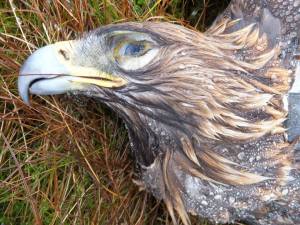
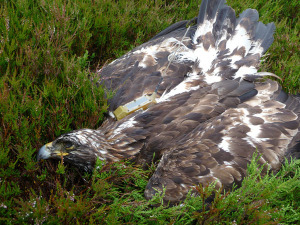
Had they done so, here are some of the images they would have found from those ‘wildlife haven’ grouse moors of the Angus Glens. From the top down, an illegally poisoned golden eagle, another illegally poisoned golden eagle, an illegally poisoned white-tailed eagle, an illegally trapped golden eagle that was then dumped in a layby with two broken legs and left to die, the nest tree of a white-tailed eagle that was illegally chainsawed to the ground, and a pile of rotting shot mountain hares. The grouse moors of the Angus Glens a wildlife haven? Hardly. They’re notorious wildlife crime scenes.

Petition to ban driven grouse shooting here

Fearnan

alma

whiteg

deeside eagle

wtenesttree

mountain-hare-cull-angus-glens-large-copy

More raptor persecution at Moy

Moy chicksPolice Scotland has issued an appeal for information following the discovery of disturbed and abandoned buzzard and goshawk nests in the Moy Forest near Tomatin in the Scottish Highlands.

During May this year, one goshawk and four buzzard nests have been abandoned in suspicious circumstances, with some evidence of illegal disturbance. These nests were being monitored by staff from Forestry Enterprise Scotland.

Further details and an appeal for information here

This area is no stranger to illegal raptor persecution. In 2010, a 20-year old gamekeeper employed by Moy Estate was convicted for possession of a dead red kite that was found in the back of his vehicle. It had two broken legs and it’s head had been smashed in.

During the police raid on the grouse moors of Moy Estate, the following was also found:

  • The remains of a further two dead red kites.
  • A red kite’s severed leg, along with wing tags that had been fitted to a sateliite-tracked red kite, hidden in holes covered with moss.
  • Six baited spring traps illegally set in the open.
  • A trapped hen harrier (still alive) caught in an illegally set spring trap.
  • A poisoned bait.
  • Four leg rings previously fitted to golden eagle chicks found in the possession of a gamekeeper.

No charges were brought against anybody for these additional crimes.

Our previous blogs on Moy can be read here.

Moy is also home of the annual Highland Game Fair, regularly attended by certain MSPs, Scottish Land & Estates and the Scottish Gamekeepers’ Association to ‘celebrate’ the activities of the game-shooting industry.

The petition to ban driven grouse shooting can be found here

Decision pending in Scottish gamekeeper’s conviction appeal

Last month we blogged about how a Scottish gamekeeper, William (Billy) Dick, was appealing against his conviction for killing a buzzard (see here).

A quick recap:

In August 2015, gamekeeper William (Billy) Dick, now 26, was found guilty of killing a buzzard on the Newlands Estate, Dumfriesshire, in April 2014. Two witnesses had observed him striking the buzzard with rocks and then repeatedly stamping on it (see here). In September 2015 he was sentenced: £1,500 fine for killing the buzzard and £500 for possession of the dead buzzard (see here).

Dick had maintained his innocence throughout the trial and had claimed he was elsewhere when the offence took place (see here).

His appeal was due to be heard in April but was then delayed. His appeal was heard at the High Court on 13th May 2016:

Billy Dick high court appeal May 2016 - Copy

The three presiding judges have reserved judgement. This means they’ll consider the appeal and produce a written judgement in due course.

How long before we can expect to hear their decision? We have no idea. Apparently there’s no time limit and much will depend on the quantity and complexity of the evidence heard, and how busy the three judges are! See here for an enlightening blog about waiting for a reserved judgement.

The decision will impact on the current prosecution against Newlands Estate landowner Andrew Duncan, charged with being vicariously liable for gamekeeper Dick’s crimes. The case against Andrew Duncan has encountered frequent delays while Dick’s appeal was underway. The next court hearing in the vicarious liability case is scheduled for 3rd June 2016 (see here). We can expect further delays if the judgement on Dick’s appeal has not been delivered by then.

Shot buzzard successfully rehabilitated and released

Last month we blogged about a buzzard that had been found with shotgun injuries in North Frodingham, East Yorkshire (see here). Vet Mark Naguib pinned the buzzard’s wing and the bird spent four weeks in the expert care of wildlife rehabilitation specialist Jean Thorpe.

Buzzard shot Driffield April 2016 Jean Thorpe

Two days ago, Jean was able to release the buzzard back to the wild:

Chxf07BWUAA02lP

Just a few weeks earlier, we blogged about Jean’s work to successfully rehabilitate and release a shot red kite (see here).

Thanks, again, Jean Thorpe, for the incredible work you do.

If anyone wants to support Jean’s efforts, please consider making a donation here.

More raptor poisonings in Co Antrim, Northern Ireland

Peregrine GlenwherryLast month we blogged about a dead peregrine that had been found at a well known persecution hotspot on 11th April 2016 (see here). Laboratory tests have now confirmed this peregrine was poisoned with the banned pesticide Carbofuran.

A further two poisoned raptors have now been reported in Co Antrim: a buzzard found in woodland in Glenarm on 15th March 2016 (lab results confirm Carbofuran poisoning) and a second buzzard, also found near Glenarm on 29th March 2016 (lab tests confirm Alphachloralose poisoning).

Media coverage here, here, here.

Well done to PSNI Wildlife Liaison Officer Emma Meredith, who pressed for a quick turnaround on these lab results. This is a major step forward in the fight against raptor persecution in Northern Ireland, where previous lab results and subsequent police appeals have taken far, far too long (e.g. see here).

A further step forward in tackling raptor persecution in NI was announced in March (here) with the launch of a multi-agency initiative, Operation Raptor. With the news of these latest three poisoning victims, they’ve got their work cut out.

Scottish gamekeeper appeals conviction for killing buzzard

A Scottish gamekeeper is appealing his conviction for killing a buzzard.

In August 2015, gamekeeper William (Billy) Dick, now 26, was found guilty of killing a buzzard on the Newlands Estate, Dumfriesshire, in April 2014. Two witnesses had observed him striking the buzzard with rocks and then repeatedly stamping on it (see here). In September 2015 he was sentenced: £1,500 fine for killing the buzzard and £500 for possession of the dead buzzard (see here).

Dick had maintained his innocence throughout the trial and had claimed he was elsewhere when the offence took place (see here).

His appeal was due to be heard this week but has now been delayed until 13th May 2016:

Dick appeal April 2016 postponed - Copy

The outcome of this appeal will be interesting on several levels, not just whether the evidence accepted in the original trial was good enough. The case is tied in with the prosecution of Newlands Estate landowner Andrew Duncan, who is charged with being vicariously liable for the criminal actions of gamekeeper Dick. Andrew Duncan’s case has been repeatedly adjourned while Dick’s appeal is heard (see here).

If Dick’s appeal is upheld, we might expect the allegations against Andrew Duncan to be dropped. If the case against the landowner is dropped, we might expect landowners’ lobby group Scottish Land & Estates (SLE) to reinstate the membership of Newlands Estate, and also reinstate the Newlands Estate accreditation to SLE’s Wildlife Estates Scotland initiative, which, you’ll recall, has been “voluntarily suspended” pending legal proceedings (see here).

Interesting times ahead.

Buzzard shot in East Yorkshire

A buzzard with shot gun injuries has been found on farmland at North Frodingham, Driffield, in East Yorkshire.

It has undergone surgery to have its wing pinned and is now being cared for by Jean Thorpe of Ryedale Wildlife Rehabilitation. If you’d like to help support Jean’s never-ending voluntary efforts, please consider a donation here.

Anyone with news about the buzzard shooting please contact Humberside Police on 101.

Buzzard shot Driffield April 2016 Jean Thorpe

Buzzard shot Driffield April 2016 Jean Thorpe 2