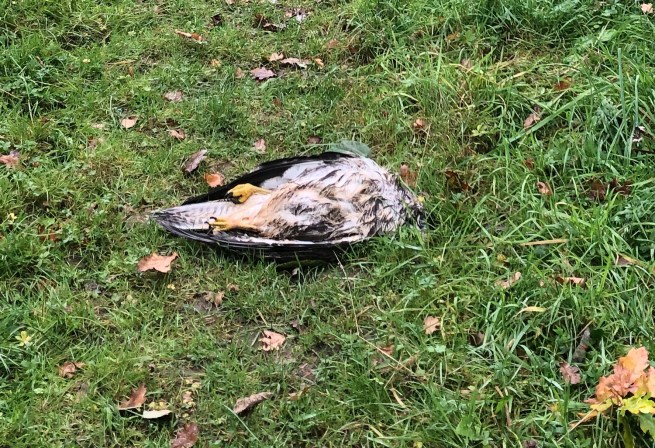
SNH reinstates General Licence use on Leadhills Estate during appeal process

In late November 2019 Scottish Natural Heritage (SNH) imposed a three-year General Licence restriction on Leadhills Estate, South Lanarkshire, after receiving what it described as “clear evidence” of wildlife crimes from Police Scotland (see here, here and here).

Those alleged offences included the ‘illegal killing of a short-eared owl, two buzzards and three hen harriers’ that were ‘shot or caught in traps’ on Leadhills Estate since 1 January 2014 (when SNH was given the power to impose a General Licence restriction on estates or individuals in Scotland). SNH has also claimed that ‘wild birds’ nests have also been disturbed’, although there is no further detail on this. The estate has consistently denied responsibility.

[The body of a shot short-eared owl that was found shoved under some heather on Leadhills Estate in May 2017. Photo by RSPB Scotland]

The General Licence restriction was imposed on Leadhills Estate on 26 November 2019.

It lasted for just 14 days.

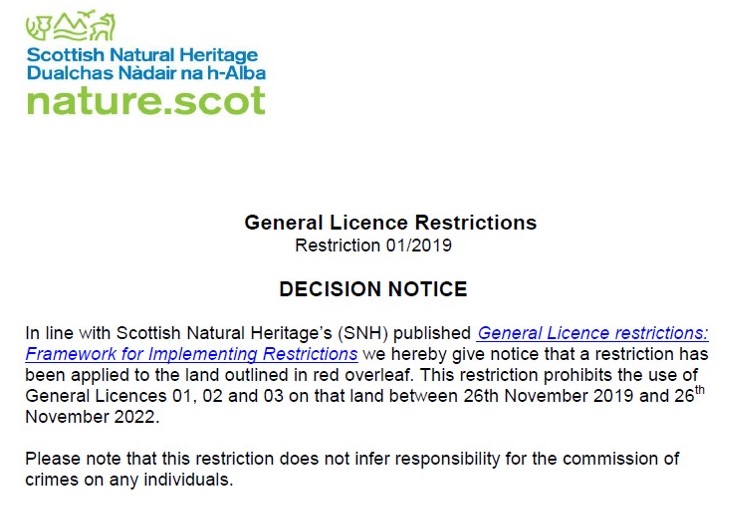
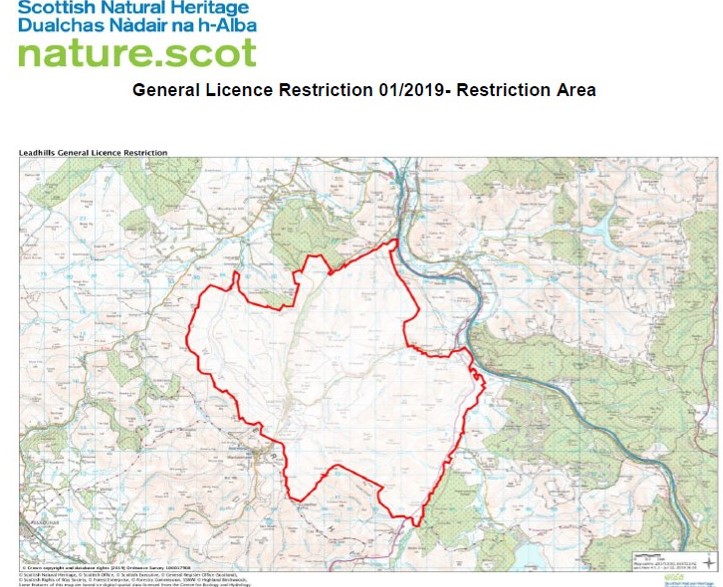
On 10 December 2019, a notice appeared on SNH’s website announcing that the restriction had been lifted due to an on-going appeal:

This means that Leadhills Estate can, until further notice, go back to using General Licences 1, 2 & 3 to lawfully kill hundreds if not thousands of certain bird species (e.g. crows) on the estate without having to report its activities to anybody.

Leadhills Estate is perfectly entitled to appeal SNH’s decision to impose the General Licence restriction. SNH has a clearly-explained policy on its appeals procedure, which states an appeal must be made within 14 days of SNH’s decision to impose the restriction and that appeal must be in writing. From the information available in the public domain it looks like Leadhills Estate has met this deadline.

An appeal has the immediate effect of suspending the General Licence restriction from the date SNH receives the appeal letter. SNH now has to consider the appeal and must notify the estate of the appeal outcome in writing, setting out the reasons behind the decision. SNH says it will seek do this within four weeks of receiving the appeal letter.

We’ll be monitoring this case very carefully.

There’s quite a lot of deja vu going on here. You might remember that Raeshaw Estate (Scottish Borders) was one of the first to be slapped with a General Licence restriction back in November 2015 (see here). That restriction only lasted for six days before the estate appealed (see here). The appeal failed and two and half months later the General Licence restriction was re-imposed on the estate (see here).

However, a couple of months later the General Licence restriction was suspended again when Raeshaw Estate took SNH to judicial review (see here). Raeshaw lost the judicial review when the court decided SNH had acted fairly so the General Licence restriction was re-instated on the estate, again, approximately one year later (see here). Interestingly, SNH did not backdate the restriction order so effectively Raeshaw Estate didn’t serve a full three-year restriction at all, thanks to all the legal disruption.

During this time Raeshaw employees also applied for individual licences to permit the continued killing of birds on the estate (e.g. 1,000 birds reported killed under one of these licences, see here), but then even the individual licence was revoked after SNH found ‘multiple instances of breaches of conditions of an individual licence that had been granted to cover essential management activities‘ (see here). SNH also said ‘These breaches may also constitute offences under the Wildlife and Countryside Act, so SNH has reported the details to Police Scotland‘. We’re not aware of any pending prosecution in relation to these alleged offences. And SNH chose not to extend the General Licence restriction further, in light of these breaches, even though it had the powers to do so (see here).

The link between Raeshaw Estate and Leadhills Estate, apart from them both being grouse shooting estates and the subject of a General Licence restriction for ‘clear evidence of wildlife crime’? Leading sporting agent and grouse moor ‘guru’ Mark Osborne, whose company J M Osborne & Co is believed to be involved at both estates (involved as in ‘present’, not involved as in ‘guilty of wildlife crime’ – SNH has made clear that a General Licence restriction does not infer responsibility for the commission of crimes on any individuals).

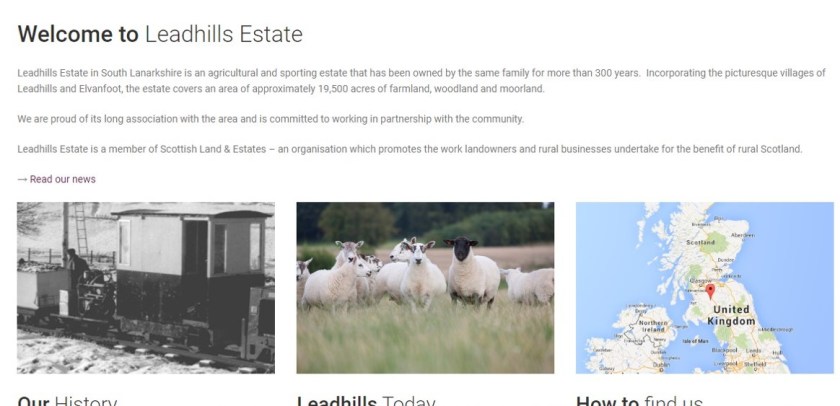
Also of interest, to us at least, is the ownership of Leadhills Estate, which has belonged to the same family (the Hopetouns) for more than 300 years, according to the estate’s website:
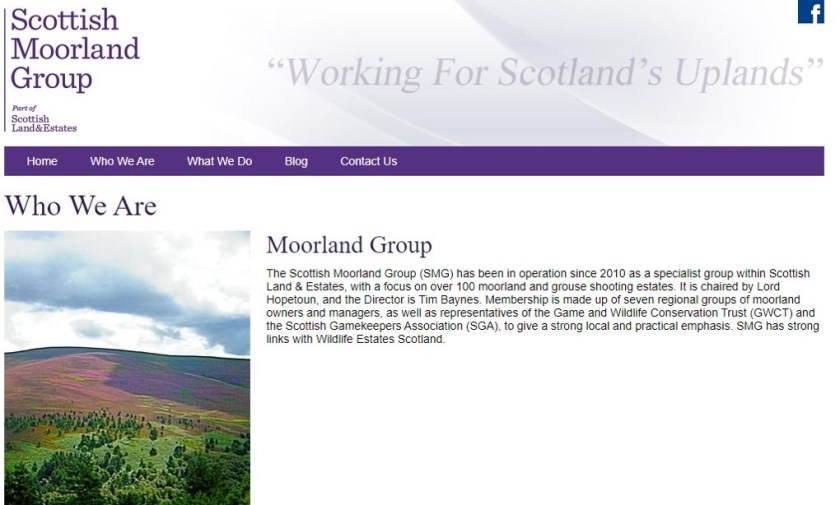
It’s also of great interest that not only is Leadhills Estate a member of Scottish Land & Estates (who, incidentally, have said absolutely nothing about this General Licence restriction so far), but that Lord Hopetoun is chair of Scottish Land & Estate’s Scottish Moorland Group:
If Leadhills Estate’s appeal fails and SNH re-instates the General Licence restriction, we’ll be expecting a full response from both Scottish Land & Estates and the Scottish Moorland Group.

UPDATE 9 January 2020: Decision due on General Licence restriction for Leadhills Estate (here)
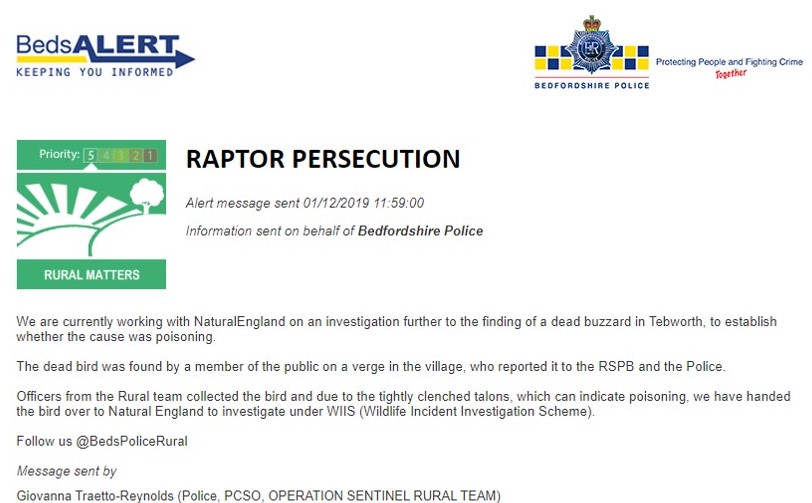
Police warn public about potential buzzard poisoning in Tebworth

Bedfordshire Police issued the following statement yesterday:

This is good communication from the police. Although the alert doesn’t say when the buzzard was found it sounds as though it was a recent discovery and IF it does turn out to have been poisoned, the toxicology results may not be available for several weeks so this early police alert provides local dog walkers etc with due warning.

Good work, Bedfordshire Police.

SNH explains decision to impose General Licence restriction on Leadhills Estate

Further to last week’s news that Scottish Natural Heritage (SNH) has finally imposed a three-year General Licence restriction on the Leadhills Estate in South Lanarkshire (see here and here), there is now an explanation, of sorts, from SNH on the decision to issue the restriction notice.

It wasn’t just one alleged incident of illegal raptor persecution that triggered this sanction, but a series of them.

Well done to journalist Charlie Parker at The Times (Scotland) for getting the information.

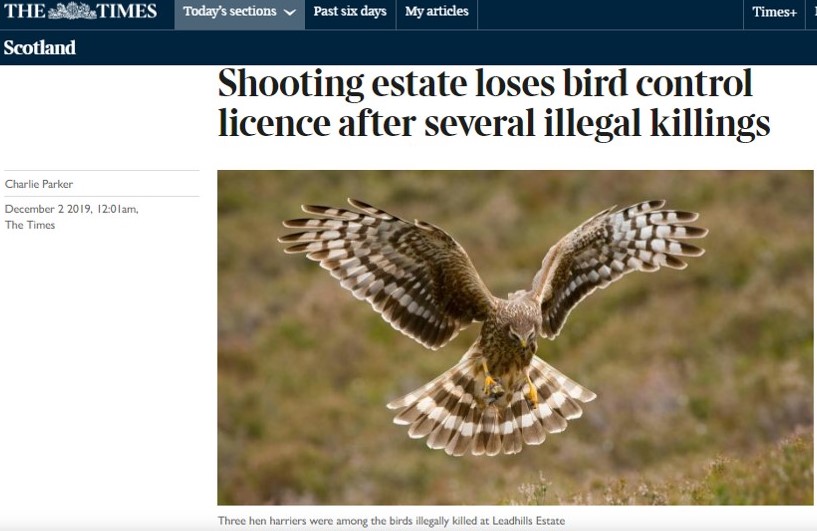
According to Charlie’s article, SNH’s decision was based on “clear evidence” of the ‘illegal killing of a short-eared owl, two buzzards and three hen harriers’ that were ‘shot or caught in traps’ on Leadhills Estate since 1 January 2014 (when SNH was given the power to impose a General Licence restriction on estates or individuals in Scotland). SNH has also claimed that ‘wild birds’ nests have also been disturbed’, although there is no further detail on this.

An unnamed SNH spokesperson is quoted in the article as follows:

The police have investigated each of these cases and while it is very clear that offences have been committed, as is often the case with these types of crime it hasn’t been possible to gather the evidence to identify the person responsible.

There is also similar historic evidence of incidents on this property pre-dating the incidents, although SNH’s decision is based on incidents which occurred since January 1, 2014“.

Most of the incidents listed by SNH have been well publicised –

However, the alleged incident relating to a third hen harrier is less clear. SNH may be referring to the discovery in 2015 of a satellite-tagged hen harrier called Annie who had been shot, although her corpse was found on a neighbouring estate, not on Leadhills Estate. Or, perhaps there is another alleged incident relating to the shooting or trapping of a hen harrier on Leadhills Estate that has yet to be publicised? Time will tell.

There are two more quotes in The Times article that are worth a mention. First, one from Ian Thomson (Head of Investigations, RSPB Scotland) who said Leadhills Estate had a “long and appalling history” of confirmed raptor persecution incidents and,

While this sanction is positive news, it is becoming increasingly clear that the threat of such a penalty is no deterrent to those whose sole motivation is the maximising of grouse numbers. Until sporting estates face the potential removal of the right to shoot, we do not believe there is a sufficient deterrent to those who continue to slaughter our birds of prey.

Meanwhile, an unnamed spokesperson for Leadhills Estate is quoted as follows:

The decision to restrict the general licence does make clear it is not inferring any criminal activity on the part of the estate. The estate condemns all forms of wildlife crime and all employees and agents of the estate are in no doubt as to their responsibilities“.

It’s our understanding that the General Licence restriction ‘does not infer any responsibility for the commission of crimes on any individuals‘ This is the exact wording from SNH’s restriction notice (see here). This statement is not the same as the one being claimed by Leadhills Estate, which argues that the restriction ‘is not inferring any criminal activity on the part of the estate’.

This sounds like real twilight zone material. SNH is holding the estate to account by imposing a sanction for alleged wildlife crimes because there is insufficient evidence to attribute the activity to an individual estate employee and the estate is saying that SNH’s decision to impose the sanction doesn’t infer any responsibility on the estate. Er….

All clear?

More to come on the Leadhills Estate case soon…


General Licence restriction at Leadhills Estate: welcome to the Twilight Zone

Earlier this week it was announced that Scottish Natural Heritage (SNH) had finally imposed a three-year General Licence restriction on Leadhills Estate in South Lanarkshire ‘on the basis of evidence provided by Police Scotland of wildlife crime against birds’ (see here).

Before we proceed any further you should be aware that you are now entering the twilight zone, suspended somewhere between reality and fantasy.

[Leadhills Estate, photo by Ruth Tingay]

We’re in that bonkers scenario where despite Police Scotland providing “clear evidence that wildlife crimes have been committed on this property” (according to Nick Halfhide of SNH), the imposition of the General Licence restriction “does not infer responsibility for the commission of crimes on any individuals“. This leaves us on wafer-thin legal ice, not able to state what to us is the bleedin’ obvious for fear of a defamation claim, even though the original intention of Scottish Ministers was to use a General Licence restriction as a “reputational driver“.

General Licence restrictions have been available to SNH (although rarely used) since 1 January 2014, introduced by then Environment Minister Paul Wheelhouse in response to continuing difficulties securing criminal prosecutions for those people still killing birds of prey. Paul instructed SNH to withdraw the use of General Licences (available for legal predator control) on land where crimes against raptors are believed to have taken place but where there was insufficient evidence to instigate criminal proceedings. The decision to withdraw the licence is based on a civil standard of proof which relates to the balance of probability as opposed to the higher standard of proof required for a criminal conviction.

A General Licence restriction is not without its limitations, and has even been described as farcical, particularly as estates can simply apply for an individual licence instead which allows them to continue predator control activities but under slightly closer scrutiny.

The Leadhills Estate and the surrounding area has been at the centre of wildlife crime investigations for decades. According to RSPB Scotland there have been over 60 confirmed raptor persecution incidents uncovered here, but only two successful prosecutions: a gamekeeper convicted for shooting a short-eared owl in 2004 and a gamekeeper convicted for laying poisoned baits out on the moor in 2009.

There have been a number of reported wildlife crimes here in recent years but because SNH isn’t keen on transparency, we don’t know which ones triggered the decision to impose the General Licence restriction. Was it the alleged witnessed shooting of a hen harrier in May 2017; the alleged witnessed shooting of a short-eared owl just a few weeks later and whose body was recovered; the discovery of a buzzard in 2018 that was found to have been shot twice; the filmed buzzard that according to the RSPB was likely killed in a crow trap in January 2019, or was it the discovery of a male hen harrier in May 2019 whose leg was almost severed by an illegally-set trap next to its nest?

We do know, from SNH’s press statement, that SNH believes “there is clear evidence that wildlife crimes have been committed on this property……” which sounds like multiple incidents have informed SNH’s decision to impose the restriction:

And because this is the twilight zone we also need to draw to your attention the Estate’s outright denials of any involvement in any of these alleged crimes – we particularly liked this one, in response to the illegally-trapped hen harrier earlier this year. Bless those little gamekeepers, finding it “very difficult” to cope with repeated crimes carried out by ‘unknown third parties’.

It’s probably just kids in stolen vehicles, right? Riding around the estate in 4 x 4s or on quad bikes, firing shotguns at protected wildlife. Let’s face it, who else would have vehicular access, firearms and a motive for wanting to kill birds of prey? Nope, nobody that we can think of.

Here is a copy of SNH’s restriction notice for Leadhills Estate, for the record:

We’ve got a lot more to say about this particular General Licence restriction but we’ll have to come back to it, hopefully within a few days. There are all sorts of interesting aspects to explore……

UPDATE 2 December 2019: SNH explains decision to impose General Licence restriction on Leadhills Estate (here)

SNH imposes General Licence restriction on Leadhills Estate

Press release from SNH (26 Nov 2019)

General Licence restriction on Leadhills Estate, South Lanarkshire

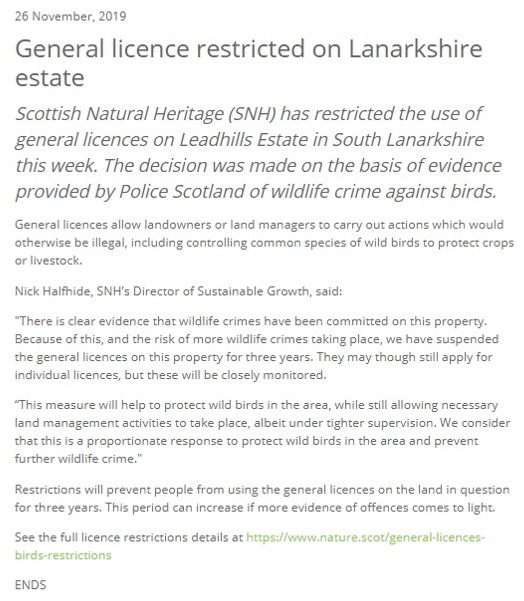
Scottish Natural Heritage (SNH) has restricted the use of general licences on Leadhills Estate in South Lanarkshire this week. The decision was made on the basis of evidence provided by Police Scotland of wildlife crime against birds.

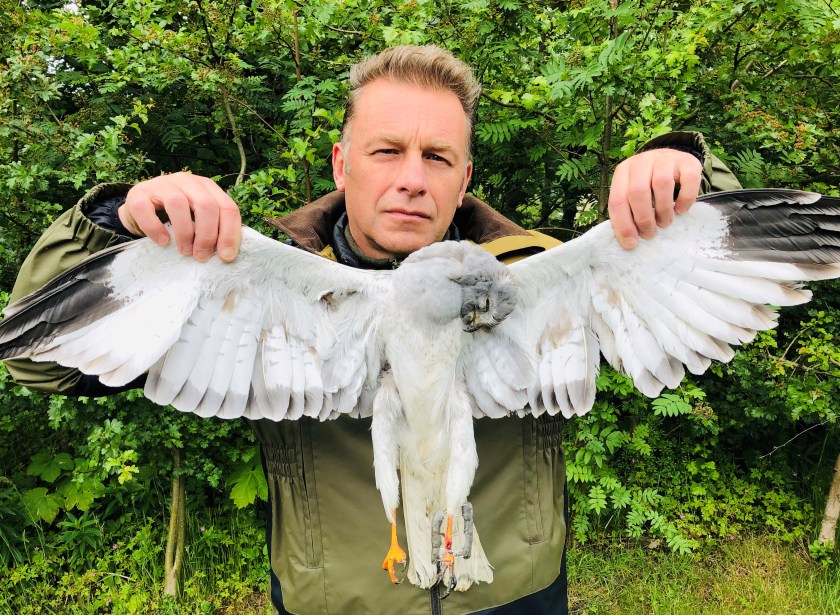
[Chris Packham holding a dead hen harrier that had been caught in an illegally-set spring trap next to its nest on Leadhills Estate earlier this year. Photo by Ruth Tingay]

General licences allow landowners or land managers to carry out actions which would otherwise be illegal, including controlling common species of wild birds to protect crops or livestock.

Nick Halfhide, SNH’s Director of Sustainable Growth, said: “There is clear evidence that wildlife crimes have been committed on this property. Because of this, and the risk of more wildlife crimes taking place, we have suspended the general licences on this property for three years. They may though still apply for individual licences, but these will be closely monitored.

This measure will help to protect wild birds in the area, while still allowing necessary land management activities to take place, albeit under tighter supervision. We consider that this is a proportionate response to protect wild birds in the area and prevent further wildlife crime.”

Restrictions will prevent people from using the general licences on the land in question for three years. This period can increase if more evidence of offences comes to light.

See the full licence restrictions details at https://www.nature.scot/general-licences-birds-restrictions

ENDS

As you might expect, we have a lot to say about this news, following on from last month’s blog about it (here).

We’ll be blogging in much more detail tomorrow but for now, our initial reaction to this news is, ‘Too little, too late’.

UPDATE 29 November 2019: General Licence restriction at Leadhills Estate: welcome to the twilight zone (here)

UPDATE 2 December 2019: SNH explains decision to impose General Licence restriction on Leadhills Estate (here)

UPDATE 12 December 2019: SNH reinstates General Licence use on Leadhills Estate during appeals process (here)

UPDATE 9 January 2020: Decision due on General Licence restriction for Leadhills Estate (here)
Buzzard shot & wounded in Co Tyrone

From the Belfast Telegraph (14/11/19):

BIRD OF PREY FOUND SHOT THREE TIMES ON MEND, SAY OMAGH VETS

A bird of prey is recovering after being shot three times in Co Tyrone.

X-rays performed by Omagh practice Corry & O’Hare Vets revealed that the buzzard had received a fractured bone following the attack in Newtownstewart.

Three round pellets were also found lodged in various parts of the female bird’s body.

It is unclear whether or not the buzzard – a species afforded the highest level of wildlife protection – was shot deliberately.

As it is illegal to hunt protected birds, the incident has been reported to the PSNI.

The penalty for committing a wildlife crime in Northern Ireland – including shooting, poisoning, trapping and nest destruction of a bird of prey – is a fine of up to £5,000 and a six-month custodial sentence.

Louise O’Hare from Corry & O’Hare Vets said the injured bird was brought to them last week after being found unable to fly by a member of the public.

ENDS

It’s good that this shooting has been reported in the media but the quality of reporting is pretty poor. If those ‘three round pellets’ found in the buzzard’s body were shotgun pellets it’s likely the bird was hit once and sprayed with shot, not ‘shot three times’. And does it matter whether the buzzard was targeted deliberately or not? If it wasn’t, then shooting it was reckless and is still an offence.

Last week the Partnership for Action Against Wildlife Crime in Northern Ireland published a ten-year review of raptor persecution (2009-2018) which highlighted buzzards as the most frequently reported victims (followed by red kite then peregrine). Technology such as satellite tags and nest cameras are now being deployed in an attempt to crack down on the criminals. You can follow this project on the Hawk Eyes website (here) and read our commentary on it here.

Raptor persecution in Northern Ireland: ten year review and new strategies to tackle these crimes

Press release from the Partnership for Action Against Wildlife Crime Northern Ireland (PAW NI):

Birds of prey to be safeguarded by new technology

Satellite tracking devices are to be fitted onto birds of prey and nesting site surveillance installed, in the latest fight against wildlife crime.

‘Hawk-Eyes’, an advanced technology project, is being launched by the Partnership for Action Against Wildlife Crime Northern Ireland (PAW NI), alongside their ‘10 Years of Persecution’ Report.

The report reveals that from 2009-18, there were a total of 72 incidents of confirmed raptor persecution in Northern Ireland, resulting in the death or injury of 66 birds of prey and the destruction of two nesting sites.

Department of Agriculture, Environment and Rural Affairs (DAERA) Wildlife Officer Dr Jon Lees said buzzards and red kites are amongst the most common victims of persecution: “Sadly, a small proportion of our population still seem to think it’s ok to destroy these magnificent birds at the expense of the environment and the rest of the community.

“Raptors such as buzzards, red kites, peregrine falcons and Sparrowhawks, have been illegally targeted right across Northern Ireland to such an extent some areas are at risk of losing their natural top predators,” explained Dr Lees.

The methods these criminals use, such as poisoned bait, are often highly dangerous, putting livestock, pets and people at risk. These offenders care little for people’s safety. We rely heavily on the vigilance of the public to report these crimes and any evidence to the police or Crimestoppers,” Dr Lees added.

The “Hawk-Eyes” project, is funded and supported by the Department of Justice, – Assets Recovery Community Scheme (ARCS) and run through PAW NI, which brings together government Departments, PSNI and other enforcement agencies, environmental organisations, animal welfare groups and country sports associations with the common goal of combating wildlife crime through publicity, education and campaigning.

Some of the birds’ tracking information will be publicly available on the project website at http://wildlifecrimeni-hawkeyes.com, which will allow people to help protect these special birds by reporting such crimes.

PAW NI encourages people across Northern Ireland to be vigilant. If anyone sees or knows of any wildlife crime, report it to the PSNI by calling 101 or, in an emergency, 999. Crime can be reported anonymously to Crimestoppers on 0800 555 111.

ENDS

The ten year review report (2009-2018) can be downloaded here: PAW NI Raptor Persecution Report 2009 – 2018

The use of technology (nest cameras and satellite tags) in the Hawk Eyes project is very interesting, especially as it’s being funded by the Department of Justice’s Assets Recovery Community Scheme, where proceeds of crimes are distributed to help community projects. It would be great to see this approach repeated in England, Scotland and Wales.

Of most interest to us is that these tags are being deployed primarily to aid the detection of wildlife crime. Typically, up until now the main reason for deploying satellite tags has been as part of an ecological research project – the subsequent detection of wildlife crime hotspots (through the discovery of poisoned/shot/trapped sat tagged birds or the suspicious disappearance of tagged birds) has been a by-product of that research and not its primary aim. This is a very clear change of approach from the PAW NI and its also very pleasing to see that the police are key partners in it. Good stuff.

Will the use of satellite tag technology help to identify the criminals as well as the hotspots? Quite possibly. It doesn’t work in England, Scotland or Wales where there are large game shooting estates and where evidence can be quickly destroyed with relative ease (no witnesses around and thousands of acres in which to hide corpses/tags) and where multiple gamekeepers can hide in the crowd (a prosecution isn’t possible unless an individual suspect is identified) but the situation in Northern Ireland is quite different.

Raptor killing in Northern Ireland isn’t such an ‘organised crime’ as it is in the rest of the UK because there are very few large game shooting estates. It seems to be more localised and opportunistic in Northern Ireland, so the perpetrators aren’t so clued up on how to avoid detection. The deterrent effect of simply knowing that these birds might be tagged may also be significant in Northern Ireland because the raptor killers there won’t have wealthy employers prepared to fork out thousands of pounds for legal defence as they do on the game shooting estates in England and Scotland. The risk of getting caught and being afraid of the consequences might just do the trick in Northern Ireland.

Well done and good luck to the PAW NI team – a lot of people will be watching this project with interest.

Is SNH about to impose a General Licence restriction on Leadhills Estate?

Last week RSPB Scotland published a blog called ‘Why vicarious liability is failing to have an impact in Scotland‘.

Written by Duncan Orr-Ewing, Head of Species & Land Management, it’s the latest in a series, following on from the excellent blog challenging the Scottish Gamekeepers’ ignorance on satellite tags, written by Ian Thomson, Head of Investigations at RSPB Scotland.

Duncan’s blog is well worth a read. It questions the Crown Office’s recent decision not to prosecute anyone for alleged vicarious liability following the conviction of Scottish gamekeeper Alan Wilson for a series of barbaric wildlife crimes on the Longformacus Estate in the Scottish Borders.

It also considers the potential benefits of having the threat of a vicarious liability prosecution, and how this may have driven down the use of illegal poisons as a method of killing raptors, but been replaced by shooting and trapping methods which are much harder to detect.

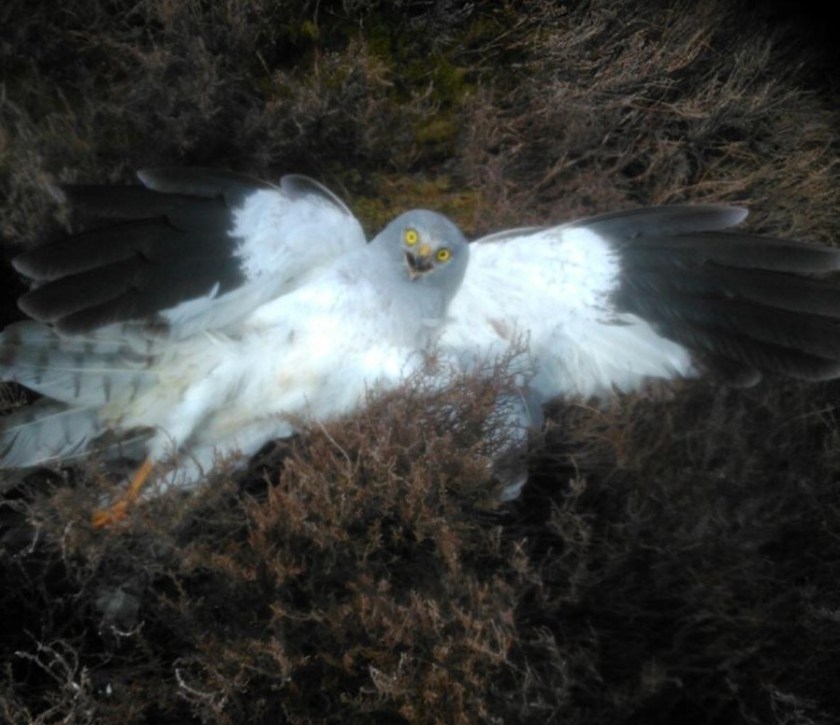
The really interesting part of the blog, as far as we’re concerned, is the section on the Leadhills Estate in South Lanarkshire. Blog readers will recall this is where a male hen harrier was found with an almost severed leg caught in an illegally-set spring trap next to his nest earlier this summer. Despite the heroic efforts of a number of experts, he didn’t survive. The estate denied all knowledge and responsibility and nobody has been charged.

[The trapped hen harrier found on Leadhills Estate. Photo by Scottish Raptor Study Group]

Regular blog readers will know this poor hen harrier is not the only victim reported from the Leadhills Estate. The list is long and goes back more than a decade (e.g. scroll down this page). Duncan’s blog discusses some of the most recent incidents including the witnessed shooting of a hen harrier in May 2017; the witnessed shooting of a short-eared owl just a few weeks later and whose body was recovered; the discovery of a buzzard in 2018 that was found to have been shot twice; and the filmed buzzard that according to the RSPB was likely killed in a crow trap in January 2019.

Nobody has been charged for any of the above, but significantly, Duncan’s blog says this:

“We are advised that only now is an Open General Licence restriction, another sanction in the public authority wildlife crime “toolbox”, to be imposed here”.

SNH has had the power to impose General Licence restrictions since 1 January 2014. This was instigated by former Environment Minister Paul Wheelhouse in response to continuing difficulties of securing criminal prosecutions and was an instruction to SNH to withdraw the use of the General Licence (available for legal predator control) on land where crimes against raptors are believed to have taken place but where there is insufficient evidence to instigate criminal proceedings. The decision to withdraw the licence is based on the civil standard of proof which relates to the balance of probability as opposed to the higher standard of proof required for a criminal conviction.

This measure is not without its limitations, particularly as estates can simply apply for an individual licence instead which allows them to continue predator control activities but under slightly closer scrutiny.

SNH has only imposed four such restrictions since 2014 – a pathetically small figure when we are aware of at least a dozen other cases where a restriction should have been applied. SNH has claimed it is ‘not in the public interest‘ to explain those failures.

We’ve looked on the SNH website to see whether Leadhills Estate has been listed as having a General Licence restriction imposed (SNH does publicise the details when it imposes the restriction) but so far Leadhills Estate is not named. Potentially the estate has been notified and is currently in the period where it may challenge SNH’s decision, as per the framework for a General Licence restriction.

Watch this space.

UPDATE 26 November 2019: SNH imposes General Licence restriction on Leadhills Estate (here)
More detail emerges about SSPCA/Police Scotland raid at Millden Estate

A couple of weeks ago the Scottish SPCA, assisted by Police Scotland, conducted a pre-dawn raid on properties in Angus and Aberdeenshire as part of an investigation in to suspected animal fighting (see here).

This story has attracted huge media attention and more details have been emerging as journalists begin to dig.

The first insight came when journalist David Leask from The Herald exclusively revealed that the property raided in Angus was the Millden Estate, a grouse shooting estate in the Angus Glens (see here). We learned that as a result of the raid, the estate had suspended an employee pending further investigation.

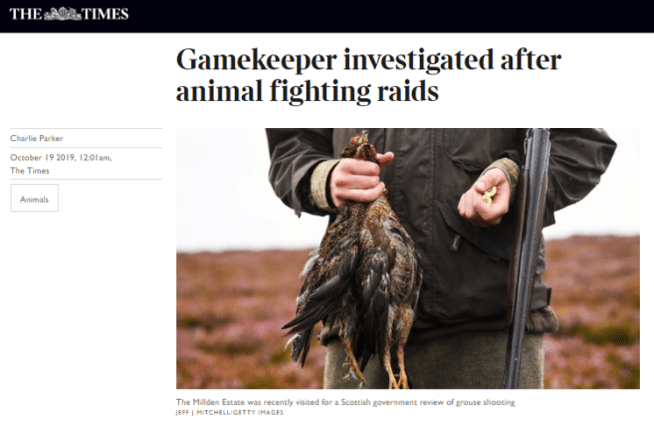
We’ve now learned that the suspended employee was apparently a gamekeeper, according to this article by Charlie Parker in The Times, published two days ago: (see copy of article at foot of this blog)

Some may already have made the assumption that the suspended employee was a gamekeeper but this wasn’t previously clear; Millden Estate employs multiple people in multiple roles and they’re not all gamekeepers (e.g. in the Millden Estate 2011 sales brochure 16 employees were listed).

We’ve also learned something else about this raid. It had previously been reported that the SSPCA had seized dogs during the raid at Millden but their condition was unreported. However, according to this article by Jim Millar in The Courier, an SSPCA spokesperson is quoted as follows:

We were made aware of animal fighting and secured a warrant to investigate further. This has been a successful raid and we are happy with the outcome. We have seized a number of dogs, which have injuries consistent with animal fighting and taken them into our care where they are getting all the love and attention they need“.

There is still no further detail about the dead buzzards that were reportedly recovered by the police/SSPCA, nor any indication of how they died.

We’ll await further information as and when the investigating authorities publish it. At this stage we are not aware of anyone being charged with any offences.

Sorry but as this is a live investigation we won’t be accepting any comments on this post.

UPDATE: Here is the text of the article in The Times:

A gamekeeper at Scotland’s most prestigious shooting estate is the subject of an investigation into organised animal fighting, The Times has learnt.

The Scottish SPCA last week led raids at two private lodgings on the £17.5 million Millden Estate in the Angus Glens. Specialist officers, backed by police, recovered computer equipment and dead buzzards among other evidence after obtaining warrants to search the properties.

They were said to be acting on intelligence gathered on animal fighting activities. Dogs and several other animals are understood to have been rescued in the operation.

Sources familiar with the raids said a gamekeeper was being investigated as part of the inquiry but no arrests have been made.

Millden Estate confirmed it immediately suspended a staff member after being contacted by officers but stressed that the investigation concerned an individual and not the estate itself.

The estate was recently visited by Alan Werritty, who is leading a Scottish government review of grouse shooting. He looked at Millden as an example of best practice for managing moors.

Robbie Marsland, director of the League Against Cruel Sports, which assisted the Scottish SPCA in its investigation, said: “We look forward to anyone found responsible experiencing the full weight of the law.”

A spokesman for Millden Estate said it was carrying out its own internal investigation. He added: “The estate will continue to liaise with the appropriate authorities. It has a robust system of compliance with the law including a zero tolerance approach to any wildlife offences or animal welfare issues.”

The Scottish Gamekeepers Association said: “If the allegations are correct, this type of abhorrent organised activity will not be condoned by anyone associated with gamekeeping.”

The Scottish SPCA issued a formal statement on Monday saying it had conducted raids in Angus and Aberdeenshire after intelligence led to concerns for the safety of dogs and wild animals. An undercover officer in its special investigations unit said: “We uncovered intelligence to suggest illegal animal fighting was taking place at these locations.”

ENDS

UPDATE 3 December 2020: Animal cruelty charges follow SSPCA/Police raid at property on Millden Estate (here)

UPDATE 2 November 2021: New trial date for Millden Estate gamekeeper accused of animal fighting offences (here)

Buzzard shot dead in North Yorkshire

Appeal for information from North Yorkshire Police (11 October 2019):

APPEAL FOR INFORMATION AFTER BUZZARD FOUND SHOT NEAR SHERBURN IN ELMET

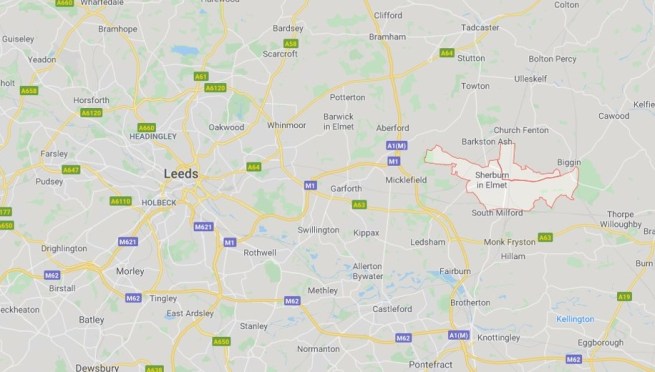
North Yorkshire Police is appealing for information after a dead buzzard was found by a member of the public at 11.45am on 3 October on a footpath close to Hagg lane near Sherburn in Elmet.

The bird was recovered and taken to a local vets to be x-rayed which revealed it contained what appeared to be eight pieces of shot.

A spokesperson for North Yorkshire Police said: “This is sadly yet another example of the unacceptable bird of prey persecution which blights our region. Killing wild birds is an offence under the Wildlife and Countryside Act and we are committed to putting a stop to this deplorable crime.”

North Yorkshire Police have carried out extensive enquiries in the local area. Officers are appealing for anyone with any information, or who may have witnessed anything taking place in relation to this bird to call 101 quoting ref: 12190183166

ENDS