Hen Harrier found poisoned on a grouse moor in North Yorkshire

I’ve blogged recently about a number of illegally-killed Hen Harriers whose deaths have not been publicised by the authorities (Hen Harrier ‘Susie’ who was found dead with gunshot injuries on a grouse moor in the North Pennines, here; and Hen Harrier ‘254843’ who was found dead on moorland in Northumberland National Park with shotgun damage to her satellite tag, here).

Here’s another one. This time found illegally poisoned on a grouse moor in North Yorkshire.

A poisoned Hen Harrier in Co Meath, Ireland, November 2019 (NB: not the poisoned HH found in North Yorkshire in January 2025). Photo by RSPB Investigations

Once again, the details of the illegal killing of this latest Hen Harrier have only become public after careful scrutiny of a national database (this one operated by the Health & Safety Executive) – an entry on a spreadsheet rather than a full-blown press release from the investigating authorities.

Here are the limited details that I’ve found:

HSE Ref number 107/913. Confirmed poisoning, North Yorkshire, January 2025. Chemicals Bendiocarb, Carbofuran, Isophenphos, Alphachloralose. Notes: ‘A dead Hen Harrier was found on a grouse moor. Residues of Bendiocarb, Carbofuran, Isophenphos and Alphachloralose were found in the samples analysed, which is an abuse of these compounds. Case closed as passed to the Police‘.

I haven’t seen ANY police appeal or press release about the illegal poisoning of this Hen Harrier or the discovery of its corpse in North Yorkshire 11 months ago in January 2025. Not a single word.

Where is the publicity from the National Wildlife Crime Unit-led Hen Harrier Taskforce? The specialist group set up explicitly to tackle the ongoing illegal killing of Hen Harriers. Not a single word.

Where is the publicity from the police-led national Raptor Persecution Priority Delivery Group (RPPDG), one of whose functions is apparently ‘awareness raising‘ and ‘raising the profile [of illegal raptor persecution] via media exposure‘? Not a single word.

Poisoning is not a commonly-used method for killing Hen Harriers because this species is not a routine carrion eater. Typically they are shot when foraging low for live prey or flying towards a roost site, or trapped on or next to their nest sites and then bludgeoned to death instead. Although there was one case of a Hen Harrier being found poisoned on a Pheasant-shoot in County Meath, Ireland in 2019 (here).

The information I’ve gleaned so far about this latest Hen Harrier poisoning just refers to ‘North Yorkshire’. It’s a huge county, with grouse moors in the Yorkshire Dales National Park, Nidderdale National Landscape (previously called an AONB), and the North York Moors National Park.

However, the eagle-eyed amongst you will have noticed the distinctive combination of chemicals used – a highly lethal mixture widely known as the ‘Nidderdale Cocktail’, so described due to the frequency of use of this nasty combination in Nidderdale, where it has killed a number of birds of prey over the years, particularly Red Kites, and also a pet dog (see here).

That might suggest a Nidderdale grouse moor as the location of the January 2025 Hen Harrier poisoning, although the Nidderdale Cocktail has also been detected in other poisoning cases as far north as Scotland, perhaps indicative of gamekeepers moving jobs, so it’s not conclusive.

This isn’t the first time that I’ve been critical of an apparent lack of action from North Yorkshire Police in relation to a national wildlife crime priority incident. Just a couple of years ago they refused to investigate the circumstances of an illegally poisoned Red Kite that had been found dead on Swinton Estate (see here).

This apparent lack of inertia is in direct contrast to how North Yorkshire Police’s Rural Crime Team used to function a few years ago, under different leadership, when it was proactive and very public about its work (e.g. see here, here, here, here etc).

I’ve submitted a number of FoIs to various agencies about this latest Hen Harrier persecution incident. I’ll report more when they respond.

UPDATE 10 March 2026: What’s happened to the police investigation in to the poisoned Hen Harrier found dead on the edge of a grouse moor in North Yorkshire? (here)

Hen Harrier found dead in Northumberland National Park with shotgun damage to satellite tag

This is a blog about one of those dead Hen Harriers for whom we’ve been waiting over a year for Natural England to confirm the cause of death.

A Hen Harrier (photo by Pete Walkden)

The young Hen Harrier in question (Tag ID: 254843) was fitted with a satellite tag when she was a nestling in Northumberland on 5 July 2024.

In Natural England’s HH spreadsheet that was updated in August 2024, her status was given as follows:

Date of last contact: 29 July 2024

Location of last contact: Northumberland

OS reference: Recovered awaiting PM

Status: Dead

There were no further details provided until 14 months later, when Natural England quietly updated its spreadsheet in October 2025. This bird’s status was now given as follows:

Date of last contact: 29 July 2024

Location of last contact: Northumberland

OS reference: NY824937

Status: Dead

Notes on Loss: The recovered carcass was not suitable for any PM owing to level of decomposition

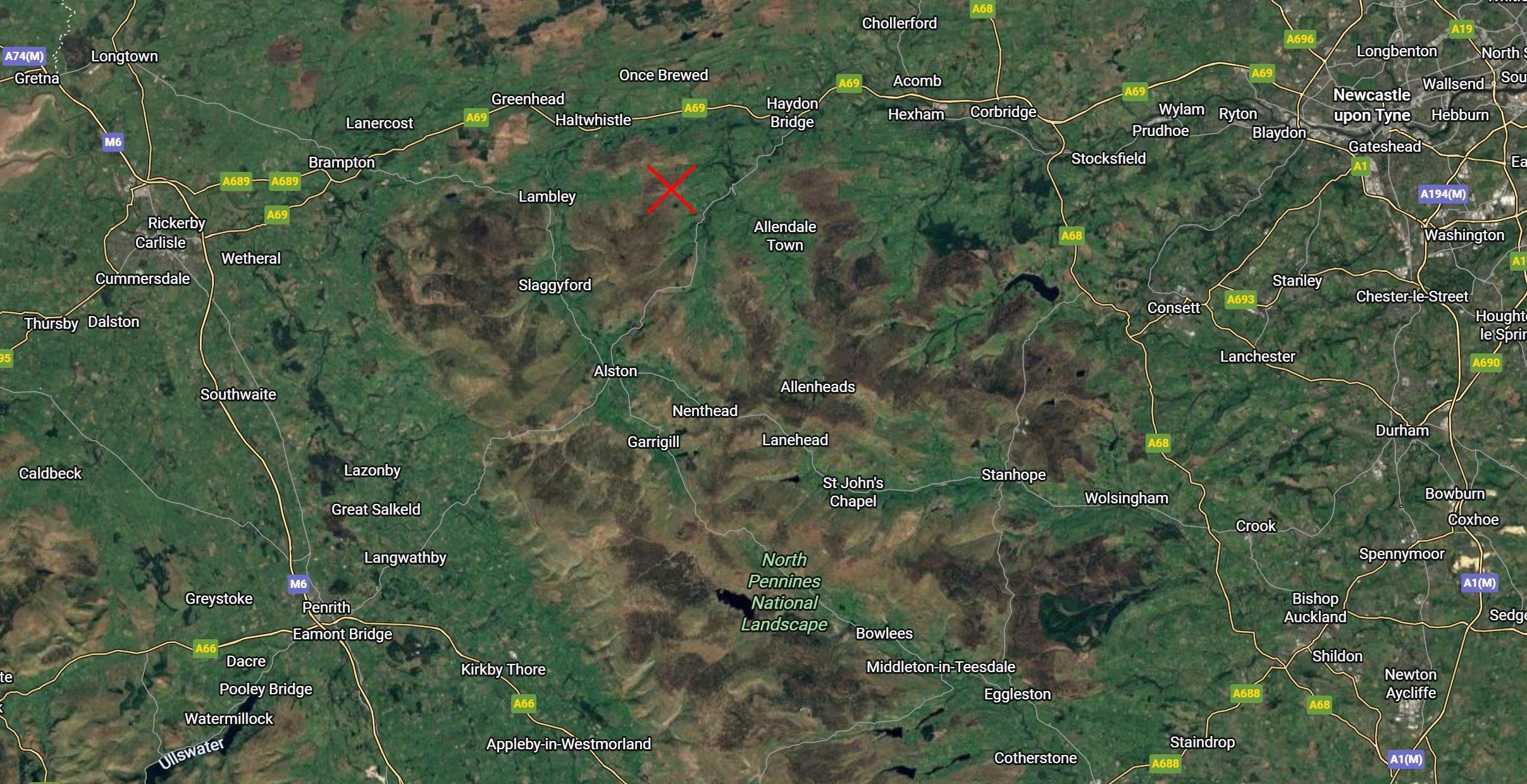
The grid reference places the last location in an upland area of Northumberland National Park, to the north east of Kielder Water. This area of moorland is not known to be a raptor persecution hotspot – indeed it’s one of the few strongholds for Hen Harrier breeding attempts in England – and there was nothing in Natural England’s spreadsheet notes to suggest she had been killed illegally. So we’re led to conclude it was a probable natural death.

Last known location of Hen Harrier 254843 according to Natural England info

But hang on a minute.

I’ve recently found a fascinating blog posted within the depths of the National Wildlife Crime Unit’s (NWCU) website that tells a very different story. It was published on 10 October 2025 and is entitled, ‘Cracking the Case: How Experts Uncovered the Truth Behind a Hen Harrier’s Mysterious Death‘.

The original blog can be read here, and I’ve copied it here incase the link is broken in the future:

When a young female hen harrier known as 254843 took her first flights over the moorlands of Otterburn, Northumbria, in July 2024, she became part of a vital conservation effort. Fitted with a satellite tag by Natural England (NE), this small device would help scientists track her journey, monitor her wellbeing, and contribute to the protection of one of the UK’s most threatened birds of prey.

But just weeks later, her signal stopped. What initially appeared to be a tragic but natural loss of a young bird soon revealed something far more sinister and set in motion a remarkable multi-agency investigation into suspected wildlife crime.

When NE staff noticed that 254843’s satellite tag had stopped transmitting, they followed established procedures to locate her. The bird’s remains were found roughly 1.2 kilometres from her nest close to where she had been learning to hunt under her parents’ watchful eyes. At first, the team suspected natural predation.

The remains of HH 254843 (photo Natural England)
HH 254843 with damaged tag (photo Natural England)

However, during recovery, one small detail caught their attention — a small, round dent and hole in the satellite tag. It was an anomaly that couldn’t be ignored.

This discovery triggered the involvement of the UK National Wildlife Crime Unit (NWCU) and the Harrier Task Force (HTF). Working closely with Natural England, the Northumbria Police Rural Crime Team, and scientific experts, they began piecing together what had really happened.

The first step was to send the remains and the tag to the Zoological Society of London (ZSL) for a detailed postmortem. Due to the bird’s advanced decomposition, the pathologists couldn’t confirm a cause of death, but their findings were enough to justify further forensic testing.

Radiograph of the carcass of HH 254843 and her satellite tag (photo by ZSL)

From there, the investigation moved to Nottingham Trent University (NTU), where specialists used CT scanning and chemical analysis to examine the damaged tag. Their results revealed elevated levels of lead around the hole a crucial clue pointing toward a lead-based projectile.

Finally, the tag was analysed by a ballistics expert from the Scottish Police Authority (SPA). The verdict: the damage was consistent with being struck by a shotgun pellet, likely from a birdshot cartridge fired from below the flying bird. Tests confirmed traces of lead, and the impact trajectory supported the theory of a shotgun discharge at an estimated distance of up to 30 metres.

The conclusion was clear. This was no accident of nature. It was a deliberate act of wildlife crime.

Shotgun damage to HH 254843’s satellite tag (photo by Scottish Police Authority)

Thanks to the combined expertise of scientists, conservationists, and law enforcement, the incident has been officially recorded as criminal damage. Each satellite tag costs around £2,800, not including the significant resources dedicated to fitting and monitoring them but the real loss is far greater, representing another blow to hen harrier conservation efforts.

The investigation also led to important lessons for future responses. New procedures now ensure that if anything suspicious is discovered during a bird recovery — no matter how small — the process halts immediately, and police take over to conduct a forensic recovery. This prevents potential evidence from being lost and strengthens the chance of bringing perpetrators to justice.

This case demonstrates the high level of skill, coordination, and dedication required to detect and investigate wildlife crime. From the precision of CT imaging and chemical testing to the meticulous work of forensic ballistics experts and the vigilance of conservation field teams every partner plays a crucial role.

It also serves as a reminder that wildlife crime is not victimless. Each illegal act damages not only individual animals but also the broader ecosystem and the tireless efforts of those working to protect it.

The public can play their part too. If you have any information about this incident or any suspected wildlife crime please report it.

Every report helps protect the wild places and species that make our countryside unique and ensures that those who threaten them are held accountable.

ENDS

It’s clear from the NWCU blog the extent of the effort, by multiple partners, to determine what happened here, and I applaud them for it.

I’m less impressed that this information hasn’t been given the media attention it deserves, nor that a link to the NWCU blog hasn’t been added to Natural England’s spreadsheet entry about the circumstances surrounding this Hen Harrier’s death. It really isn’t difficult.

I’m also interested that the NWCU blog states, “…the incident has been officially recorded as criminal damage“. This is presumably in reference to the shotgun damage caused to the satellite tag.

I wonder, though, how the death of Hen Harrier 254843 has been officially recorded…’Unknown’? ‘Suspicious’? ‘Illegally killed’?

The blog says, “The conclusion was clear. This was no accident of nature. It was a deliberate act of wildlife crime”. So why doesn’t Natural England’s spreadsheet reflect this?

Man arrested after five Red Kites found poisoned in Essex

Statement from Essex Police posted on social media, 21 November 2025:

An Aveley man has been arrested after five red kites were found dead in a field in Orsett.

Our Rural Engagement Team is investigating because killing or harming birds of prey is a criminal offence.

PC Luke Jones says: “Red kites, along with all birds of prey, are protected under the Wildlife & Countryside Act 1981.

“Tests have shown that they were poisoned. The poisons used are deadly not only to wildlife but also to humans.

“Anyone who finds a dead bird of prey or suspects illegal activity should report the information to police via our website.

“But please take care not to touch them“.

The man has been released under investigation and our inquiries continue.

ENDS

There’s no further information available, such as when the Red Kites were found or the poison(s) used.

Red Kite. Photo by Ronnie Gilbert

New independent report reveals locations of poisoned raptors in northern England, 2015-2023 – information that has been suppressed by government

Press release from independent group, Wildlife Poisoning Research UK, 15th November 2025.

WHERE THE POISONED BODIES WERE FOUND!

Many people probably imagine that the use of poisons to kill protected wildlife is something out of the pre-Victorian era, like cock fighting and bull baiting.  However, this senseless and cruel slaughter is still happening in Britain, with many mammals and birds of prey suffering horrific and agonising deaths, even though this practice has been banned since 1911.

It is a crime which not only kills wildlife, but also kills much loved family pets and can even kill people.  This is a wildlife crime that frequently occurs on remote and private land where the chance of detection is very low and most victims are never found.  Those cases which are reported and then investigated must be considered to be a very small tip of a very large ‘iceberg’ of sickening rural felonies.

An illegally poisoned Red Kite (photo via WPRUK)

In 2017, in an attempt to combat this wildlife crime, the UK Government initiated a project to map incidents of illegal bird poisonings.  This provided information to the public and other interested parties as to where these crimes were taking place and it was intended that these maps would be updated annually to “provide an invaluable intelligence tool to help fight crimes against birds of prey” (Defra press release 2017).

It now appears that these wildlife poison crime maps have not been updated and there is very little governmental action informing the public that these crimes are still occurring and wildlife is still being deliberately poisoned.

Wildlife Poisoning Research UK (WPRUK) works to place information about the environmental impact of pesticides, biocides and other toxic chemicals into the public domain so that the general public and the media have a better understanding of this situation.  Data on cases of deliberate poisoning of birds has been obtained using Freedom of Information requests.  This has enabled WPRUK to produce maps showing where these poisoned birds have been found.  This is information which the Government, for whatever reason, has now apparently declined to put into the public domain.

WPRUK has now released a report pinpointing where the poisoned birds have been found in Northern England.  Future maps will cover other parts of the UK.

Between 2015 to 2023, the bodies of 73 legally protected birds, mostly birds of prey, were found in Northern England.  These birds had been illegally and deliberately killed using poisons; 31 birds being Schedule 1 Wildlife and Countryside Act (1981) species, which have the highest level of protection.  Due to the very small chance of poisoned birds being found, the real numbers of birds being killed by this criminal activity is likely to be far higher.  To date, no one has been convicted for killing any of these 73 birds.

There were two areas in Northern England where particularly high numbers of poisoned birds were found.  These were Nidderdale in North Yorkshire and the Glapwell area in Derbyshire.

Releasing the report, Dr Ed Blane from WPRUK said: “The fact that 114 years after this sickening practice was banned, individuals are still poisoning our wildlife is deeply disturbing.  People visit the countryside to enjoy nature and they will be truly alarmed to learn that poison is still being used to kill wildlife.”

If this continues it might severely impact on plans to re-introduce white tailed eagles to Northern England.  In the Southern England eagle project, at least 2 birds have been killed by poison.

A comment from Steve Downing Chairman Northern England Raptor Forum:

“We proudly, and rightly, identify ourselves as a nation of nature lovers.  Every year tens of thousands of tourists, both domestic and foreign, visit the historic and beautiful countryside throughout the North of England to enjoy the scenery and stunning birds of prey that it supports.  Collectively they spend £millions supporting our rural communities.  What the visitors don’t see is the underbelly of criminality in the countryside where the barbaric practice of deliberately poisoning raptors persists today, as highlighted by the bodies found in Nidderdale, North Yorkshire and around Glapwell in Derbyshire.  Thanks to Ed, a spotlight is being shone on this shocking pernicious activity raising public awareness of the danger presented by these lethal poisons, both to themselves and local birds of prey.”

Bob Elliot CEO of Wild Justice said:

“Illegal wildlife poisoning hasn’t faded into history; it’s still being carried out in the shadows with very little oversight.  These findings show that wildlife species are still being killed with impunity, and the public is being kept in the dark about the scale of it.  Without transparency, enforcement and the political will to confront those responsible, this criminal abuse of our countryside will continue unchecked.”

ENDS

The report can be read / downloaded here:

Sparrowhawk shot in Towcester – Northants Police appeals for information

Press release from Northants Police (14 November 2025)

BIRD OF PREY KILLED IN TOWCESTER

Police officers from the Rural Crime Team are appealing for witnesses after a bird of prey was found dead in Towcester.

The Force were contacted by the RSPB following a report from a member of the public that a Sparrowhawk had been found dead in Redcar Road.

Following enquiries, it is believed the protected bird had been shot by a type of rifle sometime between 8am on Thursday, November 6 and 11.30am on Friday, November 7.

Sparrowhawk (photo by Ronnie Gilbert)

PC Emerson Knights of the Rural Crime Team said: “Sparrowhawks are protected under the Wildlife and Countryside Act 1981, and it is an offence to intentionally or recklessly kill or injure them.

“We believe this Sparrowhawk was fatally injured after being shot with either a high-powered air rifle or small calibre rifle and would like to hear from anyone who may be able to identify the person responsible for the bird’s death.”

Witnesses or anyone with information are asked to call Northamptonshire Police on 101 or alternatively contact Crimestoppers on 0800 555 111.

ENDS

Hen Harrier ‘Susie’, whose chicks were stamped to death in 2022, has been found dead on a North Pennines grouse moor with gunshot injuries

If ever there was an example demonstrating the high level of persecution faced by Hen Harriers on UK grouse moors, the lack of consequences for the offenders, and the lack of justice for the victims, the short life of a Hen Harrier called ‘Susie’ illustrates it all.

Hen Harrier (photo by Pete Walkden)

Susie hatched in Cumbria in 2020 and was satellite-tagged by Natural England on 21 July 2020. She first bred in Bowland in 2021, and the following year she moved up to a grouse moor near Whernside in the Yorkshire Dales National Park where she produced four chicks.

The Whernside nest was being monitored (nest camera) by Natural England as part of the ludicrous Hen Harrier Brood Meddling Trial. On 20 June 2022, NE researchers noticed that Susie’s satellite tag was unexpectedly and abruptly shown tracking approximately 35km away from her nest. An adult female should be attentive and close to her nest during this period. Her sudden exit from the nest area was worrying.

The following day, Natural England field staff visited the nest and made the grim discovery of three dead Hen Harrier chicks.

Reviewing the nest camera footage, they saw that after dark, at 9.54pm on 15 June 2022, the camera showed the nest site appeared normal with Susie settled in the nest with her chicks. However, at 9.59pm a sudden irregular ‘whiteout’ of the camera occurred, blinding the camera.

The camera used was movement-activated, and it was not triggered again until the following morning when footage captured apparently dead chicks in the nest and Susie attempting to feed them.

She could be seen removing her dead chicks from the nest. Three of these were found just outside the nest, and it is not known where she deposited the fourth.

Post-mortem examinations of the three chicks were subsequently conducted and showed that each suffered with multiple fractured bones including the humerus in one chick, both femurs in the second chick, and in the third chick, the humerus and a crushed skull. The fractures were complete and showed a considerable trauma had taken place for each chick.

It’s quite clear that ‘someone’ had visited the nest, disabled the camera, and stamped the chicks to death.

Six months later (!), in December 2022, North Yorkshire Police laid out the evidence and issued an appeal for information (see here).

Representatives from the grouse shooting industry responded by trying to manipulate the narrative of this brutal and sadistic crime (see here) and of course, nobody came forward with any information that could identify the person / people responsible.

The following year, in 2023, the story featured in a three-episode podcast by The Guardian, called ‘Killing the Skydancer’ (here, here and here). Meanwhile, Susie bred successfully (unknown location) and fledged five chicks. It was to be her last breeding season.

In April 2024, Natural England published its latest update on the fate of its satellite-tagged Hen Harriers. It did so quietly, without any publicity whatsoever. Susie’s entry on that spreadsheet read,

‘Last known transmission 12 February 2024, Northumberland. Found dead. Site confidential. Recovered, awaiting post mortem’.

Nothing more was heard about Susie’s fate until a year later, in another spreadsheet update in April 2025. Susie’s entry now read:

‘Ongoing police investigation, final transmission location temporarily withheld at police request‘. 

Again, there was no publicity about Susie, or about any of the other Natural England-tagged Hen Harriers that had either ‘vanished’ or had been found dead in suspicious circumstances.

Over one and a half year’s after Susie was found dead, the details have finally emerged, and once again Natural England has slipped them out quietly, without fanfare or commentary, in its October 2025 spreadsheet update. Susie’s entry now reads:

‘Found dead 12 February 2024, Northumberland, Grid reference NY759585. Confirmed dead, had been victim of shooting. When found dead remains would not allow determination of whether the bird died as a result of being shot. Bird died between 25 November 2023 and 12 February 2024‘.

Susie’s corpse was found on a grouse moor in the North Pennines National Landscape (a so-called protected landscape, formerly known as the North Pennines Area of Outstanding Natural Beauty, AONB), and the grid reference places her on what I believe to be the Whitfield Estate:

Susie had been shot at some point, but where, and when, is not known.

There is no suggestion that she was shot and killed on the Whitfield Estate – she could have been shot many months earlier and survived for a while before succumbing to her injuries. Without seeing the post mortem and x-ray results (which have not been published), it’s impossible to know whether her gunshot injuries caused any broken bones that could have impeded her ability to fly any distance.

That Susie was the victim of at least two separate persecution incidents (that we know about) during her three-and-a-half-year life, illustrates the severity of threat this species still faces in the UK. This should come as no surprise to anybody who has been following this blog for any length of time, nor to those who may have read the RSPB’s damning 2025 report, Hen Harriers in the Firing Line.

These appalling crimes continue because hardly anyone is ever brought to justice. There is rarely any consequence for the offenders, which gives them the green light to carry on.

There has been a change in tactics by the raptor killers in recent years, as we saw in the RSPB’s covert footage in Oct 2024 where three individuals were caught plotting, and then apparently shooting, a Hen Harrier on a grouse moor in Grassington in the Yorkshire Dales National Park. They specifically targeted the Hen Harrier that was not carrying a ‘box’ (a satellite tag) because they thought that by doing so their crime would be undetected. A gamekeeper is standing trial in January 2026 for his alleged involvement – he denies it – it will be up to the court to decide whether he was involved or not.

That case is a very uncommon prosecution, reliant on evidence provided by the RSPB’s excellent Investigations Team.

There won’t be a prosecution for the shooting of Hen Harrier Susie because there’s no evidence (that I’m aware of) that links an identified individual to that crime. Just as there was no prosecution of the person(s) responsible for stamping her chicks to death in their nest in 2022.

We all get it – finding sufficient evidence to prosecute those responsible for committing crimes in remote landscapes is incredibly difficult, but the investigating authorities could, and should, be doing much more to publicise these offences to raise awareness and help the general public spot suspicious activity.

The police’s appeal for information about the chick-stamping crime in the Yorkshire Dales National Park came six months after the event – that’s pathetic.

I haven’t seen ANY police appeal or press release about the shooting of Susie or the discovery of her corpse in Northumberland in February 2024. Not a single word.

Where is the publicity from the National Wildlife Crime Unit-led Hen Harrier Taskforce? The specialist group set up explicitly to tackle the ongoing illegal killing of Hen Harriers. Not a single word.

Where is the publicity from the police-led Raptor Persecution Priority Delivery Group (RPPDG), one of whose functions is apparently ‘awareness raising‘ and ‘raising the profile [of illegal raptor persecution] via media exposure‘? Not a single word.

Natural England has remained tight-lipped, as it always does, claiming that it requires the go-ahead from the police to issue any media. Why? Sure, in the early stages of a police investigation keeping quiet is often necessary to avoid alerting the perpetrator who may take the opportunity to remove/hide evidence before the police turn up. But 18+ months of silence, about a crime that relates to a publicly-funded project, and then to quietly slip out the information buried deep inside a spreadsheet?

Honestly, this needn’t be so bloody difficult.

X-ray reveals shotgun pellets embedded in ‘grounded’ Buzzard, Nottinghamshire

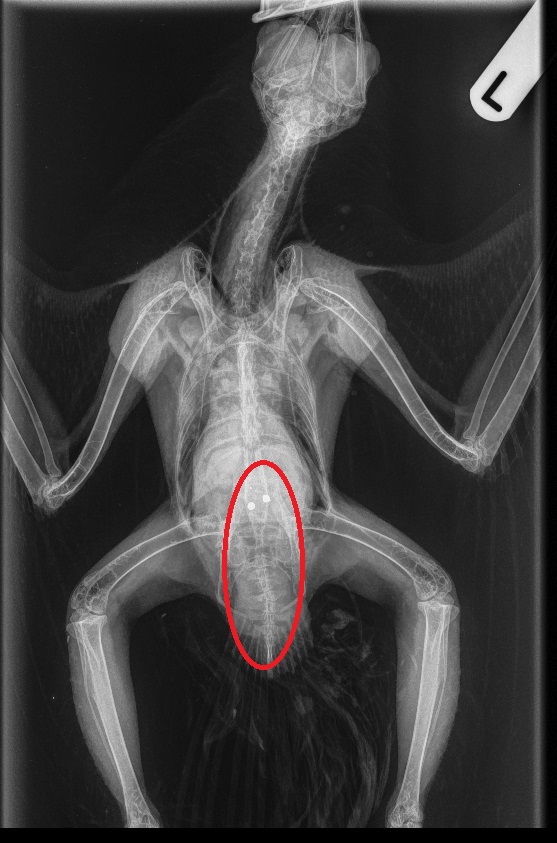
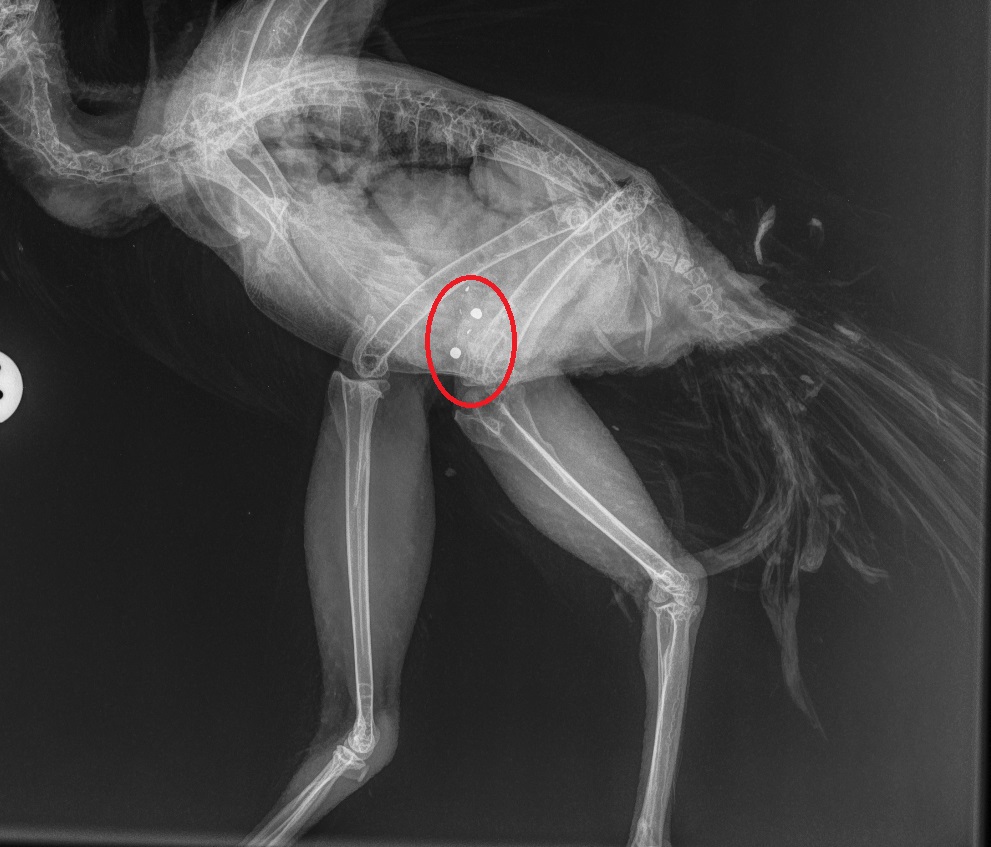
An x-ray of a grounded Buzzard has revealed two embedded shotgun pellets and a broken tail, according to Brinsley Animal Rescue in Nottinghamshire.

A statement published by the charity yesterday reads as follows:

‘Last Sunday we admitted a buzzard that had been found grounded, the caller had been struggling to find a rescue who were able to help and had them for several days before we took the call, thankfully they had been feeding the buzzard and keeping them safe.

On examination it was clear there they weren’t the best of condition not least the tail position, which was to the side and the bird wasn’t able to move it. X-rays have confirmed that not only was the tail broken, but there are several shot gun pellets lodged in the bird. It is probable that they have been shot and the broken tail is a result of the bird crash landing.

We have successfully treated and released birds with broken tails, but not a bird of prey, whilst the bones will eventually fuse, its vital that they have full mobility before they can be released and only time will tell if this ends well‘.

Photo and x-rays from Brinsley Animal Rescue

Peregrine Falcon chicks at Worcester Cathedral died from ingesting poison

Three Peregrine chicks that hatched on Worcester Cathedral all died within a few weeks, earlier this spring. Two of the dead chicks were retrieved and sent for post mortem and the results have now shown they died from ingesting poison.

The name of the poison hasn’t been published but a statement by the group who monitor the adult Peregrines at Worcester Cathedral (‘Peregrine Falcons in Worcester’) says, ‘Both birds had internal bleeding consistent with death from poison‘, which suggests the poison was probably a Second Generation Anti-coagulant Rodenticide (SGAR).

The adult breeding pair (known as ‘Peter’ and ‘Peggy’) are fine.

The BBC News website has an article on the news (here) and states that West Mercia Police had received a report but the investigation has closed due to ‘evidential difficulties’.

One of the adult Peregrines at Worcester Cathedral. (Photo from Worcester Cathedral)

A recent report written by Dr Ed Blane and published on the Wildlife Poisoning Research UK website shows that there has been a substantial increase in Peregrine exposure to SGARs, and especially to the poison Brodifacoum. The same issue is affecting Foxes and Otters.

This follows a report published last year ‘Collateral Damage‘ by Wild Justice which reported an alarming increase in SGARs exposure in Buzzards and Red Kites and was heavily critical of the Rodenticide Stewardship Scheme and how the government was ignoring the evidence.

As a result, the Health & Safety Executive, which controls the approval regime in the UK for rodenticides and decides what can and cannot be used, ran a public consultation in September 2025 to look at alternatives to SGARs.

The results of that consultation are awaited.

Shot Buzzard found in Herefordshire

A young Buzzard was found in a field in Leominster, Herefordshire last week, unable to fly.

An x-ray revealed at least two shotgun pellets lodged in its body. It’s not known when the bird was shot, or where.

Photo by Sasha Norris
Photo via Sasha Norris

The Buzzard is currently receiving expert veterinary care from Dr Sasha Norris of Hereford Wildlife Rescue with assistance from Holmer Veterinary Surgery in Hereford and Battle Flatts Veterinary Clinic in Yorkshire.

Sasha reports that the Buzzard was ‘alert, bright and eating well’ this morning.

‘Eyes on the Skies’ – new campaign to raise awareness of raptor persecution in the Yorkshire Dales National Park

Following the recent collapse of the Yorkshire Dales National Park Bird of Prey Partnership (due to its failure to tackle crimes against birds of prey), and the news that since 2015, 29 Hen Harriers have gone ‘missing’ in suspicious circumstances and almost 40 other raptors have been found poisoned, trapped or shot in the Yorkshire Dales National Park since 2015, including Peregrines, Hen Harriers, Red Kites and Buzzards, there’s some welcome news from a local community who has had enough and has decided to do something about it. Bravo!

Press release from Friends of the Dales:

SPEAKING OUT FOR BIRDS OF PREY

Friends of the Dales, the environmental campaigning charity, is launching a powerful new campaign − Eyes on the Skies − calling for an end to criminal killing of birds of prey in the Yorkshire Dales. The campaign kicks off with a high-profile live webinar on Tuesday 21 October at 5.30pm, featuring leading conservation expert Kate Jennings, UK Head of Site Conservation & Species Policy at the RSPB.

Kate will highlight the long history of bird crime in the Yorkshire Dales, drawing on evidence and case studies from the RSPB’s Investigations Team which works in support of the police and statutory agencies to bring criminals before the courts.

“We are delighted that Kate is joining us at the Eyes on the Skies launch event,” said Jonathan Riley, Chair of Trustees at Friends of the Dales. “She will shine a spotlight on Bird Crime in the Yorkshire Dales and the illegal and inhumane methods criminals use to trap, shoot and poison birds of prey − crimes that persist despite more than seventy years of legal protection.”

The Yorkshire Dales remains a blackspot for raptor persecution, with species such as hen harriers, short-eared owls, and red kites especially targeted. Just last week the RSPB issued a press release about the disappearance of Sita, a one-year-old female satellite-tagged Hen Harrier. The RSPB said that Sita is the 29th hen harrier “to suspiciously disappear in the national park since 2015” and that the bird “is likely to have been shot”.

“It is appalling that the hen harrier, one of the UK’s rarest birds, continues to be shot, trapped, and poisoned in our National Park, which should be a sanctuary for wildlife,” added Jonathan.

Public concern for these crimes is growing. In early 2024, more than 1,000 people responded to the first consultation on the new Management Plan for the Yorkshire Dales National Park, with ending the illegal persecution of birds of prey emerging as one of the top priorities.

David Butterworth, Chief Executive of the Authority also confirmed: “The Yorkshire Dales National Park Authority is unwavering in its commitment to raptor conservation. We will continue to collaborate with landowners, managers and organisations sharing our vision. We applaud those whose efforts have helped some species recover. But we must also confront the grim reality that criminal persecution still occurs.”

Friends of the Dales Eyes on the Skies campaign supports one of the core objectives of the new management plan for the Yorkshire Dales National Park, as well as the vital work of other organisations such as the National Wildlife Crime Unit, RSPB and Hen Harrier Action. The campaign will amplify messages around the scale and nature of these appalling crimes, educate people in how to spot and report any suspicious or illegal activity they might see and also inspire people to learn more about the birds themselves and why they are vital to a healthy, biodiverse ecosystem.

David Butterworth added: “The uplands of the Yorkshire Dales National Park should be a stronghold for a diverse range of raptor species. As apex predators, their presence signals a healthy environment. Their absence, conversely, is a warning.”

Summing up Jonathan Riley said: “Our Eyes on the Skies campaign will incorporate many more events including further webinars from insider experts, outdoor educational events and even some more creatively focussed activities. So, on behalf of the charity, I would encourage anyone who is interested in learning more to register for the free launch event on Tuesday 21 October at 5:30 pm, and sign up to our monthly email newsletter so they can be kept updated.”

Register for the Eyes on the Skies launch event and learn how to take action at: https://friendsofthedales.org.uk/events

ENDS

UPDATE 5 November 2025: Video of launch now available on Friends of the Dales YouTube channel – here.