Golden eagle found poisoned on Angus grouse moor

A two-year old golden eagle named ‘Fearnan’ has been found dead on a Scottish grouse moor. He had been poisoned with a banned pesticide. The poison hasn’t been named but we’ll take an educated guess at Carbofuran, the gamekeepers’ poison of choice.

Interestingly, there are three separate press releases about this latest disgraceful crime:

One from the government via PAW (here)

One from the police (here)

One from RSPB Scotland (here)

Usually, we’re lucky to see anything for at least 4-5 months after the crime so it’s somewhat surprising to see the scuffle for media attention on this one. Could this be a sign that Environment Minister Wheelhouse has put his foot down and demanded that timely press statements are released? We can’t think of any other reason why the police should suddenly change their tactics from seemingly apathetic to seemingly responsive.

Of course, regular blog readers will already know that Fearnan is not the only poisoned eagle to have been found dead in the Angus Glens. In fact, there’s been a fair bit of raptor persecution over the last nine years. Here’s a list of incidents we’ve compiled from various published reports:

2004 May, near Edzell: long-eared owl and two short-eared owls starved to death in crow cage trap.  No prosecution.

2004 May, Invermark Estate: peregrine nest destroyed. No prosecution.

2006 March, Glenogil Estate: poisoned rabbit bait (Carbofuran). No prosecution.

2006 April, Easter Ogil: poisoned buzzard (Alphachloralose). No prosecution.

2006 April, Easter Ogil: poisoned tawny owl (Alphachloralose). No prosecution.

2006 May, Glenogil Estate: poisoned rabbit bait (Carbofuran). No prosecution.

2006 June, Glenogil Estate: poisoned woodpigeon bait (Carbofuran). No prosecution.

2006 June, Glenogil Estate: Traces of Carbofuran found in estate vehicles & on equipment during police search. No prosecution. Estate owner had £107k withdrawn from his farm subsidy payments. This was being appealed, but it is not known how this was resolved.

2006 July, Millden Estate; poisoned sheepdog (Lindane). No prosecution.

2007 November, Glenogil Estate: Disappearance of radio-tagged white-tailed eagle ‘Bird N’ coincides with tip off to police that bird been shot. No further transmissions or sightings of the bird.

2008 May, ‘Nr Noranside’: poisoned white-tailed eagle ‘White G’ (Carbofuran, Isophenfos, Bendiocarb). No prosecution.

2008 May, ‘Nr Noranside’: poisoned buzzard (Bendiocarb). No prosecution.

2008 May, ‘Nr Noranside’: poisoned mountain hare bait (Carbofuran, Isophenfos, Bendiocarb). No prosecution.

2008 May, Glenogil Estate: 32 x poisoned meat baits on fenceposts (Carbofuran, Isophenfos, Bendiocarb). No prosecution.

2008 October, ‘Glenogil Estate: poisoned meat bait on fencepost (Carbofuran). No prosecution.

2009 March, Glenogil Estate: poisoned buzzard (Carbofuran). No prosecution.

2009 March, Glenogil Estate: poisoned buzzard (Carbofuran). No prosecution.

2009 April, Millden Estate: poisoned buzzard (Alphachloralose). No prosecution.

2009 July, Millden Estate: poisoned golden eagle ‘Alma’ (Carbofuran). No prosecution.

2009 August, Glenogil Estate: poisoned white-tailed eagle “89” (Carbofuran). No prosecution.

2010 May, ‘Nr Noranside’: poisoned red kite (Carbofuran). No prosecution.

2010 September, Glenogil Estate: poisoned buzzard (Chloralose). No prosecution.

2010 October, Glenogil Estate: poisoned buzzard (Carbofuran). No prosecution.

2010 October, Glenogil Estate: poisoned pigeon bait (Carbofuran). No prosecution.

2010 October, Glenogil Estate: poisoned pigeon bait (Carbofuran). No prosecution.

2011 February, Airlie Estate: buzzard caught in illegal crow trap. (see below)

2011 March, Airlie Estate: 3 x buzzard caught in illegal crow trap. Prosecution (!) but dropped after statement from suspect given to SSPCA deemed inadmissible.

2011 April, Millden Estate: shot buzzard. No prosecution.

2012 April, ‘Nr Noranside’: Remains of buzzard found beside pheasant pen. Suspicious death.

2011 June, Rottal & Tarabuckle Estate: dead kestrel inside crow cage trap. No prosecution.

2012 February, ‘Nr Edzell’: spring-trapped buzzard. No prosecution.

2012 February, ‘Nr Bridgend’: remains of buzzard found under a rock. Suspicious death.

2012 May, Millden Estate: satellite-tagged golden eagle caught in spring trap, then apparently uplifted overnight and dumped on Deeside. No prosecution.

2012 May, Glen Esk: disappearance of sat-tagged red kite. No further transmissions or sightings of bird.

2013 January, Invermark Estate: white-tailed eagle nest tree felled. No prosecution.

2013 November, Glen Lethnot: poisoned golden eagle. Prosecution? Highly unlikely!

We think you’ll agree, this is overwhelming evidence that some people in the Angus Glens are systematically persecuting birds of prey, they have been for many years, and those same people are avoiding criminal justice for their disgusting and illegal activities. We call them The Untouchables.

Why have they been able to avoid prosecution for so long?

Now would be a good time to ask the Environment Minister for an explanation. While you’re at it, please also mention your revulsion about the continued practice of illegal raptor persecution on driven grouse moors. The time for estate licensing is here; the game-shooting industry, quite clearly, cannot or will not self-regulate.  Emails to: ministerforenvironment@scotland.gsi.gov.uk

RIP Fearnan.
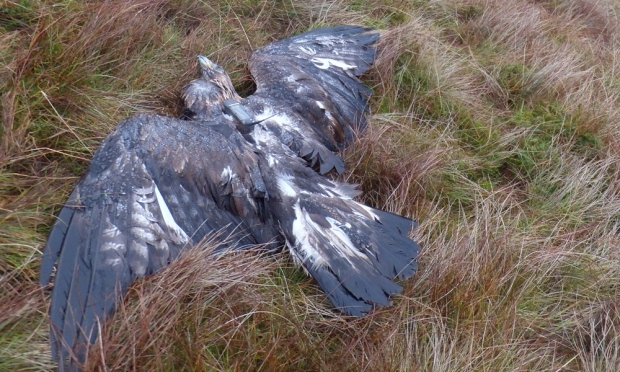
posioned GE Lethnot 2013

Gamekeeper convicted of setting an illegal pole trap

Here’s another example of how our fine ‘custodians of the countryside’ are the “most effective conservationists working in the British countryside today“.

On 9 December 2013 at Herefordshire Magistrates Court, 39-year old gamekeeper Wayne Priday was convicted of setting an illegal pole trap close to his pheasant release pen near Elton, close to Ludlow, in August this year.

He was fined £375 and ordered to pay £170 costs. Gosh, a £545 fine – that’ll learn ‘im.

Priday was caught thanks to covert video footage filmed by the RSPB Investigations Team. (Remember, this is in England where covert video evidence is readily accepted by the courts, unlike here in Scotland).

RSPB investigators visited Priday’s pheasant pen on 7th August 2013 and found a pole trap set in position on top of a post. The trap had been camouflaged with moss. Investigators disabled the trap and set a covert camera in place to identify the trap user.

The following day, along came Priday who was filmed examining the trap and clearly looking puzzled that it had been sprung without catching anything (see the covert video footage here – it’s hilarious). He unfastened the trap, put it in his vehicle and drove away.

Priday was later interviewed by West Mercia Police and he admitted setting the trap, although he claimed it was for squirrels.

Well done to the RSPB Investigations Team and also to West Mercia Police for a successful conviction.

We wonder whether Priday is a member of the National Gamekeepers Organisation? And if so, whether they will be expelling him from their club or whether they think Priday’s crime is not a ‘wildlife crime’ (e.g. as they did here). Shall we ask them? Emails to: info@nationalgamekeepers.org.uk

Pole traps have been illegal in the UK since 1904. Essentially they consist of a spring trap which is attached to a post, often by a chain. Posts are often used by birds of prey to perch on to give them a good vantage point. When the raptor lands on the set pole trap, one or both of its legs gets caught in the jaws of the trap. When the bird attempts to fly away it is prevented from doing so because the trap is attached to the post. This causes the bird to dangle upside down where it will inevitably die a prolonged and horrific death. It is probably one of the most barbaric traps around, hence it being banned for over 100 years.

Here is a photograph of a buzzard (still alive) caught in another pole trap. It did not survive its injuries.

Poisoned buzzard found dead in Stirlingshire

Here we go again…

A dead buzzard found in Stirlingshire in September had been illegally poisoned, according to Police Scotland. Three months on, they are now appealing for information.

The buzzard was found by a member of the public in the Sheriffmuir area, north of Bridge of Allan. The name of the poison used has not been revealed.

Adding this incident to the already swollen tally of illegally-killed birds found in 2013, it is abundantly clear that illegal poisoning is most definitely not decreasing, despite what the game-shooting industry would have you believe. We have calculated a 66% increase in poisoning crimes this year, and there are still a couple of weeks to go.

You might want to email the Environment Minister, Paul Wheelhouse, and ask him (a) why the police appeal for information is three months late, and (b) what else he proposes to do about this disgraceful situation seeing as  illegal raptor poisoning in Scotland is back on the increase and current government measures to stop it are clearly not working.

Emails to: ministerforenvironment@scotland.gsi.gov.uk

News article here

Gamekeeping orgs’ half-witted attempts to blur the truth

Birdcrime 2012Earlier this month the RSPB published two reports: one detailing raptor persecution crimes in Scotland during 2012 (see here) and one detailing raptor persecution crimes throughout the UK in 2012 (see here).

You’d think that the RSPB’s so-called ‘partners’ in the Partnership for Action Against Wildlife Crime (PAW) would welcome the reports, highlighting as they do the continued criminal persecution of birds of prey. That’s what PAW partners are all about, right? Raising public awareness and finding ways of cracking down on wildlife crime?

Apparently not.

Here is the response of the National Gamekeepers’ Organisation to the RSPB’s UK-wide report. In case they decide to remove it from their website, we’ve reproduced it here:

NGO Comments on the RSPB 2013 Birdcrime Report

Saturday 14th Dec 2013

The National Gamekeepers’ Organisation has issued the following comment on publication of the latest edition of the RSPB Birdcrime Report.

A spokesman for the National Gamekeepers’ Organisation said: “The NGO stands for keepering within the law and automatically condemns illegal activity. That is why the NGO is proud to be a member of PAW – the Partnership for Action Against Wildlife Crime. Furthermore, science has proven gamekeepers to be some of the most effective conservationists working in the British countryside today.

Intriguingly the RSPB’s shrill comments on persecution appear to lack the context that is essential for the public to form its own considered opinion. What the RSPB fails to mention in its news release is that the UK’s bird of prey population, taken as a whole, is thriving, with almost all species at record high levels. 

This seems a curious oversight for a charity required by law to educate the public in a balanced manner. This very important omission is intriguing, given the RSPB’s usually conscientious approach to its work. I believe it is fair to ask whether it’s perhaps to encourage charitable donations to the RSPB in the run-up to Christmas, a time of year when people are quick to put their hands in their wallets?

To view the RSPB 2013 Birdcrime Report News Release visit http://www.rspb.org.uk/media/releases/359085-sixty-years-of-protection-but-the-killing-continues

Good god, where do we start? With the bit about gamekeepers being ‘some of the most effective conservationists working in the British countryside today’?!! Or the bit about how we, the general public, are unable to form our own ‘considered opinion’ because the report apparently ‘lacks context’?!!

How about the statement: “What the RSPB fails to mention in its news release is that the UK’s bird of prey population, taken as a whole, is thriving, with almost all species at record high levels“.

The reason the RSPB ‘failed to mention’ this is probably because it’s a big fat massive distortion of the truth! ‘Almost all species at record high levels‘? That would be ‘almost all species’ apart from golden eagle, white-tailed eagle, hen harrier, red kite, goshawk, peregrine; all of which are being held at unnaturally low population levels thanks to illegal persecution, according to countless scientific studies.

And what on earth does ‘taking the UK’s bird of prey population as a whole‘ mean? Where’s the scientific validity of that? It’s absolutely meaningless pseudo-scientific rubbish! It’s like saying there’s no need to be concerned about the near-extinction of rhinos or elephants in Africa because big mammals ‘as a whole’ are doing ok.

sam4Not to be outdone in the idiot stakes, the NGO’s Scottish colleagues at the Scottish Gamekeepers’ Association have published their own statement in response to the RSPB’s Scotland Persecution report.  We’ve reproduced it here:

SGA STATEMENT: RSPB BIRD OF PREY REPORT

Following the release of an unofficial report by the RSPB today on the Illegal Killing of Birds of Prey in 2012, the SGA issued the following response. An SGA Spokesman said: “The RSPB has clearly spent a lot of money in writing this report, which entitles them to put forward their own viewpoint. “With this agenda in mind, it is important, that the public refer to the actual crimes, as published annually by the Scottish Government with information provided officially by the Police and SASA, rather than speculative possible or suspected cases, which are clearly going to confuse the public. “All PAW partners, including ourselves, are fully behind the printing of the official statistics annually, based on actual legal cases, and see no reason why this should change. “While we have been encouraged by the progress made, with the official statistics stating a record of only 3 confirmed cases of illegal poisoning of birds of prey in 2012, reports such as this do little other than damage to on-going partnership efforts designed to reduce crimes against birds of prey. “As stated consistently, the SGA continues to advocate legal means to solving countryside conflicts. Because of this, the clarity and impartiality provided by law is important to us.”

Again, not what you might expect from a PAW ‘partner’. According to the SGA, the public are ‘clearly going to be confused’ by the report’s contents. Really? Is anybody ‘confused’? We’re not – the report presents the facts in the most clear way possible – the illegal persecution of raptors continues to take place on game-shooting estates up and down the country. Our raptors are still being poisoned, trapped, shot, and bludgeoned to death on sporting estates and the majority of the criminals are still avoiding prosecution: we call them The Untouchables.

It’s also interesting to see the SGA continue to peddle the myth that poisoning is in decline. According to our 2013 figures, poisoning in Scotland has actually increased by 66% in this, the Year of Natural Scotland, and that’s not including the discovery of poisoned baits…if we included every single poisoned bait found this year (as each one had the potential to kill at least one raptor had the baits not been discovered and removed), then the figure would jump to a phenomenal 1,333% increase in poisoning!!!

The SGA claims that the RSPB’s report does ‘little other than damage the on-going partnership efforts designed to reduce crimes against birds of prey’. We would argue that the SGA’s continued involvement in the PAW Scotland raptor group, and the NGO’s continued involvement in the English PAW group, does little other than taint the credibility of the PAW concept. In fact it doesn’t just taint it – it soaks it in implausibility. The sooner the other PAW partners realise this and vote these gamekeeping organisations off the panel, the better. PAW is not going to achieve anything as long as some of the ‘partners’ continue to deny and distort the facts. Oh, and harbour convicted wildlife criminals.

Case against gamekeeper George Mutch: part 5

Criminal proceedings against Scottish gamekeeper George Mutch of Kildrummy Estate, Aberdeenshire, continued yesterday at Aberdeen Sheriff Court.

This was the 5th hearing for offences alleged to have taken place in August 2012.

Mutch was facing six charges of alleged wildlife crime. Yesterday he pled not guilty to all six. The court accepted his not guilty plea for two charges (under Section 1 subsection 2A of the Wildlife & Countryside Act: relating to the possession of dead birds) but four other charges remain.

The remaining four charges come under Section 5 subsection 1B of the WCA (relating to the use of a trap for the purpose of taking or killing wild birds) and Section 1 subsection 1A of the WCA (relating to the killing, injuring or taking of wild birds).

An intermediate diet will take place on 17th March 2014, and a provisional trial date has been set for 28th May 2014.

Previous blogs about this case here, here, here and here.

Norfolk gamekeeper faces series of raptor persecution charges

A Norfolk gamekeeper is facing seven charges of alleged wildlife crime.

Allen Lambert, 64, of Stody, near Melton Constable, has been charged with killing 16 wild birds (14 buzzards, 1 sparrowhawk and 1 tawny owl), possession of nine birds (buzzards), failure to comply with a firearms certificate, and four counts of possession and storage of banned poisons (Aldicarb and Mevinphos).

The alleged offences took place between January and April 2013.

Lambert is currently on bail and will appear before King’s Lynn Magistrates court on Thursday (19th Dec).

News articles here and here

Morvich Estate gamekeepers’ trial delayed again!

The trial of three gamekeepers from the Morvich Estate, Sutherland, has once again been postponed. This is the 8th adjournment since the case was first brought in November 2012.

The three defendants, Mathew Johnston (21), Jamie Neal (37), and William Docharty (58) are charged with a string of wildlife crimes alleged to have taken place on Morvich Estate on 16 February 2012.

Their trial was due to start on Monday (16th December 2013) but has now been put back until 7th April 2014 – more than two years after the alleged offences occurred.

Thanks to the contributor who sent in a copy of the following article from yesterday’s Press & Journal:

Estate trio on wildlife charges.

Three north estate workers face trial next year accused of committing a string of wildlife offences on a sporting estate in Sutherland.

Mathew Johnston, 21, Jamie Neal, 37, and William Docharty, 58, were not present at Tain Sheriff Court yesterday when their case called.

All three pleaded not guilty through solicitors. The case had been due to go to trial next week but was postponed to next year at the request of the court. The trial is now due to start on April 7 [2014].

All the charges are alleged to have taken place on Morvich Estate, Sutherland, on February 16 last year [2012].

Johnston, of Morvich House, Morvich Estate, Rogart, faces four charges. These include that he set six snares on a fence which would have caused an animal unnecessary suffering as any creature caught would likely have become suspended from the contraption.

Neal, of The Bothy, Morvich Estates, faces the same charge involving seven snares.

Docharty, of 10, Elizabeth Court, Dornoch, faces a similar charge involving two snares set on a log over water which would likely cause any animal trapped to be suspended from the log and drown.

Johnston is further alleged to have been in possession of a dead barnacle goose and to have failed to dispose of three sheep carcases in an appropriate manner.

Neal faces four further charges including two alleging that he failed to provide a suitable environment for nine crows by not providing food and water, a perch and adequate shelter.

For previous blogs about this case please see here.

North Yorks still worst place for raptor persecution in 2012

The RSPB has published its 2012 Birdcrime report documenting bird persecution throughout the UK.

North Yorkshire has once again come top of the league for the number of reported crimes against birds of prey (34), with Aberdeenshire a close second with 31 reported incidents. Both counties, of course, include large areas of land used for driven grouse shooting.

The 2012 report includes statistics that are all too familiar: confirmed shootings of short-eared owls, sparrowhawks, buzzards, barn owls, tawny owls, hen harriers, golden eagles, marsh harriers, and peregrines; confirmed nest destruction of peregrines, goshawks and barn owls; confirmed illegal spring-trapping of buzzards, golden eagle and peregrine; other types of illegal trapping (including crow cage traps) of sparrowhawks, tawny owls, buzzards and goshawks; and the confirmed illegal poisoning of ravens, red kites, buzzards, golden eagles, marsh harriers, peregrines, cats and dogs.

Remember, these are just the confirmed incidents. Plenty more ‘probable’ and ‘unconfirmed’ cases, and of course there are all the incidents that went undiscovered/unreported.

Does that sound to you like the game-shooting industry is cleaning up its act?

Well done to the RSPB for their meticulous work and especially for their willingness to share these data with the general public.

RSPB press release here

Download the RSPB’s 2012 Birdcrime report here

The photograph shows the shot hen harrier Bowland Betty, found on a North Yorkshire grouse moor in 2012. Nobody has been brought to justice for her death.

Derbyshire Constabulary continues to impress

Derbyshire Constabulary logoUnder the leadership of new Police and Crime Commissioner Alan Charles, wildlife crime enforcement continues to be at the top of the agenda for Derbyshire Constabulary.
We’ve blogged about Mr Charles’s impressive enforcement initiatives before (see here and here). He’s the man who put tackling wildlife crime in his election manifesto when he was running for the new post of Commissioner.

His latest move includes the provision for 20 police officers (yes, 20!) to receive specialist wildlife crime training to help them carry out their duties, supported by Special Constables. There has also been a call for members of the public to help by reporting suspicious activities.

Watch the news video here.

SNH still licensing mountain hare culls

Last month a leading upland ecologist claimed that Scottish landowners were causing ‘massive declines’ of mountain hares on grouse moors around Deeside, Aberdeenshire and blamed SNH for failing in its statutory duty to protect this species (see here).

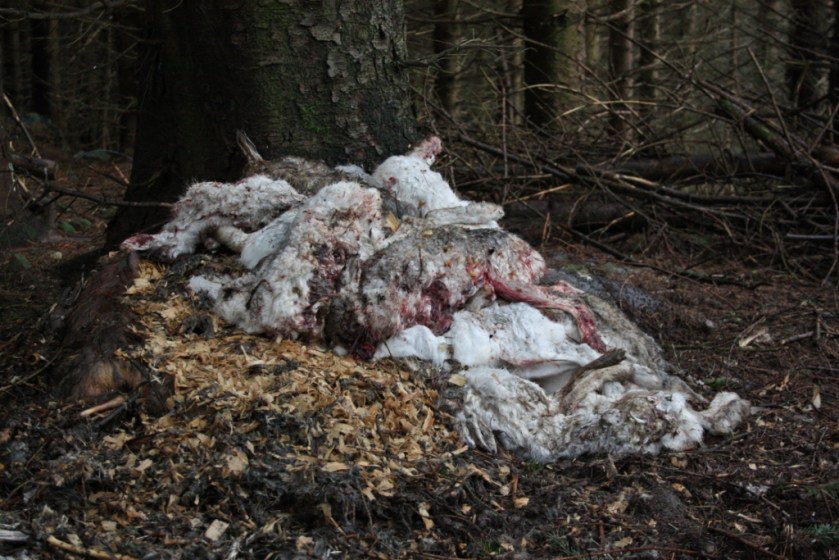
We followed up that article with some gruesome photographs showing piles of culled mountain hares left to rot on another grouse moor, this time in the Angus Glens (see here). Unregulated mountain hare culling, it seemed, was widespread.

We encouraged blog readers to contact SNH to ask them about what we thought was their long-term failure to implement an effective monitoring scheme to protect mountain hare populations. SNH responded with their usual let’s-buy-ourselves-some-time line that ‘further research was forthcoming’.

Around the same time, MSP Alison Johnstone lodged a series of parliamentary questions about mountain hare culling and how it affected mountain hare populations (see here).

Environment Minister Paul Wheelhouse has now responded to those questions (his answers presumably provided by SNH, the licensing authority). The bottom line is, SNH is still issuing licenses to allow the killing of mountain hares in the closed season, even though they admit that they are still unable to assess mountain hare abundance and therefore cannot possibly know what sort of impact, if any, these culls are having on the conservation status of the species. Quite remarkable. Where’s the precautionary principle?

Here are the parliamentary questions and answers:

Question S4W-18470: Alison Johnstone, Lothian, Scottish Green Party, Date Lodged: 19/11/2013

To ask the Scottish Government what information it holds (a) on the health of mountain hare populations and (b) that is relevant to assessing whether mountain hare are in a favourable conservation status.

Answered by Paul Wheelhouse (04/12/2013):

The National Gamebag Census data for mountain hare compiled by the Game and Wildlife Conservation Trust shows no significant trend in the data between 1961 and 2009, despite marked cyclical fluctuations which are known to exist in around half of mountain hare populations.

A questionnaire survey commissioned by Scottish Natural Heritage (SNH) in 2006-07 (SNH Commissioned Report 278) concluded that there was no evidence of an overall change in the distribution of mountain hares when compared to a similar study in mid 1990s. However, there may have been localised declines and possibly extinctions, undetectable at the 10km scale at which the data were collected and analysed.

The findings of this report provide SNH with an impression of the overall range of the species and some information on the numbers controlled, but SNH need more detailed information on hare abundance before it can be in a position to make a reliable assessment of the impact that culling is having on the population as a whole. To this end, SNH commissioned a study in 2008 into developing improved monitoring methods (Commissioned Report 444), but unfortunately, due to two severe winters hampering the fieldwork, the results did not provide SNH with the statistical relationship needed to progress this work. SNH therefore propose to develop a further programme of research, with the intention to commencing further fieldwork later in 2014. The exact detail of this work programme is still to be agreed.

Question S4W-18471: Alison Johnstone, Lothian, Scottish Green Party, Date Lodged: 19/11/2013

To ask the Scottish Government what conservation action is planned to protect mountain hare populations.

Answered by Paul Wheelhouse (04/12/2013):

In order to properly inform licence applications and to have a better understanding of the effects of culling on hare populations, a cost-effective and easily-applied method of reliably estimating hare numbers is required. This is the immediate priority and, once developed, will enable better monitoring schemes to be developed, and provision of information on population status will be improved also. Such data would then be used to inform future management decisions concerning the species, as necessary.

Question S4W-18472: Alison Johnstone, Lothian, Scottish Green Party, Date Lodged: 19/11/2013

To ask the Scottish Government what information it holds on the number of mountain hare that are culled annually and the impact of this on golden eagles (a) dispersing from, (b) likely to be recruited to or (c) nesting in natura sites for which golden eagles are a designated interest.

Answered by Paul Wheelhouse (03/12/2013):

The Scottish Natural Heritage (SNH) Commissioned Report 278 indicated that a total of 24,529 mountain hares were harvested in 2006-07 across 90 sporting estates (of these, 11,906 were reported to have been taken by 26 estates). This represents 7% of the 1995 published Scottish population estimate of 350,000 and is subject to a 50% margin of error.

SNH Commissioned Report 278 on the distribution of Mountain Hare in Scotland shows hares present in all or part of the Special Protection Areas (SPAs) designated for golden eagles.

The Report also indicates that the vast majority of hare control occurs in the central and eastern Highlands. In these areas, Report 278 suggests that there is a mixed picture of hare distributional change between 1995-96 and 2006-07 with no clear pattern of decline. The 2006-07 data are the most recent SNH holds.

(a) Golden eagles take several years to reach breeding age and juvenile birds disperse from their parent’s breeding territory and range over the Highlands and islands to varying degrees i.e. the young birds are not tied to the SPAs.

As breeding adult birds are territorial, these young birds mainly use areas of suitable habitat that does not form part of a territorial range. Some of the areas these birds will be using will be areas where hare control is being carried out. SNH Report 278 indicates that more hares are controlled from September to February, although levels of hares removed for tick control are fairly similar across the year.

(b) Young golden eagles often return and try to settle close to where they were born although some settle elsewhere. The SPAs therefore are reliant on the wider golden eagle population to support recruitment. Only a proportion of the young eagles survive to reach breeding age and it is unknown what, if any, effect the reductions in hare numbers will have on recruitment.

(c) Live prey is of key importance for chick development and successful breeding. As with (a) and (b) there is a potential impact through reducing available prey and/or requiring the birds to prey more on grouse.

Question S4W-18473: Alison Johnstone, Lothian, Scottish Green Party, Date Lodged: 19/11/2013

To ask the Scottish Government what information it holds on a link between the culling of mountain hare and the incidence of (a) louping ill or (b) other diseases transmitted by sheep ticks or other hare parasites to red grouse.

Answered by Paul Wheelhouse (03/12/2013):

The scientific evidence on this subject has been reviewed in a 2009 paper in the Journal of Applied Ecology “Culling wildlife hosts to control disease: mountain hares, red grouse and louping ill virus” by A Harrison et al.- see http://onlinelibrary.wiley.com/doi/10.1111/j.1365-2664.2010.01834.x/abstract.

The authors conclude that there is no compelling evidence base to suggest culling mountain hares might increase red grouse densities.

Question S4W-18474: Alison Johnstone, Lothian, Scottish Green Party, Date Lodged: 19/11/2013

To ask the Scottish Government how it controls the culling of mountain hare.

Answered by Paul Wheelhouse (04/12/2013):

Mountain hare are protected by a close season during which no culling can be carried out by any method except under licence granted by Scottish Natural Heritage (SNH). Mountain hare are also covered by Regulation 41 of The Conservation (Natural Habitats, &c.) Regulations 1994 which prohibits the use of certain methods of taking or killing wild animals, including the use of traps which are non-selective according to their principle or their condition of use. The use of such traps can be licensed by SNH. The use of such traps is not permissible under the terms of a general licence but can be licenced by SNH.

Question S4W-18475: Alison Johnstone, Lothian, Scottish Green Party, Date Lodged: 19/11/2013

To ask the Scottish Government how many applications it has (a) received and (b) granted for the culling of mountain hare since 2011, broken down by (i) year, (ii) purpose and (iii) area.

Answered by Paul Wheelhouse (03/12/2013):

Licences are required to control mountain hares at any time using certain otherwise prohibited means, or to kill them by any method during the “closed season”. Scottish Natural Heritage (SNH) is the licensing authority.

SNH received one application for the control of mountain hare by snaring in 2011. SNH granted that licence in 2012 and it has been amended twice. The licence was granted for the purpose of preventing serious damage to woodland.

SNH received five applications for the control of mountain hare in 2012. Two of these applications were refused. All of the remaining three were to shoot hares out-of-season and for preventing serious damage to woodland. One was in Highland, one in Moray and one in Aberdeenshire.

SNH received three applications for the control of mountain hare in 2013. Two of these were applications to renew licences issued in 2012 (one in Moray and one in Aberdeenshire). The remaining application was for another site in Moray, and again was for the purpose of preventing serious damage to woodland. Licences were granted for all three, and all three relating to shooting hares out-of-season.

MH1