Too embarrassing for words

Following this morning’s news that satellite-tagged hen harrier Brian has ‘disappeared’ in the Cairngorms National Park just a few weeks after fledging (see here), we’ve been waiting to see what the Environment Secretary and the Cairngorms National Park Authority had to say about it, and more importantly, what they intended to do about it.

This won’t take long……they’ve said absolutely nothing at all.

All as silent as Brian’s satellite tag.

Nothing on the CNPA news website, nothing on their twitter feed, nothing on the PAW Scotland website, and nothing on the Environment Secretary’s twitter feed.

Sorry Brian, you’re just too embarrassing for words.

brian-july16_jennyweston

UPDATE 29 September 2016: Official response from Environment Secretary and CEO of Cairngorms National Park Authority (here)

Satellite-tagged hen harrier ‘disappears’ in Cairngorms National Park

Another of this year’s hen harrier chicks has ‘disappeared’ just a few weeks after fledging, this time in the Cairngorms National Park.

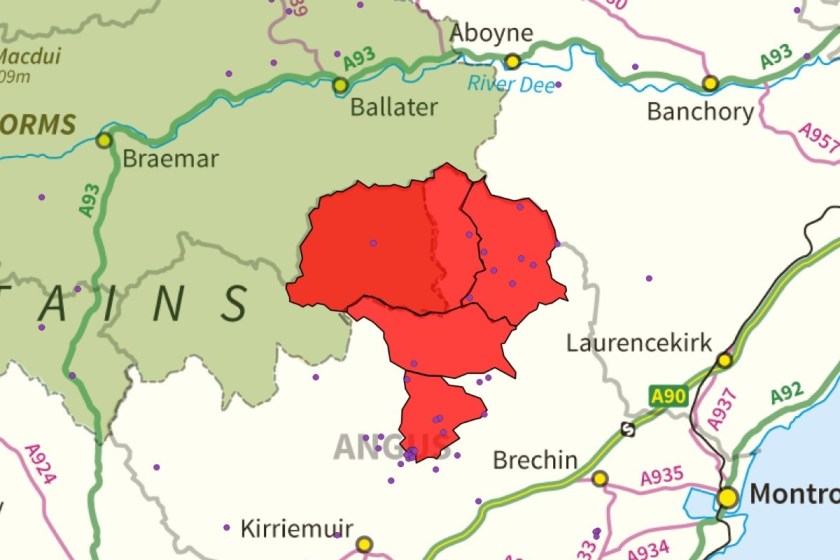
This one was called Brian, after raptor worker Brian Etheridge, and he had hatched in a nest in Perthshire, within the National Park. After fledging, he stayed within the Park boundary until his signal, ‘suddenly and without warning‘, stopped abruptly on 22 August 2016 a few miles from Kingussie. Searches for his body and tag proved fruitless. The details of Brian’s short life can be read here on the RSPB Skydancer blog.

kingussie

brian-july16_jennyweston

This is a photo of Brian taken at the nest in July with his newly-fitted satellite tag (photo by Jenny Weston).

Brian is the second of this year’s cohort to suddenly ‘disappear’ – in early August, hen harrier Elwood also vanished, in the grouse moor ridden Monadhliath mountains just to the NW of the Park (see here).

The area around Kingussie is also ridden with driven grouse moors. In fact, it wasn’t far from here where hen harrier Lad’s corpse was found in September 2015, suspected shot (see here).

So what now? A few weeks ago, following the ‘disappearance’ of eight satellite-tagged golden eagles, as well as hen harrier Elwood, in the Monadhliaths, Environment Secretary Roseanna Cunningham announced a review of the sat tag data of three raptor species – golden eagle, hen harrier, red kite – to ‘look for patterns of suspicious activity‘ (see here). That review is very welcome but the team working on the analysis is not expected to report until March 2017 at the earliest. That’s six months away. And then there’ll be further delays as the Government digests the review’s findings and thinks about how to respond, or not.

And to be frank, we don’t need to wait for the review to detect ‘patterns of suspicious activity’ – the pattern of illegal persecution has been known for years. The cause of these raptor disappearances is not unreliable sat tags (94% reliability in a recent study of Montagu’s harriers – see here), nor is it non-existent wind farms (see here), nor is it ‘bird activists’ killing the birds to smear the grouse shooting industry (see here).

We’ve said this before and we’ll say it again. Endless peer-reviewed scientific papers and government reports on golden eagles, hen harriers, red kites and peregrines have unequivocally linked the illegal killing of these raptors with intensively-managed driven grouse moors. Why pretend nobody knows what’s going on?

The ‘disappearance’ of Brian is bad enough, but for this ‘disappearance’ to take place in the Cairngorms National Park just adds to the ever-increasing catalogue of shame that the Park Authority needs to address. Cue expressions of ‘disappointment’ and more stalling tactics (futile partnership-working and discussions) from the CNPA.

Here’s that catalogue of shame, in full:

2003

Apr: 3 x poisoned buzzards (Carbofuran) + 2 grey partridge baits. Kingussie, CNP

Jun: Attempted shooting of a hen harrier. Crannoch, CNP

2004

May: 1 x poisoned buzzard (Carbofuran). Cuaich, CNP

Nov: 1 x poisoned red kite (Carbofuran). Cromdale, CNP

Dec: 1 x poisoned buzzard (Carbofuran). Cromdale, CNP

2005

Feb: 1 x poisoned buzzard (Carbofuran). Cromdale, CNP

Feb: 1 x poisoned buzzard (Carbofuran). Cromdale, CNP

Mar: 3 x poisoned buzzards, 1 x poisoned raven (Carbofuran). Crathie, CNP

2006

Jan: 1 x poisoned raven (Carbofuran). Dulnain Bridge, CNP

May: 1 x poisoned raven (Mevinphos). Grantown-on-Spey, CNP

May: 1 x poisoned golden eagle (Carbofuran). Morven [corbett], CNP

May: 1 x poisoned raven + 1 x poisoned common gull (Aldicarb) + egg bait. Glenbuchat, CNP

May: egg bait (Aldicarb). Glenbuchat, CNP

Jun: 1 x poisoned golden eagle (Carbofuran). Glenfeshie, CNP

2007

Jan: 1 x poisoned red kite (Carbofuran). Glenshee, CNP

Apr: Illegally set spring trap. Grantown-on-Spey, CNP

May: Pole trap. Grantown-on-Spey, CNP

May: 1 x poisoned red kite (Carbofuran). Tomintoul, CNP

May: Illegally set spring trap. Grantown-on-Spey, CNP

Jun: 1 x poisoned buzzard (Carbofuran) + rabbit & hare baits. Grantown-on-Spey, CNP

Jun: 1 x poisoned buzzard (Carbofuran) + rabbit bait. Grantown-on-Spey, CNP

Jul: 1 x poisoned raven (Carbofuran). Ballater, CNP

Sep: 1 x shot buzzard. Newtonmore, CNP

Sep: 1 x shot buzzard. Grantown-on-Spey, CNP

Dec: 1 x poisoned buzzard (Alphachloralose). Grantown-on-Spey, CNP

Dec: 1 x poisoned buzzard (Carbofuran) + rabbit bait. Grantown-on-Spey, CNP

2008

Jan: 1 x poisoned buzzard (Alphachloralose). Nr Grantown-on-Spey, CNP

Mar: 1 x poisoned buzzard (Carbofuran). Nr Grantown-on-Spey, CNP

Dec: 1 x poisoned buzzard (Alphachloralose). Nr Grantown-on-Spey, CNP

2009

May: 2 x poisoned ravens (Mevinphos). Delnabo, CNP

Jun: rabbit bait (Mevinphos). nr Tomintoul, CNP

Jun: 1 x shot buzzard. Nr Strathdon, CNP

Jun: 1 x illegal crow trap. Nr Tomintoul, CNP

2010

Apr: Pole trap. Nr Dalwhinnie, CNP

Jun: 1 x pole-trapped goshawk. Nr Dalwhinnie, CNP

Jun: Illegally set spring trap on tree stump. Nr Dalwhinnie, CNP

Sep: 2 x poisoned buzzards (Carbofuran) + rabbit bait. Glenlochy, CNP

Oct: 2 x poisoned buzzards (Carbofuran) + rabbit bait. Nr Boat of Garten, CNP

2011

Jan: 1 x shot buzzard. Nr Bridge of Brown, CNP

Mar: 1 x poisoned golden eagle (Carbofuran). Glenbuchat, CNP

Apr: 1 x poisoned buzzard (Carbofuran & Aldicarb). Nr Bridge of Brown, CNP

May:  1 x poisoned buzzard (Carbofuran) + rabbit bait. Glenbuchat, CNP

May: 1 x shot short-eared owl, found stuffed under rock. Glenbuchat, CNP

Jun: 1 x shot peregrine. Pass of Ballater, CNP

Aug: grouse bait (Aldicarb). Glenlochy, CNP

Sep: Satellite-tagged golden eagle ‘disappears’. Nr Strathdon, CNP

Nov: Satellite-tagged golden eagle ‘disappears’. Nr Strathdon, CNP

2012

Apr: 1 x shot short-eared owl. Nr Grantown-on-Spey, CNP

Apr: Peregrine nest site burnt out. Glenshee, CNP

May: Buzzard nest shot out. Nr Ballater, CNP

2013

Jan: White-tailed eagle nest tree felled. Invermark, CNP

May: 1 x shot hen harrier. Glen Gairn, CNP

May: Satellite-tagged golden eagle ‘disappears’. Glenbuchat, CNP

2014

Apr: Satellite-tagged white-tailed eagle ‘disappears’. Glenbuchat, CNP

May: Armed masked men shoot out a goshawk nest. Glen Nochty, CNP

2015

Sep: Satellite-tagged hen harrier ‘Lad’ found dead, suspected shot. Newtonmore, CNP.

2016

May: 1 x shot goshawk. Strathdon, CNP

Jun: Illegally set spring traps. Invercauld, CNP

Aug: Satellite-tagged hen harrier ‘Brian’ ‘disappears’, near Kingussie, CNP

In addition to the above list, two recent scientific publications have documented the long-term decline of breeding peregrines on grouse moors in the eastern side of the National Park (see here) and the catastrophic decline of breeding hen harriers, also on grouse moors in the eastern side of the Park (see here).

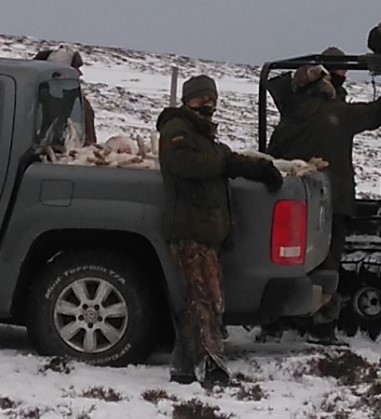
And let’s not forget the on-going massacre of mountain hares, taking place annually within the boundary of the National Park (e.g. see here, here).

Let’s see how the Environment Secretary and the Cairngorms National Park Authority respond this time. We’ll add links to any statements if/when they appear throughout the day.

UPDATE 18.40 hrs: Too embarrassing for words (here)

UPDATE 29 September 2016: Official responses from Environment Secretary and Cairngorms National Park Authority (here)

BBC Trust ruling: Chris Packham did not breach guidelines

A year ago, Tim Bonner, Chief Exec of the Countryside Alliance complained to the BBC (see here) about Chris Packham describing various ‘countryside’ organisations as “the nasty brigade” and accused him of other alleged breaches of the BBC’s editorial code.

Earlier this summer, just as the campaign to ban driven grouse shooting was gaining serious momentum, poor Timmy was furious to learn that the BBC Trust would not publish its decision until September. The Countryside Alliance clearly hoped that Chris’s participation in the highly successful ban driven grouse shooting campaign could be curtailed (see here) so they stamped their feet and pressed the BBC Trust to publish its decision without delay.

The BBC Trust gave the Countryside Alliance a metaphorical middle finger and stood firm. Today, the Trust has published its decision: Chris Packham did not breach any BBC guidelines – read the Trust’s full findings here: bbc-trust-ruling-on-chris-packham

v happy Copy

Meanwhile, as the appropriately named nasty brigade have been baying (braying?) for his blood, Chris has remained focused on more important issues. He’s just launched a new e-petition calling for a moratorium on shooting woodcock, snipe and golden plover until the cause of their population declines have been determined by independent scientific assessment – you can sign his petition here.

Oh, and one last thing. A few months ago, Chris was asked to choose a name for one of this year’s satellite tagged hen harriers as part of the Lush Skydancer Bathbomb campaign. Anyone recall the name he chose? Watch the video here and listen carefully! [Cue outraged complaint to the BBC….]

Don’t worry Countryside Alliance, next year, assuming there are some hen harrier chicks around to satellite tag, one can be called Olive and another Ridley, in honour of those marine turtles you know so much about.

Satellite tag reliability: compelling evidence from Montagu’s Harrier study

Satellite-tagged hen harriers regularly ‘disappear’ in the UK uplands, mostly in areas managed as driven grouse moors. Indeed, according to data from Natural England, of 47 hen harriers that were satellite-tagged between 2007-2014, a staggering 78.7% were listed as ‘missing’ (see here). That means a significant and suspiciously high proportion (37 tagged hen harriers) vanished without trace.

And of course it’s not just hen harriers. Last month we learned that eight satellite-tagged golden eagles had ‘disappeared’ on grouse moors in the Monadhliath mountains (see here).

Various unsubstantiated ‘explanations’ for these ‘disappearances’ are routinely trotted out by the persecution apologists, including claims that ‘bird activists’ are killing the birds to smear the grouse shooting industry (here) or that the birds have been killed at windfarms and their bodies removed to avert bad publicity….quite plausible until we discovered that the majority of the windfarms blamed for the disappearance of eight golden eagles hadn’t actually been built (see here).

And then we get the old familiar excuse that it must have been a technical failure with the satellite tag. Again, quite plausible if it happened every so often, but not if it’s happening with the frequency with which the grouse-shooting industry claims. Last month, the credibility of this excuse was blown apart when the Scottish Countryside Alliance published the following statement in response to the news about the eight ‘missing’ sat tagged golden eagles:

“Contrary to claims that transmitters are reliable, research papers published in 2013 studied three decades of wildlife radio telemetry and concluded that failure rates could be as high as 49%“.

It turned out that the SCA was disingenuously using data from satellite-tagged Olive Ridley turtles in India where problems with a saltwater switch on the tag is a known and on-going issue and so the SCA’s claim of a 49% failure rate was actually based on a totally irrelevant study and as such was highly misleading (see here). You can make up your own minds about whether this was a case of the SCA’s inability to interpret simple scientific data or whether it was deliberate propaganda pushed out to divert attention from illegal killing in the hope that nobody would check the details.

Wouldn’t it be great if, instead of relying on misrepresentative data from marine turtles in the Indian Ocean, there was a relatively comparative study of satellite tag reliability on, say, a harrier species in western Europe.

Oh, hang on, there is!

Have a look at this blog that has just been published on the RSPB’s website. It’s written by Dr Raymond Klaassen of the Dutch Montagu’s Harrier Foundation. Raymond and his colleagues have been satellite-tagging Montagu’s harriers (67 of them since 2006), using the same make and model as the sat tags being fitted to hen harriers in the UK.

raymond-klaassen-monty-by-mark-thomas

So what does Raymond say about satellite tag reliability in his study? Amongst other things, he says this:

Technical failures generally are rare. We have recorded a few throughout the years (6% of all cases), however failures have always been preceded by irregular transmission periods and, most importantly, a drop in battery voltage (another parameter monitored by the transmitter). This makes it relatively straightforward to distinguish between a likely mortality event and a likely transmitter failure“.

Wow. A six per cent technical failure rate over a ten year period. It turns out that these harrier satellite tags are actually highly reliable. Who knew? Compare that six per cent failure rate with the 78.7% rate of ‘disappearing’ hen harriers over a seven year period, supposedly the victims of satellite tag ‘technical failures’.

We trust this compelling evidence of satellite tag reliability will be included in the Scottish Government’s review of satellite tag data from three raptor species that routinely ‘disappear’ on grouse moors across Scotland (see here).

Photo of Raymond with a satellite-tagged Montagu’s harrier by Mark Thomas.

An open letter to Philip Merricks

rod-copy

There’s not much else to say, is there?

This letter was written before Philip’s incoherent presentation at the Sheffield raptor conference (here) and before Philip moved his, er, “immovable conditions” for participating in DEFRA’s Hen Harrier brood meddling plan (see here).

The forthcoming Hawk & Owl Trust AGM should be interesting….

Illegal raptor killing is PR disaster for Cairngorms National Park, says Convener

strathspey-badenoch-herald-park-talk-15th-sept-2016Illegal raptor killing is a PR disaster for the Cairngorms National Park, says Peter Argyle, the current Convener of the Cairngorms National Park Authority.

He’s not wrong.

Since the Cairngorms National Park was established in 2003, there have been over 60 recorded incidents of illegal persecution (see here) and these are only the ones that have reported. There are likely to have been many, many more that have gone undiscovered.

Writing in a blog published on the CNPA website (here), and also published in the Strathspey and Badenoch Herald last week (see photo), Peter follows in the footsteps of his predecessor Duncan Bryden, who, two years ago, wrote to the then Environment Minister Paul Wheelhouse about how raptor persecution “threatens to undermine the reputation of the National Park as a high quality wildlife tourism destination” (see here).

Peter’s blog is fairly balanced; he acknowledges that there are some estates within the National Park who are engaged in on-going conservation efforts (Glenfeshie would be a good example) but he also recognises that illegal raptor persecution is undertaken by those seeking to maximise grouse numbers. And therein lies the problem.

Peter says, “Properly managed, grouse moors can deliver massive environmental and public benefits, be it around climate change, biodiversity, habitat creation or in flood management“. But what does “properly managed” actually mean? Presumably not the intensive management regimes currently in use on many grouse moor estates within the Park which most definitely are not delivering ‘massive environmental and public benefits’ – in fact the exact opposite (see here).

Peter also says, “I nail my colours firmly to the mast when I say that I support the continuation of grouse shooting but this support is not unconditional“. He wants to have “a full and frank dialogue over all of the issues so that both public and private interests can be met“. He doesn’t seem to have grasped the fact that years of dialogue have proven futile, resulting in Golden eagles poisoned, golden eagles ‘disappearing’, chronic golden eagle survival rates (here), white-tailed eagles ‘disappearing’, white-tailed eagle nests felled, hen harriers shot, breeding hen harriers in catastrophic decline (here), goshawks shot, goshawk nests being attacked, peregrines shot, peregrine nest sites burnt out, breeding peregrines in long-term decline (here), buzzards poisoned, buzzards shot, red kites poisoned, short-eared owls shot, poisoned baits laid out, illegally-set traps, and mountain hares massacred.

We’ve blogged before about how the Cairngorms National Park Authority can take steps to stop the illegal persecution of raptors within the Park boundary (here) and we’d remind Peter, not that he needs it as Park Convener, of the CNPA’s four aims, set out by Parliament:

  1. To conserve and enhance the natural and cultural heritage of the CNP;
  2. To promote sustainable use of the natural resources of the CNP;
  3. To promote understanding and enjoyment (including enjoyment in the form of recreation) of the special qualities of the CNP by the public;
  4. To promote sustainable economic and social development of the CNP’s communities.

These aims are to be pursued collectively. However, if there is conflict between the first aim and any of the others then greater weight must be given to the first aim (section 9.6 of the National Parks (Scotland) Act).

If you haven’t already, please consider participating in the CNPA’s current consultation process on the Park’s five-year management plan. This plan will help guide the CNPA’s work on the most pressing issues, one of which has been identified as grouse moor management. Let the CNPA know of your concerns about intensive grouse moor management within the Park boundary, about the environmental damage it is causing and how self-regulation has failed, repeatedly, since the Park was first established back in 2003. The consultation closes on 30 Sept and the documents can be accessed here.

The real price of grouse: episode 8

NotsoGlorious-black-bg - Copy

Here’s episode 8 in a series of videos hosted by Chris Packham about the #NotSoGlorious damaging management practices associated with the driven grouse shooting industry. Episode one (an introduction to driven grouse shooting) can be watched here.  Episode 2 (the damaging environmental effects of heather burning) can be watched here. Episode 3 (traps) can be watched here. Episode 4 (parasites, medication and the mass killing of mountain hares) can be watched here. Episode 5 (flooding) can be watched here. Episode 6 (how your taxes are helping to subsidise driven grouse shooting) can be watched here. Episode 7 (Chris Packham interviews raptor monitoring expert Paul Irving about black holes for Hen Harriers in the north of England) can be watched here.

Here’s episode 8, where Chris interviews Mark Avery about why driven grouse shooting should be banned:

Over 122,000 people have joined Chris and signed the e-petition to ban driven grouse shooting. We’ve passed the 100,000 signatures needed to trigger a Westminster debate and we’re currently waiting to hear when that debate will take place. In the meantime, this petition is open until 20th September and the more signatures, the better. Please join us and sign HERE 

Thank you!

Royal grouse shoot in the Cairngorms National Park: a military operation?

The tabloids have been making much of the fact that the Queen was photographed driving Kate Middleton to a picnic on Balmoral Estate last week, joining Prince William who had apparently been grouse shooting (Daily Mail here; Daily Mirror here; Daily Record here).

Whilst the tabloids focused on the important things like patterned scarves and casual sleeveless jackets, our attention was drawn to something else:

At the butts behind imposing Creag Bhiorach, dozens of soldiers were waiting to do the beating and drive the grouse towards the waiting guns“.

Eh? Soldiers working as beaters on a royal grouse shoot in the Cairngorms National Park? Shurely shome mishtake?

Surely a case of mistaken identity? Surely anybody camo-ed up to work as beaters weren’t professional soldiers paid for by our taxes? Surely they were simply local men and women from the rural community, reliant on the oh-so-important beater’s wage (average £55 per day) so ‘vital’ to the local economy? Isn’t that what we’re so frequently told?

But maybe it’s not a mistake. Maybe soldiers are being used to work as beaters on the royal grouse shoot. Have a look at this (here), a report detailing the royal duties of the (now former) 1st Battalion The Argyll and Sutherland Highlanders in 1962:

“(b) Beating.

There were seventeen days of grouse driving on the two moors, Micras and Gairnshiel, which lie side by side to the North of the River Dee. The Balmoral ground was not driven at all, there being too few birds to merit it. On all shooting days one officer and forty ORs turned out as beaters to the Royal shooting party. This duty required a high standard of fitness, alertness and a definite restraint on language: it was not universally a popular duty despite the extra-duty pay (!), but the standard of beating achieved was good enough to please Gillan, the head-keeper, and to provide a total bag for the guns of over 2,200 brace which was considerably higher than anticipated at the beginning of the season”.

Has this been going on since 1962? Great to see our taxes being put to such good public use, and inside a National Park, too.

Illegal raptor killing has to stop, says Angela Smith MP

Here’s another transcript from last week’s Sheffield conference on raptors. This time we feature the deeply personal yet unflinchingly resolute presentation given by Angela Smith MP (Labour, Penistone and Stocksbridge).

Angela is no stranger to the subject of illegal raptor killing on grouse moors. You may remember, way back in 2011, she tabled a Parliamentary question asking whether it was time for England to follow Scotland’s lead and introduce vicarious liability to deal with criminal gamekeepers. The response from Richard Benyon, the then DEFRA minister who also just happened to own a grouse moor, is now legendary (see here).

Here’s what Angela had to say in Sheffield (we’ve excluded some complimentary, but irrelevant here, introductory blurb):

Now I want to start with a comment about my own constituency. Although I’m a Sheffield/Barnsley MP I think that most people in the UK would think that makes me a very urban MP but I’m not. I represent the urban parts of Sheffield and also Barnsley, part of my constituency going right out in to the Peak District so it is actually very rural; 32% of the constituency is in the National Park.

And I’ve walked the hills in my area for many years, in fact going back well well before I became an MP and I love those moors with a passion. Langsett, Midhope and Broomhead, in fact I’ll be out on Langsett on Sunday morning, and it’s partly because I don’t come across, if you don’t mind me saying this, the lycra-clad brigade in large numbers, in that part of the peak. It’s truly a place where one can lose oneself and have a sense of being at one with nature.

But the simple and stark fact is that neither do I see hen harriers on those moors, or even peregrine falcons. I’ve seen just one peregrine falcon in fact in recent years and that was back in the summer of 2013, soaring over Broomhead Reservoir. In fact I think the only known site, I may be wrong on this, for peregrine falcons breeding near Sheffield is the city centre, and that, I think, is indicative of where we are. And it should concentrate our minds more than a little.

Grouse moors aplenty in my constituency, but no hen harriers. No stable populations of other birds of prey. That’s one of the reasons why I feel so passionately about this issue. Not only am I a member of the RSPB, and have been for a long time, but I also know there is something wrong with our moorland habitats. There is something essential missing; healthy populations of our wonderful raptors.

Now, I welcome this conference and hope that it can make a contribution to resolving the deeply embedded conflict that characterises the debate about how best to manage our moorlands. Because one thing I am certain of – for as long as this conflict remains unresolved, the number one loser is the hen harrier, which is in danger of disappearing altogether from our wonderful uplands if we do not sit up and get on with the job of sorting out this problem.

Over the next two days, you will hear a range of presentations from speakers with a wide range of perspectives and who represent different parts of the UK – Scotland, the Peak District and Bowland, for example. The discussions will be detailed and complex, and so they should be. This is not a black and white problem, easily resolved.

Let me just throw in a few, brief comments about what I see as the politics of this debate.

First of all, let’s remember politics is the art of the possible, someone should try telling that to my party, and it is always preferable to act on the basis of consensus and partnership. So, ideally, the best way forward, as far as our moorlands are concerned, would be to see all interested parties agreeing principles and working through differences to establish moorland management plans that balance sporting interests with the need to restore and maintain a healthy habitat, including of course stable and sustainable populations of raptors.

Such plans would vary, of course, because our uplands are themselves wonderfully diverse. The grouse moors in my constituency are part of our precious Peak District blanket bog and are badly degraded, in fact I think it’s amongst the most badly degraded in Europe. That does not mean other parts of our moorland landscape across the UK are the same. Each upland habitat needs its own plan, tailored to its own precious ecology.

But it has to be said that the chances of delivering success with this voluntary approach look increasingly remote. Despite the partnership work still ongoing in places like the Dark Peak, which I know you’re going to hear about later, the events of this summer suggest that relationships between the different parties involved are becoming even more difficult.

The withdrawal of the RSPB in particular from the Hen Harrier Action Plan is indicative and is a consequence of what the charity sees as a failure on the part of the landowners and the shooting interests to combat effectively the illegality that tarnishes the reputation of those who do want to enjoy their sport responsibly.

And for a politician this is very depressing news, for although there are legislative options available to us, the irony is that they become necessary or even more critically necessary at that point when conflict has deepened and become more firmly entrenched.

The first of these legislative options, banning driven grouse shooting, presents an apparently straight forward solution but runs the risk of alienating landowners, who in the final analysis maintain and manage our moorland areas and provide employment for many people living in rural areas. It may well also do little to prevent further persecution – there is no guarantee that making grouse shooting illegal will necessarily lead to a cessation of the illegal killing of birds of prey.

Licensing is the other option available. Now, I understand that for the grouse shooting community this is also an unpalatable option and in many ways I would join with those that say that a voluntary, partnership based approach is preferable.

But let me also say this – the licensing option has to remain on the table. If this conflict continues and if raptors continue to be persecuted, it will have to be considered. Politicians will not be able to stand aside and allow hen harriers, for instance, to disappear from our uplands altogether

Some of you may say, that’s an open invitation to charities like the RSPB in particular not to cooperate with a voluntary approach. But I say this in response. The challenge is clear now. For those who want a voluntary approach to work, and I still do, and I think most politicians would still prefer it, the precursor to progress is that the illegal killing has to stop. It just has to stop.

And, on that basis, all parties, including the RSPB, will have a duty to work together to find a way of delivering healthy, moorland habitats that can sustain the sport of shooting that so many people here today love so much.

So I, over the years, have followed this debate, it particularly impacts on my constituency, and I think we are rapidly getting to what, if you don’t mind me using a cliché, is the last chance saloon, and I think it’s critically important that we maintain every option and keep every option on the table. But as I said before, this killing has to stop.

Enjoy the conference; I can stay for only this morning, but I wish you every success in at least taking a few small steps in the right direction.

END

Ironically, just two days before she gave this presentation, a young peregrine was found critically injured next to a grouse moor in the Peak District National Park. It had been shot. It didn’t survive (see here).

Peregrine found shot next to grouse moor in Peak District National Park

On Tuesday 6 September 2016, a critically-injured peregrine was found by walkers on a road in the Goyt Valley in Derbyshire. It was in shock and unable to fly.

perg-goyt-copy

The juvenile peregrine was collected by volunteers from Raptor Rescue and held overnight. The following day it was taken to a vets in Ashbourne where it died from its injuries. An x-ray revealed the bird’s wing bones had been smashed to pieces with lead shot. The extent of its injuries suggest this bird wouldn’t have been able to fly far from where it had been shot.

The Goyt Valley lies to the west of Buxton, within the Peak District National Park.

peregrine-goyt-overview-map

The Goyt Valley will be familiar to some blog readers as this was the venue for the Peak District’s 2015 Hen Harrier Day gathering, just half a mile to the south of where this peregrine was found near Errwood Reservoir. It’s interesting to note that the injured peregrine was found on the border of the Special Protection Area (SPA) boundary and also within the Site of Special Scientific Interest (SSSI) boundary. Oh, and look at the burnt strips of heather moorland to the south east of where the shot bird was found: Wild Moor is managed as a driven grouse moor. What an amazing coincidence.

goyt-peregrine-habitat-map-1

So here we are again, yet another raptor illegally killed within a National Park. And this National Park, the Peak District National Park, has, since 2011, been hosting a long-running Bird of Prey Initiative where ‘partners’ are supposed to have been ‘collaborating’ to increase bird of prey numbers. Five years in to the project we learned that none of the project targets had been met (see here) but that the Initiative was going to continue and extend from the Dark Peak to the South West Peak (which is where this bird was shot).

As Mark Avery commented at the time (here), “The response of the consortium is to keep pretending that everyone is on the same side and that chatting about things will bring an end to crime. It won’t“.

He was right. Raptor persecution within the Peak District National Park has continued, including the recent discovery of a spring-trapped osprey and a shot buzzard (see here), an armed man filmed sitting next to a decoy hen harrier (see here) and a suspected shot goshawk (see here).

Ironic, isn’t it, that while we were all sitting in a conference room in Sheffield at the weekend, at the edge of the Peak District National Park, listening to various speakers bleating on about ‘consensus’, ‘partnership working’ and ‘cooperation’ being the way forward, a few miles down the road the corpse of the latest victim was being shoved in a freezer, shot to pieces.

It is pitiful that this charade of ‘conflict resolution’ is allowed to continue when it is quite clear that some of the so-called ‘partners’ have no intention whatsoever of changing their criminal behaviour. They are out of control and the authorities seem unwilling, or unable, to stop them. Meaningful action against these criminals is being delayed by keeping everyone tied to the table in endless rounds of pointless talks. Enough.

The e-petition to ban driven grouse shooting has now amassed over 121,000 signatures and will result in a Westminster evidence session followed by a parliamentary debate. The petition closes in one week – if you haven’t already signed, please do so now and let your MP know that this issue is important to you. PLEASE SIGN HERE

UPDATE 14 Sept: Derbyshire Constabulary issues appeal for information here

UPDATE 15 Sept: BBC News runs the story here