ECCLR session 2: the SGA and their ‘alternative facts’

Two weeks ago the Scottish Parliament’s Environment, Climate Change & Land Reform (ECCLR) Committee held an evidence session to scrutinise the Government’s 2015 annual wildlife crime report.

The evidence session was divided in to two parts – we’ve blogged about session 1 [evidence from Police Scotland and the Crown Office] here.

This blog is about session 2, where witnesses from RSPB Scotland, Scottish Gamekeepers’ Association (SGA), Scottish Badgers and the Bat Conservation Trust were invited to speak.

The video of the session can be watched here and the full transcript can be read here.

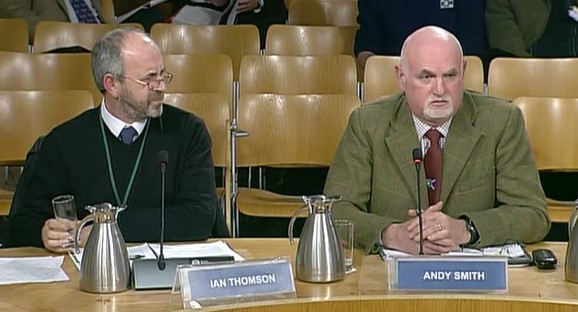
This session was fascinating and we’d really encourage you to read the transcript – and even better, watch the video. There’s too much to blog about here so we’ll just focus on the SGA’s ‘evidence’, which turned out to be a series of ‘alternative facts’, which perhaps isn’t all that surprising although it is of concern when you realise Andy Smith, the SGA rep, was a former police officer for 30 years and so he should be well versed in dealing with actual facts, not made-up ones.
Here are some of the SGA’s alternative facts. This is not an exhaustive list, just the ones that amused us the most:

Alternative Fact #1

According to Andy Smith, the SGA doesn’t support the proposal that the SSPCA should be given increased powers to help investigate wildlife crime because he was told that the SSPCA’s Chief Superintendent traveled to London to listen to the Westminster debate on driven grouse shooting, which, according to Andy Smith, means the SSPCA has an anti-shooting agenda.

The logic Andy Smith used to reach this conclusion is, well, illogical, because plenty of people attended the Westminster debate, including GWCT staff members, who most definitely are not anti-shooting. Anyway, as it turns out, the SSPCA’s Chief Superintendent did NOT travel to London to attend the debate, as he clearly explains in a recent letter to the ECCLR Committee that has been published on the Scottish Parliament’s website:  20170111_mike_flynn_to_convener_regarding_ecclr_meeting_10_january_2017

Alternative Fact #2

According to Andy Smith, “There are places in this country that should have birds of prey – raptors – but do not have them. That includes some RSPB reserves that have the perfect conditions. For example, I do not think that there are very many in Abernethy“.

Oops. There are at least eight species of breeding raptors at the RSPB’s Abernethy Reserve (perhaps more, we haven’t checked), including, er, the world famous ospreys at Loch Garten.

Alternative Fact #3

According to Andy Smith, “We should remember that the Cairngorms National Park has the highest density of eagles in the world“. [Interruption]. “Am I not right in thinking that?“.

Ian Thomson (RSPB Scotland): “No, you are not“.

Andy Smith: “It is certainly where the highest density of eagles is in the UK“.

Ian Thomson: “Harris has the highest density of golden eagles“.

Another commonly repeated myth from Andy Smith. It’s nothing new (e.g. see here, and it was also repeated in the SGA’s most recent edition of its in-house rag Scottish Gamekeeper), but it doesn’t matter how many times it’s repeated, it doesn’t make it factual. The Cairngorms National Park does NOT have the highest density of eagles in the world, nor in the UK. As Ian Thomson correctly pointed out, golden eagle density in the Western Isles (i.e. nowhere near a driven grouse moor) is among the highest recorded, although a few populations in North America have an equally high density.

The truth is that golden eagles in the Cairngorms National Park have one of the lowest rates of site occupancy in the whole of Scotland. Sure, there are breeding golden eagles in the CNP, but as was described in the authoritative Golden Eagle Conservation Framework, the vast majority of those sites are associated with open woodland (i.e. deer forest) where they are generally left alone; they are, with a handful of exceptions, absent from the extensive areas of open moorland managed for driven grouse shooting.

ge-vacant-territories-2003The data in the above table were derived from the 2003 national golden eagle survey. Since then, a 2015 national survey has been undertaken and we await publication of the detailed results, although the preliminary findings have shown that there have been improvements in occupancy in some regions, but not, unfortunately, in the Eastern Highlands, which includes large parts of the Cairngorms National Park and North East Glens, where intensively managed moorland for driven grouse shooting remains the dominant land practice and where illegal persecution continues to constrain the golden eagle population, as well as a number of other raptor populations including peregrine and hen harrier.

The SGA should watch out. With a performance like Andy Smith’s, the Trump administration may well try to headhunt him to join The White House press team.
Decision on increased powers for SSPCA to be announced by June 2017

We’ve been blogging about the proposed increase of investigatory powers for the SSPCA for six years (since Feb 2011). During this time, five, yes, five Environment ministers have been and gone (Roseanna Cunningham, Stewart Stevenson, Paul Wheelhouse, Aileen McLeod, Roseanna Cunningham [again, but this time as Cabinet Secretary]).
Here’s how the Scottish Government has handled this so far:

February 2011: Increased powers for the SSPCA was first suggested by former MSP Peter Peacock as an amendment during the WANE Bill debates. The then Environment Minister Roseanna Cunningham rejected it as an amendment but suggested a public consultation was in order.

September 2011: Seven months later Elaine Murray MSP (Scottish Labour) lodged a parliamentary motion that further powers for the SSPCA should be considered.

November 2011: Elaine Murray MSP (Scottish Labour) formalised the question in a P&Q session and the next Environment Minister, Stewart Stevenson MSP, then promised that the consultation would happen ‘in the first half of 2012’.

September 2012: Nine months later and nothing had happened so we asked Paul Wheelhouse MSP, as the new Environment Minister, when the consultation would take place. The response, in October 2012, was:

“The consultation has been delayed by resource pressures but will be brought forward in the near future”.

July 2013: Ten months later and still no sign so we asked the Environment Minister (still Paul Wheelhouse) again. In August 2013, this was the response:

“We regret that resource pressures did further delay the public consultation on the extension of SSPCA powers. However, I can confirm that the consultation document will be published later this year”.

September 2013: At a meeting of the PAW Executive Group, Minister Wheelhouse said this:

“The consultation on new powers for the SSPCA will be published in October 2013“.

January 2014: In response to one of our blog readers who wrote to the Minister (still Paul Wheelhouse) to ask why the consultation had not yet been published:

“We very much regret that resource pressures have caused further delays to the consultation to gain views on the extension of SSPCA powers. It will be published in the near future“.

31 March 2014: Public consultation launched.

1 September 2014: Consultation closed.

26 October 2014: We published our analysis of the consultation responses here.

22 January 2015: Analysis of consultation responses published by Scottish Government. 233 responses (although 7,256 responses if online petition included – see here).

We were told a decision would come from the new Environment Minister, Dr Aileen McLeod MSP, “in due course”.

1 September 2015: One year after the consultation closed and still nothing.

25 February 2016: In response to a question posed by the Rural Affairs, Climate Change & Environment Committee, Environment Minister Dr Aileen McLeod said: “I have some further matters to clarify with the SSPCA, however I do hope to be able to report on the Scottish Government’s position on this issue shortly“.

May 2016: Dr Aileen McLeod fails to get re-elected and loses her position as Environment Minister. Roseanna Cunningham is promoted to a newly-created position of Cabinet Secretary for the Environment.

12 May 2016: Mark Ruskell MSP (Scottish Greens) submits the following Parliamentary question:

Question S5W-00030 – To ask the Scottish Government when it will announce its decision regarding extending the powers of the Scottish SPCA to tackle wildlife crime.

26 May 2016: Cabinet Secretary Roseanna Cunningham responds with this:

A decision on whether to extend the investigatory powers of the Scottish SPCA will be announced in due course.

1 September 2016: Two years after the consultation closed and still nothing.

9 January 2017: Mark Ruskell MSP (Scottish Greens) submits the following Parliamentary question:

Question S5W-05982 – To ask the Scottish Government by what date it will publish its response to the consultation on the extension of wildlife crime investigative powers for inspectors in the Scottish SPCA.

17 January 2017: Cabinet Secretary Roseanna Cunningham responds:

A decision on whether to extend the investigatory powers of the Scottish Society for the Prevention of Cruelty to Animals will be announced in the first half of 2017.

Given the Government’s appalling track record on dealing with this issue, the Cabinet Secretary will forgive us for thinking this is just yet another holding statement designed to deter further questions, although we’d be delighted if she proved us wrong.

The blame for this fiasco can’t all be placed at her feet – her predecessors have played a blinder at kicking this issue in to the long grass, ably assisted by landowners, gamekeepers and Police Scotland, all of whom are against increased SSPCA powers. So now the Cab Sec has the job of wading through the overgrowth to fetch the ball and bring it back in to play. No more extra time, this decision needs to be made and whatever that decision is, we’ll understand a great deal about how serious this Government is about tackling illegal raptor persecution.

Well done and thanks (again) to Mark Ruskell MSP (Scottish Greens) for holding the Government to account.

Crowdfunding appeal for new raptor satellite tag project

The campaign group Birders Against Wildlife Crime has launched a crowdfunding appeal to help support a new project to fit satellite tags to raptors in northern England, set to begin later this year.

Satellite tagging has revolutionised efforts to detect raptor persecution crimes, and has also helped draw public attention to the illegal killing of raptors. The power of satellite-tagging was really first realised in 2009 when a young satellite-tagged golden eagle, ‘Alma’, was found dead on a grouse moor on the Millden Estate in the Angus Glens. She’d been poisoned. It’s highly unlikely her corpse would have been detected had she not been fitted with a satellite tag, which allowed investigators to pinpoint her body as she lay face down in a vast expanse of heather moorland. The resulting publicity about her death was phenomenal, and even though nobody was ever prosecuted, this crime turned the spotlight on to an industry that had escaped scrutiny for so long.

alma

Since Alma, there have been many other illegally-killed raptors, including golden eagles, white-tailed eagles, hen harriers, Montagu’s harriers and red kites whose satellite tags have given the game away. These days, the raptor killers are wise to the game and now it’s far more common for a sat-tagged bird to simply ‘disappear’, with all the evidence (carcass, sat tag) simply destroyed to avoid detection, although occasionally there won’t be a ‘clean kill’ and the wounded bird is able to move some distance before succumbing to its injuries and investigators are able to collect the corpse, conduct a post mortem and record it as a confirmed persecution crime.

Some within the grouse-shooting industry have recently been trying to discredit the use of raptor satellite tags, and it’s not hard to see why. They’ve slurred the professional reputations of highly experienced and licensed raptor researchers and have used some photographs of a young golden eagle with what appears to have a ‘slipped’ tag harness as evidence that the tagging experts don’t know what they’re doing. Now, of course, it’s possible for a sat tag harness to slip, and it does happen on occasion, but it’s a rare occurrence. What the accusers don’t mention is the circumstantial evidence that suggests tagged raptors are being caught inside crow cage traps, providing an opportunity for the trap operator to cut one of the harness straps before releasing the bird, with its tag now dangling and looking like it has been badly fitted. There is also evidence of at least one tagged hen harrier being trapped, its harness removed and transferred to a free-ranging corvid, presumably with the intention of disguising the fact the hen harrier was illegally killed.

Strangely, the grouse shooting industry has not tried to vilify the satellite tagging of non-raptor species, such as woodcock (GWCT project) or cuckoos (BTO project); it’s only the tagging of raptors they seem to object to. Can’t think why.

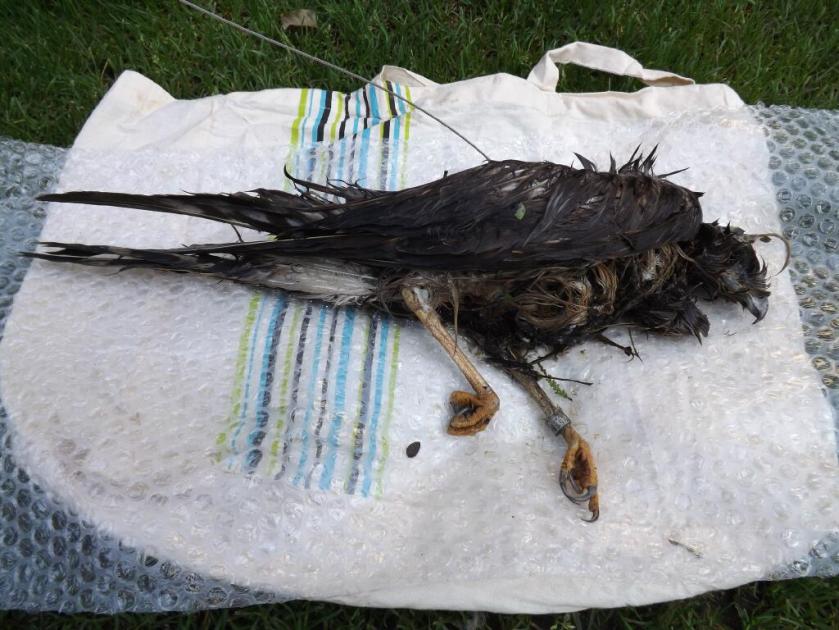
Here’s a photo (taken by Stephen Murphy) of Bowland Betty, a sat-tagged hen harrier found dead on a grouse moor on the Swinton Estate in Yorkshire in 2012. A post mortem revealed she had been shot.

bowland-betty-1

The new raptor satellite-tagging project in northern England is being undertaken by highly experienced and licensed experts in an independent research consortium (all voluntary – no salaries are being paid). The beauty of this independence is that sat tag data will be put in to the public domain very, very quickly. No more waiting for weeks/months/years to find out what happened, which will allow timely and targeted publicity every time one of these raptors ‘disappears’ or is found shot/trapped/poisoned. Greater public awareness of raptor persecution is key to bringing it to an end.

The crowdfunding target is to reach £10,000 by mid-March. It’s ambitious but it’s do-able. If you’d like to make a donation, however small or large, please visit BAWC’s crowdfunding page HERE

Thank you

Review of gamebird licensing systems due to be published ‘shortly’

Earlier this month we blogged about the long-overdue commissioned review of gamebird licensing systems (see here). This review was first commissioned by former Environment Minister Paul Wheelhouse, way back in May 2014.

In January last year, in response to a Parliamentary Question from Claudia Beamish MSP (Scottish Labour), the then Environment Minister Dr Aileen McLeod said it would be published in Autumn 2016.

In August 2016, in response to another Parliamentary Question from Claudia Beamish MSP, Environment Cabinet Secretary Roseanna Cunningham said it would be published in Autumn 2016.

In November 2016, in response to a Parliamentary Question from Mark Ruskell MSP (Scottish Greens), Environment Cabinet Secretary Roseanna Cunningham said, “We anticipate that it will be published shortly“.

In January 2017, Mark Ruskell MSP asked again in a further Parliamentary Question when this review would be published.

Environment Cabinet Secretary Roseanna Cunningham has now responded (on 17 Jan 2017):

“Scottish Natural Heritage will publish the commissioned research on gamebird licensing systems in selected other countries shortly“.

This stretching of the definition of ‘shortly’ is not uncommon in politics. In December 2016, John Finnie MSP (Scottish Greens), exasperated at the use of this term in relation to another Parliamentary Question, asked the Scottish Government: ‘…..what its definition is of the term ‘shortly’ and whether it will confirm by what date the announcement will be made‘ (Question S5W-05839).

Humza Yousef, Minister for Transport and the Islands responded almost one month later:

‘I shall reply to the member as soon as possible‘.

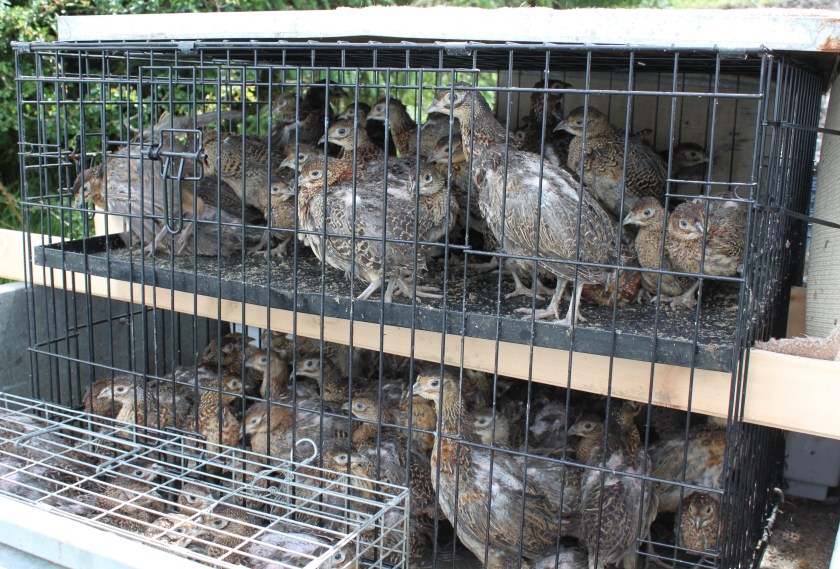
Photo of gamebirds being transported to a release pen, by RPUK

Another question on withheld raptor persecution data

mark-ruskellWe’ve talked quite a bit on the issue of withheld raptor crime data from the Scottish Government’s 2015 annual Wildlife Crime report. We blogged about it when the report was published in November 2016 (here) and again earlier this month when Mark Ruskell MSP asked for an explanation from Police Scotland during the recent ECCLR Committee hearing on wildlife crime (see here).
This issue was raised again on Thursday during a general question session at Holyrood. The topic of ‘crime recording’ was being discussed and Mark Ruskell took the opportunity to ask a supplementary question:

“The cabinet secretary might be aware that “Wildlife Crime in Scotland—2015 Annual Report” came under scrutiny recently in the Environment, Climate Change and Land Reform Committee. It was revealed that a number of bird of prey persecution incidents from two years ago were withheld from the report despite details from other sources being in the public domain. Will the cabinet secretary undertake to investigate why that information was withheld, and will he say what Police Scotland can do to ensure that wildlife crime reporting is transparent, accurate and has the confidence of the public?”

The Cabinet Secretary for Justice, Michael Matheson, responded as follows:

“Classification and the way issues are recorded in the statistics are developed by statisticians, and the approach must comply with the code of practice that is applied to recording of crime statistics. I have no doubt that if the Scottish crime recording board believes that there is a need for any alterations, it can consider that issue, as we move forward with any changes that could take place. However, I will ensure that Mark Ruskell receives a full and detailed response on the specific nature of wildlife crimes”.

The withholding of the raptor persecution data probably wasn’t due to a faulty classification system developed by statisticians. The missing data included incidents that were very clearly crimes – there’s no ambiguity about whether 4 shot buzzards, a trap containing a live pigeon decoy, and spring traps set in the open, were crimes. They obviously were crimes, even though the police-led investigation didn’t identify the person(s) responsible for those crimes.

We await Police Scotland’s explanation for why these crimes were withheld from the Government’s annual report.

Thanks to Mark Ruskell MSP (Scottish Greens, Mid Scotland & Fife) for his persistence on this issue.

Satellite-tagged hen harrier ‘Bonny’ is missing, presumed dead

Another one of the preciously small group of hen harriers that managed to fledge in England last year has been reported as missing, presumed dead.

Read the news on the RSPB’s Skydancer blog here.

This time it’s Bonny. Bonny was particularly special. He was the first hen harrier to successfully fledge on the RSPB’s Geltsdale Reserve in ten years. He was mischievously named after Tim Bonner, head of the Countryside Alliance (watch the video here) by Chris Packham, as part of the Lush Skydancer Bathbomb campaign. Bonny was featured on the BBC’s Autumnwatch programme, which was a major coup because usually the BBC shies away from the ‘controversy’ of hen harrier persecution but by filming Bonny being fitted with his satellite tag, this allowed a ‘non-controversial’ way of introducing a massive BBC audience to the plight of hen harriers – hopefully his story will be covered in the BBC’s forthcoming Winterwatch, which airs next week, thus providing an opportunity to discuss what might have happened to this young harrier.

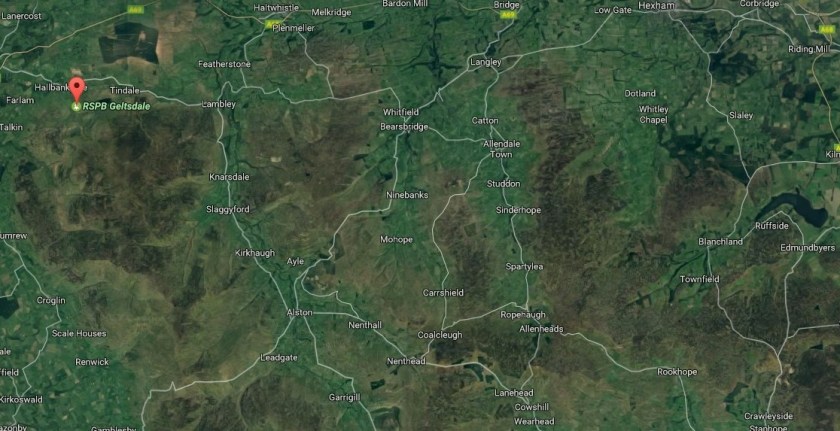
As the RSPB’s Skydancer project manager Blanaid Denman says on the Skydancer blog, we don’t know what happened to Bonny. His signal went dead on 14 December 2016 on a moor a few kilometres to the east of Geltsdale. It’s possible it’s a tag failure, but the probability of something more sinister is far greater, especially when you consider the history of raptor persecution in the Geltsdale area.

Over the years, the bodies of five shot hen harriers have been found (the killing of one of these was witnessed by RSPB investigators – see pages 38-40 in Mark Avery’s book Inglorious for a detailed description), there have been at least four attempted shootings of hen harriers, and another hen harrier was found poisoned. In addition, there have been poisoned ravens, poisoned buzzards and some shot peregrines.

Some of these crimes happened on the Geltsdale Reserve (safe to assume this wasn’t the handiwork of the RSPB wardens) and some of the crimes happened on nearby grouse moors. Take a look at the map and note those big brown smudges. When you look at the extent of the driven grouse moors here, and the long, long history of raptor persecution, it’s a miracle that Bonny even fledged in the first place.

The class of 2016 are not doing very well. In addition to Bonny, here are some of the others that didn’t make it to Xmas:

Hen harrier Elwood – ‘disappeared’ in the Monadhliaths just a few weeks after fledging.

Hen harrier Brian – ‘disappeared’ in the Cairngorms National Park just a few weeks after fledging.

Hen harrier Donald – missing in northern France, presumed dead.

Hen harrier Hermione – found dead on Mull, believed to have died from natural causes.

Hen harrier Rowan – found dead in Yorkshire Dales National Park. Cumbria Police said ‘likely to have been shot’. There is no ambiguity – this bird was shot (more on this soon).

Hen harrier Tarras – ‘disappeared’ in the Peak District National Park.

Hen harrier Beater – missing in Scottish Borders, presumed dead.

Eight down, seven to go (Aalin, Carroll, DeeCee, Finn, Harriet, Wendy, Sorrel).

Photograph of hen harrier Bonny by Mark Thomas

Kestrel found shot dead in Worcestershire

A kestrel has been found shot dead in the village of Broadwas in Worcestershire. It was discovered on 10 January 2017.

This information was sent to us by a blog reader (thank you). The kestrel had been ringed in Warwickshire in June 2016 and whoever found the body in Worcestershire reported the ring number to the British Trust for Ornithology (BTO), who then sent a ‘ringing return’ note to the bird ringer, to inform him / her of the bird’s death.

According to this ringing return, the bird had been categorised as being ‘dead for more than a week, not fresh, found shot’.

What’s interesting about this, apart from the utter stupidity of the person who shot this bird (it’s a kestrel for god’s sake, what possible reason would there be for shooting it?), is what happens to the data after being reported to the BTO.

It’s our understanding that the BTO does not, as a matter of routine, forward data about suspected persecution incidents to the Police or the RSPB.

If our understanding is correct, this situation is quite astonishing. Surely there’s an ethical responsibility for the BTO to report suspected persecution incidents, to allow the Police or RSPB to undertake follow up investigations? Even if nothing comes of any investigation, these cases would still provide useful background intelligence and, importantly, would contribute to a better understanding of the extent of illegal raptor persecution in a given area. Reporting suspected crimes to the Police / RSPB would not affect the usefulness of the data to the BTO – the BTO could still use the data for trend analyses etc, it’s not as though the data point would be ‘lost’ if it was reported to the authorities.

How many of these suspected persecution incidents go unreported by the BTO every year? Is it the BTO’s responsibility to report suspect crimes, or is it the responsibility of the ringer (once notified of the circumstances of a bird’s death via the ringing return from the BTO), or is it nobody’s responsibility?

It’s all very strange.

Photo of a kestrel by Graham Catley

UPDATE 3.30pm: The BTO has responded to this post on Twitter as follows: ‘The finder has responsibility to report any suspicious deaths but we will review to see if there is more we can do’. Good for them.

Edward Mountain MSP – the fiercest critic of those committing wildlife crime?

Edward Mountain MSP is a new member of the Scottish Parliament (Scottish Conservative & Unionist Party, Highlands & Islands).

Edward recently wrote a guest article for the Scottish Gamekeepers’ Association’s quarterly rag, Scottish Gamekeeper (Issue 71, winter 2017, page 20). We’re going to reproduce part of that article:

‘I believe that challenging the ‘spectre’ [of land management reform] is vital, if the very countryside we all value and love is to be maintained. The way to do this is by standing tall and laying out a stall, for all to see the benefits positive management has to offer. The problem is that every time it looks like the right story is being delivered another case of wildlife crime comes to light. If there is any chance of moving forward we must stop these idiots, who believe illegally killing raptors is acceptable.

I therefore would urge all organisations that represent country folk to stand up and let people know all the good work that is being done for conservation. At the same time, they also need to vilify those that break the law.

Over the next 4.5 years I look forward to working with the SGA and I will do all I can to defend the values you and your members believe in. However, I must also say that I will be the fiercest critic of those that jeopardise these values by breaking the law‘.

Good strong words, but will he put them in to action?

His article for the SGA was probably written before he hosted a parliamentary reception at Holyrood for the Scottish Country Sports Tourism Group in mid December 2016 (see here). The reception was to launch the ‘Game for Growth’ initiative that is using public funds to promote country sports providers in Scotland.

We now know that these public funds are being used to promote a sporting agent with a conviction for raptor persecution (see here) and two estates where illegally-set traps have been discovered (see here).

Now’s your chance, Edward – it’s been put on a plate for you. As you’re so publicly supportive of this Game for Growth scandal, are you going to stand up and be “the fiercest critic” of the associated wildlife crimes?

We’ll see.

Public funds being used to promote Glendye grouse moor

Yesterday we blogged about the illegally-set traps that had been photographed on a grouse moor at Glendye Estate in Aberdeenshire (here). We await the result of a police investigation to determine who was responsible for setting those traps (but we’re not holding our breath).

Meanwhile, as taxpayers, you’ll all be thrilled to learn that your money is being used to promote grouse shooting on Glendye Estate. This estate is listed on the Scottish Country Sports Tourism Group’s website, which is part-funded with a grant from VisitScotland.

We already knew that the Scottish Country Sports Tourism Group is promoting a sporting agent with a criminal conviction for raptor persecution (see here), so it shouldn’t really come as a surprise to find them also promoting a grouse moor where illegally-set traps have been discovered. In fact the SCSTG was already doing this because Invercauld Estate is also being promoted as a ‘sporting provider’ on the SCSTG website – you’ll recall that illegally-set traps were discovered on an Invercauld Estate grouse moor last summer and this resulted in what we believe to be a ‘cover-up’ by the authorities (see here).

Why is public funding being used to promote a ‘sport’ that is mired in illegal activity? It’s bad enough that public funds are being used to promote such an environmentally damaging ‘sport’ but to promote estates where criminal activities have been uncovered is scandalous. Why is the Scottish Government still turning a blind eye to what’s going on on some of these estates, despite incident after incident after incident after incident after incident after incident being uncovered? Scottish Ministers are being made to look like fools.

Illegally set traps on Glendye Estate grouse moor, Aberdeenshire

Have a look at this blog. You’ll see a series of photographs, taken yesterday (17 January 2017) on a grouse moor at Glendye, just beyond the famous Clachnaben hill, which is part of the Fasque & Glendye Estate according to Andy Wightman’s always useful website Who Owns Scotland. This area looks like it’s the area covered by the Glendye Grouse Syndicate who apparently took on a 20-year lease of this moor in 1997.

We’re not allowed to reproduce the photographs here so you’ll have to click the link if you want to see them. And you really should see them.

Three of these photographs depict illegally-set traps. They are all ‘bridge traps’ – comprising a Fenn spring trap fixed to a log across a burn or gully and designed to catch so-called ‘vermin’ such as stoats or weasels. This type of trap is legal if the trap is covered either in a natural or artificial tunnel, but the three traps photographed yesterday are definitely illegal.

One is covered with wire mesh but the entry and exit holes are wide open. This is illegal. These entry/exit holes are supposed to be partially closed to minimise the risk of catching non-target species. This trap in the photograph could easily catch a non-target species, including protected Scottish wildcats, otters and pine martens.

The other two spring traps are totally uncovered except for a single wire loop above each trap. A wire loop is not going to protect any species from standing on these traps and thus both traps are illegal. These two traps are effectively pole traps – if a bird or mammal stands on the trap, the trap will fall from the log, with the animal attached (probably by the leg), and the animal will dangle, suspended below the log, until it dies a slow, miserable death.

We don’t know whether the photographer has reported these crimes to the local police. We would hope he has – he understands that the traps are illegally-set (the safety catch is not on – we’ve looked) so we’d expect him to have provided grid references and photographs to the local Police Wildlife Crime Officer. In case he hasn’t reported them, we’ll do it for him, although by now the individual who set these traps has probably been alerted and is probably out on the moor removing all the evidence as we speak.

The local Police Wildlife Crime Officer is Doug Darling. Here’s his email address: douglas.darling@scotland.pnn.police.uk

Ask him for a crime reference number so we can follow up what action he has taken to identify the individual(s) responsible. This is important because after his investigation, we expect him to alert SNH to these illegal traps. Why? Well, because these illegal traps should result in the withdrawal of the General Licence on this grouse moor. According to SNH guidelines, evidence which may be considered by SNH in any decision to impose a General Licence restriction includes:

‘Illegal placement, design or use of traps or methods that are not in compliance with the requirements of the General Licence‘.

However, the evidence must be provided by the Police. So, just in case the Police ‘forget’ to tell SNH, we’ll notify SNH as well so they can’t then argue they haven’t been informed. Emails should be sent to Nick Halfhide, Director of Operations: nick.halfhide@snh.gov.uk 

To be fair to SNH, they are probably awaiting the findings of the Raeshaw Estate judicial review before they impose any more General Licence restrictions. That’s fine, they can just add this case to the others they’re currently sitting on and hopefully they’ll be in a position to take action in due course.

And, if you’re in the mood for writing emails, you might also want to alert the Environment Cabinet Secretary, Roseanna Cunningham, to these illegally-set traps. The information will be very helpful as she ponders the issue of introducing state-regulated licensing. These photographs confirm that law-breaking continues, despite the grouse shooting industry’s fervent claims to the contrary. Emails to: scottish.ministers@gov.scot and mark it FAO Roseanna Cunningham.

We wonder what the grouse shooting industry’s Gift of Grouse project has to say about these illegal traps? We wonder if Glendye is part of the Grampian Moorland Group, which in turn is part of the Gift of Grouse propaganda campaign? That’d be interesting…..

UPDATE 17 March 2017: Update on illegally-set traps on Glendye grouse moor (here)