Press release from Abertay University (29/11/18):
Scientitists recover fingerprints from feather exposed to outdoor conditions
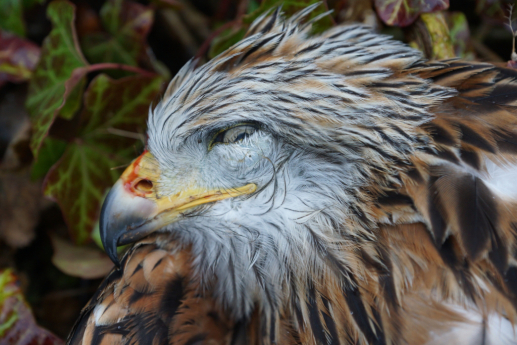
An Abertay University study has discovered that fingerprints can be recovered from bird feathers that have been left outside, exposing them to environmental conditions.
Previous research from PhD Student Helen McMorris had revealed that it was possible to obtain fingerprints from feathers under lab conditions.
For the first time, she has been able to prove it is possible to recover them from feathers that have been exposed to environmental conditions such as wind and rain.
[Helen McMorris obtains a fingerprint from buzzard feathers. Photo from Abertay University]

In the long term, it’s hoped the research will have a transformative impact on the number of wildlife crime convictions in the UK.
According to the latest RSPB Birdcrime report there were 68 confirmed incidents of raptor persecution last year, with only four prosecutions. From these, just one led to a successful conviction.
Investigations into such incidents can be extremely difficult as there’s no accurate measure of determining human involvement.
McMorris – also a Teaching Fellow at Abertay – said this makes it difficult to prosecute: “At this moment in time toxicology tests can prove that a raptor has been poisoned, and you can prove that a bird has been shot through x-rays and post mortem.
But there’s no way of telling if a human has had any contact with that bird if it’s found dead in a field or on a hillside. You have to assume there has been foul play of some description, but you can’t hone in on the actual person responsible.
This technique potentially gives investigators the chance to prove actual human involvement in raptor persecution, be it through an identifiable fingerprint or a touch mark from a human finger that identifies exact areas of contact on the bird-of-prey”.
Head of Science Dr Ben Jones said “As part of Abertay’s research in improving forensic investigation techniques, this study is an important step in moving from the laboratory closer to a real-life situation, as the technique moves from research to development for use in an investigative setting.”
ENDS
For those interested in the science, this research has been published in Science and Justice, the journal of the Chartered Society of Forensic Sciences. Publishing restrictions prevent us from posting the full paper here but here’s the abstract:

It’s probably a bit of an overstatement to claim that these results “will have a transformative impact on the number of wildlife crime convictions in the UK“. These days the majority of raptor killers are much more savvy about hiding their crimes and often remove and destroy all the evidence (cf all those ‘missing’ satellite tagged raptors that vanish in to thin air).
However, there are still some who are too stupid/lazy/arrogant to get this right, e.g. the shooting of a hen harrier on a grouse moor at Leadhills last year (here). This shooting by a masked gunman was witnessed by a member of the public, and the witness was later able to point the investigating authorities to the location which led to the discovery of the harrier’s body, partly-hidden in vegetation. In rare cases like this, the ability to test the corpse for fingerprints may well have helped to identify the perpetrator.
Similarly, in the recent case of gamekeeper Tim Cowin who shot, then stamped on, and then buried the bodies of two short-eared owls on a grouse moor in Cumbria (here), had the RSPB’s video evidence of Cowin committing his crimes been deemed inadmissible, testing the owls’ feathers for human fingerprints may well have led to Cowin having to face some awkward questions.
This new research isn’t a panacea but it is still another useful weapon in the armoury of those fighting the illegal killing of birds prey, a fight that Ian Thomson (Head of Investigations, RSPB Scotland) has described as ‘an arms race’ (here).