Politicians urged to speak out for upland reform

During this year’s Hen Harrier Day broadcast, Wild Justice launched a new ‘e-action’ allowing members of the public to easily contact their local parliamentary representative and ask for reform in the uplands.

How does this e-action work?

Well, Wild Justice has written the text of a letter (see below), in this case asking for uplands that work for people, for climate and for wildlife. Members of the public can simply enter their postcode in to the search box and the software will identify the person’s elected member of parliament, whether that be in England, Wales, Scotland or Northern Ireland.

By clicking ‘continue’, you’ll get to read the letter and have the opportunity to click another button which will automatically send the letter to your local politician.

Wild Justice’s aim is for every single politician in all four parliaments to receive at least one letter on this subject. So far, over 14,000 letters have been sent and almost every single politician has received at least one from one of their constituents (see here).

Here is the text of the letter being sent:

I am writing to you to ask you to speak up for our uplands. 

In the face of a nature and climate emergency, we need uplands that work for people, for the climate and for wildlife.

Ahead of this autumn’s international meetings on climate and biodiversity, I would like to ask you to make a new commitment to the precious upland landscapes of Britain. 

As the person who speaks for me in parliament, can I ask you to stand up for uplands that work for:

People:  We need a better deal for residents, workers, landowners, visitors and taxpayers. Our hills should provide benefits for all. We need to see more sustainable economic activity, reduced flood risk and responsible land ownership. They should benefit our health and wellbeing, as beautiful places to relax and enjoy the scenery and wildlife.  

Climate: We need you to help uplands reach their potential as huge, natural carbon stores; they are key to helping us tackle climate change in a sustainable way. The return of natural woodlands and bogs in prime condition will deliver that vision and bring wildlife back. The uplands are our largest carbon bank – let’s invest in them.

Wildlife: We need to reverse decades of de-wilding and put the wildlife back into the uplands. We need to diversify landscapes, restore a mix of habitats and shift away from over-burning, over-draining and overgrazing.

At the heart of this, we must see an end to the persecution of our raptors. The brutal killing of Hen Harriers must stop. The killing of Golden Eagles, Peregrines, Buzzards and Goshawks must stop. Our uplands are not uplands without raptors thriving alongside a wealth of wildlife in a functioning ecosystem. 

The absence of Hen Harriers from so many of our upland landscapes, including many of our National Parks, symbolises how wrong the current situation is. Protected wildlife is being removed by criminals engaged in unsustainable land management. We cannot be proud of the uplands whilst wildlife crime is rife. 

I am asking you as my political representative to commit to this new vision for the uplands of Britain: for people, for the climate and for wildlife.

ENDS

If you haven’t yet signed the e-action and you’d like to do so, please CLICK HERE to send a strong message backed by thousands of others who think the same. Thank you.

Multi-agency raid following suspected raptor persecution in Herefordshire

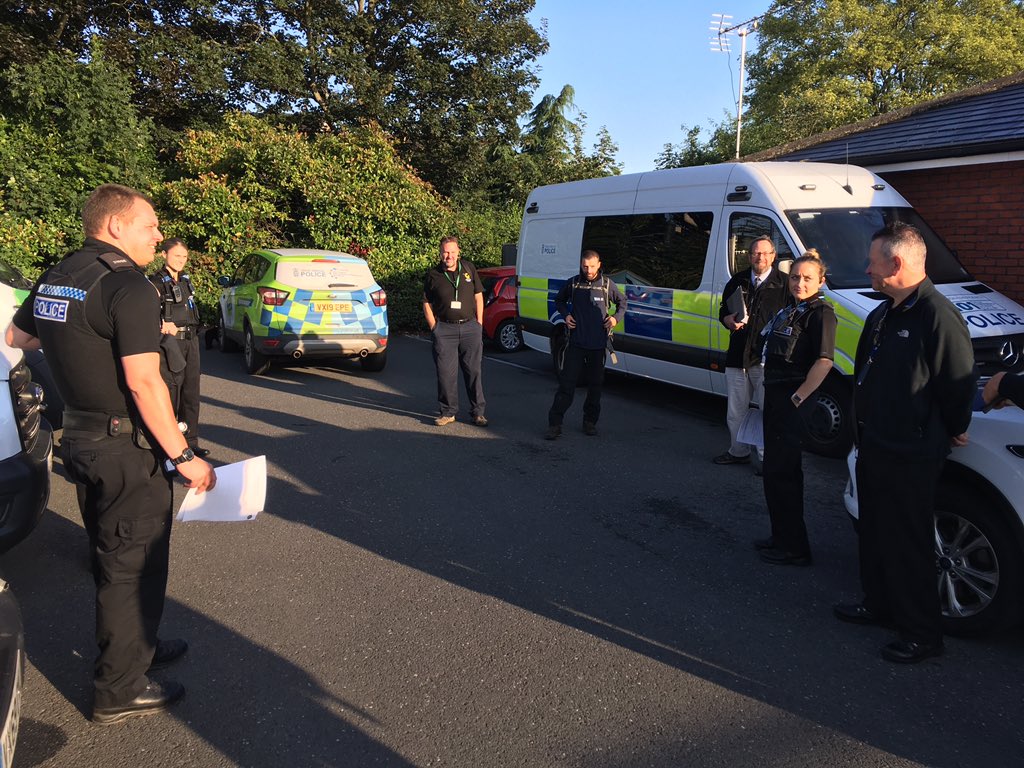
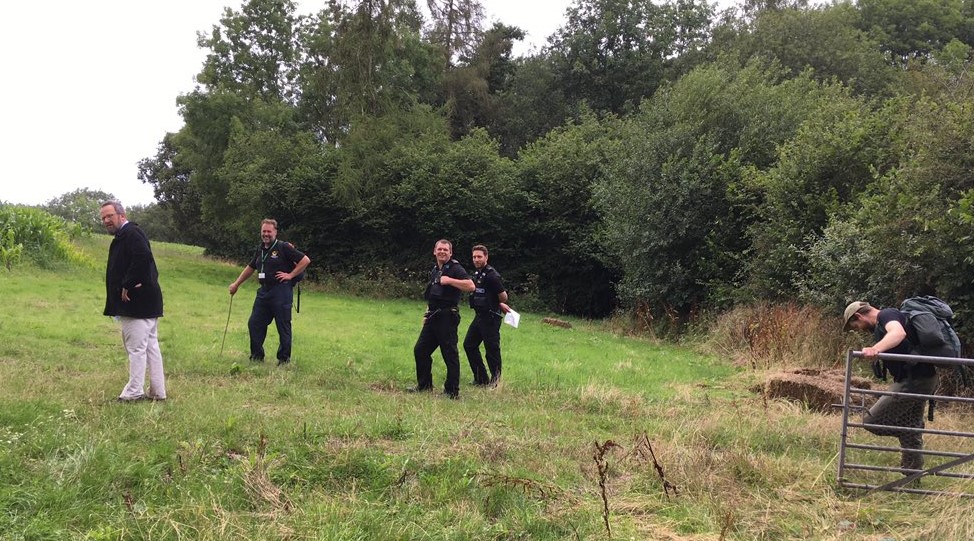
Herefordshire Police led a multi-agency raid on Thursday 12th August following a suspected raptor persecution incident in the south west of the county.

The police were joined by staff from Natural England, National Wildlife Crime Unit and RSPB Investigation’s team. Items were seized and enquiries are apparently continuing.

[Photos from RSPB]

This is at least the 7th multi-agency search in England this year, all in response to raptor persecution crimes. On 18th January 2021 there was a raid in Suffolk (here), on 15th March there was a raid in Lincolnshire (see here), on 18th March a raid in Dorset (here), on 26th March a raid in Devon (see here), on 21st April a raid in Teesdale (here), on 2nd August a raid in Shropshire (here) and now this raid in Herefordshire.

Well done to all the agencies involved in these follow-up investigations. It’s good to see genuine partnership-working in the fight to catch the raptor killers.

Trial date set for gamekeeper accused of killing buzzards

A gamekeeper appeared in court on 12th August 2021 accused of the alleged killing of a number of buzzards in Nottinghamshire in January 2021.

He was charged after a joint investigation by Nottinghamshire Police and the RSPB’s Investigations Team (see here).

The gamekeeper pleaded not guilty so this case will now progress to trial.

Trial dates have been set for 6th-7th January 2022.

Please note, as this is a live case no further detail will be provided here until the case has concluded or there is official commentary from the court reporter. Comments on this particular blog also won’t be accepted until the case concludes so as not to prejudice proceedings. Thanks for your understanding.

Gamekeeper on trial for alleged killing of buzzards

A gamekeeper is due in court tomorrow (12th August 2021) accused of the alleged killing of a number of buzzards.

This prosecution relates to the joint investigation undertaken by Nottinghamshire Police and the RSPB’s Investigations Team in January this year (see here). It’s a good example of what genuine partnership-working can achieve.

Tomorrow’s court hearing will provide an opportunity for the defendant to enter a plea.

If he pleads not guilty, the case is expected to continue to go to trial at a later date.

If he pleads guilty, he may be sentenced tomorrow or the magistrate may ask for background reports before sentencing at a later date.

Please note, as this is a live case no further detail will be provided here until the case has concluded or there is official commentary from the court reporter. Comments on this particular blog also won’t be accepted until the case concludes so as not to prejudice proceedings. Thanks for your understanding.

UPDATE 15th August 2021: Trial date set for gamekeeper accused of killing buzzards (here)

It’s Hen Harrier Day! Live broadcast starts at 10am

It’s Hen Harrier Day, the 8th year this event has been part of the UK’s conservation scene.

Covid restrictions have meant that once again the event has had to move online, but the upside is that this provides more opportunity to reach a wider audience.

This year Wild Justice has put together the programme and Chris Packham and Megan McCubbin will be hosting the live broadcast from 10am to 11.30am (click here to watch). They’ll be joined by a wide variety of guests and contributors discussing the problems with current upland management and how these issues could be addressed.

There’ll be plenty of opportunities for you to get involved, whether that’s bidding for some fantastic original artwork (including a piece by Jim Moir [Vic Reeves] no less!), buying a t-shirt, or signing the Call for Action to your local parliamentary representative. All proceeds will go to Wild Justice and its conservation campaign work, including work to protect the hen harrier.

Stand by for an eventful show!

CLICK HERE TO WATCH

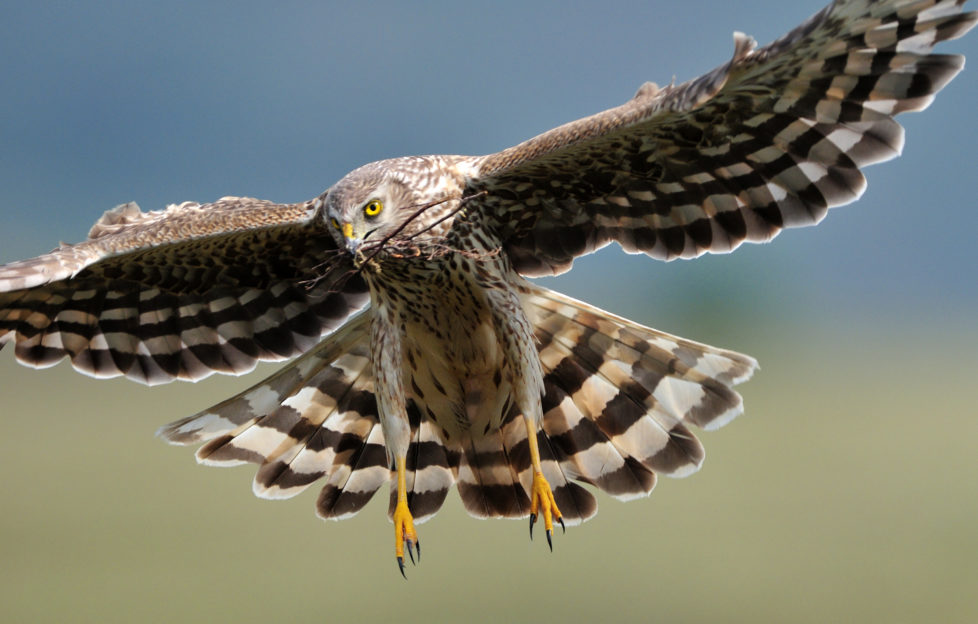
[Female hen harrier, photographed by Laurie Campbell]

Job vacancy: scientist to assess ecological impact of releasing ~60 million non-native gamebirds in UK every year

The RSPB is recruiting a conservation scientist for a fixed-term (one year) position to assess the ecological impacts of releasing millions of non-native gamebirds in the UK countryside every year.

The exact number of gamebirds that are released in the UK for shooting every year is not known because, incredibly and unlike virtually every other European country, the game bird shooting industry in the UK has been astonishingly under-regulated. Nobody even knows how many game bird shoots there are because the people involved have not had to register anywhere, nor report on the number of birds released / shot each year, in order to get a licence (because there is no licence!). It’s been a great old wheeze for decades.

Although some new, limited, regulation has now been introduced, thanks to a legal challenge by Wild Justice, it will still be incredibly difficult to find out how many non-native birds are being let loose each year, (currently estimated at around 61.2 million per annum). The ecological impacts of releasing so many alien species in to the countryside has to be substantial.

The RSPB has been reviewing and developing its policy on gamebird shooting (e.g. here) and the findings of the newly-recruited scientist will feed in to that on-going policy review.

It’s interesting to note that one of the four main areas of focus for this post is ‘a spatial analysis to investigate to what extent raptor persecution incidents are associated with gamebird releasing’. I’ll look forward to seeing those results.

Here is an overview of what the job entails:

Recreational shooting of gamebirds in the UK is underpinned by a suite of management practices, including the annual large-scale release of non-native pheasants and red-legged partridges. With an estimated 57 million birds released into the UK countryside annually, there is much interest in identifying potential positive and negative ecological impacts of released gamebirds and of associated management on wildlife and habitats.  This 1 year fixed-term role will work on identified knowledge gaps, producing outputs to inform and support RSPB policy and research development regarding ecological impacts of non-native gamebird release.

This desk-based role will include work on four main areas, with the post holder:

– Organising, undertaking and analysing a survey of land managers to characterise potential and perceived impacts of gamebirds on protected sites and species.

– Leading a spatial analysis to investigate to what extent raptor persecution incidents are associated with gamebird releasing.

– Reviewing and critiquing current gamebird releasing sustainability guidance and synthesising the associated evidence.

– Contributing to the production of peer-reviewed publications in relation to ecological effects of gamebird release.

Essential skills, knowledge and experience:

  • The ideal candidate for this role will have a proven scientific background (e.g. a PhD in a relevant subject or equivalent experience designing and conducting one or more research projects to a robust scientific standard).
  • A track record of scientific writing and peer-reviewed publication.
  • Experience of designing and implementing ethically-sound, ideally web-based, questionnaire surveys.
  • Experience of collecting, collating, manipulating and analysing large and complex data sets, including knowledge of how to apply complex analytical procedures such as the quantitative analysis of qualitative data arising from questionnaire surveys, and analysis of spatially-reference data.
  • Familiar with Microsoft Office applications and proficient in the use of R or similar statistical software for complex statistical analysis, and ability to learn new techniques and programmes.
  • Experience of summarising and communicating complex scientific information both to colleagues/peers and external audiences.
  • Self-motivated and able to work efficiently to plan and organise their work within a defined work plan to meet deadlines.

Salary: £27,574.00 – £30,590.00 Per Annum

Benefits: Pension, annual leave

Duration: 12 months

Location: Flexible

Closing date: 30th August 2021

For more information and to apply for this position, please click here.

Police attend suspected peregrine shooting near Aylesbury, Buckinghamshire

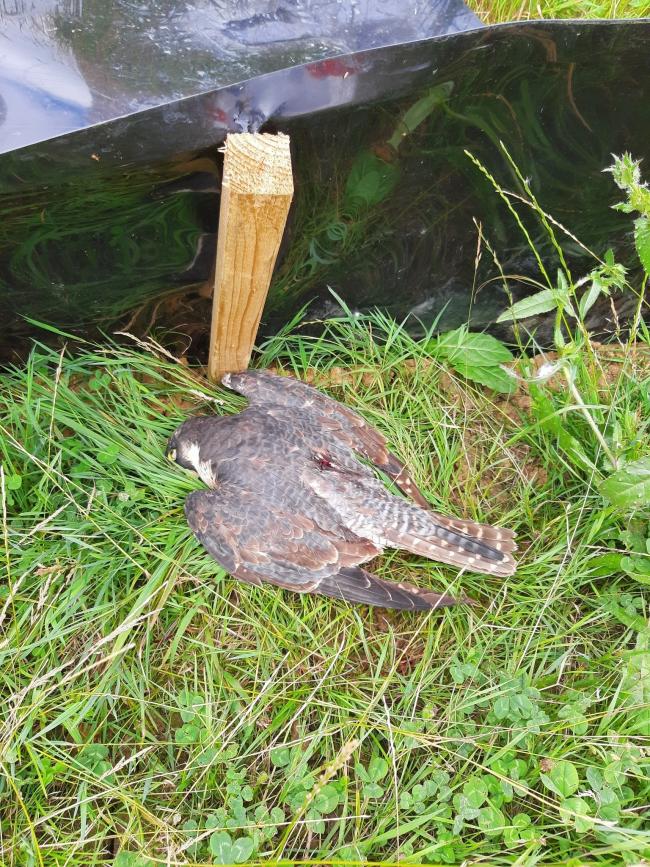
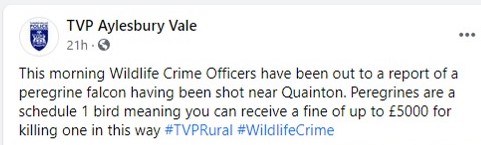
Yesterday, Thames Valley Police (Aylesbury Vale) posted this on Facebook:

I haven’t been able to find any follow-up information, e.g. whether the peregrine was x-rayed to confirm/rule out shooting and there isn’t an incident number or an appeal for information on the Thames Valley Police website.

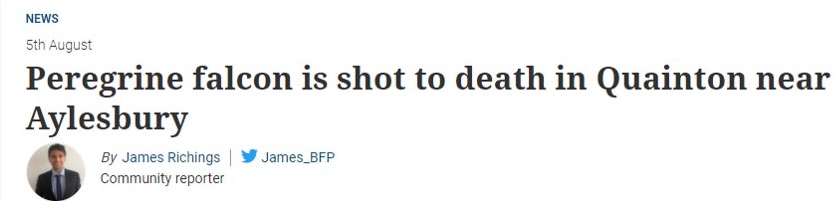
Meanwhile, the local press are reporting this as a confirmed shooting. Eg. see this headline from the Bucks Free Press:

Wouldn’t it be good if there was a national standard on how to report suspected raptor persecution crimes, that every police force could follow? And a central location where these verified reports could be found?

New research reveals extent of nature-impoverished intensively-managed grouse moors in Britain’s National Parks

Press release from charity Rewilding Britain (5th August 2021)

Nature-impoverished intensively-managed grouse moors cover over three-quarters of a million acres of Britain’s national parks, Rewilding Britain reveals.

More than three-quarters of a million acres of Britain’s national parks are covered by intensively-managed grouse moors which leave nature impoverished and contribute to climate breakdown, new research by Rewilding Britain reveals.

With the annual grouse shooting season recommencing on 12 August, the charity says its findings highlight the need for government action to ensure wilder national parks that can lead the way in tackling the nature and climate crises.

A total of 852,000 acres – an area more than twice the size of Greater London – of Britain’s national parks are devoted to intensively-managed grouse shoots, known as driven grouse shooting, according to figures released today by the environmental charity.

Of the six national parks that contain grouse moors – which are found only in Scotland and northern England – almost a third of their combined land area (27%) is devoted to driven grouse shoots, which keep the land in a degraded state, contribute to climate breakdown, and prevent significant recovery of wildlife.

“With over three quarters of a million acres of our national parks devoted to driven grouse moors, the parks are being held back from tackling Britain’s collapsing biodiversity and the climate emergency,” said Rewilding Britain’s policy and campaigns coordinator Guy Shrubsole.

“The Prime Minister’s pledge to protect 30% of Britain’s land for nature – and count national parks towards this total – rings hollow when you realise that vast areas of our national parks are dominated by these nature-impoverished and heavily-managed areas.

“We’re urging ministers to show real leadership by creating wilder national parks and setting up core rewilding areas in each of them – in which driven grouse shoots are phased out, and our precious moors brought back to health.”

Grouse moors are often intensively managed, with heather regularly burned to produce fresh shoots for young grouse. This burning often damages underlying peat soils – the UK’s single largest carbon sink – releasing carbon and worsening the climate crisis. It also prevents the growth of trees and a wide range of other vegetation by suppressing natural regeneration, and kills other wildlife including large numbers of insects, preventing the recovery of biodiversity.

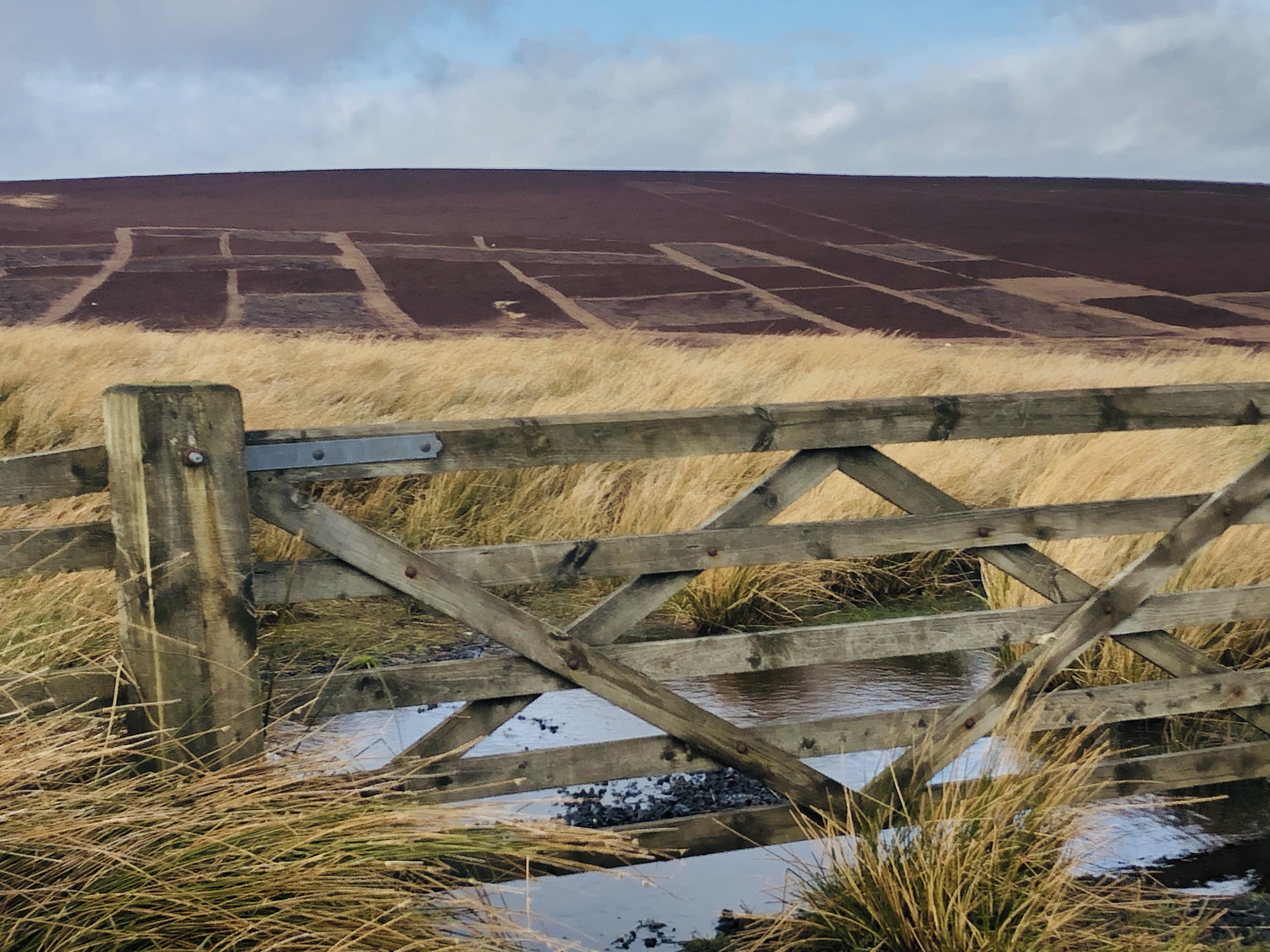
[An example of a shockingly intensively managed grouse moor in northern England. Photo by Ruth Tingay]

Illegal persecution of birds of prey also still occurs on some intensively-managed grouse moors, with killing of goshawks, hen harriers and eagles – and trapping of stoats, foxes and mountain hares – to maximise grouse numbers.

A staggering 44% of the Cairngorms National Park comprises driven grouse moors, as does almost a third (28%) of the North York Moors, a quarter of the Yorkshire Dales and a fifth (21%) of the Peak District. Driven grouse moors also cover 15% of Northumberland National Park and 2% of the Lake District.

Driven grouse shooting, which only occurs in the UK, involves intensive management of moorland to maximise the numbers of grouse, enabling people to shoot large numbers of red grouse flushed out by rows of walkers called beaters. The country’s other form of grouse shooting – known as ‘walked up’ shooting – is much less intensive in its management of the land, does not seek to maximise grouse numbers in the same way, and is generally seen as more environmentally sustainable.

Rewilding Britain is calling for government action to create wilder national parks – with a tenth of the parks’ land forming core rewilding areas and nature recovery across another 50%. This would allow the parks to set the pace for ensuring a healthier, more nature-rich Britain, with fresh opportunities for communities and local economies.

The UK has been ranked 189th out of 218 countries for nature, with some 56% species in decline and 15% threatened with extinction. Rewilding Britain says rewilding – large-scale restoration of nature to the point where it can take care of itself – will help reverse this collapse in biodiversity.

The charity’s research shows rewilding can also significantly boost green job creation and volunteering opportunities. Data from Rewilding Britain’s analysis of 23 large-scale rewilding sites in England – including some former driven grouse areas – shows a 47% increase in jobs overall as a result of rewilding.

“Britain’s nature would be in an even worse state were it not for the national parks, which have protected their landscapes from urbanisation and done a lot for conservation. But with the nature and climate crises outpacing us, the parks’ wildlife and habitats are badly depleted. We need bold action for nature recovery to match the scale of the threats,” said Guy Shrubsole.

Rewilding 10% of the parks would see peatlands, moorlands, woods, rivers and seas restored, with no loss of productive farmland. Nature recovery areas across a further 50% of the parks would involve a mix of habitats, wildlife corridors and land uses, with Government financial support for nature-friendly agriculture.

The Government can create rewilding areas across 10% of the parks regardless of action by private landowners. Public bodies – along with water companies, which are legally obliged to help the parks meet their purpose – own 738,000 acres or 13% of the total 5.7m acres covered by Britain’s 15 national parks.

Rewilding Britain’s petition calling on the UK and devolved governments to create wilder national parks can be signed at https://act.rewildingbritain.org.uk/demand-wilder-national-parks

ENDS

The Guardian has an article on this today (here) including a fatuous quote from Amanda Anderson of the Moorland Association about grouse moor owners apparently being ‘wild at heart’ (eh?) and a link to Wild Justice’s legal challenge against the burning of peatlands in the English uplands (here).

Hen Harrier Day 2021 takes place this Saturday (7th August) and there’ll be plenty of discussion in the live online broadcast about the devastating environmental impacts of grouse moor management. Sign up here for notification about the event.

New golden eagle satellite tags being tested in Cairngorms National Park, an eagle-killing hotspot

Press release from Cairngorms National Park Authority (3rd August 2021). My commentary is below that.

High tech tags to give insight into lives of golden eagles in Cairngorms National Park

Three golden eagle chicks in the Cairngorms National Park have been successfully tagged using the latest innovative technology. Three estates in the Cairngorms National Park – including two in Strathspey – are part of this latest raptor tagging initiative, a partnership project that has been developed and funded by the Cairngorms National Park Authority and NatureScot.

The ‘Celltrack’ tags being used have come from the USA and are among the leading technology in raptor tagging. They will provide a better understanding of the species’ movements, habitat preferences and mortality.

The birds’ movements are tracked in real-time by CNPA staff and partners with transmissions coming in daily, providing a multitude of data that can help better understand the life of juvenile golden eagles, with an inbuilt alert system should mortality occur, whether through natural causes, persecution or other anthropogenic influences. The tags have the ability to detect unusual behaviour and send alerts with accurate locations.

‘Celltrack’ tags make use of an innovative dual communication system with data being sent over the mobile phone network as well as through a network of (ARGOS) satellites. By using this hybrid communication system, the large quantity of location fixes acquired each day can be transmitted over the mobile phone network, with the additional security of satellite communications when birds are out of signal.

Dr Ewan Weston, an independent research ecologist, has been in charge of tagging the golden eagle chicks under licence. He commented: “Having been involved in fitting tags to eagles for 14 years, the technological advances in the tags we use now bring data that was previously unimaginable. The data we receive, feeds into wider research on the species and covers aspects of golden eagle biology and environment, providing an insight into aspects of their lives in incredible detail. This work has included aspects of their dispersal behaviour, interaction with the landscape and developments such as wind farms.”

Dr Pete Mayhew, Director of Nature and Climate Change at the CNPA said: “The more we know about golden eagles in the Cairngorms National Park – from fledging through to acquiring their own territories – the better we can conserve and enhance their populations for the future. This is another excellent conservation partnership project involving government bodies and private estates who all wish to see a healthy future for our raptor species.”

The CNPA set out plans for a golden eagle tagging project in 2019, which included the use of British Trust for Ornithology-provided tags; however, delays in production, technical issues and the impact of the Covid-19 pandemic has seen the project switch to using ‘Celltrack’ tags. However, partners will continue to work closely with BTO over the coming months, including sharing data from the three recently tagged golden eagle chicks.

Seafield & Strathspey Estates are a partner in the project – their Chief Executive Will Anderson said: “We are very proud of our raptor populations here and as a result we are involved in several tagging projects. We are particularly pleased to be partnering with the Park Authority in this initiative as the type and volume of data collected is likely to be incredibly beneficial to be able to plan for the future with the birds needs in mind.”

The RSPB Scotland has also had one of their young golden eagles tagged as part of this project. Fraser Cormack, RSPB Scotland Abernethy Warden said “With raptors still being persecuted in Scotland the data that these tags provide could be crucial in helping to stop such crimes. Also with this potentially being a new territory it will be great to see the chicks movements after fledgling and where it disperses to in the future.”

Andy Turner, NatureScot Wildlife Crime officer, added: “NatureScot are providing strong support to the CNPA on this project. This innovative technological development will strengthen our understanding of golden eagle movements, aiding both research and hopefully acting as a deterrent to illegal persecution. The ability for instant alerts and complex motion data will provide welcome new insights into the movements of these special birds.  If this is successful, I hope we can deploy this technology more widely.”

Licenses to tag Golden Eagles are granted on behalf of NatureScot by the British Trust for Ornithology who look at various criteria, especially animal welfare. Tag data will be managed by a small, dedicated team at the CNPA and Dr Ewan Weston, NatureScot, and Police Scotland’s Wildlife Crime Unit.

ENDS

Hmmm. In principle, I am fully supportive of the continued satellite-tagging of golden eagles in Scotland because of the incredible insight they have provided in to the lives of this often elusive species.

Researchers have been able to provide tag data to influence conservation policy, based on new information about these birds that would previously have been almost impossible to find out (e.g. see here for a fantastic piece of modelling, based on satellite tag data, to predict how young dispersing golden eagles in Scotland will use specific landscape features, and here for the most recent scientific paper, again based on satellite tag data showing how young golden eagles in Scotland are actively avoiding wind turbines).

This sort of research is fundamental to our ability to conserve golden eagles and the quality of the research undertaken in Scotland is held in high regard by fellow scientists in Europe and North America.

I’m also very pleased to see the Cairngorms National Park Authority (CNPA) and NatureScot continue to recognise the importance and significance of golden eagle satellite-tagging, and be willing to put their money where their mouths are by funding this tagging sub-project, despite the best attempts of the grouse-shooting industry to derail this type of research. The shooters object because as well as ecological and biological insights, these tags are also providing illuminating information about the locations where golden eagles are still being illegally killed, almost 70 years after they became a protected species.

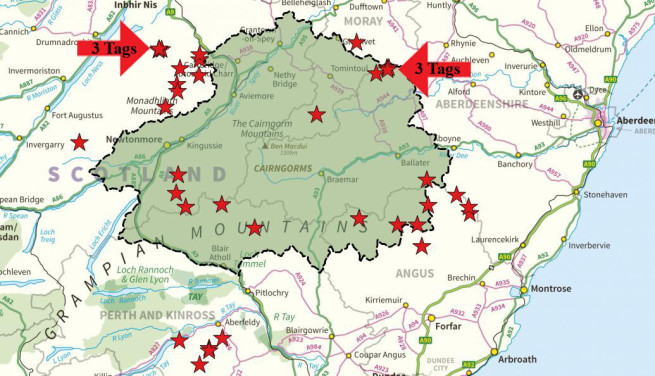
Significantly, the satellite tag data have allowed researchers to identify several geographical clusters where golden eagle persecution still takes place and more often than not, these are on or very close to moors being managed for driven grouse shooting. Unfortunately for the CNPA, some of those clusters are actually inside the Cairngorms National Park:

[This map shows the last known locations of satellite-tagged golden eagles that have either been found illegally killed or have disappeared in suspicious circumstances between 2004-2016. Data from the SNH report Analyses of the fates of satellite-tracked golden eagles in Scotland (2017) authored by Dr Alan Fielding & Dr Phil Whitfield]

It’s clear then, that the CNPA (and NatureScot) are in an embarrassing position and want/need to be seen to be doing something about the ongoing persecution. And ongoing it is, as we’ve seen with an illegally poisoned white-tailed eagle being found on a grouse moor inside the National Park last year (here) and yet another illegally poisoned golden eagle being discovered on another grouse moor inside the National Park earlier this year (see here). The subsequent bad press from these crimes is difficult for the CNPA to deal with (e.g. here).

And that leads me to be cynical about the timing of this latest press release. If you remember, back in 2019 the CNPA issued a similar press release (see here), stating that a new type of tag had been developed and would be fitted to golden eagles in the National Park over the forthcoming 18 months. The CNPA claimed this new tag would ‘provide an instant fix on any birds which die’.

The reality was somewhat different. The ‘new tag’ wasn’t developed to a sufficient standard that it could be trialled and thus was not fitted. That 2019 press release was considerably premature and I’m going to stick my neck out again and say this latest press release is similarly premature. Although this time a ‘new tag’ has actually been fitted and deployed on three young birds, it is far too soon to know whether the tag actually works as is being claimed, not least whether it will provide an ‘instant alert’ when an eagle dies. The ‘new tag’ being deployed this time is collecting the same type of data as the tags we currently deploy on golden eagles, and it has been used to track raptors in North America, but it is not the tag that we were told was being developed, with public funding, to specifically help detect illegal persecution of golden eagles in Scotland.

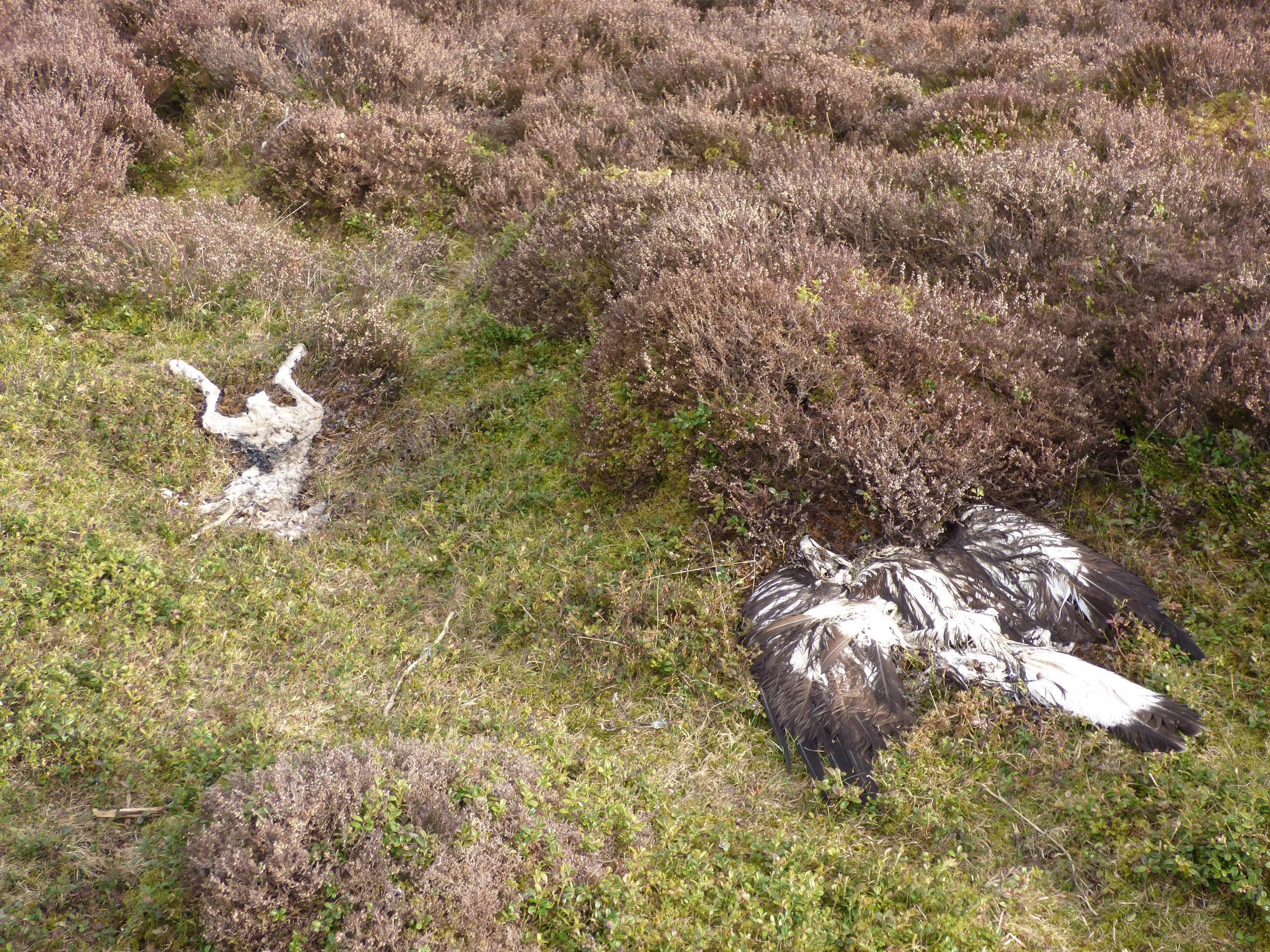
So why might the CNPA be keen to put out this press release prematurely? Well, if you’re a cynic like me, you might think that the CNPA has recently received a barrage of criticism for its inability to prevent the illegal killing of golden eagles (and other raptors) inside the National Park, sparked by the discovery of the poisoned golden eagle on Invercauld Estate earlier this spring, and so they’re keen to try and turn that around:

[The deliberately poisoned golden eagle, next to a poisoned mountain hare bait. Photo by RSPB Scotland]

The timing of the press release might also have a lot to do with the CNPA’s forthcoming five-year management plan, where it will have to report on its failures to meet the previous plan’s raptor conservation-based objectives. If the CNPA can chuck in a few ‘positives’ in to the new plan, such as the deployment of these new tags, it might act as a sweetener to those who will, quite rightly, be criticising the Park’s lack of progress on this issue.

Having said all that, I wouldn’t be alone in being delighted if this tag does function as is being claimed, and provides an ‘instant alert’ when an eagle dies, whether that be from natural causes or from illegal persecution. Any technological advance that would help the police to identify the criminals would be warmly welcomed by all (except for the criminals, obviously).

It’ll be interesting to see what happens with this new tag once the young eagles disperse during the autumn and travel into grouse moor areas where eagles are still not tolerated.

Incidentally, there will be short film about golden eagle persecution in Scotland being shown during this weekend’s live broadcast for Hen Harrier Day (Saturday 7th August 2021). If you want to hear more about this and what else is coming up, please sign up for Wild Justice’s event notification here.


Police lead multi-agency search after suspected peregrine poisoning in Shropshire

A multi-agency search took place in Shropshire yesterday as part of the ongoing investigation in to the suspected poisoning of a peregrine earlier this year.

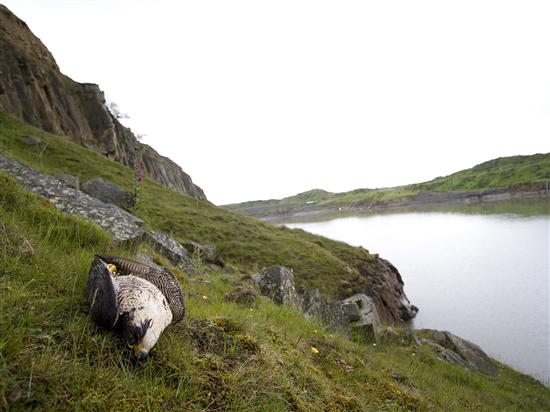
You may recall the very prompt appeal for information made by West Mercia Police in May (see here) after the corpse of a female peregrine had been found, along with a suspected pigeon bait, at the notorious raptor persecution blackspot of Clee Hill.

[This is a photograph of another peregrine found poisoned at this site in 2017 (see here). Photo by RSPB]

Toxicology results are apparently still pending on this latest case but given the long history of poisoned peregrines at this site, and the discovery of yet another baited pigeon, it’s more than likely that this latest peregrine victim had also been illegally poisoned.

No doubt this is what prompted the police-led search at a premises yesterday, assisted by experts from Natural England, the National Wildlife Crime Unit and the RSPB Investigations team. The investigation continues.

[Photo via West Mercia Police]

This is at least the 5th multi-agency search in England this year, all in response to raptor persecution crimes. On 15th March 2021 there was a raid in Lincolnshire (see here), on 18th March a raid in Dorset (here), on 26th March a raid in Devon (see here) and on 21st April a raid in Teesdale (here). And now this raid in Shropshire.

Worryingly, all of these cases have involved the confirmed / suspected use of banned poisons to kill birds of prey.

Well done to all the agencies involved in these follow-up investigations. It’s good to see genuine partnership-working in the fight to catch the raptor killers.