Dorset MP Chris Loder doesn’t want Police to investigate suspicious death of white-tailed eagle

Further to yesterday’s news that two reintroduced white-tailed eagles have been found dead in suspicious circumstances on game-shooting estates in southern England and that Dorset Police are investigating the circumstances of the one found in Dorset (here), local conservative MP Chris Loder has made an extraordinary statement on Twitter this morning.

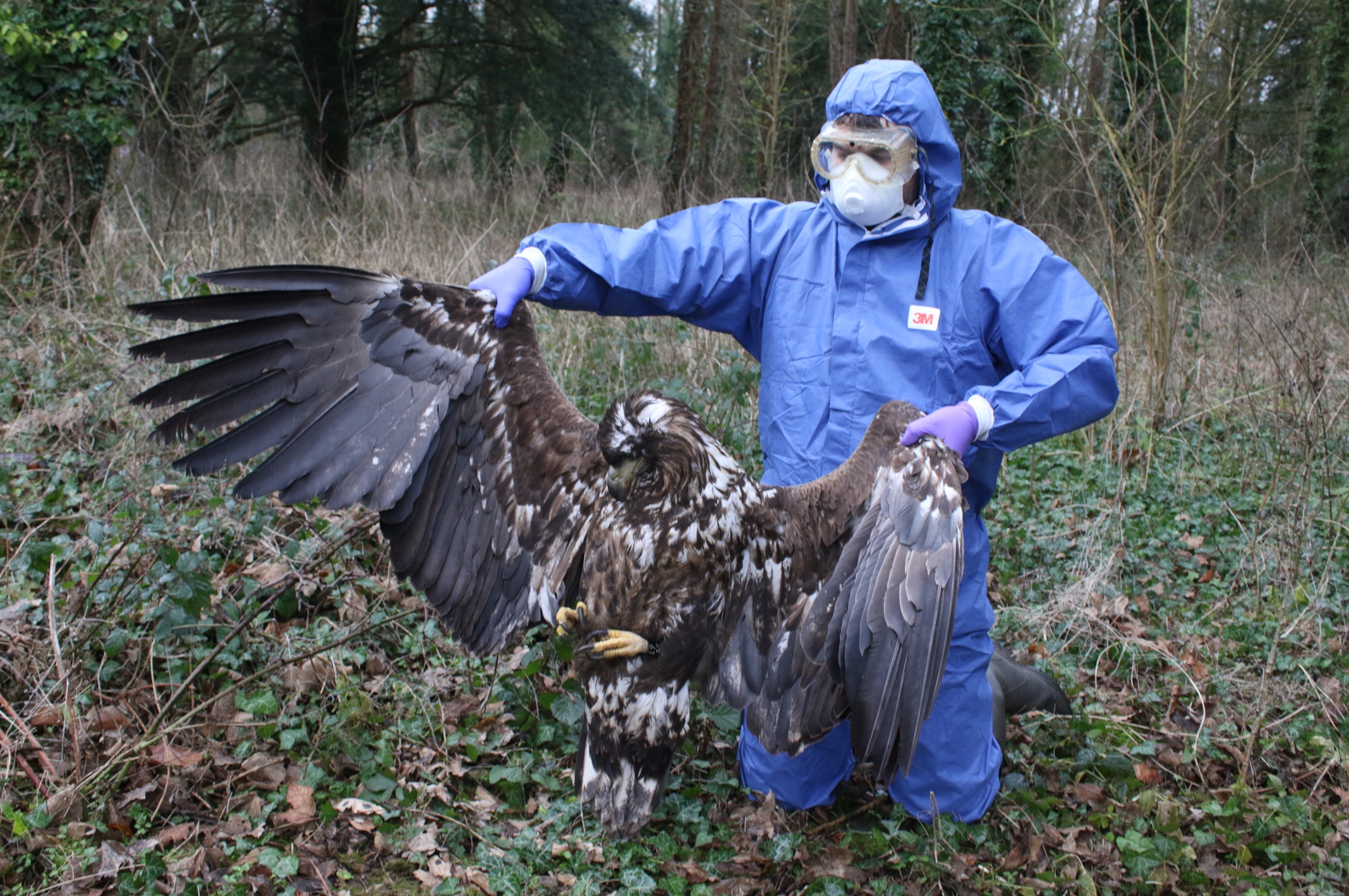
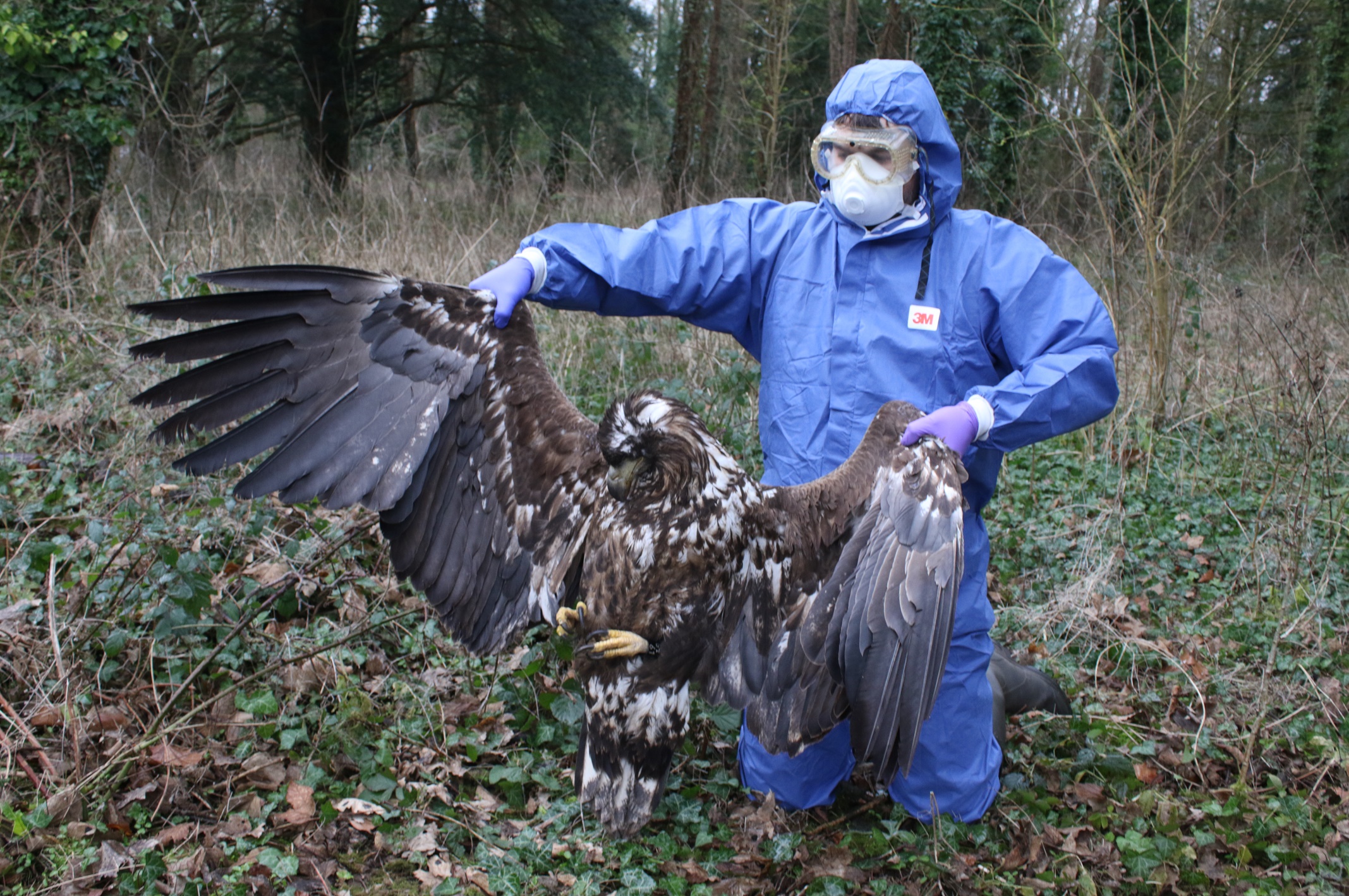
[The dead white-tailed eagle found in Dorset. Photo from Dorset Police]
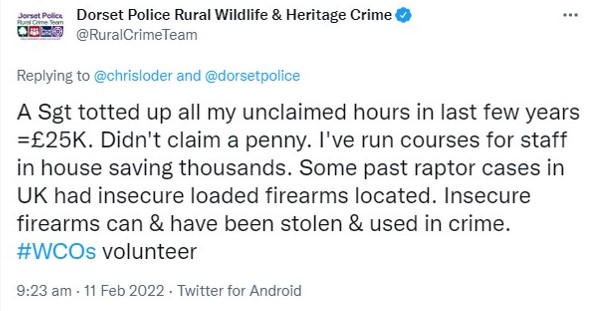
Here’s his tweet:
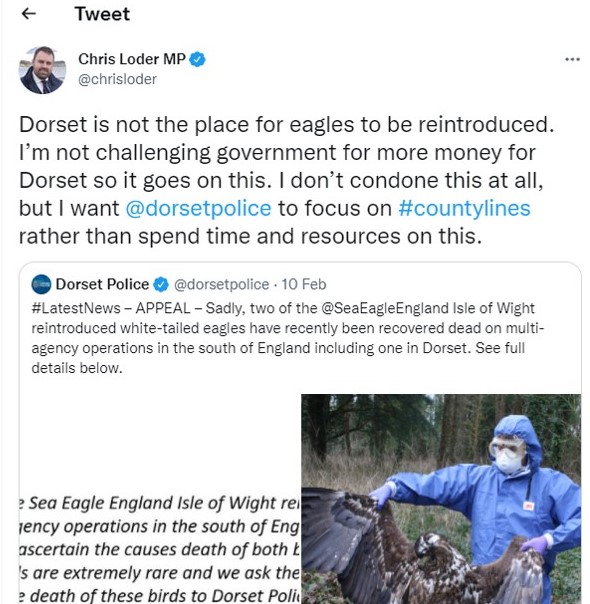
Is this guy for real?

This is a suspected wildlife crime of a very serious nature. The three most common methods for killing birds of prey on UK game-shooting estates are shooting, trapping (and then clubbing to death) and poisoning. We don’t know which of these methods, if any, have been deployed in this case but all are potential features of the case. The fact that Dorset Police have stated the eagle has gone for toxicology analysis suggests that poisoning is a possibility.

The poisons most frequently used to kill birds of prey in this country are highly toxic substances – banned in many countries because they’re so dangerous that just a tiny amount is enough to kill a human. The effects of using poisonous baits are indiscriminate. Not only may the baits kill the target species but any other species that happens to come into contact with it, or any pet dog, or any inquisitive human, including a child.

If the eagle has been shot, there’s a dangerous armed individual on the loose in Dorset.

If the eagle has been trapped and clubbed to death, there’s a dangerous psychopath on the loose in Dorset.

Why on earth wouldn’t Mr Loder MP want Dorset Police to spend time and resources investigating this incident?

It wouldn’t have anything to do with the local conservative party receiving donations from a prominent Dorset estate, would it? [Note: I am not in any way suggesting that the donor estate is linked to the death of this eagle, I’m pointing out that on the Parliamentary register of interests Mr Loder has listed substantial party donations from a Dorset estate whose owner appears to be linked to ‘country sports’].

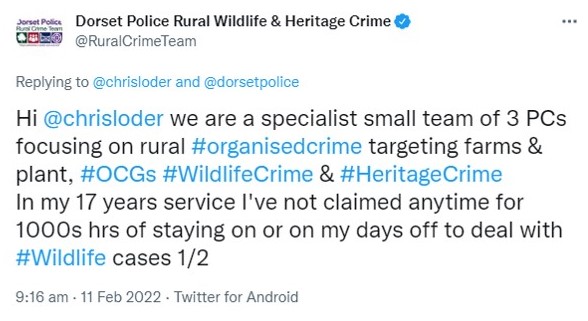
Dorset Police’s Rural Crime Team have hit back at Mr Loder:
Mr Loder’s response:
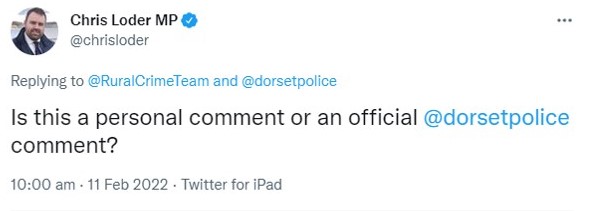
FFS. As if it isn’t difficult enough for under-staffed, under-resourced police officers to investigate wildlife crime. Imagine being on this rural crime team, which, by the way, has a deserved reputation for being diligent and sincere when dealing with alleged raptor persecution crimes, trying to get to the bottom of what will be one of the highest profile cases this year, under huge public pressure to deliver results (quite rightly, IMHO), and the local MP publishes demoralising tosh like this.

I hope his inbox is flooded with complaints.

UPDATE 12th February 2022: Dorset MP Chris Loder’s farming connections may explain his anti-eagle hysteria (here)

UPDATE 14th April 2022: Dorset Police refuse FoI request for correspondence between them and Chris Loder MP on poisoned eagle (here)

UPDATE 5th March 2025: Natural England quietly releases intriguing grouse moor location where two shot brood meddled hen harriers found dead (here)
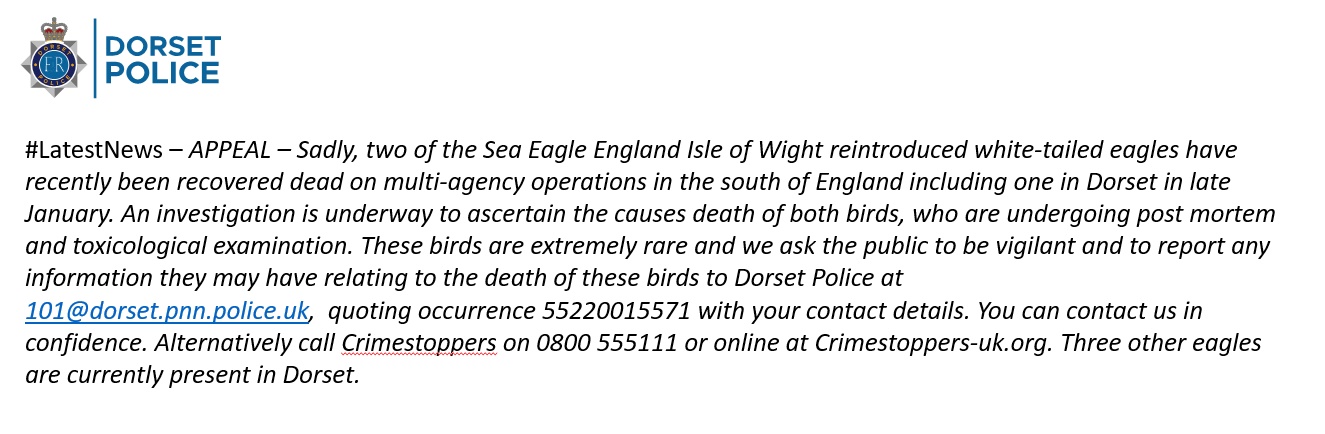
Two reintroduced white-tailed eagles found dead in suspicious circumstances on game-shooting estates in southern England

Well it took longer than I expected but it’s happened.

Two of the reintroduced white-tailed eagles from the Isle of Wight Project have been found dead in suspicious circumstances on game-shooting estates in southern England.

The fact they were discovered during multi-agency searches is a clear indication that criminality is suspected. One was found in Dorset in January and the other one is believed to have been found in Sussex last October.

Toxicology results are awaited for both eagles, although why it’s taken four months for the results from the first bird is not yet clear.

[The dead white-tailed eagle found on a game-shooting estate in Dorset. Photo by Dorset Police]

There is huge concern for the safety of three other white-tailed eagles currently in Dorset, which I imagine is why the police have decided to issue this statement:

UPDATE 11th February 2022: Dorset MP Chris Loder doesn’t want Police to investigate suspicious death of white-tailed eagle (here)

UPDATE 12th February 2022: Dorset MP Chris Loder’s farming connections may explain his anti-eagle hysteria (here)

UPDATE 15th February 2022: Police investigate after sudden death of white-tailed eagle on Isle of Wight (here)

UPDATE 27th April 2022: White-tailed eagle poisoned with banned pesticide on a game-shooting estate in West Sussex (here)

General Licence restriction imposed on Invercauld Estate in Cairngorms after poisoned golden eagle & baits found

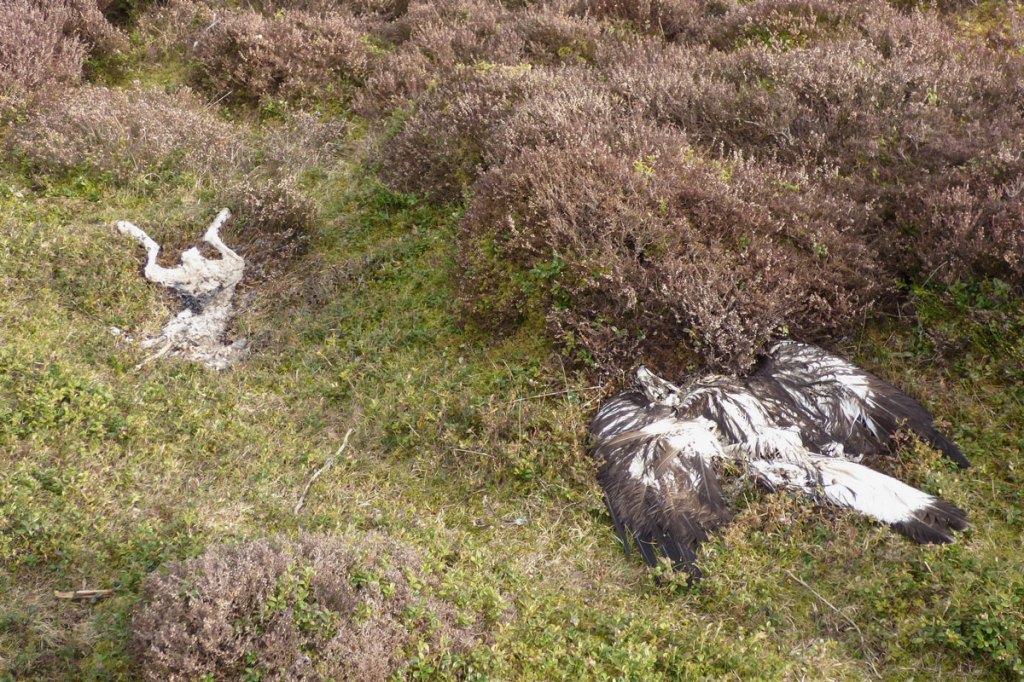
In March last year a dead golden eagle was found face-down on a grouse moor on Invercauld Estate in the Cairngorms National Park. It had been ‘deliberately’ poisoned with a banned substance, according to Police Scotland, and two poisoned baits were found close-by (see here).

[The poisoned golden eagle, next to a poisoned hare bait. Photo by RSPB Scotland]

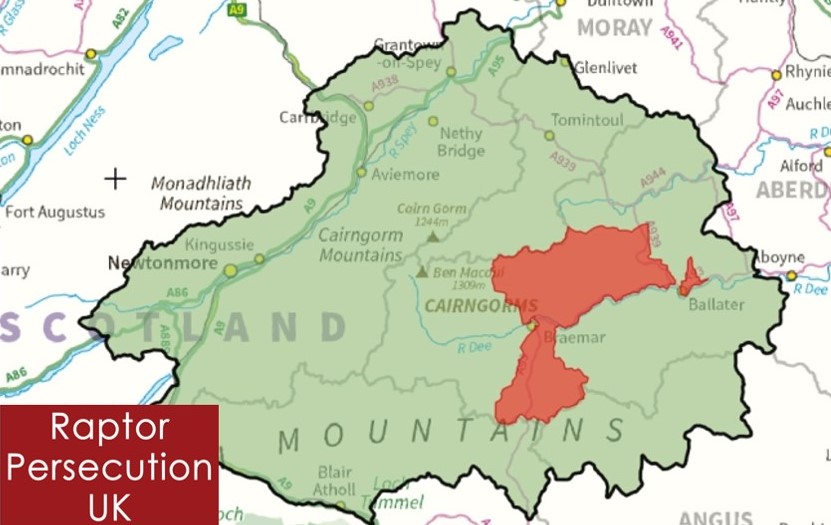
[Invercauld Estate inside the Cairngorms National Park. Boundary data from Andy Wightman’s Who Owns Scotland website]

Today, 11 months after the grim discovery, the Scottish Government’s statutory nature conservation agency NatureScot has imposed a three-year General Licence restriction on part of Invercauld Estate. Here’s the press release:

General Licence restricted on Cairngorms Estate

NatureScot has restricted the use of general licences on part of the Invercauld Estate in the Cairngorms National Park.

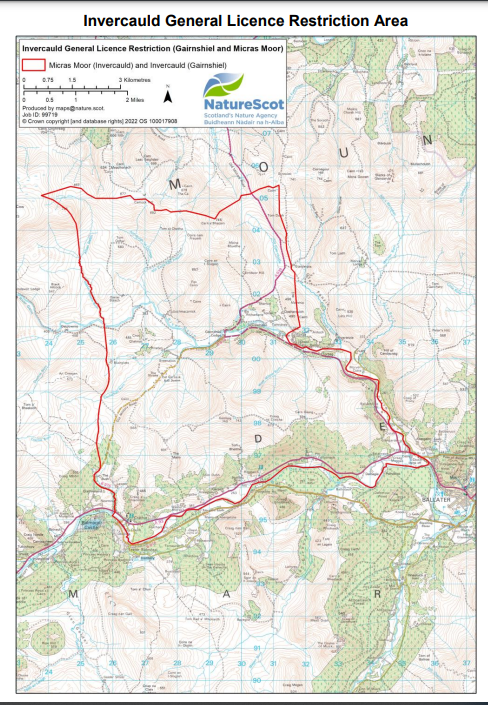
The decision was made on the basis of evidence provided by Police Scotland of wildlife crime against birds. This evidence included a poisoned golden eagle found on the estate in March 2021, along with a rabbit and a hare carcass, both baited with poison. The restriction will apply to the Gairnshiel and Micras moor on the estate, where the evidence of poisoning was found.

Donald Fraser, NatureScot’s Head of Wildlife Management, said: ““These poisoning incidents are appalling and an act of animal cruelty. The indiscriminate use of poisons is not only lethal to our iconic Scottish wildlife, but can also pose a serious health risk to people and domestic animals that come into contact with it. 

“We are committed to using all the tools we have available to tackle wildlife crime. In this case, there is clear evidence of criminal behaviour. Because of this, and the risk of more wildlife crimes taking place, we have suspended the use of general licences on this property for three years. They may still apply for individual licences, but these will be closely monitored.

“This measure will help to protect wild birds in the area, while still allowing necessary land management activities to take place, although under tighter supervision. We believe this is a proportionate response to protect wild birds in the area and prevent further wildlife crime.

“We work closely with Police Scotland and will continue to consider information they provide on cases which may warrant restricting general licences. The detection of wildlife crime can be difficult, but this is the third time in recent months when we have restricted use of general licences on the basis of evidence of crime taking place. New and emerging technologies, along with a commitment from a range of partners to take a collective approach to these issues, will help us stop wildlife crime.”

General licences allow landowners or land managers to carry out control of common species of wild birds, such as crows and magpies, to protect crops or livestock, without the need to apply for an individual licence.

ENDS

Here is the map showing the restricted areas on Invercauld Estate. The restriction applies from 9th February 2022 to 9th February 2025.

This has been a long time coming for this estate. I wrote about it in May 2021 (here) and I’ll repeat it here.

Invercauld Estate and the surrounding area has been at the centre of many alleged wildlife crimes over the years, including the discovery of three poisoned buzzards on the estate in 2005 (here), the discovery of a poisoned red kite at the Spittal of Glenshee on Invercauld Estate in January 2007 according to former police wildlife crime officer Alan Stewart (in litt. 9 Feb 2022), the discovery of an illegally shot peregrine at the Pass of Ballater in 2011, the reported coordinated hunt and subsequent shooting of an adult hen harrier at Glen Gairn on the border of Invercauld and Dinnet Estates in 2013, the illegally-set traps that were found near Geallaig Hill on Invercauld Estate in 2016, the suspicious disappearance of satellite-tagged hen harrier Calluna ‘on a grouse moor a few miles north of Ballater’ on 12 August 2017, the opening day of the grouse shooting season (here) although it’s not clear whether this was on Invercauld Estate or neighbouring Dinnet Estate, the suspicious disappearance of satellite-tagged white-tailed eagle ‘Blue T’ on Invercauld Estate in May 2018 (see here), the suspicious disappearance of satellite-tagged hen harrier Stelmaria ‘last recorded on grouse moor a few miles north west of Ballater, Aberdeenshire on 3rd September 2018 (see here), the discovery of a golden eagle flying around the area with a spring trap attached to its foot in August 2019 (here), the suspicious disappearance of satellite-tagged hen harrier (Wildland 2) on Invercauld Estate on 24 September 2019 (here) and the discovery of a deliberately poisoned golden eagle and poisonous baits on a grouse moor on Invercauld Estate in March 2021 (see here).

I’m pleased to see this restriction finally imposed on Invercauld, although I’d much rather have seen a series of criminal prosecutions. The restriction will have very little material affect on the game-shooting activities on Invercauld because the estate can simply apply for an individual licence allowing it to continue its activities as if no ‘clear evidence of criminal behaviour’ has been uncovered (more on that ridiculous situation shortly) but it does mean the estate’s reputation is damaged and it also means this can be used to apply pressure on organisations such as Scottish Land & Estates and the Scottish Gamekeepers Association, who both claim to have a zero tolerance of raptor persecution.

Will Invercauld Estate and its gamekeepers remain members of these two organisations?

UPDATE 7th April 2022: Invercauld Estate in Cairngorms National Park loses appeal against General Licence restriction imposed for wildlife crime (here)

Another DEFRA Minister pretends to be taking action against raptor persecution on gamebird shooting estates

Last week in the House of Lords, Baroness Hayman of Ullock (Sue Hayman), a life peer serving as Shadow Spokesperson for Environment Food & Rural Affairs asked the Rt Hon Lord Richard Benyon (Parliamentary Under Secretary of State at DEFRA and a pheasant shoot and grouse moor owner) how the Government intended to take forward the recommendations of a new United Nations report on UK wildlife crime, including raptor persecution (p81-88). One of the many recommendations was the licensing of gamebird shoots.

Benyon’s predictable response might as well have said, ‘Nothing to see here, there’s no problem, move along now‘ (see here).

It’s a recurring theme from DEFRA Ministers.

In recent days, Kerry McCarthy MP asked George Eustice, Secretary of State for Environment, Food & Rural Affairs a similar question in the House of Commons:

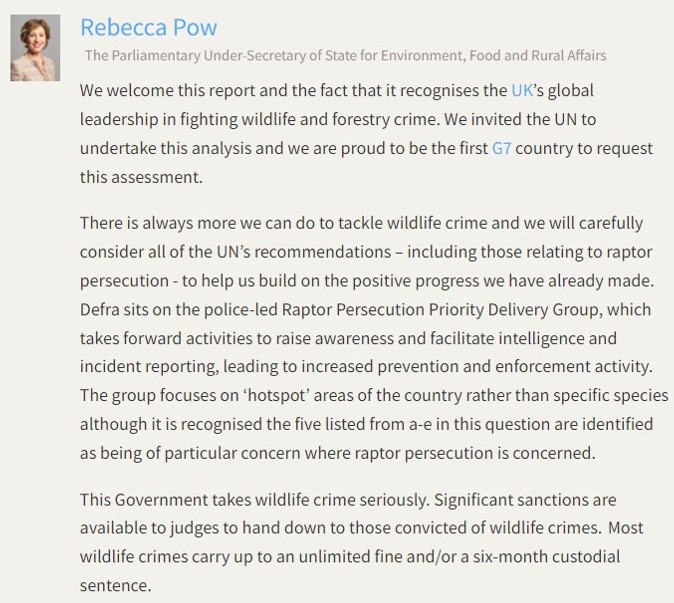
Rebecca Pow, the Parliamentary Under-Secretary of State replied on behalf of George Eustice:

Regular blog readers won’t be surprised to learn that Pow’s response is just a re-hash of the response she gave five months ago when asked a similar question by Fleur Anderson MP (see here).

In the spirit of re-hashing responses, here’s mine from five months ago:

It’s quite obvious that this answer has been designed to pull the wool over the eyes of your average member of the public, assuring the uninformed and the gullible that the Government has this under control and there’s no reason for anyone to be concerned because the Government is ‘committed’ to effective enforcement and the criminals are sent to jail. That would all be fine if there WAS effective enforcement, and that offenders DID get sent to jail for these heinous crimes, but it’s an utter fallacy.

Yes, it’s accurate to say there are strong penalties available for raptor persecution crimes, including imprisonment, but as Minister Pow will know, there’s a huge gulf between there being a provision for this in the legislation and it being applied in real life. For example, when was the last time that a criminal gamekeeper was sent to jail for killing a bird of prey? That’s an easy one to answer – never, in England & Wales. It has never happened. The only time a gamekeeper has received a custodial sentence for killing a bird of prey in the UK was in 2014 when a gamekeeper was filmed clubbing to death a goshawk on the Kildrummy Estate in Scotland two years earlier (see here). It was headline news at the time precisely BECAUSE it was the first ever custodial sentence, and it was the last, too.

It’s also complete deception to claim that the Raptor Persecution Priority Delivery Group (RPPDG) is delivering increased prevention or increased enforcement in the hotspot persecution areas. There isn’t ANY evidence to support such claims. The RPPDG is, in my opinion, a partnership sham, designed to look as though efforts are being made to effectively tackle illegal raptor persecution in England and Wales. It’s been in existence since 2011 and the ‘delivery’ results speak for themselves – so far it has achieved absolutely sod all in terms of contributing towards the conservation of raptors in the UK and instead has frustrated the efforts of those organisations who are genuinely trying to stamp out persecution (e.g. see here).

Nothing has changed. Raptors continue to be poisoned, trapped and shot on driven grouse moors and the Westminster Environment Minister’s wilful blindness is responsible for enabling that to continue.

Multi-agency raid following suspected raptor poisoning in North Wales

North Wales Police Rural Crime Team has posted this photograph on Twitter of a multi-agency raid that took place in Flintshire, North Wales today, involving the police, Welsh Government, National Wildlife Crime Unit and the RSPB’s Investigations Team.

There aren’t any further details other than a statement from the police:

‘The use of poisons to target birds of prey within our countryside will not be tolerated‘.

Well done to all the agencies involved.

This is the latest in a surge of multi-agency investigations in response to raptor persecution crimes over the last 13 months, including a raid on 18th January 2021 in Suffolk (here), another raid in January 2021 in Nottinghamshire (here), on 15th March 2021 a raid in Lincolnshire (see here), on 18th March 2021 a raid in Dorset (here), on 26th March 2021 a raid in Devon (see here), on 21st April 2021 a raid in Teesdale (here), on 2nd August 2021 a raid in Shropshire (here), on 12th August 2021 a raid in Herefordshire (here), on 14th September 2021 a raid in Norfolk (here), a raid in Wales in October 2021 (here) and on 10th December 2021 a raid in Humberside (here).

The Nottinghamshire investigation concluded on 28th January 2022 when gamekeeper John Orrey was sentenced for battering to death two buzzards he’d caught inside a trap (here).

Let’s hope some of these other raids have secured sufficient evidence to bring defendants to court.

More on those shot & dumped birds in Angus

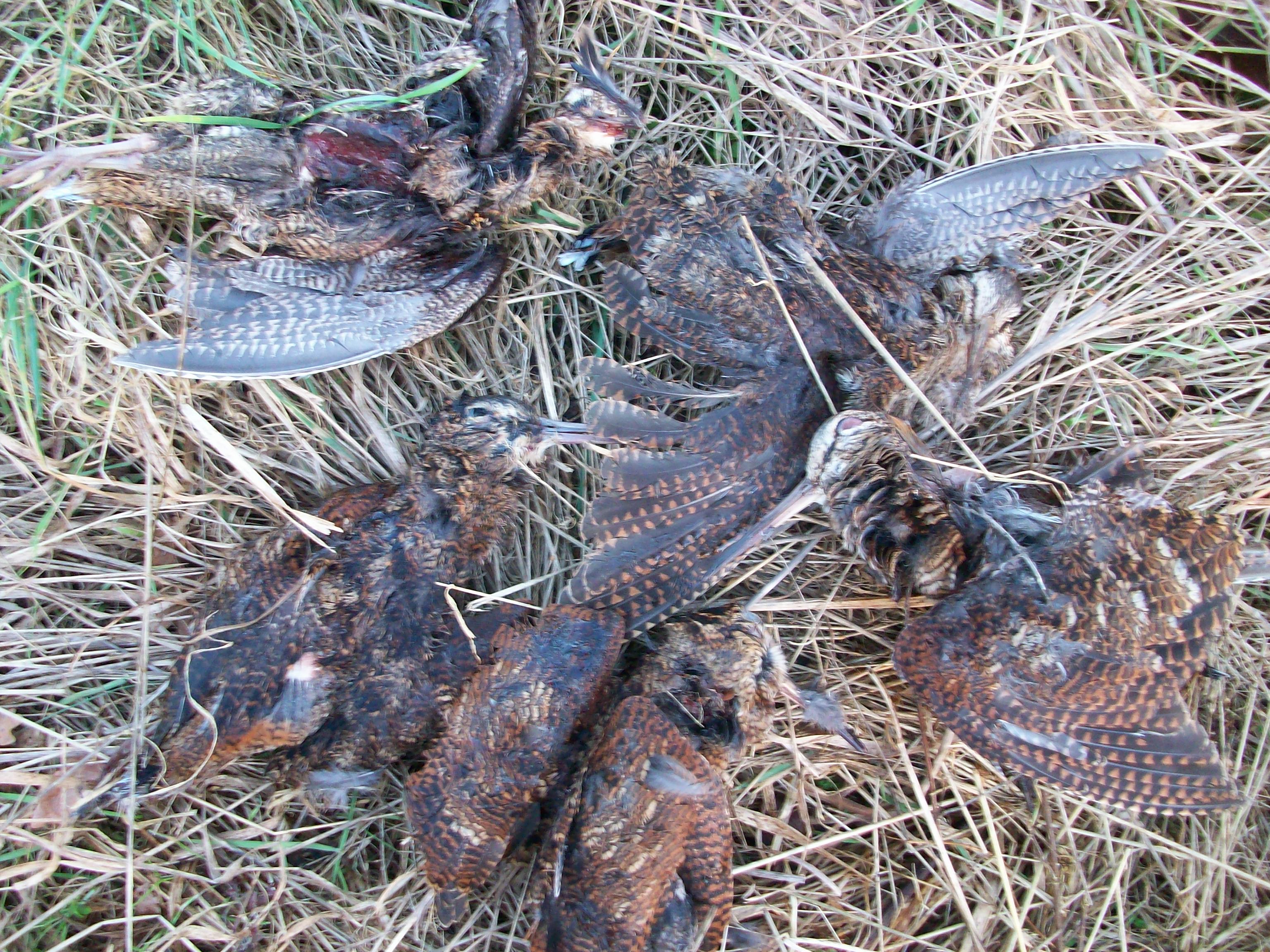
Yesterday’s blog about the discovery of shot and dumped pheasants (and assorted other species) found in a lay-by in Angus, Scotland (here) caused quite a lot of discussion on social media about whether the carcass pile included woodcock, common snipe and jack snipe.

Shooting woodcock for ‘sport’ is highly controversial – this is a UK red-listed species. Shooting and then dumping the corpses would be inexcusable.

Last night the person who sent me the original photos from that lay-by went back to the dump site to try and get better photos for ID purposes:

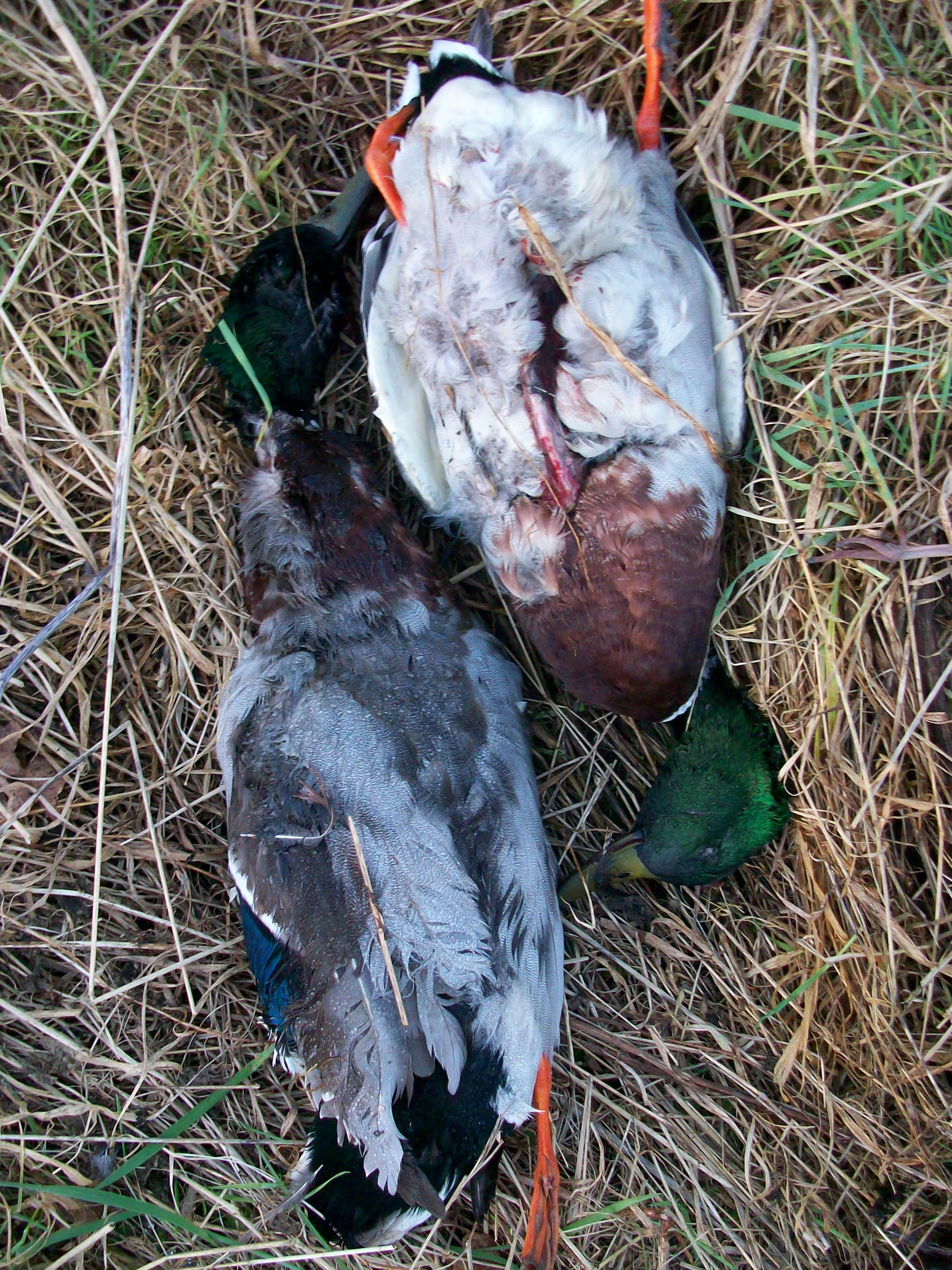
This morning another blog reader visited the dump site and took more photos (see below). He told me there were five waders (he ID’d as woodcock) and another pile of birds nearby that looked to have been dumped a few weeks ago (pile included pheasants, teal and woodcock).

Here are the photos:

UPDATE 14th February 2022: ‘Insane’: Outrage after gamebirds dumped in Angus (here)

Wild Justice begins legal challenge against DEFRA on Schrodinger’s pheasant

When is a pheasant considered livestock and when is it considered wildlife?

The answer has huge significance in terms of what species gamekeepers are permitted to kill to ‘protect’ their gamebirds using General Licence 42, issued by DEFRA, which authorises the killing of certain bird species to prevent serious damage to ‘livestock’.

The answers are not at all clear, as shown in this infographic created by conservation campaign group Wild Justice:

In fact it’s so unclear, and appears to have been rigged for the benefit of the game-shooting industry rather than to benefit genuinely at-risk livestock, that Wild Justice has started legal proceedings against DEFRA.

You can read more detail about this legal challenge on Wild Justice’s blog (here) and it was also featured in an article in The Guardian this morning (here).

Wild Justice has three co-directors (Mark Avery, Chris Packham, Ruth Tingay) who work unpaid as volunteers. Their work to get a better deal for wildlife relies entirely on donations so if you’d like to support their work please consider a donation here. If you’d like to hear more about their legal challenges and campaign work, please sign up for their free newsletter here.

Thank you.

UPDATE 11th March 2022: DEFRA forced to U-turn on Schrodinger’s pheasant after legal threat from Wild Justice (here)

More pheasants shot & dumped, in Angus this time

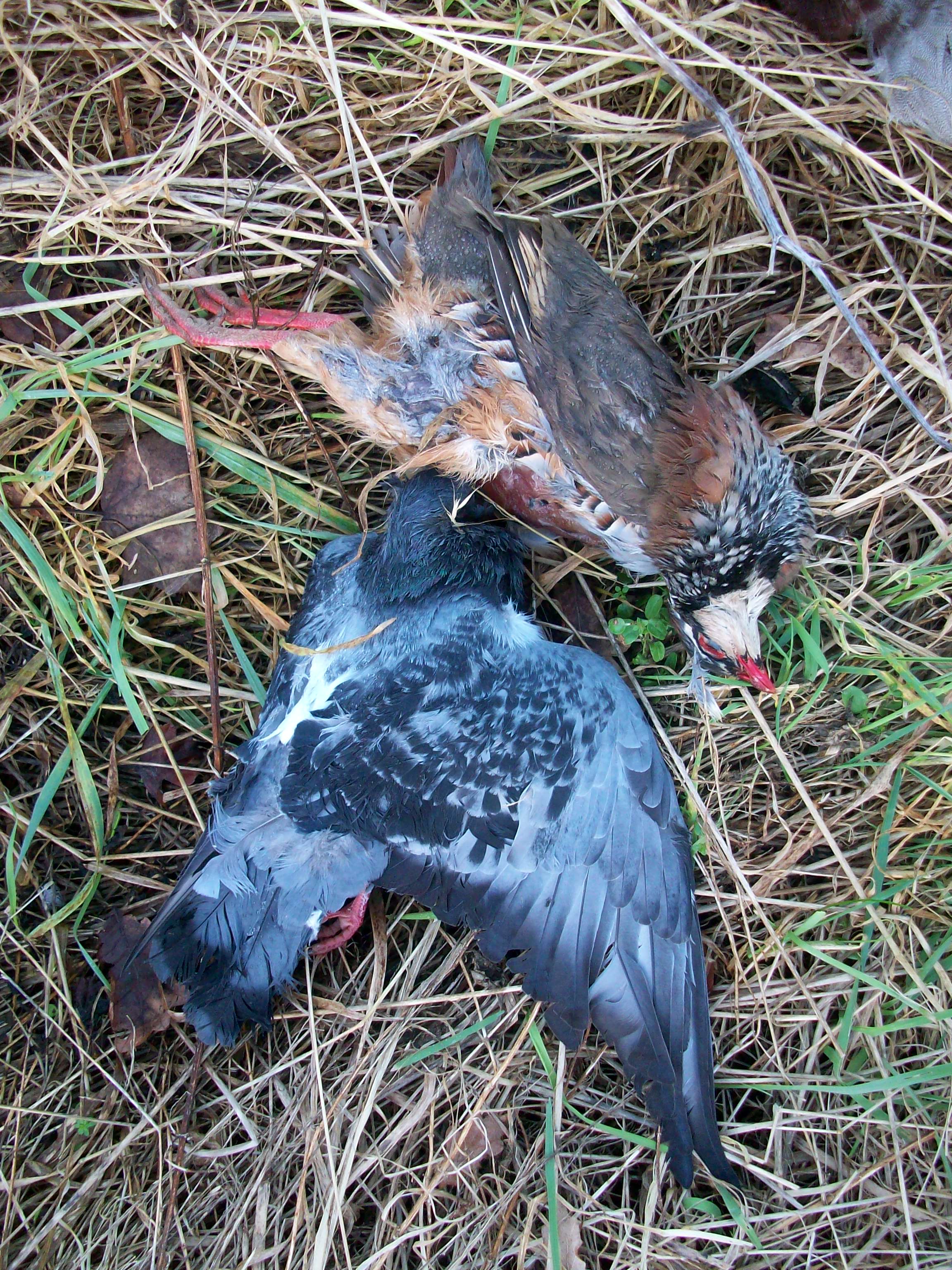
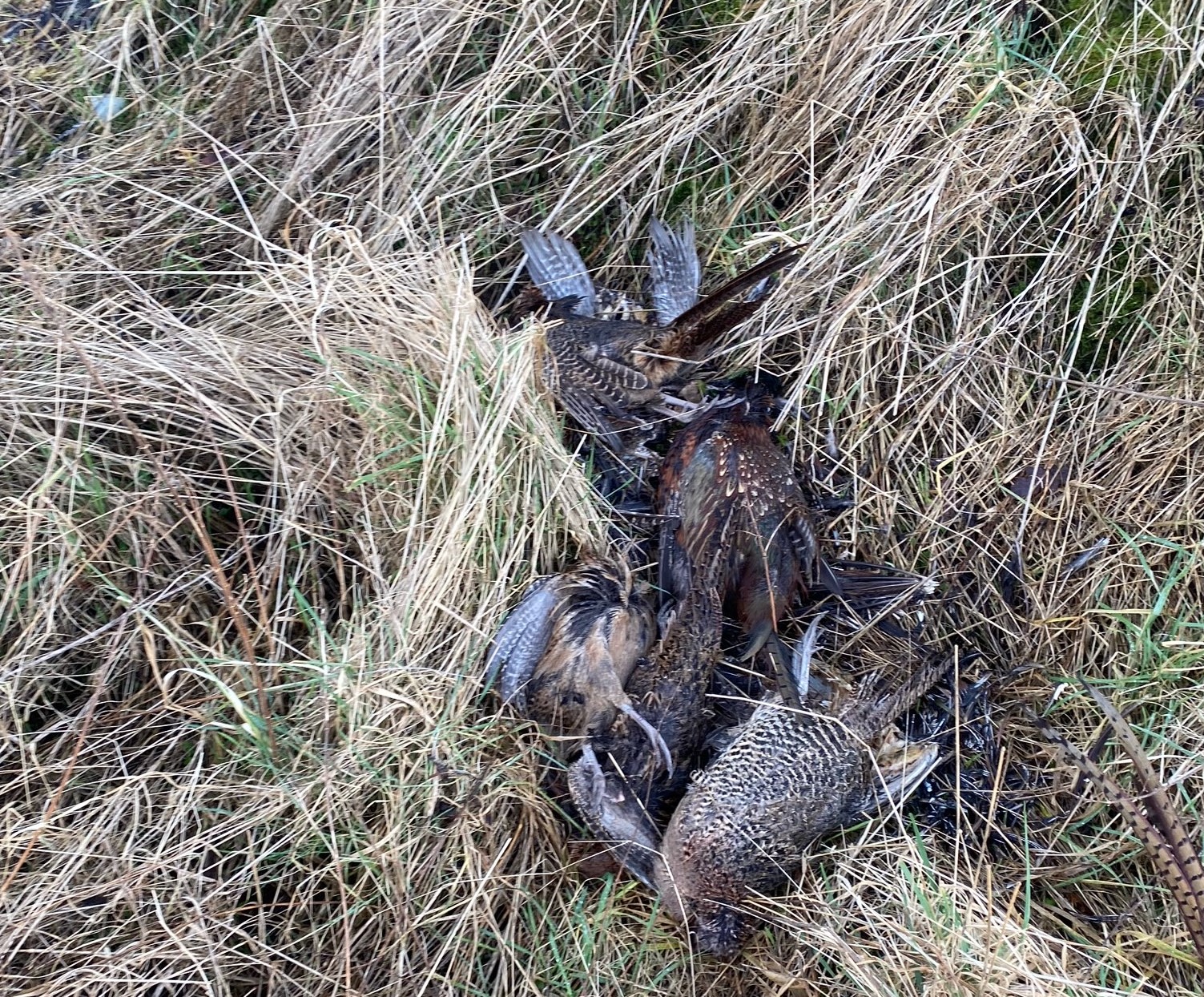
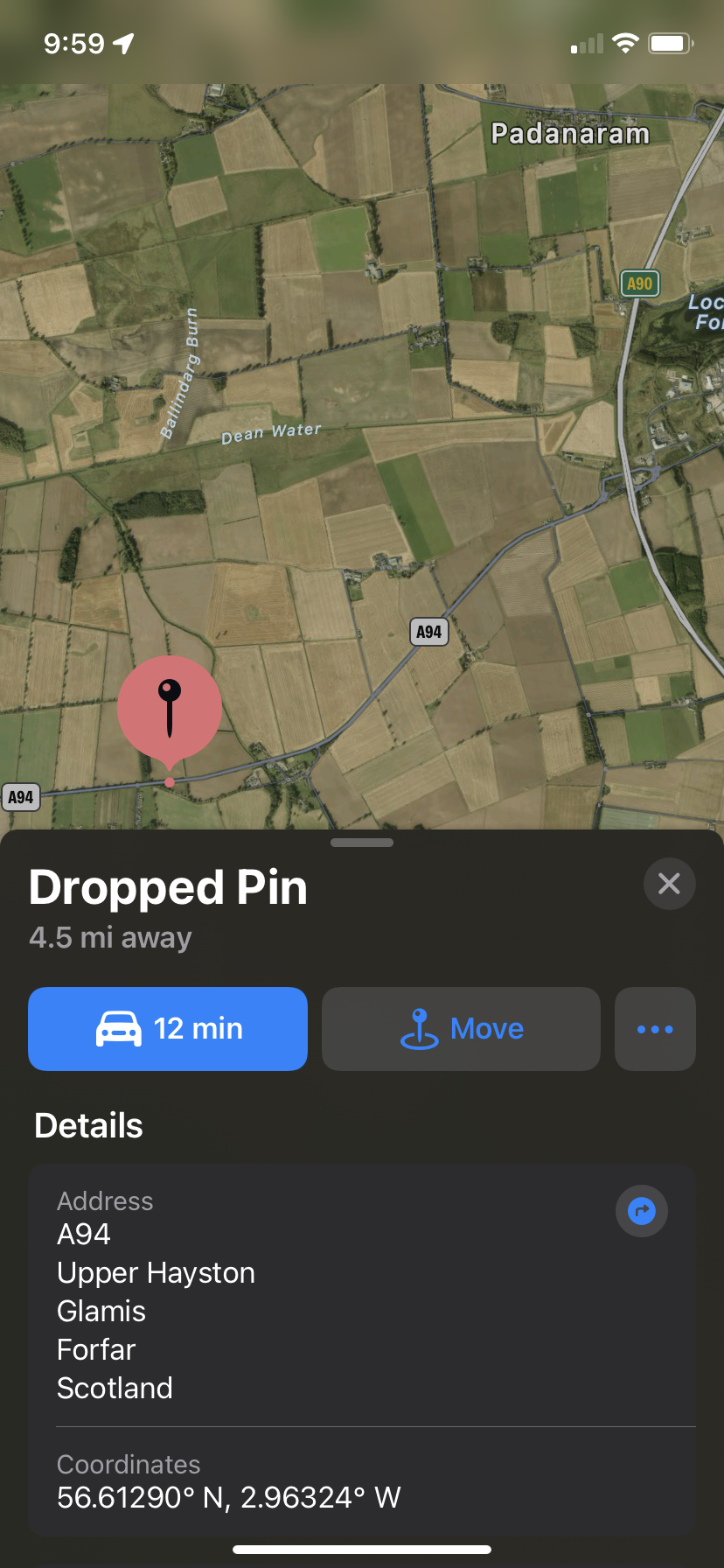
Many thanks to the blog reader who sent in the following photos of dumped pheasants, found in a lay-by on the A94 in Angus, Scotland, yesterday (6th February 2022).

If you look closely you’ll see dead pheasants, red-legged partridge, ducks and a pigeon:

So yet another dumping incident to add to the long list including Cheshire, Scottish borders (here), Norfolk (here), Perthshire (here), Berkshire (here), North York Moors National Park (here) and some more in North York Moors National Park (here) and even more in North Yorkshire (here), Co. Derry (here), West Yorkshire (here), and again in West Yorkshire (here), N Wales (here), mid-Wales (here), Leicestershire (here), Lincolnshire (here), Somerset (here), Derbyshire’s Peak District National Park (here), Suffolk (here), Leicestershire again (here), Liverpool (here), even more in North Wales (here) even more in Wales, again (here), and in Wiltshire (here).

But the pressure is mounting. Last week Lord Newby told me he was going to pursue Lord Benyon about the issue of pheasant-dumping, after pheasant-shoot-owning DEFRA Minister Benyon denied having any evidence of it (here).

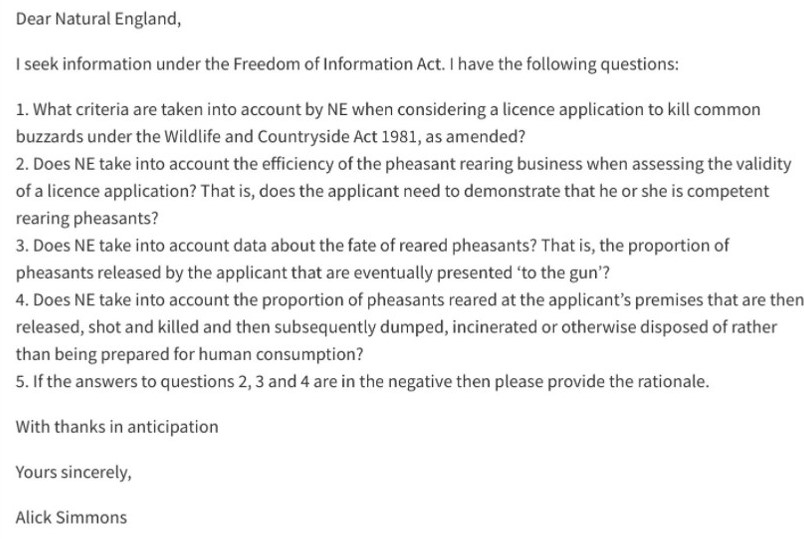
Also last week, the UK Government’s former Deputy Chief Veterinary Officer, Alick Simmons, submitted the following FoI to Natural England:

UPDATE 8th February 2022: More on those shot and dumped birds in Angus (here)

UPDATE 15th February 2022: ‘Insane’: Outrage after gamebirds dumped in Angus (here)

Grouse moor lobby group furious about public reporting peatland fires to RSPB

Last autumn the RSPB launched an online reporting system for members of the public to document moorland fires (muirburn) to help build a picture of where heather moorland is being set alight as part of so-called grouse moor ‘management’ (see here).

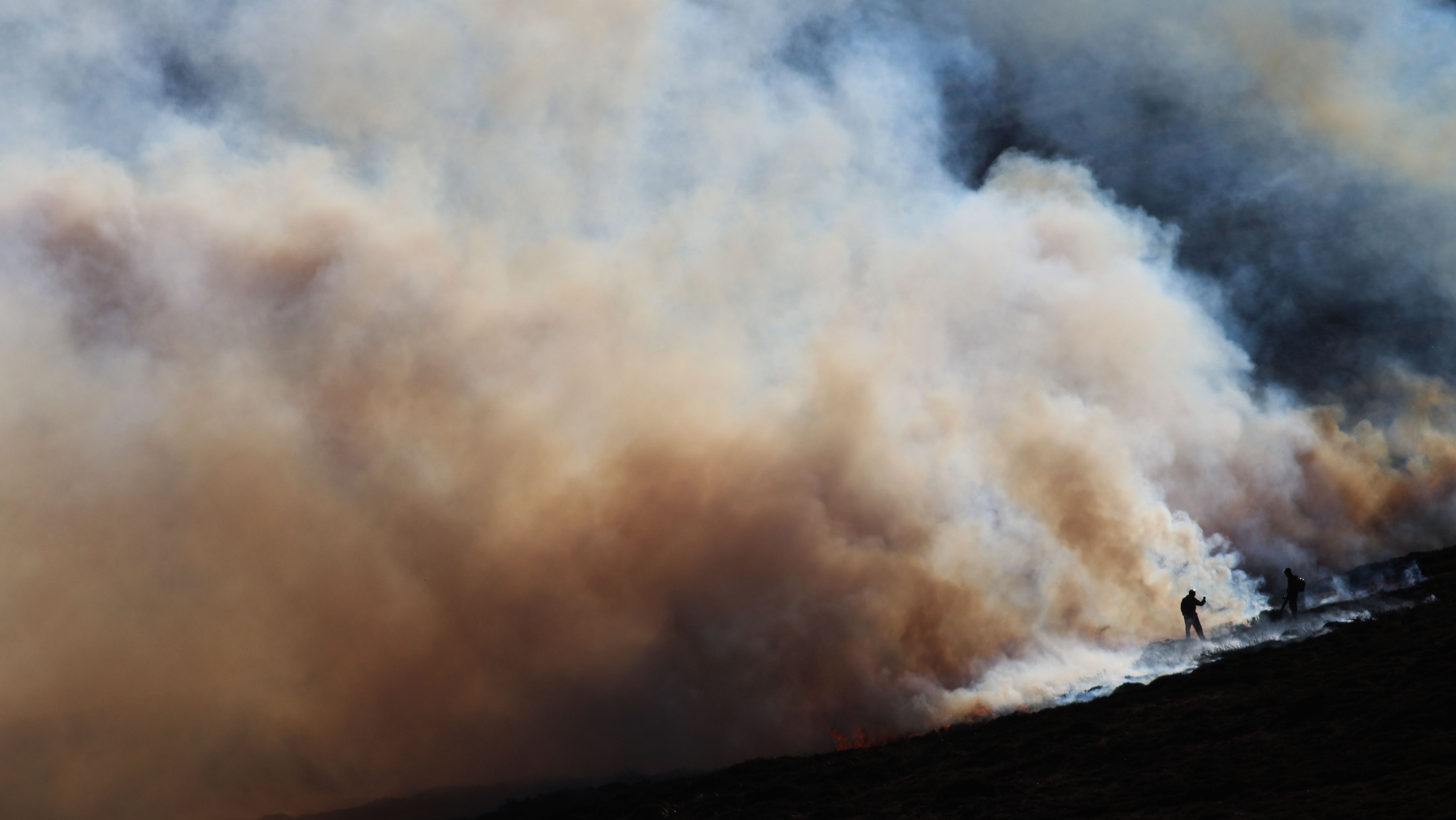
[Gamekeepers setting fire to a grouse moor in NE Scotland a few days ago. Photo by RPUK contributor]

A few days ago the RSPB renewed its call for muirburn reports from the public with the aid of a free APP to make it a simple process (see here).

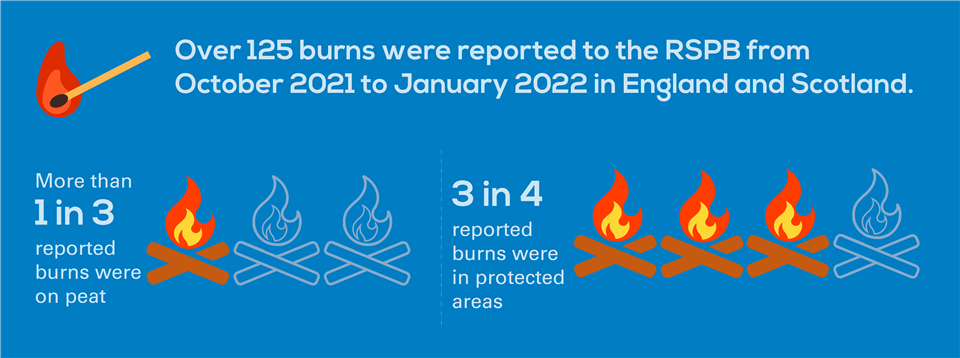
The RSPB also provided this infographic analysing the reports it had received between October 2021 – January 2022, providing evidence that muirburn was taking place on peat which is obviously of huge concern in this period of climate crisis. There was also evidence that burning was taking place in protected areas which is now illegal unless an individual licence has been granted:

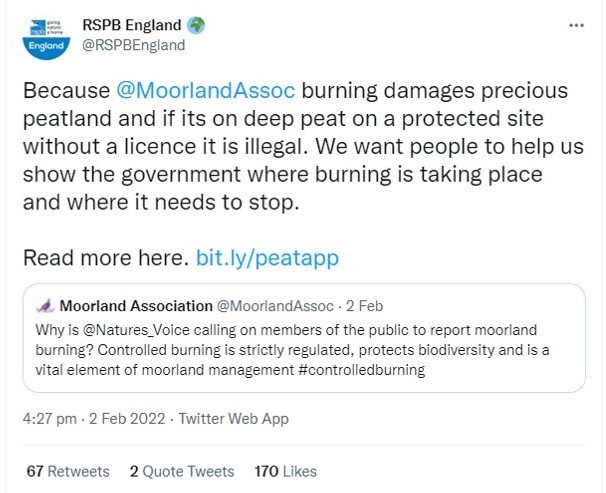
England’s grouse moor owners’ lobby group, the Moorland Association, reacted to the RSPB’s request for information with the following tweet:

Gosh, it’s almost as though they’ve got something to hide.

And they do like hiding things. Author Gill Lewis responded to the tweet with a perfectly reasonable and polite reply, explaining (as if they didn’t know) why setting fire to grouse moors is an issue. In response, the Moorland Association used the new Twitter feature to ‘hide’ Gill’s message, making it more difficult for people to read it:

The RSPB also responded to the Moorland Association’s tweet, again explaining for the hard of understanding why these reports are important:

The moorland burning season continues to April 15th (which can be extended to 30th April in Scotland with landowners’ permission) so if you’re heading out to the hills, do consider downloading the RSPB’s APP and sending in reports – they’ll be put to good use and will help hold the grouse moor owners to account. Reports are welcome from England and Scotland.

UPDATE 9th March 2022: RSPB records peatland fires on grouse moors in supposedly protected areas (here)

Marsh harrier dies in suspected rodenticide poisoning

An article from Jersey Evening Post, 3rd February 2022

Death of ‘iconic’ bird of prey leads to rat poison warning

ISLANDERS should take care when laying rat poison after a marsh harrier was found dead in St Ouen’s Bay, an environmentalist has said.

Bob Tompkins said the bird of prey was recently found lying face down by National Trust rangers. A post-mortem examination by the JSPCA revealed that the likely cause of death was rodenticide poisoning.

‘One is too many,’ Mr Tompkins said, describing the bird’s death as ‘completely avoidable’.

‘They are an iconic bird, like the red kite or the golden eagle.’

Several peregrine falcons were poisoned in Guernsey over the space of a year recently, an act which Mr Tompkins said ‘was deliberate’.

‘I am not saying that is the case here,’ said Mr Tompkins, but he added that it was a ‘possibility’.

‘If you need to put rodenticide poison out, make sure it is done in a professional manner,’ Mr Tompkins stressed.

Leaving poison out in the open carried a risk of rats dying in the open, he said, adding that these would then be feasted on by carrion eaters such as marsh harriers, barn owls and buzzards, another bird which the environmentalist said had recently been killed by poison.

The deceased marsh harrier was found in otherwise peak condition without a mark on it, he said, but had blood in and around its mouth, beak and digestive system, prompting concerns that it had swallowed a large amount of poison.

Mr Thompson added that birds that did not die straight away suffered the long-term effects, causing a decline in their condition and making them easy prey, as the poison built up in their system.

Poisonings had a ‘domino effect’ on the wider ecosystem, said Mr Tompkins, with birds less able to raise their young successfully, an egg’s chances of survival being reduced and the poison passed on to chicks. He cited one case in which he had come across a nest of barn-owl chicks, which were ‘obviously blind’.

Writing in today’s Nature pages, Mr Tompkins said it was ‘always concerning when a high-profile bird is found dead’.

It was ‘something, unfortunately, that is all too commonly seen in raptors and carrion eaters’, he added.

ENDS