Red kite shot & blinded in North Pennines raptor persecution blackspot

Press release from RSPB, 21 May 2018:

SEVENTH RED KITE PERSECUTED IN NORTH PENNINES ‘PROBLEM AREA’

The RSPB is appealing for information after a protected red kite was found shot in Country Durham.

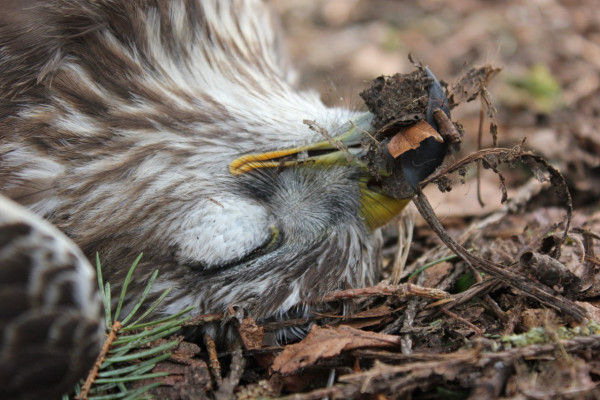
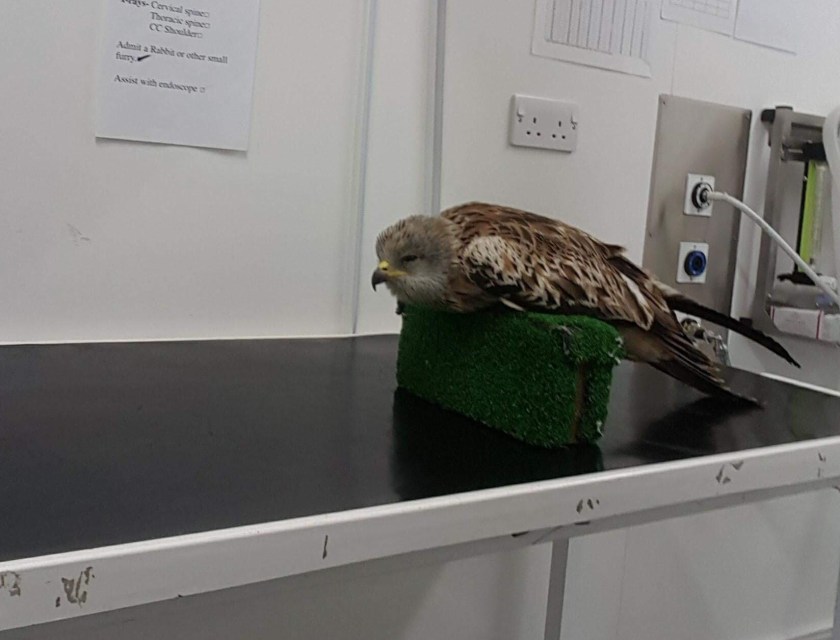
The bird was found alive on 23 April in Derwent Gorge, in the North Pennines AONB, by a member of the public who alerted the group Friends of Red Kites (FoRK). An x-ray by a local vet showed the bird had three shotgun pellets lodged in its head, neck and wing. The bird was cared for but went blind from its injuries and had to be euthanized.

[Photos by Robson & Prescott Vets, Morpeth]
Durham Police visited the area where the bird was found but so far have no leads as to who shot the kite. The RSPB is now appealing to the public for information.

Like all birds of prey, red kites are protected under the Wildlife and Countryside Act 1981 which makes it an offence to deliberately kill or injure a wild bird. Those found to have done so could be given an unlimited fine and/or up to six months in jail.

Since 2010, six kites have been poisoned or shot near Derwent Gorge, including a red kite found poisoned in nearby Muggleswick in 2014.

And in February this year, a rare hen harrier disappeared in suspicious circumstances less than an hours’ drive away from this latest incident. The hen harrier, which was wearing a special satellite tag, suddenly and inexplicably stopped transmitting after it flew over a grouse moor near Middleton-in-Teesdale. [See here]

Jenny Shelton from the RSPB’s Investigations Unit said: “Spring is a crucial time of year when adult kites will be feeding their young, so the death of this bird could have also affected any family it might have been raising. Red kites were almost completely wiped out of the UK until they were reintroduced in the 1980s. This has been a wonderful success, and most of us enjoy watching these impressive birds. But threats like persecution are preventing them from naturally expanding their range and we clearly have a problem area on our hands here. As mainly scavengers, these birds are no risk to anyone. Blasting this bird from the sky was a thoughtless act.”

Jenny added: “We would like to thank Friends of Red Kites and Robson and Prescott Veterinary Hospital in Morpeth who have been a huge help.”

Allan Withrington of Friends of Red Kites said: That anyone could even think about shooting one of these beautiful, graceful birds is beyond my comprehension. We are saddened by yet another wildlife crime and look forward to hearing the results of any investigation.”
If you have any information relating to this incident, call Durham Police on 101 quoting reference number: DHM230420180371.

If you find a wild bird which you suspect has been illegally killed, contact RSPB investigations on 01767 680551 or fill in the online form HERE

ENDS

Well done to the RSPB for putting out this appeal for information. It’s a shame there’s no similar appeal on Durham Constabulary’s website (at least not at the time of writing this blog). Why not?

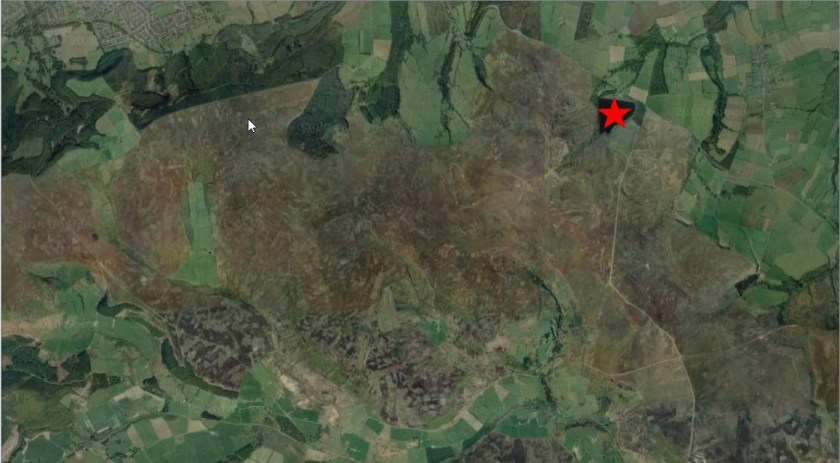
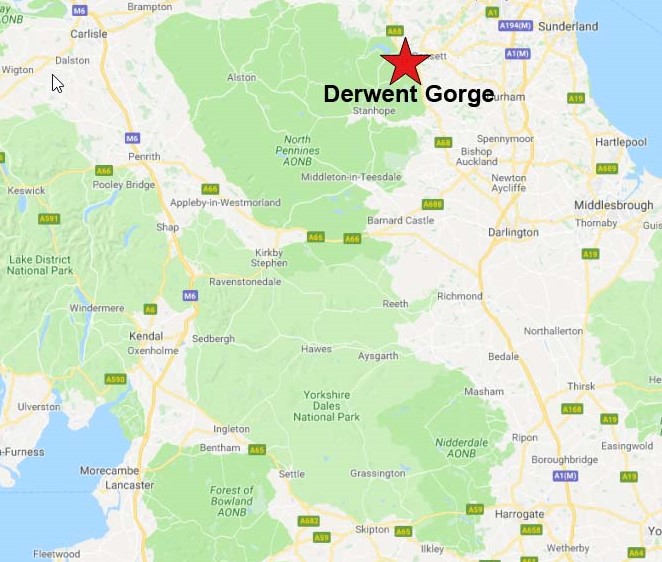
UPDATE 16.15hrs: We’ve updated the two maps (above) to show the location of Derwent Gorge (as opposed to the nearest town of Shotley Bridge). Derwent Gorge is bang next door to the grouse moor at Muggleswick, and lies within the North Pennines AONB (Area of Outstanding Natural Beauty).

UPDATE 17.00hrs: Well done to the North Pennines AONB for publishing the following statement on their website:

RED KITE KILLED IN NORTH PENNINES

The report of the killing of a protected red kite in the North Pennines Area of Outstanding Beauty (AONB) has come as very distressing news.

Chris Woodley-Stewart, Director of the North Pennines AONB Partnership, said: “We are appalled that someone has committed this despicable crime. Someone must know who is involved and we would urge anyone with any information to come forward. There are so few raptors across the Northern uplands because of this illegal persecution – no one should pretend otherwise.

We met with the police recently to raise awareness of raptor crime and we plan to follow this up. It needs more people to speak out against raptor crime, more resources put into investigation, a commitment to bring prosecutions and stiffer sentences for those found guilty.”

If you have any further information on this incident, please call Durham Police on 101 quoting reference number DHM230420180371 or the confidential Raptor Crime Hotline on 0300 999 0101. All calls are anonymous.

ENDS


Police appeal after red kite found shot on Harewood Estate, Yorkshire

WEST YORKSHIRE POLICE APPEAL FOR INFORMATION, 18th May 2018

POLICE APPEAL FOR INFORMATION AFTER YORKSHIRE RED KITE SHOT IN LEEDS

Police are appealing for information after a Yorkshire Red Kite was shot in Leeds.

The incident happened on Thursday 10 May when an injured Red Kite was found by two walkers on a footpath just inside the northern boundary of the Harewood Estate.

They took the bird to the estate office, who arranged for it to be cared for by staff at the Harewood Bird Garden. It had suffered serious injuries and was taken by staff to a nearby veterinary practice for treatment.

X-rays revealed that the bird had been shot and a pellet was lodged in its right wing. The bird was put down by staff at the practice, as its injuries were too severe for it to survive and wouldn’t have been able to fly any distance.

It is believed the shooting occurred close to the entry point of the public footpath into the Harewood Estate from the A659, near to the junction with the A61 at the bottom of Harewood Bank.

West Yorkshire Police are appealing for witnesses who were in the area and may have seen anything suspicious; to come forward and contact the police to assist with their investigation.

In 2016, at around the same time of the year, six Red Kites were known to have been shot in Yorkshire – two in West Yorkshire and four in North Yorkshire.

In all but one of these cases, the injuries proved fatal. Other instances of kites being targeted by firearms, include one fatally shot at Pateley Bridge in 2017 and several which had been victims of illegal poisoning but which had been found to be carrying lead shot from non-fatal shooting incidents.

Ben Lascelles, Development Manager at Harewood Estate, said: “The Harewood Estate works hard to champion conservation of Red Kites and other native wildlife, and many thousands of people visit us each year to enjoy them. To discover one of these majestic birds has been shot is particularly disappointing and upsetting.”

Howard Jones, RSPB Investigations Officer, said: “Illegal persecution is a real and persistent threat to birds of prey like red kites. They’re a wonderful sight, and the conservation effort to return these birds to our skies has been huge – it is disgraceful that some are spoiling this through their thoughtless and criminal actions.

The RSPB’s new raptor crime hotline on 0300 999 0101 allows whistle-blowers to come forward confidentially in relation to this type of crime and, given the number of illegally kites in Yorkshire, we hope someone will speak up and reveal who is responsible.”

Doug Simpson, Yorkshire Red Kites Co-ordinator, said: “This latest attack on the reintroduced Red Kite population is particularly sickening. A lot of hard work has gone into this programme and for someone to strike right at the heart of it, at the actual release site, is both unbelievable and devastating. It once again raises the question of the suitability of some people to own guns.

No fewer than 43 Red Kites have been confirmed as victims of illegal persecution since releases began in Yorkshire in 1999. That 23 of them have been found by people out in the countryside shows the importance of everyone keeping their eyes open for anything untoward and reporting it.”

Anyone with information about this incident is asked to call West Yorkshire Police on 101 quoting crime reference number 13180232956. Anyone wishing to remain anonymous can call the RSPB’s confidential Raptor Crime Hotline on 0300 999 0101.

ENDS

Police appeal after buzzard found shot in North York Moors National Park

APPEAL FOR INFORMATION FROM CLEVELAND POLICE, 17th May 2018:

SHOT RAPTOR APPEAL

At some point on Friday 4th May between 1pm – 6pm a buzzard was shot near to Lockwood Beck Reservoir in East Cleveland.

The buzzard had received serious wounds to its legs and unfortunately had to be put to sleep by a local vet.

We are appealing for anyone who may have been in the area at the time and seen person / persons / vehicles acting suspiciously.

Please contact Police on 101 quoting event no: SE18078559 and for the attention of PC Ward 542

ENDS

Lockwood Beck Reservoir is in the North York Moors National Park:

Satellite-tagged sea eagle ‘disappears’ on Invercauld Estate in Cairngorms National Park

A satellite-tagged white-tailed eagle has ‘disappeared’ on Invercauld Estate in the Cairngorms National Park.

Apparently its last tag signal came from a roost wood close to the River Dee, near to Braemar, on Saturday.

[Map showing Invercauld Estate in the Cairngorms National Park. Estate boundary sourced from Andy Wightman’s Who Owns Scotland website]

There are scant details at the moment, other than an article published on the BBC news website (here) where the reader is told that Invercauld Estate (intensively-managed for driven grouse shooting) is ‘committed to conservation’, and that its gamekeepers were ‘working hard’ to find the missing eagle ‘in case there has been a technical malfunction of the tag and the eagle returns to roost again’.

Interestingly, there hasn’t been any press statement from the RSPB or Police Scotland, so we don’t know whether a police-led search has already taken place or whether any other investigative leads are/were being followed. It looks very much like Invercauld Estate has jumped the gun on this news, issuing its own press release in what appears to be a damage-limitation exercise. If that’s the case, it would be a clear breach of the Partnership for Wildlife Crime (PAW) Scotland media protocol.

Funnily enough, a similar thing happened a couple of weeks ago following the suspicious disappearance of another sat-tagged sea eagle (Blue X) in the Strathbraan area of Perthshire, when the Scottish Gamekeepers Association published a press statement while the police search was still underway – again, a clear breach of the PAW Scotland protocol.

What the estate / BBC article didn’t mention was how the disappearance of this latest satellite-tagged eagle fits the pattern of 45+ other cases where satellite-tagged eagles have disappeared in suspicious circumstances on or close to a driven grouse moor, and in areas where other raptor persecution incidents have been recorded, as reported in the Scottish Goverment’s Golden Eagle Satellite Tag Review published last year:

We’ve blogged about Invercauld Estate and the wider area of Deeside many times before –

There was the discovery of an illegally shot peregrine at the Pass of Ballater in 2011, the reported coordinated hunt and subsequent shooting of an adult hen harrier at Glen Gairn on the border of Invercauld and Dinnet Estates in 2013, and then there were the illegally-set traps that were found nr Geallaig Hill on Invercauld Estate in 2016, which resulted in ‘secret action‘ being taken against a gamekeeper but no prosecution followed, and nor has SNH imposed a General Licence restriction for this incident (and SNH has refused to discuss its decision saying ‘it’s not in the public interest‘ to tell us). Last year satellite-tagged hen harrier ‘Calluna’ disappeared in suspicious circumstances on a grouse moor in this area (here), although it’s not clear whether this was on Invercauld Estate or neighbouring Dinnet Estate.

This part of the Cairngorms National Park is identified as a wildlife crime hotspot, but not to worry, the Scottish Government has it in hand. It recently launched a pilot scheme deploying five police special constables (i.e. part-time volunteers) in the Cairngorms National Park, tasked with addressing wildlife crime (see here). What a joke.

Illegal raptor persecution is out of control and the Scottish Government needs to act, now. No more procrastination, no more excuses, no more chances.

We’ll be blogging more about the missing white-tailed eagle later today when more details become available.

UPDATE 16.30hrs: RSPB Scotland statement:

UPDATE 12 May 2018: Article in The National: ‘Gamekeepers and RSPB at loggerheads over sea eagle’s disappearance’ (here)

UPDATE 15 May 2018: Missing sea eagle Blue T: statement from Cairngorms National Park Authority (here)

Three dogs & two buzzards die after being ‘deliberately poisoned’ in Perthshire

BBC News article (8 May 2018):

DOGS AND BUZZARDS DIE AFTER BEING DELIBERATELY POISONED

Police in Highland Perthshire are appealing for information after three working dogs and two buzzards were deliberately poisoned.

The incidents took place between October 2017 and April this year in and around the Edradynate and Pitnacree Estates area.

The poisons used to kill the dogs and birds are banned in the UK.

[Photo of a poisoned buzzard found in the area in 2015, by RPUK]

A Police Scotland spokesman said the animals’ owners were “understandably upset” at the loss of their dogs.

He said: “Once again, we also find ourselves investigating the illegal killing of raptors and this is extremely disappointing.

We have searched the areas and our investigations to date would suggest that there is not a wider threat to public safety.

However, all members of the public in the area are asked to remain vigilant and report any suspicious behaviour, especially during the hours of darkness.”

ENDS

Hmm. Edradynate Estate has been at the centre of investigations for alleged wildlife crime for a very, very long time. It’s well worth reading an earlier summary we wrote (here) which includes some fascinating commentary about the estate by former RSPB Investigator Dave Dick, who claimed as far back as 2004 that the estate was “among the worst in Scotland for wildlife crime“, and commentary by former Police Wildlife Crime Officer Alan Stewart, who said in 2005, “Edraynate Estate has probably the worst record in Scotland for poisoning incidents, going back more than a decade“. The details involve a disturbingly high number of poisoned birds and poisoned baits that were found over the years, as well as a number of dropped prosecution cases (nobody has ever been convicted for any of the alleged offences). The summary also includes information about links between the estate and the Scottish Gamekeepers’ Association.

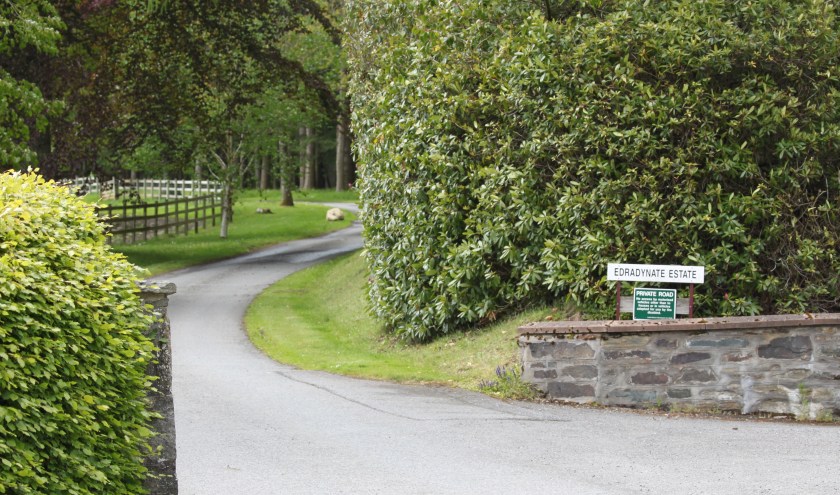
[Edradynate Estate, photo by RPUK]

More recently, in March 2015 two dead buzzards were found near to the estate. Toxicology tests revealed they’d been poisoned with a banned substance (although the name wasn’t revealed). A police raid of the estate uncovered a third dead buzzard. A thorough police investigation followed but in May 2017 the Crown Office rejected a plea from Police Scotland to bring proceedings against an estate gamekeeper (see here). The Crown Office has so far not provided a clear explanation for this decision.

However, in September 2017 SNH imposed a three-year General Licence restriction on Edradynate Estate, presumably in response to the alleged buzzard poisonings in 2015 (see here). Some felt sympathy for the new gamekeeper who would now be subjected to these restrictions even though he’d only just begun his employment following the ‘retirement’ of the previous Head gamekeeper in February 2017.

And talking of that previous Head gamekeeper, you may remember last year he was charged with a number of offences including the alleged malicious damage of crops on Edradynate in April 2017 (it is claimed he poisoned them by spraying with an unknown substance, causing them to rot and perish) and the alleged theft of a thermal imaging spotting scope (see here). This resulted in some court proceedings that were mysteriously shrouded in secrecy (here).

Presumably he has pleaded not guilty as we now know a trial will take place at Perth Sheriff Court on 11 June 2018 for alleged ‘malicious mischief’.

4th raptor poisoning in south Scotland this year

From BBC News (2 May 2018):

RED KITE POISONINGS IN SOUTH WEST SCOTLAND INVESTIGATED

A police investigation has started following the discovery of three dead red kites in Dumfries and Galloway.

Tests have confirmed that two of the birds were illegally poisoned with examinations ongoing on the third.

It takes the number of birds killed by illegal pesticides in the region since the start of the year to four.

Police said the use of poisoned bait was “illegal and totally unacceptable” and could have “devastating consequences” for wildlife.

The incidents in the region since the start of the year are:

  • a red kite discovered poisoned in Kirkpatrick Durham in January
  • a buzzard found dead in Mossdale in March
  • a second red kite killed at a separate location in Kirkpatrick Durham in April
  • another red kite poisoned in April at Old Bridge of Urr
  • a further red kite death with the cause yet to be established at Gelston in April

Specialist Wildlife Crime Officer PC Alan Steel said police were working closely with SAC Consulting and Science and Advice for Scottish Agriculture (SASA) to investigate the cases.

What we have established is that illegal pesticides have been used to kill four of the birds,” he said.

The pesticides identified have been banned in the UK for many years, but despite this there would still appear to be those who leave out poisoned bait, whether that is to target crows, foxes, raptors or other wildlife.

The use of such poisoned bait is illegal and totally unacceptable and those responsible should understand that their unlawful activities not only serve to have devastating consequences on their intended targets but also on various other forms of wildlife.”

He said they were “absolutely determined” to put a stop to the killings and find the people responsible.

They are working with a number of landowners and farmers and liaising with RSPB Scotland as part of the investigation.

We have also carried out a number of land searches in the vicinity of where the birds have been located with a view of trying to locate poisoned bait at these locations,” he added.

It is anticipated that further land searches will take place in the near future.”

A red kite trail in the region is reckoned to be worth millions of pounds to the local economy.

A study last year said the Galloway Kite Trail had generated more than £8.2m since it was launched in 2003.

ENDS

Buzzards found poisoned & decapitated in Co Cork

Reported on BirdWatch Ireland’s facebook page on 24 April 2018, news of three dead buzzards found in a field at Ring, near Clonakilty, Co Cork.

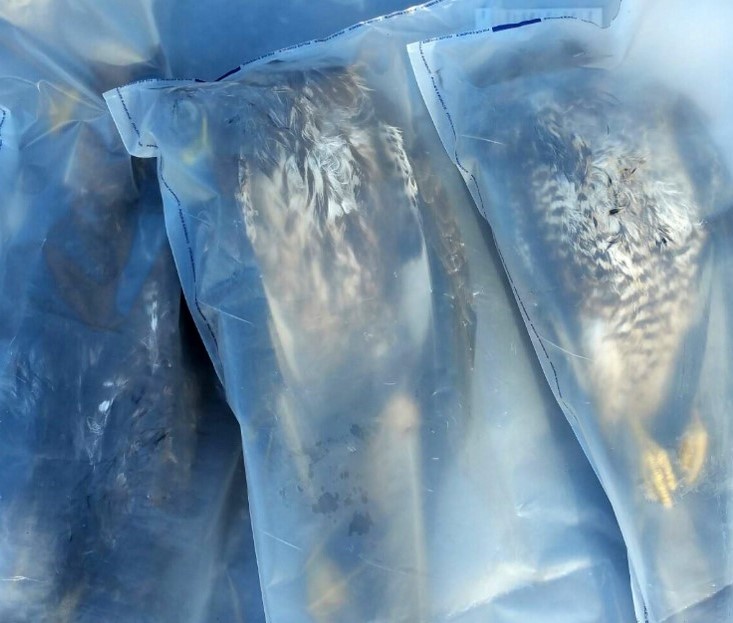
The birds were found in January and collected by staff from the National Parks & Wildlife Service (NPWS) to be sent for post-mortem. X-rays showed no sign of lead shot but two of the buzzards had missing heads and one had a missing leg.

Toxicology results have revealed high levels of the highly toxic pesticide Carborfuran as well as two rodenticides.

The NPWS is investigating and calling for information.

More details on the BirdGuides website (here).

Photo of the dead buzzards in evidence bags [photo by NPWS]

“It can’t go on” – Mark Ruskell MSP speaks out against illegal raptor persecution

Press release from white-tailed eagle species champion Mark Ruskell MSP (19/4/18), following the recent suspicious disappearance of sea eagle Blue X in grouse moor dominated Glen Quaich, Perthshire:

WILDLIFE CRIME IS HIGHLAND PERTHSHIRE’S SHAME

Green MSP for Mid-Scotland and Fife Mark Ruskell has branded Highland Perthshire a wildlife crime hotspot after a further disappearance of a White Tailed Eagle around the Glen Quaich area and called on the Scottish Government to finally act by bringing in a licensing regime for driven grouse shooting estates.

Raptor Persecution UK highlighted Perthshire North, as a hotspot for raptor disappearance. Six satellite-tagged eagles have disappeared in suspicious circumstances in what is a relatively small area. Green MSP Mark Ruskell called on the Scottish Government to face up to Perthshire’s shame and ensure those responsible for eagle disappearances face justice.

The individual eagle who recently vanished was named Blue X and was fledged in NE Fife. In his role as the Parliament’s White Tailed Eagle champion Mr. Ruskell last year visited the nest site where the bird fledged and spoke to volunteers who had spent hundreds of hours guarding the site from wildlife criminals. Mr. Ruskell also sits on the Scottish Parliament’s Environment Committee which last year agreed that a licensing regime for driven grouse moor estates should be put in place.

Mark Ruskell said: “Highland Perthshire is renowned for the beauty of the landscape and phenomenal wildlife, but this latest incident brings shame to the area. It’s quite clear from the satellite tags that these birds are disappearing around driven grouse moors. Some disreputable estates and gamekeepers have a bizarre Victorian attitude that wildlife should be exterminated, despite wildlife tourism bringing millions into the Scottish economy. Driven grouse estates in particular are attempting to deliver unsustainable levels of grouse populations which lead them to cull mountain hares for example.

It can’t go on; the Scottish Government is prevaricating over the setting up of a licensing scheme for driven grouse moor estates that would separate the good from the bad. Wildlife crime is notoriously difficult for the Police to track down and there is a wall of silence in communities, no-one wants to call out the illegal actions.

I’m particularly gutted to see this bird disappear, volunteers had spent months on end guarding its nest site in Fife and I even saw the bird myself from afar last year.

ENDS

Well done, Mark, and thank you.

UPDATE 21 April 2018: Green MSP angers gamekeepers over missing bird of prey (article in The National, here)

Why shooting estates should fear eagle disappearances

An interesting and insightful Leader Comment in today’s Scotsman: (whoever wrote this, well done!) –

As the RSPB Scotland points out, the disappearance of a fourth satellite-tracked eagle in a part of Perthshire that’s home to several shooting estates over four years is “highly suspicious”.

The Scottish Gamekeepers Association complains its members are the “first to be accused when any bird of prey goes missing”, but the illegal killing of raptors undoubtedly happens, as a 2016 report on red kites by Scottish Natural Heritage found, and few others have a motivation. Each case is a further challenge to the rule of law that will eventually force parliament to react.

And that could lead to the licensing of shooting estates – with the threat of licences being revoked over killings of birds of prey – or a strict liability offence so that a landowner would be found responsible for the unnatural death of any raptor on their land.

Both are measures that estates would – and should – fear.

The sooner the shooting community realises that the death of a sea eagle represents a greater threat to their business than a live bird, the better the chances will be of protecting these magnificent creatures.

Deputy First Minister’s constituency a hotspot for ‘disappearing’ sat-tagged eagles

Following the recent news that satellite-tagged white-tailed eagle ‘Blue X’ has ‘disappeared’ in suspicious circumstances in the grouse moor dominated Glen Quaich, Perthshire, we’ve taken a closer look at this area.

It was one of the areas identified as a hotspot for ‘disappearing’ satellite-tagged golden eagles in last year’s expert review of Golden Eagle Satellite Tag Data, with a cluster of five golden eagles vanishing without trace in recent years:

It turns out that this area sits within the constituency boundary of North Perthshire, held by John Swinney MSP, Deputy First Minister and Cabinet Secretary for Education:

Another star now needs to be added to this map, representing the last known position of white-tailed eagle ‘Blue X’, although unlike the missing golden eagles we don’t know the precise location of her last known fix, other than it being in Glen Quaich.

That’s six satellite-tagged eagles that have vanished in suspicious circumstances in a small area of John Swinney’s Perthshire North constituency.

We have no idea of John Swinney’s views on illegal raptor persecution and its undisputed link to driven grouse moor management but as a respectable, law-abiding member of society we’d expect him to be as outraged as the rest of us.

What’s different about John Swinney is that he’s a senior member of the Scottish Government and so he’s in a much stronger position than the rest of us to push the Government in to action.

We haven’t seen any commentary from John about the suspicious disappearance of sea eagle ‘Blue X’ in his constituency and it may be that as a busy senior politician it has escaped his attention.

If you are one of John Swinney’s local constituents and you want to know what he thinks, and more importantly what he intends to do about these missing eagles, please drop him an email: john.swinney.msp@parliament.scot

If you are not a constituent but would still like to bring this issue to his attention, and register your disgust that such blatant lawlessness is apparently allowed to continue without sanction, please use this email address and mark it for the attention of John Swinney: Scottish.Ministers@gov.scot

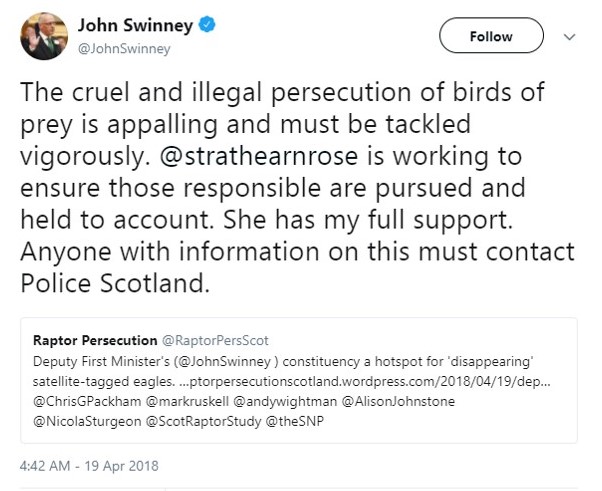
UPDATE 4pm: John Swinney has responded on Twitter as follows:

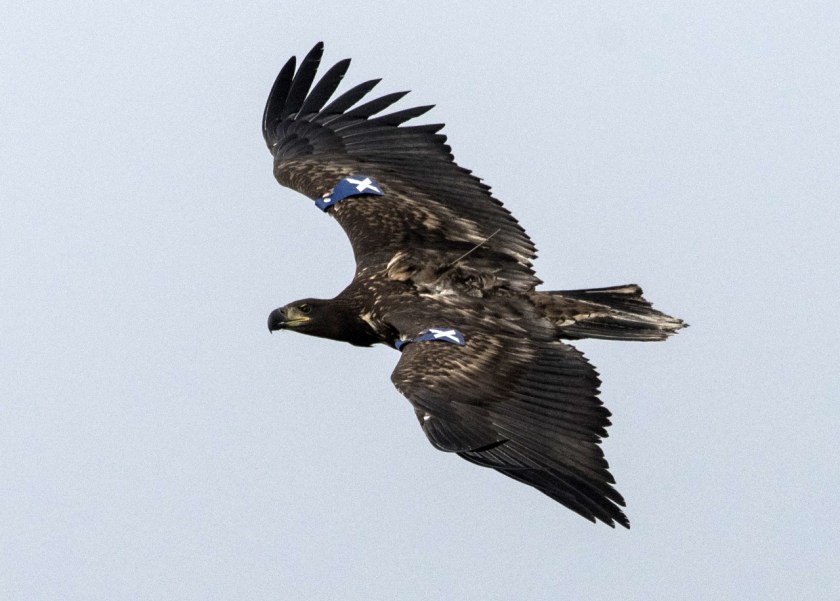
Photo of missing sea eagle ‘Blue X’, by RSPB Scotland.

UPDATE 20 April 2018: “It can’t go on” – Mark Ruskell MSP speaks out against illegal raptor persecution (here)