Blog

Royal family ‘hypocritical’ to have grouse shooting at Balmoral – headline in The Times!

Crikey, it’s coming to something when The Times (Scottish edition) headlines with this:

Royal family ‘hypocritical’ to have grouse shooting at Balmoral.

This paper is not known for its criticism of the establishment and especially not of establishment hobbies such as driven grouse shooting (e.g. it was only on Sunday the paper was publishing what looked very much like an attempted stitch-up of Chris Packham at the behest of a load of gamekeepers (or more likely the gamekeepers’ masters)).

Anyway, today’s headlining article is very welcome. I’m afraid it sits behind a paywall but as it’s based on the writing of Nick Kempe, whose brilliant blog ParksWatchScotland should be a must-read for anyone interested in the mis-management of Scotland’s two national parks, the Cairngorms and Loch Lomond & the Trossachs, then I’d encourage you to cut out the middle man and go direct to Nick’s blog.

The blog post on which today’s article in The Times is based is this one:

COP26, the Royal Family and the failures of the Cairngorms National Park, published by Nick on 12th November 2021 and can be read here.

And if that whets your appetite, there’s now a follow-on blog called:

The £23m sale of the Abergeldie Estate – the Royal Family should pay for their environmental damage, published by Nick on 22nd November 2021 (here).

It’s a fascinating and useful discussion which will help inform your reaction the next time you hear a senior Royal claiming green / conservation credentials.

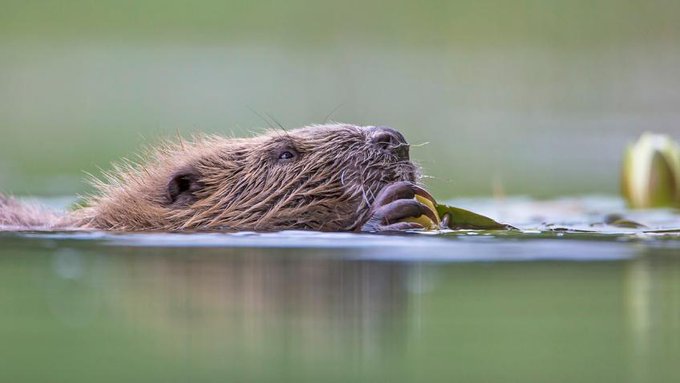
Scottish Government makes u-turn on beaver shooting & now supports translocations

Further to the blog posted on 22nd October 2021 about Scottish charity Trees For Life‘s successful judicial review challenge against the shooting of beavers and the potential consequences of that ruling on the ‘control’ of other protected species such as birds of prey (here), today the Scottish Government has made a complete u-turn and has announced it now supports translocation (of beavers) over lethal control.

This is a massive and hard-won result for all those campaigners who have spent considerable time and effort over a number of years to force a change of policy. Brilliant work, well done to all of them!

[Photo by Scotland The Big Picture]

Here is a press release from Trees For Life (24th November 2021)

Breakthrough for Scotland’s beavers a win for nature, climate and farmers

The Scottish Government today announced a new approach to actively expand Scotland’s beaver population, through more use of translocation to new areas of Scotland outside of beavers’ current range rather than lethal control to deal with negative beaver impacts.

Responding to the announcement, Trees for Life’s Chief Executive Steve Micklewright said: “This is a rewilding win for Scotland’s wildlife, climate and farmers. After almost half a millennium, the country is set to welcome beavers back properly at last.

“Allowing these habitat-creating, biodiversity-boosting, flood-preventing animals to be relocated across Scotland – to where they are needed and wanted, away from prime agricultural land, and in a way that works for farmers – offers hope for tackling the nature and climate emergencies.

“It’s a wonderful result 16 months to the day that we launched our campaign for Scotland’s beavers, which has seen almost 17,000 people sign the most successful petition to the Scottish Parliament in over a decade, our successful court case in which a senior judge ruled that NatureScot’s beaver-killing licences have been unlawfully issued, and 66% of Scots say they back relocation not killing of beavers.”

Trees for Life says ministers now need to lay out clearly that the Government and NatureScot will ensure proper support for farms and communities wanting to reintroduce beavers to new sites of suitable habitat – including through a simplified process that doesn’t tangle applications up in needless red tape. The Government should ensure practical and financial support for farmers – including a beaver relocation service, and access to timely and efficient advice and resources.

The Government’s announcement comes days before the Scottish Parliament’s Net Zero, Energy and Transport Committee is due on 30 November to consider Trees for Life’s petition to the Scottish Parliament calling for the Government to relocate rather than shoot beavers.

The Government’s previous refusal to allow beavers to be relocated to new areas of Scotland, even though NatureScot has identified over 100,000 hectares of habitat, had left Tayside farmers whose crops are damaged by beavers with little option but to apply for a culling licence. 

Since the Government legally protected beavers in 2019, its nature agency NatureScot has allowed over 200 beavers to be killed under license – despite laws under which beavers are a protected species which should not be killed unless there is no satisfactory alternative. 

NatureScot’s failure to make licensed killing of beavers a last resort was challenged by Trees for Life’s judicial review, heard by the Court of Session in June. The charity’s crowdfunder for the case was supported by over 1,500 people and raised over £60,000. Lady Carmichael ruled that NatureScot had ‘erred in law’ when issuing licences authorising the deaths of over 200 beavers.

Beavers create wetlands that benefit other wildlife, soak up carbon dioxide, purify water and reduce flooding, but the animals sometimes need managing if they cause damage to farmland.

Trees for Life is dedicated to rewilding the Scottish Highlands. See treesforlife.org.uk.

For the Scottish Government’s announcement, see www.gov.scot/news/protecting-scotlands-beaver-population/.

ENDS

Birdfair – end of an era

The British Birdwatching Fair (known to many as simply Birdfair) has come to an end, at least in the location and format we all knew: an annual event celebrating the world of birds which took place over three days in late August at Rutland Water.

This morning an announcement was sent to all previous participants by the Birdfair team, as follows:

Statement from Dr Anthony Biddle, Chair LRWT:

It is with great regret that Leicestershire and Rutland Wildlife Trust (LRWT) has made the decision to no longer run the annual Birdfair staged at Rutland Water Nature Reserve.

For over 30 years, LRWT, supported by its staff, volunteers and members, has been proud to run this internationally-renowned event.  Working with our co-promoter, the RSPB, we have brought thousands of visitors to Rutland Water Nature Reserve for three days each August, and overall have raised more than £5 million for overseas projects run via the Birdlife International group of charities. We are immensely proud of this achievement in global wildlife conservation.

The global pandemic has had a significant effect on our day-to-day operations as a charity. Like many other similar institutions, we have seen income streams lost or reduced, with resultant significant impact on our financial reserves and thus the delivery of our charitable work.

Birdfair operations have contributed to these financial concerns. When Covid struck, we were obliged to cancel the 2020 event. We could have chosen to close the gates of Birdfair for good at that point. Instead we decided to press forward with evolving the event and continuing the Birdfair legacy. Our innovative Virtual Birdfair, held in 2020, showed how new digital techniques could be harnessed effectively to communicate with the public and spread the Birdfair message.

However, to continue Birdfair operations, we had to obtain external funding from the National Lottery Heritage Fund, as well as a loan from the Royal Society of Wildlife Trusts to support our working capital. Despite these measures, Birdfair operations made a loss of over £19,000 in Financial Year 20/21, which is wholly borne by LRWT itself. These stresses were exacerbated by the prolonged Covid measures which meant that an event in 2021 was also not viable.

The impact of Covid has meant that we have had to take a long, hard look at our commitment in operating Birdfair.

Birdfair proceeds have always been donated in full to Birdlife International. LRWT has never received any part of this, but we have nevertheless borne all the risks and liabilities. Moreover a large part of our staff team have had to devote significant time to its preparation and running over the years, supported by our remarkable team of 341 Birdfair volunteers. This is a significant burden for any organisation, let alone a small, local, charity such as ourselves.

LRWT’s focus now has to be on our recovery from the financial impacts of Covid, and on our new forward strategy ‘30 by 30’, which aims for 30% of land managed for wildlife by 2030.

We also need to be aware that the world has changed markedly over the past two years. One realisation in particular is that a vastly disrupting event such as the global pandemic we are still experiencing may not be uncommon in future.

Other concerns have also been key to our decision.

Firstly, the current format of Birdfair is heavily influenced by travel and tourism. The carbon footprint generated both by the event itself and the activities it promotes does not now fit well with our own strategy towards tackling the climate crisis.

Secondly, we have become concerned about the impact the event might be having on Rutland Water Nature Reserve itself in terms of compaction of soil in the site area. Whilst our studies have not been conclusive so far, our stewardship of the Nature Reserve has to be taken seriously. On balance, we believe the risk to the site itself, and also to LRWT’s reputation should the site become damaged, outweigh the benefits of the event continuing at the Nature Reserve.

We conclude that in this overall scenario, continuing to run Birdfair in its current form presents LRWT with unsustainable financial, ecological and reputational risk. We feel that if it were to continue, then the event would need a radical rethink in terms of content and format. Given the other factors to our decision I have noted, LRWT does not have the resources to take up this challenge.

We have thought long and hard about all these concerns, and the decision has been an extremely difficult and sad one. But we knew that it was now time to make the future clear, in the interests of the event, and of everyone who is involved in it or supports it.

We hope the legacy of Birdfair may live on in similar events, run by organisations with greater resources than our own.

Although we are bringing our involvement with Birdfair to a close, we are pleased to be able to announce a donation of £15,005 to Birdlife International. This amount is made up of direct donations and auction proceeds in aid of their Helmeted Hornbill conservation project supported by our Virtual Birdfair in 2020.

We send our thanks to all our sponsors, exhibitors, site contractors, and the many wildlife experts and media presenters who have supported Birdfair over the years. Thanks are also due to LRWT’s members, and the tremendous family of Birdfair volunteers, not forgetting LRWT’s Birdfair organisation team, the Rutland Water Nature Reserve site team, our finance team, and Anglian Water. Birdfair could not have existed without these key people.

We wish you the best for the future.

Yours sincerely,

Dr Anthony Biddle

Chair LRWT

More information can be found at www.lrwt.org.uk/Birdfair

ENDS

What’s this got to do with raptor persecution? Plenty – the Birdfair was a venue to reach wide audiences, to raise awareness, to educate, to inform, to learn, and to make connections and gather support for campaigns, several of which were hatched over the years during conversations inside and outside those humid tents.

It’ll be missed but I’m sure someone will see an opportunity to fill the void.

‘Stop killing raptors and we can talk’, Packham tells gamekeepers

Yesterday the Sunday Times (Scotland) ran an opportunistic piece, presumably at the behest of a load of gamekeepers.

Written by Deputy Editor Mark Macaskill, it was claimed that a ‘moorland consortium’ had invited Chris Packham to visit a grouse moor to watch them set it alight, in response to Chris’s derision of muirburn whilst COP26 was taking place just down the road.

It transpires that the ‘moorland consortium’ in question is the one representing Scotland’s regional moorland groups, some of whose members are either currently, or recently have been, under police investigation for alleged raptor persecution crimes (e.g. members of the Angus Glens Moorland Group, Tomatin Moorland Group, Strathdearn & Speyside Moorland Group, Grampian Moorland Group, Tayside & Central Moorland Group), but this doesn’t appear to be a barrier to getting the deputy editor of the Times to publish favourable articles. Friends in high places, no doubt.

Anyway, a quote from the moorland groups’ co-ordinator, Lianne MacLennan, included this line:

“There is an opportunity to foster a better understanding and take the heat out of a polarised debate“.

I spoke to Chris about this and at the time of writing, Chris hadn’t received the invitation but he was still pushed for a quote by Macaskill. That quote was then minimised in the print edition of the article (apparently due to lack of space) and not fully presented even in the digital edition, where space is not an issue.

It’s strange that when journalists ask for a quote they don’t use it in full. This happens a lot.

Here is Chris’s quote, in full:

“Thank you for the invitation. Whilst I have a genuine desire to reach a point when real conservationists and some of the responsible factions of the game shooting industry can again sit around a table and make progress, I fear we are not yet at that point.

So I would gladly visit an estate to witness the burning . . . as long as I was also shown the whereabouts of all the graves of illegally killed raptors were buried. Until the wholesale slaughter of our precious birds of prey ends, I’m out. Its an intractable blockage to progress  – stop the killing and we can start talking. And also, science, proper science, isn’t about whether Mars Bars get singed or not. Just saying . . .“

[Chris with the corpse of a male hen harrier that had been caught in a barbaric trap that had been set illegally next to the harrier’s nest on a driven grouse moor. Photo by Ruth Tingay]

Here is a copy of the digital edition of the article:

Packham urged to take heat out of moorland burns

Mark Macaskill, Sunday November 21 2021

Chris Packham has declined an invitation to witness the controlled burning of Scottish moorlands after his comments during the Cop26 climate talks that Scotland was “sticking two fingers up” to a world in ecological crisis.

The naturalist and host of BBC Winterwatch, who was the victim of an arson attack at his home in Hampshire last month, used social media to highlight muirburn, which he believes contributes to carbon emissions and should be banned. He was accused of claiming, falsely, that peat, a natural carbon store, was being burnt on grouse moors.

In an effort to “take the heat” out of the debate, a moorland consortium asked Packham to be their guest on a Scottish estate to see muirburn in action.

Packham said that he was willing to engage with the shooting industry but pointed to the illegal persecution of birds of prey as a stumbling block.

“Whilst I have a genuine desire to reach a point when real conservationists and some of the responsible factions of the game shooting industry can again sit around a table and make progress , I fear we are not yet at that point . So I would gladly visit an estate to witness the burning . . . as long as I was also shown the whereabouts of all the graves of illegally killed raptors. Until the wholesale slaughter of our precious birds of prey ends , I’m out . Its an intractable blockage to progress – stop the killing and we can start talking.”

Bodies such as the Scottish Gamekeepers Association (SGA) insist that muirburn removes surface vegetation while leaving underlying layers of moss and peat intact. The practice is approved under licence from NatureScot, the government agency.

Environmentalists argue that burning on peatlands releases carbon into the atmosphere, undermining efforts to reduce emissions to help control climate change.

During the muirburn season from October to April it is estimated that the equivalent of 87,000 football pitches is burned.

Lianne MacLennan, co-ordinator of Scotland’s regional moorland groups, said that muirburn was conducted carefully and pointed to a Scottish government report last year which suggested that many bird species fared better where muirburn had taken place, although further research was required.

“Muirburn plays a vital role in preventing the type of climate-busting wildfires that lost a million tonnes of carbon in Moray and the Flow Country in 2019 and can help retain carbon in peatlands,” she said. “ We have written to Chris Packham in the hope he will come out and see what actually happens when trained, professional gamekeepers carry out the activity.”

A letter sent to Packham on Friday stated: “There is an opportunity to foster a better understanding and take the heat out of a polarised debate.”

ENDS

Update on shot red kite in Essex

On Wednesday I blogged about a police investigation into a shot red kite that had been found in Galleywood Road, Chelmsford, Essex (see here).

The details were a bit sketchy but Essex Police Wildlife Crime Officer Jed Raven had said he believed the kite had suffered wing injuries after someone had fired a shotgun at this protected species.

A further update now reveals that the kite was shot, it flew a short distance, landed in a tree, and then fell from the tree in front of witnesses who took the injured bird to a wildlife hospital.

The kite is currently undergoing treatment.

[Ed: NB. An earlier version of this article said the red kite had died as a result of its injuries. This was incorrect]

If you have any information about this crime, which was committed on 14th November 2021, please contact Essex Police on Tel 101 and quote crime reference number: 42/265786/21

Please note, this police investigation is one of two separate incidents concerning dead red kites. The other one relates to the discovery of a dead red kite that had been found in suspicious circumstances in the Uttlesford area of Essex earlier this month (here).

UPDATE 14th December 2021: Shot red kite successfully rehabilitated and released in Essex (here)

JOB VACANCY: Red Kite Field Officer, Northern Ireland

RSPB job advert

Red Kite Field Officer (Fixed Term)

Reference:NOV20218665
Expiry date:23:59, 12 December 2021
Location:RSPB Northern Ireland
Salary:£18,100.00 – £20,080.00 Per Annum
Benefits:Pension, Life Assurance, 26 days Annual Leave (pro-rata)
Duration:6 months

Are you passionate about species conservation? Interested in gaining valuable research and monitoring experience, while working with one of the UKs most recognisable raptors? RSPBNI is looking for an enthusiastic individual with experience in monitoring birds of prey for a six-month post in County Down, Northern Ireland.

The role

Red Kites were reintroduced to Northern Ireland in 2008 and since then the local population has been monitored by a dedicated team of staff and volunteers.

Your role will be to collect data on wintering and breeding Red Kites at their strongholds in the Dromara Hills and surrounding areas. This will include winter roost surveys, nest finding and monitoring to assess productivity, associated data entry, and supporting and coordinating a team of volunteers. The post holder will need to have previous experience in finding and monitoring raptor nests.

This is an exciting opportunity to work alongside a passionate team in one the most spectacular places in Northern Ireland. Please note that the successful candidate will be required to work unsociable hours, including the occasional weekend, depending on the weather.

Key activities will include:

  • Winter Red Kite roost watch surveys.
  • Nest location and monitoring of Red Kites.
  • Developing and upkeeping relationships with stakeholders and landowners.
  • Delivering appropriate species protection for priority species in identified geographical/priority areas.
  • Manage all relevant data to ensure it is stored and analysed appropriately to allow review of work programmes and future planning.
  • Build appropriate positive relationships with key external partners and stakeholders so that RSPB’s monitoring of species and habitats, policies and messages are understood within relevant partnerships and fora.
  • Contribute to the delivery of RSPB’s conservation programme away from reserves focussing on monitoring and species protection to help deliver Saving Nature Outcomes.
  • Supporting and coordinating a team of volunteers – including on tasks such as data management, monitoring, and wing-tagging.

Essential skills, knowledge and experience:

  • Higher level qualification in a relevant subject or ability to show equivalent work experience e.g., field season conducting raptor surveys.
  • Knowledge of bird and wildlife ecology, habitat requirements and identification to enable credibility in the role.
  • Organisational skills e.g., maintenance and analysis of datasets, and managing conflicting priorities.
  • Ability to work effectively as a team player both internally and externally.
  • Effective communication skills (verbal, written and presentational) – including an ability to speak confidently and cogently in public to a variety of audiences.
  • Ability to be diplomatic.
  • Experience of working to survey, protect and/or manage important sites, species or habitats.
  • Experience of managing volunteers and setting clear work priorities.
  • Experience of working with land managers e.g., farmers, woodland owners
  • Ability to rapidly analyse significant quantities of information, prioritise and balance a diverse workload often to tight deadlines.
  • Knowledge of the wildlife and habitats of the operational area of this role
  • Experience of public engagement work e.g., attendance at county shows and events.
  • Experience of productive Partnership working.
  • Specialist conservation knowledge in relevant habitat /species areas.

This is a Contract, Full Time role for 6 months. The RSPB reserves the right to extend or make this role permanent without further advertising dependent on business needs at the end of the contract term.

We are looking to conduct interviews for this position from 21st December 2021. For further information please contact Neal.Warnock@rspb.org.uk.

As part of this application process you will be asked to complete an application form including evidence on how you meet the skills, knowledge, and experience listed above.

The RSPB is an equal opportunities employer. This role is covered by the Rehabilitation of Offenders Act 1974.

ENDS

Organic farm ‘East Coast Organics’ subjected to online hate campaign for supporting Chris Packham and grouse moor reform

Five years ago a small rural company in Lancashire (Bowland Brewery) was subjected to a disgraceful online hate campaign by gamekeepers and others from the game-shooting industry, simply because the brewery was supporting an RSPB hen harrier conservation project by donating profits from the sales of its Skydancer beer to the project. A promotional photograph of Chris Packham and Mark Avery enjoying the beer was apparently enough to enrage some gamekeepers to the point where they couldn’t control the urge to target the brewery with a torrent of online abuse and threats (see here).

This hate campaign back-fired somewhat after decent, ordinary people read about what was going on and turned out in their droves to buy the beer online and support the brewery (e.g. see comments here).

Five years later, you might have thought the gamekeepers would have moved on from such tactics, especially as they’ve been complaining a lot about the alleged online abuse they claim to be suffering (see here). You’d also think that now the police are paying close attention to the social media accounts of those applying for firearms and shotgun licences (e.g. see here), especially following the mass shooting / murders in Plymouth carried out by a licenced gun user earlier this year (see here), then maybe the more intemperate gamekeepers might have learnt some self control before hurling abuse and threats at people who just happen to hold a different opinion to them.

But no, apparently not.

This time the target of abuse is a small, rural company called East Coast Organics, who farm and then use electric vehicles to deliver their organic produce to customers within a 25 mile radius of the farm in East Lothian.

Last week, East Coast Organics posted this comment on their Facebook page in support of the forthcoming REVIVE coalition conference on grouse moor reform:

This simple, innocuous statement seems to have triggered the usual suspects in the gamekeeping /game-shooting world and the East Coast Organics Facebook page was flooded with abuse and threats by some pretty vile and stupid men and women who were being egged on by a particularly unpleasant narcissist from their community who has been at the centre of abuse and harassment campaigns for years.

Fortunately, East Coast Organics has reported those involved in the hate campaign to Facebook and many of the comments have now been removed. The more sinister trolls have also been reported to the police. A few fake reviews remain on the page but many have also now been removed.

Unlike Bowland Brewery, East Coast Organics doesn’t sell its produce nationwide, which is a shame. But if you live within 25 miles of their farm (check whether they deliver to your postcode here, includes much of Edinburgh) please consider showing them some solidarity and support by buying one of their fruit/veg boxes. You might also want to consider writing a supportive review on their Facebook page.

Rural Affairs Minister Mairi Gougeon is a fan after a recent visit to the farm and will no doubt be horrified to learn about these latest attacks:

Another red kite shot in Essex

Less than two weeks ago Essex Police announced they were working with the RSPB to investigate the suspicious death of a red kite found in the Uttlesford district (see here).

This morning, Police Wildlife Crime Officer Jed Raven has informed me of another incident, this time the shooting of a red kite.

The details are limited but here is what has been provided so far:

Crime reference number: 42/265786/21

14 November 2021, 2pm.

Galleywood Road, Chelmsford, Essex

Suspect(s) unknown have shot a red kite using what is believed to be a shot gun. The red kite was shot through its wing.

It’s not clear whether the shooting was witnessed and took place at this location at the stated time, or whether this time and location is where the injured kite was discovered.

I understand the kite is currently at a wildlife hospital but I don’t know whether it survived its injuries.

Hopefully more information will emerge as the investigation progresses.

Many thanks to PC Jed Raven for getting the news out. If anyone has any information about this latest crime please contact Essex Police on Tel: 101 and quote crime reference 42/265786/21.

UPDATE 21st November 2021: Update on shot red kite in Essex (here)

UPDATE 14th December 2021: Shot red kite successfully rehabilitated and released in Essex (here)

Chris Packham backs grouse moor reform group ahead of key meeting

An article published in The National today:

A TV wildlife expert has backed the work of a grouse moor reform group ahead of a key national conference.

Chris Packham has praised the work of Revive ahead of its national conference this weekend. The wildlife expert, TV presenter and conservationist, who is currently at COP26, will host the event. Themes will include issues surrounding intensive grouse moor management in Scotland and examine where this fits within the land reform debate.

The one-day event, People, Wildlife & Environment, run by Revive, has sessions on more wildlife on our moors, energising our environment and land reform, people and power. [See the full programme here]

Speakers include National columnist, broadcaster and campaigner Lesley Riddoch, ecologist Dr Helen Armstrong, Ruth Tingay from Raptor Persecution UK, RSPB Scotland’s Duncan Orr-Ewing, MSPs Colin Smyth, Paul McLennan and Mark Ruskell and former MSP Andy Wightman among others.

Packham said: “As we digest the events of COP26 I’m excited to be staying in Scotland to tackle another real and serious concern, which is the management – or mismanagement – of grouse moors and the circle of destruction which surrounds these.

“Scotland’s grouse moors are firmly in the public eye, thanks to Revive and I’m delighted to be hosting their national conference.

“Revive is an organisation I wholeheartedly support, it is a movement of people taking action because they care about our wildlife and our environment. The desire for reform is growing every single day. Scotland deserves better and our wildlife and environment needs this more than ever.”

Campaign manager for Revive, Max Wiszniewski, added: “We’re thrilled that Chris Packham is hosting our conference this weekend. He has been a firm supporter since our launch three years ago and has been pivotal in the progress Revive has made towards our vision for better land use alternatives.”

The conference takes place on Sunday at the Perth Concert Hall.

ENDS

Please note, tickets will not be on sale at the door. If you’d like to book, please buy your tickets in advance here

Scottish grouse moors set on fire in Cairngorms National Park while world leaders discuss climate emergency in Glasgow

Press release from REVIVE, the coalition for grouse moor reform:

11th November 2021

Scotland’s Muirburn Shame

National Park burns while world leaders discuss climate emergency in Glasgow

Scottish landowners are being accused of putting two fingers up to COP26 as they cause environmental damage through muirburn during the global climate conference.

REVIVE, the coalition for grouse moor reform has published graphic footage of muirburn in the Cairngorms National Park, highlighting the hypocrisy of the practice as Scotland hosts UN climate talks to reach agreement to tackle the climate emergency. The footage filmed by REVIVE partners, the League Against Cruel Sports Scotland, shows large swathes of moorland burning intensively.

[Gamekeepers setting fire to heather on peatland on Edinglassie Estate, Cairngorms National Park last week. Photo by League Against Cruel Sports Scotland]

League Against Cruel Sports Scotland Director, Robbie Marsland said: “It beggars belief that heather burning on this scale is happening at the very same time as a global summit on climate change.

“Every year thousands of hectares of heather goes up in smoke in Scotland’s highlands and much of it is on deep peat. The heather is burnt to increase the number of grouse that can be shot for entertainment. 

“Our film also shows the dramatic impact of the burning – a treeless brown desert stretching to the horizon. But this is just the impact which is visible. What we can’t see is the carbon stored on this land leaking into the atmosphere, undermining efforts to reduce climate emissions. In the context of the international conference on the climate crisis this to me, looks like these landowners are putting up two fingers to COP 26.”

Muirburn involves burning heather moorland to provide unnatural habitats for game birds to increase numbers for sport shooting. The practice is an issue of growing concern due to the increasing extent and intensity of burning on grouse moors, and particularly the effects of burning over deep peat.

Dr Richard Dixon, Director of Friends of the Earth Scotland, a REVIVE coalition partner said: “Allowing landowners to burn land indiscriminately puts our vital peatlands at incredible risk by allowing the carbon it stores to leak into the atmosphere, undermining other efforts to reduce climate emissions.

“This is a very serious issue for grouse moors, because much of that land is high in peat, and peaty soils contain a massive amount of carbon. With the eyes of the world on Scotland’s climate action, the management of all our peat-rich grouse moorland will have to improve radically to contribute to national efforts to cut emissions.”

The Scottish Government recently announced a series of measures to license grouse moors, including addressing issues such as muirburn, following the Werritty Review of grouse moor management.

Campaign Manager for REVIVE Max Wiszniewski added: “With every sector under pressure to reduce carbon emissions and help tackle the climate emergency it is staggering that muirburn for a purpose as unnecessary as increasing the number of grouse that can be shot for entertainment is deemed acceptable. Scotland’s vital peat reserves are under constant threat from the damage caused by increasingly intensive muir burning on grouse moors and we would urge the Scottish Government to ban this environmentally damaging practice.

“The footage shows moor land in the Highlands quite literally on fire with huge plumes of smoke billowing into the atmosphere. Muirburn is just one of a number of unpalatable practices in the circle of destruction that surround grouse moors causing significant environmental, social and animal welfare concerns.”

Muirburn season runs from 1st October until 15th April in Scotland. [Ed: and incredibly can be extended to 30th April with landowner permission!]

ENDS

Here is a short video:

The Daily Record also has an article on this today (here), which provides detail of the identities of the estates featured in this footage – reported to be Edinglassie Estate and Allargue Estate. If you can look beyond the tabloid sensationalism, it’s an interesting read.

I particularly liked this bit:

[Robbie] Marsland, [Director of League Against Cruel Sports Scotland] said arguments put up by estate owners for burning the heather are bogus.

He said: “The people who burn the land regularly claim they do it to help conserve lapwing. However, the clue of their real motive is rather obviously in the title of the moors. They’re not called lapwing moors, they’re called grouse moors“.

There’s also a quote from Stuart Young, Chief Executive of Dunecht Estates (which includes Edinglassie Estate) whose reported comments included this:

“Controlled fires following the official Muirburn Code do not damage the peat underneath and also serve as an essential management tool to prevent and reduce the extent and severity of uncontrolled wildfires which are a really serious threat to the nature conservation and carbon sequestration benefits provided by moorland“.

It’s cleverly worded, but of course fails to acknowledge that not all grouse moor owners comply with the (mostly voluntary) Muirburn Code. With the intensification of grouse moor management in some areas of Scotland comes an increase in the extent and intensity of rotational heather burning. These fires have even been lit on areas of deep peat (forbidden by the voluntary Muirburn Code, which many land managers seem to simply ignore) causing damage to protected blanket bog habitat – in fact 40% of the area of land burned for grouse moor management in Scotland is on deep peat according to a 2019 report commissioned & published by the Revive Coalition (see here).

Meanwhile, last month conservation campaign group Wild Justice was refused permission for judicial review of the much criticised and frankly grossly inadequate regulations brought in by DEFRA to limit vegetation burning on peatland soils in the uplands of England. Wild Justice has appealed this ruling and a decision is expected in early December.

Ps. REVIVE’s annual conference will take place in Perth this Sunday (14th Nov) and tickets are still available (here). Speakers include Chris Packham, Lesley Riddoch, Andy Wightman and others (see programme here). Please note, the start time has been put back to 11am to accommodate attendees arriving on public transport.

I look forward to seeing some of you there.