BBC programme ‘Caught Red Handed’ features conviction of buzzard-killing gamekeeper John Orrey

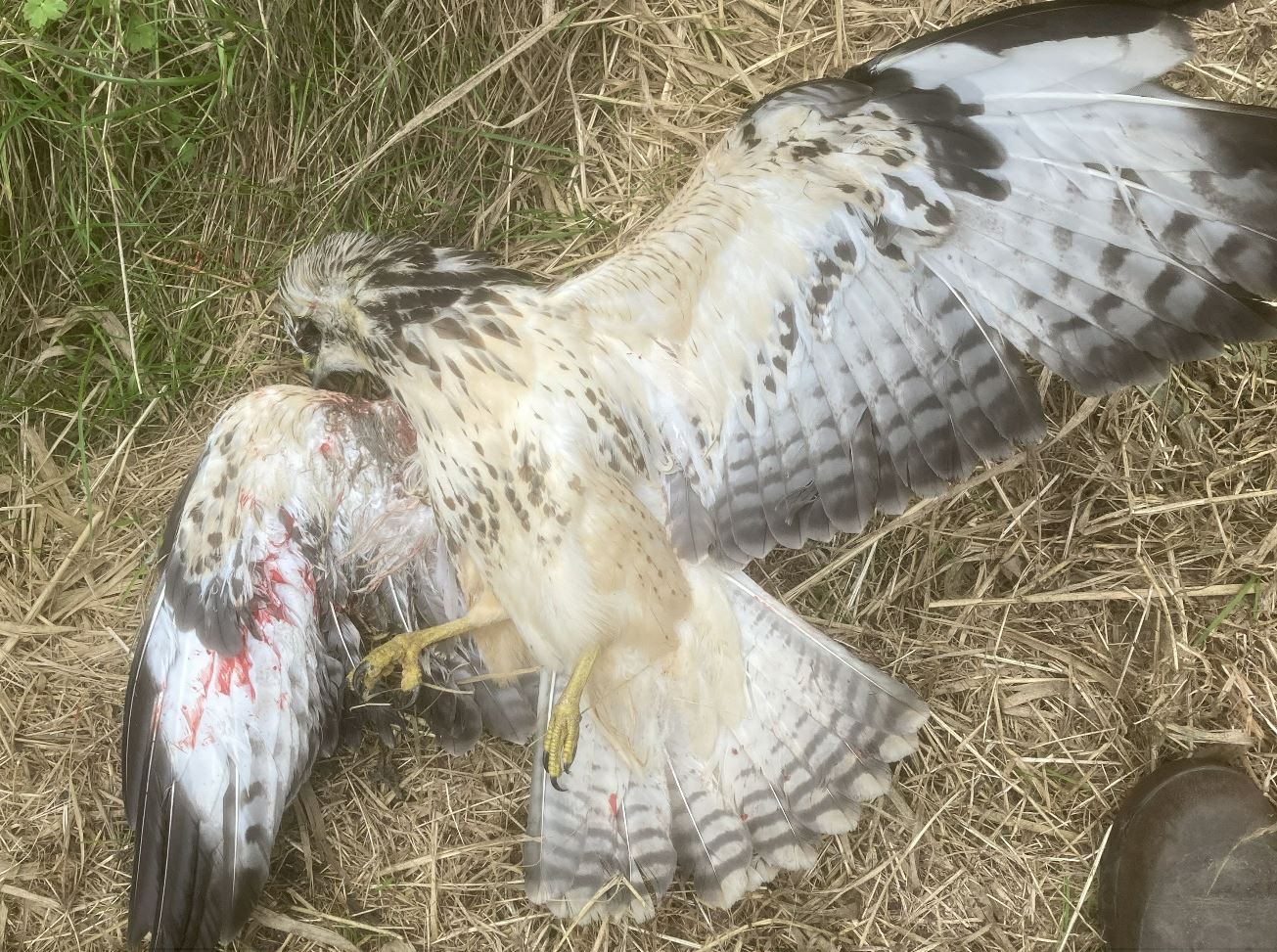
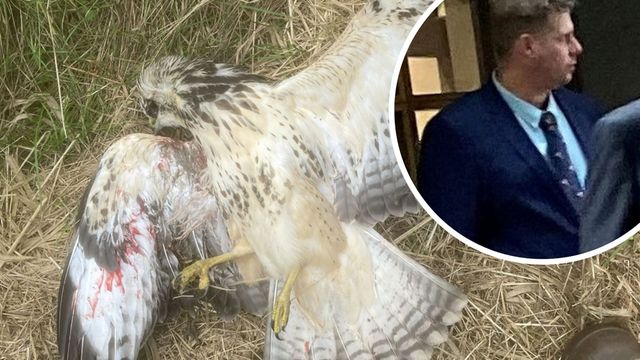
A BBC programme called ‘Caught Red Handed‘ has featured the conviction of buzzard-killing gamekeeper John Orrey and the role of the RSPB Investigations team in bringing him to justice.

Caught Red Handed‘ is a daytime TV programme, hosted by Dom Littlewood, that ‘looks at clever ways that the police and the public are catching crooks red handed‘. Currently being broadcast at 10am every weekday, this is bound to have brought the spectre of illegal raptor persecution to a much wider audience.

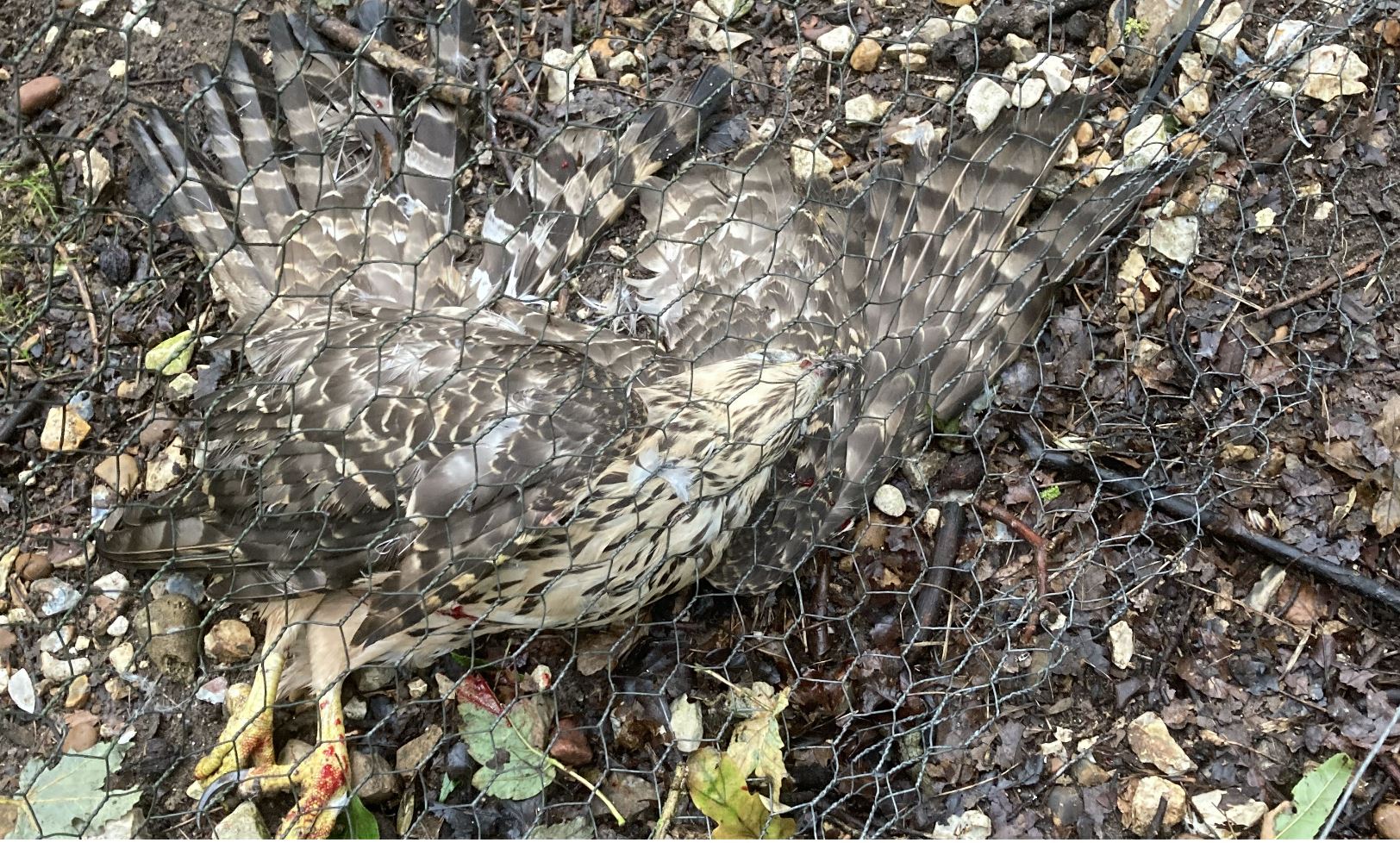
Orrey, you may recall, was convicted in January this year after covert footage provided by the RSPB caught him battering buzzards to death after he’d caught them in an illegally-set trap on a pheasant shoot at Hall Farm, Kneeton, Nottinghamshire (see here).

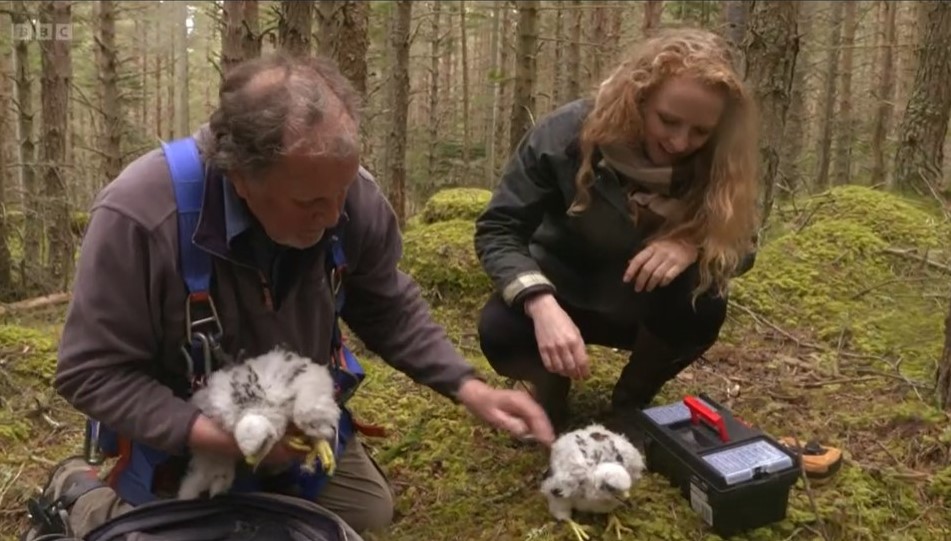
In the programme, previously-unseen footage of the police raid is shown:

There is an extensive interview with RSPB Investigator Tom Grose, who provides a behind-the-scenes explanation of the investigation. His poise and professionalism is exemplary.

This episode of Caught Red Handed is available on iPlayer for 29 days (here) and the feature lasts for about ten minutes, starting at 7.21 mins.

Excellent BBC regional news coverage of hen harrier persecution & conservation in Peak District National Park

Further to yesterday’s news that, against all the odds, two hen harrier nests have been successful this year on National Trust land in the Peak District National Park (see here), there was excellent coverage last night on the BBC’s regional news programme, North West Tonight.

With contributions from the National Trust’s General Manager in the Peak District, Craig Best, and from Howard Jones of the RSPB’s Investigations Team, this short, three-minute piece managed to get across the significance of this year’s breeding success but without pretending that ongoing illegal persecution isn’t an issue.

The programme is available on iPlayer but expires at 7pm this evening so you’ll need to be quick. The link is here (starts at 14.34 min).

Well done to all involved.

Perspective required as National Trust celebrates two successful hen harrier nests in Peak District National Park

The National Trust is celebrating two successful hen harrier breeding attempts in the Peak District National Park this year, in what it describes as ‘the most successful year for hen harrier breeding in the Peak District for over a decade‘.

Here is a press release issued by the National Trust this morning:

National Trust records most successful year for hen harrier breeding in the Peak District for over a decade

Seven hen harriers have successfully fledged from multiple nests on National Trust land in the High Peak, making 2022 the most successful year for hen harrier breeding on land cared for by the conservation charity in the Peak District for over a decade, despite two nest failures earlier this year.

[Hen harrier chicks, photo by Tim Melling]

The National Trust, RSPB and Peak District Raptor Group have been working closely together to encourage more birds of prey to live and thrive in the Peak District, by protecting birds currently living there, whilst also creating rich feeding and nesting grounds.

Work undertaken by the Trust includes cutting heather to allow a more diverse range of moorland plants such as sphagnum moss, bilberry and cottongrass to grow, which helps attract the different insects and small mammals which the birds rely upon for food. The charity is also working closely with tenants to ensure their land management practices support the vision for more birds of prey in the area.

Craig Best, General Manager of the National Trust in the Peak District said:A great deal of work has gone into encouraging more breeding pairs of these majestic birds to the Peak District, so this is brilliant news.

The presence of the birds indicates a plentiful and healthy food source, which shows the work we have done so far to improve the landscape is starting to provide ideal conditions for different species to thrive. However, we want to see more of these important birds of prey in the High Peak, as they play an important role in creating the right ecological balance in the landscape. That is why it is crucial that we continue to work together to achieve our aim of growing the population of birds of prey in the area and doing everything we can to prevent persecution.”

Mark Thomas, Head of investigations at the RSPB said:

Despite the suspicious loss of two hen harrier nests in this area earlier in the season [Ed: see here] we are delighted that further pairs have bred successfully and raised youngsters. This is a validation of the National Trust’s Moorland Vision, and a testament to the partnership work being undertaken to ensure hen harriers and other species flourish in our uplands. Hen harriers are protected by law – yet a government study in 2019 identified criminal persecution by humans as the main factor suppressing the UK hen harrier population. The Dark Peak is sadly one of the worst areas in the UK for raptor persecution, for this reason we will be keeping a close eye on the continuing survival of the chicks that have been tagged this year.”

To help monitor the birds progress and to aid understanding of the species, the birds have also been fitted with tracking tags by the RSPB and Natural England. The National Trust also works with the local Raptor Monitoring Group.

Mike Price from the Peak District Raptor Monitoring Group said: A mild winter, good prey availability and the fine weather during the nesting period have no doubt all contributed to what appears to be a successful year for breeding Hen Harriers both locally and nationally. It is another step along the journey to get a self-sustaining breeding population of Hen Harriers established in the area. Now the birds have fledged, the birds will face further threats, so we need to continue to work together to remain vigilant and do all we can to protect them.

Visitors and local residents can help with conservation efforts by staying on footpaths and keeping dogs on leads during ground nesting bird season, which lasts from the beginning of March to the end of July.

ENDS

When two nests inside a National Park are deemed a cause for celebration, and they amount to ‘the most successful breeding year for over a decade‘, you get a good idea of just how dire the situation is for hen harriers inside a National Park that has sufficient habitat and prey to host many, many more pairs.

The last time two hen harrier nests were successful on National Trust land in the Peak District National Park was back in 2006, fledging ten chicks. But those two nests were only ‘successful’ because a team of 40+ volunteers provided 24-hour-round-the-clock protection and supplementary feeding after the two breeding males ‘disappeared’ in suspicious circumstances (see here). Shockingly, they were only the second and third pairs to nest there in 140 years!

The National Trust was praised in 2016 when it terminated the shooting lease on one of its moors after video evidence emerged of an armed gamekeeper laying in wait next to a decoy hen harrier, presumably with the intention of luring in a live harrier and shooting it at close range (see here and here).

But despite that bold move by the National Trust, the suspected persecution of hen harriers in this National Park continues.

In 2018, a young satellite-tagged hen harrier called Octavia ‘disappeared’ in suspicious circumstances on a privately-owned grouse moor in the Peak District National Park (here).

In 2021, a displaying pair of hen harriers ‘disappeared’ in suspicious circumstances on another privately-owned grouse moor in the Peak District National Park (see here).

In February this year, another satellite-tagged hen harrier ‘disappeared’ in suspicious circumstances on another privately-owned grouse moor, neighbouring the grouse moor where Octavia vanished 4 years earlier (see here).

In May this year, two active hen harrier nests were abandoned on a National Trust-leased moor after the suspicious disappearance of two more breeding males, leaving ten eggs to chill and die (see here).

So actually, the news that two hen harrier nests have been successful this year on National Trust land inside the Peak District National Park goes against all the odds and for that, the National Trust, the Peak District Raptor Monitoring Group and the RSPB deserve to celebrate. However, as is emphasised in the National Trust press release, the seven fledglings are still not safe and face ongoing threats both inside the National Park and beyond.

Let’s see how long it takes before they feature on this sobering list of 70 (so far) hen harriers illegally killed or vanished in suspicious circumstances in the UK since 2018.

UPDATE 24th August 2022: Excellent BBC regional news coverage of hen harrier persecution & conservation in Peak District National Park (here)

Moy Estate loses appeal against General Licence restriction imposed for wildlife crime

Moy Estate in the Scottish Highlands has lost its appeal against a General Licence restriction that was imposed on the estate in June 2022 (see here) after Police Scotland provided the licensing authority (NatureScot) with evidence of wildlife crime against birds of prey on the estate, notably the discovery of a poisoned red kite in 2020 and ‘incidents in relation to trapping offences’.

[RPUK map showing Moy Estate boundary, based on information provided by Andy Wightman’s website, Who Owns Scotland]

Regular blog readers will know that the three-year General Licence restriction on Moy Estate took effect on 21st June 2022, prohibiting the use of General Licences 01, 02 and 03 on the estate until 21st June 2025.

However, the estate appealed the restriction (as is permitted by NatureScot’s restriction process) in July and the official ‘restriction notice’ was temporarily removed from NatureScot’s website whilst the appeal was underway.

It’s all a massive farce, of course, because the estate has already had one opportunity to appeal the decision, as part of the formal restriction process. I.E. NatureScot has to provide a written ‘notification’ to an estate when a restriction has been recommended, but before the final decision has been made. The estate then has 14 days to respond (appeal) and explain why the restriction is unwarranted. On receipt of that appeal, Naturescot makes its final decision and if it’s decided to go ahead and impose the General Licence restriction, then the estate is given ANOTHER opportunity to appeal the decision within 14 days.

I don’t have the details of Moy Estate’s appeal(s) because when I asked for similar documents relating to an appeal by Leadhills Estate against its second General Licence restriction last year, NatureScot came under pressure from the solicitor representing the estate who argued that the information was ‘of a sensitive nature and disclosure into the public domain ‘may prejudice the right to any future proceedings’. NatureScot upheld that view and refused to disclose the details of the appeal (see here). Given that the same solicitor is believed to be representing Moy Estate, I haven’t wasted my time by applying for the details, although I’d suggest, given the hilarious appeal that Leadhills Estate made against its first GL restriction (see here) that the real reason for withholding the information of any similar appeals is to avoid the embarrassment of having the laughable appeal letter torn to shreds by public scrutiny.

No matter really, because it’s NatureScot’s response to the appeal that’s really of interest, and in this case, Moy Estate’s appeal has failed and as of last week, the official restriction notice is back on public view on NatureScot’s website:

There’ll be more news from Moy next month when a man appears in court to face charges concerning the alleged shooting of a sparrowhawk.

Goshawk nest attacked in Peak District National Park – Derbyshire Police appeal for information

An appeal for information by Derbyshire Police’s Rural Crime Team (21st August 2022):

‘Back in June this year a larch tree at Westend in the Upper Derwent Valley which was home to a pair of goshawks was found to have been interfered with. Sadly, the birds abandoned the site and it was discovered that the tree had drilled holes and bolts all the way up it which we believe to be evidence of how the nest had been accessed. A local ornithologist had confirmed the presence of eggs in the nest prior to all this but had then found the be no longer there.

[A goshawk nest, photo by Archant]

With help from Forestry England staff a forensic examination was carried out on the tree and items were submitted to the lab.

We are appealing to anyone who may be able to provide information to help with this enquiry.

Thank you‘.

ENDS

[Photo of the forensic examination of the goshawk’s nest tree. Photo by Derbyshire Police]

Goshawks in the Dark Peak area of the Peak District National Park have been the target of relentless illegal persecution for decades, along with a number of other raptor species including peregrine and hen harrier (the most recent incident reported earlier this summer – here).

The majority of these crimes have been linked to driven grouse shooting. For new blog readers, the following reports and scientific papers provide good background evidence:

Red grouse still on menu at The Ritz, despite odd claims to the contrary

An article in The Observer yesterday made a bold claim that red grouse had been removed from the menu at The Ritz, and this was heralded as a ‘victory for environment campaigners’.

The article goes on to claim:

But those hoping to eat the tiny game bird in the gilded Ritz dining room in London will be out of luck this year, as the world-famous hotel has quietly removed it from the menu after an outcry from environmental campaigners.

The Ritz usually supports the Glorious Twelfth, enlisting executive chef John Williams to create a special grouse dish. Last year, it wrote on Instagram: “Every year the Chef creates an exciting new dish, showcasing grouse, honouring the very best of British produce. On the menu this year, for a limited time only, will be Grouse, Celeriac, Juniper and Walnut”.

No such dish has been created this year……’

That’s just simply not true. I downloaded a menu from The Ritz’s website on Tuesday (16th August) and they were advertising Yorkshire Grouse on their weekly lunchtime menu:

The Observer article yesterday continues:

Those calling the hotel to ask if they can dine on grouse in the grand dining room are being discreetly told that they are not serving it because of supply issues‘.

However, this morning the menu is still offering red grouse:

The Observer article doesn’t appear to be the result of sloppy journalism. The journalist responsible, Helena Horton, is a seasoned writer on environmental issues and has clearly done her due diligence checks because she’d asked The Ritz to comment. The last line of her article reads:

The Ritz declined to comment but confirmed that grouse is not currently on the menu‘.

It’s all a bit odd.

Elsewhere in the article, there’s a quote from another high-end London restaurant offering red grouse this year, Corrigans in Mayfair. Chef Richard Corrigan is quoted:

We have some grouse on at the moment. I want to make sure our grouse comes from good places – we don’t take it from the more intensive shoots. I love the whole idea of country pursuits but I am much more aware these days of the cost of intensive grouse operations. I get mine from walked-up shoots, not driven. Large driven shoots – it doesn’t sit easy with me any more“.

At face value this quote sounds very promising indeed. Is the message about the massive environmental damage caused by intensive driven grouse shooting finally getting through? Maybe, but I’m cynical enough to want to learn more about the exact provenance of the grouse on the menu and what due diligence checks Corrigan has undertaken to ensure his grouse are sustainably sourced, as he claims. And then there’s the small matter of whether they’ve been shot with toxic lead ammunition.

A quick look at the Corrigan’s menu reveals that Foie Gras is still on offer. I might be wrong, of course, but I find it hard to believe that a restaurant still prepared to sell a food whose production in the UK would be illegal under animal welfare legislation would be sufficiently concerned about the environmental havoc created by driven grouse shooting to demand sustainably-sourced red grouse.

Edward Mountain MSP disregards sanctions imposed on Moy Estate for wildlife crime

Here’s another senior MSP who decided to disregard the three-year sanction imposed in June this year on Moy Estate after Police Scotland provided evidence to demonstrate wildlife crime had taken place on the estate, notably the discovery of a poisoned red kite and incidents related to alleged trapping offences, although the estate has long been recognised as a raptor persecution hotspot (e.g. see here, scroll down to below the press release).

Sir Edward Mountain, 4th Baronet, the Scottish Conservative’s Deputy Chief Whip, attended Moy Game Fair earlier this month to present prizes on behalf of BASC:

So that’s now two senior MSPs (former Cabinet Secretary Fergus Ewing MSP was the other one), the Scottish Gamekeepers Association, Scottish Land & Estates, and BASC who all seem to have a very strange approach to the notion of ‘zero tolerance’ of raptor persecution.

Some of you might remember Ed Mountain claiming, in 2017, that he’d be “the fiercest critic” of anyone killing raptors. It was a claim he made in a guest article he wrote for the Scottish Gamekeepers Association’s quarterly rag. Here’s a reminder of what he wrote:

I believe that challenging the ‘spectre’ [of land management reform] is vital, if the very countryside we all value and love is to be maintained. The way to do this is by standing tall and laying out a stall, for all to see the benefits positive management has to offer. The problem is that every time it looks like the right story is being delivered another case of wildlife crime comes to light. If there is any chance of moving forward we must stop these idiots, who believe illegally killing raptors is acceptable.

I therefore would urge all organisations that represent country folk to stand up and let people know all the good work that is being done for conservation. At the same time, they also need to vilify those that break the law.

Over the next 4.5 years I look forward to working with the SGA and I will do all I can to defend the values you and your members believe in. However, I must also say that I will be the fiercest critic of those that jeopardise these values by breaking the law‘.

I asked at the time whether he’d put these strong words into action, but just a few months later he seemed reticent (see here).

This year he had the perfect opportunity to stand by his stated commitment against raptor persecution and boycott the Moy Estate. His actions, and those of his shooting industry mates, speak volumes.

Illegal baited trap in Airdrie ‘a deliberate attempt to attract wild birds’, particularly birds of prey

Press release from the Scottish SPCA (17th August 2022):

Appeal for information after Jackdaw caught in illegal trap in Airdrie

The Scottish SPCA has appealed for information after a Jackdaw was found in an illegal spring trap in Plains, Airdrie, on 18th May 2022.

Scotland’s animal welfare charity was alerted to the incident by a member of the public who discovered the live bird in the trap.

A Scottish SPCA special investigations unit inspector, who cannot be named due to undercover operations, said: “Sadly, the Jackdaw caught in the trap had sustained such horrendous injuries that they had to be put to sleep to end their suffering.

The bird was caught in the trap by their left leg. A post mortem showed the leg had a severe open fracture and was partially amputated causing severe pain and suffering.

The spring trap was illegally set and had deer legs scattered around it as bait, in what appears to be a deliberate attempt to attract wild birds.

We are appealing to the local community to pass on any information relating to a person, or persons, illegally killing birds, particularly birds of prey.

These traps are unlawful and indiscriminate and will cause unnecessary suffering to any bird or animal caught in them.

If anyone knows who this device might belong to then we would urge them to phone our animal helpline immediately on 03000 999 999. All calls can be treated confidentially.

Equally, if anyone spots an illegal trap such as this, or a trap or snare they suspect is illegal, please don’t hesitate to contact us.”

ENDS

Scottish Government makes unlikely claim to be monitoring avian flu in gamebirds

Last week, amid widespread concerns about gamebird-shooting during the current avian flu epidemic, the RSPB called for a moratorium on gamebird releases to help limit the catastrophic spread of this highly contagious virus (see here).

In a typical year, approximately 61 million non-native gamebirds (pheasants and red-legged partridges) are released into the UK countryside to be shot. This year the number has been reduced considerably due to an import ban on gamebird eggs from France, where many of the UK shooting industry’s gamebirds are sourced (see here), although birds sourced from UK game farms are unaffected by the ban and have already been released. How many, and where, is anyone’s guess.

In the run up to the RSPB’s call for a moratorium on gamebird releases, Scottish Greens MSP Mark Ruskell had lodged a number of written questions on the subject.

These have now been answered by Environment Minister Mairi McAllan but her responses are contradictory and the claims made seem highly unlikely.

Apparently, the Government is ‘closely monitoring’ the potential spread of avian flu from gamebirds to wild birds, but there isn’t any detail on what that ‘close monitoring’ entails:

And if you look at the Minister’s next response, that ‘close monitoring’ looks even more unlikely given that the Government is not considering, nor does it intend to consider, a full registration scheme of all non-native gamebird releases:

Mark Ruskell also asked under what circumstances a moratorium on gamebird releases would be considered by the Scottish Government. The answer? ‘Where it would be in the public interest’. That hasn’t been defined either:

It’s hard to have any confidence in the Government’s commitment to this issue, given its complete indifference to the spread of another contagious disease, Crypotosporidiosis, and the known threat it poses to wild birds caused by the overstocking of gamebirds (here).

Botham’s day of grouse shooting halted by Hunt saboteurs

The Hunt Saboteurs Association (HSA) has once again turned its attention to driven grouse shoots and since the season opened on Friday, it has successfully halted three grouse shoots in the Yorkshire Dales National Park and Peak District National Park.

[Photo by Hunt Saboteurs Association]

Ian Botham is reported to be one of those affected after a grouse shoot in the Peak District was targeted. The HSA has posted this image which it says is Botham driving off the moor:

Blogs about these latest sabbing events can be read on the HSA website here and here.

It looks like the HSA is set to continue its activities throughout the grouse-shooting season. A quote from an HSA spokesperson reads:

On the day that drought was declared across the country, grouse shooters have taken to tinder-dry moorland to blast away at our wildlife. What are they thinking? Every year, these selfish, entitled people kill hundreds of thousands of birds, burn precious upland areas and litter the landscape with traps and snares. Our message to grouse shooters is a simple one: expect us’.