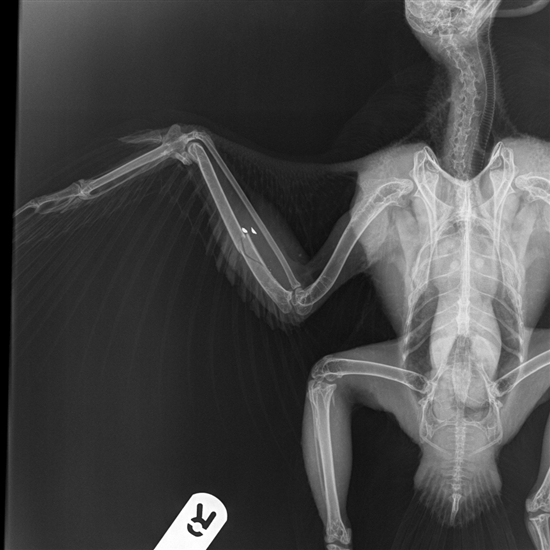
As you know, last week the Scottish Parliament’s Environment Committee voted to recommend that the Scottish Government undertakes further exploration for the introduction of a licensing system for driven grouse moors (see here).
The game-shooting industry responded with a joint statement that included a set of proposals for ‘reform’ – none of which included licensing and basically just called for the maintenance of the status quo (see here).
Wildlife conservationists responded to the Environment Committee’s decision with a joint statement that included the offering of an olive branch to “forward-thinking representatives” and “progressive elements” of the game-shooting industry (see here).
Now the Gift of Grouse has responded with this statement, written by Tim (Kim) Baynes (Director of SLE’s Scottish Moorland Group):
WILDLIFE CRIME: PARTNERSHIP, PREVENTION AND PUNISHMENT IS THE WAY FORWARD
The shooting community was pleased to see the press release from RSPB, Scottish Raptor Study Groups and the Scottish Wildlife Trust calling for a progressive partnership. The press release marks a welcome change from some of the recent comment and allegations and backs up our community’s approach, embodied in the set of proposals put to the ECCLR Committee on 19th May and noted in the Committee’s decision on 23rd May to write to the Cabinet Secretary.
All six organisations have working relationships with RSPB, SRSG and SWT in certain areas and we are all conservationists – we just take different management approaches. Many raptor study volunteers help estates and vice versa. We work with RSPB on many projects, for instance the South Scotland Golden Eagle Project, and we have a long standing relationship with SWT. There is much more to unite than to divide, but we do need to resolve the issue of bird of prey persecution and put it into context.
The issue is not one of raptor “body counts” which all acknowledge is now at a historically low level. It is about what might be happening unseen, with areas of relatively low populations of certain raptor species raising suspicion. We are very keen to work with SNH, and any other organisation with constructive intentions, to find out more about these areas and have welcomed the Government’s satellite-tagging review to get clarity on all the conflicting facts and comment.
We have been disappointed at the muddled thinking behind the petition for a licensing system. Initially it was for all types of game shooting, but soon became clear that it was really another attack on driven grouse moors. The idea of licensing specific types of shoot management or parts of land holdings in multiple use has not been thought through either in terms of practicality, collateral impact, unintended consequences or even whether it would hit the target specifically identified by the Cabinet Secretary in her letter to the ECCLR Convenor of 7th March. The set of proposals put forward by our sector were to home in on the difficulty of evidence and enforcement which has been elusive. The solution to that is prevention, working with police, SNH and any other expert body such as RSPB and SRSG. A storm of media coverage is trying to put pressure on Government to implement yet more regulation but that is the wrong solution. To be clear we wholeheartedly believe that a combined strategy of punishment and prevention is the most effective way forward. This would be in keeping with the view of Police Scotland in relation to all forms of crime.
If there is to be a genuine partnership, there does need to be an understanding that driven grouse shooting is an important land use in specific parts of Scotland, with benefits for many species such as waders (the subject of a major new national conservation project) black grouse and white hares – all protected species. It is also important for rural investment, jobs and tourism which are of lesser concern to organisations with a focus on birds, but vitally important in the wider world. Those public benefits only come with proactive management. Walked up grouse shooting is not a solution; it may look nice superficially and is certainly an important part of our community, but it cannot generate the income necessary to pay for long-term, sustainable moorland conservation; it is often a stage in the progression towards loss of birdlife, as can be seen only too clearly on the abandoned moors in south west Scotland or Wales. We want the opportunity to explain these facts in a calm atmosphere so welcome the idea of a constructive partnership which could build for instance on the solid work of Scotland’s Moorland Forum. We also have the model of the SNH led raptor survey protocol signed in 2016 by RSPB and SRSG, which although adherence was not 100% is still a workable model, setting out what is expected of all parties, and the ability to learn lessons from it.
There needs to be a pause for reflection in the current social media frenzy. Raptor incidents are at a historically low level. There have been difficult issues with historic cases not coming to court and a more recent problem with adherence to GL restriction order and there will be incidents which the law will deal with as appropriate, but the underlying situation has never been better and we cannot risk letting extremists force their agenda on upland management policy, which is so important for Scotland.
We look forward to arranging a scoping meeting to discuss how such a partnership can be structured.
ENDS
Before we comment on this statement, it’s worth reminding ourselves about the Gift of Grouse. This is the grouse-shooting industry’s propaganda machine that made great claims in 2015 about the number of bird species that had been recorded ‘feeding and breeding’ on three driven grouse moors – Invermark & Glenogil (both in the Angus Glens) and Glenturret in Perthshire. We blogged about these claims (here) and we made repeated requests to see the actual data/reports (as did others – e.g. Andy Wightman here), but all to no avail. The Gift of Grouse refused to publish the reports and instead pointed everyone to a summary, written by The Gift of Grouse and not by the ecological consultants who had conducted the surveys. Indeed, on the back of these apparent survey results, the Gift of Grouse even held a prestigious Parliamentary reception at Holyrood, hosted by Graeme Dey MSP on 23 November 2015, with wide media coverage, to “celebrate diversity through grouse moor management“.
A year later, the ecological consultants published their report and surprise surprise, it turned out that the Gift of Grouse had, how shall we put this, ‘somewhat embellished’ the results (see here).
The Gift of Grouse has also made the unbelievable claim that raptors are ‘thriving’ on Scottish grouse moors (see here); a claim refuted by RSPB Scotland as “risible, make-believe tosh” (see here).
Going by their track record then, the Gift of Grouse’s latest statement should come as no surprise. Once again, Tim (Kim) tries to deny the prevalence of illegal raptor persecution, saying it’s ‘at a historically low level’ (it isn’t) and suggests it needs to be ‘put in to context’, which implies that the extent of raptor persecution has been exaggerated. He just doesn’t get it, does he? The context is there for all to see, and has been for several decades. How many scientific surveys, reports and reviews do we need? We’ve said this so many times but we’ll repeat it, again:
Systemic, illegal raptor persecution on intensively managed driven grouse moors is having population level impacts on several raptor species (e.g. golden eagle, peregrine, hen harrier, red kite). These aren’t the embellished results of some crappy, one-off, four-day ‘survey’ conducted in snow, rain and hail by a bunch of German students (which is the Gift of Grouse’s idea of sound evidence); they are the findings of multiple, long-term, rigorously conducted, peer-reviewed scientific studies published in high quality academic journals. To continue to deny this wealth of evidence is as bone-headed as President Trump’s denial of climate change data. Tim (Kim) does say that the industry has ‘welcomed’ the Government’s satellite-tagging review – it’ll be interesting to see whether the industry ‘welcomes’ the findings of that review, which is due to be published imminently, and is expected to demonstrate, once again, that satellite-tagged raptors ‘disappear’ with disproportionate regularity in certain areas where intensively managed driven grouse shooting is the predominant land use.
Tim (Kim) claims that ‘prevention and punishment’ is the way forward, not licensing. That might have been the way forward 63 years ago when raptors were given protected status but this approach has patently failed, which is why we’re in the position we are today. The game-shooting industry has been unsuccessful at reigning in the criminal element within its ranks – indeed, these criminals have often been shielded and defended by the industry. How many of these raptor-killing criminals have ever been reported to the Police by industry representatives? The industry has been gifted opportunity after opportunity after opportunity to clean up its act and yet still the illegal killing continues. Stamping their feet and shouting ‘it’s so unfair’ just doesn’t cut it anymore.
Tim (Kim) also suggests that the licensing petition ‘was really another attack on driven grouse moors’. Actually, it was nothing of the sort. As Tim (Kim) acknowledges, the petition called for the licensing of ALL types of game bird shooting; it was the politicians on the Environment Committee who honed in on driven grouse shooting (because that’s where the majority of illegal raptor persecution takes place), not the petitioners. And actually, Tim’s (Kim’s) derision about licensing only ‘specific types of shoot management’ could well backfire during the forthcoming inquiry. If it’s an impractical solution, as Tim (Kim) suggests, the political decision-makers could well turn the licensing proposal back on to ALL types of game bird shooting and not just driven grouse shooting, which we’d be very happy with.
And then finally, Tim (Kim) draws his thesis to a close with this:
“There needs to be a pause for reflection in the current social media frenzy…….The underlying situation has never been better and we cannot risk letting extremists force their agenda on upland management policy, which is so important for Scotland“.
It’s not the first time he/his organisation has complained about too much media coverage of raptor persecution (e.g. see here) and he needs to understand that coverage is high because it reflects the huge level of public, and now political, concern about the persistence of these abhorrent crimes in 21st Century Scotland. If nobody cared, nobody would read it and thus nobody would bother writing it. More and more people are being made aware, they are incredulous that not only does this continue but that it has been allowed to continue without proper regulation, and as a result, media coverage is only going to increase – this is not going away, Tim (Kim).
Oh, and by the way, we’re not ‘extremists’ and it’s pretty distasteful to label us as such in the week when an actual extremist blew up himself and 22 others in Manchester. We, and everyone else, including those politicians on the Environment Committee who voted to progress the licensing petition, are law-abiding, rational human beings who expect to see the law upheld and criminals brought to justice. That’s as ‘extreme’ as we get.
 North Yorkshire Police are appealing for information following the discovery of a dead buzzard.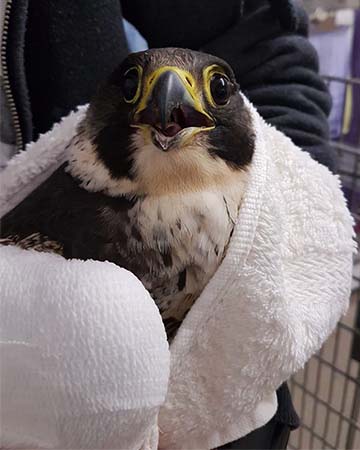


 Logan Steele of the Scottish Raptor Study Group and lead petitioner said: “The ECCLR Committee has made a thorough assessment of the evidence put before it, and clearly concluded that raptor persecution has not been dealt with by the gamebird shooting industry. I warmly welcome the committee’s decision to write to the Cabinet Secretary, recommending that the Scottish Government gives consideration to implementing a licensing system for shooting businesses. The Scottish Raptor Study Group accepts that many within the shooting industry are law abiding and are as keen as we are to bear down on the criminal element within their ranks. A Government-sponsored inquiry, into how a licensing regime might work, presents an opportunity to work in partnership with forward-looking representatives from the industry, and other stakeholders, towards creating a sustainable upland environment where our birds of prey can thrive alongside legitimate shoot management.”
 Jonny Hughes, Chief Executive of the Scottish Wildlife Trust, said: “We fully support this call for a constructive and broad partnership to provide expertise to a much needed inquiry into licensing of gamebird hunting in Scotland. Now is the time for all interested parties to come together to address what is clearly still a significant problem in our countryside. Shooting organisations should not see this as a threat, but more as a real opportunity to put differences aside and ensure that the best long term interests of nature and enhanced rural employment are at the heart of such discussions.”
 As he prepares to retire from his position as Director of RSPB Scotland, Stuart Housden said: “We commend the committee’s thorough scrutiny of the evidence put before it over the last few months, and welcome their vote to recommend an inquiry into a potential licensing regime for gamebird shooting in Scotland.
 In the run up to the Scottish Parliament’s Environment Committee meeting last Tuesday to