RSPB provides update on raptor persecution surge during Coronavirus lockdown

Two weeks ago the RSPB said there had been a ‘surge’ in raptor persecution crimes during the Coronavirus lockdown period resulting in a number of police searches on various grouse moors across the UK (see here).

The shooting industry’s leaders responded to this news with their usual mind-bending, truth-twisting denials and obfuscation (see here).

This morning, in response to some of the accusations and denials made by the shooting industry, the RSPB has published a short video update:

The ~2 min video features Mark Thomas, head of investigations and the transcript is as follows:

Hi, it’s Mark Thomas from RSPB Investigations.

Thank you for your concern, disappointment and overall overwhelming support since last week’s news release about the surge in raptor crime.

Of the 56 incidents, 81% of those confirmed so far have a connection with land use for shooting, both in the uplands and in the lowlands.

Interestingly, the shooting world seem fixated on trying to show these incidents didn’t actually happen, particularly the red kite in Leeds which was shot on the city outskirts close to other confirmed persecution incidents. The latest news on this one is that a shooting syndicate are helping police with their enquiries.

This doesn’t look, feel or sound like zero tolerance, more like the usual denial. In fact the only progressive voice has been that of Shooting Times, who called out the issue and then swiftly became targets from their own peers. What chance of self regulation?

So where are we a week on?

Well unsurprisingly the figures have gone up, more confirmed and potential offences have come to light from the police, including four from the Peak District National Park alone. One of those being a buzzard that was found mortally injured and had to be put to sleep, the x-ray showing it had been shot with a shotgun on not just one but two separate occasions. 

We’ve also received news from Norfolk Police of a shot buzzard in west Norfolk that also had to be put to sleep, and another dead buzzard in North Yorkshire which is currently being investigated.

We are aware of, and have been involved in, a number of other police investigations, some that we can’t talk about. Put simply, this is not going away.

We’ve been in close contact with the police and the National Wildlife Crime Unit, in fact supplying the NWCU with detailed line-by-line breakdown for each of the incidents we’ve detailed.

As always, we are science and evidence based. This isn’t an issue to be discussed behind closed doors, it’s of national public concern and a measure of that interest is why it’s being featured on Channel 4 News tonight and on BBC Countryfile on Sunday.

Please do tune in and let us know your views.

And finally, please do keep your eyes and ears open in the countryside. We need you to do that.

Thank you as ever.

ENDS

Buzzard illegally poisoned in North Yorkshire’s Nidderdale AONB

A couple of weeks ago North Yorkshire Police was warning Nidderdale residents about potential poisonous baits in the community after two dogs fell ill and one subsequently died – an investigation is ongoing but a veterinary expert suspected poisoning (see here).

Now North Yorkshire Police are having to warn the public again after toxicology analysis has confirmed that a buzzard found near Pateley Bridge in March had been illegally poisoned.

Here is the North Yorkshire Police press statement (27 May 2020):

Analysis shows buzzard killed by combination of four different pesticides

North Yorkshire Police is urging pet owners to be vigilant after analysis of a dead buzzard found near Pateley Bridge showed the presence of four pesticides in its system which are believed to be the cause of death.

In March 2020, a member of the public saw a buzzard fall out of a tree in Pateley Bridge, Nidderdale. It was taken straight to a local vet but sadly died soon after. The buzzard was sent to the Wildlife Incident Investigation Scheme (WIIS), administered by Natural England, for further analysis due to the circumstances surrounding its death.

[The illegally poisoned buzzard, barely still alive. Photo via North Yorkshire Police]

This analysis identified the presence of three pesticides in the buzzard’s gizzard and crop with a fourth pesticide detected in its kidney. The report received by the police from WIIS noted the bird’s good body condition and the fact there was a good quantity of mixed food in its crop – two factors which indicate it likely died as a result of exposure to the pesticides.

The pesticides identified in the buzzard’s system were; Bendiocarb, Carbofuran, Isofenphos, and Chloralose. Bendiocarb is licenced for use in England as an ingredient in a number of insect control products but should not be released into an environment where wildlife could come into contact with them. Carbofuran, Isofenphos and Chloralose are all banned substances which should not be used under any circumstances.

Unfortunately several birds of prey have been the victim of poisoning in Nidderdale over the past few years with similar mixtures of poisons found in the dead birds in the past.

North Yorkshire Police is investigating this incident and has so far not found any evidence to suggest how the pesticides reached the buzzard in this case or previous cases. Often, the poison may be laid on bait such as a rabbit carcass or other so police urge dog owners to be careful and not allow their dogs to eat any dead animals they might come across on a walk or during exercise.

Anyone with any information which could help the police track down those responsible for the illegal use of these is asked to contact North Yorkshire Police, quoting reference 12200084524.

Anyone misusing pesticides may be committing a variety of offences. If you come across an object which you believe may be contaminated with a pesticide or other poisons, please do not touch it. Instead take lots of photos of the scene and a detailed grid reference if possible. Report the situation immediately to the police giving all the information collected and why you suspect involvement of a poison.

The buzzard population has recovered in Yorkshire over the past few decades and they are now a common sight in Nidderdale.  All birds are protected by law and it is a crime to intentionally kill, injure, or take any wild bird.  Persecution of birds of prey is one of the five priority crimes for the National Wildlife Crime Unit.  If anybody has information about persecution of birds of prey please call North Yorkshire Police on 101.

Find out more about how to recognise the signs of bird of prey persecution here: www.northyorkshire.police.uk/opowl-getinvolved

ENDS

The combination of four poisons used in the latest crime is interesting – it’s a familiar lethal cocktail that has been used on various grouse moors across the UK in recent years. It’s almost as though a batch has been pre-prepared and then distributed. Wouldn’t it be interesting if the geography of these occurrences matched the movements of, say, certain gamekeepers moving between jobs? There’s an analysis for the National Wildlife Crime Unit to undertake….

The Nidderdale Area of Outstanding Natural Beauty (AONB) is a well-known raptor persecution hotspot and Nidderdale residents will be used to receiving these warnings about illegal poisonous baits; there have been several police warnings in recent years (e.g. see hereherehereherehereherehere) as poison has been used routinely to kill off red kites inside this AONB and the surrounding area (e.g. see here).

And it’s not just red kites that are targeted here. We’ve blogged about Nidderdale many, many times including the poisoning and shooting of red kiteshen harriersbuzzardsmarsh harriers on Nidderdale grouse moors (as reported by the AONB partnership in September 2019). As recently as January this year the police were appealing for information after a kestrel had been found shot and just three weeks ago they appealed for information after the shooting of a buzzard.

The shooting industry’s claimed stance of ‘zero tolerance’ on the illegal killing of birds of prey becomes more discredited every single day.

[Nidderdale AONB sign, photo by Ruth Tingay]

Shameful Natural England issues another licence for hen harrier brood meddling

Last week, Natural England announced that it had issued another licence to enable hen harrier brood meddling to take place this year.

For new blog readers, hen harrier brood meddling is a conservation sham sanctioned by DEFRA and carried out by Natural England, in cahoots with the very industry responsible for the species’ catastrophic decline in England.

It is supposed to test whether those people responsible for killing hen harriers illegally would stop killing hen harriers if the chicks were brood meddled (removed from the grouse moor in June at the critical grouse-rearing stage and then returned to the wild in August). We all know this won’t work because we know that young hen harriers are killed routinely during the grouse shooting season, and especially in September and October and yet still DEFRA, Natural England and their grouse shooting mates have pressed ahead with this five year ‘trial’. For more background on hen harrier brood meddling see here.

Here is a copy of Natural England’s recent announcement:

Breeding hen harriers in England are at a critical population level. Natural England is involved in a number of initiatives to help ensure hen harriers recover including Defra’s Hen Harrier Recovery Plan.

One of these initiatives is the hen harrier brood management trial. The 5 year brood management trial is designed to determine how many hen harriers can live alongside grouse before they have an impact on grouse numbers through predating them. Natural England is also involved in monitoring surveys, protecting hen harriers from persecution and exploring re-introduction into the South of England.

Brood management involves the removal of hen harrier eggs and/or chicks to a dedicated hatching and rearing facility, where they are hand-reared in captivity, before being transferred to specially-constructed pens in hen harrier breeding habitat, from which they are then re-introduced into the wild in the uplands of northern England.

We issued the first 2 year trial licence in 2018. Earlier this year we received an application to renew this licence for a further two years. A renewal licence application has now been processed and we issued the licence on 20th May 2020.

Successful brood management intervention took place in 2019. All five chicks from the intervention nest were successfully raised to become healthy fledglings and released. That is a strong success rate compared to the 2018 nesting data which show that five of the 14 wild nests failed entirely and only two of the 14 wild nests were able to fledge five chicks.

We understand that some people may have questions and concerns over the taking of birds from the wild and so I wanted to outline more about this decision.

Evidence suggests that hand-rearing hen harriers in captivity before releasing them into the wild can lead to an improvement in their numbers and therefore their conservation status. Brood management is the sixth action within the Defra Hen Harrier Recovery Plan. One of the success criteria of the plan is to build confidence with land managers that thriving harrier populations can coexist with local business interests and contribute to a thriving rural economy.

This intervention may only occur in areas where there are already enough hen harrier nests to protect their numbers in the local population. The ‘trigger’ for brood management to commence is two successful nests occurring within 10km of each other, on a grouse moor.

The licence is time-limited for a 2-year period and places stringent conditions on the trial. We have rigorously scrutinised the licence application and will work closely with the licence applicant throughout the duration of the trial to ensure that all elements are carried out proportionately and effectively, to bring about the best possible outcome for hen harriers.

The applicant will have to provide evidence that they have taken every precaution to ensure the welfare of the birds or local populations are not affected.

We understand that there are active hen harrier nests this year that meet the licensed criteria for trial brood management and willing landowners who want to be part of the trial.

We will shortly publish the redacted licence and a link will be provided here.

ENDS

There is so much to say about this, but we’ll come back to it in separate blogs.

For now, we have asked Natural England to provide the following information:

  • What is the status of the five satellite-tagged hen harrier chicks from the 2019 brood meddled nest? The last we heard three of the five had ‘disappeared’ (here) although then one came back online (here) and it then became apparent that some of the satellite tags used last year were different to the tags used previously and were not as reliable (see here). [SEE UPDATE AT FOOT OF BLOG]
  • Can we see a copy of the annual report of the 2019 brood meddling trial that the HH Brood Meddling Project Team is required to provide, as laid out in the Brood Meddling Management Plan.
  • Can we see a copy of the approved minutes of the Scientific Advisory Group’s meetings, to date.
  • Can we see the ‘report by licensee of action taken under the 2019 licence’ which was due to be submitted to NE no later than 14 days after the licence expired (20 Jan 2020) as a condition (#8) of last year’s licence.

More soon, including some shocking new information…….

[Sketch by Gerard Hobley]

UPDATE 8 June 2020: The five brood meddled hen harriers from 2019 are all ‘missing’ (see here)

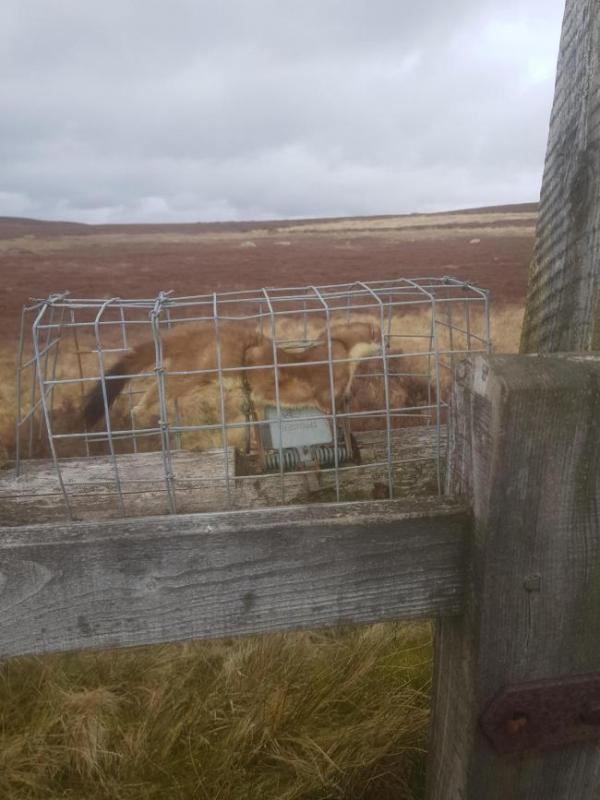
Stoat killed in illegal trap on grouse moor in Teesdale

There’s an article in the Northern Echo today reporting the discovery of a dead stoat in an illegally-set Fenn trap on an unnamed Durham grouse moor.

A member of the public had found the stoat and reported it to the League Against Cruel Sports, who reported it to Durham Police.

[Dead stoat caught in illegal Fenn trap on unnamed Teesdale grouse moor, photo via Northern Echo]

An unnamed spokesperson for Durham Constabulary said:

We received reports of a suspected illegal Fenn trap in the Teesdale area and on investigation, found it was illegal and the trap subsequently removed by the landowner.

We would like to remind all those concerned that following new legislation that came into effect on April 1, 2020, the use of Fenn traps and all copycat designs have now been made illegal to trap stoats.

We would encourage landowners to comply and remove any traps that are illegal if they have not already done so.

If members of the public should see any traps which they think are illegal they can contact us by calling 101.”

We’ve blogged previously about the new rules for trapping stoats (see here).

We know that Fenn traps have also been found set in position on other grouse moors since the traps became illegal and we’re aware that at least some of these have been reported to various police forces.

It’ll be interesting to see how long it takes before someone is actually charged with an offence for continuing to use these now-illegal traps for killing stoats, rather than the landowner simply being ‘encouraged to comply’ with the law.

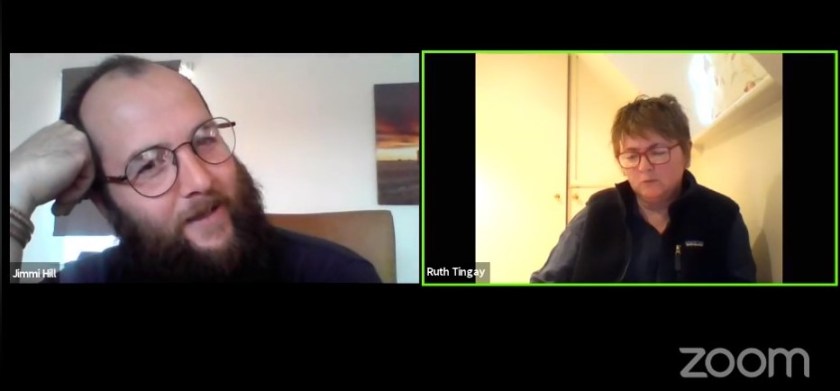
Q&A interview with RPUK blogger Ruth Tingay

Many thanks to Jimmi Hill of UK charity Raptor Aid for providing an opportunity to participate in a Q&A interview yesterday evening.

For those who are interested in my actual background in raptor conservation (as opposed to the shooting industry’s claims that I’m an animal rights extremist jumping on the bandwagon), you can watch the archived video on Raptor Aid’s facebook page (see link below). The discussion also includes a fair amount on raptor persecution, on running this blog, and a little bit about Wild Justice.

The video link is here and you don’t need a Facebook account to watch it: https://www.facebook.com/raptoraiduk/videos/854066891772187/

For those of you interested in raptor conservation, check out some of the other interviews that Jimmi has recorded with various experts from around the world through the lockdown period (all archived on the Raptor Aid Facebook page) for some fascinating insights. This evening at 7pm he’ll be interviewing Brian Etheridge from the Scottish Raptor Study Group – definitely not to be missed.

Self-regulation continues to elude the game-shooting industry

We’re used to hearing from the game-shooting industry that self-regulation is the way forward, instead of the proposition of statutory legislation and regulation, such as shoot licensing, (e.g. see here for the Scottish game-shooting industry’s response to the Werritty Review, where they argue that self-enforced ‘codes of practice’ are the best solution for grouse moor management).

The thing is, self-regulation hasn’t worked for decades, so why should anyone believe it’ll work now?

This Bank Holiday weekend provided yet another example of what appears to be failed self-regulation, and it’s a shocker.

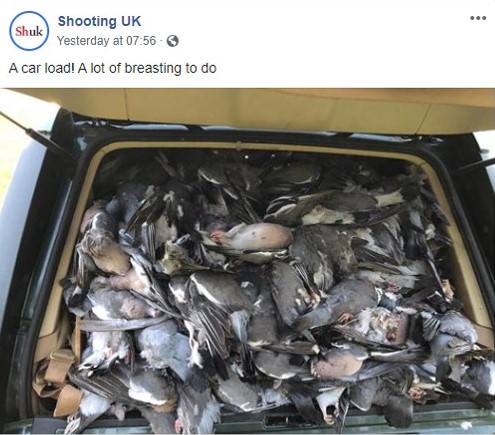
A photograph appeared on social media (see below) showing the back of a 4X4, absolutely rammed full of dead wood pigeons, which presumably have been shot, lawfully, to protect crops from ‘serious damage’. Let’s hope there aren’t any dead Stock doves in this pile – although it’d be virtually impossible to see with so many carcasses heaped on top of one another.

Not only was this photograph posted on social media at the weekend, but it was posted by Shooting UK, which, according to its website, is ‘the umbrella site for Shooting Times, Sporting Gun and Shooting Gazette‘. This wasn’t the handiwork of some random idiot, this was published by a so-called industry leader who didn’t see anything wrong with sharing this grotesque image nor any comprehension of the potential breaches of the industry’s own Code of Good Shooting Practice:

Here is the industry’s self-regulatory Code of Good Shooting Practice: CodeGoodShootingPractice
The Code is overseen by a steering committee comprising representatives of BASC, Countryside Alliance, GWCT, Moorland Association, National Gamekeepers Organisation, Scottish Gamekeepers Association, Scottish Land & Estates, National Game Dealers Association, Game Farmers Association and the CLA.

According to page 4 of this document, ‘This Code is primarily addressed to shooting ‘game’, which includes all of the traditional gamebirds, namely pheasants, partridges and grouse, but many of the principles apply equally to other quarry types – ducks, geese, waders and hares – as well as pest species including; pigeons, crows, rabbits and grey squirrels‘.

The Code has ‘Five Golden Rules’. Golden Rule #3 is as follows:

Respect for quarry is paramount. It is fundamental to mark and retrieve all shot game which is food and it must be treated in accordance with the Guide to Good Game Handling.

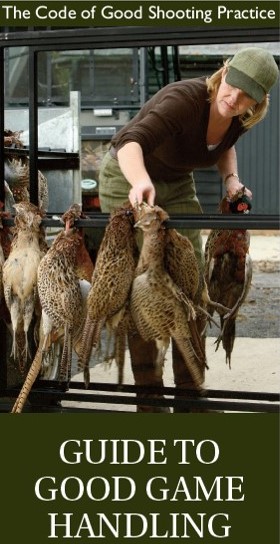
So, does cramming a load of shot wood pigeons in to the back of a 4X4 constitute ‘accordance with the Guide to Good Game Handling’? Let’s have a look:

Here is a copy of the Guide to Good Game Handling: Guide-Good-Game-Handling

This guide discusses the basics of good food handling and hygiene such as keeping it clean, protecting it from contamination, the need for rapid cooling and correct storage. It discusses the importance of good air circulation and the need to space birds out, laying them separately and on their backs, and never to leave them in heaps as they’ll quickly deteriorate. It also says that when it’s being transferred to a suitable food storage facility a separate game cart or designated area within a vehicle should be used, again keeping space between the birds to encourage airflow between them.

Oops.

Now, the comment from Shooting UK about breasting implies these birds are destined to be eaten, but what isn’t clear is (a) whether these wood pigeons are destined to be sold or (b) whether the person/people who shot them is going to take them home and shove them in their own freezer for their own consumption, along with all the toxic lead shot in each bird.

Does the Code still apply for private consumption or is it only applicable if the shot birds are going to be sold to someone else? Presumably the Code of Good Shooting Practice applies to ALL scenarios, right? Or is it open to interpretation, a bit like the rules about driving from London to Durham during CV19 lockdown….

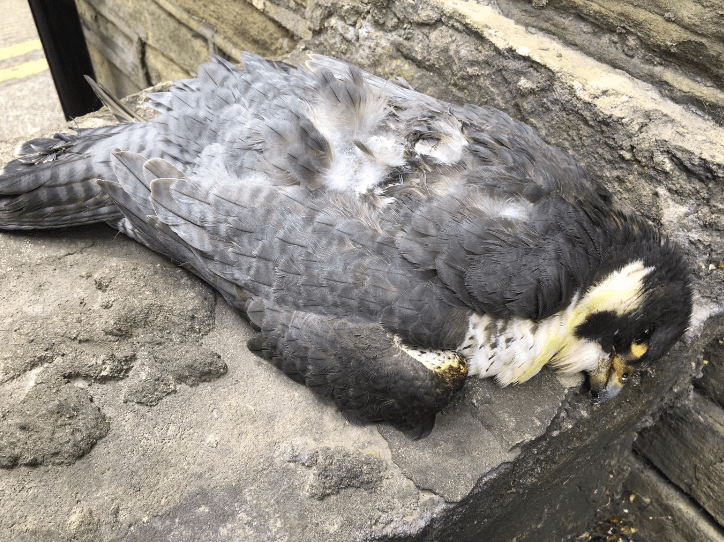
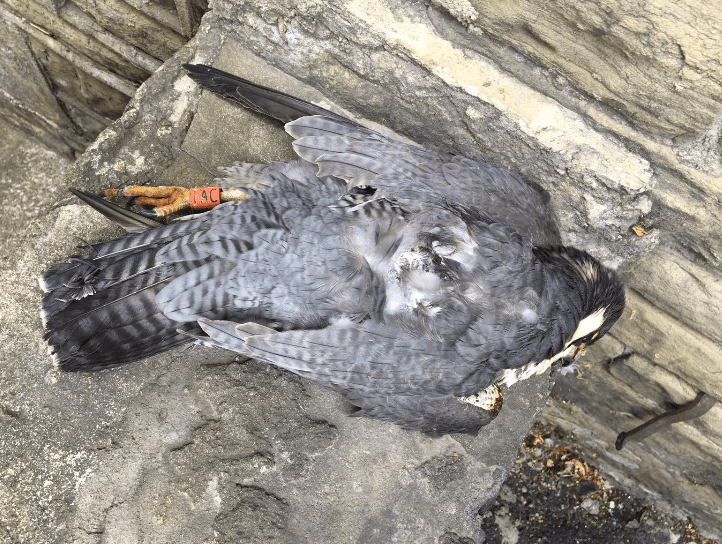
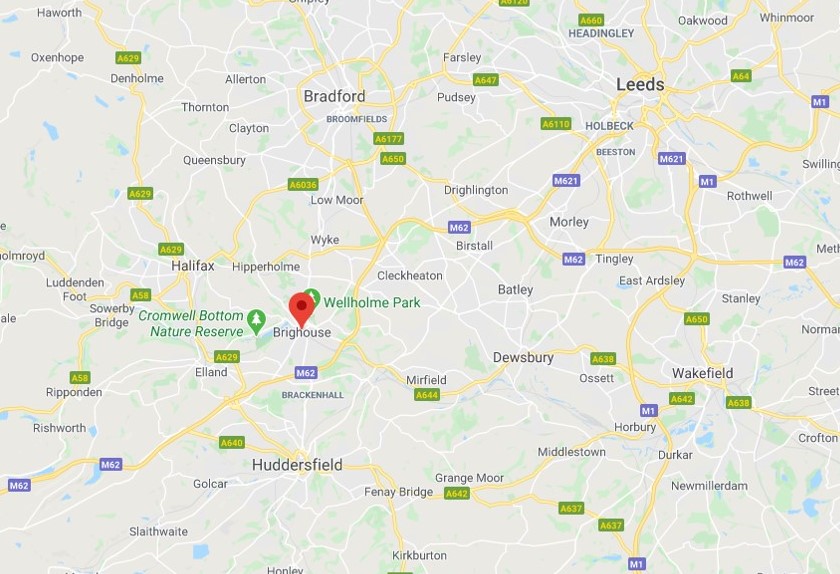
Peregrine found shot dead in Brighouse, West Yorkshire

A peregrine has been found shot dead in Brighouse, West Yorkshire. It’s leg ring has identified it as a male that hatched in 2018 at the University of Leeds, according to @UoLPeregrine.

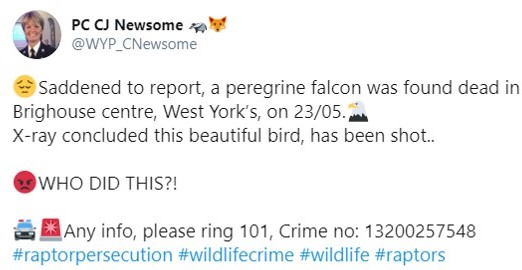
The dead bird was found yesterday (23 May 2020) and police wildlife crime officer PC CJ Newsome has tweeted that an x-ray has confirmed he’d been shot, although there is no further detail on whether this was a shotgun or an air rifle.

If anyone has any information about this crime please contact the Police on 101 and quote ref # 13200257548

Police ask public to be vigilant after buzzard & two peregrines found dead in Staffordshire Moorlands

Press release from Staffordshire Police (20 May 2020)

Three birds of prey found dead in Staffordshire Moorlands

Police have raised concerns after three birds of prey were found dead in the Staffordshire Moorlands [inside the Peak District National Park].

On Saturday (16 May) a buzzard and peregrine falcon were sadly discovered dead in a wooded area of Longnor, and yesterday (Tuesday 19 May) a second peregrine falcon was found dead near Wetton.

As there were no visible signs of injury, the birds will now be forensically examined to establish the cause of death. At this time officers cannot rule out the possibility that the birds were poisoned.

A police investigation is on-going as under the Wildlife and Countryside Act it is an offence to intentionally kill, injure or take wild birds.

[Photo by Staffordshire Police]


Officers are asking local residents and visitors to these areas to report of any suspicious behaviour and be vigilant for the signs of criminal activity, including dead or injured birds, poisoned bait and traps.

Reports are handled in the strictest of confidence – so anyone with any information is asked to get in touch by calling 101, or completing an online form at; https://www.staffordshire.police.uk/report-online/ quoting incident number 284 of 19 May.

Staffordshire Police continues to support Operation Owl – a national initiative to raise awareness and prevent the persecution of birds of prey in our countryside.

Chief Inspector Mark Thorley, commander of the Staffordshire Moorlands Neighbourhood Policing Team and rural crime lead, said:

If the birds have been specifically targeted, this is a dreadful crime and those responsible must be brought to justice.

If you come across a dead bird or suspicious object, this could be a wildlife crime scene. Please do not touch or move anything. Every piece of information may be crucial in prosecuting an offender so please take photographs if you can and make a note of your surroundings and landmarks to help officers to locate it.

Any information, no matter how small and insignificant it may seem, could help with our on-going investigation so please get in touch with us directly or any of our partners listed below.”

Crimestoppers 0800 555 111.
Wildlife Incident Investigation Scheme hotline 0800 321 600.
RSPB’s confidential Raptor Crime hotline 0300 999 0101.

ENDS

UPDATE 2 October 2020: Birds of prey illegally poisoned in Staffordshire / Peak District National Park (here)

Wild Justice response to RSPB consultation on gamebird shooting

Last year the RSPB announced it was undertaking a policy review on gamebird shooting (see here).

This was prompted by ongoing environmental concerns including ‘the ongoing and systematic illegal persecution of birds of prey such as hen harriers on some sporting estates; the ecological impact of high numbers of game birds released into the countryside increasing the density of generalist predators; the mass culling of mountain hares in some parts of our uplands; the use of lead ammunition; the impact of burning peatlands and medicating wild animals for sport shooting’.

The policy review process comprises three elements, including a consultation of RSPB members as well as with others with an interest in gamebird shooting, whether that be for or against (see here).

The consultation period closed in April and the RSPB is currently assessing those responses and intends to publish them (or at least those who gave permission for their response to be published) in due course.

Nine organisations from the game shooting industry have already published their joint response, which was interesting in that they chose to write a letter waffling on about the GWCT’s proposed ‘principles of gamebird management’ instead of responding to the questions posed in the RSPB’s consultation questionnaire. The tired old cliches are all in there and the obligatory accusation that the RSPB threatens future ‘partnership working’ (ahem) if it decides to change its stance on gamebird shooting. The game shooting industry’s letter can be read here: RSPB-consultation-Shooting Industry response-16-04-20

Wild Justice also responded to the consultation and its response has been published on its blog today – see here. As with the game shooting industry response, you’ll probably detect some irritation from Wild Justice with some of the RSPB’s proposed principles, and this irritation builds throughout the WJ response, but for completely different reasons to the irritation shown by the game shooting industry!

Irritations aside, the RSPB’s policy review of game shooting is very welcome and it’ll be fascinating to see where it ends up. The results are due to be announced at the RSPB AGM in October.

Game-shooting industry displays zero credibility in fight against raptor persecution

The game-shooting industry continues to bang nails in to its own coffin with its latest magnificent display of zero credibility when it comes to tackling the ongoing illegal killing of birds of prey across the UK.

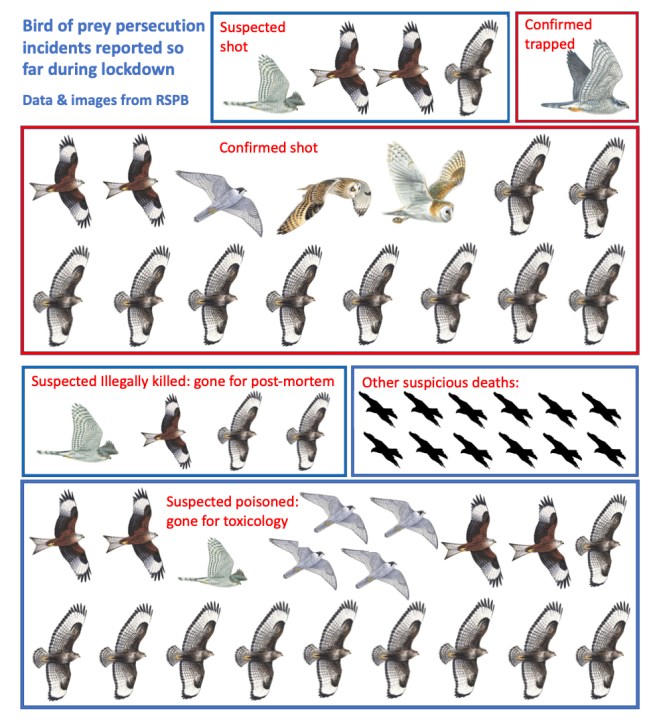
Have a look at these responses from the major game shooting organisations to last week’s news of a reported raptor persecution surge during lockdown. For those who missed the news, see here, or for ease have a look at this brilliant infographic published on Twitter by @RobThomas14, a senior lecturer at Cardiff University:

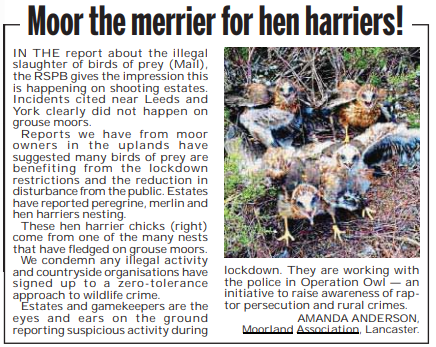
First up, a letter in the Daily Mail from Amanda ‘pass me the Brasso for my neck’ Anderson of the Moorland Association (which is a carbon copy of the statement published on the MA’s website):

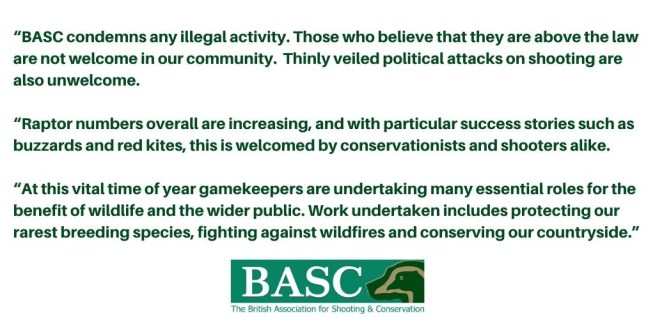
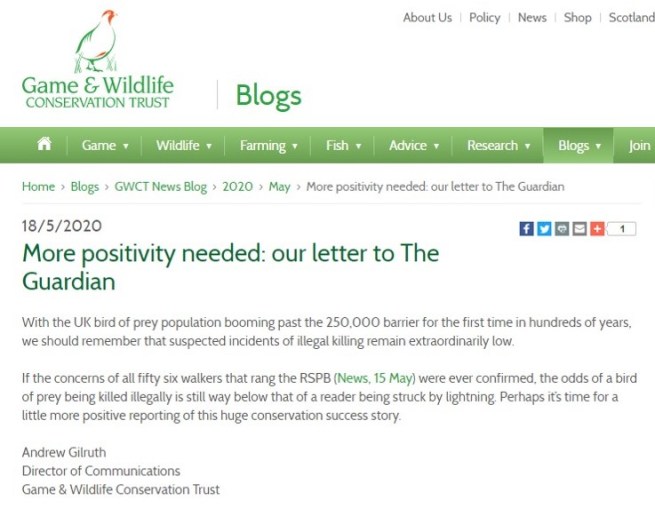
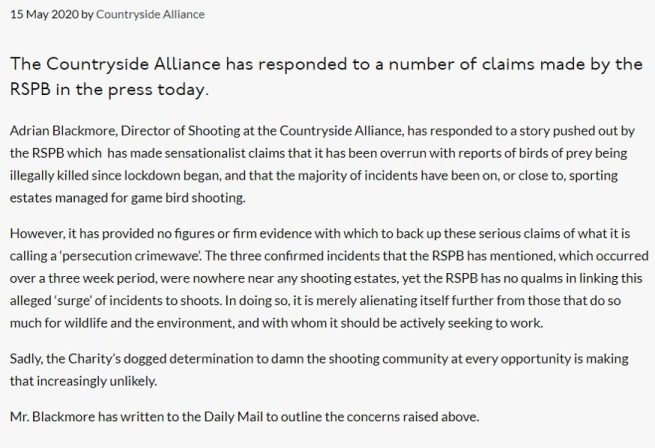
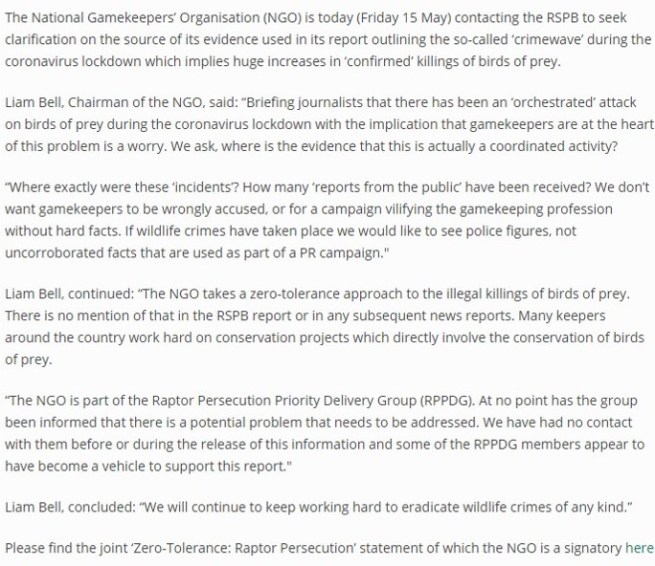
In a similar display of denial, delusion and detraction, here are some others:

They just don’t seem able to comprehend how utterly ridiculous they look. It’s the digital equivalent of sticking their fingers in their ears and dancing around singing ‘I can’t hear you, la la la’ while increasingly well-informed members of the public stand and stare at them in disbelief. You just need to have a glance on Twitter to see the public’s reactions to these statements of denial and it quickly becomes obvious where public opinion is heading.

And once the details of these most recent crimes become public (i.e. when the police have reached a stage in their investigations when it will be appropriate for such detail to be released), we predict public opinion will be further enraged, causing significant difficulty for those in the industry who continue to shield the criminals.

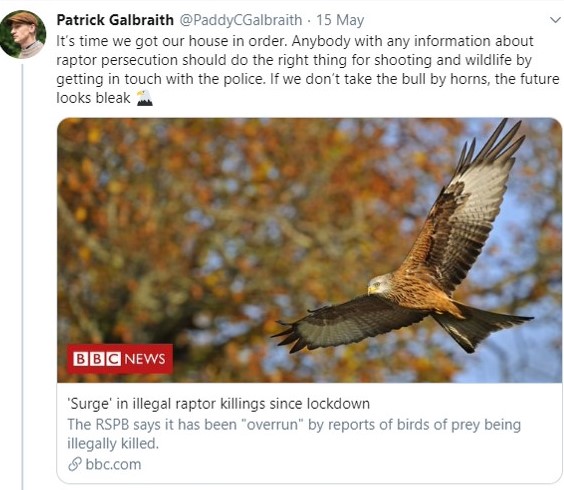
There was one notable exception amongst the responses from the game-shooting industry to the news of the raptor persecution surge, from an unexpected quarter. Paddy Galbraith, the Editor of Shooting Times has seen the writing on the wall and tweeted this:

No denial, no delusion, no detraction, no attempt to shoot the messenger, just an open acceptance of what everybody already knows is going on, and what looks to be a sincere plea to bring it to a halt. Good for him.

UPDATE 29 May 2020: RSPB provides update on raptor persecution surge during Coronavirus lockdown (here)