Last year, campaign group Wild Justice launched a legal challenge against DEFRA over the unregulated annual release of 50+ million gamebirds (pheasant and re-legged partridge) in to the English countryside (see here).
Permission was granted to Wild Justice for a judicial review after a judge dismissed DEFRA’s claim earlier this year that the case was ‘premature and academic’ (see here) and the court hearing is scheduled for Tuesday and Wednesday next week.
Meanwhile, this legal challenge was discussed on BBC Radio 4’s Farming Today programme this morning. You can listen here (the last 5 mins of the programme) and this clip is available for the next 29 days.
DEFRA was asked to comment and was quoted as saying a statement is imminent…..
For more information on this case and other Wild Justice legal challenges, both current and forthcoming, check out the Wild Justice blog (here) and subscribe to the free Wild Justice newsletter (here).
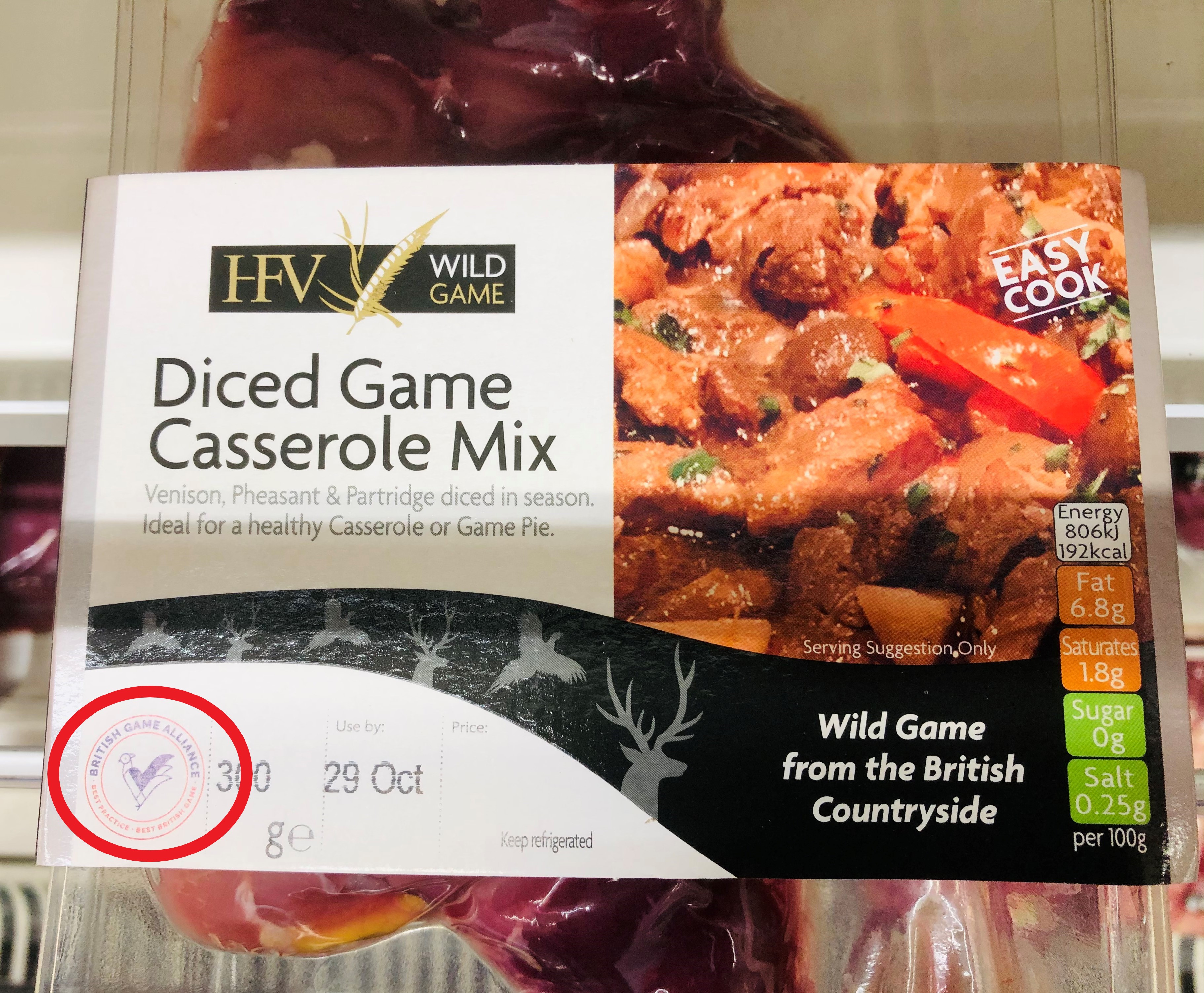
Supermarket Sainsbury’s has a new product on sale this autumn – a mixed game casserole, which apparently is made of 50% venison and 50% pheasant and red legged partridge:
[All photos by Ruth Tingay]
It’s being produced by a company called Holme Farm Venison, a company based in North Yorkshire that specialises in venison but also sells gamebirds.
According to the packaging, this product is ‘endorsed’ (ahem) by the British Game Alliance (BGA), whose ‘kitemark’ is stamped on the front:
Some of you may remember the British Game Alliance. It was created a couple of years ago as ‘the official marketing board for the UK game industry’ and claims on its website, ‘Through our ‘British Game’ assurance scheme we can ensure the provenance of our game meets rigorous and ethical standards‘.
Sounds good, right? Well, it does until you start digging in to the details – see here and here for earlier blogs about the BGA and some of its, let’s call them ‘interesting’, members.
It seems that accuracy and transparency is still an issue for the BGA – where it previously had listed some of its so-called ‘accredited’ members, it has now removed the list from the website:
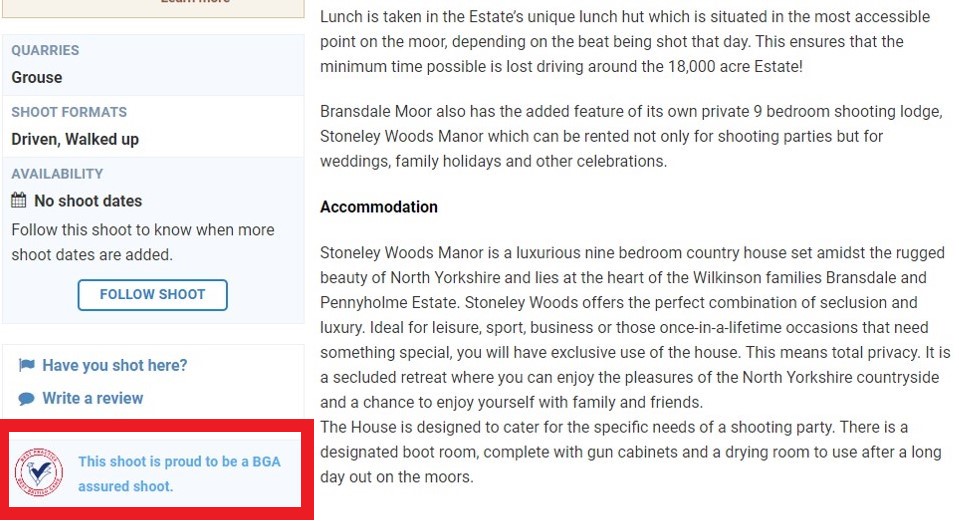
However, all is not lost if you know where to look. Here’s an example of the BGA logo being advertised on the Guns on Pegs website. This screengrab is the entry for the Bransdale Estate in North Yorkshire, where a police investigation is on-going after the discovery earlier this year of five dead buzzards shoved under a rock, four of them confirmed shot (here) –
It’d be interesting to know whether Sainsbury’s has taken the BGA ‘assurance’ at face value or whether it has actually demanded transparency from its supplier, Holme Farm Venison, and asked from which estates, exactly, it has sourced the pheasants and partridge for this new game casserole.
According to a press release from the BGA last week (see here), the BGA ‘stamp of assurance gives consumers confidence in the traceability, sustainability and quality of the game they eat‘. Really? Well then Sainsbury’s will have no trouble telling its customers all about the exact provenance of these gamebirds.
Which is just as well, because Holme Farm Venison seems a little bit confused about where they’ve come from. Its website first says “all its game products are supplied from our local gamekeeper” (ah, isn’t that all homely and lovely):
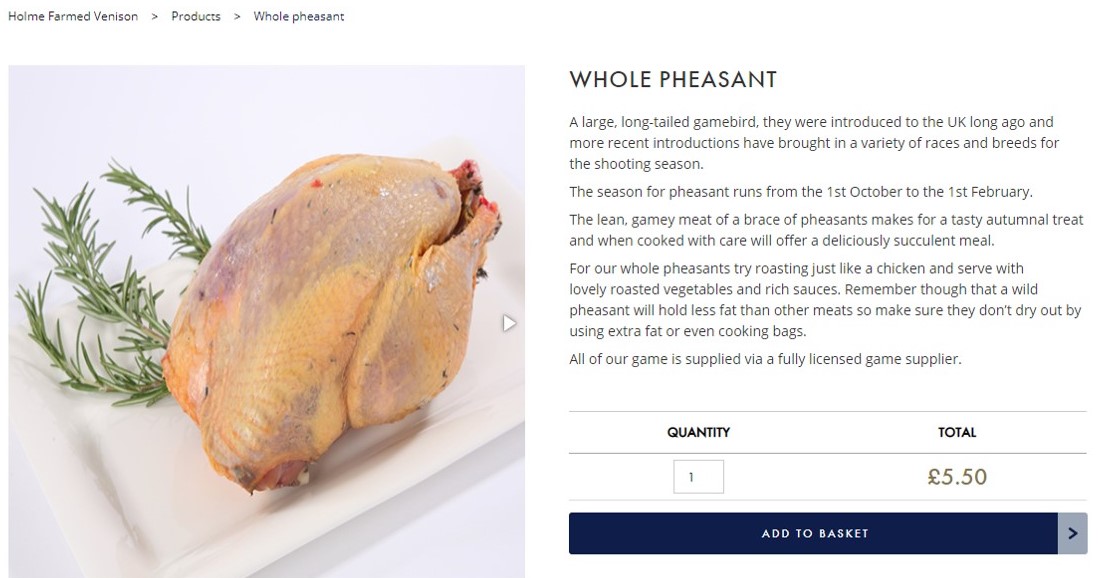
But when you actually look at the details of its gamebird products (pheasants and red legged partridge) it says they are supplied by a ‘fully licensed game supplier’:
Who’s that, then? And can they tell us the names of the estates from where these gamebirds have been shot? According to the BGA press release ‘an estimated half a million birds will find their way in to this product‘ – that’s one very busy gamekeeper! The packaging says the birds have been sourced from ‘Traditional UK Estates’ – who’s that?
And talking of shot……lead shot….toxic lead shot…..have these pheasants and partridge been shot with toxic lead ammunition? And if so, how is Sainsbury’s warning its customers that there is no safe level of lead consumption and that consuming lead is especially harmful to children and pregnant women?
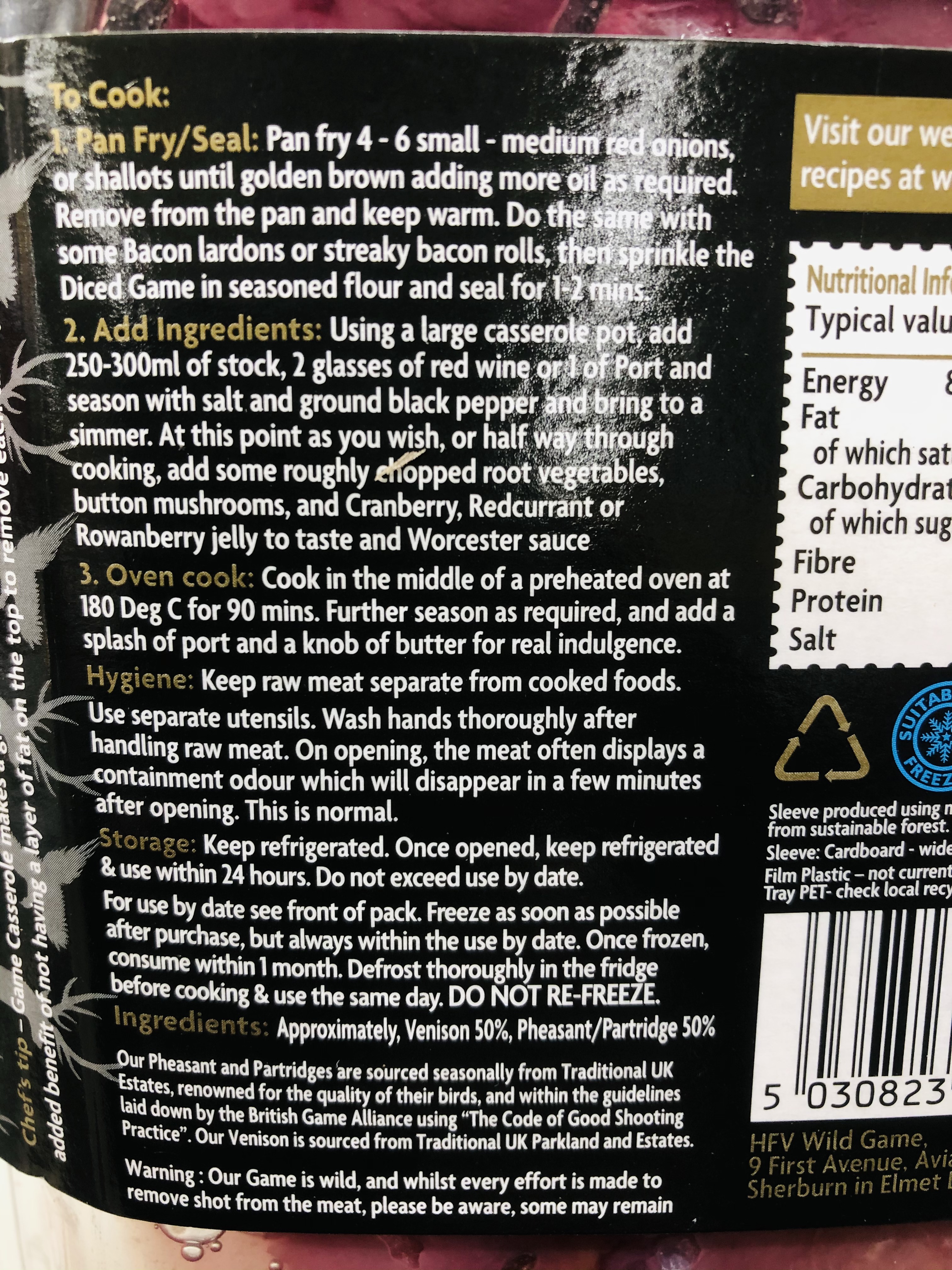
Here’s what it says on the packaging:
“Our game is wild, and whilst every effort is made to remove shot from the meat, please be aware, some may remain“.
That’s quite a statement. It doesn’t mention that those ‘wild’ gamebirds have probably been bred, pumped with antibiotics and released in to the British countryside to be shot with toxic lead ammunition. It doesn’t even mention lead! Perhaps they haven’t been shot with toxic lead ammunition after all?
Shall we ask Sainsbury’s? There’s a slogan on Sainsbury’s website that says, ‘We want to be the UK’s most trusted retailer’. Well then there’ll be no problem answering questions about the provenance of these gamebirds and whether they contain toxic lead ammunition, will there?
Press release from the Revive Coalition for grouse moor reform (28 October 2020)
Campaigners launch spoof Dragons’ Den film ridiculing grouse shooting industry
#GovernmentsDen video shown to MSPs in exclusive preview
MSPs have been given an exclusive preview of a spoof Dragons’ Den film, highlighting the weakness of the arguments in favour of managed grouse moors in Scotland.
Government’s Den imagines a world where grouse shooting doesn’t exist and puts two lobbyists in front of the dragons, arguing for up to a fifth of Scotland to be managed for the sport. The film sees the lobbyists put forward their case for ownership of a huge part of Scotland in return for a 0.02% contribution to the economy, with only ‘a few Government subsidies’ required. They also argue that they will use predator control to systematically wipe out all species that pose a threat to grouse to enable them to cultivate tens of thousands of game birds to be shot for entertainment.
The campaigning film is the brainchild of Revive, the campaign for grouse moor reform. It’s Campaign Manager, Max Wiszniewski said: “The video is intended to be taken tongue in cheek, but behind the humour is a very serious issue. Driven grouse shooting is an intensively managed bloodsport which depends on turning vast swathes of Scotland into barren monocultures. The circle of destruction which surrounds grouse moor causes untold suffering to many thousands of animals, depletes our peat reserves and causes environmental damage on an industrial scale.
The Revive coalition has alternative visions for our moors to address the environmental crisis in our countryside caused by intensively managed grouse moors and we hope this video will raise awareness of these issues and show just how ridiculous the current situation is.”
To find out if the lobbyists win over the dragons with their arguments watch the video below.
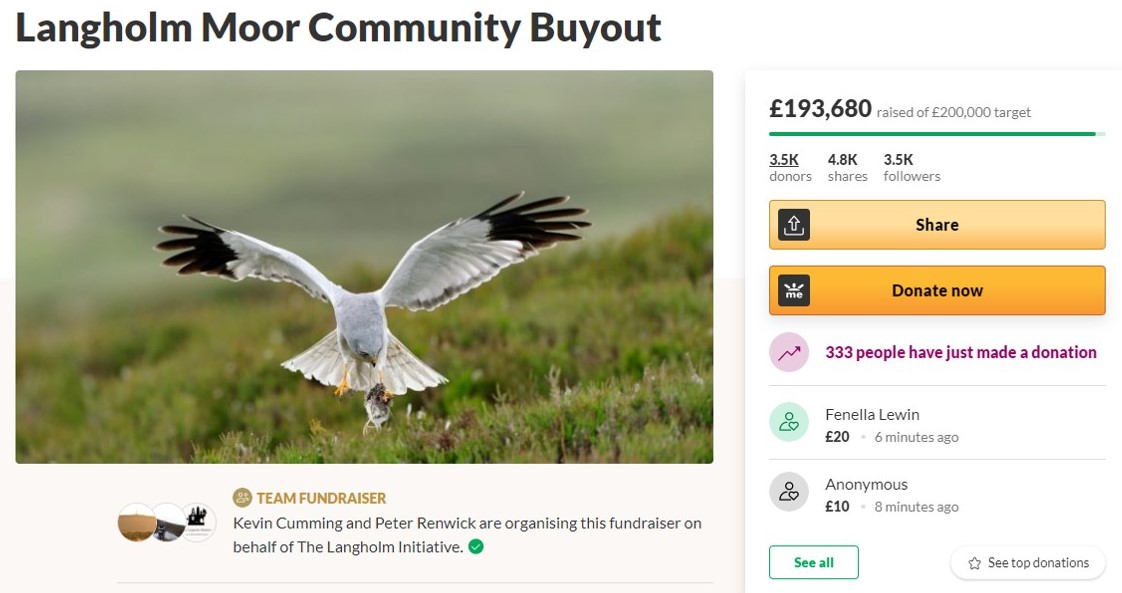
The Oct 31st deadline is looming for the Langholm Moor Community Buyout, an initiative aiming to buy land from Buccleuch Estates and transform it from an old grouse moor in to something of benefit for the whole community.
At the moment it looks like there may be enough funds to support Plan B, which is to buy part of the land to help the region’s environmental, economic and social development.
Press release from South Yorkshire Police (26 October 2020)
Information sought following the poisoning of a protected bird
Officers investigating reports of a bird of prey being deliberately poisoned are appealing for your help to find those responsible.
On Saturday 4 July officers found a juvenile peregrine falcon in ill health in the Fish Dam Lane area of Barnsley, the bird sadly died a short time later.
[The poisoned peregrine, photo via South Yorkshire Police]
Initial assessment of the bird indicated that it could have been poisoned. Following a forensic examination by the Wildlife Investigation Scheme it has now been confirmed that the bird had been poisoned with Bendiocarb, a highly toxic substance.
Peregrine falcons are protected under Sec1 of The Wildlife and Countryside Act 1981.
Investigating Officer PC Fran Robbs De La Hoyde said: “It is believed the poisoned peregrine falcon ingested bait laced with the poison which was deliberately set out to target the bird.
“There is nothing to suggest that this bait was laid in open land.
“This was a deliberate act that caused the death of a beautiful and protected bird. I am saddened by this and I am asking for your help to bring those responsible to justice.”
Tom Grose, RSPB Investigations Officer, said: “It’s always a privilege to catch a glimpse of a peregrine. The fastest birds in the world, they are highly adaptable creatures and often make their homes in urban areas these days.
“Bendiocarb is one of the most commonly-abused substances for killing birds of prey and we have sadly seen it used for this purpose on many occasions. It is illegal to kill these birds, and we urge anyone with information to come forward.”
Poisons commonly used to commit a crime like this are incredibly toxic to humans and pets. Should any person locate any dead or injured birds they are strongly advised not to touch them or let pets come into contact with them.
If you have any information that can help officers please call 101 and quote crime reference number 14/104692/20.
Alternatively, you can stay completely anonymous by contacting the independent charity Crimestoppers via their website Crimestoppers-uk.org or by calling their UK Contact Centre on 0800 555 111.
SYP are committed to the investigation of serious wildlife offences, including the poisoning of birds of prey.
ENDS
UPDATE 17 November 2020: Police raid property in poisoned peregrine investigation (here)
The Revive Coalition for grouse moor reform in Scotland has released a trailer for a forthcoming new film, called ‘Government’s Den’.
A parody of the Dragon’s Den format, this short film imagines a world in which driven grouse shooting doesn’t exist – where the grouse shooting industry must pitch its case for starting driven grouse shooting – to the Scottish Government.
Would the Government be in, or would it be out?
The film will be released at 2pm on Wednesday 28th October 2020 on the Revive Coalition’s YouTube channel here.
The Revive Coalition comprises a number of organisations working for grouse moor reform in Scotland. Members of the coalition are OneKind, League Against Cruel Sports, Common Weal, Friends of the Earth (Scotland) and Raptor Persecution UK. Find out more about the coalition’s work on its website (here).
Press release from North Yorkshire Police (21st October 2020)
Police appeal for information after peregrine falcons found dead near Tadcaster
Analysis finds carcasses containing pesticides
North Yorkshire Police is appealing for information following investigations into the death of two peregrine falcons found at a quarry near Stutton, Tadcaster.
[Photos by Guy Shorrock]
A member of the public who had been observing the mating pair of birds, found a male bird dead on a cliff ledge and following investigation by the RSPB and North Yorkshire Police to recover the carcass, a deceased female peregrine falcon was located in the bottom of the quarry.
Both birds were sent away for testing which confirmed high levels of Bendiocarb in their systems and this was found to be the cause of death. The male bird was found next to a pigeon carcass which it is believed may have been used as bait.
Bendiocarb is licensed for use as a pesticide in England but is highly toxic and should never be released into the environment where wildlife, such as birds of prey, could be exposed to it. The pesticide has been found used to kill birds of prey in North Yorkshire previously and as such, police believe this was a deliberate act of poisoning.
North Yorkshire Police Inspector Matt Hagen said:
“Poisoning a bird of prey is a crime and it is saddening each time we have another incident reported to us. Every investigation is thoroughly carried out with all lines of enquiry followed to try and find those responsible, but we cannot do this without the public’s help, please be our eyes and ears and report this type of incident to the police.
“I’m urging anyone who has any information about bird of prey persecution to get in touch with the police, someone out there knows who is committing these crimes and we need that information to ensure they are stopped.”
Despite extensive investigations, police have yet to identify those responsible for misusing this toxic substance. Anyone with information about this incident should contact North Yorkshire Police quoting reference 12200057190.
If you wish to remain anonymous, you can pass information to Crimestoppers on 0800 555 111.
ENDS
These peregrines were found poisoned six months ago in April 2020. There is no explanation given for the delay in publicising this crime but it is likely to do with long delays at the toxicology lab caused by the Coronavirus lockdown. It’s understood there is still a backlog of samples waiting to be analysed.
Last year Waitrose became the first (and only?) supermarket to ban the sale of gamebirds that have been shot with toxic lead ammunition (see here).
It was a bold move but one that was welcomed across the conservation sector.
Meanwhile, after years of consistently defending the use of toxic lead ammunition (e.g. here’s a classic example from one of the industry’s ‘figureheads’ (ahem) claiming that concerns were “nonsense”), in February this year a suite of shooting organisations announced that they wanted to promote a voluntary ban on the use of toxic lead ammunition and see an end to its use within five years. They had clearly seen the writing on the wall and decided to jump before they were pushed, although according to a statement from the Wildfowl & Wetland Trust (WWT), a group that’s been at the forefront of campaigning against lead ammunition for a very long time,
‘While the transition to lead-free ammunition is a positive move forward, conservationists stress that previous voluntary bans have been unsuccessful and without policy change at government level, there will still be risks to human health, wildlife and the market for game birds. A full restriction will contribute to the further removal of poisonous lead from our environment‘.
And not every shooting organisation was in support of even a voluntary ban. Those doyens of scientific research, the Scottish Gamekeepers Association, refused to sign up with the other shooting organisations because, they claimed, the impacts of lead “must be better studied” (see here). The irony of that statement wasn’t lost on any of us.
And just to confuse matters further, just last month the UK shooting industry as a whole stated it was to fight a new forthcoming EU regulation restricting the use of toxic lead ammunition on wetlands (see here).
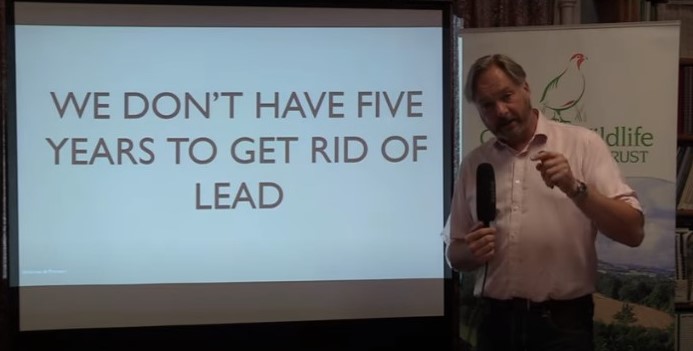
It’s with some interest then that John Gregson, senior manager of agri-food communications at Waitrose, gave a very strong presentation at the GWCT’s recent Game 2020 Conference on the company’s stance on lead shot.
This video is well worth watching. Aside from positioning himself as a former editor of the Shooting Times, and switching between talking about himself as a member of the shooting industry and as a Waitrose spokesperson, presumably to allay any fears amongst his audience that he might be perceived/smeared/dismissed as being ‘anti-shooting’, Gregson gives a compelling argument about why the shooting industry MUST drop the use of toxic lead ammunition ASAP – he argues that “we don’t have five years to get rid of lead“.
It was also good to hear him speak well of several scientists (namely Drs Debbie Pain and Rhys Green) who have worked for decades to demonstrate the no-brainer notion that toxic lead ammunition has to go.
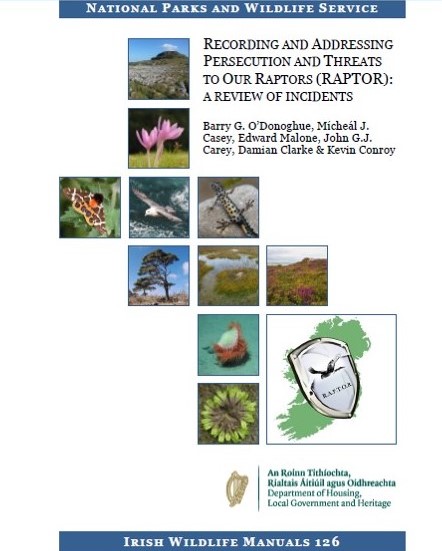
A new report has been published today reviewing confirmed incidents of illegal persecution and other threats to raptors in Ireland between 2007-2019.
The report is the cumulative work of the RAPTOR protocol (Recording and Addressing Persecution and Threats to Our Raptors) which was a collaborative approach between the National Parks & Wildlife Service, Regional Veterinary Laboratories and the State Laboratory to ‘systematically determine the extent to which anthropogenic non-habitat related impacts (for example poisoning, persecution, disturbance, collisions, etc.) are threats to Ireland’s native birds of prey‘.
The report contains the usual illegal poisoning, shooting and trapping incidents that won’t come as a shock to anyone familiar with this blog, although the range of poisons detected is interesting and the geographic spread of illegal persecution incidents is disturbing.
What’s unusual about this report is that it includes reports of other ‘threats’ to birds of prey such as collisions (wind turbines, vehicles, fences, powerline) and secondary poisonings, which might be useful for planning purposes but needs to be borne in mind if trying to draw quick conclusions from the headline data.
A very useful aspect of this report is the idea of providing individual species accounts, giving an overview of the specific threats and a map detailing the spread of incidents for that particular species.
This report is a comprehensive data resource, well worth a look. You can download it here:
Regular blog readers will know that there are currently two separate projects, by two very different organisations, considering the reintroduction of eagles in to Wales.
[Golden eagle photo by Steve Liptrot]
One organisation called ‘Wilder Britain‘, headed by Dr Paul O’Donoghue, is apparently seeking to reintroduce a total of ten golden eagles to Snowdonia National Park but he’s what might be described as a ‘controversial’ figure (google Lynx reintroduction and Wildcat Haven for examples or just read the previous blogs, linked below) and the detailed specifics of his eagle reintroduction research and proposed plan have yet to be made public.
The other organisation, called Eagle Reintroduction Wales Project and headed by Sophie-Lee Williams, is currently assessing the feasibility of reintroducing golden and white-tailed eagles across Wales and has conducted extensive research to inform its proposals. Some of this research has already been published in peer-reviewed journals (e.g. here) and more output is expected shortly. The ERW Project is working with Cardiff University (where Sophie-Lee has just completed her PhD on this topic) and is liaising closely with a network of national and international eagle experts.
This year due to the pandemic, the ERW Project is short of the Government funding that is needed to complete the feasibility studies. ERW has set up a crowdfunder (here) to raise £25K to pay for a full-time researcher to continue this work and conduct public consultations. So far almost £6.5K has been raised. The crowdfunder was due to close last week but has just been extended for a further two weeks to try and attract more support.
For those of you interested in the ERW Project, have a look at this video of Sophie-Lee recently discussing her research findings with the Royal Society of Biology. Her talk lasts for approx 50 minutes and then there’s over an hour of questions and answers. It’s well worth your time.
If you’re able to support the ERW crowdfunder with a small donation please click here.










 Raptor Persecution UK