Derbyshire Police refuse to publicise report of two shot buzzards on pheasant estate

The blog I wrote a couple of days ago (here) about Police Scotland’s refusal to publicise the discovery of a shot peregrine found on a grouse moor in the notorious raptor persecution area of Strathbraan drew a lot of criticism of wildlife crime policing.

Some of that criticism was fair, in my opinion, but some of it wasn’t. The main point to be made, as has been discussed many times on this blog, is that not all police forces are the same. There are some brilliant, pro-active and creative police forces in the UK, spearheaded by diligent, hard-working officers who feel the same frustration as we all do when cases cannot proceed to court, and not for lack of trying. We’ve seen evidence of these officers’ work in recent months, including at least eight search warrants executed across the country in relation to suspected raptor persecution offences:

On 18th January 2021 there was a raid in Suffolk (here), on 15th March there was a raid in Lincolnshire (see here), on 18th March a raid in Dorset (here), on 26th March a raid in Devon (see here), on 21st April a raid in Teesdale (here), on 2nd August a raid in Shropshire (here), on 12th August a raid in Herefordshire (here) and on 14th September a raid in Norfolk (here).

Yesterday evening we saw another example (here), this time from Police Scotland, resulting in an individual being charged for an alleged offence that took place last week! Whatever the outcome of this case, Police Scotland’s response cannot be faulted and those officers involved should be commended.

It’s my view that slagging off the police in general, accusing them all of being inept, corrupt, members of the Masons etc, is a lazy and inaccurate response to wider failures within the criminal justice system. I get why people do it – the criminal justice system is hopelessly underfunded and some of the legislation is in dire need of updating to close some gaping loopholes – and the public rightly feels frustrated every time another raptor persecution crime goes unpunished, again and again and again, but that still doesn’t justify some of the criticism aimed at the police in general.

However, I think it’s also fair to criticise police forces and officers when it is obvious that investigative procedures are not up to standard. That was the point of the blog post about Police Scotland’s response to the shot peregrine in Strathbraan and it’s also the focus of today’s blog, which looks at Derbyshire Constabulary’s appalling response to a report of the shooting of two buzzards, witnessed by a member of the public on a pheasant-shooting estate in Derbyshire during last year’s first lockdown (April 2020).

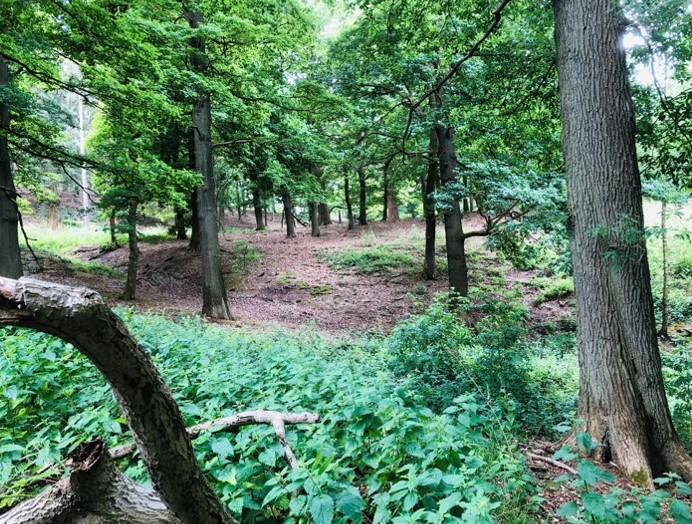
To set the scene, this is a large, private estate in the lowlands, heavily wooded and with some lakes and open parkland. Approximately 20,000 pheasants are released for commercial shooting each year. Some of the estate is closed off to the public but other parts are criss-crossed by public footpaths and bridleways, making this a popular location for visitors.

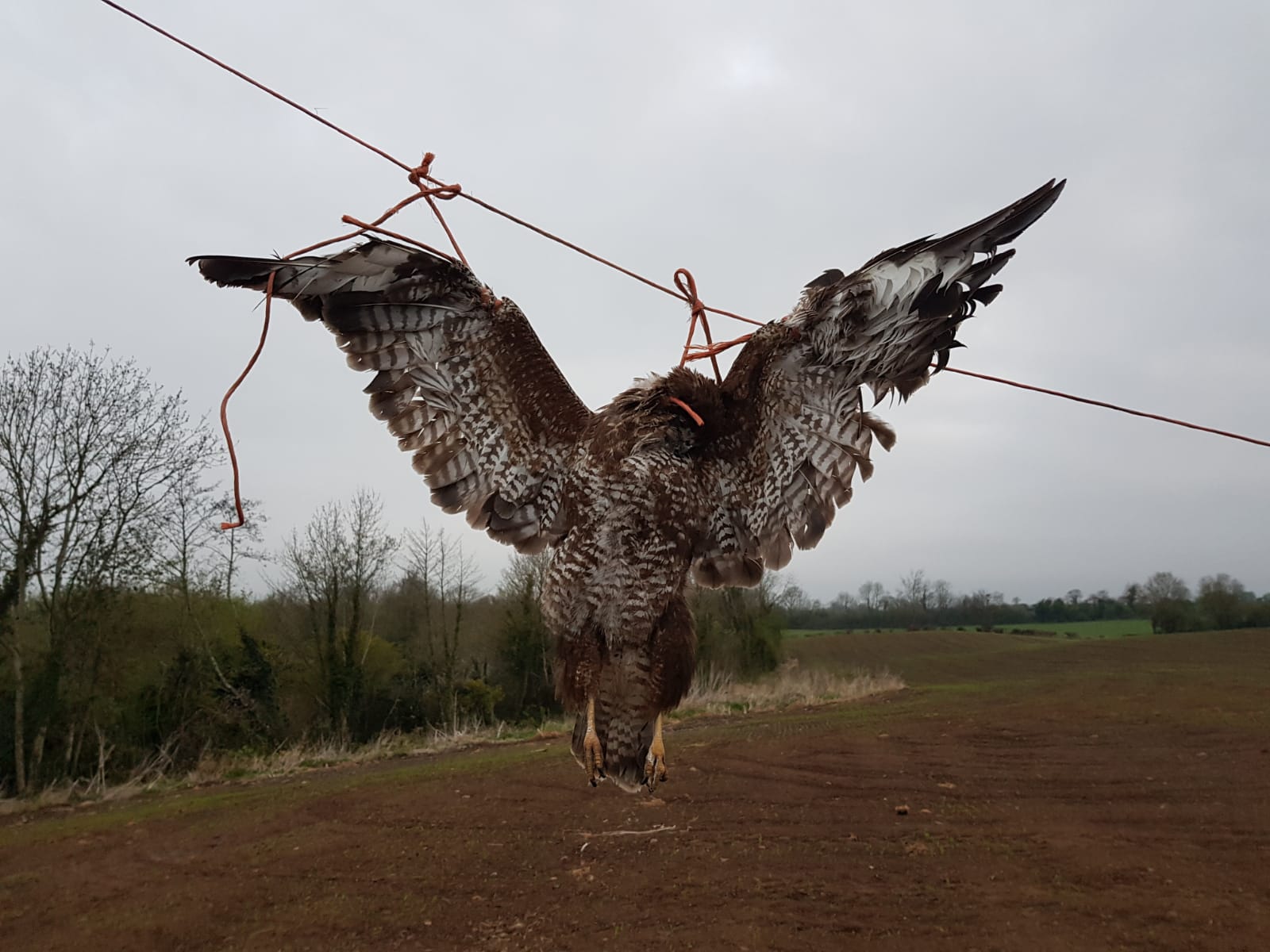
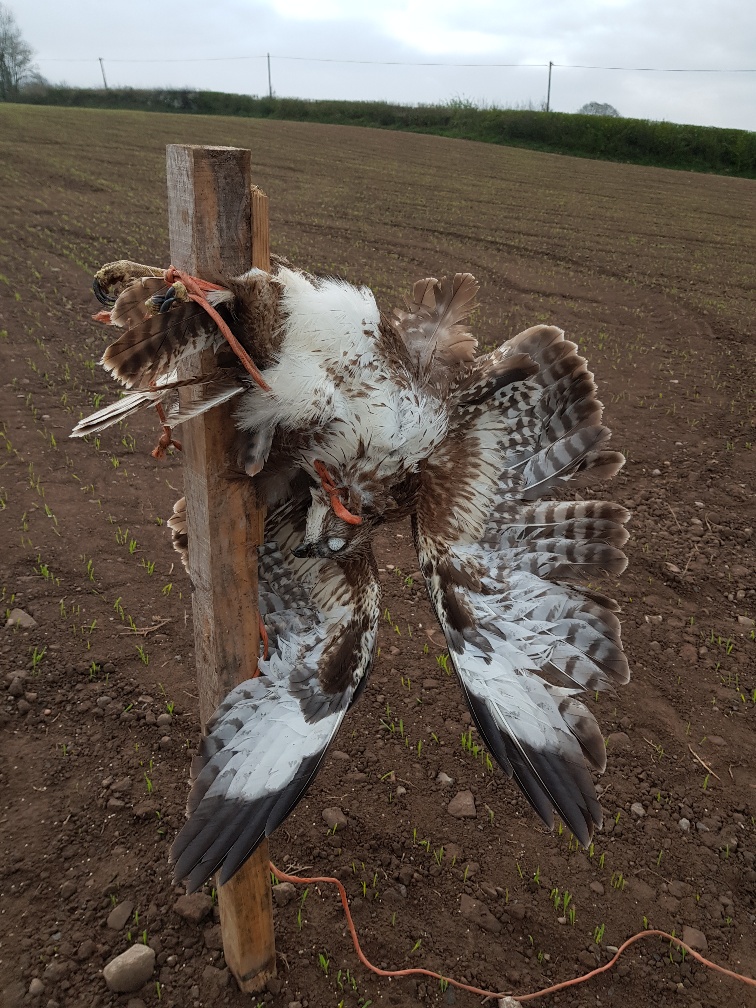
On 1st April 2020, a visiting member of the public was watching two buzzards circling above a wood when he heard a shot and witnessed the buzzards falling. The incident was reported to Derbyshire Police as a suspected raptor persecution crime. The police quickly attended the scene but, I’m told, did not conduct a search of the wood but did speak to the gamekeeper and a number of other estate residents.

With no corpses found and no other witnesses, the next most obvious move would be for the police to issue an appeal for information. But Derbyshire Constabulary had other ideas.

The following is an email sent by a member of the police wildlife crime team to somebody who was asking whether an appeal for information might be forthcoming, given that raptor persecution is a national wildlife crime priority. The police response is astonishing:

This is such a jaw-dropping response I don’t really know where to begin!

The police officer seems to think that if the estate residents didn’t see anything then there was ‘zero chance‘ of further evidence coming to light. Er….what about other visitors? The country was in lock-down at the time but the estate is located in a village where local residents may well have been taking their daily allowance of exercise and who may have witnessed something of relevance.

The police officer also seems to think that issuing an appeal for information would mean accusing the gamekeeper of shooting the buzzards. That’s not the case at all! Just a statement of the facts was all that was needed – without accusing anybody. Police forces do this all the time. And surely, the gamekeeper and the estate owner would welcome an appeal for information if it was possible that someone without authority was wandering around the estate discharging a firearm?! Fear of upsetting the gamekeeper/estate owner ‘when we may need the cooperation of the estate for future things‘ is not a valid reason for not progressing this investigation.

I think the most worrying aspect of the police response is this:

I think we all know that it would inevitably lead to repeated discussions which we’d have to become part of if it was our publication about gamekeeping practices in general. We’ve found that, for our team’s purposes, propaganda is of no value to us and is something we try to avoid‘.

Again, an appeal for information would not need to include any mention of gamekeeping practices. It would just be a statement of facts – that a member of the public reported what he believed to be the shooting of two buzzards at this location, at xx:xx hours on 1st April 2020, if anyone has any information that might help please contact the police on Tel 101 and quote incident ref number xxxxxxx.

How does Derbyshire Constabulary expect to maintain the public’s confidence to report suspected wildlife crime when reports are likely to be viewed as ‘propaganda’ by the police?

This isn’t the first time that Derbyshire Constabulary has faced criticism for the way it deals with reported raptor persecution crimes.

In January 2020, the RSPB issued a press statement about an illegally poisoned buzzard, found next to a poisoned bait, in the Peak District National Park. This crime had been uncovered the year before, in April 2019, but Derbyshire Constabulary had chosen not to say anything about it, nor to warn the public about the danger of poisoned baits being laid out in the countryside, let alone in a National Park (see here).

In response to that press release and the subsequent criticism of the police, Derbyshire Constabulary issued a remarkable statement on Facebook claiming that the circumstances surrounding the discovery of the poisoned buzzard, lying next to the poisoned bait, were ‘inconclusive’ as to whether the buzzard had been deliberately poisoned (yes, really – see here).

More criticism followed, quite rightly in my opinion, and shortly afterwards Derbyshire Constabulary posted another statement on Facebook, where they discussed the size of the geographic area they had to cover, their high workload, the lack of resources available to them and the small size of the team. They did though, commit to doing better (see here).

Just six weeks later this reported shooting of two buzzards landed on their desks.

As I said at the top of this blog, I have no interest in a general slagging off of the police. And particularly of Derbyshire Constabulary – a few years ago an elderly member of my family, suffering from advanced dementia, was prone to wandering off in a confused and distressed state, often for hours on end. Time and again, officers from Derbyshire Constabulary went looking for him and brought him home safely. I will always be grateful for the care and diligence shown by those officers, who went above and beyond my family’s expectations. Their efforts were exemplary and hugely appreciated.

My point is, again, that bringing the perpetrators of wildlife crime to justice, and particularly those guilty of raptor persecution, is difficult enough without some police officers seemingly doing their best to obstruct investigations. Blogs like this one make for uncomfortable reading but it’s clear that there needs to be a root and branch overhaul of procedures, with examples of best practice being highlighted and encouraged, at a national level. This is a role the so-far useless Raptor Persecution Priority Delivery Group (RPPDG) can play in England & Wales, and by the so-far useless PAW Raptor Group can play in Scotland, supported by the National Wildlife Crime Unit.

There are some seriously good officers dealing with wildlife crime but they need to be seen as the rule, not the exception.

Peregrine found shot dead on grouse moor in Strathbraan – Police Scotland refuse to publicise

A peregrine falcon was found shot dead on a grouse-shooting estate in the Strathbraan area of Perthshire in November 2020.

The discovery was made during a police-led multi-agency raid following reports of suspected wildlife crime taking place on the estate. I blogged about that raid in February this year (see here).

This is an estate that has previously been under investigation for alleged wildlife crime offences.

My understanding is that the Scottish SPCA are progressing a case for alleged snaring offences but that Police Scotland were dealing with the shot peregrine (because it was already dead and so was beyond the (current) remit of the SSPCA)

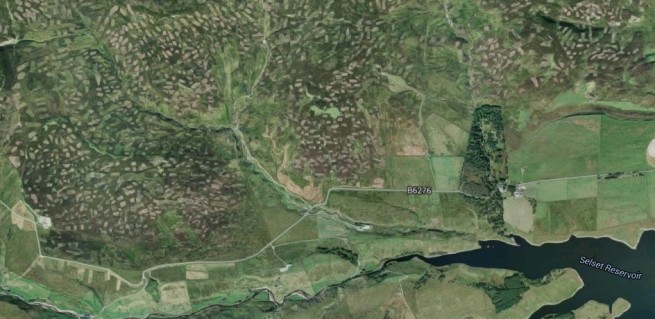
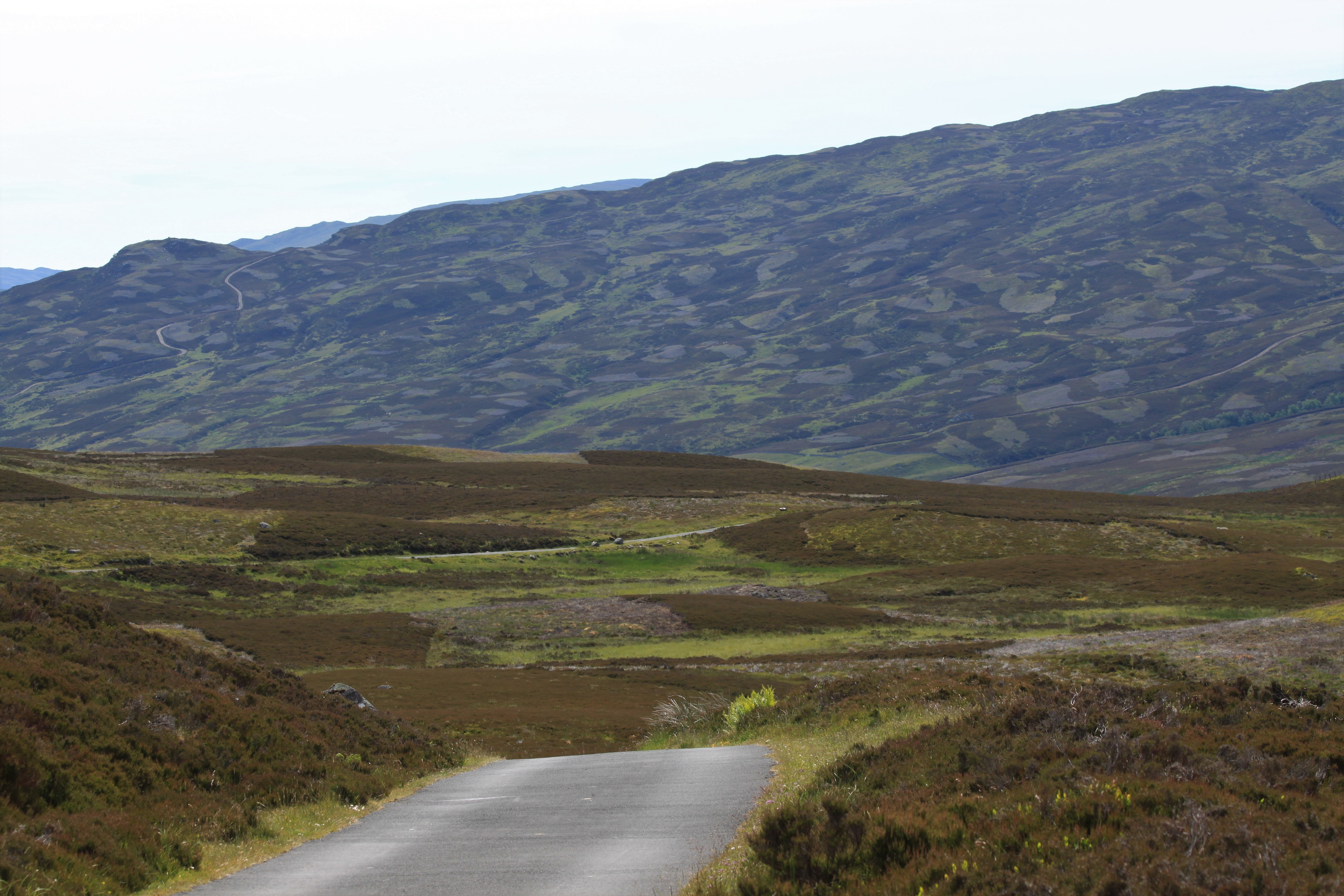
Strathbraan is an area that has received much attention on this blog. Dominated by grouse-shooting estates, it has a very well-earned reputation as a wildlife crime hotspot, and is particularly notorious for the suspicious disappearance of satellite-tagged eagles (one of whose tags turned up in a river, its harness cut and the tag wrapped in lead sheeting to prevent transmission – see here). It is also the area where SNH issued a (flawed) licence in 2018 permitting the mass killing of ravens on the basis of ‘seeing what happened’ – but which was later withdrawn after a legal challenge by the Scottish Raptor Study Group.

[Evidence of intensive grouse moor management in Strathbraan. Photo by Ruth Tingay]

Given the reputation of Strathbraan as a wildlife crime hotspot, and given that raptor persecution is a national wildlife crime priority, and given that Police Scotland has spent much of the last year with a dedicated campaign to try and raise public awareness of wildlife crime and encourage people to recognise and report suspected incidents, it’s difficult to understand why the police have deliberately withheld this crime from the public.

And it has been deliberately withheld. This wasn’t an oversight, or an admin error. It was a conscious decision not to say anything about it. How do I know that? Well, because I’ve been talking to Police Scotland about this crime since January 2021 and have asked, repeatedly, when they were planning on putting out the news / making an appeal for information because I believed it to be in the public interest to do so.

At first I was told that no press release was planned “until I have done a little bit more enquiry in to the circumstances“.

Fair enough.

Three months later I asked again but got no response. I tried again at four months and then finally five months later I was told, “There was no need for us to put out anything in the press from our perspective“, and “As you say from the evidence we have, we will never know where and when it was shot“.

Good grief.

Where’s the x-ray of the shot bird? An examination of its injuries (e.g. broken wings) would provide a pretty good indication of whether it was shot close to where it had been found dead, or whether it might have had the capacity to fly several miles before succumbing to its injuries. In which case, an appeal for information would have been a logical next-step, surely?

And if the police decide to say nothing, as they have in this case, where is the public record of this offence? It’s been almost a year since it was found.

How many more raptor persecution crimes are Police Scotland keeping quiet about? Quite a few, as it happens. More to come….

UPDATE 21st September 2021: Long-eared owl illegally held in trap on same Strathbraan grouse moor where shot peregrine was found (here)

No prosecution for 5 shot buzzards found hidden on Bransdale Estate, North York Moors National Park

In April 2020, during the first lockdown, North Yorkshire Police conducted a search of Bransdale Estate in the North York Moors National Park where they discovered five dead buzzards that had been shoved in a hole under a large rock, presumably to conceal them.

X-rays confirmed that at least four of those buzzards had been shot. A later post-mortem suggested the 5th buzzard had also been shot.

Eight individuals were interviewed under caution.

North Yorkshire Police issued a press statement in May 2020, including an appeal for information (see here).

The following day, Channel 4 News featured the crime in a six minute film (here) which included shocking footage from the police officer’s body camera of when the dead buzzards were being pulled from the hole.

In early June 2020 I blogged about the game-shooting industry’s response to these abhorrent crimes – see here. Remember, this is the industry that has professed to supposedly having a ‘zero tolerance’ policy when it comes to raptor persecution. I’m not quite sure how a wall of silence from the main shooting organisations reflects this policy.

One group did comment (the North York Moors Moorland Association), some of whose members may well have been among those interviewed under caution by the police in the course of this investigation, but I’m not sure that the group’s decision to slag off the police was all that bright or did them any favours (see here).

Fast forward one year and four months to August 2021, and Inspector Matt Hagen of North Yorkshire Police revealed during an online interview about the difficulty of investigating raptor persecution incidents, that this particular criminal investigation is not going any further:

There was one estate on the North York Moors National Park, there were five dead buzzards that were found. Four of them had definitely been shot and from the post mortem it suggested that the 5th one had been shot as well.

We’ve analysed mobile phones and all this takes such a long time and costs a lot of money and ultimately at the end of it all we are not going to be able to progress this case because we have to be able to prove beyond reasonable doubt, to a court, who is responsible, and on this case we’re not able to do that, unfortunately“.

It’s been suggested to me from several locals that a number of gamekeepers have since ‘moved on’ from this estate (to work on game-shooting estates in other parts of the UK) and also that the shooting rights have changed hands since these crimes were uncovered. If true, all coincidental, I’m sure.

I don’t know whether the estate is still lauded as an accredited member of the British Game Alliance, the industry’s so-called official marketing board, which now appears to have changed its name to British Game Assurance. Ironic really because the BGA doesn’t seem to do transparency (e.g. here and here).

So there we have it. Yet another disgraceful raptor persecution crime uncovered on a UK driven grouse shooting estate, inside a National Park no less, where armed culprits have got away with committing wildlife crimes without suffering any consequence whatsoever. And in this case, not through lack of effort by North Yorkshire Police.

[X-ray of one of the five shot buzzards found concealed in a hole on the grouse shooting estate]

Freedom of information documents highlight gamekeepers, fox hunting and raptor persecution in 3 public forests

The Scottish animal welfare charity OneKind has today revealed that Forestry Land Scotland (FLS) is still permitting the use of fox-hunting foot packs in several public forests, partly for the benefit of privately-owned grouse shooting estates. These public forests also happen to be in well-known raptor persecution hotspots.

In a freedom of information response, FLS admitted allowing the fox-hunt foot packs to operate in three public woodlands near Inverness: Loch Farr Wood, Farr Wood and Meall Mor near Moy.

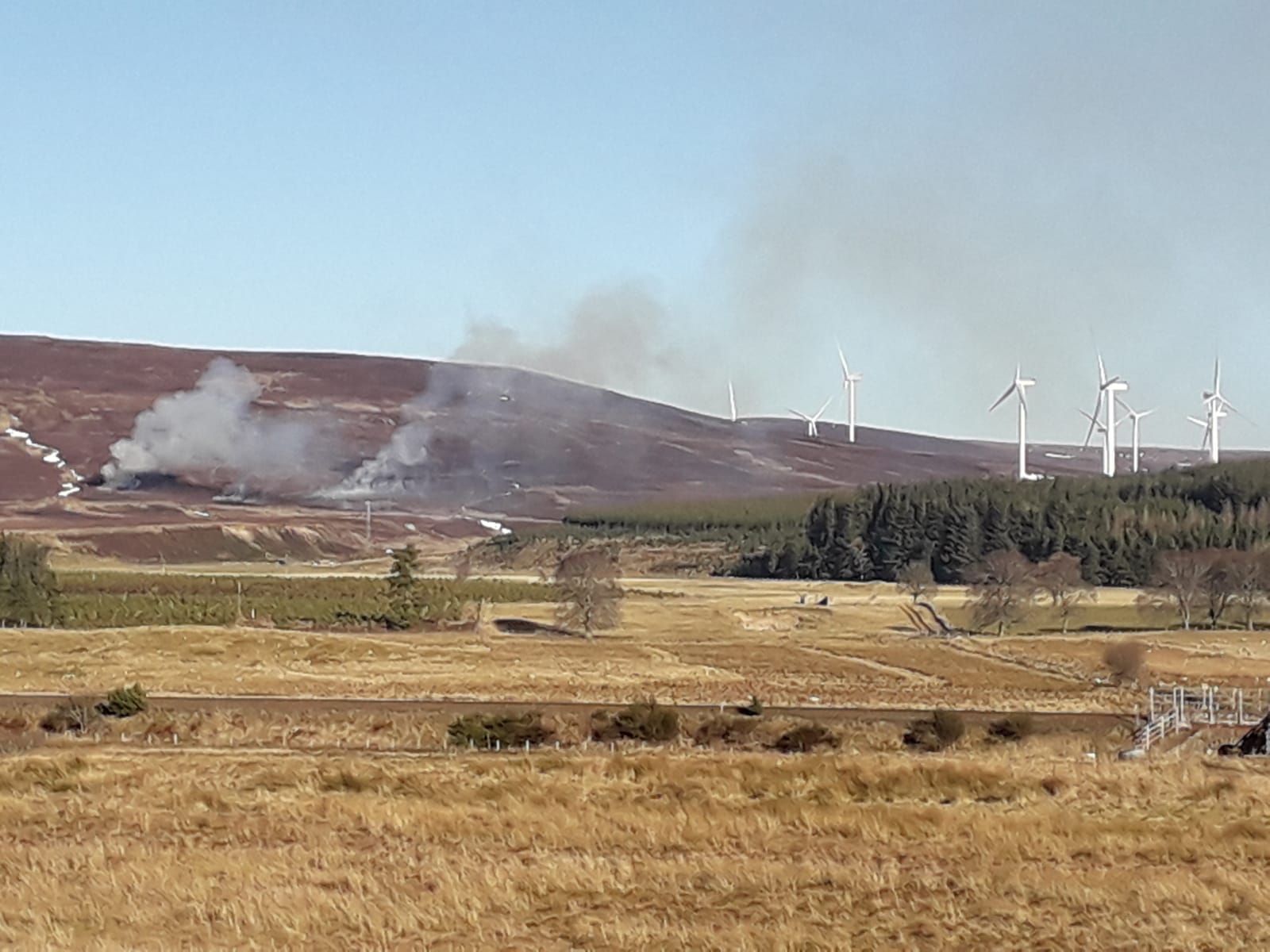
[Moy has long been of interest to this blog, mostly for the frequency of illegal raptor persecution incidents recorded there for over a decade. And then there’s this: a photo to illustrate the stupidity of setting fire to the moor for grouse management, a few hundred yards from some publicly-subsidised wind turbines!]

The FoI documents also reveal that FLS staff suspected that gamekeepers were visiting the forests to look for fox dens to block up, which also happened to be beside Schedule 1 raptor nests, some of which have been repeatedly attacked in previous years.

For example, in 2016 Police Scotland issued an appeal for information after one goshawk and four buzzard nests were abandoned in suspicious circumstances in Moy Forest (see here).

In 2017, also in Moy Forest, masked gunmen were caught on camera underneath a goshawk nest. The nest, containing a clutch of eggs, was mysteriously abandoned shortly afterwards (see here and here).

In July this year, Police Scotland appealed for information after a dead goshawk was found in Loch Farr Wood – this bird had been shot (see here).

The issue of fox-hunting is beyond the remit of this blog although I’d question whether a Scottish Government agency should be complicit in supporting the eradication of native predators for the benefit of driven grouse shooting, which is what appears to be happening here.

If you’d like to read more about OneKind’s freedom of information request and FLS’s response about fox-hunting, gamekeepers and raptor persecution in these public forests, please see the OneKind blog (here) and an article in today’s National (here).

Meanwhile, as the authorities seem unable to tackle raptor persecution in public forests, we’re all still waiting to see whether NatureScot will impose a General Licence restriction on Moy Estate following the discovery of a poisoned satellite-tagged red kite found on the grouse moor almost a year ago, in October 2020 (see here).

New study: raptor persecution in Wales 3 x more likely in areas managed for driven gamebird shooting

Press release from RSPB Wales (24th August 2021)

New research sheds light on crimes against birds of prey in Wales

The theft of eggs and chicks of birds of prey has almost ceased in Wales, but persecution rates are not declining – according to a new RSPB Cymru review, published today.

Crimes against raptors in Wales 1990-2019 – written by RSPB Cymru and published by the Welsh Ornithological Society – summarises the plight of raptors in Wales over the past three decades.

One of the key findings is that since the 1990s, egg and chick theft has almost ceased. Theft used to be a major problem in Wales, with eggs of raptors such as peregrines and red kites stolen by collectors. The chicks of goshawks and peregrines have also been targeted for the purposes of selling to falconers, including in the Middle East. But tougher penalties and a shift in public awareness and attitude has resulted in the detection of only a handful of cases in Wales over the past decade.

On the other side of the coin, the picture for raptor persecution (by shooting, trapping and poisoning) is less positive. While the number of confirmed incidents of raptor persecution fell in 2000 – 09 compared to the previous decade, there has been a marginal increase in the past decade. However, the real total could be much higher, as the number of confirmed persecution cases could only be the tip of the iceberg.

[This buzzard was found shot dead near Powys]

Most worryingly of all, the rate of poisoning cases has increased in the last 30 years, with 52 cases confirmed in the last decade. While laying poison baits in the open has been illegal since 1911, the review suggests that it remains a problem for wildlife in the Welsh countryside. Birds of prey, wild mammals and even household pets can fall victim to the abuse of pesticides.

Julian Hughes, RSPB Cymru Head of Species and lead author of the paper, said:

There has been good progress made over the past three decades to reduce the rate of crimes against our majestic birds of prey. The dramatic reduction in the theft of egg and chick shows that tougher action really does work. This has helped the welcome return of birds such as red kite that was once on the brink of extinction. However, the rise in persecution, and especially poisoning cases, is a big worry. There’s still work to be done to root out these deplorable acts of crime against wildlife.

The paper also shows that the probability of a persecution incident in 2010-19 was three times higher in areas where driven shooting of gamebirds is available for sale.

Julian Hughes continued:

The relationship between raptor persecution and driven shooting was stronger than we expected, and we think this deserves further investigation to understand.”

Anne Brenchley, Chair of the Welsh Ornithological Society, said:

Public awareness of raptor persecution has heightened in the last thirty years, often due to the concerted efforts of the RSPB. The Welsh Ornithological Society fully supports all attempts to reduce raptor persecution, particularly investigating the apparent link between persecution and gamebird management. We hope that the levels of detected illegal raptor persecution continues to decrease over the next thirty years.”

Rob Taylor, Welsh Government Wildlife and Rural Crime Coordinator, said:

Historically the human race has affected the population and even existence of many birds and habitats within Wales, for a variety of reasons. As a nation we have many iconic birds that proudly adorn our skies and we give credit to the work of the few who have gone that extra mile to maintain their essential conservation. The red kite and osprey are a prime example of a success story within Wales, although these can be still subject to unnecessary persecution even in 2021. We, the police and our key partner agencies, have a duty to prevent the further persecution of any bird within Wales and protect them and their habitats for future generations to come. My new role, sponsored by the Welsh Government, will ensure that we remain focused as a nation and the establishment of a Wales Bird Crime Enforcement Group will bring together the necessary expertise to achieve that. Our work today will maintain the natural beauty of our Welsh birds and visitors for generations to come.”

ENDS

The research paper has been published today in the journal of the Welsh Ornithological Society. Here’s the citation:

Hughes, J., Mason, H., Bruce, M. and Shorrock, G. (2021). Crimes against raptors in Wales 1990-2019. Birds in Wales 18 (1): 3-19.

The research paper can be downloaded here:

Shot goshawk in notorious persecution black spot: police investigation reaches dead end

In July this year, a shot goshawk was found in one the country’s most notorious raptor persecution black spots in the northern Monadhliaths in the Highlands (see here).

A member of the public discovered the dead bird in woodland managed by Forestry Land Scotland (FLS), which is close to land managed for grouse and pheasant shooting. The corpse was retrieved by the Police, FLS and the RSPB and sent for post mortem where it was confirmed it had been shot.

It is by no means unusual that masked gunmen will visit public woodland to attack goshawk nests (e.g. see herehere and here) especially as this highly efficient predator is a perceived threat to gamebird stocks and as such is despised by many in the game-shooting industry.

Police Scotland issued a timely appeal for information (here) and opened a criminal investigation.

Unfortunately, as with so many raptor persecution crimes, that investigation has now reached a dead end. A police spokesperson has advised that ‘all lines of enquiry have been completed, including CCTV, door to door enquiries, local enquiries, vet analysis of the remains, x-ray of remains, background checks, social media and traditional media press release‘.

There haven’t been any arrests and there won’t be any prosecutions unless new information comes to light.

Of course, this doesn’t mean that the crime didn’t take place (some in the game-shooting industry would have you believe that no prosecution = no crime), it just means that yet again, someone with access to a gun in this area has been able to commit a crime and will face zero consequences, just like the last time, and the time before that, and the time before that, and…..etc etc.

Police attend suspected peregrine shooting near Aylesbury, Buckinghamshire

Yesterday, Thames Valley Police (Aylesbury Vale) posted this on Facebook:

I haven’t been able to find any follow-up information, e.g. whether the peregrine was x-rayed to confirm/rule out shooting and there isn’t an incident number or an appeal for information on the Thames Valley Police website.

Meanwhile, the local press are reporting this as a confirmed shooting. Eg. see this headline from the Bucks Free Press:

Wouldn’t it be good if there was a national standard on how to report suspected raptor persecution crimes, that every police force could follow? And a central location where these verified reports could be found?

Opportunity for Prince Harry to blow the cover of the hen harrier killers

The ‘wall of silence’ maintained by many in the grouse-shooting industry to protect the identities of the raptor killers within their ranks is a well-known phenomenon. It’s been likened to the Mafia’s omertà, the code of silence about criminal activity and a refusal to provide evidence to the police.

With news that Prince Harry has agreed a publishing deal with Random House to write his memoirs, including ‘the mistakes made, the lessons learned’, wildlife campaigners have been wondering whether he will use it to reveal what exactly went on at Dersingham Bog near Sandringham back in 2007 when he and his mate William van Cutsem were out shooting with a Sandringham Estate gamekeeper when a witness alleged two hen harriers had been shot. Harry and van Cutsem were interviewed by the police and denied all knowledge and no hen harrier corpses were found.

An article in the Guardian this last weekend examined the possibility of Harry using his memoirs to perhaps have more to say about not only this incident, but also to distance himself from the wider criminal link between driven grouse shooting and hen harrier persecution.

You can read the Guardian article in full here

iNews also carried a shortened version of the article here

It would have been quite good had the journalist not got his figures mixed up in this one paragraph:

Hen harriers have been illegally targeted particularly on upland moors because they prey on red grouse, for which there is a lucrative driven shooting industry on the moors. They virtually ceased breeding in England in the early 2000s because of persecution. They have since recovered to an estimated 330 pairs, but remain one of the rarest and most persecuted raptors in the UK‘.

If only hen harriers HAD recovered to an estimated 330 pairs in England! Sadly we are still a very long way from coming anywhere close to that number (unless DEFRA’s hen harrier brood meddling conservation sham has turned out to be extraordinarily good!).

What the journalist should have said was:

England has sufficient habitat to host at least 330 pairs of hen harriers but due to persistent illegal persecution by the grouse shooting industry (e.g. at least 56 hen harriers killed/suspiciously vanished in the last three years alone) we haven’t even got 10% of that number breeding. You can find out more about this scandal at this weekend’s Hen Harrier Day‘.

Hen Harrier Day 2021 takes place this Saturday (7th August 2021). You can sign up for notifications of Wild Justice’s online event here.

Peregrine found shot & critically injured in Fife

Press release from the Scottish SPCA (2nd August 2021)

Peregrine falcon shot near Kirkcaldy

We are appealing for information after a peregrine falcon was shot near Kirkcaldy.

We were alerted to the incident after the female bird was discovered on farmland at Grange Farm near Kirkcaldy on 25 July.

The falcon was unable to fly and was transferred to the Society’s National Wildlife Rescue Centre in Fishcross where x-rays uncovered she had been shot.

[Photos and x-rays by Liam Reed]

An undercover Scottish SPCA special investigations unit inspector said, “We were shocked to hear that the peregrine falcon had been shot.

This poor bird was extremely lucky to be spotted by the farm worker, who took immediate steps to ensure the falcon’s welfare and survival.

The shot would have knocked the bird out of the sky almost instantaneously so the incident will have happened close to the farmland the bird was found on.

Thankfully, due to the expert avian vets we have at our national wildlife hospital, the falcon has a good chance at recovery and release back in to the wild.

Peregrine falcons are a Schedule One listed species of The Wildlife and Countryside Act and it is illegal to intentionally harm or kill one of these birds.

We are working closely with Police Scotland to establish the circumstances around the bird’s injuries due to the use of a firearm in the incident.

We would like to find out what happened to this falcon. If anyone witnessed anything on the 25 July or has any information they feel may be relevant they can contact our confidential animal helpline on 03000 999 999 or Police Scotland on 101, quoting incident number quoting incident number 1390 of 28 July 2021.”

Wildlife Crime Liaison Officer, Detective Constable Ben Pacholek, said: “The fact that a shotgun has apparently been used in an attempt to kill a bird of prey is of serious concern. This incident is sadly another example of the unacceptable persecution of raptors in Scotland.

I strongly urge anyone within the local and wider community to come forward with details or any information about this incident which can help the ongoing investigation.”

If anyone is concerned about an animal, please do not hesitate to contact our confidential animal helpline on 03000 999 999.

ENDS

You can see on the x-ray that the peregrine’s ulna has been broken by the shotgun pellets. This is a clear indication the bird was shot close to where it was found – there’s no way this bird would have been able to fly with an injury that severe:

Well done to the Scottish SPCA for getting this appeal for information out so quickly. This should be the very least we expect from investigating authorities but as many of you will know, it doesn’t happen as often as it should.

Standby for news of another case involving a shot peregrine that Police Scotland has refused to publicise…….

Goshawk found shot in Staffordshire had to be euthanised

Staffordshire Police are appealing for information this evening after the discovery of a shot goshawk.

Unfortunately the details of this latest wildlife crime are vague, even though raptor persecution is supposed to be a national wildlife crime priority. This is what was posted on the Rural & Wildlife Crime team’s Facebook page:

The post doesn’t say when this bird was found, but the incident reference number suggests it may have been on 21st July 2021. There isn’t any information about the type of weapon used (e.g. shotgun, air rifle) nor any specific detail about the location. I couldn’t find any press statement/appeal on the police website.

If you can assist the police investigation, please get in touch with them.