Rising levels of wildlife crime during pandemic, new report from nature experts warns

Press release Wildlife & Countryside Link (25th November 2021)

Rising reports of wildlife crimes during the pandemic spark fresh fears for beloved species

  • Reports of wildlife crimes against many species rose between 35-90% in 2020
  • At the same time convictions on key types of wildlife crime fell by 50%+
  • Nature experts are calling for improved recording and monitoring, better targeting of resources, and enhanced use of expert police and prosecutors to tackle wildlife crime

A new report published today (25 Nov) by nature experts has revealed a worrying increase in reporting of wildlife crimes against badgers, fish, birds of prey, and marine mammals during the pandemic. While a sharp decline in convictions for wildlife crimes including hunting, illegal wildlife trade, and fishing crime was also seen in 2020.

Reports of likely crimes against badgers rose by 36% in 2020, compared to 2019, with reports of potential fishing crimes up by more than a third (35%) and marine mammal incident reports (in Cornwall alone) rising 90%, according to data gathered by the NGOs. The number of confirmed raptor crimes in England & Wales in 2020 was almost double that in 2019, rising from 54 to 104 (the worst year for bird-crime ever as detailed by the RSPB in October).

At the same time fishing crime convictions fell by almost two-thirds from 2037 in 2019 to 679 in 2020, and illegal wildlife trade convictions halved to just 4 convictions. Hunting prosecutions also more than halved, from 49 in 2019 to 22 in 2020, with only 8 convictions. Hunting conviction rates have in fact steadily decreased for the last five years, falling from 54% of prosecutions being successful in 2016 to less than a third (32%) of prosecutions achieving conviction in 2020.

Martin Sims, Director of Investigations at the League Against Cruel Sports and Chair of Wildlife and Countryside Link’s Wildlife Crime group, said: ‘‘Wildlife crime is something that should concern everyone –it inflicts pain, harm and loss for much-loved wildlife and fuels wider criminality against people and property. Despite this the police still don’t gather centralised data on these serious crimes, leaving an incomplete picture from charities, which could be just a drop in the ocean of wildlife crimes. It is high time the Government steps in to treat wildlife crime with the seriousness it deserves. Making key crimes notifiable would enable police forces to better target resources, and track repeat offenders. While better police and prosecutor training and resources would help raise the pitiful 32% conviction rate for hunting prosecutions alone. The system must change to crack down on offences against nature once and for all.”

Dawn Varley, Acting CEO of the Badger Trust, said: Badger crime has been a UK Wildlife Crime Priority for more than a decade, due to the scale of persecution – but sadly this persecution shows no sign of letting up. 2020 saw reports of badger crime rise, driven in large part by a shocking 220% increase in reports of developers interfering with badger setts. A small minority seem to see badger habitat protections as an inconvenience to be quietly bulldozed over, rather than a legal requirement to conserve an iconic British mammal. 2022 must see renewed work by police forces and the Crown Prosecution Service to bring offenders to justice. This must be supported by better monitoring, new training to enable officers and prosecutors to demonstrate criminal intent, and consistently tougher sentencing to deter these crimes.”

Mark Thomas, RSPB Head of Investigations UK, said: In the wake of an emergency climate conference and with all life on earth facing an uncertain future, there has never been a more important time for urgent action to end the illegal killing of wildlife. Wildlife declines are already being felt, and species can ill afford to face the additional pressure of being brutally shot, trapped or poisoned; nor should the public have to put up with these crimes taking place in the wild places they go to for refuge.

Bird of prey persecution reached unprecedented heights in 2020, particularly where land was managed for gamebird shooting. And it is certain that more crimes will have been committed and simply gone undetected and unreported. We urge the public to report dead or injured birds of prey in suspicious circumstances to the police and the RSPB, or pass on any information which may help lead to a conviction.” 

[One of two dead peregrines found illegally poisoned near Tadcaster, North Yorkshire in 2020. Photo RSPB]

The lockdowns and restrictions of 2020 appear to have contributed to rises in reporting of wildlife crimes and falls in convictions in several ways. Opportunistic offenders may have felt that with the police busy enforcing social restrictions that wildlife could be harmed with relative impunity. With increased use of the countryside in the pandemic more members of the public were also present to witness and report incidents of concern. COVID-19 pressures around social restrictions and staff absences appear also to have unfortunately reduced the capacity of police forces and the Crown Prosecution Service, and their ability to both bring hunting and fishing cases to trial and achieve convictions.

While today’s report reveals worrying figures, with impacts for treasured species like badgers, buzzards, kestrels, seals, dolphins and bluebells, it gives an incomplete picture. These organisations all collect data in different ways, with many only holding figures on reporting and convictions for incidents where members of the public have directly contacted them. There is a huge lack of information on wildlife crimes due to police not being required to officially record wildlife offences. Most wildlife crimes are recorded as ‘miscellaneous’ offences and are therefore invisible in police records, with no duty to be reported upon. The scale of wildlife crime is therefore likely to be far greater than the data collected by NGOs suggests. 

The 16 wildlife organisations behind today’s report are warning that the way wildlife crimes are handled by both the police and Crown Prosecution Service must be reviewed and improved, if offences against treasured British wildlife are to be tackled. In particular, the new report highlights that the continued absence of dedicated recording for wildlife crimes means that resources cannot be effectively assessed and targeted. A lack of expertise and resource for police and prosecutors, and deficiency of sentencing guidelines, is also leading to failures in convicting criminals and inadequate penalties for crimes.

Nature experts and conservationists are calling for several key actions to better tackle wildlife crimes:

  • Make wildlife crimes recordable – A shortlist of wildlife offences (compiled by the National Wildlife Crime Unit) is being considered by the Home Office for notifiable status. This must be approved in 2022 to bridge the crippling wildlife crime data gap and help target resources effectively.
  • Ensure effective police & prosecutor action – Staff with expert training on wildlife crimes are critical to effectively building and prosecuting a case against these criminals. Also key is early coordination between the CPS and police on cases, and ensuring prosecutors have adequate preparation time for cases. Ensuring police and CPS training and process reflects this is vital.
  • Produce sentencing guidelines – Unlike most other crimes, the Sentencing Council provides no sentencing guidelines for wildlife crimes. This must be rectified to ensure sentencing consistently reflects the seriousness of these crimes and acts as a deterrent to criminal activity. 

ENDS

The full report can be downloaded here:

Notes:

The new report has been written and published by Wildlife and Countryside Link, the biggest coalition of wildlife and environment charities in England, and Wales Environment Link, a network of environmental, countryside and heritage non-governmental organisations with an all-Wales remit. Both operate as part of a UK-wide coalition – Environment Links UK

Organisations supporting today’s report include: Amphibian and Reptile Conservation, Badger Trust, Bat Conservation Trust, Buglife, Four Paws, Humane Society International UK, IFAW, Institute of Fisheries Management, League Against Cruel Sports, National Trust, Naturewatch Foundation, Plantlife, RSPB, Whale and Dolphin Conservation, Wild Justice and WWF UK.

UPDATE 12.45hrs: Coverage of this new report in The Guardian here

UPDATE 13.00hrs: Coverage on Farming Today (starts at 06.20min) interviewing Mark Thomas, Head of RSPB Investigations here

Police warn dog-walkers after suspected wildlife poisoning in Derbyshire woodland

Derbyshire Constabulary are warning dog-walkers to be careful as they investigate suspected wildlife poisoning in a Derbyshire woodland.

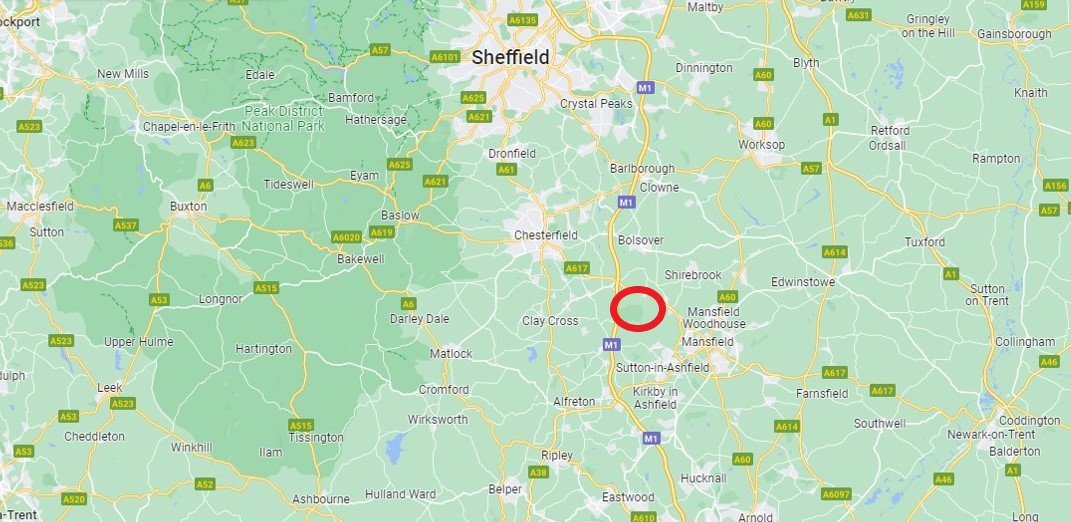
Two dogs are reported to have become ill after visiting Swinepark Wood at Lea, near Matlock and the police say this may be related.

The police have posted warning signs at entry points to the woods:

There doesn’t appear to be any further information about the type of poison suspected to be in use or whether any wildlife has been affected but the fact that the police have been proactive in issuing these warnings about the risk to public and pet safety is a welcome move from a police force who have previously been criticised for their attitude towards raptor poisoning incidents (e.g. see here and here).

Well done, Derbyshire Constabulary’s Rural Crime Team.

Gamekeeper convicted for pesticide and firearms offences but buzzard-poisoning charge is dropped

Last week I blogged about how a Suffolk gamekeeper was due at Ipswich Magistrates Court to face a charge of poisoning a buzzard, having already pleaded guilty to several pesticide storage and firearms offences (see here).

This case stemmed from a multi-agency raid last January (here) after the discovery of an illegally poisoned buzzard in September 2020 which had been found close to pheasant-rearing pens near Lakenheath.

[The illegally-poisoned buzzard found close to the pheasant-rearing pens. Photos by RSPB]

The case was heard yesterday and it appears that the buzzard-poisoning charge was dropped, probably due to insufficient evidence, because despite the gamekeeper having this particular poison (Bendiocarb) in his possession, the prosecution would need to demonstrate that he was the person who laid the poisoned bait that subsequently killed this buzzard. The fact that the poisoned buzzard was found in close proximity to his workplace, and that he had the same poison in his possession, is simply not enough.

We can all draw our own conclusions of course, based on the balance of probability, but in English law the balance of probability is insufficient to convict for this particular offence. That’s not the fault of the police, the RSPB, the Crown Prosecution Service or the magistrate.

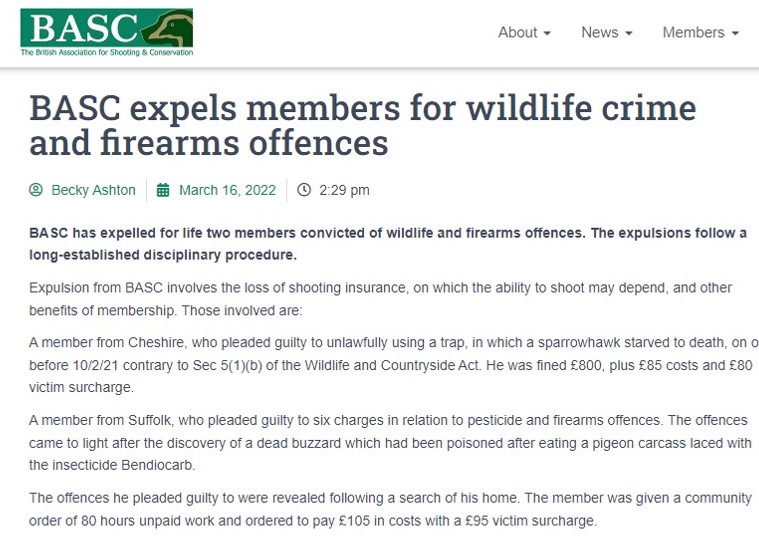
In this case, the gamekeeper, Shane Leech, 33, of Maids Cross Hill, Lakenheath, Suffolk, was convicted of six charges relating to pesticide and firearms offences and was given a Community Order of 80 hours unpaid work, ordered to pay £105 costs and a £95 Victim Surcharge.

I’ll leave it to you to decide whether the punishment fits the crime(s) and whether it offers any semblance of a deterrent to anyone who might be considering committing similar offences.

The RSPB has published two blogs about this case. The first one provides an overview of the case and offers praise to the work of Suffolk Police and the Crown Prosecution Service (see here).

The second blog is a more detailed discussion about the difficulties of bringing a successful prosecution for the illegal poisoning of birds of prey (see here). It also includes this shocking image of a pile of dead pheasants apparently being prepared for human consumption in the same room where the poison was being stored illegally!

Gamekeeper due in court next week accused of poisoning a buzzard

A gamekeeper is due in court on Monday 8th November accused of poisoning a buzzard.

He has already pleaded guilty to a number of firearms offences and a number of pesticide storage offences.

At an earlier hearing in August, the gamekeeper pleaded not guilty to poisoning the buzzard so the case was sent for trial.

This case stems from a multi-agency raid, led by Suffolk Police, at a property last January (see here).

[Police officers seized a number of firearms during the raid. Photo via Suffolk Police]

Please note, as this is a live case no further detail will be provided here until the case has concluded or there is official commentary from the court. Comments on this particular blog also won’t be accepted until the case concludes so as not to prejudice proceedings. Thanks for your understanding.

UPDATE 9th November 2021: Gamekeeper convicted for pesticide and firearms offences but buzzard-poisoning charge is dropped (here)

“They all know what is going on, and they cover it up” – police inspector’s view on gamekeepers & raptor killing

Timed to publish on the same day as the RSPB’s Birdcrime report, documenting how 2020 was the ‘worst year on record’ for crimes against birds of prey in the UK (see here), National Geographic has just published a lengthy article, written by journalist Rene Ebersole who visited the UK earlier this year specifically to research the subject of raptor persecution on grouse moors.

Rene visited quite a few field sites and interviewed a lot of people for this piece, including Mark Thomas (RSPB Investigations), Mark Avery (Wild Justice), Caroline Middleton Gordon (Moorland Association), Matt Hagen (North Yorkshire Police and RPPDG), Mark Cunliffe-Lister (Swinton Estate & Moorland Association), Steve Downing (Northern England Raptor Forum), the witness who saw ‘gamekeepers’ shooting buzzards on the Bransdale Estate last year, and some others.

I could spend a long time analysing the contributions from these people but unfortunately I don’t have the time today. I will try and come back to it at some point though, because some of it, especially Cunliffe-Lister’s comments, deserve ripping to shreds. If you’re going to read the article, and I’d urge you to because it’s very, very good, I’d recommend you don’t have a hot drink anywhere nearby when you read Cunliffe-Lister’s predictable denials and diversions. For example:

Grouse shooting had some bad times when raptors were being controlled illegally historically, but now we’re all being responsible and working a way forward, so we can still keep somebody living in this house and working up here, rather than giving up“.

What a prat. It’s these constant denials from senior figures in the shooting industry, in the face of decades worth of overwhelming science and evidence, that provide the raptor killers with the confidence to continue their crimes on the shooting estates, safe in the knowledge they’re probably going to be protected.

North Yorkshire Police Inspector Matt Hagen deserves a medal simply for being prepared to stand up and say it how he sees it, at great risk to his personal and professional life knowing how the nasty brigade has turned on previous officers who’ve dared to form and express an opinion based on evidence and experience.

He talks about knowing the identity of the Nidderdale poisoner, of how the Bransdale gamekeepers all gave ‘no comment’ interviews when questioned about the five shot buzzards found buried on the estate, how ‘shocked and disgusted’ he is about the high level of raptor persecution in the UK, how it’s ‘more likely than not‘ that hen harrier River was shot on the Swinton Estate, despite the ridiculous and largely implausible explanations of estate owner Cunliffe-Lister, and how gamekeepers “all know what is going on, and they cover it up“.

He’s not wrong. This pie chart from the latest RSPB Birdcrime report shows that almost three-quarters of those convicted of raptor persecution crimes in the last 30 years worked in, or had connections to, the game-shooting industry.

The National Geographic article is free and open access. You can read it HERE

Well done, journalist Rene Ebersole and her photographer Anastasia Taylor-Lind – it’s a very good piece and it’s excellent that these disgraceful crimes are being featured by a highly respected organisation such as National Geographic, being exposed to a much wider international audience.

UPDATE: A PDF of the article can now be downloaded here:

Shotguns & dead bird of prey seized during multi-agency raid in Wales

Article from The Leader (8th October 2021)

MORE than a dozen shotguns and a dead bird of prey have been seized following an investigation into the illegal killing of raptors in the Ceiriog Valley.

The operation that took place this week was carried out by North Wales Police’s Rural Crime Team, in partnership with the RSPB Investigations Team, the National Wildlife Crime Unit and the Welsh Government, targeting those suspected of unlawfully poisoning birds of prey.

It came following an investigation launched in July into the poisoning of a red kite, found dead in the Ceiriog Valley on February 27 [Ed: see here].

Toxicology tests carried out on the bird by the Welsh Government earlier this year revealed it tested positive for Bendiocarb – a highly toxic pesticide.

Officers believe the incident was a deliberate act.

[Photo from North Wales Police Rural Crime Team]

Following this week’s searches, which included the recovery of 15 shotguns, the dead bird of prey was sent off for toxicology tests, while dangerous chemicals also discovered at one property are being dealt with.

Sergeant Dewi Evans of the Rural Crime Team said:

It’s time to stamp out persecution against our birds of prey. We are glad to have worked with Welsh Government, National Wildlife Crime Unit and RSPB Investigations on our operation targeting those suspected of criminally harming our wildlife. We look forward to working with our partners again in future.

RSPB Investigations officer Niall Owen said: “This was a well organised multi-agency operation and a positive step in the right direction for investigating raptor persecution in Wales.

“We, as a team, are committed to working alongside the police to safeguard the future for birds of prey and uncover these barbaric crimes against our birds.

“Laying poison baits in the countryside to target birds of prey is not only illegal but represents a huge danger to any person or animal unlucky enough to come across it.

“We would like the thank North Wales Police for their commitments to follow up these incidents.”

ENDS

Scotland’s Programme for Government announced: grouse moor licensing, SSPCA powers & General Licence review

Scotland’s First Minister Nicola Sturgeon has today revealed the 2021 to 2022 Programme for Government, outlining the policies and actions that are expected to take place over the coming year as well as the expected legislative programme for the forthcoming parliamentary year.

This programme for Government is the first one since the historic power-sharing agreement between the SNP and the Scottish Greens and it’s apparent that there has been some influence from the Greens’ policy machine.

The 2021 to 2022 Programme for Government can be downloaded here:

Of obvious interest to this blog is when the Scottish Government is finally going to pull its finger out and deliver the grouse shooting licence it promised in response to the Werritty Review, back in November 2020. We’re fast approaching a year since that commitment was made, which came a full year after the Werritty Review’s recommendations were presented to the Government (Nov 2019), which came more than two years after the Werritty Review was commissioned (May 2017) on the back of a devastating report that showed the extent of ongoing golden eagle persecution and its link to the driven grouse shooting industry. That report had been commissioned by the Government in August 2016 on the back of an RSPB press release about eight young satellite-tagged golden eagles disappearing in highly suspicious circumstances on grouse moors in the Monadhliaths over a period of five years.

As you can see, and as many of you already know, the Government has been promising action on this for a very long time and now having committed to taking that action, it needs to bloody well get on with it.

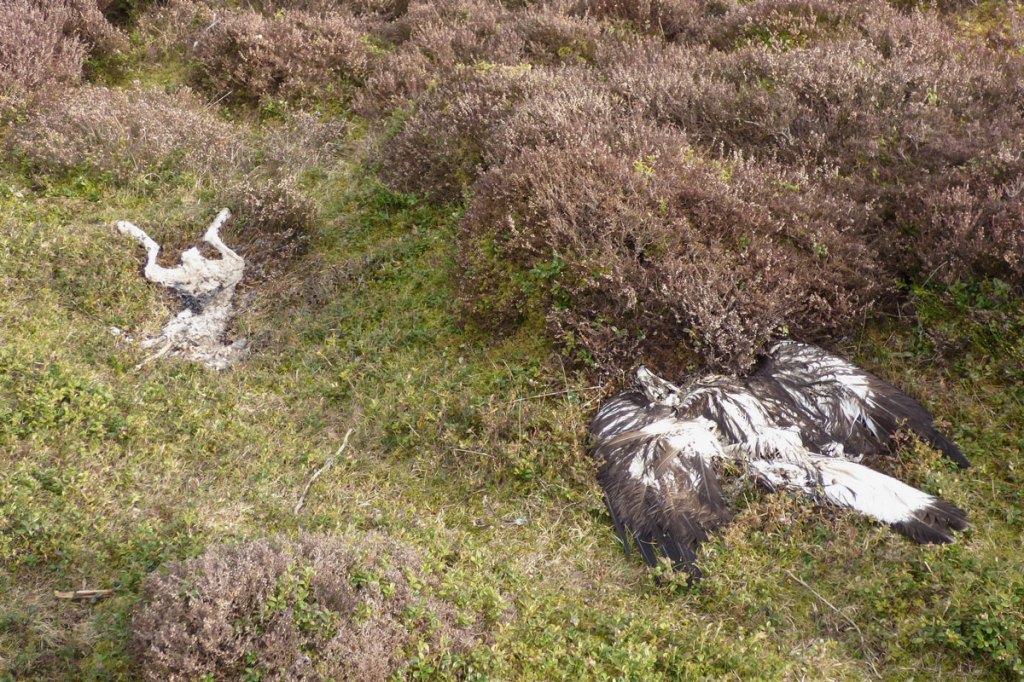
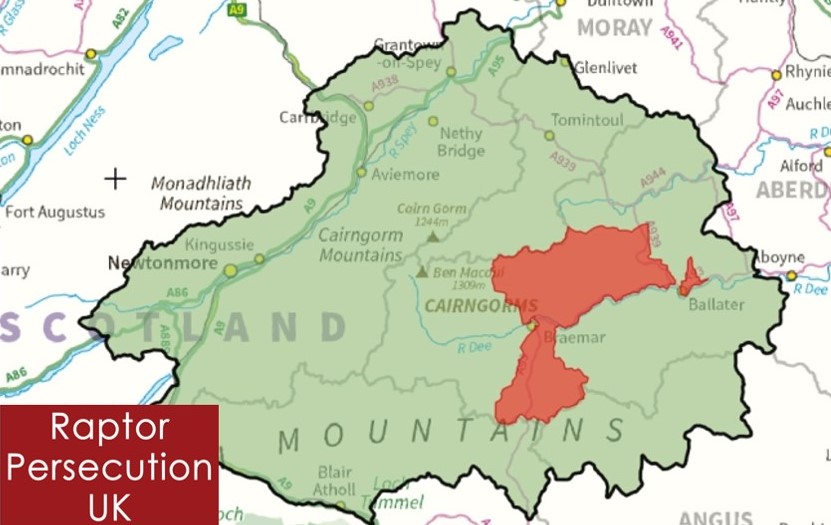
Since the Government’s announcement in Nov 2020 that it would, finally, introduce a grouse-shooting licence without delay, more birds of prey have turned up illegally killed, including this young golden eagle, found ‘deliberately poisoned’ (according to Police Scotland) on an Invercauld estate grouse moor in the Cairngorms National Park, in the heart of Royal Deeside.

We cannot afford to have any further procrastination, navel-gazing or can-kicking.

Here’s what the Programme for Government (p90) says about delivering the Werritty Review recommendations:

As the 2021 grouse-shooting season is already underway, I would want to see progress on this policy before the start of the 2022 season, in August next year. That means Scot Gov needs to get on with its stakeholder and public consultations as soon as possible.

Also featuring in the Programme for Government is a review of the use of General Licences, which are used to permit the widespread killing of millions of birds each year (typically various crow species, and others) without any real oversight or monitoring, ostensibly for quite sensible reasons such as the protection of crops, to protect public safety and to conserve some bird species. Campaign group Wild Justice has been busy challenging the lawfulness of these licences in England, Wales (and currently Northern Ireland), arguing that the current licences are not fit for purpose and that they allow too much ‘casual killing’. The group’s efforts have forced significant review and change by the statutory authorities. It is believed that this proposed review of the General Licence system in Scotland is designed to head off any potential legal challenge that Wild Justice may be considering. That’s smart.

Here’s what the Programme for Government (p90) says about its General Licence review:

Animal welfare issues feature quite strongly in the Programme for Government and many of my colleagues in other organisations will no doubt be pleased that these issues feature, but will probably be less pleased about the ongoing delay beyond this parliamentary year for tackling some of them.

Here’s what the Programme for Government (p89) says about animal welfare issues:

The issue of increased powers for the Scottish SPCA is of significant interest, not just for the benefit it’ll bring to animal welfare but specifically, for the boost these additional powers will provide to wildlife crime investigations in Scotland.

However, this is a subject that the Scottish Government has been procrastinating on for over ten years. Personally, I don’t believe that the new ‘independent taskforce’ (still to be appointed) will ‘report before the end of 2022’. Why don’t I believe it? Because the Scottish Government has failed, repeatedly, to stick to its promises on this subject:

For new blog readers, here’s the timeline of embarrassment:

February 2011: Increased powers for the SSPCA was first suggested by former MSP Peter Peacock as an amendment during the Wildlife & Natural Environment (Scotland) Bill debates. The then Environment Minister Roseanna Cunningham rejected it as an amendment but suggested a public consultation was in order.

September 2011: Seven months later Elaine Murray MSP (Scottish Labour) lodged a parliamentary motion that further powers for the SSPCA should be considered.

November 2011: Elaine Murray MSP (Scottish Labour) formalised the question in a P&Q session and the next Environment Minister, Stewart Stevenson MSP, then promised that the consultation would happen ‘in the first half of 2012’.

September 2012: Nine months later and nothing had happened so I asked Paul Wheelhouse MSP, as the new Environment Minister, when the consultation would take place. The response, in October 2012, was:

The consultation has been delayed by resource pressures but will be brought forward in the near future”.

July 2013: Ten months later and still no sign so I asked the Environment Minister (still Paul Wheelhouse) again. In August 2013, this was the response:

We regret that resource pressures did further delay the public consultation on the extension of SSPCA powers. However, I can confirm that the consultation document will be published later this year”.

September 2013: At a meeting of the PAW Executive Group, Minister Wheelhouse said this:

The consultation on new powers for the SSPCA will be published in October 2013“.

January 2014: In response to one of this blog’s readers who wrote to the Minister (still Paul Wheelhouse) to ask why the consultation had not yet been published:

We very much regret that resource pressures have caused further delays to the consultation to gain views on the extension of SSPCA powers. It will be published in the near future“.

31 March 2014: Public consultation launched.

1 September 2014: Consultation closed.

26 October 2014: I published my analysis of the consultation responses here.

22 January 2015: Analysis of consultation responses published by Scottish Government. 233 responses (although 7,256 responses if online petition included – see here).

I was told a decision would come from the new Environment Minister, Dr Aileen McLeod MSP, “in due course”.

1 September 2015: One year after the consultation closed and still nothing.

25 February 2016: In response to a question posed by the Rural Affairs, Climate Change & Environment Committee, Environment Minister Dr Aileen McLeod said: “I have some further matters to clarify with the SSPCA, however I do hope to be able to report on the Scottish Government’s position on this issue shortly“.

May 2016: Dr Aileen McLeod fails to get re-elected and loses her position as Environment Minister. Roseanna Cunningham is promoted to a newly-created position of Cabinet Secretary for the Environment.

12 May 2016: Mark Ruskell MSP (Scottish Greens) submits the following Parliamentary question:

Question S5W-00030 – To ask the Scottish Government when it will announce its decision regarding extending the powers of the Scottish SPCA to tackle wildlife crime.

26 May 2016: Cabinet Secretary Roseanna Cunningham responds with this:

A decision on whether to extend the investigatory powers of the Scottish SPCA will be announced in due course.

1 September 2016: Two years after the consultation closed and still nothing.

9 January 2017: Mark Ruskell MSP (Scottish Greens) submits the following Parliamentary question:

Question S5W-05982 – To ask the Scottish Government by what date it will publish its response to the consultation on the extension of wildlife crime investigative powers for inspectors in the Scottish SPCA.

17 January 2017: Cabinet Secretary Roseanna Cunningham responds:

A decision on whether to extend the investigatory powers of the Scottish Society for the Prevention of Cruelty to Animals will be announced in the first half of 2017.

31 May 2017: Cabinet Secretary Roseanna Cunningham rejects an extension of powers for the SSPCA ‘based on legal advice’ and instead announces, as an alternative, a pilot scheme of Special Constables for the Cairngorms National Park (here). It later emerged in 2018 that this pilot scheme was also an alternative to the Government’s 2016 manifesto pledge to establish a Wildlife Crime Investigation Unit as part of Police Scotland – a pledge on which it had now reneged (see here).

November 2019: The pilot scheme of Special Constables in the Cairngorms National Park was an absolute failure as a grand total of zero wildlife crimes were recorded by the Special Constables but plenty were reported by others (see here).

June 2020: Mark Ruskell (Scottish Greens) proposed further powers for the SSPCA at Stage 2 of the Animals and Wildlife Bill. The latest Environment Minister, Mairi Gougeon persuaded him to withdraw the proposed amendment on the basis that she’d consider establishing a taskforce to convene ‘this summer’ to consider increased powers (see here).

December 2020: Mark Ruskell (Scottish Greens) submits two Parliamentary questions asking about the status of the taskforce and who is serving on it (see here).

January 2021: New Environment Minister Ben Macpherson says the taskforce has not yet been appointed but that it is “expected to be established later this year“ (see here).

September 2021: In the 2021 to 2022 Programme for Government it was announced that the ‘independent taskforce [Ed: still to be appointed] will report before the end of 2022’ (see today’s blog, above).

Given the Government’s embarrassing track record on kicking this issue in to the long grass, I fully expect to be writing a blog in a year’s time about how zero progress has been made. I hope I’m proved wrong.

Reports of wildlife crime doubled during lockdown, says Police Scotland Chief

Press release from Police Scotland:

Operation Wingspan, a year-long campaign to tackle wildlife crime, working with partners, including the Partnership Against Wildlife Crime (PAW) Scotland, has seen considerable success and is now entering its final phase.

This involves officers working on the persecution of fresh water pearl mussels and tackling all aspects of poaching, including hare coursing. As with previous phases, it will involve a combination of enforcement action and education.

Overall, the campaign has involved officers engaging with a number of organisations, including the agricultural community, ranger services, land managers and game keepers with the aim of educating the wider public and encouraging them to report wildlife crime to the police.

Detective Sergeant Billy Telford, Police Scotland’s Wildlife Crime Co-ordinator, said: “We have many internationally renowned species that attract thousands of nature lovers and tourists every year to Scotland, but many crimes against wildlife are cruel and barbaric, often involving a painful death.

From hunting deer, hares or badgers with dogs, to using poisons or snares on protected birds, and protecting one of our lesser known species, the critically endangers freshwater pearl mussel, Operation Wingspan is raising awareness and hopefully encouraging people to come forward and report this kind of crime.”

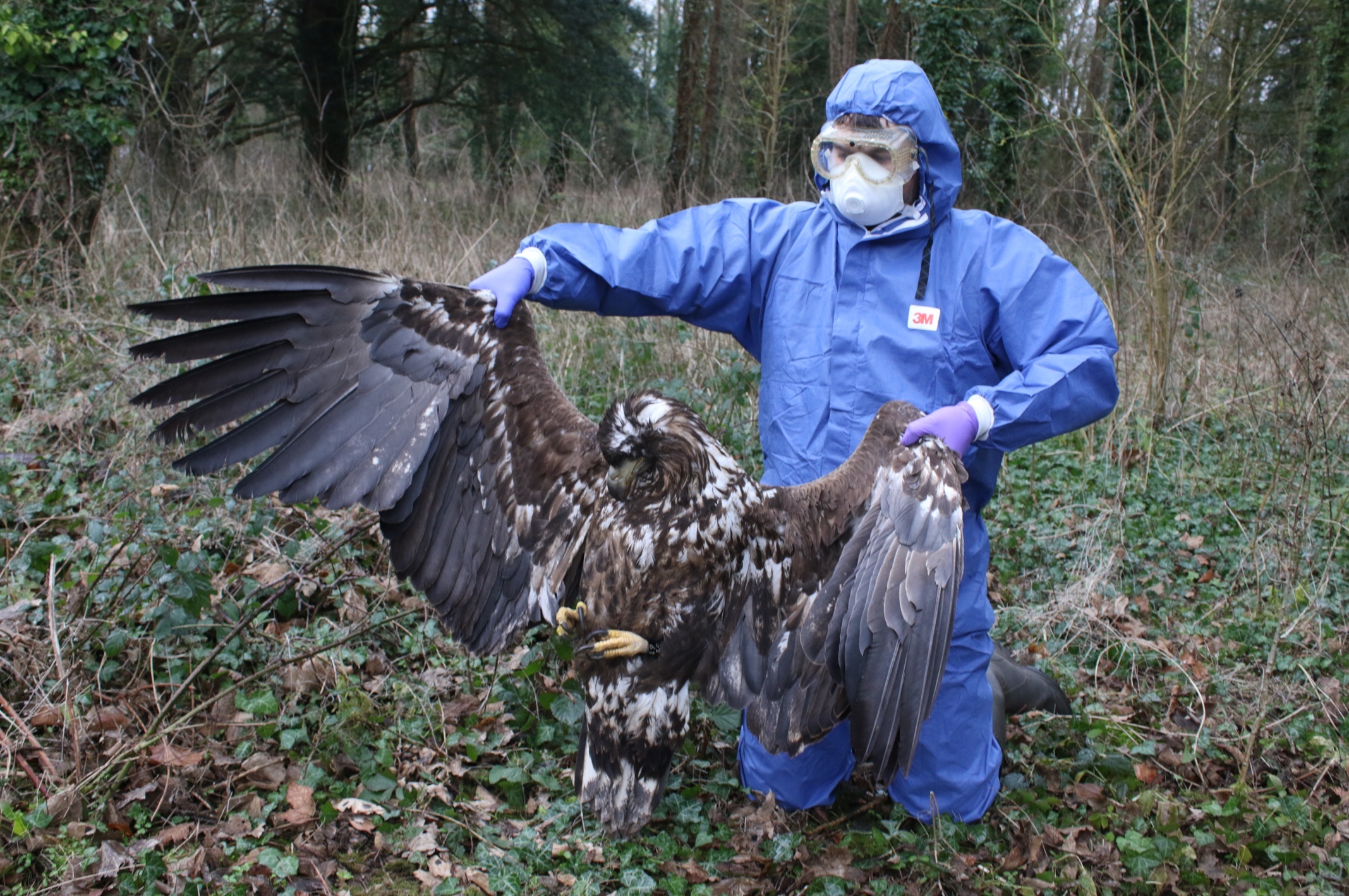
[This young golden eagle was found ‘deliberately poisoned‘ with a banned toxin on an Invercauld Estate grouse moor in the Cairngorms National Park in March this year. Photo by RSPB Scotland]

Operation Wingspan began in October 2020 and Phase One saw officers tackling the trade in endangered species and included visits to over 300 business premises, such as antique dealers, retro shops and pet shops across Scotland to advise owners and provide information about potential contraventions under The Control of Trade in Endangered Species (COTES) 2018 regulations. It resulted in the seizure and recovery of alligator heads from across the country.

Phase Two tackled badger persecution, working with the charity Scottish Badgers, to highlight that badgers and their setts are protected, that it is an offence to harm or interfere with them and that badger baiting is illegal. Where ongoing risks were identified, action was taken to protect the sett and the badgers.

Phase Three saw officers taking part in a construction conference to outline the responsibilities of developers, highlighting that it is an offence to destroy or damage roosts, as well as engaging with bat groups and visiting vulnerable roosts, ultimately leading to people being charged for undertaking development that threatened the welfare of bats.

In Phase Four concentrated on raptor persecution. Officers have carried out a number of activities, including patrols of vulnerable nesting sites, warrants executed in relation to wildlife crime and a social media campaign with an educational video that was produced in collaboration with the RSPB.

Detective Chief Superintendent Laura McLuckie said: “Reports of wildlife crime doubled during lockdown and Police Scotland is dedicated to working closely with a wide range of partner organisations to reduce the harm to species targeted by criminals and the communities who rely on them for employment and tourism across Scotland.

Tackling wildlife crime is not just about enforcement, it is also about working with partners and raising public awareness to prevent it happening. Indeed, the public has an important role in helping up to investigate reports of wildlife crime and I would urge anyone with concerns or who suspect a wildlife crime has been committed to contact us on 101, and if it is an emergency to call 999.”

More information can be found on our website: https://www.scotland.police.uk/wildlifecrime

ENDS

Investigation opens into suspected buzzard poisoning

Various media fora in the Irish Republic have reported on the suspected poisoning of two buzzards in Kerry.

A member of the public found the birds in August in the Currow/Scartaglen area, south of Castleisland, Co. Kerry. One buzzard was dead and the other one was taken for treatment and possible rehabilitation.

The National Parks and Wildlife Service is investigating and toxicology results are awaited.

A Government report published in October 2020 demonstrated that illegal raptor persecution continues to be a problem in Ireland, especially for the common buzzard. In 2020, 23 buzzards were poisoned in one single incident by the banned pesticide Carbofuran (see here) and in the same area in 2018, three buzzards were poisoned with Carbofuran, two were then decapitated and one had its leg pulled off (here).

Trial date set for Suffolk gamekeeper accused of poisoning buzzard

A couple of days ago I blogged about a gamekeeper who was due in court this week to face allegations that he was responsible for the alleged poisoning of a buzzard in Suffolk (see here).

This prosecution resulted from a multi-agency investigation and raid conducted at premises in January this year involving Suffolk Police, National Wildlife Crime Unit, Natural England and the RSPB’s Investigations team (see here).

[Police seized guns and pesticides during the multi-agency raid in January 2021. Photo via Suffolk Police]

News from the court today (via the RSPB) is that this gamekeeper has pleaded guilty to some charges but not guilty to others, so this case will now proceed to trial.

The gamekeeper pleaded guilty to six charges relating to firearms and pesticide storage.

He pleaded not guilty to two further charges relating to the illegal buzzard poisoning.

The trial is due to begin on 8th November 2021.

Please note, as this is a live case no further detail will be provided here until the case has concluded or there is official commentary from the court. Comments on this particular blog also won’t be accepted until the case concludes so as not to prejudice proceedings. Thanks for your understanding.

UPDATE 9th November 2021: Gamekeeper convicted for pesticide and firearms offences but buzzard-poisoning charge is dropped (here)