Shot peregrine released back to wild after treatment

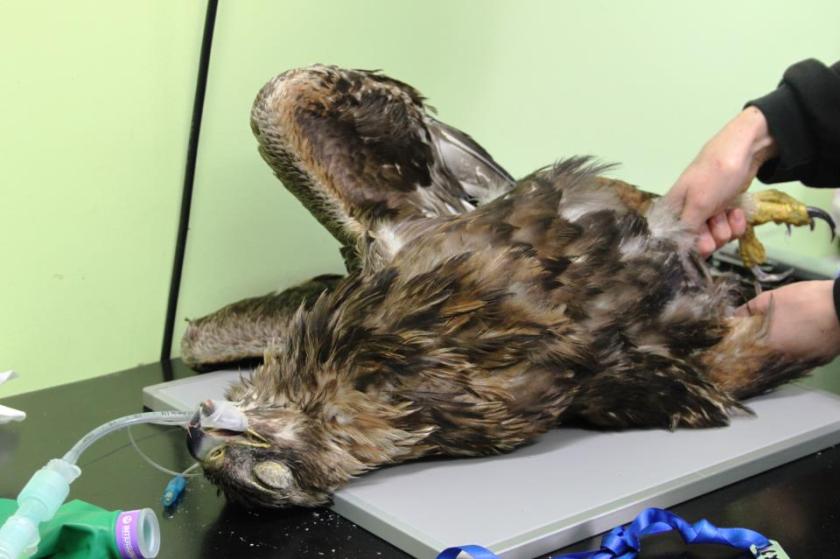
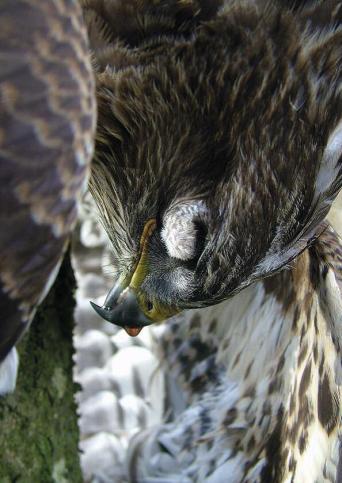
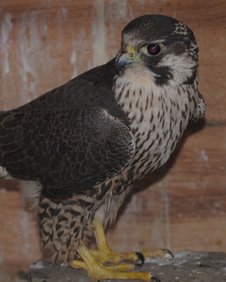
_66033291_peregrineA peregrine falcon was found with a broken wing in January – apparently it had been shot. It has now been nursed back to health and released back into the wild at the location where it was found.

According to the BBC (see here), the injured peregrine was found ‘in a field near a local shoot’ in Salwick, near Preston. Kudos to Turbary Woods Owl and Bird Sanctuary for their efforts in this bird’s recovery.

This is a good news story, in that a wild peregrine has been successfully rehabilitated and released, but disturbingly, this incident can be added to what looks like a growing trend in a different method of persecution – shooting. Has anyone else noticed this? In recent months there have been quite a few reported shootings, including golden eagles, hen harriers, red kites and buzzards. Is it a real trend or is the media just getting more savvy at reporting these incidents?

Reported poisoning incidents are dropping, of that there’s no doubt. Whether that’s a reflection of a downturn in actual poisoning incidents or simply an indication that gamekeepers are getting smarter at hiding the evidence remains to be seen. The cynical amongst us may believe that the method of persecution has simply been switched…

Misleading guff from Scottish Land and Estates

scotsman_logo_200The following letter has appeared in The Scotsman in the continuing ‘debate’ on grouse moor management (see here to read the earlier articles).

“Logan Steele’s letter (14 Jan) which alleges that driven grouse shooting is only viable with the persecution of birds of prey, particularly the hen harrier, is misleading.

First, official statistics demonstrate a clear decline in the number of incidents of raptor persecution.

Second land management for driven grouse shooting delivers a huge benefit for other protected wildlife, especially waders, and sustains employment and communities in remote rural areas. This is something the suggested alternative of walked-up grouse-shooting would not do.

Of particular significance is clear evidence that where grouse and hen habitat and vermin management have declined in some hen harrier “special protection areas”, this has actually resulted in lower harrier populations, as well as declines in other species such as waders.

This is a more complex situation than some make out.

The Langholm Moor Demonstration Project, set up in partnership with the government to bring back driven grouse shooting in the presence of sustainable numbers of hen harriers, is where the best hopes of progress on this issue lie.

Results at Langholm so far are that neither harriers nor grouse have recovered – not what anyone expected, but each year scientific understanding improves and practical solution gets closer.

Making progress will involve compromise on all sides.

Organisations representing grouse moor managers such as SLE are fully behind this process and it is unfortunate that RSPB has pulled out of the mediation process in England. Perhaps Scotland provides the best opportunity to make progress now.  Douglas McAdam, Scottish Land & Estates, Musselburgh”

[Link to the letter here].

And he accuses Logan Steele’s letter as being misleading!

First, which “official statistics demonstrate a clear decline in the number of incidents of raptor persecution” is Doug McAdam referring to? The ones we know of only relate to known poisoning incidents, although they are limited to poisoned birds; they do not include the discovery of poisoned baits and nor do they include suspected poisoning incidents or unreported poisoning incidents. More to the point, they do not relate to other types of raptor persecution, such as shooting, trapping, nest destruction, ‘disappearing’ birds etc. The only statistics that account for all types of raptor persecution incidents are those compiled annually by the RSPB; statistics that have never been accepted by SLE or any other game-shooting organisation.

Second, McAdam says “land management for driven grouse shooting delivers a huge benefit for other protected wildlife, especially waders, and sustains employment and communities in remote rural areas“. Another misleading statement. Land managed for driven grouse shooting is not only bad for protected wildlife (golden eagles, white-tailed eagles, hen harriers, goshawks, red kites, buzzards, peregrines, ravens, pine martens, mountain hares etc etc) but it is catastrophic for other species too (foxes, weasels, stoats, crows etc etc). And that’s without even touching on the landscape-level environmental damage.

McAdam goes on to suggest that “making progress will involve compromise on all sides“. No it won’t. Making progress will depend entirely on whether the grouse-shooting industry will accept that they have to work within the law and put an end to illegal persecution. If they do, all well and good. If they won’t, then they face a direct action campaign to ban driven grouse shooting by those of us who are sick of waiting for the government to act on our behalf. Hollow promises just don’t wash anymore. Time’s up.

McAdam’s penultimate sentence is laughable. He’s trying to suggest that the RSPB are the unreasonable ones in this 20+ year saga, for walking away from the six-year long Hen Harrier Dialogue process (see here). They are definitely not the unreasonable ones – they recognised a sham process and got out. Until SLE start to publicly expel their member estates where raptor persecution is rife (and we all know who they are, and so should McAdam – if he doesn’t, he’s in the wrong job), then the credibility of SLE’s involvement in ‘making progress’ will be viewed with as much contempt as it deserves.

Here comes 2013….the year of natural scotland

imagesHappy Hogmanay!

Tomorrow marks the start of another Scottish government themed year: The Year of Natural Scotland, in which we’re encouraged to celebrate Scotland’s stunning natural beauty and biodiversity. Good job it wasn’t this year’s theme as there might have been some red faces in the government:

  • SGA gamekeeper Whitefield sentenced for poisoning four buzzards (he already had an earlier wildlife crime conviction). His sentence this time? 100 hours community service.
  • Scottish gamekeeper McLachlan, convicted for possession of the banned poison Carbofuran. Fined ÂŁ635.
  • Scottish gamekeeper Barrie lost an appeal for his sentence of ÂŁ520 for illegal possession and control of a wild bird.
  • COPFS choosing not to prosecute a Scottish gamekeeper who had been filmed beating birds to death with a stick inside a crow cage trap.
  • Scottish gamekeeper Christie convicted for wildlife crimes relating to the illegal use of a crow cage trap. His sentence? An admonishment (a telling off).
  • Scottish gamekeeper Graham convicted for allowing a buzzard to starve to death inside a crow cage trap. Fined ÂŁ450.
  • Scottish gamekeeper McKellar convicted for possession of banned poison. Fined ÂŁ1,200.
  • Scottish gamekeeper Scobie convicted for using banned poison. Fined ÂŁ270.
  • A satellite-tagged golden eagle mysteriously ‘disappeared’ in the Angus glens.
  • A satellite-tagged golden eagle mysteriously ‘disappeared’ to the North East of the Cairngorms National Park.
  • Peregrine chicks mysteriously ‘disappeared’ from a nest site in Dumfries & Galloway.
  • A golden eagle was found dead, poisoned in Lochaber.
  • A golden eagle was found dead in suspicious circumstances on the Isle of Harris. Still awaiting results.
  • A satellite-tagged golden eagle mysteriously ‘disappeared’ in the Monadhliaths.
  • A poisoned raven, crow, and three poisoned baits were found in the Borders.
  • A satellite-tagged golden eagle was found dead near a lay-by in Aberdeenshire. Its injuries and its sat tag data suggested it had been illegally trapped on an Angus grouse moor and then dumped during the night and left to die.
  • A golden eagle was found shot and critically injured on a grouse moor in Dumfries & Galloway.
  • Barry, the sat-tagged hen harrier from Langholm mysteriously ‘disappeared’.
  • Buzz, the sat-tagged buzzard mysteriously ‘disappeared’ in the Angus glens. (More on this case in the New Year).
  • Willow, a sat-tagged marsh harrier mysteriously ‘disappeared’ in Galloway.
  • A hen harrier was found shot dead on an Aberdeenshire grouse moor.

These are just a few of the ‘highlights’ from Scotland this year – there are a few more that we can’t yet report but we will in the New Year. And of course this list doesn’t include other confirmed incidents from other parts of these fair isles such as England, Wales, Northern Ireland and the Irish Republic; a list that includes shot and poisoned sea eagles, buzzards, kites, harriers, peregrines and sparrowhawks. Nor does it include the incidents that went undiscovered.

We’ll be blogging quite a lot about the Year of Natural Scotland, which hopefully won’t be just a banner-waving exercise by the government but an opportunity for them to put their money where their mouths are. You don’t think so? No, neither do we. Why should 2013 be any different from the previous three decades of ineffective action?

A hint of what’s to come is the revelation that the theme will be highlighted during several events throughout the year. Two particular locations caught our attention: the Scone Game Fair and the Moy Game Fair.

The Scone Game Fair is of course organised by the GWCT. That’s the same GWCT that has recently asked for the addition of buzzards and sparrowhawks to the General Licences (that means they want permission to kill them…we’ll be blogging about that shortly). It’s also the same Game Fair that has previously attracted sponsorship from some very, how shall we put it, ‘surprising’ sources.

The Moy Game Fair is held on the Moy Estate near Inverness. If you’re unaware of this place, try googling it.

Thanks for all your interest and support in 2012…we’ll see you soon. Sláinte!

This golden eagle was found shot, critically injured &left to die on a Scottish grouse moor. Photo SSPCA
This golden eagle was found shot, critically injured and left to die on a Scottish grouse moor. Photo SSPCA

RSPB Scotland: 2011 persecution report published

RSPB Scotland has just published its latest report, The Illegal Killing of Birds of Prey in Scotland in 2011. You probably won’t be surprised or shocked by the content, especially if you’ve read the previous 17 annual reviews. In fact, when you read this 18th review, you might get a strong sense of dĂ©jĂ  vu.

It opens with a Foreword by Stuart Housden, Director of RSPB Scotland. Apart from the new photo, this foreword looks like a cut and paste job from the 2010 report, with a few words or sentences added or adjusted. To be fair, not much has changed since the 2010 report was published so perhaps he felt justified in repeating what he’d written the previous year.

Then there are RSPB Scotland’s strategic recommendations for addressing raptor persecution. Again, these show a remarkable similarity to the recommendations made in the 2010 report, and also in the 2009 report. The recommendations were / are still good and to see them repeated again is a useful indicator of how little progress has been made by those with the power to push them forward.

Next come the tables showing the confirmed and probable persecution incidents recorded by the RSPB during 2011. It’s these tables that the game-shooting lobby usually object too – they’re especially reluctant to accept the ‘probable’ incidents although to date, they’ve failed to provide a convincing argument to account for any of them.

The data in the 2011 tables demonstrate once again that illegal raptor persecution is widespread, with incidents reported in Perthshire, Angus, South Lanarkshire, Aberdeenshire, Dumfries-shire, East Ayrshire, Borders and Inverness-shire. We counted 15 very familiar-sounding locations within these regions, although there are a few notable absentees this time. Have they stopped their criminal activities or have they just got better at covering up? Time will tell.

Just focusing on the confirmed incidents, in total 17 incidents of deliberate poison abuse were confirmed during 2011, involving 20 victims: 7 buzzards, 4 red kites, 1 golden eagle, 2 peregrines, 2 ravens and 4 other bird species. Sixteen other illegal incidents relating to shooting, nest destruction, and the use of uncovered spring traps or cage traps were confirmed. The victims included 8 buzzards, 2 peregrines, 1 goshawk, 1 sparrowhawk, 2 kestrels and 1 short-eared owl. As in previous years, not all of these incidents were publicised at the time they occurred. It’s a continual disappointment that several years have to pass before the public learns of these appalling crimes.

Once again the occupations and interests of those convicted for illegal raptor persecution crime have been analysed (data from 2003-2011 inclusive). 87% of them were gamekeepers (7% pigeon racers, 3% pest controllers, 3% farmers).
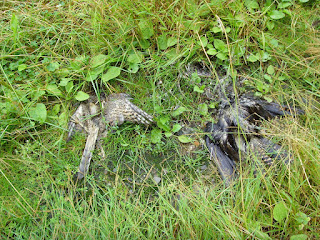
The report includes an interesting case study of poisoned raptors that have been found in recent years on the Glen Kyllachy and Farr Estate near Inverness. Very little of this information has been previously published and certainly this is the first time these photographs have been published. It’s a shame it’s taken several years for the info and images to reach the public domain but nevertheless it’s very encouraging to see RSPB Scotland highlight these cases, especially as Northern Constabulary hasn’t bothered.

All in all the report makes for grim reading, but nobody should be surprised by that. We all owe a large debt of gratitude to the RSPB’s Investigations Team for meticulously collecting these data and especially for making them publically available.

TO DOWNLOAD A COPY OF THE REPORT CLICK HERE

Here’s some media coverage:

RSPB Scotland press release here

BBC news article here

STV news article here

Herald Scotland article here

Scottish Gamekeepers Association: statement here

Scottish Land and Estates: nothing yet

@SNHMedia: “SNH report finds vast majority of gamekeepers highly qualified”. Link to this.

PAW Scotland: nothing yet

Police wco earns well-deserved recognition

For the benefit of those not on Twitter…

Devon & Cornwall Police Wildlife Crime Officer P.C. Josh Marshall has received a Commander’s Commendation at the South Devon Police Awards for his work on Operation Wilderness.

According to the RSPB’s recently published 2011 Birdcrime report, Devon had the worst record for bird of prey persecution in England last year, when fifteen goshawks, peregrines and buzzards were found poisoned or shot.

We’ve previously blogged about Josh’s innovative and successful Operation Wildnerness (see here, here, here, here and here) and it’s fantastic that his efforts have been recognised at the top police level. The word we’ve most often used to describe his work is ‘pro-active’, and his approach is even more impressive when you realise his role as a Police Wildlife Crime Officer is only part-time; something he has to fit in alongside his other policing duties.

Congratulations, Josh, on your very well-earned award! Hope you don’t mind that we’ve nicked your photo from Twitter!

Josh’s blog here

Dead raptors found in suspicious circumstances in Devon

Here’s another example of fine, proactive wildlife policing from Devon WCO Josh Marshall.

On his personal blog, which he set up specifically to raise awareness about wildlife crime in his region, Josh is reporting the discovery of a dead peregrine and a dead sparrowhawk that were found in suspicious circumstances last week. The birds were x-rayed and they hadn’t been shot, but their bodies were too decomposed to allow for any toxicology analysis.

Even though the cause of death could not be established, Josh believes that persecution had taken place due to the position of the birds.

Rather than keeping quiet and forgetting about the incident, knowing that it was going to be virtually impossible to make any more progress with the investigation, Josh chose to publicise the incident and asked people to be extra-vigilant when out walking in the area. Once again, he’s showing how suspected wildlife crimes should be handled. Well done that man.

Story on Josh’s blog here

Young peregrine shot in County Antrim

The Northern Ireland Raptor Study Group has sent us the following press release and photo:

‘During July a peregrine nest site, in Glenwherry, Co. Antrim, Northern Ireland was the site of a gruesome discovery.

Two young peregrines were being watched over recent months in the nest and one of the chicks which had only recently flown from the nest was found dead below the cliff. X-rays have revealed the bird was shot.

The quarry owner who keeps a close eye on the peregrines alerted the Northern Ireland Raptor Study Group and condemned this event saying “I cannot believe one of these chicks which we all were watching has been shot. I appeal to those responsible to think about what they have done or come forward with what they might know and report any further information to the police”.

Jim Wells, chairman of the NIRSG and MLA was angered at yet another peregrine falcon senselessly killed. He said “Every summer it is the same – illegally poisoned or shot falcons. This has to stop. It is an absolute disgrace that anyone thinks they have justification for shooting a rare and specially protected bird.”

The PSNI are appealing for anyone, particularly in the Broughshane, Glenwhirry or Larne area, who may have information as to who is responsible for shooting this protected bird. This latest incident of raptor persecution clearly indicates that some people are still prepared to break the law risking a custodial sentence, their livelihoods and their right to possess firearms.

Anyone that has any information about this incident, peregrine persecution in Northern Ireland or any other wildlife crime should report it directly to the police or anonymously through Crimestoppers on 0800 555 111 to bring these criminals to justice’.

The Belfast Telegraph (here) is reporting a £1,000 reward is on offer to anyone who can help catch those responsible.

The Northern Ireland Birdwatchers’ Association is suggesting that all four peregrines from this nest site (two adults and two chicks) have been killed (see here).

Thanks to NIRSG and to our Twitter followers in Northern Ireland and the Irish Republic for the information.

Some not so depressing news for a change

Sick of reading all the depressing news on this site? So are we, so as a one-off-feel-good-Friday special, here’s a link to some positive raptor news in Scotland, thanks to the efforts of Forestry Commission Scotland and their partners.
Follow this link (here) to find out about this year’s Aberfoyle ospreys & buzzards, Tweed Valley ospreys, Huntly peregrines and Mull sea eagles.

Tune in next week for a return to depressing news. Monday will be a big day…

Police investigate attempted peregrine poisoning

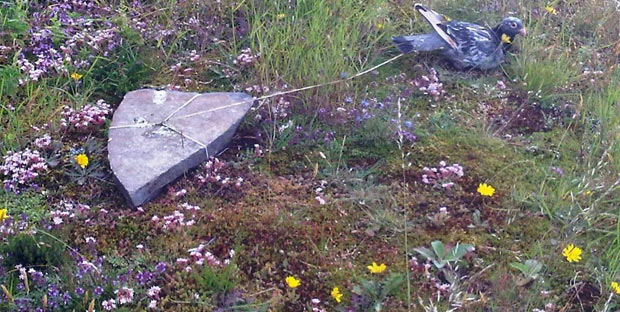
Police are investigating the attempted poisoning of peregrines after the discovery of a live pigeon, covered in poison, was found tethered to a rock at a quarry in North Wales.

Well done to Sgt Rob Taylor, the local Police Wildlife Crime Officer, for highlighting the incident and for warning the public about the danger to walkers and dogs.

The newspaper report suggests this isn’t the first tethered & poisoned pigeon to be used as live bait at this site.

News report in the North Wales Daily Post here

Stuff and nonsense

The airwaves are busy with criticism of last night’s episode of Countryfile, which featured a few pieces on evil birds of prey, especially buzzards and peregrines.

It’s too tedious to reproduce all the arguments here – we’ve heard it all before, although the SGA chairman Alex Hogg’s apparent inability to count was quite amusing. In a voiceover we were told that Alex was due to release 700 pheasant poults into his woodland pens (prior to letting them loose into the wider countryside so they can be shot dead). The interviewer (Tom Heap) then asked Alex if he had any idea how many poults he might be losing to buzzards. Alex’s response: “We’re probably losing, getting on for over a thousand pheasants in a year to buzzards“. Hmm.

At least the RSPB’s Duncan Orr-Ewing was able to provide some balanced and constructive discussion, but it was disappointing that the producers failed to include any meaningful discussion on the persecution issue. Tom Heap took to his Twitter account after the programme and offered this:

“Am intrigued…many accusing #countryfile of buzzard bias. Why? Real country issue, meticulous balance. Proud of our work“.

For anyone who missed it, the episode can be seen on BBC iPlayer for the next seven days (here).