Head, sand, buried

Yesterday we blogged about the availability of the written evidence submitted to the UK parliament’s audit on wildlife crime (see here).

Today we’ve read all the written evidence and our expectations of who might have said what were fully met. Although there’s no substitute for reading things for yourself and drawing your own conclusions, there were a few things that stood out…

One common theme was the use of RSPB vs NWCU (National Wildlife Crime Unit) raptor persecution statistics, with groups such as the National Gamekeepers’ Organisation and the Moorland Association claiming that only the NWCU figures should be used to determine the ‘true scale’ of the problem. The Countryside Alliance goes one step further and says that it objects to what it calls ‘scene-of-the-crime involvement of third party campaigning organisations and charities such as the RSPB’ and calls for urgent guidance to clarify ‘that all crimes and suspected crimes should be reported to the police’. No great surprises there – it’s the usual knee-jerk reaction to the RSPB, but what is interesting is that they forgot to mention just how unrepresentative the NWCU figures actually are! Why are they unrepresentative? Well according to the written evidence of the Association of Chief Police Officers (ACPOS), not all police forces submit their wildlife crime data to the NWCU, and even if data have been submitted, it’s not always possible to identify which incidents were wildlife crimes as they are not allocated to a specific code! So yes, it is easy to see why these groups want to get rid of the RSPB stats and replace them with the NWCU figures!

Another point of interest was a statement from the Moorland Association on hen harriers. We thought the second paragraph contained particularly sinister undertones:

The scale of crime against the hen harrier and its impact on the hen harrier population has been overstated and is misleading. A lack of breeding success on grouse moors does not automatically mean that laws have been broken. There are many, many more birds in England than four successfully nesting pairs, which can be seen over grouse moor during migration and at winter roost sites.

Until a full set of special rules allowing the positive management of hen harriers breeding on grouse moors is forthcoming from the Environment Council’s Hen Harrier Dialogue, moorland owners are within their rights and the law to deter the birds from settling on their moors to breed.”

We assume that ‘positive management’ in this context refers to either killing or otherwise removing (translocating) any harriers that are considered ‘surplus’ to an agreed acceptable number (known as a ‘ceiling’). We understand that the Environment Council is seriously considering a ‘ceiling’ on hen harrier numbers for grouse moors; a controversial and long-running argument that we’ll write about another time. But what does the Moorland Association mean when it says ‘moorland owners are within their rights and the law to deter birds from settling on their moors to breed’?

The other comment we found particularly interesting was one made by the Countryside Alliance:

The recent publication of out of date research into the breeding success of peregrine falcons on grouse moors is a further example of counterproductive allegations against shooting which resulted in misleading coverage in the media. As a result of this, the National Wildlife Crime Unit circulated a clarification to all Police Wildlife Crime Officers in the UK, and to all Partnership for Action Against Wildlife Crime members, in which it was drawn to the attention of those studying the research paper that the data used was out of date, and that in using such information there was a clear danger that the research paper might be misunderstood as representing the current situation, which it did not.”

The publication being referred to is the recent paper by Amar et al (2011) which showed that the breeding productivity of peregrines nesting on grouse moors in Northern England was 50% lower than the productivity of peregrines breeding on non-grouse moors (see here for earlier blog on this). Now, why would the NWCU feel it necessary to send an email to wildlife crime police officers and other PAW partners about how to interpret this paper? Did they think that these people were so stupid that they couldn’t read and understand the paper for themselves? Why did the NWCU think that the data used in the paper (collected between 1980-2006 from 141 nesting ranges) were unrepresentative of the current situation? Has the NWCU collected and analysed more recent data to demonstrate that the current situation is different? How does sending this email fit in with the NWCU’s stated primary role of ‘assisting in the prevention and detection of wildlife crime’? What sort of message does this email give to those involved with the fight against raptor persecution? Here is a peer-reviewed scientific publication in a prestigious journal that points directly to the significant relationship between grouse moors and raptor persecution. Isn’t this exactly the sort of publication that the NWCU’s Charlie Everitt was referring to in his speech at the recent wildlife crime conference when he said: “We’ve also been looking to the use of science to try and benefit from what science can deliver to us”?

The thing is that the data used in the paper were part of a long-term data set that clearly showed a trend in poor productivity (i.e. not a snap shot but a long-term picture over 26 years), and this trend also mirrored that of other studies that have shown a clear relationship between low raptor survival and grouse moors (go and read some of the golden eagle papers that have been produced over the last ten years). The NWCU appear to have missed this point in their scrabble to appease the grouse-shooting lobby; so much for their intelligence-led approach to combating raptor persecution, eh?

All the written evidence submitted to the audit committee so far can be read here.

Covert camera at peregrine nest catches offenders within 48 hours

A proactive police and RSPB crackdown on wildlife crime in Devon & Cornwall, called Operation Wilderness, has had its first success after two men were filmed visiting an active peregrine nest site without the appropriate licences.

The men were caught on film just 48 hours after a covert camera had been installed at the site. Police were able to identify them from the camera images and the two men, aged 44 and 43, were found to be in possession of a camera containing images of the peregrine nest site. Both men have been released pending further enquiries.

Full details available on Devon Police Wildlife Crime Officer Josh Marshall’s blog here

Well done Josh and all involved – excellent work! For more information about why Operation Wilderness was launched, see earlier blog post here.

2011 poisoning stats ‘out’ in every sense of the word

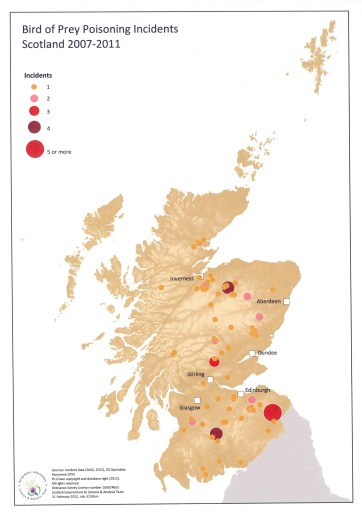
The Scottish Government has today published the 2011 poisoning map (otherwise known as Scotland’s map of shame).

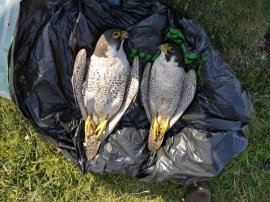
The newspapers are heralding the figures as a success story, as the numbers show an apparent drop in poisoning incidents (“only [only??!] 16 raptors were killed as a result of being illegally poisoned in Scotland – 12 fewer than in 2010 and the lowest death toll since the first maps were published six years ago“, says The Scotsman). The victims included seven buzzards, four red kites, two peregrines, two sparrowhawks and a golden eagle.

On a superficial level this does look like convincing progress, but let’s scratch the surface and see what’s underneath…

The official Scottish government poisoning map only shows the places where poisoned birds were discovered. Given the remote areas involved and the fact that most of these poisoned birds were found by chance (by passing hillwalkers etc.), the official figures can in no way represent the actual number of raptors that were poisoned (but undetected) during 2011.

The figures behind the map also do not show the areas where poisoned baits (but no dead birds) were discovered during 2011. Nor do they show the other incidents of raptor persecution that were discovered during 2011, including shooting, trapping and nest destruction incidents. According to an article in today’s Guardian, it is claimed that last year’s illegal shooting, trapping and nest destruction incidents “have remained constant with previous years“. We’ll have to wait a good few months for the RSPB Birdcrime Report to see the actual figures. (Incidentally, how come the 2011 poisoning figures, as compiled by SASA, have not yet been released to the public? They’re obviously available as they were used to construct the poisoning map. So far they’ve only published data up to September 2011. Isn’t it in the public interest to release them? Why all the secrecy?).

It seems plausible that some shooting estates are doing their best to distance themselves from any sign of illegal raptor persecution, especially in light of the new law on vicarious liability. A likely example of this behaviour was an incident in the Borders in September 2011. A dog walker discovered a bag full of dead raptors by the side of the busy A68  road (see here for earlier blog on this). The police were alerted and the birds were sent to SASA for toxicology tests. The results showed that the two sparrowhawks and two buzzards had been poisoned with the banned pesticide Carbofuran. Because the dead birds had been dumped away from any shooting estate or farm, without being seen, it was virtually impossible for the police to prosecute anyone (SASA reports that the police have now closed the case due to a lack of positive leads – see here). What is the probablity that other estates up and down the country are poisoning raptors on their land and then removing the evidence as far from their location as possible?  It was pure chance that this bag of poisoned raptors was discovered. How many more are left rotting and undiscovered across the country?

But let’s suppose, just for a minute, that the latest map IS an accurate representation of all raptor poisoning incidents that took place in 2011. Should we then accept that shooting estates are cleaning up their act and they’ve all suddenly decided, after over 100 years of persecution, that raptors are actually ok and shouldn’t be killed? The only way to measure that will be to look at LONG-TERM TRENDS of poisoning incidents as well as LONG-TERM TRENDS of raptor populations. We’ve blogged about this before (see here) but it’s worth repeating some of it to show the bigger picture. The graph (adapted from the RSPB’s excellent report: The Illegal Killing of Birds of Prey in Scotland in 2010, see here) shows the long-term trend of poisoning incidents in Scotland from 1989-2010. Look carefully at the graph and you’ll see peaks and troughs in the numbers recorded. Yes, there certainly have been previous drops in the number of poisoning incidents, but then look what happened in the following years – another increase, and then another drop, then another increase etc. Before the game-shooting lobby starts its self-congratulatory back-slapping, we need to see a continuous decline in the number of recorded incidents, AND we need to see raptor populations recovering in those areas where persecution has been endemic. This will take time, but could arguably be judged in about five years’ time.

Of course we all hope that the 2011 figures are the start of a new era in raptor conservation in Scotland. As Environment Minister Stewart Stevenson has said in today’s media: “I hope this proves to be the beginning of a continuing reduction in such cases, leading to the end of this outdated, dangerous and cruel practice“. It is notable that his statement contains more than a hint of caution. That man’s no fool.

See an excellent article about the latest figures in today’s Guardian here

Article in The Scotsman here

Nest cameras to protect raptors in south west England

In a bid to tackle increasing levels of wildlife crime, Devon & Cornwall Police have teamed up with the RSPB to launch ‘Operation Wilderness’, a new scheme that will see 24 hr nest cameras installed at vulnerable sites across the region.
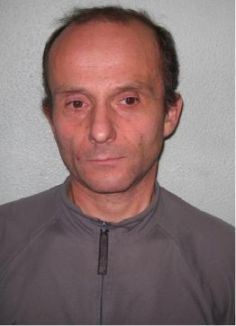
This is a proactive response to the spate of raptor persecution incidents last year, which included the illegal poisoning (with Carbofuran) of four goshawks and a buzzard (see here) and three peregrines (see here and here). There is also concern about egg collectors and pigeon fanciers in the area.

The cameras have been paid for by the Devon Bird Watching and Preservation Society, and Operation Wilderness is being led by Police Wildlife Crime Officer PC Josh Marshall.

Well done to everyone involved  – this is an impressive  joint effort.

BBC news article here

Egg-thief Gonshaw gets unprecedented ASBO banning him from Scotland

Following earlier posts about four-times jailed egg thief Matthew Gonshaw (see here and here), his ASBO hearing was finally heard at Stratford Magistrates’ Court, London, on Friday (24 February).

In perhaps one of the most creative choices of punishment, in addition to his earlier six-month prison sentence, Gonshaw was given an ASBO (anti-social behaviour order) that bans him from coming to Scotland during the bird nesting season (1 Feb – 31 Aug) for the next ten years. Ten years is the maximum ASBO term, and if he breaks the conditions, he could receive a £20,000 fine and a five-year jail term. Gonshaw is further prevented from visiting all RSPB and Wildlife Trust land for the next ten years – presumably this means in England and Wales.

Strangely though, Ian Thomson of RSPB Scotland is quoted in The Herald as saying, “Gonshaw is, in fact, due to appear at Inverness Sheriff Court on March 8 facing charges relating to the theft of wild birds’ eggs in Scotland only last year“. It’s not clear how he can appear at Inverness in March if he’s now banned from travelling to Scotland until 1 Sept at the earliest. Ah well, not our problem.

Well done to everyone involved and especially the smart person who thought about trying for an ASBO and the magistrate who agreed to its use.

Article in The Herald here

Egg-collector Matthew Gonshaw’s ASBO hearing delayed

Four-times jailed egg thief Matthew Gonshaw was due to find out last Friday (17 February) whether he was to be the subject of an Anti-Social Behaviour Order (ASBO) following his latest conviction for egg-collecting (see here for background). If granted, the ASBO could see him facing a £20,000 fine and five years in prison for further offences.

The case was adjourned and is now due to be heard this Friday (24 February).

Eight month prison sentence for illegal sale of stuffed birds of prey

A Bedfordshire man has been sentenced to eight months in prison for the illegal sale of stuffed birds of prey.

Greg Turner, 32, of St Peter’s Court, Ashwood Close, Potton, described as ‘an unemployed stuffed bird enthusiast’, was reported to have illegally sold over 100 birds on Ebay, netting £22,000. The species included red kite, marsh harrier, goshawk, peregrine, kestrel, barn owl, tawny owl and hawk owl. When officers from the National Wildlife Crime Unit raided his home, they found stuffed birds, two dead birds in his freezer waiting to be stuffed, and forged paperwork.

Kudos to the National Wildlife Crime Unit for their investigation and special mention to Judge Stuart Bridge, who said the following at Luton Crown Court:

In my judgement this was your livelihood, illegally trading in stuffed specimens. It was pre-planned, blatant and calculated and put live birds at risk. You took a risk hoping you would not be noticed. I am told that you have ceased trading and are in work but the seriousness of the offence can only be adequately reflected by immediate custody“.

An excellent result – finally, here’s a judge willing to use the full force of his sentencing powers. Well done to all involved.

BBC news article here

Hertfordshire Advertiser article here

Police raid pigeon fanciers in England and Wales in peregrine persecution investigation

Yesterday saw a coordinated multi-agency raid on the homes of four pigeon fanciers during an investigation into alleged peregrine persecution.

The investigations took place in the following regions: Avon & Somerset, South Wales, Northumbria and the West Midlands. Police with search warrants were aided by investigators from the RSPB, RSPCA, Natural England and the Countryside Council for Wales. A 47 – year old man is reported to have been arrested at one of the locations in connection with evidence that was seized during the raid.

RSPB press release here

Let’s hope these raids end with a better result than a recent prosecution in Scotland, where an individual was charged with the alleged illegal use of a Larsen trap at a pigeon loft. Unfortunately, the case became time barred under Scottish law (meaning the prosecution evidence wasn’t presented in time) and therefore the case wasn’t heard in court.

Eight red kites found poisoned in Ireland since November

We have been asked by the Golden Eagle Trust (Ireland) to publish the following press release:

The Irish Red Kite Reintroduction Project is part of an all-Ireland effort to restore red kites. These attractive birds were extinct in Ireland for about 200 years. The Golden Eagle Trust, National Parks and Wildlife Service, and the Welsh Kite Trust have collected (from Wales) and released 120 red kites in Co. Wicklow between 2007 and 2011 and 39 red kites in Co. Dublin in 2011. The RSPB released 80 red kites in Co. Down between 2008 and 2010. There are now 10-15 pairs of red kites breeding in Co. Wicklow and 5-6 pairs breeding in Co. Down.

Following the successful release of red kites during the summer in Dublin and Wicklow, it is with disappointment that we report further recent kite deaths in Fingal. Since the release in July, this year, a total of eight (8) kites have now been recovered dead in Fingal since November.

The deaths include the satellite tagged kite known as ‘@’ which has flown as far as Co. Mayo on its travels and within a few weeks of returning to Fingal was found dead near Lusk.

Ms Phil Moore, from the Fingal LEADER Partnership expressed sadness saying ‘We just can’t believe ‘our baby’ is dead. We have all been following the satellite tagged kite since her release and have pictures all over the office of her journey; it is upsetting to know she is now dead’. 

There were 39 red kites, collected for Fingal under licence fromWales with project partners, the Welsh Kite Trust. The Fingal Red Kite release programme is part of the final and fifth year of an ambitious project to re-establish red kites in Ireland. The deaths represent just over 20% of the red kites released in the Fingal area.

The Golden Eagle Trust is managing the project, which is funded by Fingal LEADER Partnership through the Rural Development Programme 2007 – 2013 and the National Parks and Wildlife Service (NPWS). Fingal County Council, at Newbridge Demesne, and a private landowner hosted and facilitated the two separate release cages.

The project is widely supported throughout local communities, a suite of volunteers and landowners. There were over 100 people involved in cage building, collections, feeding and subsequent monitoring of the released kites.

Each kite is fitted with a radio tag which has allowed the project team to follow the kites’ movements since release. Whilst these tags allow us to track their daily movements they have also led us to find the dead birds.

Dr Marc Ruddock, Red Kite Project Manager, said ‘There is nothing more heart-breaking than having to pick up the carcass of bird and putting it in a bag for post-mortem after having followed its development from a small, downy chick collected in Wales and then watching it flying free in Fingal’.

Earlier this year, a post-mortem protocol was agreed between NPWS, Department of Agriculture and the State Laboratory. Each of the red kite carcasses has been sent for testing at Backweston Campus, to establish the cause of death. This process and the rigorous work undertaken is fundamental to the growing understanding of environmental issues and the threats posed to kites and other wildlife. 

It has now been confirmed that at least four of the kites contained the second-generation rodenticide, brodifacoum. This is an anti-coagulant rat poison usually recommended for indoor use only, which causes internal bleeding. It is widely recognised that rodenticides can kill non-target species.

Dietary analysis of the red kites, both in Wicklow and Dublin has shown that they are clearly hunting and scavenging rats, providing a natural control on rodent populations. The red kite is a specialist scavenger and is therefore likely to be at high risk of secondary poisoning if feeding on rats which are dead or dying from rodenticides.

We recognise the requirement for rat and mice control in terms of human health and food safety. But we urge amateur and professional users alike to ensure that rodent control programs are carefully planned and follow a defined treatment period to be effective.

The over-use of some chemicals could lead to resistance and accumulation in the environment. Those in the countryside should ensure best practice use of these chemicals to allow for more effective rodent control in the long-term and minimise the secondary poisoning risk to non-target wildlife. This includes other rodent-eating native raptors and owls such as kestrels, buzzards, barn owls, long-eared owls and red kites.

Best practice rodent eradication strategies record information such as the quantity and location of all baits and require baits to be regularly inspected and not left exposed to non-target animals and birds. Furthermore, dead rodents should be collected and disposed of safely and baits should be removed at the end of the treatment. Urban and rural rodenticide users are urged to be mindful of the potential environmental effects of the use of chemicals.

The farming and shooting communities in Fingal are very supportive of the project and are anxious to continue to control rats and mice effectively and minimise unintentional consequences for natural rat predators”. -END-

The substance used to kill the other four kites that have been discovered since November has yet to be confirmed – toxicology tests are on-going. It’s possible they were also unintentionally killed by secondary rat poison, but it’s equally possible that they have been deliberately (and illegally) killed by other poisons. For example, at the beginning of November 2011, it was reported that a red kite and a buzzard had been illegally poisoned in County Wicklow by alphachloralose (see here). In addition, a map produced by the Golden Eagle Trust in 2010 (see figure) shows the extent of illegal poisoning across Ireland (the map does not include instances of unintentional secondary rat poisoning). Species affected include red kites, golden eagles, white-tailed eagles, buzzards and peregrines, killed with alphachloralose or carbofuran.

Golden Eagle Trust website here

Prolific egg thief jailed for fourth time

One of the UK’s most prolific wild bird egg thieves has today been sent back to jail for what is reportedly his fourth jail term for similar offences.

This time, Matthew Gonshaw (49) from London, was caught with almost 700 wild bird eggs and egg-collecting paraphenalia at his house, including eggs from Scottish golden eagles and ospreys, as well as peregrines and red kites.

At Thames Magistrates Court, Gonshaw admitted ten offences under the Wildlife & Countryside Act, including two counts of taking golden eagle eggs from sites on the Isle of Lewis in April 2010. He was sentenced to six months in prison.

Gonshaw will re-appear in court in February to find out if he will be subject to an anti-social behaviour order (ASBO), which would see him face a £20,000 fine and five years in jail if he commits more crimes.

Well done to the RSPB, Metropolitan Police and the CPS for a successful conviction.

BBC News article here

STV article here

Good photographs in Daily Mail article here