Earlier last year Derbyshire Constabulary appealed for information after a pair of peregrines in the Peak District abandoned their breeding attempt in suspicious circumstances (see here).
It was later reported that eggs had been stolen from three peregrine nest sites in the Peak District this spring (see here) and officers from Derbyshire Constabulary believed they were being stolen for the Middle Eastern falconry trade.
Earlier this evening Derbyshire Constabulary issued a statement on Facebook, as follows:
Things sometimes take a while to come to fruition in our job, but two of our lengthy investigations have finally reached the point where people can be charged and summoned to court to answer for their actions.
The first involves the theft from a farm in the Bradwell area of a collection of vintage tractor parts which were part of a long-term project and labour of love on the part of the owner. Many of the parts were recovered and a salvage business underpinned by crime operating in neighbouring South Yorkshire was uncovered. The recovery of some stolen car parts from Buxton was a bonus too.
Our regular followers will know that we’ve invested a lot of time and effort into the problem of bird of prey persecution and trying to fathom where these illegally taken eggs are ending up and who’s involved. We were very pleased, therefore, back in the spring when we were presented with excellent video evidence of someone taking some peregrine falcon eggs from a breeding site in the Peak District. Thanks to the power of social media helping to identify the suspect we embarked on another long investigation which has now yielded charges, not only for the egg taking offences but for a firearms offence too.
Whilst this is very encouraging for us and those others we work with it doesn’t mean we’ve cracked it. Quite the opposite, in fact, and we’ll be putting next season’s plan together over the coming weeks.
ENDS
Well done, Derbyshire Constabulary.
Shame the RSPB wasn’t credited for providing the covertly-filmed footage, though.
NB: As this is a live prosecution comments won’t be published until criminal proceedings have concluded.
UPDATE 17 November 2020: Derbyshire man due in court in February for alleged theft of Peregrine eggs in Peak District (here)
Press release from South Yorkshire Police (26 October 2020)
Information sought following the poisoning of a protected bird
Officers investigating reports of a bird of prey being deliberately poisoned are appealing for your help to find those responsible.
On Saturday 4 July officers found a juvenile peregrine falcon in ill health in the Fish Dam Lane area of Barnsley, the bird sadly died a short time later.
[The poisoned peregrine, photo via South Yorkshire Police]
Initial assessment of the bird indicated that it could have been poisoned. Following a forensic examination by the Wildlife Investigation Scheme it has now been confirmed that the bird had been poisoned with Bendiocarb, a highly toxic substance.
Peregrine falcons are protected under Sec1 of The Wildlife and Countryside Act 1981.
Investigating Officer PC Fran Robbs De La Hoyde said: “It is believed the poisoned peregrine falcon ingested bait laced with the poison which was deliberately set out to target the bird.
“There is nothing to suggest that this bait was laid in open land.
“This was a deliberate act that caused the death of a beautiful and protected bird. I am saddened by this and I am asking for your help to bring those responsible to justice.”
Tom Grose, RSPB Investigations Officer, said: “It’s always a privilege to catch a glimpse of a peregrine. The fastest birds in the world, they are highly adaptable creatures and often make their homes in urban areas these days.
“Bendiocarb is one of the most commonly-abused substances for killing birds of prey and we have sadly seen it used for this purpose on many occasions. It is illegal to kill these birds, and we urge anyone with information to come forward.”
Poisons commonly used to commit a crime like this are incredibly toxic to humans and pets. Should any person locate any dead or injured birds they are strongly advised not to touch them or let pets come into contact with them.
If you have any information that can help officers please call 101 and quote crime reference number 14/104692/20.
Alternatively, you can stay completely anonymous by contacting the independent charity Crimestoppers via their website Crimestoppers-uk.org or by calling their UK Contact Centre on 0800 555 111.
SYP are committed to the investigation of serious wildlife offences, including the poisoning of birds of prey.
ENDS
UPDATE 17 November 2020: Police raid property in poisoned peregrine investigation (here)
Press release from North Yorkshire Police (21st October 2020)
Police appeal for information after peregrine falcons found dead near Tadcaster
Analysis finds carcasses containing pesticides
North Yorkshire Police is appealing for information following investigations into the death of two peregrine falcons found at a quarry near Stutton, Tadcaster.
[Photos by Guy Shorrock]
A member of the public who had been observing the mating pair of birds, found a male bird dead on a cliff ledge and following investigation by the RSPB and North Yorkshire Police to recover the carcass, a deceased female peregrine falcon was located in the bottom of the quarry.
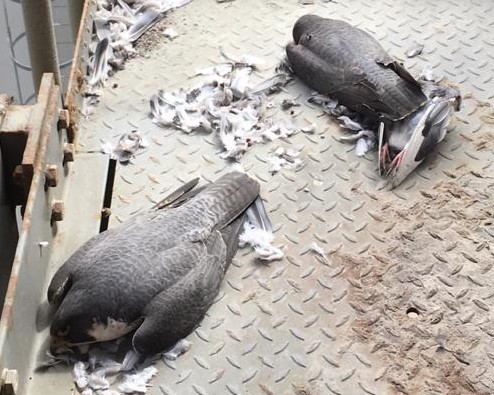
Both birds were sent away for testing which confirmed high levels of Bendiocarb in their systems and this was found to be the cause of death. The male bird was found next to a pigeon carcass which it is believed may have been used as bait.
Bendiocarb is licensed for use as a pesticide in England but is highly toxic and should never be released into the environment where wildlife, such as birds of prey, could be exposed to it. The pesticide has been found used to kill birds of prey in North Yorkshire previously and as such, police believe this was a deliberate act of poisoning.
North Yorkshire Police Inspector Matt Hagen said:
“Poisoning a bird of prey is a crime and it is saddening each time we have another incident reported to us. Every investigation is thoroughly carried out with all lines of enquiry followed to try and find those responsible, but we cannot do this without the public’s help, please be our eyes and ears and report this type of incident to the police.
“I’m urging anyone who has any information about bird of prey persecution to get in touch with the police, someone out there knows who is committing these crimes and we need that information to ensure they are stopped.”
Despite extensive investigations, police have yet to identify those responsible for misusing this toxic substance. Anyone with information about this incident should contact North Yorkshire Police quoting reference 12200057190.
If you wish to remain anonymous, you can pass information to Crimestoppers on 0800 555 111.
ENDS
These peregrines were found poisoned six months ago in April 2020. There is no explanation given for the delay in publicising this crime but it is likely to do with long delays at the toxicology lab caused by the Coronavirus lockdown. It’s understood there is still a backlog of samples waiting to be analysed.
Do you remember way back in May, during lockdown, Staffordshire Police asked the public to be vigilant after the discovery of a dead buzzard and two dead peregrines in the Peak District National Park? Officers suspected those protected raptors had been illegally poisoned and the corpses were sent for toxicology (see here).
Then in early June another peregrine was found dead in suspicious circumstances and that, too, was sent for toxicology analyses (see here).
[One of the illegally poisoned peregrines. Photo by Staffordshire Police]
Well guess what? The toxicology results are in and all four raptors were illegally poisoned with the same (unnamed) pesticide, and at least two of the incidents involved a pigeon bait which had been laced with the pesticide.
These illegal raptor poisonings are in addition to the confirmed illegal poisoning of a buzzard and a kestrel in Derbyshire at the beginning of lockdown (see here) and a shot buzzard found with horrific injuries in the Peak District National Park during the middle of lockdown (see here).
Staffordshire Police has issued a press statement about the latest four killings, as follows:
£1,000 reward for information after birds of prey poisoned
Reward offered for information after bird of prey poisoning incidents in Staffordshire during Covid lockdown.
The Royal Society for the Protection of Birds (RSPB) has offered a £1000 reward for information leading to a conviction after four birds of prey were found dead in Staffordshire.
The appeal follows three separate incidents over a three-week period during Covid lockdown.
On Saturday 16 May, a common buzzard and peregrine falcon were sadly discovered dead in a wooded area of Longnor. On Tuesday 19 May a second peregrine falcon was found dead at Beeston Tor near Wetton. On Thursday 4 June, a third peregrine falcon was found dead in a quarry near Waterhouses.
[The latest poisoning victims. Photos via Staffordshire Police]
Two of the incidents occurred in the Peak District National Park, and a few of the locations are believed to be near peregrine falcon breeding sites.
As there were no visible signs of injury, and following contact with Natural England the birds were submitted for post mortem examinations and toxicology tests to establish the cause of death as part of the Wildlife Incident Investigation Scheme (WIIS). The scheme investigates the death or injury of wildlife and companion animals that may have resulted from pesticide poisoning.
The results show that all four birds of prey were illegally poisoned by the same pesticide, and that at least two of the incidents involved a pigeon bait which had been laced with the pesticide.
A police investigation into the circumstances is underway as all birds are protected by the Wildlife and Countryside Act 1981. To kill or injure one is a criminal offence and could result in an unlimited fine and/or up to six months in jail.
Officers are asking local residents and visitors to these areas to report any suspicious behaviour they may have witnessed in the days leading up to the discovery of the birds and to continue to be vigilant for the signs of criminal activity, including dead or injured birds, poisoned bait and traps.
Detective Inspector Tim Boulton, of the Staffordshire Police Rural and Wildlife Crime Unit, said: “To find out that these birds have been deliberately targeted and poisoned is truly dreadful. We are working to ensure those responsible are identified and brought to justice.
“It is extremely concerning that a harmful substance has been placed in the countryside putting not only wildlife, but also people and pets at risk too.
“If a member of the public comes across a dead bird or suspicious object, please do not touch or move anything. Please take photographs if you can and make a note of your surroundings and landmarks to help officers to locate it. Every piece of information may be crucial in prosecuting an offender.
“We would like to thank Natural England and the Peak District Natural Park for their assistance so far and we are incredibly grateful for the reward offered by the RSPB.
“Any information, no matter how small and insignificant it may seem, could help with our on-going investigation. Someone out there knows who poisoned these birds, so please do the right thing and get in touch with the police directly or any of our specialist partners.”
Mark Thomas, RSPB Head of Investigations, commented “Peregrines are the fastest birds in the world, yet all too often the lives of these magnificent creatures are cut short by illegal persecution like poisoning.
“For incidents like this to repeatedly happen in a National Park is all the more alarming. If you have any information about any of these cases, or if you come across what you believe may be a poisoned bird of prey, please call the police immediately. You are our eyes and ears.”
Sarah Fowler, chief executive of the Peak District National Park, added: “I would to thank those individuals who have reported these incidents to the police, and it remains completely unacceptable that illegal activity against wildlife is taking place in and around the Peak District. The nature of poisoning witnessed in these cases is deeply worrying for species both within and outside our National Park boundary.
“These incidents are particularly concerning in a year where many birds of prey – including the peregrine falcon – have successfully bred in other areas. We will continue to support the police in their investigations, and welcome any information from the public that may help capture those involved and bring them to justice.”
Dave Slater, Natural England’s Director for Wildlife Licensing and enforcement cases, said: “Raptor persecution is a national wildlife crime priority and a priority for Natural England. We are a committed partner with the Police and NGOs in tackling these despicable crimes. We would urge anyone witnessing or suspecting persecution to contact the police.”
Anyone with any information is asked to call one of the services listed below:
Staffordshire Police: 101 quoting incident number 232 of 16 May. You can also report online at http://www.staffordshire.police.uk/report or by sending a private message to Staffordshire Police on Facebook and Twitter.
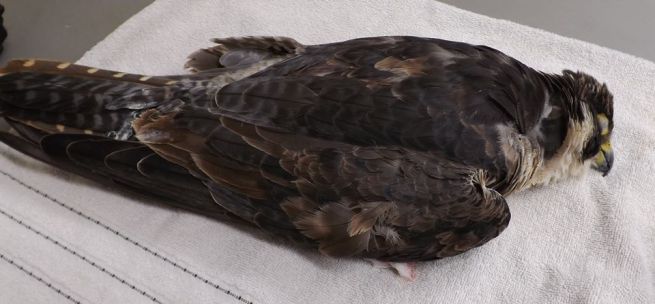
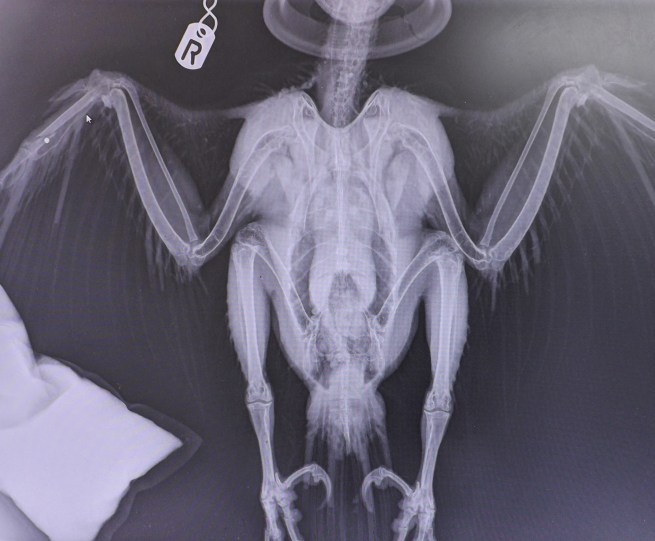
In mid-August we blogged about a shot peregrine that had been found critically injured in Gloucestershire and was later euthanised due to the extent of its injuries (see here).
[The shot peregrine, photo from Vale Wildlife Hospital]
There was very little information available about this crime at the time but now Gloucestershire Police are appealing for witnesses.
The shot peregrine was found near Northleach in the Cotswolds Area of Outstanding Natural Beauty.
Anyone with information is urged to contact PC Ashley Weller on 101, quoting incident # 349/16/08.
The wounded bird was taken to Vale Wildlife Hospital near Tewkesbury, Gloucestershire today. There are no further details yet about where this illegally-shot peregrine was picked up.
Anyone with information please contact the Police on Tel: 101, or the RSPB Raptor Crime Hotline on Tel: 0300 999 0101 or anonymously Crimestoppers on Tel: 0800 555 111.
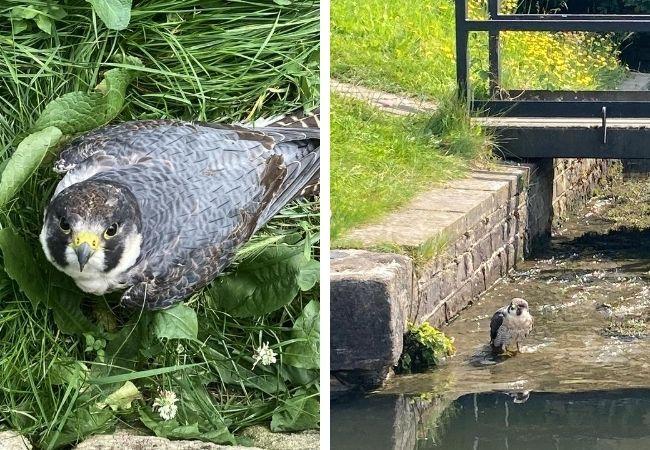
West Yorkshire Police are appealing for information after a peregrine was found shot in Bingley yesterday (11th August 2020) according to an article in the Telegraph & Argus.
The injured bird was found by members of the public at Bingley Three Rise locks yesterday afternoon. It didn’t survive its injuries, which a vet has described as being caused by a pellet gun.
[The shot peregrine. Photos by Brian Goddard]
A spokesperson for West Yorkshire Police said:
“Police were called during the afternoon of Tuesday August 11 by a vets surgery which made a third party report of a Peregrine Falcon dying after being shot with a pellet gun.
Officers have recorded a crime for the killing of a protected schedule one bird and initial enquiries are underway.”
Anyone who has information about the incident is asked to contact the Bingley NPT on 101, referencing crime number 132004033337
Last week we blogged about the 4th peregrine confirmed to have been illegally poisoned with banned toxins in the Channel Islands (see here).
[Two of the four poisoned peregrines, along with the pigeon that had been laced with poisons and used as bait. Photo via Alderney Bird Observatory]
It was reported that a 5th (unidentified) raptor had been submitted for toxicology analysis and that a reward of £5,000 was on offer for information leading to a conviction.
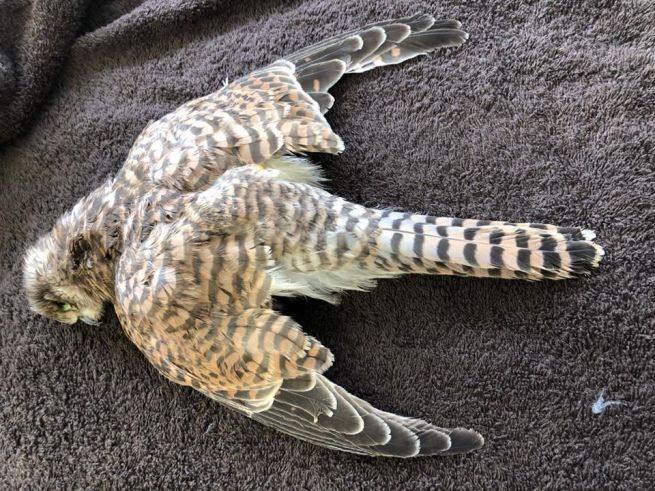
That fifth raptor has now been reported to be a kestrel – toxicology results are pending.
[The dead kestrel. Photo via Guernsey Animal Aid]
In early August the reward for information had increased from £5,000 to £7,500 but according to Alderney Bird Observatory the reward now stands at £10,500.
If you have any information that could help this investigation please contact Sue Vidamour at Guernsey Animal Aid: 07781 150388.
A couple of weeks ago Police on the island of Guernsey appealed for information (see here) after at least three peregrines had been found poisoned with ‘an unusual cocktail of banned pesticides’ in the previous 14 months and a fourth peregrine, found dead in June 2020, had been submitted for toxicology analysis which was delayed by Covid19.
Those toxicology results have now confirmed that the fourth peregrine was also poisoned by what have been described as ‘professional-use pesticides’ (see here). Another dead bird of prey (not identified in the local press), has been submitted for toxicology analysis after being found dead in July ‘under unusual circumstances’.
The names of the banned pesticides have not been revealed.
An anonymous donor has contacted Guernsey Animal Aid to put up a £5,000 reward for anyone who can provide information that leads to a conviction (see here).
Sue Vidamour from the charity said:
“It’s a disgusting thing to do, to kill a beautiful animal like that for your own gain or for whatever reason is just outrageous.
Maybe somebody out there knows who it is but is reluctant to say but humans being humans it may just tip the balance and they’ll give a name.”
UPDATE 9th August 2020: £10,500 reward for info on four poisoned peregrines (here)
As conservationists continue to express concern for the safety of the visiting Bearded Vulture in the Peak District National Park (e.g. see here), the RSPB has published a blog detailing more cases of confirmed and suspected illegal raptor persecution that have been recorded in the area since the beginning of lockdown.
[This shot buzzard had to be euthanized due to the extent of its injuries. Photo by Peak District Raptor Monitoring Group]
The RSPB’s updated list includes the following, some of which have already featured on this blog and some which haven’t previously been publicised:
NEW: In the north of the National Park, the remains of a short-eared owl, an amber-listed species, were found on a grouse moor near Glossop on 7 May. A post-mortem recently concluded that shooting had been the cause of death. No leads were forthcoming from police enquiries.
NEW: Near Agden Reservoir, an area dominated by driven grouse moors, four raven chicks were found dead in a nest also on 11 May. The parent birds had been seen bringing food to the young, then vanished without explanation. The chicks were almost at the point of fledging, and the RSPB say the adults were exceptionally unlikely abandon the nest at that stage. The incident is being investigated by South Yorkshire Police.
NEW: Test results are awaited in connection with an adult peregrine found dead in the Upper Derwent Valley.
NEW: In the south, just outside the National Park an eyewitness reported seeing two buzzards being shot near Ashbourne on 1 April 2020. A member of the public was watching the two birds circling a wood, on land managed for pheasant shooting, when he heard a shot and saw the birds fall. There’s no comment about a police investigation.
PREVIOUSLY REPORTED: On 11 May, a buzzard was found mortally wounded on land managed for gamebird shooting near Diggle. It was found alive but with terrible injuries and sadly had to be euthanized. An x-ray revealed six pieces of shot lodged in the bird’s body. [This crime has previously been blogged about here]
PREVIOUSLY REPORTED: In the south of the Park, a buzzard and two peregrines are being tested for poison after being found dead in Staffordshire. [These incidents have previously been blogged about here] [Confirmed illegally poisoned. See UPDATE at foot of this blog]
PREVIOUSLY REPORTED: In mid-June, Derbyshire Police issued an appeal for information after three peregrine nests were robbed of their eggs, all within the National Park. The RSPB alerted the police about one of the incidents. [These incidents have previously been blogged about here]
PREVIOUSLY REPORTED: A dead kestrel and a buzzard have also gone for poison testing: they were found near Glapwell, where several buzzards were found poisoned in 2016. [These incidents have previously been blogged about here] [Confirmed illegally poisoned. see UPDATE at foot of blog].
The RSPB’s Head of Investigations, Mark Thomas, was also on BBC Radio Derby a few days ago talking about the ongoing killing of birds of prey in the Peak District National Park. Available here (starts 3hrs 16) for 24 days.
UPDATE 3rd August 2020: Buzzard and kestrel confirmed illegally poisoned in Derbyshire (here)
UPDATE 2nd October 2020: Birds of prey illegally poisoned in Staffordshire / Peak District National Park (see here)





 Sue Vidamour from the charity said: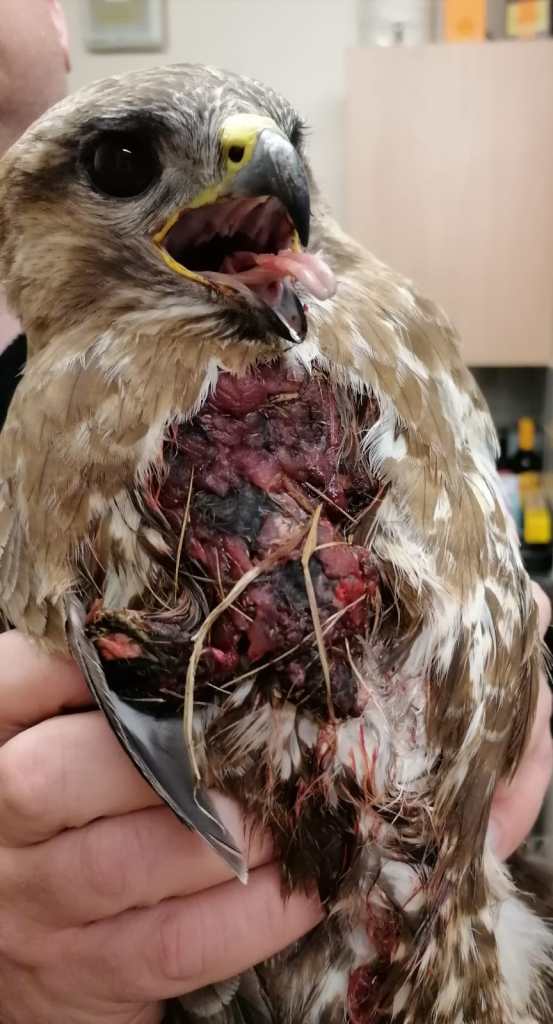
 Raptor Persecution UK