Obituary – Patrick Stirling-Aird MBE, Secretary of the Scottish Raptor Study Group

Obituary – Patrick Stirling-Aird MBE

10 August 1943 – 8 November 2025

The Scottish Raptor Study Group (SRSG) is saddened to report the passing last week of its long-term Secretary Patrick Stirling Aird at his home in Dunblane, Perthshire. We are extremely fortunate and proud to have had Patrick as our Secretary for more than 20 years. It is believed that Patrick started in this role on 19th February 2000.  It cannot be overstated how much of a massive role Patrick has played both for the SRSG and more widely for raptor conservation in Scotland.  He will be greatly missed by all of us in the tight-knit Scottish raptor conservation community.

Patrick Stirling-Aird (Photo by Sue Stirling-Aird)

Patrick was an authority on the Peregrine Falcon, his main passion, along with other upland raptor species including Golden Eagles and Ravens. He assiduously monitored these birds in the Central Scotland (CSRSG) and Tayside and Fife Raptor Study Group (TFRSG) areas for decades. Even whilst in his mid-eighties Patrick was out monitoring Peregrines this year, and was still the species coordinator for both Peregrine and Golden Eagle in the Central Scotland Raptor Study Group area.      

In his book “The Peregrine Falcon” (New Holland 2012) Patrick claimed to have seen his first Peregrine more than 40 years ago, so going back to the early 1970s. He said it was these first sightings, and the recognition of the Peregrine as an “ecological barometer”, that got him involved with formal raptor monitoring. At this time, raptor monitoring was pioneering work promoted especially by Derek Ratcliffe, who warmly acknowledged Patrick’s work and influence in his own monographs on the Peregrine and Raven. In the 1970s and when Patrick took up raptor monitoring in west Perthshire, the Peregrine had of course become an extremely rare breeding bird following the pesticide crisis caused by DDT and Dieldrin in the 1960s, and as revealed by those dedicated individuals who monitored Peregrines across the UK at the time.

I first met Patrick in the early 1990s when I became a member of the CSRSG, having moved down from the Highlands.  He was the Chair of CSRSG since its formation in 1983 and only stood down from that role ten years ago.  Patrick was definitely in charge of monitoring Peregrines, Golden Eagles and Ravens!  It amused me at the time that other species including Red Kites, my own passion, were given relatively short attention at meetings! Owls were barely mentioned unless prompted (something that did not change greatly)! The focus was clearly on the three key raptor species – Patrick’s birds!  What was also clear was Patrick had huge attention to detail.  Patrick was trained and worked as a solicitor and brought this attention to detail to his raptor monitoring. His raptor data record keeping was second to none. When discussing particular raptor sites, he could call on an extensive background history of each site, rigorously documented year by year. If anybody was asked to monitor any Peregrine sites for him or to search certain glens for occupancy, you could expect a full documented history of that site, sometimes going back for over 50 years; detailing alternative sites, productivity; and information on how to access to get the best view of nests.   

Patrick’s own study area was along the boundary between the CSRSG and TFRSG areas. He monitored all of the peregrines from Glen Artney up to Glen Almond and across to Stirling for decades. He also monitored the breeding Golden Eagles and Ravens in these areas. However, when discussing other sites for these species in these RSG areas there did not seem to be many that he had missed during his time either!  For SRSG nationally in Scotland, and for CSRSG and TFRSG more locally, he coordinated the national population surveys for Peregrine – in particular in 1981, 1991, 2001 and 2014.   

By Patrick’s own admission he liked to monitor his birds alone. He also waited impatiently for the good weather to go and do his work on the hill. Characteristically he wore his tweed “plus twos” and deerstalker “fore and aft” hat. When he went out in the field, he tended to spend all day on the hill monitoring one or a small number of sites in a day, observing Peregrines and Eagles for many hours from a distance, noting their behaviour carefully. From my own conversations with folk on the ground whilst out doing my own raptor studies in the same general area I noted the respect that he also carried with the landowners, gamekeepers and stalkers. Patrick always made time to speak to estate owners and their employees both before and after his monitoring visits. In my time, I have rarely heard anybody saying a bad word about Patrick, even when he had to have the difficult conversations with estates about the suspicious disappearance of raptors he was monitoring or their apparently criminal breeding failure!   Patrick was calm, forceful and never shied away from conflict.  

Sadly in many parts of Patrick’s study area he monitored a decline in numbers of breeding Peregrines in recent decades in line with national trends for this species in the Scottish uplands, however the Ravens have fared well, and the Eagles that he monitored are now largely free from human interference. I am privileged to be amongst the few who have been out on the hill over many years with Patrick and every trip was a learning experience. Patrick had a huge commitment to raptor monitoring above all else.

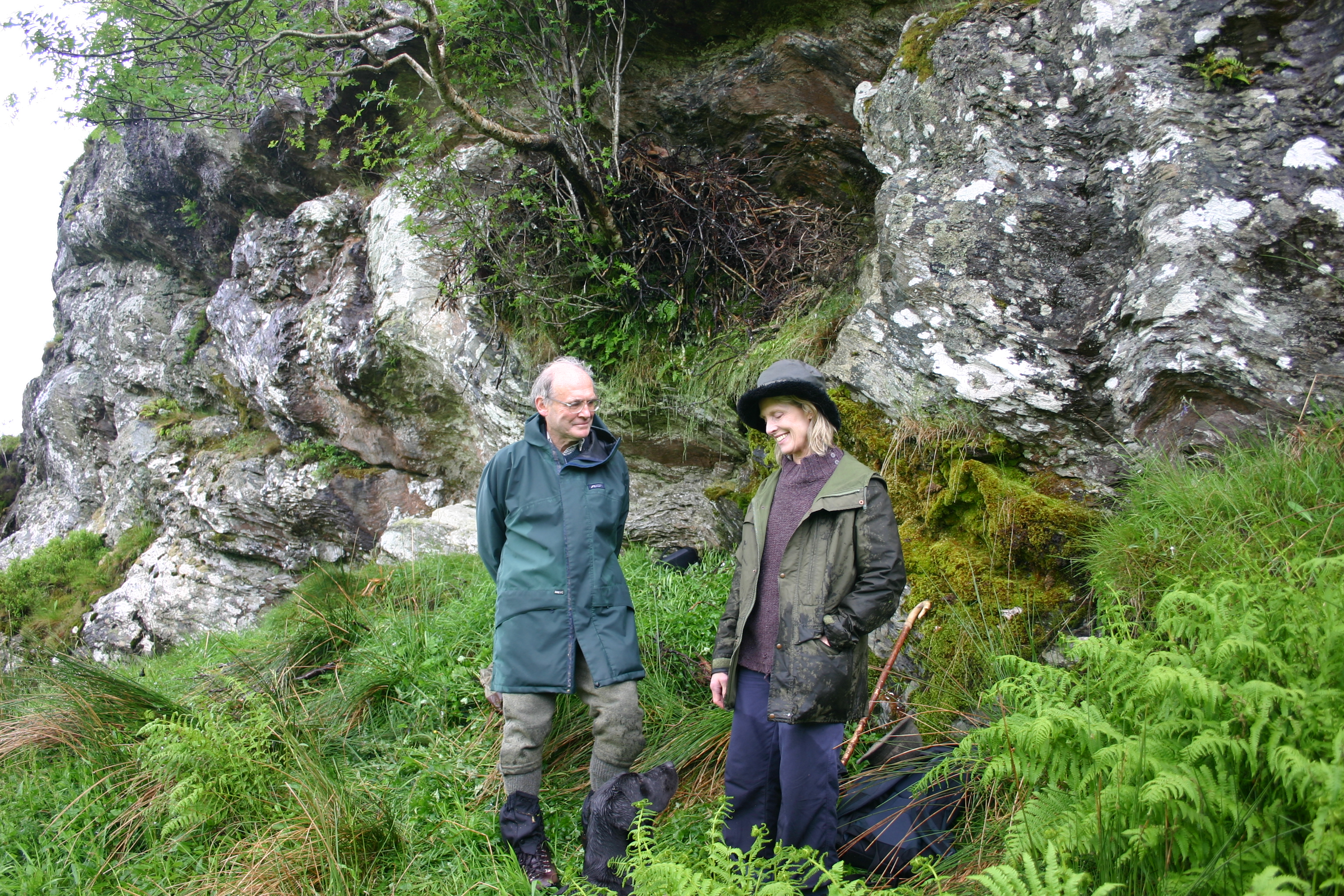
Patrick and Sue Stirling-Aird at a Golden Eagle eyrie (Photo by Duncan Orr-Ewing)

The list of important public roles Patrick undertook over many years as the SRSG Secretary are endless. He was a member of the UK Government’s DETR Raptor Working Group from 1995 to 2000. This initiative was set up originally to tackle what was perceived by the then administration as “the raptor problem”. It ended up meeting 25 times and making 25 recommendations for the enhancement of raptor conservation!   Several officials singled out Patrick for special praise for his unstinting contributions to the group.  The DETR RWG Report was a seismic moment for raptor conservation in the UK and included the production of the SRSG document “Counting the Cost” which used SRSG data to highlight the continuing illegal persecution of raptors in Scotland, including around Patrick’s own long term Peregrine study area in Central Scotland – “Human interference apparently affected about one fifth of the peregrine breeding population in central Scotland, 18% less young produced in the years 1981-1996”.

In my own role at RSPB Scotland, we used these Report recommendations in the early 2000s to tackle the Scottish Government to do more for raptor conservation. The formation of the Scottish Raptor Monitoring Scheme, in which Patrick was also instrumental, is one very good example of the report’s outcome.  Licensing of grouse shooting was secured in Scotland in March 2024 to address systemic illegal persecution of raptors associated with this land use, and this is testament to many decades of hard work by a number of key individuals, who could hold the ring and talk authoritatively about raptors.  Patrick played a totemic role in this.   

In his role as SRSG Secretary, Patrick represented the SRSG on the Moorland Forum and the Police Raptor Persecution Priority Delivery Group. His controlled persistence in defence of raptors, and against criminal persecution was unique, using his background training and professionalism as a solicitor to maximum effect. No matter how discordant the voices of the those in denial of raptor persecution, Patrick calmly and robustly spoke up for raptors and SRSG fieldworkers.  Not a lover of the phrase ‘balance’, he warmed to the closing lines of Derek Ratcliffe in his 2003 foreword to ‘Birds of Prey in a Changing Environment’:  “Raptor enthusiasts will have to speak up, and assert their simple conviction that birds of prey are as important as gamebirds or homing pigeons.”  

Patrick has served time on the UK RSPB Council and was previously a member of the RSPB Scottish Advisory Committee. He was also on the Scottish Wildlife Trust Council and a member of the BTO Research & Surveys Committee. We in the SRSG community and his family were all absolutely delighted when Patrick was awarded an MBE in 2005 in the New Year’s Honours list for his services to wildlife conservation and this award was subsequently presented at a ceremony at Holyrood Palace. This demonstrated the high regard with which he was held throughout the conservation and political world.

Duncan Orr-Ewing, Head of Species and Land Management, RSPB Scotland and Chair, Central Scotland Raptor Study Group

NatureScot says “decision in next few weeks” on whether to impose General Licence restriction in relation to shooting & killing of golden eagle Merrick

The Scottish Government’s nature advisory agency, NatureScot, has been now been procrastinating for over 18 months on whether to impose a sanction on an estate in relation to the ‘shooting and killing’ of a sleeping Golden Eagle called Merrick. But apparently a decision is now expected “in the next few weeks”.

Merrick was a young satellite-tagged Golden Eagle, released in south Scotland in 2022 as part of the South Scotland Golden Eagle Project, a lottery-funded conservation initiative which translocated young Golden Eagles from various sites across north Scotland to boost the tiny remnants of the Golden Eagle breeding population in south Scotland that had previously been decimated by illegal persecution and had become isolated by geographic barriers.

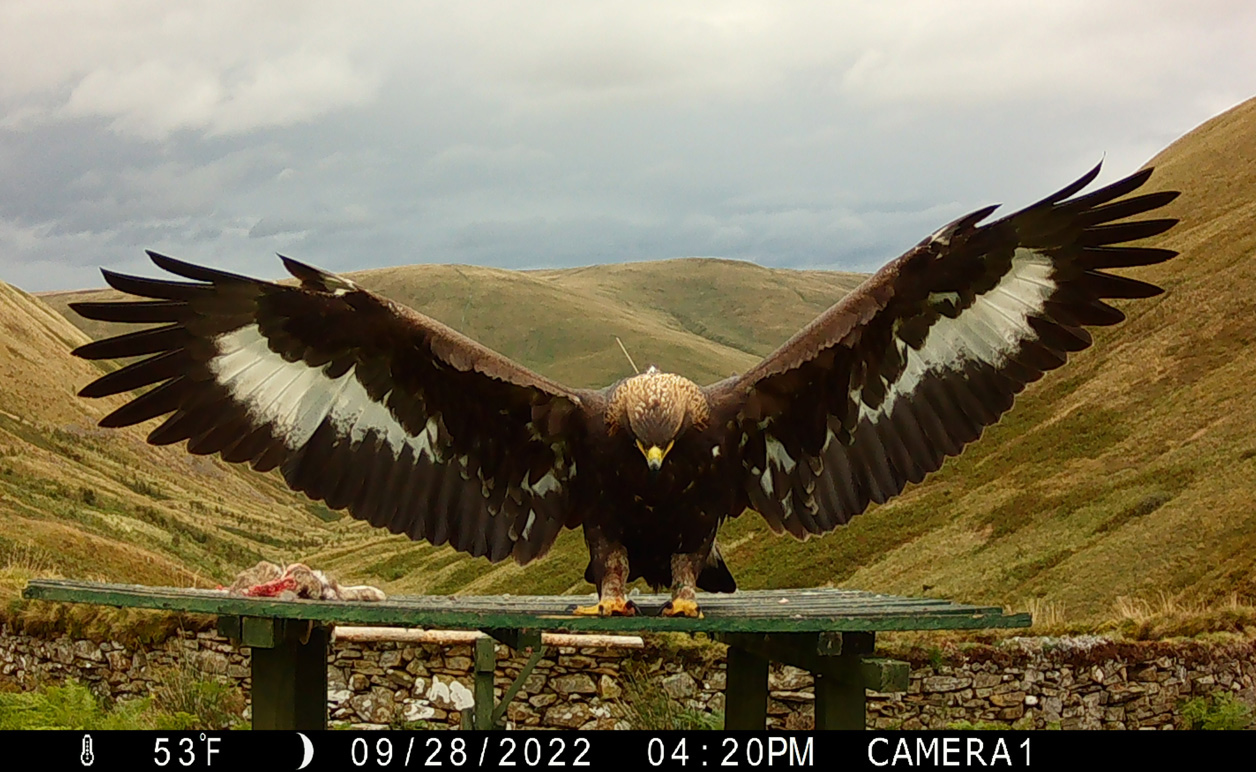
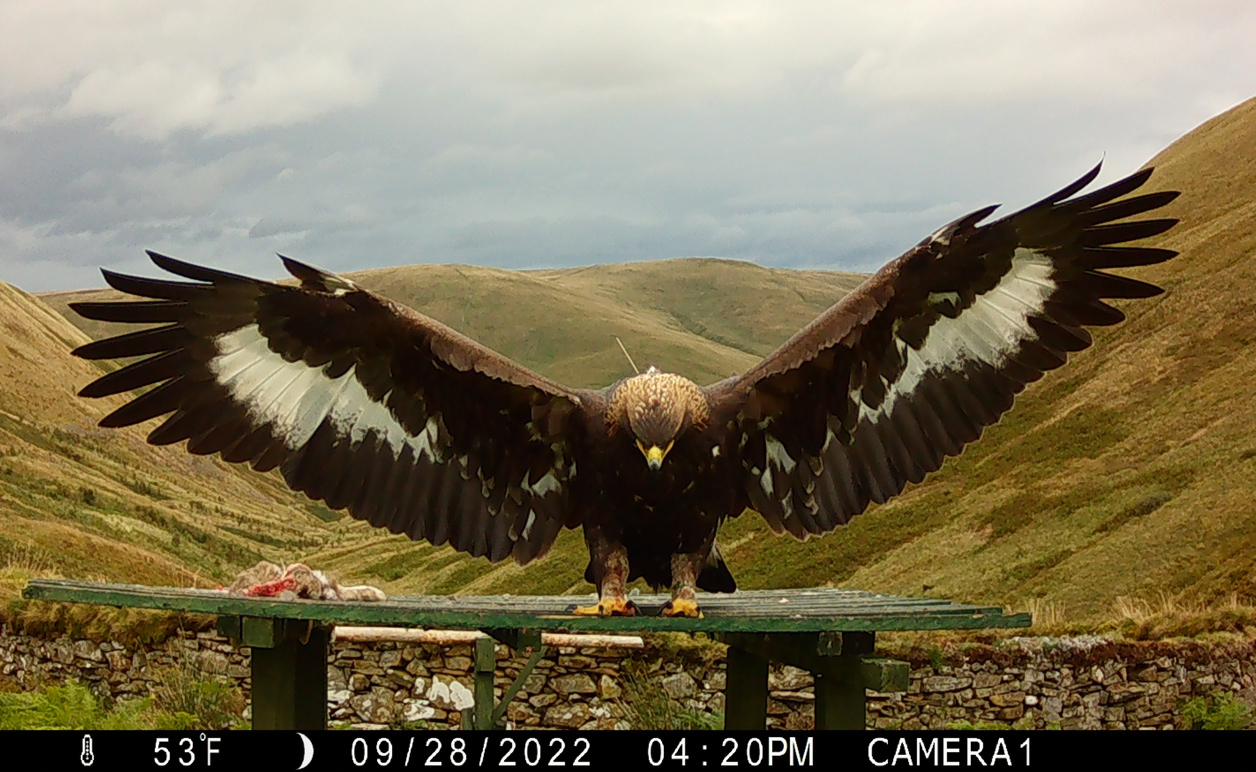
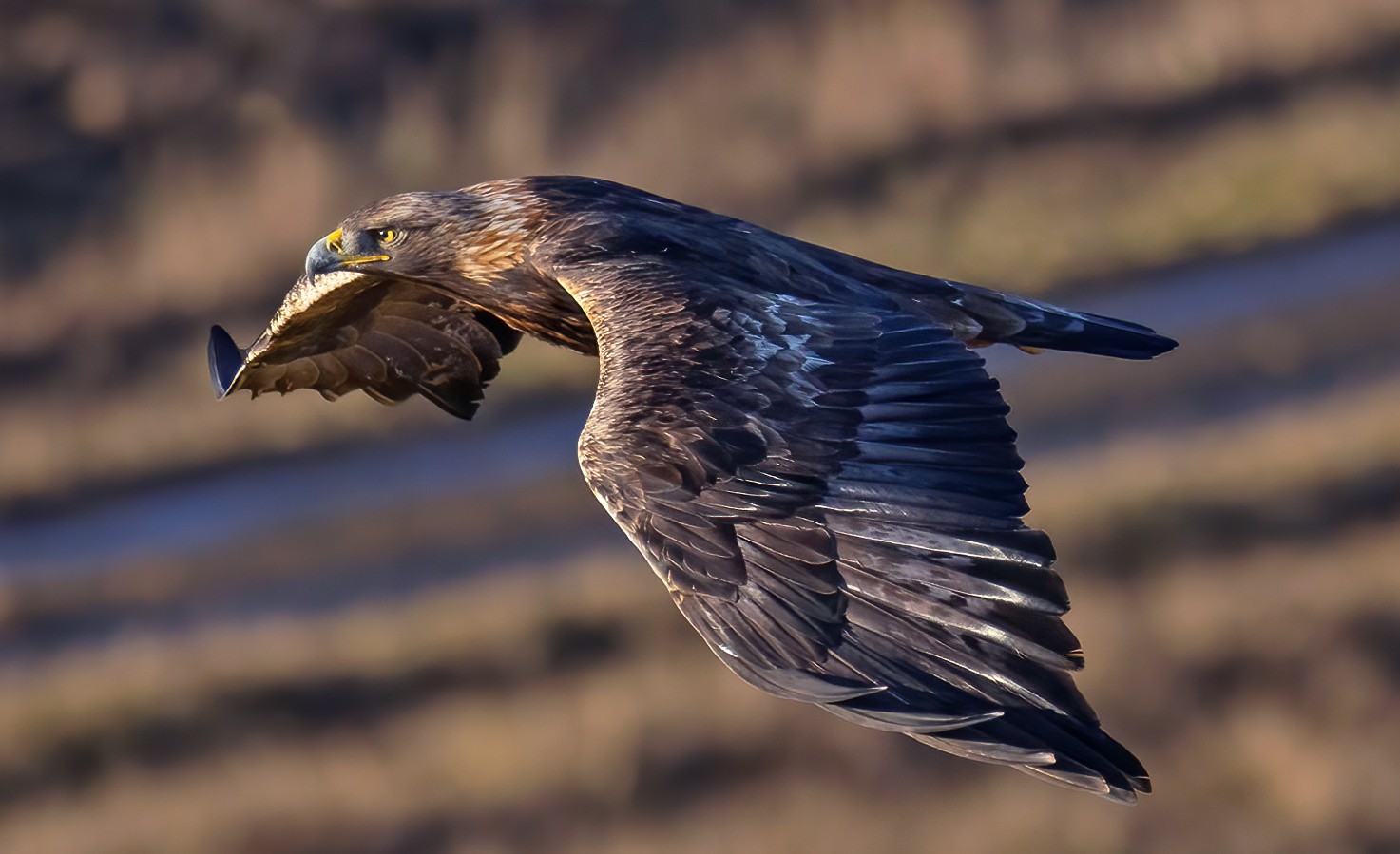
Camera trap photo of golden eagle Merrick in 2022, from South Scotland Golden Eagle Project

A year after her release, which had seen her fly around south Scotland and down into northern England and back, on 12 October 2023 Merrick’s satellite tag suddenly and inexplicably stopped transmitting from a roost site in the Moorfoot Hills in the Scottish Borders where she’d been sleeping overnight.

A project officer from the South Scotland Golden Eagle Project went to her last known location where he found Merrick’s feathers and blood directly below her roost tree. Police Scotland later determined from the evidence that she’d been ‘shot and killed’ and that someone had then ‘removed her body and destroyed her satellite tag’ (see here).

There was limited scope for anyone to be charged and prosecuted for killing this eagle unless someone in the know came forward with sufficient evidence to identify the individual(s) responsible. In addition, the prospect of an estate having its grouse-shooting licence withdrawn as a consequence of this crime was zero, given that this offence took place prior to the enactment of the Wildlife & Muirburn (Scotland) Act 2024, the legislation that introduced grouse moor licensing.

That just left a General Licence restriction as a possible sanction. Not that I’d describe a GL restriction as an effective sanction, for reasons that have been explored previously on this blog (e.g. here and here). Nevertheless, it’s still something and, given the high-profile of Merrick’s death, you might think that making a decision on whether to impose a GL restriction would be a high priority for NatureScot.

Not so.

I wrote about NatureScot’s procrastination on this case in August (see here), after receiving a response to a Freedom of Information request I’d lodged in June 2025. That response confirmed that NatureScot had received an information package from Police Scotland, on which it would base its General Licence restriction decision, in April 2024.

I blogged again in September, highlighting that NatureScot had now procrastinated for 17 months. Unbeknownst to me at the time, that blog prompted two blog readers to write to NatureScot, and one of them lodged a formal complaint against the agency.

Blog reader Stuart Wilson has kindly given permission for me to share the response he received recently from NatureScot in relation to his complaint, which is almost identical to the response blog reader SusanH shared on this blog a few days ago on an unrelated post.

17 months (& waiting) for NatureScot to make decision on General Licence restriction relating to ‘shooting & killing’ of sleeping Golden Eagle called Merrick

The Scottish Government’s nature advisory agency, NatureScot, has been now been procrastinating for 17 months on whether to impose a sanction on an estate in relation to the ‘shooting and killing’ of a sleeping Golden Eagle called Merrick.

Merrick was a young satellite-tagged Golden Eagle, released in south Scotland in 2022 as part of the South Scotland Golden Eagle Project, a lottery-funded conservation initiative which translocated young Golden Eagles from various sites across north Scotland to boost the tiny remnants of the Golden Eagle breeding population in south Scotland that had previously been decimated by illegal persecution and had become isolated by geographic barriers.

Camera trap photo of golden eagle Merrick in 2022, from South Scotland Golden Eagle Project

A year after her release, which had seen her fly around south Scotland and down into northern England and back, on 12 October 2023 Merrick’s satellite tag suddenly and inexplicably stopped transmitting from a roost site in the Moorfoot Hills in the Scottish Borders where she’d been sleeping overnight.

A project officer from the South Scotland Golden Eagle Project went to her last known location where he found Merrick’s feathers and blood directly below her roost tree. Police Scotland later determined from the evidence that she’d been ‘shot and killed’ and that someone had then ‘removed her body and destroyed her satellite tag’ (see here).

There was limited scope for anyone to be charged and prosecuted for killing this eagle unless someone in the know came forward with sufficient evidence to identify the individual(s) responsible. In addition, the prospect of an estate having its grouse-shooting licence withdrawn as a consequence of this crime was zero, given that this offence took place prior to the enactment of the Wildlife & Muirbun (Scotland) Act 2024.

That just left a General Licence restriction as a possible sanction. Not that I’d describe a GL restriction as an effective sanction, for reasons that have been explored previously on this blog (e.g. here and here). Nevertheless, it’s still something and, given the high-profile of Merrick’s death, you might think that making a decision on whether to impose a GL restriction would be a high priority for NatureScot.

I wrote about NatureScot’s procrastination on this case in August (see here), after receiving a response to a Freedom of Information request I’d lodged in June 2025. That response confirmed that NatureScot had received an information package from Police Scotland, on which it would base its GL restriction decision, in April 2024.

Seventeen months on and we’re now at the end of September 2025 and there’s still no sign of a decision from NatureScot.

What’s the hold up? Why hasn’t this decision been a priority for NatureScot?

What sort of message does NatureScot’s procrastination send out to others who might be thinking of ‘getting rid’ of a Golden Eagle in south Scotland, or any other part of Scotland for that matter?

The consequences became very clear yesterday when it was announced that two more satellite-tagged Golden Eagles from the South Scotland project had ‘disappeared’ in suspicious circumstances.

Two Golden Eagles ‘disappear’ in south Scotland – Police appeal for information

Press release from Police Scotland, 29 September 2025:

APPEAL FOR MISSING GOLDEN EAGLE

Detectives are appealing for information after a satellite-tagged golden eagle disappeared in the hills to the north of Langholm.

The tag on Tarras, a four-year-old male golden eagle, has displayed suspicious patterns and data reports, and officers are concerned he may have come to harm between Wednesday, 27 August, 2025 and Friday, 29 August, 2025.

A full search of the area where his tag last transmitted has been carried out using specialist resources, including dogs trained in tracing birds and their tags, however neither the bird nor the satellite tag have been recovered.

Tarras was translocated to the area in 2021 as part of the South of Scotland Golden Eagle Project.

Officers and wildlife partners have subsequently been unable to trace his mate, Wren. Although there is nothing to suggest she has come to harm, her disappearance coincides with that of Tarras and concerns are growing for her welfare.

Golden Eagles. Photo by Pete Walkden

Detective Sergeant David Lynn, National Wildlife Crime Coordinator, said: “The data received from Tarras’ tag suggests that he has come to harm to the north of Langholm and efforts remain ongoing to locate him and his tag.

We cannot say for certain that Wren has also come to harm, but her disappearance is worrying.

Our investigation remains ongoing, and we are working with a range of partner agencies to establish more details around the disappearance of both birds.

I would urge anyone with any information that may assist to contact us.”

Anyone with any information should call 101, quoting reference number 1987 of Friday, 26 September, 2025. Alternatively, please contact Crimestoppers though 0800 555 111, where anonymity can be maintained.

ENDS

There’s quite a bit of information missing from this press release, just as there was from the other recent press release about the poisoned Red Kite found in Perthshire.

This was a satellite-tagged territorial pair so the sudden disappearance of both of them at the same time is highly suspicious.

Why isn’t there any information provided about their last known positions according to their tag data? A police search has already taken place, so it’s not as though naming the location would provide a suspect with a chance of hiding or removing evidence.

It’d be very interesting to know the proximity of the nearest Red-legged Partridge release pen to the eagles’ last known locations…

Chick success after translocated Golden Eagle breeds with one of ‘our’ wild satellite-tagged birds in south Scotland

One of the translocated Golden Eagles in southern Scotland has bred with one of ‘our’ wild satellite-tagged eagles, resulting in the successful fledging of a male eaglet.

This is the first fledging event from a nest of one of the translocated eagles and marks a major milestone for the South Scotland Golden Eagle Project.

The chick has been named ‘Princeling’ by Sir David Attenborough.

Golden Eagle chick ‘Princeling’ having a satellite tag fitted (Photo copyright Ian Georgeson)

The breeding pair got together in 2024 and built up a nest but didn’t breed. That’s not unusual behaviour for young Golden Eagles who can take up to six years to mature, although in areas where there’s little competition for territories (e.g. through depletion of the population by persecution, as in south Scotland), breeding can happen much earlier.

Emma, the female, had been translocated to south Scotland in 2021 and was named by the Scottish Government’s then Biodiversity Minister, Lorna Slater MSP, in memory of the women’s rights and equality advocate, Emma Ritch.

Keith, the male, fledged from a wild nest in Dumfries & Galloway in 2018 and was named Keith after a member of the local Raptor Study Group. He was satellite-tagged as part of a project run by RPUK and Chris Packham in association with experts from the Scottish Raptor Study Group and we’ve been tracking his movements ever since.

Here he is prior to fledging in 2018 (Keith is on the right, one of his parents on the left). This is footage from a nest camera which are routinely installed (under licence) at nest sites to help researchers monitor young eagles after they’ve been fitted with a satellite tag to ensure the tag/harness is not causing any health or welfare issues.

Photo copyright Scottish Raptor Study Group

After dispersing from his natal territory in November 2018, Keith hung around in Dumfries & Galloway for a few months before then suddenly making a beeline for the border and in to England. He stayed in Northumberland for a while (and was joined by at least one other tagged Golden Eagle that had been translocated to south Scotland) before heading back in to Scotland and heading over to his old haunts in SW Scotland before eventually finding his own territory and settling there in October 2023.

After their unsuccessful breeding attempt in spring 2024, Keith and Emma were photographed together in October 2024 on a camera trap at a food platform provided by the South Scotland Golden Eagle Project. They looked to be in excellent condition:

Keith on the right, with the much larger female Emma. Photo copyright South Scotland Golden Eagle Project

The location of their successful breeding attempt this year has had to remain a secret because, as we’ve seen, (here and here) Golden Eagles, along with many other raptor species, still face the threat of illegal persecution in this region and beyond.

New BBC documentary provides shocking insight into appalling crimes on Auch Estate, Bridge of Orchy

A new BBC documentary aired last night that charts the police investigation into a missing charity cyclist, Tony Parsons, who vanished at the Bridge of Orchy in 2017 and whose remains were found three years later buried in a stink pit on the Auch Estate.

The programme follows the criminal trial of twin brothers Alexander (Sandy) and Robert McKellar from the Auch Estate, initially charged with murder but in 2023 Alexander was eventually convicted for the lesser offence of culpable homicide and Robert for attempting to defeat the ends of justice.

This case was of interest to me because the Auch Estate was at the centre of another criminal investigation in 2009 after walkers discovered a dead Golden Eagle. Tests revealed it had been illegally poisoned with the banned pesticide Carbofuran.

In 2012 Auch Estate farm manager Tom McKellar was convicted and fined £1,200 for possession of Carbofuran (not for poisoning the eagle, even though he had reportedly admitted during interview of putting out poisoned baits). He was also found to be in possession of two unlicensed handguns but instead of receiving a mandatory five-year custodial sentence he was given a 300-hour community service order.

From the Guardian, June 2009

The new BBC documentary provides a fascinating insight into the difficulties of investigating serious crime on a remote rural estate and the parallels with investigations into illegal raptor persecution in these glens will not be lost on blog readers. The ease with which the McKellar twins could hide their appalling crimes for so long is sobering.

The two-episode programme is available on BBC iPlayer (Murder Case: The Vanishing Cyclist).

UPDATE 6 May 2026: ‘Should I Marry a Murderer?’ New Netflix documentary provides sobering insight into brutal killing and burial of charity cyclist Tony Parsons by McKellar twins at Auch Estate, Glen Orchy (here)

16 months (& waiting) for NatureScot to make decision on General Licence restriction relating to ‘shooting & killing’ of sleeping Golden Eagle called Merrick

Documents released under a Freedom of Information request show that the Scottish Government’s nature advisory agency, NatureScot, has been procrastinating for 16 months on whether to impose a sanction on an estate in relation to the ‘shooting and killing’ of a sleeping Golden Eagle called Merrick.

Merrick was a young satellite-tagged Golden Eagle, released in south Scotland in 2022 as part of the South Scotland Golden Eagle Project, a lottery-funded conservation initiative which translocated young Golden Eagles from various sites across north Scotland to boost the tiny remnants of the Golden Eagle breeding population in south Scotland that had previously been decimated by illegal persecution and had become isolated by geographic barriers.

Camera trap photo of golden eagle Merrick in 2022, from South Scotland Golden Eagle Project

A year after her release, which had seen her fly around south Scotland and down into northern England and back, on 12 October 2023 Merrick’s satellite tag suddenly and inexplicably stopped transmitting from a roost site in the Moorfoot Hills in the Scottish Borders where she’d been sleeping overnight.

A project officer from the South Scotland Golden Eagle Project went to her last known location where he found Merrick’s feathers and blood directly below her roost tree. Police Scotland later determined from the evidence that she’d been ‘shot and killed’ and that someone had then ‘removed her body and destroyed her satellite tag’ (see here).

Evidence from the crime scene – photo via South Scotland Golden Eagle Project

As with every single other case of satellite-tagged Golden Eagles whose transmitters had suddenly stopped sending data and who seemingly vanished in to thin air (a Scottish Government-commissioned report in 2017 showed that almost one third of 131 satellite-tagged Golden Eagles had disappeared in such circumstances, most of them on or close to driven grouse moors), the person(s) responsible for ‘shooting and killing’ Merrick and then disposing of her body and her satellite tag was not arrested, charged or prosecuted.

It was this lack of enforcement, largely due to the difficulties of identifying the actual individuals responsible and securing sufficient evidence to meet the threshold for a criminal prosecution, that led to the Scottish Parliament voting to pass the Wildlife Management and Muirburn (Scotland) Act 2024, which introduced grouse moor licences that could be withdrawn by NatureScot if gamekeepers and/or estates were found, based on the lower burden of civil proof (the balance of probability), to have been involved in the illegal killing of birds of prey.

Grouse moor licensing hadn’t been introduced at the time Merrick was ‘shot and killed’ and can’t be applied retrospectively so in the absence of a grouse shoot licence withdrawal, and the absence of a prosecution, that leaves a General Licence restriction as the only possible sanction that NatureScot could impose.

Not that I’d describe a GL restriction as an effective sanction, for reasons that have been explored previously on this blog (e.g. here and here). Nevertheless, it’s still something and, given the high-profile of Merrick’s death, you might think that making a decision on whether to impose a GL restriction would be a high priority for NatureScot.

But apparently, it’s not.

In June this year, I submitted an FoI to NatureScot to find out what was happening in relation to this potential GL restriction, as we head towards the two-year anniversary of Merrick’s killing. NatureScot replied in July with this:

We have received an information package from Police Scotland to this case, and it is currently under consideration‘ (see here for earlier blog).

I submitted another FoI in July and asked Naturescot:

Please can you advise the date on which NatureScot received the information package from Police Scotland?‘.

NatureScot responded this month, as follows:

We can confirm that we received an initial information package from Police Scotland on 18 April 2024, then additional information on 3 May 2024‘.

April 2024?? That’s 16 months (and counting) that NatureScot has been procrastinating on this. It hardly inspires confidence, does it?

And the shooting and killing of a sleeping Golden Eagle isn’t the only raptor persecution case that’s awaiting a potential GL restriction decision. There are at least two others that I’m aware of – I’ll write about those in a separate blog because the cause of the delays in those two cases appears to lie at the feet of Police Scotland.

UPDATE 30 September 2025: 17 months (&waiting) for NatureScot to make decision on General Licence restriction relating to ‘shooting & killing’ of a sleeping Golden Eagle called Merrick (here)

General Licence restriction ‘under consideration’ in relation to shooting & killing of Golden Eagle ‘Merrick’ in south Scotland

I’m sure many of you remember the young, satellite-tagged Golden Eagle called ‘Merrick’.

She was part of the South Scotland Golden Eagle Project, a lottery-funded conservation initiative which translocated young Golden Eagles from various sites across north Scotland to boost the tiny remnants of the Golden Eagle breeding population in south Scotland that had previously been decimated by illegal persecution and become isolated by geographic barriers.

Camera trap photo of golden eagle Merrick in 2022, from South Scotland Golden Eagle Project

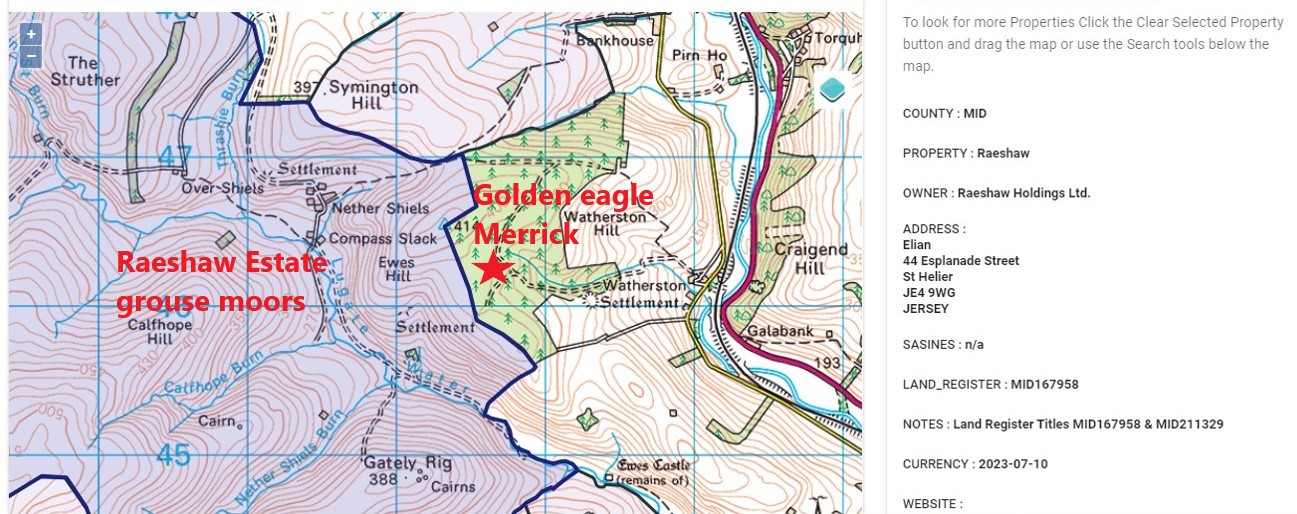
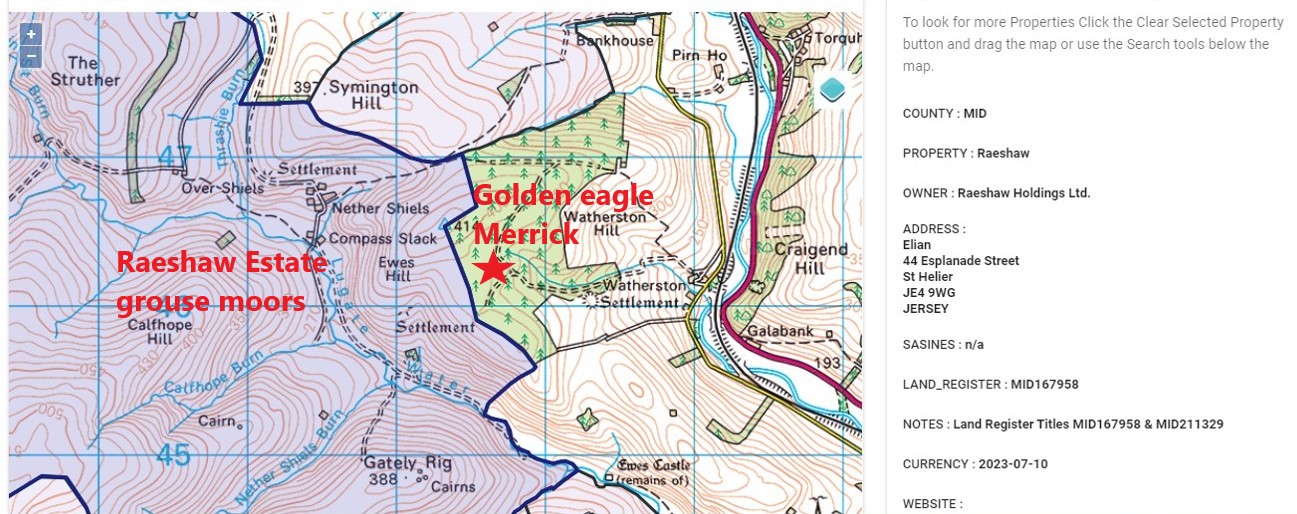
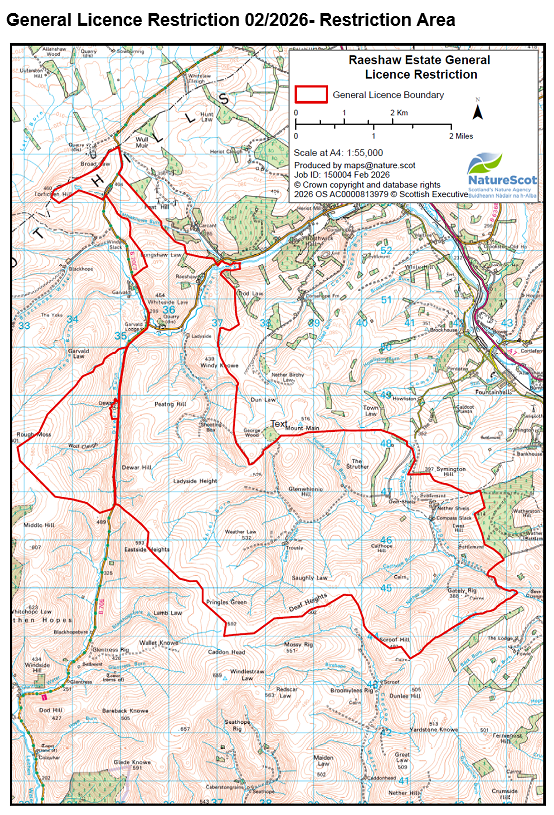
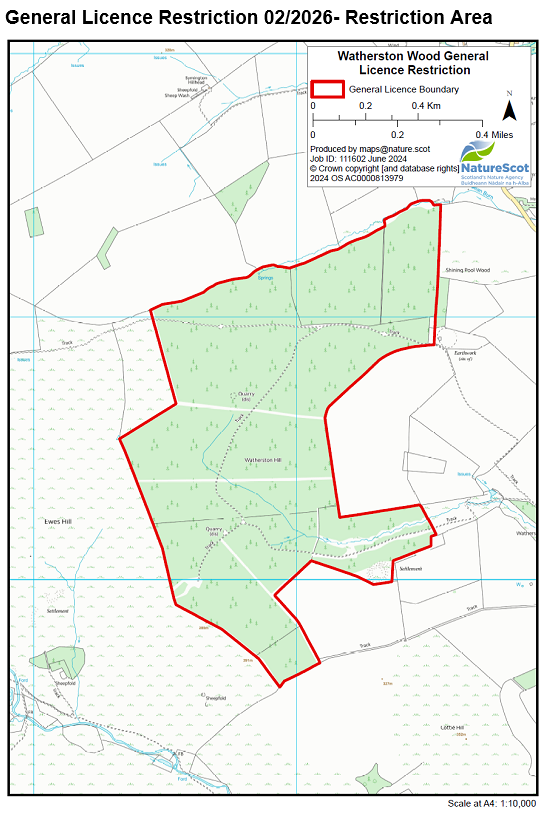
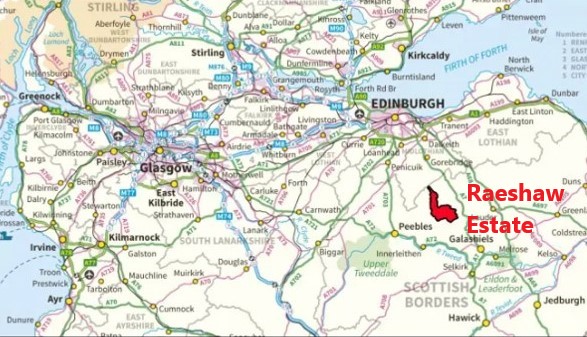
Merrick hit the headlines in autumn 2023 when her satellite tag suddenly and inexplicitly stopped transmitting on 12 October 2023 at a location in the area to the west of Fountainhall, between Heriot and Stow, close to the boundary of the Raeshaw Estate in the Scottish Borders.

Police Scotland issued an appeal for information in November 2023 in which they stated they believed Merrick ‘had come to harm’ but no further details were provided at that time.

We didn’t hear anything more for another six months but then in May 2024 the South Scotland Golden Eagle Project issued a press release that revealed evidence from the crime scene that led Police Scotland to believe that Merrick had been ‘shot and killed’, whilst she was sleeping in a tree, and that someone had then ‘removed her body and destroyed her satellite tag’ (see here).

The criminal who shot Merrick as she slept has not been arrested or charged. It’s the same old story – insufficient evidence to identify an individual and so whoever killed this eagle escapes without consequence, just like every single other eagle-killer in Scotland. Not one of them has ever been convicted.

New legislation was supposed to address this failure with the introduction of the Wildlife Management and Muirburn (Scotland) Act, whereby a grouse-shooting licence could be revoked in circumstances where, on the balance of probability, a crime was considered to have taken place where land was being managed for grouse shooting, but at the time of Merrick’s shooting this legislation wasn’t yet in place and can’t be applied retrospectively.

That just leaves a General Licence restriction as the only potential ‘sanction’ in this case, not that I’d describe a GL restriction as an effective sanction, for reasons that have been explored previously on this blog (e.g. here and here). Nevertheless, it’s still something.

As we head towards the two-year anniversary of Merrick being shot and killed, I wanted to know whether NatureScot had considered a General Licence restriction in this case, either on the land where Merrick was believed to have been shot or on land nearby. It was rumoured that this was under consideration over a year ago in June/July 2024 but I hadn’t seen any restriction notice so in June this year, I submitted an FoI to NatureScot to find out what the status was.

NatureScot replied to me on 21 July 2025 with this:

We have received an information package from Police Scotland to this case, and it is currently under consideration‘.

Tellingly, NatureScot didn’t elaborate on how long this decision had been under consideration so I’ve since submitted a further FoI request to find out on what date NatureScot received the ‘evidence package’ from Police Scotland which would allow NatureScot to begin its deliberations.

I await the response with interest.

UPDATE 11 August 2025: 16 months (& waiting) for NatureScot to make decision on General Licence restriction relating to ‘shooting and killing’ of sleeping Golden Eagle called Merrick (here).

DEFRA endorses Natural England’s recommendations for a presumption AGAINST the issuing of licences for taking wild birds of prey for falconry

Some good news for birds of prey! DEFRA has endorsed Natural England’s recommendations for a presumption AGAINST the issuing of licences for taking birds of prey from the wild for falconry and aviculture.

A licensing policy review was undertaken by Natural England following the furore in 2020 when NE issued licenses for the removal of young peregrines from the wild for a purported captive-breeding programme.

That news had generated heated arguments both for and against the licences, as reported on Mark Avery’s blog (e.g. see herehere and here). In 2022 NE said that although licences had been issued in 2020, ‘the licenses expired earlier this year with no chicks having been taken‘. It’s not clear why the licences weren’t used.

Young peregrines on a nest ledge. Photo by Ruth Tingay (taken under licence)

In 2022, licences to take birds of prey from the wild were temporarily suspended whilst NE began a fairly comprehensive licensing policy review which included a public consultation with wide stakeholder engagement from the falconry and non-falconry communities. Natural England has published links to various reports resulting from the consultation process, here.

The species most frequently mentioned by those wanting to take birds from the wild for falconry purposes were peregrine (58%), sparrowhawk (58%), merlin (22%) and goshawk (10%). One individual falconer respondent mentioned buzzard and golden eagle. However, many falconer and non-falconer respondents considered the latter two species to be unsuitable for inclusion in a future wild take licensing regime. In the case of golden eagles, it was stated that this was due to their rarity in England. Many falconers also considered merlin to be unsuitable for inclusion due to their rarity.

The consultation process included detailed evidence from the National Wildlife Crime Unit (NWCU) about the increase in the legal and illegal trade in peregrines, both for the domestic and international market, and how licensed ‘wild take’ may add to the problem.

Many of you will be familiar with Operation Tantallon, the recent successful multi-agency investigation leading to the subsequent prosecution and conviction of two peregrine launderers in south Scotland who were selling wild Scottish peregrines to wealthy falconers in the Middle East (see here).

The scale of their offending was considerable and I heard at a wildlife crime conference earlier this week that many more cases are currently under investigation as a result of Operation Tantallon.

In October 2023 Natural England’s ‘wild-take’ licensing review came to an end and drew the following conclusions:

  • Wild take is not integral to the present-day practice of falconry or aviculture in England. Few modern falconry texts define falconry as involving the use of ‘wild’ birds of prey and there are limited historical references to the cultural importance of wild take or of  wild-taken birds to British falconers. No clear consensus exists within the falconry community or in the available falconry literature regarding the cultural importance of wild take as a core aspect of falconry practice.
  • Despite rapid growth in the popularity of falconry in recent decades, the available evidence suggests that there are sufficient birds of the relevant species readily available – via captive populations – to meet current demand. There is no evidence of significant inbreeding risks in these captive populations and captive-bred birds are generally considered to perform to a similar standard as wild birds when used for falconry purposes.
  • Most non-falconers are opposed to licenced wild take on ethical grounds and have concerns regarding the potential impacts of falconry and wild take on the conservation and welfare of the species affected. Both falconers and non-falconers are supportive of additional measures to ensure that individuals keeping birds of prey have suitable experience in caring for such birds.
  • Few respondents to the public call for evidence expressed a desire to gain commercially from wild take. However, risks identified relating to the illegal trade in birds of prey nevertheless suggest a need for strict controls on commercial use of such birds alongside improved traceability and other measures to be taken forwards by the responsible agencies. Difficulties in tracing individual birds under current arrangements mean there is a credible risk that the offspring of a wild bird taken under licence could be illegally laundered via commercial breeding operations into the domestic and international trade.

On the basis of the above conclusions, Natural England put forward the following recommendations to DEFRA in late 2023 and advised that a clear policy statement should be published for England setting out the following:

  • That licences permitting the wild take of native birds of prey for falconry or avicultural purposes should not be issued other than in exceptional circumstances;
  • That the commercial use of native birds of prey taken from the wild under a licence issued for falconry or avicultural purposes – and any offspring of such birds –should not be permitted other than in exceptional circumstances; and,
  • That the power to grant licences remains on statute, with the adopted policy (as above) subject to future evidence-based review as required.

These are the recommendations that DEFRA has now endorsed and has implemented the policy of a presumption AGAINST issuing licences to take wild birds of prey for falconry and aviculture.

Natural England has stated that, ‘Whilst the power to grant licences will remain on statute, Defra ministers support the view that licences should not be issued, other than in exceptional circumstances. No evidence was provided during the review process that would support the issuing of licences for any specific exceptional circumstances at the present time‘.

There’s a useful Natural England blog on the subject, here.

For those interested in Natural England’s policy review, it can be read/downloaded here:

From my personal point of view, this is an excellent decision and is good news for birds of prey in England.

I’ve previously outlined my reasons, here.

50,000 people support the Northern Ireland Raptor Study Group’s petition to ban possession of dangerous, raptor-killing pesticides

Many, many thanks to all of you who signed the Northern Ireland Raptor Study Group’s (NIRSG) petition calling for a ban on the possession of dangerous, raptor-killing pesticides.

The petition has just passed its target of 50,000 signatures and the NIRSG has issued the following press release:

The NIRSG held a recent Raptor Conference which provided incredible insights into a range of topics locally and globally. Many of the talks raised a consistent theme of targeted persecution of birds of prey. Not least amongst these was the on-going issue in Northern Ireland of the Possession of Dangerous pesticides.

Some of the NIRSG 2025 conference attendees supporting the call for a ban on dangerous, raptor-killing pesticides. Photo by Marc Ruddock

The NIRSG highlighted that 63 raptors have been killed between 2009 and 2023 with a range of poisons, dominated by Carbofuran which has been banned for nearly 25 years. There have been at least 30 buzzards, 16 peregrine falcons, 13 red kites, 3 white tailed eagles and 1 golden eagle all poisoned in this time frame.

This evidence is collated by the Partnership for Action Against Wildlife Crime in Northern Ireland (PAW NI) and published in raptor persecution reports, which include ‘hotspots’ of illegal killing of our native birds of prey. These reports are publicly available on the PAWNI webpage available here and also aggregated in the RSPB Bird Crime reports available here.

In 2011, the wildlife legislation in Northern Ireland was strengthened, resulting in increased sentences of £5,000 fines (per offence) and up to 6 months imprisonment. The updated laws included a provision to ban the possession of prescribed ingredients under “Section 15B Possession of pesticides harmful to wildlife” of the Wildlife (Northern Ireland) Order 1985 as amended.

As part of that legislation there should have been an attached Order listing the banned chemicals. That list has never been created. Wildlife has continued to be poisoned by these dangerous and banned substances.

The legislation states in Section 15B Part 2: “A prescribed ingredient is one which is prescribed for the purposes of this Article by an order made by the Department; but the Department may not make an order under this Article unless it is satisfied that it is necessary or expedient to do so in the interests of protecting wild birds or wild animals from harm”. [Emphasis added by NIRSG]

There is significant evidence of continued harm from banned pesticides to birds of prey, based on robust post-mortem and laboratory results, which has been published in many reports. We believe it is indeed expedient for Minister Andrew to implement this Order to protect our birds of prey from harm. 50,000 people agree with us. Thank you to everyone who has supported the petition and helped give a voice to our wildlife.

The NIRSG will be seeking a meeting with Minister Andrew Muir to present the petition now that it has surpassed 50,000 signatures.   

ENDS