
A new report reviewing the current use of spring traps in England has been published by the National Anti Snaring Campaign (NASC) group.
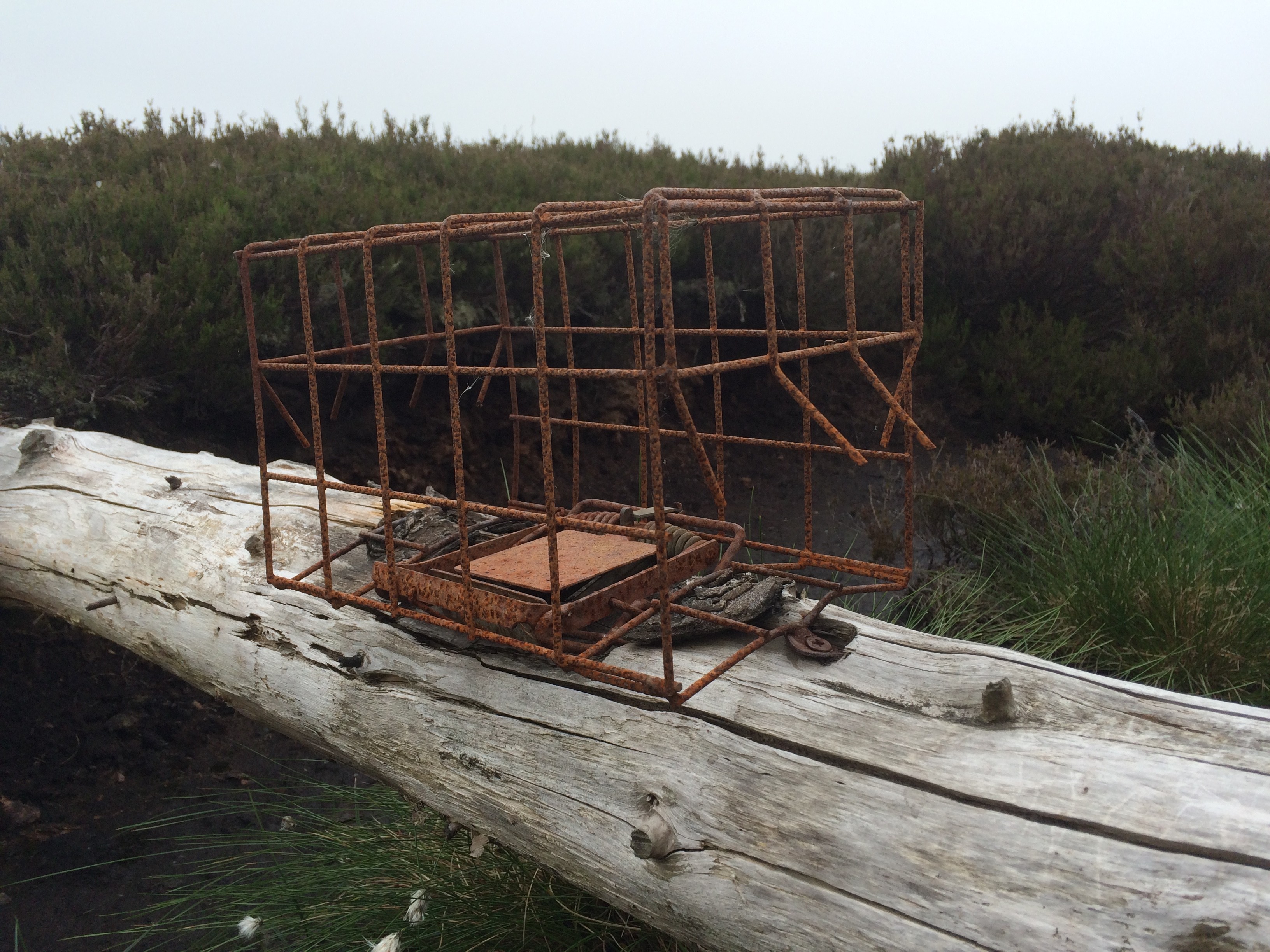
Authored by Professor Stephen Harris, the report was commissioned as a direct response to Defra’s Animal Welfare Strategy, which was announced in December 2025, laying out the Westminster Government’s priorities and a framework for the changes it seeks to achieve by 2030. Those priorities include a ban on snares, a ban on trail hunting, and a review on traps and gamebird rearing (see here).
Thousands of traps are used in the countryside to kill so-called ‘vermin’, and they’re particularly common on driven grouse moors, where the intention is to protect grouse stocks from predation.
There have long been concerns about the animal welfare aspects of traps, particularly spring traps, and that includes traps that have been set legally, as well as those that have been deliberately (and illegally) mis-used to kill non-target species, including raptors (see here for many previous blog entries on this subject).
New legislation in 2020 was intended to counter the inhumane trapping of some species, particularly Stoats, although the subsequent new-design spring traps are still a cause for concern (e.g. see here).
The new report on spring traps in England is comprehensive and includes a review on current use, welfare implications and legislation. NASC has sent a copy of it to Defra to help inform policy.
The report is available to read / download here:
 Raptor Persecution UK
These abhorrent, sadistic spring traps should be banned permanently.
Supposedly used in the countryside to kill so-called ‘vermin’, and just as likely any other animal that suffers its fate getting caught in one, being particularly common on driven grouse moors, where the intention is to protect grouse stocks from predation: more likely their huge profits from the shooting fraternity is their biggest worry.
Just ban grouse moor shoots. That would then, hopefully, end the need for these monstrous traps
Very unfortunately, that is unlikely to happen because, as my MP told me, it brings much needed income into rural areas and provides jobs, believe that as you may but that’s what we’re up against
Hi. I used to live between Grewelthorpe and Ilton in Nidderdale. Ive destroyed many of these traps on the Swinton estate moors and other neighbouring moors too. Vile. Iain
[Ed: Blog readers need to be aware that destroying a legally-set trap could constitute an offence of criminal damage. Indeed in Scotland, this is now a specific offence under the Wildlife Management & Muirburn Act 2024. There are several defences available but these are specific to the individual circumstances – destroying a trap just because you don’t agree with its use is not viewed as a “reasonable excuse”/defence].
My personal opinion, don’t damage traps or do anything illegal, or alert anyone to your visits. Just keep an eye on them. Trapping routes (done usually on the quad bike) follow the same basic network of tracks and estate roads where a lot more of the legal AND illegal stuff occurs. There is more value in gathering knowledge than costing them a few quid to replace traps and giving them easy PR. I know for a fact that keepers really hate the sense that someone is sometimes knocking about – losing that sense of complete god like omnipotence over “their” ground – and this forces them to work harder and at more anti-social hours / with expensive technology to do the necessary bad stuff.
Stoat trapping can be justified – on some scale, in some places. To debate and understand whether or not it is justifiable on the scale it occurs on grouse moors is another matter. I have my own views, but never mind them.
How does someone new to the topic or unfamiliar with grouse moors form an opinion? If they go online they will see the Regional Moorland Groups constantly extolling the virtues of “predator control” with regard to “red listed waders” (obscuring the fact it is done for the grouse, and other species are lucky incidental beneficiaries). But when someone (not me) asks politely about the numbers of creatures killed each year to produce the results they want – they are brusquely put down with dismissive replies saying such information is commercial intellectual knowledge, etc or similar evasive bullshit.
Then other commentators bash them for being “anti’s”. Accurate information like this needs to be out there – legally – to inform the debates. If the truth – as I believe it – were known, people would get a shock and that IMHO is why they run from this question.
But don’t overlook the fact that they will use the honesty of the RSPB, who publish their lethal control figures annually, as a means to criticise them and pretend that they are being hypocritical. Obviously, anybody involved in genuine conservation, not forcing the overpopulation of Red Grouse so that they need constant medication and their faux conservation designed to do one thing: maximise the birds to be shot, knows that some lethal control can be necessary. The difference being that the hunting and shooting set use it as standard practice, without bothering to take alternative measures first, whereas the RSPB, and Wildlife Trusts, use it as a last resort and are honest about it, and everything they do is within the law. Again, unlike the members of the hunting and shooting set.