Parliamentary reception for group promoting wildlife criminal

Yesterday we blogged about the launch of the Scottish Country Sports Tourism Group’s new initiative, Game for Growth, aimed at promoting the value of country sports to the Scottish economy (see here).

We mentioned that Andy Wightman MSP had lodged a Parliamentary Question asking whether public funds (via VisitScotland as part of the Game for Growth initiative) had been given to the owners or managers of landholdings where wildlife crime had taken place.

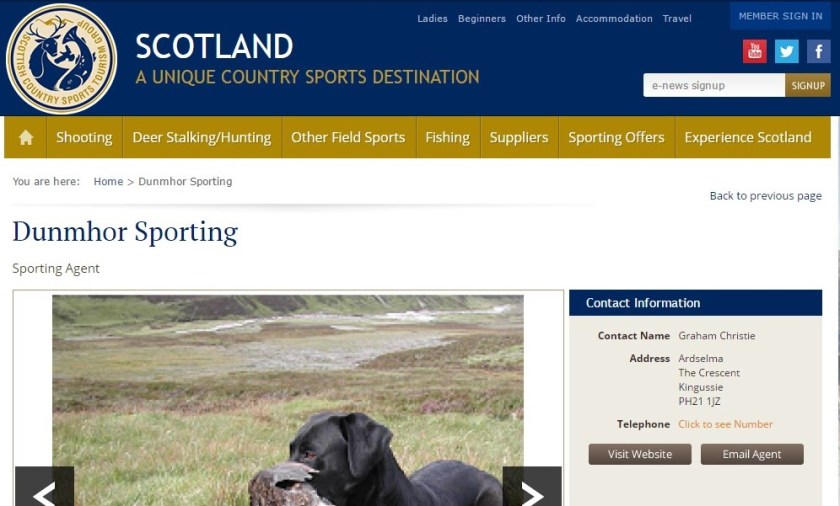
We also mentioned our surprise that the Scottish Country Sports Tourism Group’s website is promoting a sporting agent with a current conviction for raptor persecution.

What we didn’t mention was that the launch of the Game for Growth initiative took place at a prestigious parliamentary reception at Holyrood on 20 December 2016, with wide media coverage.

This parliamentary reception was hosted by Edward Mountain MSP (Conservative, Highlands & Islands) and included speeches from Malcolm Roughead, Chief Exec of VisitScotland, and Cabinet Secretary for Rural Economy & Connectivity, Fergus Ewing MSP.

The revelation that the Scottish Country Sports Tourism Group is actively promoting a convicted wildlife criminal will probably be a surprise to Edward Mountain MSP, and undoubtedly a source of deep embarrassment; he surely wouldn’t have hosted them had he known. It’s reasonable to assume he didn’t know because his expertise appears to be in fishing rather than gamebird hunting. Sustainable sport fishing does bring in millions to the rural economy and it isn’t underpinned by wildlife crime, so it’s easy to see why he would lend support to the Game for Growth initiative.

Unfortunately for Edward, as well as the sport fishing industry, the Gift of Grouse is also prominently involved with the Game for Growth initiative (check out that banner in the photo) and this isn’t the first parliamentary reception they’ve been involved with that has led to awkward questions being asked.

We await the Scottish Government’s response to Andy Wightman’s Parliamentary Questions about public funding for wildlife criminals with great interest.

Parliamentary Question: is public money being used to promote wildlife criminals in Scottish shooting sector?

scstg-logoLast week it was announced that the Scottish Country Sports Tourism Group (SCSTG) has plans to boost the value of game shooting, stalking and fishing to the rural economy by £30 million, via its new ‘Game for Growth’ strategy.

The Game for Growth strategy document can be read here: sctsg-game-for-growth-strategy-document-dec-2016

It’s a pretty turgid read, full of tedious marketing soundbites, but basically it sets out how the industry plans to promote Scottish country sports over the next four years to reach a wider national and international market. This will be achieved mostly, it seems, by claiming the industry is sustainable with fabulous conservation benefits and ignoring the vast environmental damage and wildlife crime associated with some activities within this sector.

visit-scotland-1Interestingly, VisitScotland (the national tourism agency linked to the Scottish Government) has apparently committed to boosting the country sports tourism sector and has announced a matched ‘Growth Fund’ to help SCSTG develop its marketing strategy and increase its online presence.

We’re not the only ones to raise an eyebrow at this. Andy Wightman MSP has lodged the following Parliamentary Question about it:

Question S5W-05930: Andy Wightman (Lothian, Scottish Green Party). Date lodged: 22/12/2016

To ask the Scottish Government whether it will provide a breakdown of the recipients of financial contributions from VisitScotland to the strategy, Game for Growth Strategy – Country Sports Tourism in Scotland 2016; what information it has regarding how each recipient will use this; what action it has taken to ensure that no money was provided to the owners or managers of landholdings on which crimes against wildlife have been committed; whether it will publish the strategy on its website, and what aspects of this it is supporting or plans to support with public money.

Expected answer date: 19/01/2017

These are legitimate questions, and especially when you take a closer look at the SCSTG website, which has been developed to connect potential visitors with various country sports providers across Scotland. For example, if you want to pay money to shoot mountain hares in Scotland, you can use the website’s search facility and a number of sporting agents/estates who offer this ‘sport’ will be highlighted.

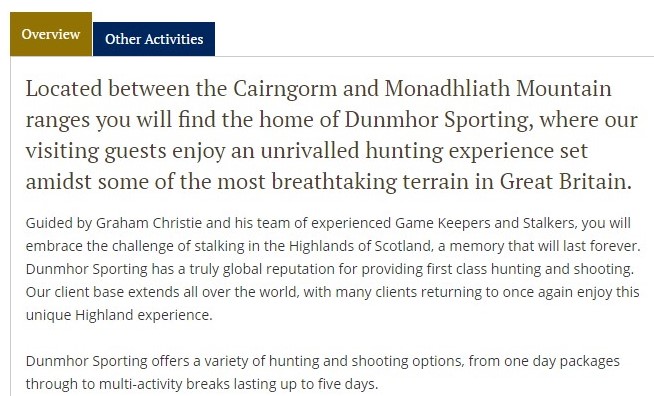
We used the search facility to look for various ‘sporting’ opportunities and were very surprised to find that sporting agency Dunmhor Sporting was being promoted:

Why the surprise? Well, Graham Christie of Dunmhor Sporting was convicted in December last year of being vicariously liable for the criminal actions of his gamekeeper, who had used an illegal gin trap to catch and injure a buzzard on the Cardross Estate.

Why is the Scottish Country Sports Tourism Group promoting an agent who has a current conviction for wildlife crime? And why is VisitScotland providing match funding to an organisation that is promoting a convicted wildlife criminal?

Gamekeepers want sea eagles, kites, buzzards, sparrowhawks & ravens added to General Licences

Further to this morning’s blog about RSPB Scotland’s damning response to SNH’s General Licence consultation (see here), we said we’d write a separate blog about some of the other responses that SNH received.

SNH has now published all the responses, and they’re well worth a read: all-responses-to-snh-general-licence-consultation-2016

There are many organisations and individuals calling for ravens to be added to the General Licences (no surprise) and, yet again, there are a number of requests for buzzards and sparrowhawks to also be added, which would allow these species to be casually killed across Scotland without any monitoring or regulation, although some have suggested these raptors should be on ‘regional’ General Licences to limit the casual killing to a particular area. How thoughtful.

One of the reasons given for adding ravens and buzzards to the General Licences was this: “There are arguably too many of them around and they cloud the skies in our local area“.

Here’s a photograph of some ravens and buzzards clouding the skies:

Actually, this is a photograph (by Richard Barnes) of Dunlin flocking on the coast of North America but it could just as easily be a plague of swarming raptors over a Scottish grouse moor, if you happen to be a pathological raptor hater stuck with an 18th century attitude, that is.

Take a look at the consultation response from Garry MacLennan. Surely not the same Garry MacLennan, Head Gamekeeper at Invermark Estate? Aren’t raptors supposed to be ‘thriving’ there? Perhaps the headline should have read ‘Raptors are thriving on Scottish grouse moors and we want licences to kill them’.

Also have a look at the responses from Iain Hepburn (the same Iain Hepburn as the head gamekeeper at Dunmaglass Estate?), Duncan Mackenzie and Calum Kippen (the same Corrybrough Estate gamekeepers who attended the recent meeting between the Cairngorms National Park Authority & the Scottish Gamekeepers’ Association?). Aren’t these the gamekeepers who want licences to monitor and ring raptors? Don’t they see a bit of a conflict of interest there if they also want licences to kill these raptors?

Best of all though, is the response from Bert Burnett (presumably of the SGA). Bert suggests that ravens should be added to the General Licences and argues that regional general licences “could be rolled out for various species that may start to cause problems like sea eagles and kites etc“. Ah yes, that very serious problem of sea eagles mistaking small children for prey.

Of course, these calls for licences to cull raptors are nothing new. Scottish (and English) gamekeepers and land owners have been asking for these for 20 years (see here, here, here, here, here, here, here). So far, SNH has resisted but given Natural England’s recent capitulation on buzzard-killing licences, how much longer before we see the same in Scotland?

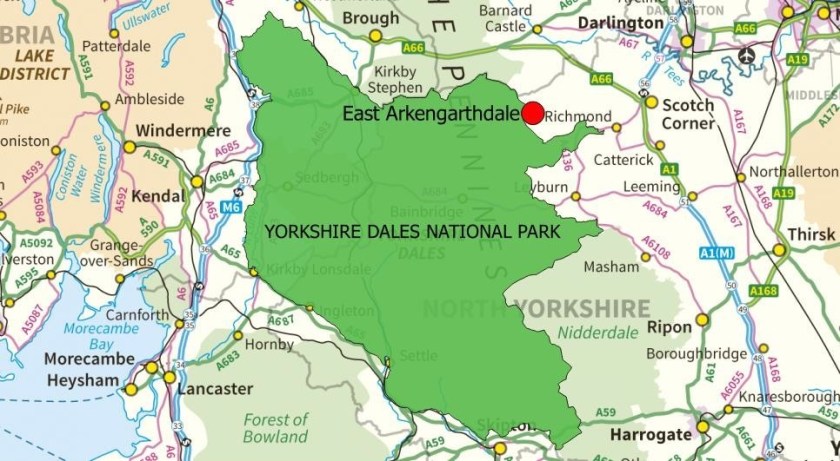
Subsidy penalty for East Arkengarthdale Estate?

Ten days ago we blogged about the RSPB’s Investigations Team finding a buried poisons cache on the East Arkengarthdale Estate in North Yorkshire in 2014 (see here).

east-arkengarthdale

Incredibly, nobody was prosecuted for this illegal stash and, despite the best efforts of North Yorkshire Police, the gamekeeper who had admitted using the poisons cache had his firearms certificates returned.

We asked several organisations within the grouse shooting industry a number of questions about this case (see here) but so far, none of them have said a word about it (in public, at least). We’ll come back to this.

What we’re interested in now is whether the East Arkengarthdale Estate will be the focus of an investigation by DEFRA’s Rural Payments Agency. Did this estate receive any agricultural subsidies in 2014, if so under what scheme(s), and does having confirmation that an estate gamekeeper was using the poisons cache constitute a cross-compliance breach of any of these subsidy schemes, and if so, will the estate receive a subsidy penalty?

According to records at Companies House, East Arkengarthdale Ltd has two Directors: Eric Axel Lennart Torstenson and Mrs Anita Ingrid Linnea Torstenson.

A search of the CAP Payments website shows that EAL Torstenson received the following subsidies in 2014 and 2015:

torstenson-2014-cap-payments

torstenson-2015-cap-payments

These documents show that EAL Torstenson received agricultural subsidies (trading as) Shaw Farm.

According to this 2003 newsletter about a Black Grouse Recovery Project, “Shaw Farm in North Yorkshire is part of the East Arkengarthdale Sporting Estate“.

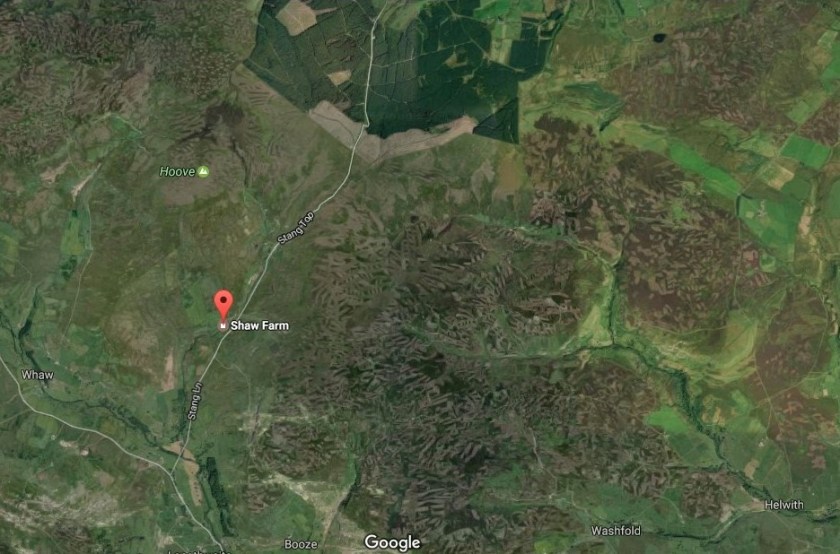
Here’s a map of Shaw Farm, to the west of Hurst Moor where the poisons cache was found:

shaw-farm-map

We’d like to draw the Rural Payments Agency’s attention to this case (because they have a duty to investigate anything that is drawn to their attention so by telling them about it they can’t later claim they didn’t know anything about it) and we’d like them to answer the following questions:

  1. Did the CAP subsidies received by Shaw Farm in 2014 cover the land where the poisons cache was discovered?
  2. If so, does having a poisons cache, administered by a gamekeeper, qualify as a cross-compliance breach?
  3. If so, will the Rural Payments Agency be applying a subsidy penalty?

Emails to: ruralpayments@defra.gsi.gov.uk

Minutes of meeting between Cairngorms National Park Authority & Scottish Gamekeepers’ Association

ALMDLast month we blogged about a comment that had been made during an official meeting between the Cairngorms National Park Authority (CNPA) and the SGA. The comment came from a CNPA Board member (Eleanor Mackintosh) who was advising the gamekeepers to ‘cover up’ dead mountain hares so that photographs of the corpses couldn’t be published on social media (see here).

That meeting between the CNPA and the SGA was triggered by the SGA’s anger over a blog that had been written by Will Boyd Wallis (CNPA’s Head of Land Management & Conservation) in August, where Mr Boyd Wallis had raised legitimate concerns about some aspects of intensive grouse moor management (see here).

The SGA was furious about that CNPA blog, for a number of reasons (see below). The SGA asked for a meeting with the CNPA to discuss these concerns and the meeting was arranged, apparently after the ‘intervention‘ of Fergus Ewing MSP, who is Cabinet Secretary for the Rural Economy & Connectivity, but whose remit does not cover the National Parks (Cabinet Secretary Roseanna Cunningham has responsibility for the National Parks).

Chairman of the SGA, Alex Hogg, wrote to the CNPA requesting a meeting. We got a copy of his letter via an FoI request and here it is: sga-letter-requesting-mtg-with-cnpa-sept-2016

It’s an entertaining read. In it, Alex claims there’s no need for concern about the potential environmental harm of dumping tonnes of medicated grit on to the grouse moors because there’s no scientific evidence to show any damage. He also suggests that if the CNPA was concerned about potential environmental damage then the CNPA would be looking at the issue of dogs and livestock (which have also been wormed) defecating all over the Park. Hmm. If dogs and livestock had been wormed every day with a drug that was 10-20 x the strength permitted for use in the UK, and those piles of faeces were placed at every 100 metres across the grouse moor, for up to eight months of the year, as are piles of medicated grit put out for red grouse, then he might have had a valid point. Unfortunately for Alex, there is growing scientific evidence that the drug used in medicated grit (Flubendazole) is actually highly toxic to some aquatic organisms (e.g. see here) and, given the extent of its use on intensively managed grouse moors, this is exactly why Leeds University is offering a PhD scholarship to examine this issue in more detail (see here).

Anyway, on to the actual meeting itself. This took place on 29 September 2016 at Glenlochy in the National Park (an interesting choice of venue given the raptor persecution crimes that have been recorded in the area). In attendance were several representatives of the CNPA, several from the SGA, including Bert Burnett, some gamekeepers, and local SNP councillor Geva Blackett, who used to work as the SGA’s Parliamentary Officer many moons ago and who is married to Simon Blackett, the (now retired) Estate Factor at Invercauld Estate.

The minutes can be downloaded here: minutes-cnpa-sga-mtg-29-sept-2016

These minutes are well worth a read, not just because they expose the buffoonery of the SGA, but also because they provide an insight to the astonishing display of deference from the CNPA officials towards the SGA.

The meeting covered many topics and we won’t go in to all of them here because you can read them for yourselves and have a good giggle (whatever you do, don’t diss red grouse by calling them willow grouse!). The main thing we want to focus on is the discussion about gamekeepers getting licences to monitor and ring raptors and waders within the National Park.

Geva Blackett is pushing the CNPA to support this idea, and according to Bert Burnett, “no training is needed”. He really doesn’t have a clue, does he?!  The CNPA seems equally as ignorant, claiming that they’d like to support this initiative because they’d like to know about raptor numbers within the Park. Er, have they not heard of the award-winning Scottish Raptor Monitoring Scheme? A multi-partner scheme that holds all the raptor monitoring data collected across Scotland? Apparently not.

What’s even funnier about the SGA’s demands to get licences is that just this week, Bert Burnett and a couple of his cronies (including a convicted falcon thief) have launched a social media campaign designed to portray raptor fieldworkers in a negative light. They’ve trawled the internet and come up with some old photographs of raptor tagging activities (one photo is at least 13 years old!) and have made wholly unsubstantiated allegations about the behaviour of those featured in the photographs (unbeknownst to Bert, one of the photographs is actually from a project in North America, not from Scotland!). Apparently, these nest visits cause birds to desert. Hmm. And the evidence for that is where, exactly?

Bert has also claimed that raptor monitoring, ringing and tagging is “completely unregulated and those doing it are totally non accountable for their actions”. This exposes Bert’s lack of knowledge about the training and qualifications needed for this work, and also his ignorance about the high level of reporting required by the licensing authorities.

Strange, isn’t it, that if Bert thinks all this monitoring and ringing is ‘bad’, that at this meeting with the CNPA he is pushing for gamekeepers to be issued with licences to do the same work!

And if Bert/the SGA and co are so upset about satellite-tagging, why are they not kicking off about the GWCT’s woodcock satellite-tagging project?

And if Bert/the SGA and co are so upset about the ‘welfare’ of satellite-tagged golden eagles, why do we never see them kicking off about eagles that have been found poisoned, shot or trapped on driven grouse moors?

What is obviously going on here is a desperate little smear campaign designed to coincide with the forthcoming review of raptor satellite tag data, as requested by Cabinet Secretary Roseanna Cunningham (see here). This review, due out in the spring, is expected to be damning. We already know that many satellite-tagged raptors ‘disappear’ on grouse moors, and we also know that many satellite-tagged raptors have turned up either poisoned, shot or trapped on grouse moors. This review will pull all of those data together and it is predicted to be a shocking read.

The SGA knows this, hence these latest tactics to try and discredit the raptor workers.

Now, what was it that Tim (Kim) Baynes of the Scottish Moorland Group told that parliamentary committee last week? Ah yes, it was this:

We would very much like to see greater cooperation between ourselves, the Raptor Study Groups and the RSPB“.

It’s pretty clear the SGA has not received this message, or if it has, it’s chosen to ignore it.

But you carry on, Bert, because what you’re doing is political suicide. By asking your cronies to send (no doubt illiterate, baseless rants) to Roseanna Cunningham, complaining about Scottish Raptor Study Group members, she will see that the SGA is trying to undermine her review of the satellite tag data, and she’ll also recognise that the SGA’s claims of ‘partnership working’ with other members of the PAW Raptor Group are nothing more than lip service. PAW partners? Piss-poor partners, more like.

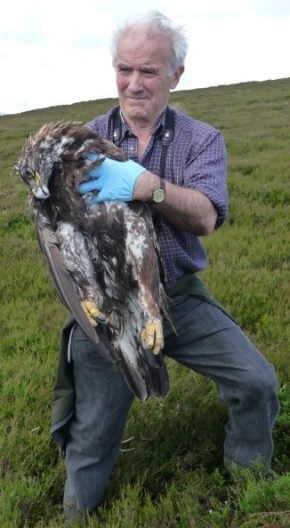
Photograph: dead golden eagle ‘Alma’, found poisoned on a grouse moor on Millden Estate in the Angus Glens. Her corpse was only found because she was wearing a satellite tag, fitted by Scottish Raptor Study Group member and internationally-recognised expert Roy Dennis. It’s no surprise then, that the SGA wants to put a stop to satellite-tagging.

East Arkengarthdale Estate: some questions for the grouse shooting industry

Following on from today’s earlier news that in December 2014 a poisons cache had been uncovered on a driven grouse moor at East Arkengarthdale Estate in Yorkshire, and that a gamekeeper had admitted that he was responsible for placing poisons in the cache, but he avoided prosecution and had his firearms certificates reinstated (see here), we’ve got some questions for the grouse-shooting industry.

arken

Let’s start with questions for the Moorland Association. Email: amanda@moorlandassociation.org

  1. Is East Arkengarthdale Estate a member of the Moorland Association?
  2. When were you first aware of the discovery of this poisons cache, that was found two years ago?
  3. Were you aware of it when you gave evidence at Westminster on the petition to ban driven grouse shooting?
  4. If East Arkengarthdale Estate is a member, will you be expelling them from your organisation?
  5. If not, why not?
  6. Will you be publishing a statement about the discovery of a poisons cache on a driven grouse moor in Yorkshire?
  7. If not, why not?
  8. Will you be praising the superb work of the RSPB Investigations Team for uncovering this poisons cache on a driven grouse moor?
  9. Can you confirm whether Adrian Thornton-Berry, a Moorland Association official, was the sporting agent (via Dalesport Sporting Agency) at East Arkengarthdale Estate in December 2014 when the poisons cache was discovered?
  10. Did Amanda see the poisons cache through her kitchen window?

Questions for the National Gamekeepers’ Organisation. Email: info@nationalgamekeepers.org.uk 

  1. Is this (unnamed) gamekeeper a member of the National Gamekeepers’ Organisation?
  2. If yes, do you intend to expel him from your organisation?
  3. If not, why not?
  4. Could you explain why this gamekeeper had an electronic calling device (typically used to attract predators) with a series of raptor calls stored in it?
  5. Could you explain why this gamekeeper was visiting a poisons cache on a driven grouse moor?
  6. Could you explain why those poisons had been hidden in a bucket, underground?

Questions for the Game & Wildlife Conservation Trust. Email: info@gwct.org.uk

  1. When did you first become aware of the discovery of a poisons cache at East Arkengarthdale Estate?
  2. Were you aware of it when one of your 2014 auction prizes (some driven grouse shooting on 4 Yorkshire grouse moors, including East Arkengarthdale Estate) was fulfilled in October 2015?
  3. Have you received funding/donations from East Arkengarthdale Estate?
  4. Will you be accepting any further funding/donations from East Arkengarthdale Estate in light of today’s news?

Questions for BASC. Email: click here

  1. Why did your senior staff member, Dr Colin Shedden, tell a Scottish parliamentary committee that “any hint of illegal activity can lead to the right to hold a [shotgun] certificate, and the ability to shoot, being withdrawn“, when on the very same day, the BASC Chairman was defending the right of a gamekeeper to keep his shotgun certificate despite him admitting to placing poisons in a secret cache?

Poisons cache found on Yorkshire grouse moor – no prosecution

This just beggars belief.

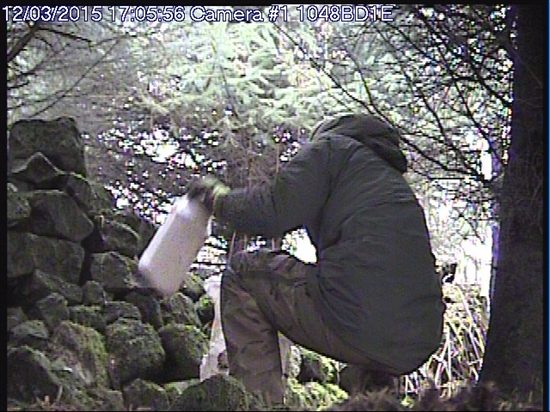
Have a read of this blog (here) written by Senior RSPB Investigations Officer, Guy Shorrock. It tells the story of how he and a colleague discovered a cache of poisons hidden underground in a small forestry plantation on Hurst Moor, a driven grouse moor which forms part of the East Arkengarthdale Estate, just outside the Yorkshire Dales National Park. A suspect was identified from camera footage obtained by the RSPB and North Yorkshire police paid him a visit.

east-arkengarthdale

arken

During that police visit, a number of items were seized including an electronic calling device that contained a series of raptor calls.

Despite the best efforts and intentions of the RSPB investigators, North Yorkshire Police and Natural England, working in some pretty harsh conditions, the Crown Prosecution Service didn’t want to proceed with a prosecution due to some procedural concerns. Nevertheless, North Yorkshire Police seized the gamekeeper’s firearms and revoked his firearms and shotgun certificates. That seemed perfectly reasonable, especially in light of Dr Colin Shedden’s evidence yesterday to a Scottish parliamentary committee that “any hint of illegal activity can lead to the right to hold a [shotgun] certificate, and the ability to shoot, being withdrawn” (see here).

However, the gamekeeper at East Arkengarthdale Estate decided to appeal this decision and get his firearms returned. This was a remarkable move because undoubtedly, the evidence that the police had based their decision upon would now be heard in open court! And indeed, that is what happened yesterday.

According to Guy’s blog, it was apparently accepted in court that this gamekeeper had placed the poisons in that underground stash on that grouse moor. Nevertheless, the judge decided that this gamekeeper could have his firearms returned and his firearms certificates reinstated.

Incredible!

Let’s remind ourselves again of Dr Colin Shedden’s evidence to a parliamentary committee yesterday:

“Shotgun certificate holders are among the most law-abiding sector of society and any hint of illegal activity can lead to the right to hold a certificate, and the ability to shoot, being withdrawn“.

Sorry, Dr Shedden, but the result of yesterday’s court hearing blows the credibility of your evidence right out of the water.

In an ironic twist, Dr Shedden works for BASC. The Arkengarthdale Estate gamekeeper’s defence barrister, Peter Glenser, is also associated with BASC – he’s the current Chairman, having recently been elected following a bit of a fracas at a BASC staff meeting where the police were called in. It struck us as amusing that on the day Dr Shedden is telling a parliamentary committee that shotgun certificate holders are already stringently regulated and their certificates can be revoked “at any hint of illegal activity” (and thus there’s no need for further regulation such as the licensing of gamebird hunting), at the very same time on the very same day, his colleague, Peter Glenser, is defending a gamekeeper’s right to keep his shotgun certificate even after admitting to hiding poisons in a secret cache!

You couldn’t make it up.

Gift of grouse: their propaganda exposed

The Gift of Grouse – a campaign run by the Scottish grouse-shooting industry to promote the so-called ‘benefits’ of driven grouse shooting, have been well and truly caught with their pants down.

(Gift of Grouse for you anagram fans: to fog figures]

Some of you may remember a story from last year, where the Gift of Grouse made great claims about the number of bird species that had been recorded on three driven grouse moors – Invermark & Glenogil (both in the Angus Glens) and Glenturret in Perthshire. We blogged about these claims (here) and have since made repeated requests to see the actual data/reports (as have others – e.g. Andy Wightman here), but all to no avail. The Gift of Grouse refused to publish the reports and instead pointed everyone to a summary, written by The Gift of Grouse and not by the ecological consultants who had conducted the surveys.

Pay attention to some of the specific claims made in that Gift of Grouse summary about the survey undertaken on Invermark Estate:

The consultants “used a variety of techniques to record birds, butterflies, mammals and other species across 80 sq km of upland habitats which are specifically managed for grouse“.

And

“…..with an overall total of 81 bird species recorded as either breeding on the site or using the area as a valuable feeding resource“.

The clear intention from these statements was for people to believe that these three driven grouse moors support a wide range of avian biodiversity.

Indeed, on the back of these apparent survey results, the Gift of Grouse even held a prestigious Parliamentary reception at Holyrood, hosted by Graeme Dey MSP on 23 November 2015,  with wide media coverage, to “celebrate diversity through grouse moor management“.

The Gift of Grouse have been pumping out this so-called success for a year now, and only the other day they referred to these survey results in another press release (here) when they claimed that ‘raptors are thriving on Scottish grouse moors’ – a press release that was dismissed by RSPB Scotland as “a pile of risible, make-believe tosh” (see here).

Well guess what? It turns out that the Gift of Grouse had good reason not to release the actual survey report from Invermark Estate because if they had, their misinterpretation (we’re being kind) of the data would have been exposed.

Unfortunately for the Gift of Grouse, a new summary report, written by the ecological consultants (Taylor Wildlife) has now been published and it makes for very interesting reading indeed.

Download it here: invermark-wildlife-audit-2015-and-2016

According to the Taylor Wildlife report, there were NOT81 bird species recorded as either breeding on the site or using the area as a valuable feeding resource” in 2015 as the Gift of Grouse had claimed. There were actually only “52 species considered to be breeding on site, 19 additional species noted during surveys as flying over and 10 species documented as incidental sightings“. How on earth can birds recorded as “flying over” a site be listed as “either breeding on the site or using the area as a valuable feeding resource“?!

Furthermore, the survey was not conducted “across 80 sq km of upland habitats which are specifically managed for grouse” as the Gift of Grouse had claimed. According to the Taylor Wildlife report, the habitats surveyed included “blanket bog, bracken, broadleaved and mixed woodland, coniferous woodland, dwarf shrub heath, improved grassland, inland rock and montane heath“. Since when has broadleaved and mixed woodland, coniferous woodland, improved grassland and inland rock been “managed specifically for grouse“?!

That RSPB Scotland quote, “a pile of risible, make-believe tosh” springs to mind.

It looks very much like the Gift of Grouse have misled everyone, including Graeme Dey MSP, doesn’t it? You can make up your own minds whether this misinterpretation of the Invermark survey results was a deliberate and cynical ploy to portray driven grouse shooting in a favourable environmental light, or whether it was just an honest inability to grasp the simple interpretation of bird survey data.

As an aside, it’s also interesting to note that these surveys were conducted as a requirement of the estate claiming Basic Payments. Funny that. Didn’t the grouse shooting industry claim that no public subsidies were used to support driven grouse shooting?

We should make it clear here that we are not having a go at Taylor Wildlife. On the contrary, we thank them for publishing this summary report. This morning, Andrew Whitelee, one of the ecological consultants involved in the survey, wrote a comment on one of our earlier blogs. We’re reproducing it here:

Hello everyone,

I work for Taylor Wildlife, who have been subject to a lot of speculation on this website recently. As with any other ecological consultancy, client confidentiality would normally prevent us from discussing specific surveys and data. However, in this instance the client (Invermark) have made the data public which means I can take this opportunity to clarify a few points. The Taylor Wildlife summary report can be found on this link.

Over the past two field seasons (2015 and 2016) Taylor Wildlife staff have been surveying on the Invermark Estate as part of the Basic Payment Scheme Farm Environment Surveys. This Government scheme requires us to undertake bird surveys using a modified version of the Brown and Shepherd methodology. This methodology is usually used for recording upland waders but for the purposes of the scheme we are required to record all species we encounter on surveys. We are not required to disturb the nests of Schedule 1 birds and our surveyors work completely within the law. The SGRPID/SNH guidelines we (and any other consultancy undertaking surveys) are bound by for the scheme are on the link below (page down to Annex A).

https://www.ruralpayments.org/publicsite/futures/topics/all-schemes/basic-payment-scheme/basic-payment-scheme-full-guidance/eligible-hectares-and-minimum-activity—bps/

As I am sure you will all appreciate, we have no control over how our data is interpreted by others once it is published, so I would ask you to take a look and make up your own mind. At the end of each survey season we are required to submit our data and report to SNH/SGRPID for review. We also give our data to the relevant organisations such as Butterfly Conservation, The Mammal Society or Birdtrack (via the bulk upload option).

There seems to be a misconception that Taylor Wildlife provided the majority of the data used in the Gift of Grouse statement. However, we only collected data on Invermark so that is the only part I can pass comment on. Two years of Invermark data starts to give us a baseline, more data collected in the coming years may help us to identify trends and hopefully provide useful data for informed land management decisions in the future. In my opinion the more data collected in upland environments the better.

If anyone wants to contact me to discuss the above, then please feel free to do so, my email address is andrew@taylorwildlife.co.uk

Andrew Whitelee
Senior Ecologist
Taylor Wildlife

Vicarious liability prosecution: Andrew Duncan (Newlands Estate), part 12

Criminal proceedings continued yesterday (6 December 2016) against landowner Andrew Walter Bryce Duncan, who is alleged to be vicariously liable for the crimes committed by gamekeeper William (Billy) Dick in April 2014.

Gamekeeper Dick was convicted in August 2015 of killing a buzzard on the Newlands Estate, Dumfriesshire by striking it with rocks and repeatedly stamping on it (see here). Mr Dick was sentenced in September 2015 and was given a £2000 fine (see here). Mr Dick attempted to appeal his conviction but this was refused on 15 July 2016 (see here).

Here’s a quick review of the proceedings against Andrew Duncan so far:

Hearing #1 (18th August 2015): Trial date set for 23rd Nov 2015, with an intermediate diet scheduled for 20th Oct 2015.

Hearing #2 (20th October 2015): Case adjourned. November trial date dumped. Notional diet hearing (where a trial date may be set) scheduled for 18th January 2016.

Hearing #3 (18th January 2016): Case adjourned. Another notional diet & debate scheduled for 11th March 2016.

Hearing #4 (11th March 2016): Case adjourned, pending the result of gamekeeper Billy Dick’s appeal. Another notional diet scheduled for 4th April 2016.

Hearing #5 (4th April 2016): Case adjourned, pending the result of gamekeeper Billy Dick’s appeal. Another notional diet scheduled for 3rd June 2016.

Hearing #6 (3rd June 2016): Case adjourned, pending the result of gamekeeper Billy Dick’s appeal. Another notional diet scheduled for 17th June 2016.

Hearing #7 (17th June 2016): Case adjourned, pending the result of gamekeeper Billy Dick’s appeal. Another notional diet scheduled for 15th July 2016.

Hearing #8 (15 July 2016): Case adjourned. Another notional diet scheduled for 2 August 2016.

Hearing #9 (2 August 2016): Proceedings moved to trial. Intermediate diet scheduled for 15 November 2016 and provisional trial date set for 7/8 December 2016.

Hearing #10 (15 November 2016): The case was adjourned for another intermediate diet scheduled for 22 November 2016. Trial date of 7/8 December 2016 is dumped.

Hearing #11 (22 November 2016): The case was adjourned for yet another intermediate diet, scheduled for 6 December 2016.

Hearing #12 (6 December 2016): The case was adjourned for yet another intermediate diet, scheduled for 24 January 2017. A provisional trial date (this will be the third time a trial date has been assigned) is scheduled for 24 April 2017.

Vicarious liability in relation to the persecution of raptors in Scotland (where one person may potentially be legally responsible for the criminal actions of another person working under their supervision) came in to force nearly five years ago on 1st January 2012. To date there have been two successful prosecutions/convictions: one in December 2014 (see here) and one in December 2015 (see here).  One further case did not reach the prosecution stage due, we believe, to the difficulties associated with identifying the management structure on the estate where the crimes were committed (see here).

Further delay in case against Angus Glens gamekeeper accused of pole trapping offences

Criminal proceedings continued on Monday (5 December 2016) against Scottish gamekeeper Craig Graham.

Mr Graham, 51, is accused of setting and re-setting a pole trap, baited with a pheasant carcass, on the Brewlands Estate between 9-17 July 2015. He has denied the charges.

This case was first called on 31 March 2016. A provisional trial date was set for 9th September 2016. This date was later dumped and another provisional trial date was set for 5th December 2016.

On Monday, the case was adjourned, again. An intermediate diet is scheduled for 28 March 2017 and another provisional trial date has been scheduled for 15 May 2017. This is the third time a provisional trial date has been set for this case.

Previous blogs on this case here and here