Another gamekeeper convicted for poison offences on a pheasant shoot, but not charged for poisoned kite & shot buzzard

David Matthews, a gamekeeper with 50 years experience, has been convicted at Wrexham Magistrates Court for poison offences uncovered on the McAlpine Estate in Llanarmon Dyffryn Ceiriog, North Wales, where he has worked for 25 years.

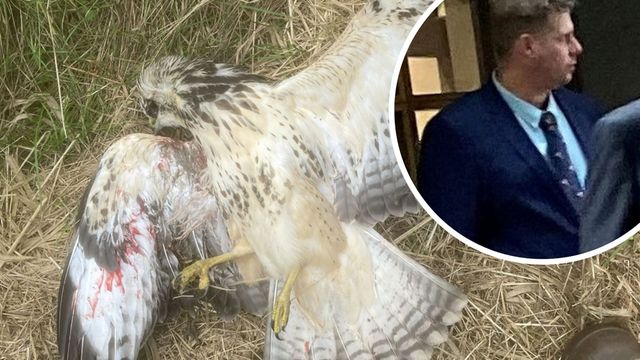
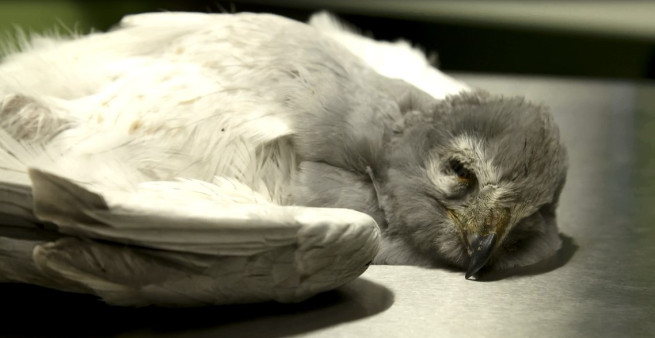
In February 2021 a dead red kite was found on the estate by a member of the public and a later toxicology analysis revealed it had been poisoned with Bendiocarb.

[The poisoned red kite. Photo by RSPB]

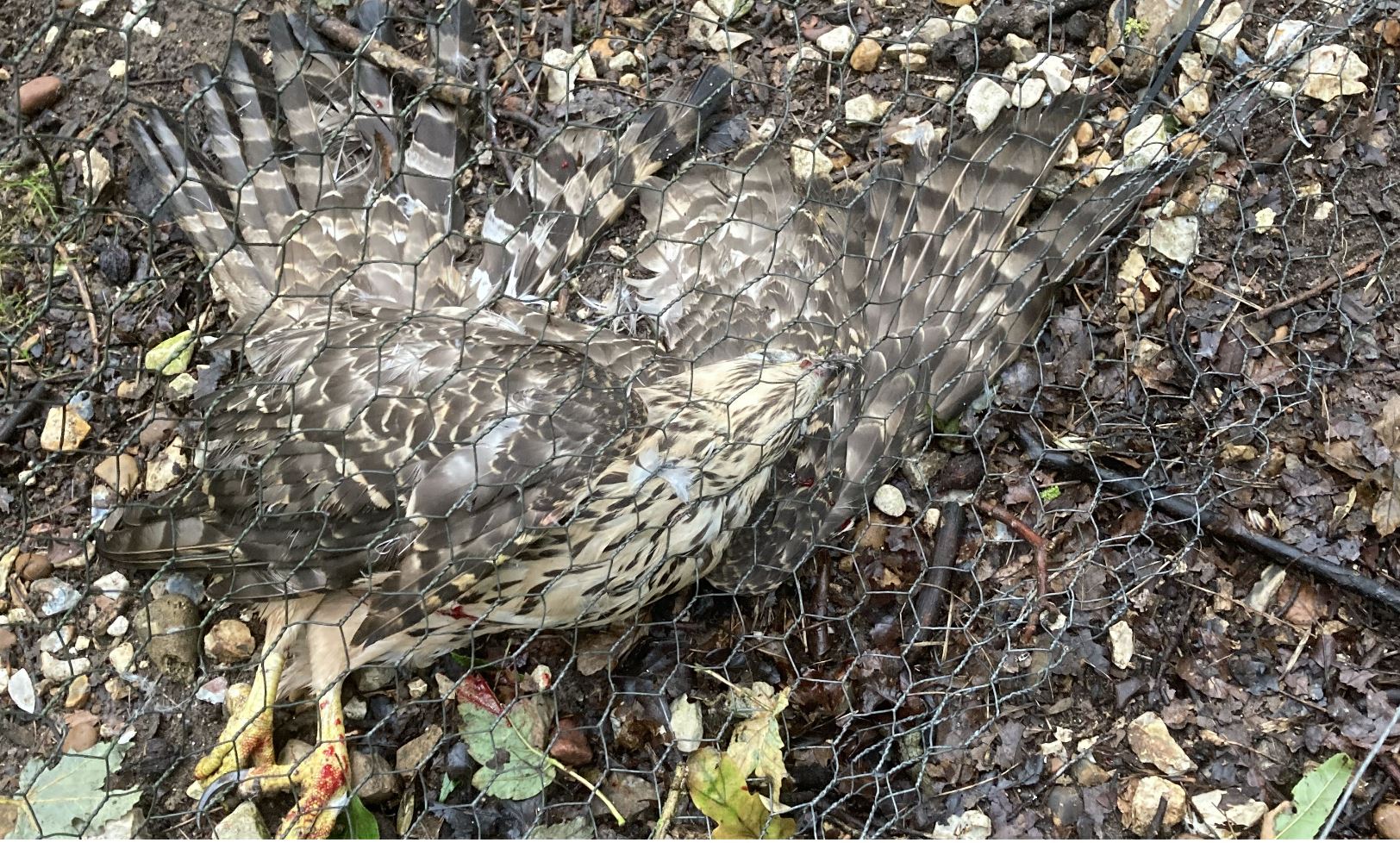
When RSPB Investigations Officers subsequently visited the McAlpine Estate they found a dead buzzard inside a pheasant release pen. When the body was x-rayed, a piece of shot could be seen lodged in the bird’s skull.

[The shot buzzard found inside the pheasant release pen. Photo by RSPB]

A multi-agency search in October 2021 by North Wales Police, the Welsh Government, RSPB and the National Wildlife Crime Unit uncovered an unlocked barn containing 18 highly toxic products, including Cymag which has been banned since 2004. They also found the remains of a pheasant, inside a game bag on a bonfire site inside a pheasant release pen. The pheasant tested positive for Bendiocarb. Another dead buzzard was too badly decomposed to be tested.

Gamekeeper Matthews pleaded guilty to one charge relating to the possession of unauthorised pesticides. He received a total fine of £219.

You can read the full details of this case on the RSPB’s blog here.

In that blog, the RSPB state, ‘It remains unknown who killed the buzzard and the kite‘.

I’m pretty sure that the RSPB investigators, just like the rest of us, have a pretty good idea who might have been responsible but presumably there was insufficient evidence to charge anyone. Such is the nature of this game that it would be libellous to suggest a suspect.

It seems odd to me, though, that a gamekeeper who had worked on the estate for 25 years wouldn’t have noticed someone laying poisoned baits, placing the bait inside a game bag and leaving it on a bonfire site inside a pheasant release pen, and shooting dead a buzzard and leaving its corpse inside a pheasant release pen.

His £219 fine makes a total mockery of the system. Had this case been in Scotland, the fine for possessing an unauthorised poison would now be £40,000. That’s a serious deterrent.

£219 is not.

This is the reality and I’ll be reminding DEFRA Minister Lord Benyon of this the next time he repeats the Westminister Government’s tediously predictable claim that raptor-killing criminals face ‘significant sanctions…including an unlimited fine and/or a six month custodial sentence‘ (e.g. see this from Environment Minister Rebecca Pow in September 2021, and this from Richard Benyon in February 2022, and this from Rebecca Pow in February 2022, and this from Richard Benyon in April 2022).

Matthews is the 7th gamekeeper to be convicted in seven months across England, Scotland and Wales. There are still multiple cases pending court in the coming months. Clear evidence then that the game-shooting industry’s supposed ‘zero tolerance’ policy towards raptor persecution is simply just rhetoric and that the Government’s so-called ‘significant sanctions’ are complete bollocks.

The other convicted gamekeepers in recent months are:

Gamekeeper Shane Leech who was convicted in November 2021 for firearms and pesticides offences after the discovery of a poisoned buzzard found close to pheasant-rearing pens in Lakenheath, Suffolk (here);

Gamekeeper Peter Givens who was convicted in November 2021 for causing the death of a goshawk and a barn owl which starved to death in an illegally-operated trap on the Cathpair Estate in the Scottish Borders (here);

Gamekeeper Hilton Prest who was convicted in December 2021 for causing a sparrowhawk to starve to death in an illegally-operated trap in Cheshire (here);

Gamekeeper John Orrey who was convicted in January 2022 for battering to death two buzzards he’d caught in a cage trap on a pheasant shoot in Nottinghamshire (here);

Gamekeeper Rhys Davies from the Millden Estate in the Angus Glens, Scotland, who was convicted in May 2022 for animal cruelty relating to badger baiting (he’ll be sentenced at the end of June – here);

Gamekeeper Archie Watson who was convicted in June 2022 for raptor persecution and firearms offences after he was filmed throwing 8 dead raptors down a well on a pheasant-shoot in Wiltshire (here).

Well done to the multi-agency search team involved in bringing David Matthews to court.

Gamekeepers in England try to ‘out dinosaur’ gamekeepers in Scotland over continued use of toxic lead ammunition

The ongoing use of toxic lead ammunition in the UK is no laughing matter. This stuff should have been banned years ago when Governments were first made aware of lead’s toxic effect on our environment, our wildlife, and our people.

But no, even though most of the previously significant sources of lead in the environment (e.g. lead-based paint and leaded petrol) were eliminated decades ago due to their known damaging effects, the use of toxic lead ammunition for gamebird shooting has been allowed to continue, largely thanks to selfish, idiotic shooting organisations campaigning for the right to use toxic lead and sod the consequences to the environment, wildlife and human health.

[US Fish & Wildlife Service researchers examining 58 dead Bald Eagles in 2012. 60% had detectable concentrations of lead. 38% had lethal lead concentrations. Photo by USFWS]

There are various restrictions/bans in Scotland, England and Wales introduced between 1999-2004 on the use of lead ammunition over wetlands, but research has demonstrated that that has largely been ignored by a significant number of shooters:

It’s also worth mentioning for new blog readers that UK gamebird meat is still exempt from testing for poisonous lead whereas every other type of meat destined for the human food chain is not. It’s scandalous. (E.g. see here).

In 2020, after seeing the writing on the wall in parts of the US and Europe where more progressive, enlightened Governments have made huge strides to get rid of toxic lead ammo, nine of the UK’s shooting organisations, including the National Gamekeepers Organisation, suddenly made a massive U-turn and announced they were introducing a ‘five year voluntary transition away from toxic lead shot’. Many of us believed it was simply a propaganda ploy to fool the Government and the public that the shooting industry was finally taking responsibility for its filthy, damaging activities.

So far, two years into the so-called ‘transition’ they’ve made no progress whatsoever in moving away from the use of toxic lead shot (see here and here).

Notably, the dinosaurs at the Scottish Gamekeepers Association refused to sign up because they didn’t think there was sufficient evidence to support a move away from the use of toxic lead ammunition (yes, really).

Earlier this year, the main shooting organisations’ fear became reality when the Westminster Government, with support from the Scottish and Welsh Governments, finally agreed to consider a lead ammunition ban in ALL environments (not just wetlands) (see here).

As part of this process, last month a dossier was published by the UK Health & Safety Executive showing that the damaging effects of toxic lead ammo ‘are not adequately controlled‘ [more like, are not controlled at all!] and the authors set out a framework for a ban. The dossier/report is lengthy and detailed but the evidence is clear:

A six-month public consultation on the terms of the proposed ban is now underway, due to close on 6th November 2022 (see here). The consultation is based on the recommendations of the review and covers issues such as:

  • a ban on the sale of lead shot
  • a ban on the use of all types of lead ammunition for live quarry shooting including lead shot, shotgun slugs, lead bullets and airgun pellets
  • a ban on the use of lead shot for outdoor target shooting with possible exemptions for licensed athletes at licensed ranges with appropriate environmental protection measures
  • a ban on the use of lead bullets for outdoor target shooting with possible exemptions for shooting at licensed ranges with appropriate environmental protection measures
  • mandatory labelling of the packaging of lead ammunition regarding the hazards and risks of lead.

Proposed transition periods for each of the restrictions vary, and range from 18 months to five years.

You’d think that shouldn’t cause the shooting organisations any concerns at all, especially as they’re already two and a half years in to their own five-year voluntary transition away from lead ammo, right?

But look at this full-page advert by the National Gamekeepers Organisation published in this week’s Shooting Times. It’s almost like they’re trying to ‘out dinosaur’ the Scottish Gamekeepers Association, and that takes some doing!

Police lead more multi-agency raids after suspected raptor persecution & poisoning in Durham & Northumbria

Statement from Durham Constabulary (27th May 2022)

Joint operation targets suspected raptor persecution and poisoning of birds of prey

Police have carried out searches at several locations this week in connection with suspected raptor persecution and poisoning of birds of prey. 

Officers from Durham and Northumbria attended the addresses across the two force areas following information received from the public. 

Suspicious substances were seized from some of the locations and taken away for forensic examination. 

[Photo from Durham Constabulary]

The multi-agency operation was carried out with the help and support of Natural England, the Royal Society for the Protection of Birds (RSPB) and the National Wildlife Crime Unit.

It also formed part of Operation Owl, which is a national initiative to increase awareness of bird of prey persecution and to seek support in tackling it head on. 

Raptor persecution is one of the UK Wildlife Crime Priorities, which includes poisoning, shooting, trapping, and habitat and nest destruction. 

PC David Williamson, Durham Constabulary’s Wildlife Crime Officer, said: “In the UK, birds of prey are a protected species and any criminal offences committed against these beautiful creatures are completely unacceptable. 

We have acted on intelligence from the local community to carry out this operation and try and disrupt those involved in these activities

We’d encourage anyone with an information on potential criminal activity in their area to call us on 101 or report it via Crimestoppers anonymously on 0800 555 111.”

ENDS

Well done Durham Constabulary, Northumbria Police, Natural England, RSPB and the National Wildlife Crime Unit.

These latest multi-agency raids are the latest in a surge of similar investigations in response to raptor persecution crimes over the last 18 months, including a raid in Suffolk on 18th January 2021 (here), a raid in January 2021 in Nottinghamshire (here), on 15th March 2021 a raid in Lincolnshire (see here), on 18th March 2021 a raid in Dorset (here), on 26th March 2021 a raid in Devon (see here), on 21st April 2021 a raid in Teesdale (here), on 2nd August 2021 a raid in Shropshire (here), on 12th August 2021 a raid in Herefordshire (here), on 14th September 2021 a raid in Norfolk (here), a raid in Wales in October 2021 (here) a raid in Humberside on 10th December 2021 (here), a raid in North Wales on 8th February 2022 (here) and another raid in Suffolk on 22nd April 2022 (here).

So far, only two of these investigations have concluded. These are the Nottinghamshire case (from January 2021), where gamekeeper John Orrey was sentenced in January 2022 for battering to death two buzzards he’d caught inside a trap (here), and the Suffolk case (also from January 2021) where gamekeeper Shane Leech was convicted of firearms and pesticides offences in November 2021 after the discovery of a poisoned buzzard found close to pheasant-rearing pens in Lakenheath (here).

The conviction yesterday of gamekeeper Archie Watson in Wiltshire (here) was the result of another multi-agency raid undertaken in 2020 (here).

I was at a wildlife crime meeting recently when it was announced that at least 12 raptor persecution cases are pending court hearings, some of them also dating back to 2019. That’s indicative of the hard work of these investigators and they deserve full credit for their efforts. It’s been a long, long time since that number of raptor persecution cases have got anywhere near a court room. Well done all.

Gamekeeper Archie Watson convicted of raptor persecution & firearms offences on Wiltshire pheasant shoot

On 1 June 2022 at Swindon Magistrates Court gamekeeper Archie Watson (21) of Dragon Lane, Manningford Bruce, Pewsey received a 12-month community order to carry out 180 hours unpaid work and was ordered to pay £393 costs and £95 surcharge for pleading guilty to raptor persecution offences relating to the discovery in 2020 of at least 11 buzzards, four red kites and one gull species that had been dumped down a well on Galteemore Farm, a pheasant-shooting venue in Wiltshire.

[Gamekeeper Watson caught on camera dumping a buzzard in the well. Photo by Guy Shorrock/RSPB]

Watson was caught on camera 13 times after the RSPB installed a covert video recorder following a tip off by a member of the public. He denied killing the birds but pleaded guilty to possession of dead birds – three red kites, five buzzards and a herring or black-backed gull – contrary to the Wildlife and Countryside Act 1981. He claimed in court that he had ‘found’ the dead birds on the estate.

He also pleaded guilty to firearms offences after a loaded shotgun was discovered on the seat of his unlocked vehicle. Following a search at Watson’s home, several firearms were discovered that had been left unlocked and next to unsecured ammunition.

There has been significant media coverage of this latest conviction and I’d encourage you to read the following articles and watch the Channel 4 video, which reveals the extent of the multi-agency investigation that brought Watson to court:

RSPB Investigations blog here

Wiltshire Police statement here

Crown Prosecution Service statement here

Channel 4 News video here

ITV News coverage here

One of this blog’s readers attended court yesterday and has provided this excellent commentary on what went on:

[Court documents showing the charges faced by gamekeeper Archie Watson]

Charges 1 to 3 were dropped by the CPS as they couldn’t present sufficient evidence that Watson was the person who actually did the killing. It appears that he did not admit to killing them under questioning prior to the case and continued to maintain that in court that he had merely ‘found’ the carcasses as part of his duties out and about on the estate. He then disposed of them in a well estimated to be 8m deep with no water apparent and covered by a manhole cover. 

Having been alerted to the suspected disappearance of raptors (I couldn’t hear who by) the RSPB and possibly others (Wildlife Crime Unit?) set up camera surveillance at the site of the well. After an initial inspection of the contents of the well (by lowering a GoPro camera into it) it was found to contain remains of various birds including Common Buzzards, Red Kites and a Herring or Lesser Black Backed Gull). Following this the number of surveillance cameras was increased.

Watson was identified in the recordings on more than one occasion depositing bird carcasses into the well and on one occasion was recorded on audio in conversation with another person (not named) indicating that he knew ‘gulls were protected’. The evidence was passed to the police (Wiltshire Constabulary) who obtained warrants to search two addresses linked to Watson who was then arrested while staying at the address of a relative in Beckhampton (Nr Avebury, Wiltshire).

Searches of Watson’s home address in Dragons Lane, Manningford Bruce Nr Pewsey, Wilts turned up no evidence relating to raptor persecution however a glass jar containing white powder (later identified as Bendiocarb) was found in his vehicle. Watson claimed this was used as an insecticide against wasps and ants while the prosecution stated that it was also known to have been used in other recorded raptor poisoning incidents.

However at this site there was found evidence of multiple firearms offences concerning the safe storage of weapons and ammunition. In particular a Benelli M2 automatic (pump action) shotgun was found to be left unattended and unsecured in his Toyota pickup vehicle, still loaded with 11 shotgun cartridges. Watson was also found to be in possession of two BTO leg rings [from a buzzard and a red kite] which were attached to a keyring. Prosecution stated that to remove these rings from any bird it would have been necessary to break its legs. Watson claimed he had found these rings whilst metal detecting at his Uncle’s farm near Pewsey.

A search of Galteemore Farm in Beckhampton where the well was located found no further evidence of raptor persecution other than the contents of the well. A detailed inspection of the well was conducted under the supervision of the Fire Brigade and in conjunction with the Hampshire Confined Spaces team. It was found to contain the remains of a sheep, 9 bird skulls, multiple bird carcasses and an unidentified mammal skull’. 

[Examination of the carcasses as they were exhumed from the well. Photo by Guy Shorrock/RSPB]

Watson maintained at interview that he had not killed the birds but had simply used the well to dispose of carcasses he had ‘found’ whilst conducting his duties as gamekeeper. One of those function was to “keep the site clear” of such remains. He claimed to have found one of the buzzards on the A4 main road but had for some unspecified reason seen fit to dispose of it in the well. 

The prosecution provided witness testimony from a local wildlife expert that suggested it was highly unlikely to find such a high number of dead raptors over a relatively small area of open farmland where the birds had died of natural causes. Starvation was cited as one reason such birds may die and possibly only two such cases could be expected per annum. An impact statement was read out from a Mr Shorrock from the RSPB who said that there had been a serious problem with raptor persecution in the area. Forensic analysis of several of the bird carcasses found evidence of metal fragments.

As the charges for killing the birds had already been dropped due to lack of direct evidence Watson was the person responsible, it was also agreed that there was no case to answer on animal cruelty by Watson, which could have incurred an 18 week custodial sentence.

The defence argued for leniency on the grounds of it being Watson’s first (indicted) offence, previous ‘good character’ and that the length of time between the offences (2 years) had given him time to reflect on his actions and that he had “learnt his lesson”. It was stated that Watson had left school at 16 and been apprenticed as a gamekeeper sometime thereafter. He was 19 at the time of the offences and accepts that he had become ‘complacent’ around the proper use and care of the firearms. His firearms certificates had been revoked and whilst the court could apply for the destruction of the weapons it had not done so.

It was stated that clearly others had been using the well to dispose of carcasses and had been caught on video but were not identified in this case. The defence suggested that the custodial threshold had not been met because of these factors. The defence suggested that the risk of reoffending was “low” and that there was no evidence of further offending.

The Magistrates asked for clarifications on whether there was public access to the farmland? Watson suggested it was accessible only by a private driveway and was fenced but it was clear he was referring only to the immediate environs of the farm buildings and later stated that the entire holding was c.1000 acres. On a further supplementary question from the magistrates it was revealed that there is public access to the land and that it is adjacent to the historic monument of Avebury which attracts up to a quarter of a million visitors a year. These questions related specifically to the issue of firearms safety.

It was also asked why Watson had not reported finding the BTO leg rings to the appropriate authorities or even the BTO themselves to which the defence only replied that there was “no statutory obligation to report” this. It was also made clear that the number of birds Watson was being charged with being in possession of was reduced to 5 buzzards, 3 Red Kites and the Gull. No explanation was given for this.

At sentencing the Magistrates gave Watson credit for pleading guilty at the earliest opportunity and had therefore spared the public the time and cost of a trial. They regarded the firearms offences as being particularly serious and a combined sentence for all the offences combined was given as 180 hour unpaid community service plus costs of £393 plus a £95 surcharge for the forensic analysis of the bird carcasses. Watson was then referred to the Probation officer within the court before being allowed to leave the premises’.

ENDS

There’s so much to say about this case. First of all, full credit is due to the multi-agency investigation team who had to go to extraordinary lengths to retrieve the evidence. Their level of commitment was exemplary.

Second, this case illustrates in grim detail the lengths that those who kill birds of prey will go to hide the evidence of their crimes. Had it not been for a tip off by a member of the public, raptor-killing on this pheasant shoot would no doubt still be continuing, at huge cost to local raptor populations.

The defendant’s explanation for what was uncovered was so implausible that it’s laughable, but it’s no laughing matter and again, goes to highlight how difficult it is to secure a conviction, even with the level of evidence amassed in this case.

Watson’s sentence was derisory. It’s what we’ve come to expect, even though the number of corpses involved in this case make it the biggest raptor persecution investigation in England to date.

It’s not known whether Archie Watson was a member of the National Gamekeepers Organisation or BASC, as other recently-convicted gamekeepers have been, but to date neither organisation has bothered to issue a statement to condemn Watson’s crimes. How telling.

The blog reader who attended court also said this:

Also, I think he pleaded guilty on advice because they knew he’d have to answer difficult questions under oath on the stand that may have led to identifying who else was involved. And who was paying for his defence costs and the fine?

I asked him some of these questions outside the court with my GoPro on but the b@stard SD card wasn’t in properly and no recordings came through. He didn’t answer anyway but he was smirking and laughing with his mates as they went to their pickup’.

Some of the forensics work in this case, undertaken by the Natural History Museum at Tring, was funded by Wild Justice’s Raptor Forensics Fund, established in 2020 to help support police investigations into alleged raptor persecution crime. Thank you to all those who have contributed to this fund. The court ordered Watson to pay back the costs (£288).

Court case delayed against Wiltshire gamekeeper Archie Watson

Criminal proceedings against a 21-year-old gamekeeper for multiple alleged raptor persecution and firearms offences have been delayed.

Archie Watson, of Dragon Lane in Manningford Bruce near Pewsey, Wiltshire, was due to appear at Swindon Magistrates next Wednesday (25th May 2022) to face six charges under the Wildlife & Countryside Act and three charges under firearms legislation, for offences alleged to have been committed on an unnamed game-shooting estate in 2019.

However, this case has now been adjourned to 1st June 2022 where Watson will be invited to submit his plea. If he pleads guilty sentencing will follow shortly afterwards; if he pleads not guilty this case will proceed to trial at a later date.

This case relates to a multi-agency raid in Wiltshire in September 2020 when two warrants were executed at locations in the Pewsey and Beckhampton areas. Firearms were seized as part of ongoing enquiries, and the carcasses of a number of birds of prey, including red kites and buzzards, were located at the site in Beckhampton (see here).

Earlier this month a Wiltshire Police spokesperson said: ‘The case has been brought after almost two years of detailed investigation and forensic analysis in conjunction with the CPS, RSPB and other partners. It is potentially the largest English raptor persecution case in terms of the number of alleged victims‘.

For context, and to provide an indication of how many raptor deaths may be involved, prior to this case the largest one in England was at the Stody Estate in Norfolk in 2014 (here) when gamekeeper Allen Lambert was found guilty of poisoning 11 birds of prey – 10 buzzards and one sparrowhawk.

PLEASE NOTE: As Archie Watson has been charged and court proceedings are live, I won’t be accepting blog comments on this case until criminal proceedings have concluded. Thanks for your understanding.

For previous blogs on this case please see here, here and here.

Wiltshire gamekeeper facing multiple charges of raptor persecution is named

Further to last week’s blog about a Wiltshire gamekeeper facing multiple raptor persecution and firearms offences (see here), this individual has now been named.

According to the Swindon Advertiser (here), the gamekeeper is 21-year-old Archie Watson of Dragon Lane in Manningford Bruce near Pewsey, Wiltshire.

Watson is due in court on 25th May to face six charges under the Wildlife & Countryside Act and three firearms offences.

This case relates to a multi-agency raid in Wiltshire in September 2020 when two warrants were executed at locations in the Pewsey and Beckhampton areas. Firearms were seized as part of ongoing enquiries, and the carcasses of a number of birds of prey, including red kites and buzzards, were located at the location in Beckhampton (see here).

A Wiltshire Police spokesperson said: ‘The case has been brought after almost two years of detailed investigation and forensic analysis in conjunction with the CPS, RSPB and other partners. It is potentially the largest English raptor persecution case in terms of the number of alleged victims‘.

For context, and to provide an indication of how many raptor deaths may be involved, prior to this case the largest one in England was at the Stody Estate in Norfolk in 2014 (here) when gamekeeper Allen Lambert was found guilty of poisoning 11 birds of prey – 10 buzzards and one sparrowhawk.

PLEASE NOTE: As Archie Watson has now been charged, I won’t be accepting blog comments on this case until criminal proceedings have concluded. Thanks for your understanding.

UPDATE 20th May 2022: Court case delayed against Wiltshire gamekeeper Archie Watson (here)

Millden Estate (Angus Glens) gamekeeper convicted for animal cruelty in relation to badger baiting

The long-running criminal case against a gamekeeper from Millden Estate in the Angus Glens was partially completed yesterday.

Rhys Davies, 28, pleaded guilty at Forfar Sheriff Court to a number of offences relating to the keeping and training of dogs for animal fighting (badger baiting) and a failure to seek veterinary attention for dogs that had sustained serious injuries from those fights. He also admitted a number of firearms and shotgun offences relating to unsecured guns and ammunition.

This has been a long-running investigation that began back in May 2019. Unbelievably, Davies had submitted some photos to a printing company to be developed. Those photographs contained images of horrifically injured, disfigured and dead animals, along with a number of clearly identifiable individuals posing with spades at what looked to be fox dens and badger setts. Davies used his address at Millden Estate for the photo order to be returned.

Fortunately, the print developer recognised the serious nature of the images and reported the order to the Scottish SPCA.

In October 2019, the Scottish SPCA led a multi-agency raid on Millden Estate, and at another property in Aberdeenshire, where multiple pieces of evidence were uncovered during searches of gamekeepers’ houses and the wider estate.

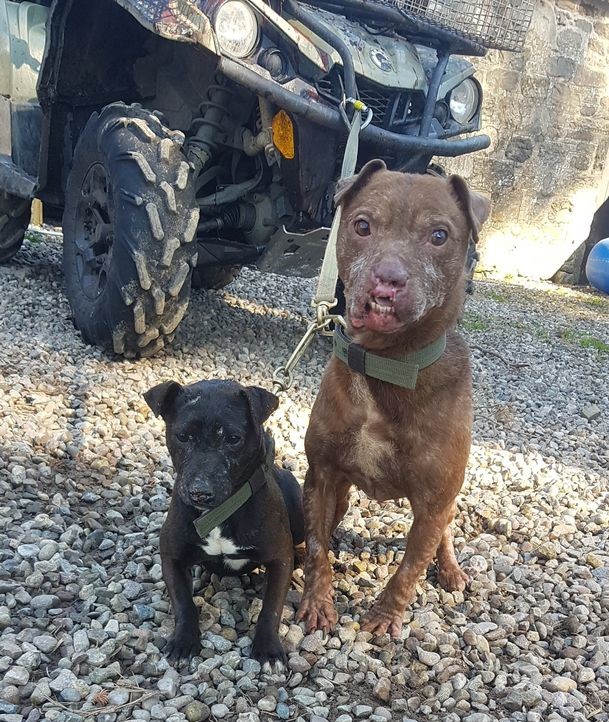
Amongst other things, eleven dogs were seized from kennels at Davies’ cottage and from an outbuilding. Some dogs showed evidence of injuries, some fresh and others sustained previously. These injuries included a torn-off lower lip, extensive scarring and the lower face of one dog was missing. A collar tested positive for badger DNA.

Davies’ phone was seized and more images were found of harrowing animal injuries, GPS locations of where he’d been, and conversations with others in the gang discussing the fights, injuries sustained and comments about DIY veterinary attention.

One of these gang members, 32-year-old Liam Taylor of Deyhill, MacDuff, Aberdeenshire, was convicted last year for his role in this savagery (here).

Davies initially pleaded not guilty and his case was due to be heard in November 2020 but was adjourned, time after time (see here) until yesterday when he finally decided to plead guilty.

Davies’ defence agent, a QC, no less (I wonder who paid for that!) tried to plead for mitigation but the Crown Office Fiscal, Karon Rollo, made clear that Davies was a fully-trained gamekeeper (three-years college training) and had been employed as a gamekeeper for four years so knew exactly what he was doing. Sheriff Derek Reekie agreed and asked for social reports on Davies before sentencing in June 2022.

There’s a full court report by Ross Gardiner in The Courier here.

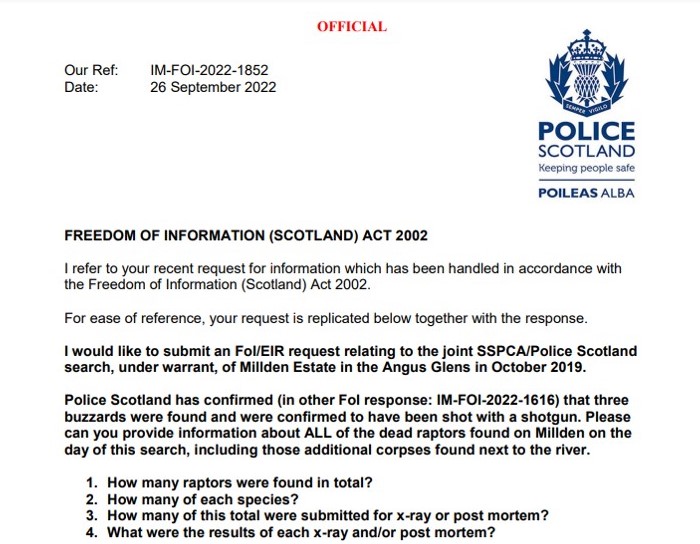
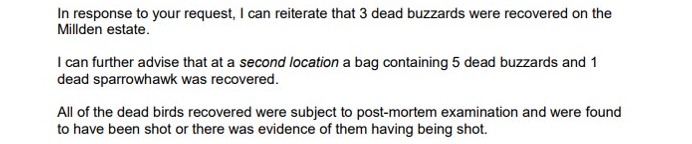
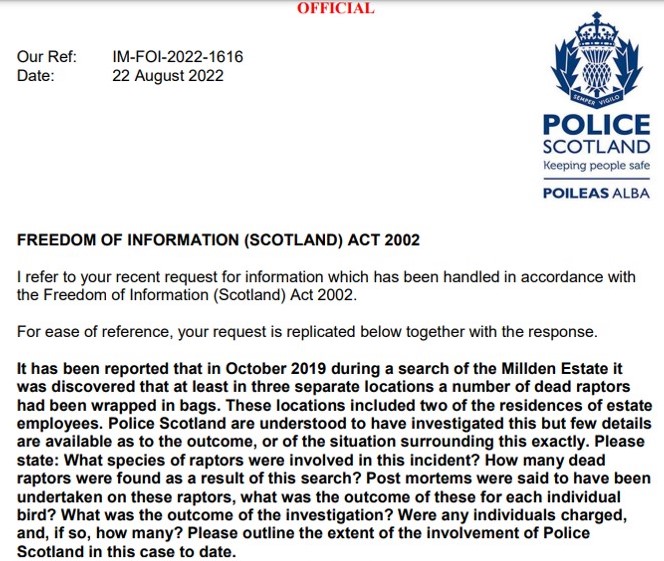
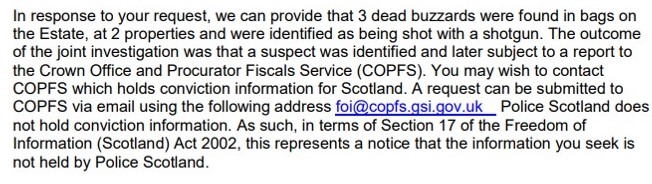
This case isn’t over yet. During the raid on Millden Estate in October 2019, a number of dead raptors were found stuffed in sacks at various locations. Police Scotland are dealing with this aspect of the case and I understand a separate court hearing will take place in relation to those birds.

Following yesterday’s conviction, I read a statement from an unnamed spokesperson at Millden Estate:

The estate does not condone or tolerate any illegal activity relating to the welfare of animals or wildlife.

We were shocked to learn of all the allegations when they came to light.

The employee involved was suspended by the estate with immediate effect and resigned a few days later when the police investigation was still at an early stage.

At no stage was the estate itself the focus of the investigation“.

I don’t think that last sentence is true at all; it looks like a damage limitation exercise to me. Millden Estate was very much at the centre of this investigation, with the search extending from gamekeepers’ houses, to outbuildings, gardens and the wider ground including the land used for grouse, pheasant and partridge shooting.

I’d also argue that Millden Estate has a lot of questions to answer, not least how underkeeper Davies was able to keep 11 dogs, many of them seriously injured, without his Head Keeper, other under keepers, the sporting agent, or anyone else noticing.

Millden Estate has been at the centre of a number high profile wildlife crime investigations over the years, including the discovery of a poisoned golden eagle (here) and the discovery of a fatally-injured golden eagle whose legs had been virtually severed in what was believed to have been a spring trap. The eagle was found several days later dumped in a layby away from the estate, having travelled overnight according to its satellite tag data (here).

I’ll come back to the history of Millden Estate, and a number of other relevant issues relating to this case, over the coming days.

Meanwhile, we all owe the Scottish SPCA a huge debt of gratitude for uncovering the grotesque crimes of gamekeeper Rhys Davies and his depraved mates. This was an intricate, detailed investigation and without it this gamekeeper would likely still be employed by Millden Estate, inflicting vicious, unspeakable brutality on wildlife and dogs.

I look forward to the Scottish Government pulling their finger out and finally (after 11 years of procrastination) granting extended powers to the Scottish SPCA to allow them to investigate more wildlife crime.

Previous blogs on this case can be read hereherehereherehereherehere, here

Further delay for trial of Millden Estate gamekeeper accused of animal fighting offences

There has been yet further delay in the trial of a Scottish gamekeeper from the Millden Estate in the Angus Glens, who is accused of a number of animal welfare offences related to animal fighting.

This trial was due to commence today, after a series of adjournments going back to November 2020(!) but once again the case has been delayed, this time until May 2022.

Here’s some history on this case:

Police Scotland and the Scottish SPCA raided a property on Millden Estate and another property in Aberdeenshire in October 2019 after intelligence suggested animal fighting was taking place. A number of dogs were seized (see here) and a number of dead raptors were also discovered. The Scottish SPCA was dealing with the alleged animal fighting offences and Police Scotland were supposed to be dealing with the discovery of the dead raptors.

Charges relating to alleged animal fighting offences were brought in November 2020. Specifically these were under the Animal Health & Welfare (Scotland) Act 2006 as follows:

Section 19 (concerns offences related to unnecessary suffering).

Section 23 (concerns offences related to animal fights).

Section 24 (concerns offences related to ensuring the welfare of animals).

A preliminary hearing was due to be heard in court in November 2020 but was adjourned until 11th May 2021 and a trial date was set for 2nd June 2021.

The June trial date came and went and the case was further delayed, with a new trial date set for 3rd December 2021.

That December trial was adjourned, apparently at the behest of the gamekeeper’s QC, and a new trial date was set for 11th April 2022 (i.e. today).

Today’s trial has also been adjourned and a new trial date has been set for 5th May 2022.

There hasn’t been any public statement from Police Scotland about the circumstances in which the dead raptors were found. I have been asking the Police Wildlife Crime Officer about this aspect of the case for a couple of years now but the responses have been evasive and non-committal. Until January this year, when I was told:

“… A report is being submitted [to the Crown Office] forthwith.”

Unfortunately as this is a live case I am unable to publish further details or accept comments until proceedings have concluded. Thanks for your patience.

Previous blogs on this case can be read herehereherehereherehere, here

Two gamekeepers expelled from BASC after wildlife crime convictions

The British Association for Shooting & Conservation (BASC) has expelled two of its members following convictions for wildlife crimes.

The two expelled members are gamekeeper Hilton Prest from Cheshire who was convicted in December 2021 and gamekeeper Shane Leech from Suffolk who was convicted in November 2021.

Unusually, BASC posted an announcement about the expulsions on its website last week:

I say ‘unusually’ because although I’m aware of previous expulsions from game-shooting organisations following wildlife crime convictions, these are not common and when they do happen we tend to see vague statements sometime later, such as, ‘The Scottish Gamekeepers Association has expelled five members in recent years‘, but there’s rarely any evidence provided by which to authenticate the claim.

I’d argue that this rare open & transparent statement from BASC is as a result of long-term campaigning by conservationists to get the shooting organisations to back up their claims of having ‘zero tolerance of raptor persecution’. I also see it as a sign that the shooting organisations are feeling the increasing pressure imposed by campaigners, forcing the shooting industry to show Government policy-makers that it can self-regulate and thus avoid the inevitable enforced regulation that is hurtling towards them in the near distance, following on the heels of the forthcoming regulation in Scotland.

Good work, everybody, and especially to the multi-agency teams (Suffolk & Cheshire Police, RSPB Investigations, Natural England, National Wildlife Crime Unit, Crown Prosecution Service) that secured the convictions of these two gamekeepers after months of painstaking work.

General Licence restriction imposed on Invercauld Estate in Cairngorms after poisoned golden eagle & baits found

In March last year a dead golden eagle was found face-down on a grouse moor on Invercauld Estate in the Cairngorms National Park. It had been ‘deliberately’ poisoned with a banned substance, according to Police Scotland, and two poisoned baits were found close-by (see here).

[The poisoned golden eagle, next to a poisoned hare bait. Photo by RSPB Scotland]

[Invercauld Estate inside the Cairngorms National Park. Boundary data from Andy Wightman’s Who Owns Scotland website]

Today, 11 months after the grim discovery, the Scottish Government’s statutory nature conservation agency NatureScot has imposed a three-year General Licence restriction on part of Invercauld Estate. Here’s the press release:

General Licence restricted on Cairngorms Estate

NatureScot has restricted the use of general licences on part of the Invercauld Estate in the Cairngorms National Park.

The decision was made on the basis of evidence provided by Police Scotland of wildlife crime against birds. This evidence included a poisoned golden eagle found on the estate in March 2021, along with a rabbit and a hare carcass, both baited with poison. The restriction will apply to the Gairnshiel and Micras moor on the estate, where the evidence of poisoning was found.

Donald Fraser, NatureScot’s Head of Wildlife Management, said: ““These poisoning incidents are appalling and an act of animal cruelty. The indiscriminate use of poisons is not only lethal to our iconic Scottish wildlife, but can also pose a serious health risk to people and domestic animals that come into contact with it. 

We are committed to using all the tools we have available to tackle wildlife crime. In this case, there is clear evidence of criminal behaviour. Because of this, and the risk of more wildlife crimes taking place, we have suspended the use of general licences on this property for three years. They may still apply for individual licences, but these will be closely monitored.

This measure will help to protect wild birds in the area, while still allowing necessary land management activities to take place, although under tighter supervision. We believe this is a proportionate response to protect wild birds in the area and prevent further wildlife crime.

We work closely with Police Scotland and will continue to consider information they provide on cases which may warrant restricting general licences. The detection of wildlife crime can be difficult, but this is the third time in recent months when we have restricted use of general licences on the basis of evidence of crime taking place. New and emerging technologies, along with a commitment from a range of partners to take a collective approach to these issues, will help us stop wildlife crime.”

General licences allow landowners or land managers to carry out control of common species of wild birds, such as crows and magpies, to protect crops or livestock, without the need to apply for an individual licence.

ENDS

Here is the map showing the restricted areas on Invercauld Estate. The restriction applies from 9th February 2022 to 9th February 2025.

This has been a long time coming for this estate. I wrote about it in May 2021 (here) and I’ll repeat it here.

Invercauld Estate and the surrounding area has been at the centre of many alleged wildlife crimes over the years, including the discovery of three poisoned buzzards on the estate in 2005 (here), the discovery of a poisoned red kite at the Spittal of Glenshee on Invercauld Estate in January 2007 according to former police wildlife crime officer Alan Stewart (in litt. 9 Feb 2022), the discovery of an illegally shot peregrine at the Pass of Ballater in 2011, the reported coordinated hunt and subsequent shooting of an adult hen harrier at Glen Gairn on the border of Invercauld and Dinnet Estates in 2013, the illegally-set traps that were found near Geallaig Hill on Invercauld Estate in 2016, the suspicious disappearance of satellite-tagged hen harrier Calluna ‘on a grouse moor a few miles north of Ballater’ on 12 August 2017, the opening day of the grouse shooting season (here) although it’s not clear whether this was on Invercauld Estate or neighbouring Dinnet Estate, the suspicious disappearance of satellite-tagged white-tailed eagle ‘Blue T’ on Invercauld Estate in May 2018 (see here), the suspicious disappearance of satellite-tagged hen harrier Stelmaria ‘last recorded on grouse moor a few miles north west of Ballater, Aberdeenshire on 3rd September 2018 (see here), the discovery of a golden eagle flying around the area with a spring trap attached to its foot in August 2019 (here), the suspicious disappearance of satellite-tagged hen harrier (Wildland 2) on Invercauld Estate on 24 September 2019 (here) and the discovery of a deliberately poisoned golden eagle and poisonous baits on a grouse moor on Invercauld Estate in March 2021 (see here).

I’m pleased to see this restriction finally imposed on Invercauld, although I’d much rather have seen a series of criminal prosecutions. The restriction will have very little material affect on the game-shooting activities on Invercauld because the estate can simply apply for an individual licence allowing it to continue its activities as if no ‘clear evidence of criminal behaviour’ has been uncovered (more on that ridiculous situation shortly) but it does mean the estate’s reputation is damaged and it also means this can be used to apply pressure on organisations such as Scottish Land & Estates and the Scottish Gamekeepers Association, who both claim to have a zero tolerance of raptor persecution.

Will Invercauld Estate and its gamekeepers remain members of these two organisations?

UPDATE 7th April 2022: Invercauld Estate in Cairngorms National Park loses appeal against General Licence restriction imposed for wildlife crime (here)