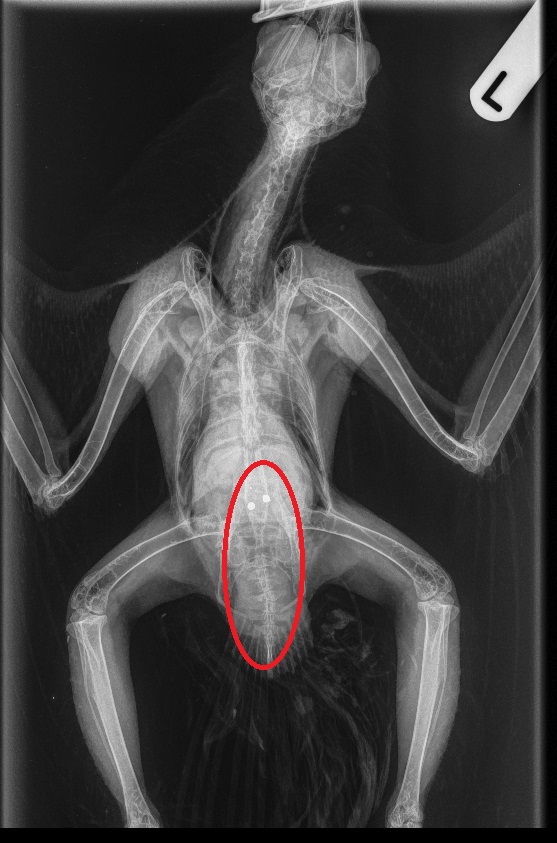
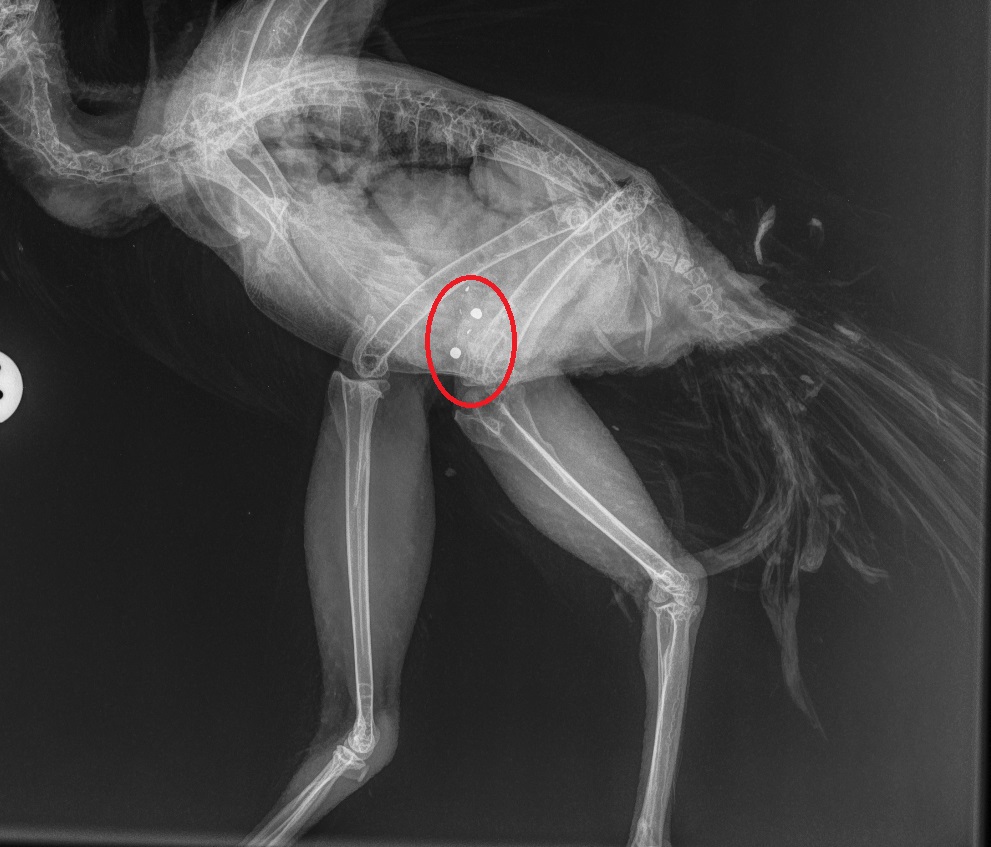
An x-ray of a grounded Buzzard has revealed two embedded shotgun pellets and a broken tail, according to Brinsley Animal Rescue in Nottinghamshire.
A statement published by the charity yesterday reads as follows:
‘Last Sunday we admitted a buzzard that had been found grounded, the caller had been struggling to find a rescue who were able to help and had them for several days before we took the call, thankfully they had been feeding the buzzard and keeping them safe.
On examination it was clear there they weren’t the best of condition not least the tail position, which was to the side and the bird wasn’t able to move it. X-rays have confirmed that not only was the tail broken, but there are several shot gun pellets lodged in the bird. It is probable that they have been shot and the broken tail is a result of the bird crash landing.
We have successfully treated and released birds with broken tails, but not a bird of prey, whilst the bones will eventually fuse, its vital that they have full mobility before they can be released and only time will tell if this ends well‘.
A young Buzzard was found in a field in Leominster, Herefordshire last week, unable to fly.
An x-ray revealed at least two shotgun pellets lodged in its body. It’s not known when the bird was shot, or where.
Photo by Sasha Norris
Photo via Sasha Norris
The Buzzard is currently receiving expert veterinary care from Dr Sasha Norris of Hereford Wildlife Rescue with assistance from Holmer Veterinary Surgery in Hereford and Battle Flatts Veterinary Clinic in Yorkshire.
Sasha reports that the Buzzard was ‘alert, bright and eating well’ this morning.
Following the recent collapse of the Yorkshire Dales National Park Bird of Prey Partnership (due to its failure to tackle crimes against birds of prey), and the news that since 2015, 29 Hen Harriers have gone ‘missing’ in suspicious circumstances and almost 40 other raptors have been found poisoned, trapped or shot in the Yorkshire Dales National Park since 2015, including Peregrines, Hen Harriers, Red Kites and Buzzards, there’s some welcome news from a local community who has had enough and has decided to do something about it. Bravo!
Friends of the Dales, the environmental campaigning charity, is launching a powerful new campaign − Eyes on the Skies − calling for an end to criminal killing of birds of prey in the Yorkshire Dales. The campaign kicks off with a high-profile live webinar on Tuesday 21 October at 5.30pm, featuring leading conservation expert Kate Jennings, UK Head of Site Conservation & Species Policy at the RSPB.
Kate will highlight the long history of bird crime in the Yorkshire Dales, drawing on evidence and case studies from the RSPB’s Investigations Team which works in support of the police and statutory agencies to bring criminals before the courts.
“We are delighted that Kate is joining us at the Eyes on the Skies launch event,” said Jonathan Riley, Chair of Trustees at Friends of the Dales. “She will shine a spotlight on Bird Crime in the Yorkshire Dales and the illegal and inhumane methods criminals use to trap, shoot and poison birds of prey − crimes that persist despite more than seventy years of legal protection.”
The Yorkshire Dales remains a blackspot for raptor persecution, with species such as hen harriers, short-eared owls, and red kites especially targeted. Just last week the RSPB issued a press release about the disappearance of Sita, a one-year-old female satellite-tagged Hen Harrier. The RSPB said that Sita is the 29th hen harrier “to suspiciously disappear in the national park since 2015” and that the bird “is likely to have been shot”.
“It is appalling that the hen harrier, one of the UK’s rarest birds, continues to be shot, trapped, and poisoned in our National Park, which should be a sanctuary for wildlife,” added Jonathan.
Public concern for these crimes is growing. In early 2024, more than 1,000 people responded to the first consultation on the new Management Plan for the Yorkshire Dales National Park, with ending the illegal persecution of birds of prey emerging as one of the top priorities.
David Butterworth, Chief Executive of the Authority also confirmed: “The Yorkshire Dales National Park Authority is unwavering in its commitment to raptor conservation. We will continue to collaborate with landowners, managers and organisations sharing our vision. We applaud those whose efforts have helped some species recover. But we must also confront the grim reality that criminal persecution still occurs.”
Friends of the Dales Eyes on the Skies campaign supports one of the core objectives of the new management plan for the Yorkshire Dales National Park, as well as the vital work of other organisations such as the National Wildlife Crime Unit, RSPB and Hen Harrier Action. The campaign will amplify messages around the scale and nature of these appalling crimes, educate people in how to spot and report any suspicious or illegal activity they might see and also inspire people to learn more about the birds themselves and why they are vital to a healthy, biodiverse ecosystem.
David Butterworth added: “The uplands of the Yorkshire Dales National Park should be a stronghold for a diverse range of raptor species. As apex predators, their presence signals a healthy environment. Their absence, conversely, is a warning.”
Summing up Jonathan Riley said: “Our Eyes on the Skies campaign will incorporate many more events including further webinars from insider experts, outdoor educational events and even some more creatively focussed activities. So, on behalf of the charity, I would encourage anyone who is interested in learning more to register for the free launch event on Tuesday 21 October at 5:30 pm, and sign up to our monthly email newsletter so they can be kept updated.”
Media attention has been drawn to the Yorkshire Dales National Park this week, following the RSPB’s press release on the suspicious disappearance of a satellite-tagged Hen Harrier named ‘Sita’.
When it comes to the illegal killing of birds of prey, the Yorkshire Dales National Park is rarely out of the news, and that’s hardly surprising when 29 satellite-tagged Hen Harriers have gone ‘missing’ there and 39 other raptors have been found poisoned, trapped or shot there since 2015, including Peregrines, Hen Harriers, Red Kites and Buzzards.
Yorkshire Dales National Park. Photo by Ruth Tingay
Given these appalling figures, the RSPB has described the Yorkshire Dales National Park as a ‘no-fly zone for birds of prey’.
High profile cases within the National Park have included the conviction of a gamekeeper who was filmed shooting two Short-eared Owls on a grouse moor and then stamping the corpse of one of them into the peat and shoving the other one inside a drystone wall (here); a gamekeeper filmed on a grouse moor using a tethered Eagle Owl to attract Buzzards that he then shot and killed from close range (here); the stamping to death of four Hen Harrier chicks in a nest on a grouse moor (after obscuring the camera pointing at the nest, here); the grisly death of a Hen Harrier caused by his head and leg being pulled off whilst he was still alive (here); and three individuals caught on camera on a grouse moor discussing the shooting and killing of a Buzzard and a Raven before apparently shooting and killing a Hen Harrier (here) – one gamekeeper has been charged with conspiracy to kill a Hen Harrier, he has pleaded not guilty and his case will proceed to trial in January 2026 after his barrister failed in his attempt to have the case thrown out on a legal technicality.
The Yorkshire Dales National Park Authority has also long recognised the extent of this criminal activity and has responded to public concern (e.g. see here and here). Earlier this year the Park Authority terminated its five-year ‘partnership’ with the grouse shooting industry to tackle these crimes, after recognising the futility of this endeavour. Two conservation organisations (the RSPB and the Northern England Raptor Forum) had already walked away from the sham in 2023 and 2024 respectively.
In an article published a couple of days ago by the Craven Herald & Pioneer, Mark Corner, a member of the Yorkshire Dales National Park Authority is quoted saying the continued illegal killing of raptors in the Park was “a crying shame“.
He added: “As the member champion for the natural environment, I’m personally embarrassed that we are the worst spot in the country in terms of the illegal killing of birds.”
In the same article, there’s an hilarious quote from the Yorkshire Dales Moorland Group, which is one of a number of regional groups set up in 2015 to represent local grouse moor owners and their gamekeepers in an attempt to counter the bad publicity about ongoing illegal raptor persecution. I think that members of most of these regional moorland groups have been, or still are, the subject of police investigations into illegal raptor persecution.
A spokesperson for the Yorkshire Dales Moorland Group reportedly told the reporter that ‘hen harrier numbers were at a 200-year high across the uplands’.
That’s simply not true – Hen Harrier breeding attempts on grouse moors across the north of England have been in sharp decline over the last two years – the only areas where they remain stable is on land managed for conservation rather than for Red Grouse shooting.
According to its FaceBook page, the Yorkshire Dales Moorland Group claims to have “around 100,000 acres of managed uplands here in the Dales where the estates are members of this group (virtually all of the moors)“.
Why is it then, there were only two Hen Harrier breeding attempts in 2025 across the whole of the Yorkshire Dales and neighbouring Nidderdale? I’d like the Moorland Group to provide a plausible explanation for these absences.
The Yorkshire Dales Moorland Group also told the Craven Herald reporter:
“Our keepers have and will always assist the police in searches for missing persons, lost dogs or missing birds. Tag failure is rare but not unheard of.
“The default accusation that persecution is responsible is regrettable. The conservation work undertaken by moor keepers is commendable as can be seen by the abundance of raptors and other rare species in the Dales“.
What “abundance of raptors” are those then? All the dead ones? Or just the ones that are allowed to breed because they don’t pose any threat to Red Grouse stocks?
And if these grouse shooting estates are so keen to help the police, how many of them signed the letter last year agreeing to allow the police to enter the land and use equipment for the purposes of crime prevention and detection? Did any of them sign it?
And if these gamekeepers are so keen to help police investigations, how many of them have given ‘no comment’ responses when interviewed about suspected raptor persecution crimes on these moors? Maybe it’d be quicker to count how many gamekeeper didn’t give a ‘no comment’ interview.
The article also quotes Alex Farrell, Head of Uplands at BASC:
“As a committed conservation organisation, we are taking progressive steps with our partners to oversee the continued recovery of hen harriers.
“Figures released by Natural England today show that collaborative effort resulted in 106 fledged hen harrier chicks in England this year – up from 80 last year“.
What “progressive steps” is BASC taking?
Oh, and those figures released by Natural England show that the small increase in Hen Harrier fledging rates are in spite of, not because of, any so-called ‘collaborative effort’ from the grouse shooting industry.
Last week I blogged about an appeal for information that had been posted on North Yorkshire Police’s Facebook page, in relation to ‘the suspected shooting of a buzzard‘ near Goathland on 2nd May 2025 (see here).
I’d noted that the appeal was quite vague. It wasn’t clear if the appeal was a result of a witness report of someone seen shooting towards a buzzard or whether a corpse had been found and was awaiting post mortem.
I’ve since been informed by a reliable local source that a dead buzzard had been found and an x-ray revealed it had been shot.
Having a corpse with shot in it is a confirmed shooting, not a suspected shooting.
Without seeing the x-ray it’s not possible for us to determine if it had been shot close to where the body was discovered (e.g. if its wing bones had been shattered by the shot then it’s unlikely to have been able to fly any distance) so it may have been shot near Goathland or it may have been shot elsewhere and just succumbed to its injuries close to the Duchy of Lancaster grouse moor.
It’s obviously pure coincidence that the grouse moors near to Goathland just happen to be a raptor persecution hotspot.
It’s pointless asking North Yorkshire Police for further information about this buzzard – they routinely refuse to answer such requests.
Appeal for information from North Yorkshire Police on Facebook (12 May 2025):
Did you see anything suspicious?
Our Rural Task Force is appealing for information following the suspected shooting of a buzzard in the North York Moors National Park.
The Buzzard is thought to have been killed near to, Beck Hole Road, Goathland on Friday 2 May, and we are appealing for anyone who may have seen any suspicious people or vehicles in the area to please come forward.
Buzzards and all other birds of prey are legally protected by the Wildlife and Countryside Act 1981. To intentionally kill or injure one is a criminal offence which could result in an unlimited fine or up to six months in jail.
If you have any information that could help please email Chris.Unsworth@northyorkshire.police.uk or call North Yorkshire Police on 101, select option 2 and ask for Chris Unsworth.
If you wish to remain anonymous you can contact Crimestoppers on 0800 555 111 via their website.
Please quote NYP reference 12250082575 when passing on information.
ENDS
Goathland is probably best known to many as the filming location of the TV series ‘Heartbeat’. To me it’s known as one of a number of raptor persecution hotspots in the grouse moor-dominated North York Moors National Park.
Goathland is almost surrounded by intensively-managed driven grouse moors and in 2020 video footage emerged purporting to show a gamekeeper killing a Goshawk that had been trapped inside a Jackdaw-baited trap on one of the Queen’s grouse moors, part of the Duchy of Lancaster (see here and here).
Channel 4 News did a very good follow-up piece here.
A couple of years earlier, a group of local residents from Goathland got together and called a series of public meetings to discuss their concerns about the environmental damage caused by driven grouse moor management in their area, and particularly their concerns about ‘disappearing’ wildlife, notably satellite-tagged Hen Harriers. The North York Moors National Park has been identified in an excellent scientific paper based on Hen Harrier satellite tag data as the place with the highest risk of HH death/persecution in any of our National Parks – it’s no coincidence that the NYMNP also holds the largest expanse of grouse moors within its boundary.
Notes from the Goathland community meetings of disgruntled residents can be read here, here and here.
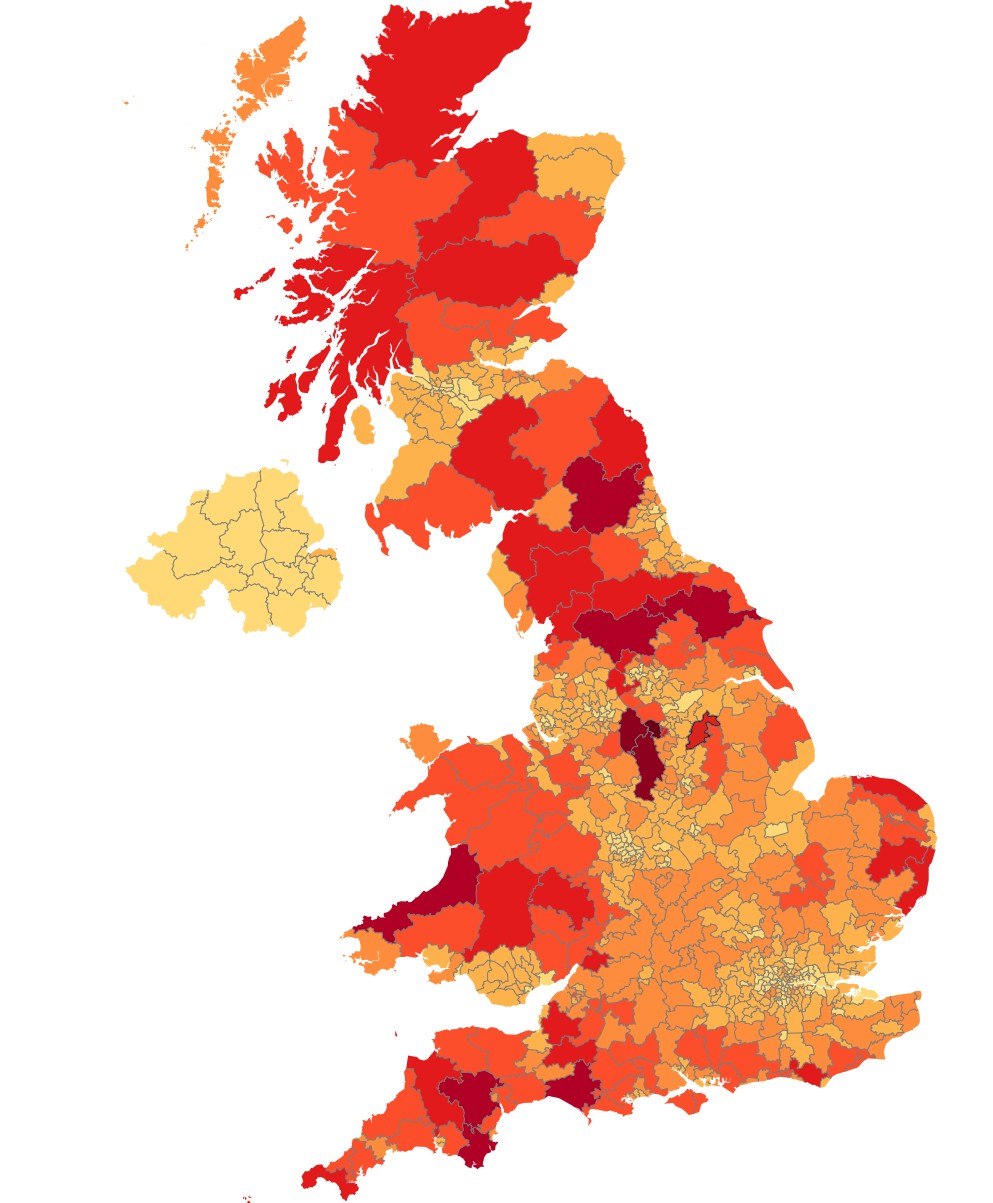
If you look at the map showing the distribution of signatures on Wild Justice’s recent Ban Driven Grouse Shooting petition, it’s worth noting the high number of signatures in this area. I hope they’ll be making their voices heard again if/when the Government’s petitions committee announces the date for a debate in Westminster Hall.
The latest appeal from North Yorkshire Police about the suspected shooting of a buzzard near Goathland is a bit vague. It’s not clear if the appeal is a result of a witness report of someone seen shooting a Buzzard or whether a corpse has been found and is awaiting post mortem.
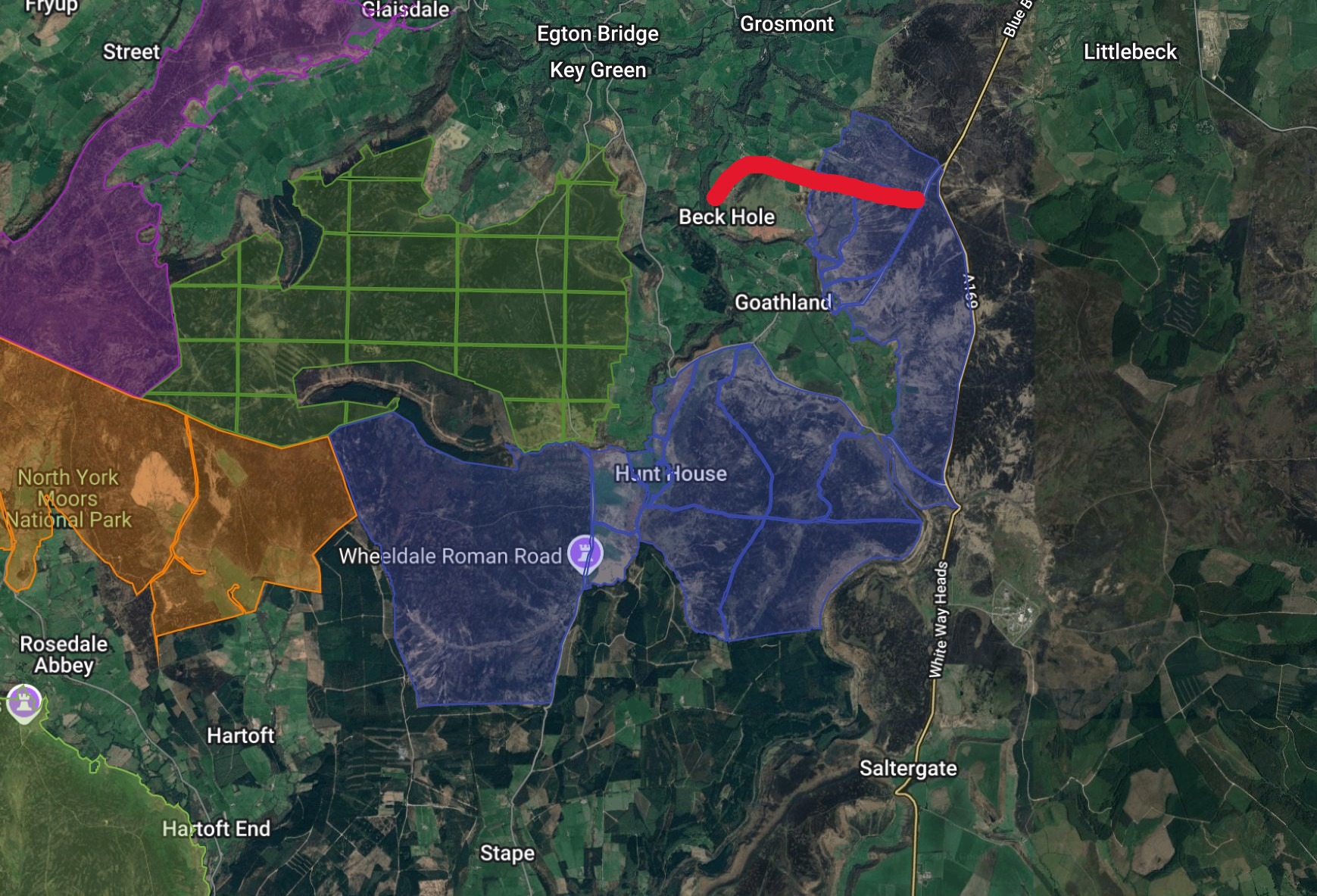
The police appeal says, ‘The Buzzard is thought to have been killed near to, Beck Hole Road, Goathland on Friday 2 May…‘.
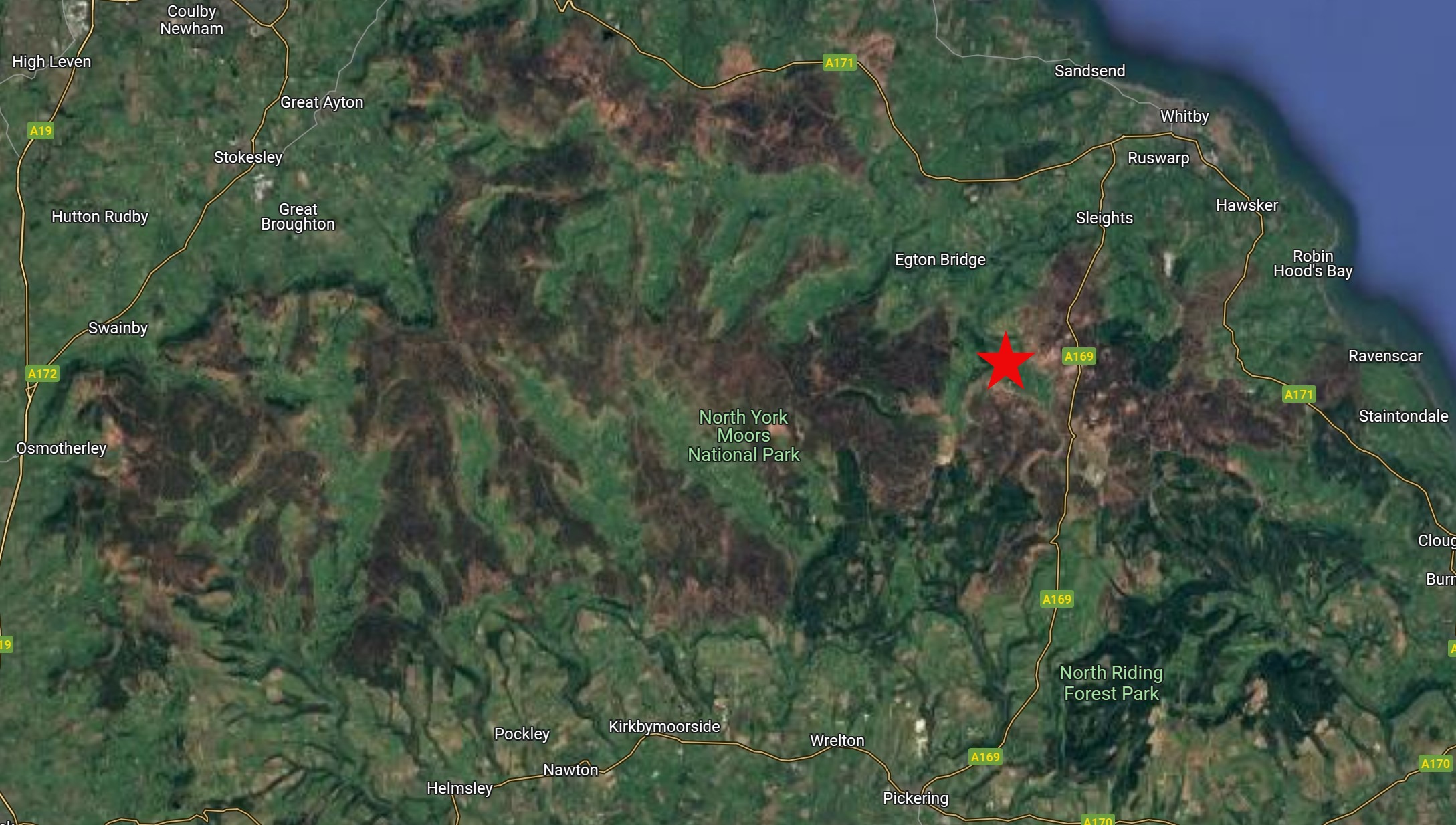
Here is an annotated map from Guy Shrubsole’s brilliant website Who Owns England, showing the extent of the Duchy of Lancaster grouse moors (purple) around Goathland. I’ve added the approximate location (in red) of the Beck Hole Road.
UPDATE 22 May 2025: Incident update – Buzzard found dead near Goathland in North York Moors National Park ‘was shot’ (here).
In October last year, Channel 4 News featured incredible footage secretly filmed by the RSPB’s investigations team of three gamekeepers plotting to kill, and then allegedly killing, a hen harrier on an unnamed grouse moor in the north of England (see here).
If you missed the piece on Channel 4 News you can watch it here:
The audio quality on the footage was remarkable, allowing viewers to listen to the three gamekeepers discussing what not to shoot (a hen harrier with a satellite tag) and what to shoot (an untagged hen harrier, whose death would not be revealed to the wider world, or so they thought).
They were also heard discussing what else they’d apparently casually shot that afternoon – a buzzard and a raven, both protected species.
According to one of my media sources, a gamekeeper has now been charged in relation to this incident for an alleged offence under the Serious Crime Act 2007.
At this stage I’m not publishing the name of the accused, or the name of the grouse moor where the footage was captured, although I understand this information is widely known within the Yorkshire Dales National Park.
The accused is due in court for a first appearance next month.
NB: As an individual has now been charged, comments are disabled on this blog until criminal proceedings have ended to avoid prejudicing the case.
The RSPCA has issued an appeal for information following the discovery of a dead buzzard that is believed to have been shot.
The buzzard was found by a member of the public near Severn Trent’s Four Ashes Sewage Treatment Works on Enterprise Drive, Wolverhampton, on Wednesday 12 March 2025. It reportedly had ‘pellet wounds to its wing, body and head‘.
The shot buzzard. Photo by RSPCA
There isn’t any information about the type of weapon used (e.g. air rifle, shotgun etc). There were also reports of a second buzzard being killed in the same area but the RSPCA was unable to find a body.
Anyone with information about this incident should contact RSPCA’s appeal line number on 0300 123 8018, quoting incident number 01467643.
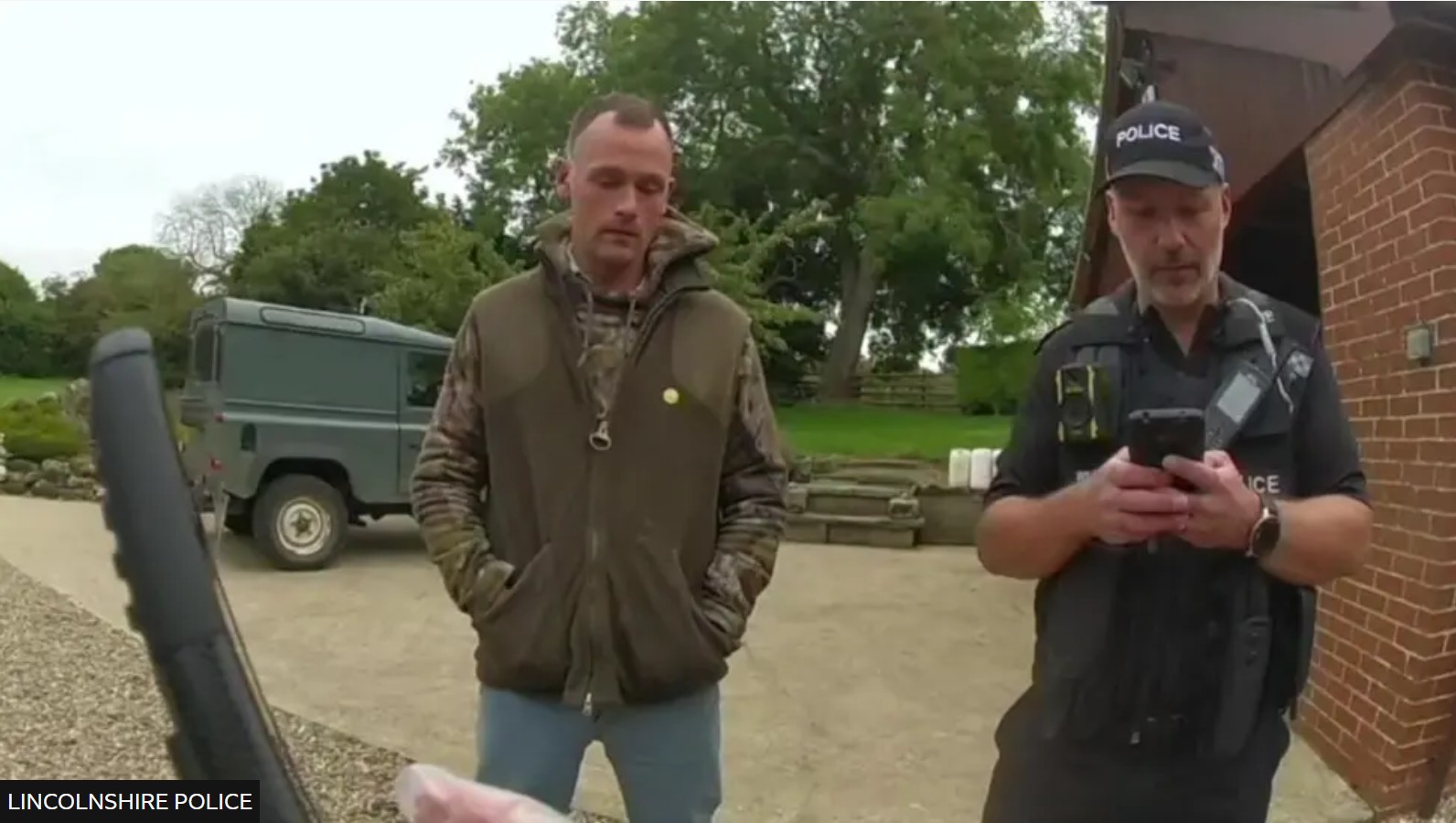
Further to the news about the conviction and sentencing of Lincolnshire farmer/gamekeeper John Bryant for multiple offences at Grange Farms, West Ashby in October 2022, relating to an investigation into the illegal persecution of birds of prey (see here, here and here), Lincolnshire Police’s Rural Crime Team has provided some information about the revocation of Bryant’s shotgun and firearms certificates.
Convicted farmer/gamekeeper John Bryant
“We have been asked about his firearms/shotgun certificates.
“As a direct result of this investigation. Both from matters revolving around the storage and security of firearms and ammunition along with this case being brought against him, his authority to possess firearms and shotguns was also withdrawn. In other words, Lincolnshire Police revoked those certificates so he could no longer possess licensable guns.
“This was contested at Lincoln Crown Court whereby his legal team failed to argue the case and judgement was held in support of the Police decision to revoke them.
“This should also stand as a warning to all certificate holders. One criminal act can easily lose you your right to possess firearms, but also the way you store/secure/keep those firearms can also have a huge detrimental impact on those certificates“.
It sounds then, that in addition to the charges against Bryant for the poison and trap offences, there was also an issue about the storage and security of his firearms and ammunition, although I haven’t seen any report of charges being brought against him for those alleged offences, just a revocation of his licences.
Given that the appeal hearing against his firearms and shotgun licence revocations was held at Lincoln Crown Court (date unknown), this probably accounts for at least some of the reported £100,000 costs incurred by Bryant for his defence, as mentioned in court during his sentencing hearing yesterday.
Looking at the account’s for Grange Farms (West Ashby) Ltd, held on Companies House website, which lists Bryant as one of several Directors (here), the family’s company can easily afford to cover Bryant’s own legal costs in addition to the fine and costs he received from the court (£7,449) from the company’s £1 million+ capital and reserves.
I do wonder about the firearms and shotgun revocations though. Can other family members, residing and/or working at the same property, hold their own certificates and thus legitimately keep firearms and shotguns on the premises? And if so, what measures are taken to ensure John Bryant doesn’t have access to them?
These are genuine questions. I’d welcome the opinion of any firearms experts who might be reading this.
Further to today’s earlier blog on the sentencing of Lincolnshire gamekeeper John Bryant who was found guilty of multiple crimes after a police investigation into the illegal killing of a red kite and two buzzards (see here), the RSPB Investigations Team has issued the following press release:
GAMEKEEPER ORDERED TO PAY OVER £7,000 AFTER BEING FOUND GUILTY OF POISON AND TRAP-RELATED OFFENCES
Numerous birds of prey had been poisoned in the Belchford area of Lincolnshire over a number of years, leading to a police investigation.
Police uncovered large quantities of banned poison and illegal traps on the gamebird shoot.
The RSPB is urging the government to introduce a licensing scheme for all gamebird shooting, with the sanction to remove licences to shoot if wildlife protection laws are broken, and to act as a meaningful deterrent to bird of prey crimes in particular.
After a two-day trial at Lincoln Magistrates’ Court, John Bryant (40), of West Ashby, Horncastle was found guilty on 7 March 2025 in relation to four offences. He was sentenced on 20 March 2025 and ordered to pay £7,449 in total – including £2112 in fines for the four offences, £4,492 in costs and a victim surcharge of £845. The court heard how a number of birds of prey were found poisoned in the Belchford area over several years, and how Lincolnshire Police then led a multi-agency search on a pheasant and partridge shoot at Grange Farms, West Ashby in October 2022 together with the RSPB, National Wildlife Crime Unit (NWCU) and Natural England.
This case is yet another example of why the RSPB is urging Westminster to introduce a system of licensing for gamebird shooting, to afford birds of prey better protection, and to follow Scotland’s lead on licensing all grouse shooting as a positive start.
Bryant, a gamekeeper and farmer, pleaded guilty to two offences relating to the illegal storage and usage of Alphachloralose. Alphachloralose can be legally used as a poison for rodents using products at 4% concentration or lower. However, during a search of his home, police found the poison illegally decanted into pots in the suspect’s vehicle and outbuilding. These two pots were tested under the WIIS (Wildlife Incident Investigations Scheme) run by Natural England, and found to contain banned and highly dangerous levels (85% and 88%) of the deadly substance. Alphachloralose remains one of the most common substances used for poisoning birds of prey.
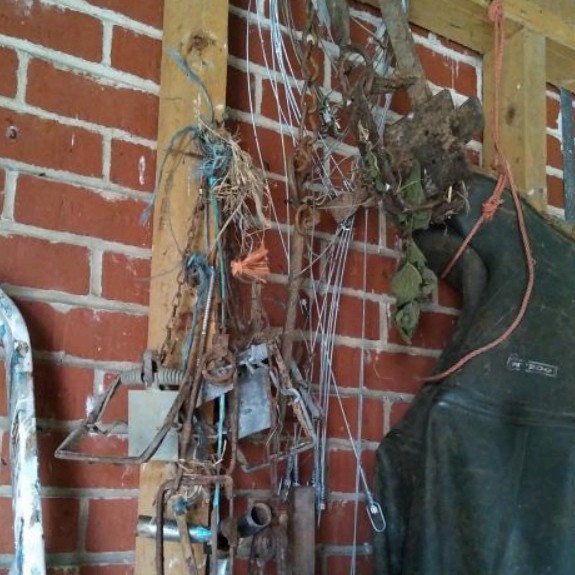
Bryant was also found guilty of two offences relating to the possession of two pole traps, deemed as items capable of committing a wildlife offence. Police found unset spring traps (similar to a powerful mouse trap) hanging from wooden posts at two locations on land managed by Bryant. This set up is commonly recognized as a pole trap, used to catch and brutally injure birds of prey that perch on the post when hunting. Pole traps have been banned since 1904.
Forensic DNA analysis conducted by SASA (Science and Advice for Scottish Agriculture) found traces of Tawny Owl and wood pigeon DNA on one spring trap and the other spring trap tested positive for wood pigeon DNA. Bryant was found not guilty of setting any pole traps.
The District Judge said he found it unrealistic that Bryant would not have known the pole traps were on his land, which had been part of his defence.
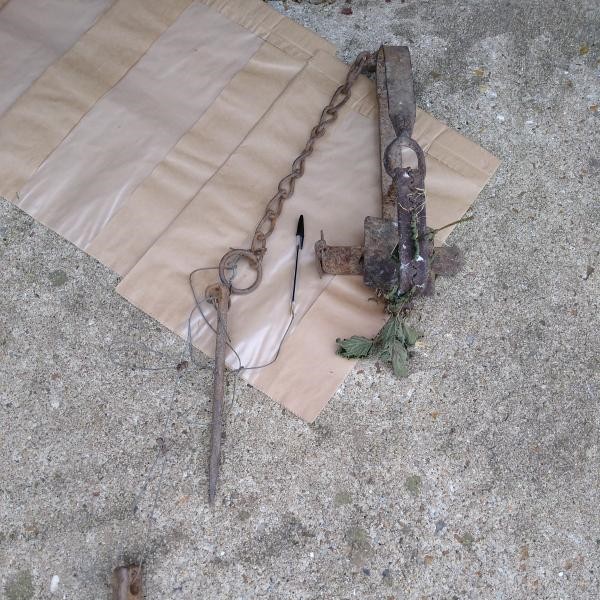
Police also found four unset gin traps in an outbuilding belonging to the suspect. Forensic DNA analysis conducted by SASA found bird of prey DNA on three of the gin traps (a mechanical device, illegal in the UK since 1958, designed to catch an animal by the leg using spring-operated jaws). Two had Buzzard DNA on them, with a Sparrowhawk feather identified in the jaws of a third trap. Bryant was charged in relation to possession of the gin traps being items capable of committing a wildlife offence, but was found not guilty.
An assortment of traps found in Bryant’s garage. Photo: RSPB
One of the gin traps with what look like relatively fresh nettles caught in the jaw. Photo: RSPB
Several birds of prey have been found poisoned in the Belchford area over a number of years. In 2022 a Buzzard was found poisoned by Alphachloralose. In 2020 another Buzzard was killed having ingested the banned insecticide Aldicarb, and in 2017 a Red Kite was killed by Alphachloralose. Bryant was not charged in relation to poisoning any of these birds.
It is illegal to intentionally kill, injure or take a wild bird in the UK under the Wildlife and Countryside Act 1981. Yet the persecution of raptors persists, particularly in connection with land managed for gamebird shooting. Of all individuals convicted of bird of prey persecution-related offences from 2009 to 2023, 68% have been gamekeepers.
Howard Jones, RSPB Senior Investigations Officer, said:
“This case highlights the immense value of police searches in relation to bird of prey persecution which clearly has been an issue in this area. This search found illegal poisons being used in a hugely dangerous manner, putting the public and wildlife at risk, along with a number of illegal traps.
“We are urging the UK Government to introduce a system of licensing for all gamebird shooting, whereby this licence to operate could be revoked if crimes against birds of prey are detected on an estate. This would set a better precedent and act as a greater deterrent to those tempted to commit these crimes. “We thank Lincolnshire Police, and in particular DC Aaron Flint, on an excellent investigation into this case, demonstrating the value in strong partnership working in tackling bird of prey persecution“.
DC Aaron Flint, Forces Wildlife Crime Officer at Lincolnshire Police, said:
“Unfortunately, this case is just one of a large number of bird of prey poisonings reported in Lincolnshire in recent years. However, the outcome demonstrates that Lincolnshire Police takes bird of prey persecution seriously. We thoroughly investigate any reports that relate to criminal activity around birds of prey. Our message is this: If you commit crimes against wildlife in Lincolnshire, we will identify you and you will be put before the courts.
“This investigation was made possible through close collaboration with multiple agencies, and I want to express my gratitude to the National Wildlife Crime Unit, the RSPB, Natural England, CPS and SASA for their invaluable support. The Forensic Analysis Fund also played a vital role in advancing this investigation“.
Chief Inspector Kevin Lacks-Kelly, Head of the UK National Wildlife Crime Unit:
“Thanks to the work of Police and Partners we have seen justice delivered. This conviction sends a strong message that bird of prey crime will not be tolerated, and you will feel the full force of the national policing capability. These offences are not only cruel, the undermine the conservation of our vulnerable wildlife. These birds should be free for us all to enjoy, not consigned to a police evidence bags.”
If you have information about anyone killing birds of prey which you wish to report anonymously, call the RSPB’s confidential Raptor Crime Hotline on 0300 999 0101.
ENDS
Well done to Lincolnshire Police Rural Crime Team and the partner agencies whose hard work resulted in Bryant’s conviction.
£7,000 is a relatively small fine given the seriousness of Bryant’s crimes, although when compared with some of the recent pathetic fines handed out by courts for wildlife crimes, this figure can be viewed as being substantial.
I’ve also been told by a blog reader who was observing proceedings in court, that it was mentioned that Bryant’s defence costs were £100,000. If that figure is accurate then he certainly has taken a big financial hit.