“Vicious” gamekeeper convicted of killing buzzards

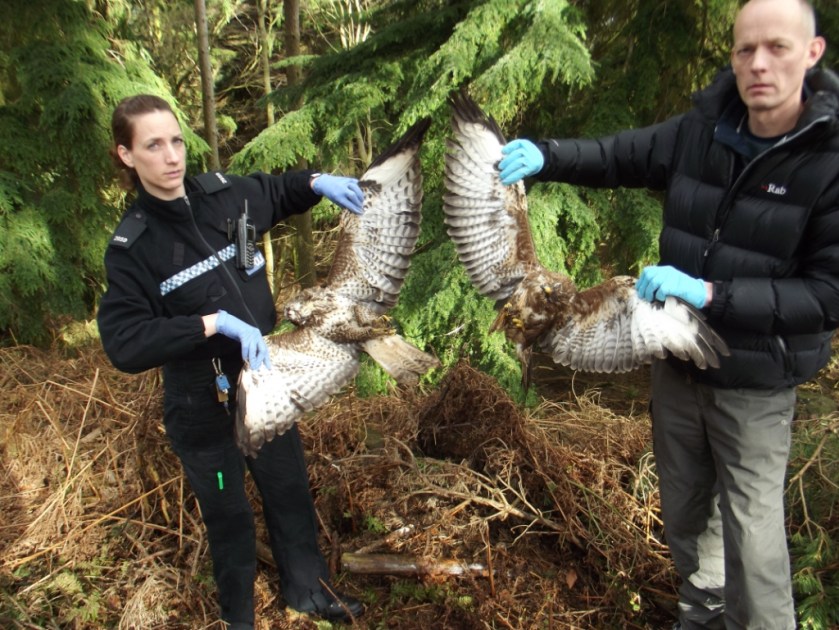
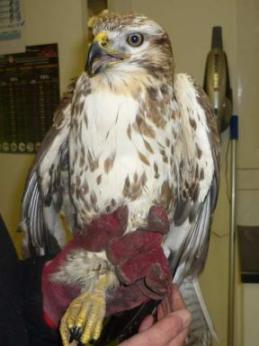
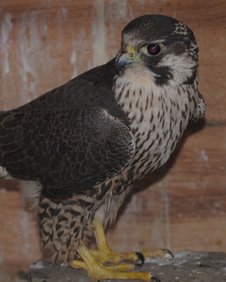
A poisoned buzzard
A poisoned buzzard

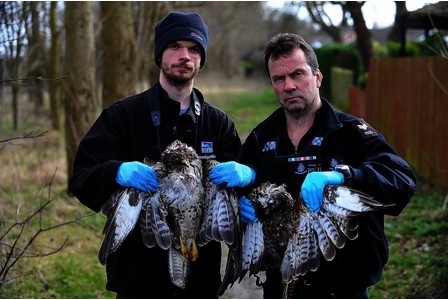
The RSPB Investigations Team scored another victory today as a Lincolnshire gamekeeper was convicted of killing two buzzards and possessing the banned poison Carbofuran.

Robert William Hebblewhite, 71, of Appleby, Scunthorpe, was fined £1,950 at Lincoln Magistrates Court.

The two buzzards were found dead in Sept 2011 on land at Bonsall Lane in Blyton, near Gainsborough, where he works as a gamekeeper. Toxicology tests revealed the birds had died from Carbofuran poisoning from poison-laced pheasant carcasses. The RSPB said Hebblewhite was in possession of enough Carbofuran to destroy all the raptors in Lincolnshire.

It’s not known whether Hebblewhite is a member of the National Gamekeepers Organisation. Hopefully they will put out a statement to clarify his membership status and to condemn this disgusting, persistent practice.

Congratulations to the RSPB guys for a successful prosecution. Importantly, he was convicted for actually killing the birds and not just for the lesser offence of possession of poison, which is the result we usually see. Well done indeed.

RSPB press release here

Hen harrier found shot dead on Yorkshire grouse moor

A young hen harrier has been found shot dead on a Yorkshire grouse moor. Regular blog readers will not be surprised to learn that it has taken over 5 months for an appeal for information to be made by North Yorks police.

The harrier was raised in a nest in Bowland, Lancashire in 2011. She was nick-named ‘Bowland Betty’ and was fitted with a satellite tag as part of Natural England’s so-called ‘Hen Harrier Recovery Project’. During her first year of life she was tracked through the uplands of Northern England and as far north as Caithness in northern Scotland. In June 2012 she was back in the Yorkshire Dales. Predictably, by late June her sat tag data suggested she was stationary and her dead body was found on 5 July on Thorny Grain Moor in Colsterdale in the Yorkshire Dales. Post-mortem results confirmed she had been shot.

This area is dominated by moorland managed for grouse shooting. We understand her body was found on Swinton Estate, although it is not known where she was actually shot as she could have flown for several miles before succumbing to her injuries.

RSPB and government data show the Yorkshire Dales as a hot spot for illegal raptor persecution, with at least 20 birds of prey illegally poisoned, trapped or shot between 2007-2011. This figure includes 10 poisoned red kites, 4 poisoned buzzards, 2 shot red kites, 2 shot buzzards, 1 shot kestrel and 1 trapped sparrowhawk. In addition there were at least 4 incidents of poisoned baits and a number of dogs were also poisoned.

Hen harriers have been tracked from Bowland since 1999. Wing tags were used to monitor hen harrier dispersal and survival between 1999-2002 (data from at least 42 birds). From 2002-2010, 118 hen harriers have been tracked either via radio transmitter or satellite tag. Astonishingly, Natural England have released very little detail about the results of this project, ten years on. They did produce a report in 2008 (see here) although this related to hen harriers over a broad geographic area and didn’t include specific detail about individual birds. What happened to all those birds? Where are their data? Why, when a satellite tag suggests that a harrier’s movements are suspicious (i.e. it’s been stationary on a grouse moor for several hours), do NE researchers have to seek the estate owner’s permission before they can go and search for the (presumably dead) bird? We’ve used an analogy before but it’s worth repeating – would you expect a police officer to call ahead to a suspected drug dealer to ask permission to go and search his house?

We all know only too well what will happen now. The death of this harrier will be added to the never-ending list of illegally-persecuted raptors found dead on UK grouse moors. Nobody will be prosecuted for shooting it. The public will express outrage for a few days but it’ll soon be forgotten, just like all the others that have been illegally killed before and all the others that undoubtedly will be killed in the future. The people who hold the positions of power that could bring this disgraceful practice to an end will continue to show wilful blindness and downplay the extent of the problem. The police will continue to form ‘partnerships’ with organisations who harbour the criminals responsible for this systematic killing. Nothing will change. Tune in next month to read about the latest victim. (Actually, tune in later this month….)

What can we do? The only thing we can do is to keep publicising these incidents. We can all play a part; don’t leave it to someone else. Tweet it, Facebook it, blog it, talk about it, email your MP about it. Do it.

Police officer guilty of egg theft

A police constable amassed a collection of 649 rare birds’ eggs by stealing from nests, sometimes while on duty for Suffolk Police, according to the BBC (see here).

Michael Upson, 52, admitting having the eggs in his possession, including those of several Schedule 1 species such as the marsh harrier. He is due to be sentenced at Norwich Magistrates Court tomorrow (Thurs).

It’s a fascinating story, described by the BBC here. He apparently kept detailed notes describing how and where he collected the eggs, including instances when he was working on nightshift. He apparently also travelled throughout the UK on his egg-thieving expeditions, if his diaries are to be believed, including to the Western Isles to help an un-named collector steal golden eagle eggs.

Following his arrest in June, Upson was suspended but he retired from the police force in August before being convicted, so he will keep his pension.

Well done to the RSPB’s Mark Thomas for leading the investigation and securing a conviction.

Good photographs in the Daily Mail here

Police wco earns well-deserved recognition

For the benefit of those not on Twitter…

Devon & Cornwall Police Wildlife Crime Officer P.C. Josh Marshall has received a Commander’s Commendation at the South Devon Police Awards for his work on Operation Wilderness.

According to the RSPB’s recently published 2011 Birdcrime report, Devon had the worst record for bird of prey persecution in England last year, when fifteen goshawks, peregrines and buzzards were found poisoned or shot.

We’ve previously blogged about Josh’s innovative and successful Operation Wildnerness (see here, here, here, here and here) and it’s fantastic that his efforts have been recognised at the top police level. The word we’ve most often used to describe his work is ‘pro-active’, and his approach is even more impressive when you realise his role as a Police Wildlife Crime Officer is only part-time; something he has to fit in alongside his other policing duties.

Congratulations, Josh, on your very well-earned award! Hope you don’t mind that we’ve nicked your photo from Twitter!

Josh’s blog here

North Yorks gamekeeper arrested over alleged misuse of bird trap

A news article in today’s York Press reports that an un-named gamekeeper has been arrested over the alleged illegal use of cage traps.

North Yorks Police said a live buzzard was found caught inside a trap, which apparently was inside a pheasant pen (?!) in the Pickering area. The buzzard was released unharmed, and a second trap containing a live pigeon was found nearby.

The article can be read here. There’s no mention of who the gamekeeper is, nor the name of the estate/farm/land which was searched under a police warrant. There’s also no information about when these alleged incidents took place. No information is available on the North Yorks police website either.

A statement attributed to investigating police officer PC Stewart Ashton appears in the newspaper article:

Police are receiving a growing amount of evidence that raptors are being routinely shot, trapped and poisoned by gamekeepers throughout the Ryedale area. This is just the latest incident in what appears to be a persistent breaking of the law by a significant number of gamekeepers. This is a hidden crime which usually goes unreported. Sadly, what we are seeing is just the tip of a very big iceberg“.

An earlier blog entry from March 2012 about a poisoned red kite found in this area can be read here. Again the story was published in the York Press but precious few details were released.

In May 2011, a gamekeeper from Ryedale was convicted of shooting a badger. David Stephen Welford pleaded guilty at Scarborough Magistrates Court and was fined £385 and ordered to pay £100 court costs. York Press news article here.

Appeal for info after Marsh harrier poisoned (in May!)

The RSPB has put up a £1,000 reward for information leading to a conviction after a marsh harrier was found poisoned on Goxhill marshes in Humberside. Their reward money is probably quite safe, as the harrier was found poisoned on 27th May 2012!

It’s worth noticing again that it’s the RSPB putting out the news of this latest poisoning incident, and not the police, and yet again it’s many months (almost five) too late. Isn’t it strange that we have to rely upon a charity to inform us about these crimes. Where are the police and where is the sense of urgency??

Full details of this poisoning can be read here

RSPB 2011 Birdcrime Report published

The RSPB has published its annual report ‘Birdcrime’, detailing offences against wild bird legislation throughout the UK in 2011.

We’ll comment on the report once we’ve had time to read and digest.

The report can be downloaded here

Dead raptors found in suspicious circumstances in Devon

Here’s another example of fine, proactive wildlife policing from Devon WCO Josh Marshall.

On his personal blog, which he set up specifically to raise awareness about wildlife crime in his region, Josh is reporting the discovery of a dead peregrine and a dead sparrowhawk that were found in suspicious circumstances last week. The birds were x-rayed and they hadn’t been shot, but their bodies were too decomposed to allow for any toxicology analysis.

Even though the cause of death could not be established, Josh believes that persecution had taken place due to the position of the birds.

Rather than keeping quiet and forgetting about the incident, knowing that it was going to be virtually impossible to make any more progress with the investigation, Josh chose to publicise the incident and asked people to be extra-vigilant when out walking in the area. Once again, he’s showing how suspected wildlife crimes should be handled. Well done that man.

Story on Josh’s blog here

N Yorks police appeal for info 3 months after kite found poisoned on moor

North Yorkshire police have taken three months to appeal for information after the discovery of a poisoned red kite on moorland.

The kite was found by a raptor fieldworker on Lofthouse Moor, Nidderdale, in May 2012. Toxicology tests revealed it had been poisoned ‘by a combination of banned pesticides’. The press release doesn’t offer any further detail about which banned pesticides were used, but it also states that rodenticides were discovered during the tests. Confusingly, the police wildlife crime officer focuses on the ‘common problem’ of accidental rodenticide poisoning rather than the other common problem of deliberate poisoning using banned chemicals.

Why has it taken the police three months to make this appeal? Where’s the sense of urgency? Where’s the indication that this crime is being taken seriously? Does anybody know whether Lofthouse Moor is managed for grouse shooting?

North Yorkshire Police press release here

News article on the Grough website here

Gamekeeper’s wildlife crime conviction(s) overturned

Shooting Times has an interesting article out today (see here), claiming that Leicestershire gamekeeper Ivan Crane has had three wildlife crime convictions overturned after the appeal judge claimed the behaviour of the investigating police officer was “very underhand“.

Shooting Times reports that His Honour Judge Tony Mitchell went further with his scathing attack, saying: “I can’t think of a case which more fairly fits an abuse of power, an abuse of position, and therefore an abuse of process“.

It seems the police officer’s [supposed] mistake was not to inform Crane that he could no longer use the General Licence for trapping birds due to his two recent wildlife crime convictions. Instead, the officer took the initiative and covertly filmed a Larsen trap on Crane’s farm.

Crane’s previous wildlife crime convictions were for using an illegal pole trap and unsafe storage of pesticides (see here). He was then later convicted for unlawfully using a Larsen trap (see here), which seems to have been the catalyst to launch his appeal.

Local newspapers (eg. Lutterworth Mail) also seem to be running the story but the actual article appears to be currently unavailable on the web (google it and see if you can find it). One of the headlines (that is accessible) suggests that the Judge has ordered the Crown Prosecution Service to pay Crane’s legal bill of £35,000.

It’s not clear to us whether all three of Crane’s wildlife crime convictions have been overturned (as suggested by Shooting Times) or just the conviction for unlawfully using a Larsen trap.

It’s all a bit odd really. Isn’t it the General Licence user’s responsibility to understand the terms and conditions of General Licence use? It’s a specified requirement on the Scottish General Licences; perhaps not on the English ones? Since when has ignorance of the law been an acceptable defence? To put the situation in context….if someone had a driving conviction and was a disqualified driver, and then they drove their car whilst disqualified and received a second conviction, could they get that conviction overturned and their legal costs paid if they argued that the police officer hadn’t advised them that it was illegal for them to drive and the police had used ‘covert’ surveillance to catch them?

Another fine example of the difficulties faced by those trying to investigate and prosecute alleged wildlife crime offences in the UK. Their chances of success get slimmer by the day.