Lancashire man convicted of shooting Tawny Owl in local park

In July 2024 Joe Morris, 28, of White Grove, Colne, Lancashire was charged with killing two wild birds with an air rifle after police received reports of someone seen dumping a Tawny Owl and a Woodpigeon in a wheelie bin in Colne in March 2024 (see here).

Tawny Owl. Photo by Pete Walkden

This case was heard in November 2024 but it missed my radar so here, for completeness, is a belated report, thanks to the court reporter Andrew Bellard at the Lancashire Telegraph who wrote the following article, published 18 November 2024:

DRUNK MAN SHOT TAWNY OWL AND WOOD PIGEON AT ALKINCOATS PARK

A drunk man shot two “beautiful” birds with an air rifle when he went shooting in a public park.

Blackburn magistrates heard Joe Morris was drunk when he went to the park and shot a tawny owl and a wood pigeon.

Morris, 28, of White Grove, Colne, pleaded guilty to possessing an air weapon in Alkincoats Park, Colne, and killing a tawny owl and a wood pigeon.

He was made subject to a community order for 12 months with a 15-day rehabilitation activity requirement and a six-month alcohol treatment requirement.

He was fined £40 with £85 costs and a £114 victim surcharge.

District Judge Alexandra Preston said wildlife was priceless and Morris had killed two beautiful birds.

“It is alarming to think you were out with an air rifle and, by your own admission, you were drunk when you did this,” she said.

Henry Prescott, prosecuting, said police received an anonymous tip-off about a man returning to his home address and putting a tawny owl and a wood pigeon in his wheelie bin.

The caller said Morris regularly went to Alkincoats Park shooting wild birds.

When officers spoke to Morris at his home he admitted what he had done and recovered the birds from the bin.

Mr Prescott said the air rifle was not an illegal weapon and had not been seized by the police.

Mark Williams, defending, said his client had disposed of the air rifle and had no intention of replacing it.

“He is very embarrassed and ashamed of what he did,” said Mr Williams.

“He can’t and doesn’t wish to put forward any excuses. He accepts what he did was very inappropriate.”

Mr Williams said his client had problems with alcohol and had self-referred to Inspire.

ENDS

Gamekeeper from a Yorkshire Dales grouse moor charged in relation to alleged shooting of hen harrier (as featured on Channel 4 News in October)

In October last year, Channel 4 News featured incredible footage secretly filmed by the RSPB’s investigations team of three gamekeepers plotting to kill, and then allegedly killing, a hen harrier on an unnamed grouse moor in the north of England (see here).

If you missed the piece on Channel 4 News you can watch it here:

The audio quality on the footage was remarkable, allowing viewers to listen to the three gamekeepers discussing what not to shoot (a hen harrier with a satellite tag) and what to shoot (an untagged hen harrier, whose death would not be revealed to the wider world, or so they thought).

They were also heard discussing what else they’d apparently casually shot that afternoon – a buzzard and a raven, both protected species.

An untagged hen harrier. Photo by Pete Walkden

According to one of my media sources, a gamekeeper has now been charged in relation to this incident for an alleged offence under the Serious Crime Act 2007.

At this stage I’m not publishing the name of the accused, or the name of the grouse moor where the footage was captured, although I understand this information is widely known within the Yorkshire Dales National Park.

The accused is due in court for a first appearance next month.

NB: As an individual has now been charged, comments are disabled on this blog until criminal proceedings have ended to avoid prejudicing the case.

Peregrine eggs smashed at St Albans Cathedral as person seen walking over them on livestream camera

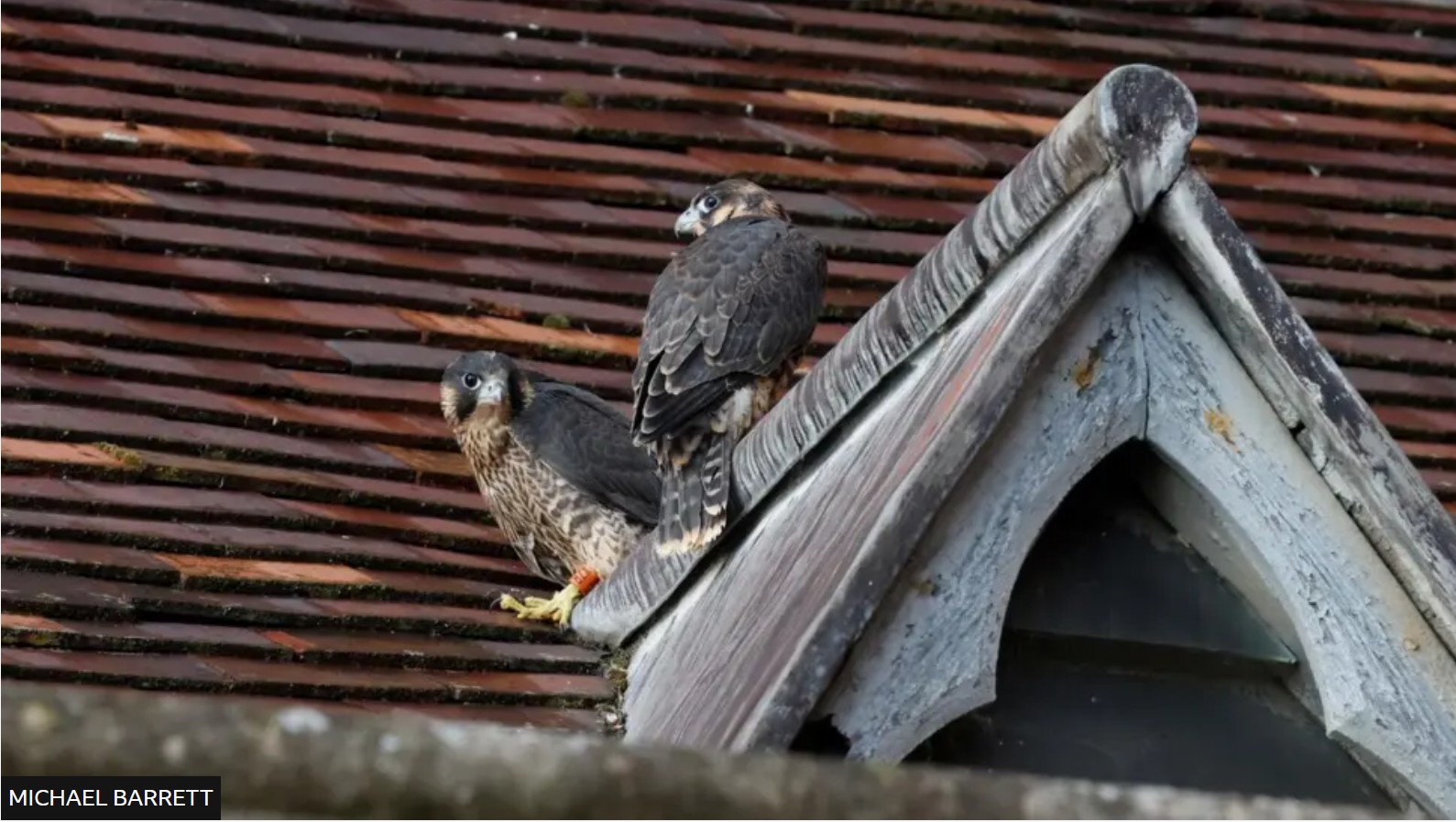
An individual is ‘helping police with their inquiries‘ after a person was seen on livestream camera deliberately walking over three Peregrine falcon eggs laid by the resident breeding pair at St Albans Cathedral in Hertfordshire yesterday.

The livestream feed, run in partnership by St Albans Cathedral and Herts and Middlesex Wildlife Trust, has been taken off air.

A livestream viewer said:

The female bird was sitting on the eggs and all of a sudden there was a noise that spooked her, it sounded like a door opening.

Then I saw a man’s leg enter in front of the camera. He stood there for 30 or 40 seconds before literally walking across – he didn’t stamp but he stepped on the eggs and just kept walking“.

More details on BBC News website here.

UPDATE 5 May 2025: ‘Investigation still ongoing’ into person seen trampling Peregrine eggs at St Albans Cathedral (here).

UPDATE 19 April 2026: No prosecution after man crushed Peregrine eggs at St Albans Cathedral (here).

Thousands of gamebirds culled at breeding facility in N Yorkshire after bird flu outbreak

The number of outbreaks of Highly Pathogenic Avian Influenza is showing no sign of slowing down, with the latest flurry of cases reported in Yorkshire and County Durham.

So much so that from today (7th April 2025), the regional Avian Influenza Prevention Zone (AIPZ) mandating enhanced biosecurity and housing for kept birds currently in force across Cheshire, City of Kingston Upon Hull, East Riding of Yorkshire, Herefordshire, Lancashire, Lincolnshire, Merseyside, Norfolk, North Yorkshire, Shropshire, Suffolk, Worcestershire and York has now been extended to cover the following counties:

Cumbria, County Durham, Northumberland, Tyneside.

One of the recent outbreaks reported in North Yorkshire caught my eye. Here’s the report of a case on 30 March 2025:

Highly Pathogenic Avian Influenza (HPAI) H5N1 was confirmed in commercial poultry and other captive birds at a premises near Pickering, Thirsk & Malton, North Yorkshire (AIV 2025/37).

A 3km protection zone and 10km surveillance zone have been declared around the premises. All affected birds on the premises will be humanely culled‘.

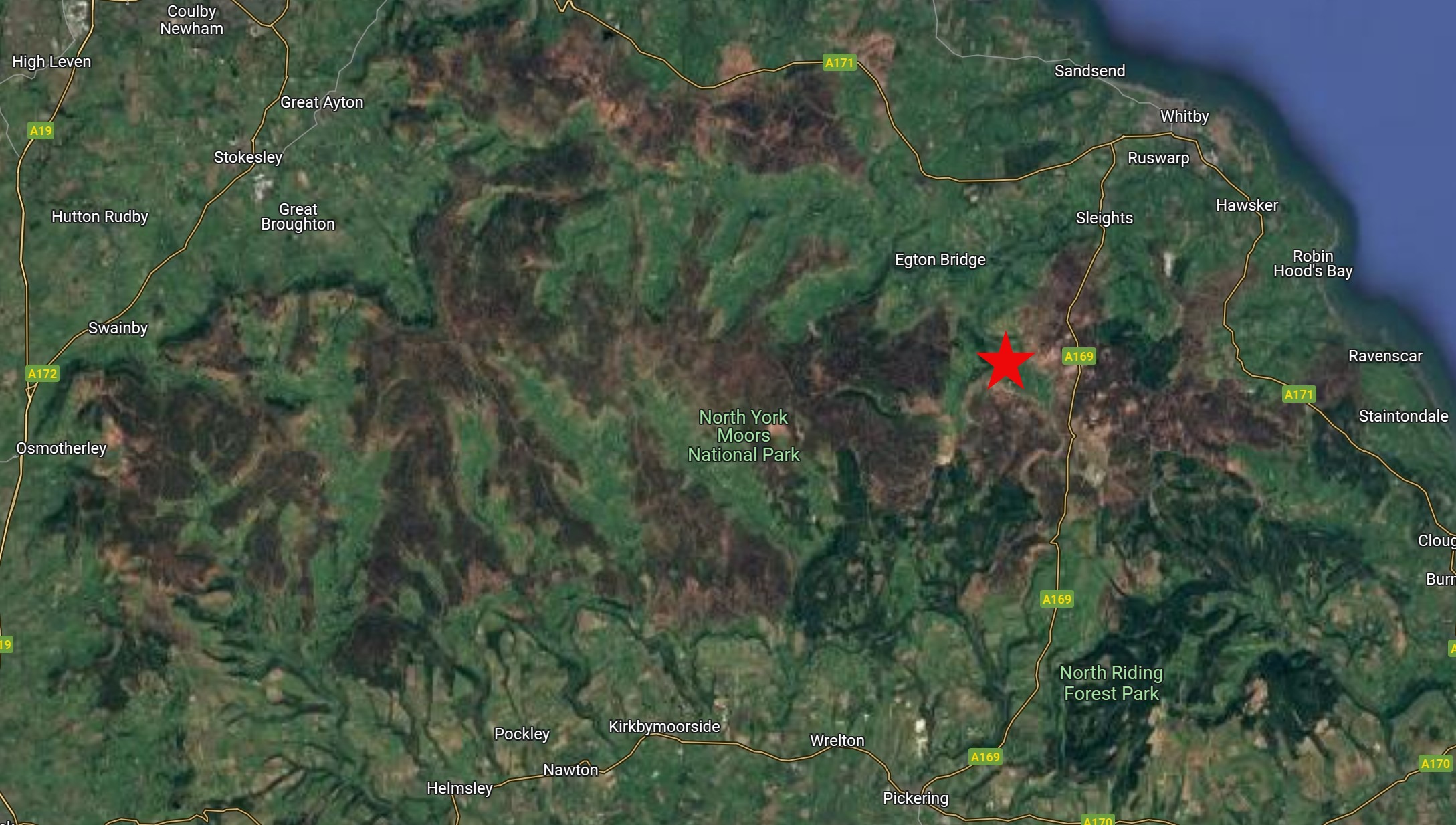
The grid reference given for the centre of the protection zone (i.e. the location of the H5N1 outbreak at the centre of the blue circle) is given as: SE7592387464.

This appears to be Westfield Farms, Cropton Lane, Pickering, just on the border of the North York Moors National Park.

Sound familiar?

In 2015 the owner of Westfield Farms, where pheasants, red-legged partridges and ducks are bred and reared to be sold for gamebird shooting was convicted of permitting the use of a pole trap at his game farm after the RSPB filmed him driving past and appearing to look in the direction of a pole trap set above a rearing pen.

Pole traps have been banned since 1904. It’s a barbaric way to kill any animal and causes horrendous suffering and distress, often over a period of many hours. A spring trap is placed on a post where a bird of prey is likely to perch. When the bird lands on the ‘plate’, the trap springs shut on the bird’s legs. When the bird tries to fly off, it ends up dangling upside down because the trap is attached to the post by a chain to prevent it from being carried away. The bird remains dangling, often with severe injuries, until its ultimate demise.

The game farm owner had denied any knowledge of the pole trap but after viewing the RSPB’s footage, magistrates said it was “inconceivable” that he wouldn’t have seen it. In addition to his conviction for permitting the use of a trap, two of his staff were cautioned by police after a total of five set pole traps were found at the game farm (see here).

North Yorkshire Police collecting one of five illegally-set pole traps at Westfield Farm. Photo: RSPB

However, the game farm owner’s conviction was quashed on appeal later that year after judges at York Crown Court declared that “the prosecution had failed to prove its case” (i.e. that the game farm owner had seen the illegal trap) – see here.

Sign at Cropton last week (supplied by RPUK blog reader). Spot the pheasant!

Buzzard found shot dead in Wolverhampton: RSPCA appeals for information

The RSPCA has issued an appeal for information following the discovery of a dead buzzard that is believed to have been shot.

The buzzard was found by a member of the public near Severn Trent’s Four Ashes Sewage Treatment Works on Enterprise Drive, Wolverhampton, on Wednesday 12 March 2025. It reportedly had ‘pellet wounds to its wing, body and head‘.

The shot buzzard. Photo by RSPCA

There isn’t any information about the type of weapon used (e.g. air rifle, shotgun etc). There were also reports of a second buzzard being killed in the same area but the RSPCA was unable to find a body.

Anyone with information about this incident should contact RSPCA’s appeal line number on 0300 123 8018, quoting incident number 01467643.

Crown Court upholds police decision to revoke convicted gamekeeper John Bryant’s shotgun & firearms certificates

Further to the news about the conviction and sentencing of Lincolnshire farmer/gamekeeper John Bryant for multiple offences at Grange Farms, West Ashby in October 2022, relating to an investigation into the illegal persecution of birds of prey (see here, here and here), Lincolnshire Police’s Rural Crime Team has provided some information about the revocation of Bryant’s shotgun and firearms certificates.

Convicted farmer/gamekeeper John Bryant

We have been asked about his firearms/shotgun certificates.

As a direct result of this investigation. Both from matters revolving around the storage and security of firearms and ammunition along with this case being brought against him, his authority to possess firearms and shotguns was also withdrawn. In other words, Lincolnshire Police revoked those certificates so he could no longer possess licensable guns.

This was contested at Lincoln Crown Court whereby his legal team failed to argue the case and judgement was held in support of the Police decision to revoke them.

This should also stand as a warning to all certificate holders. One criminal act can easily lose you your right to possess firearms, but also the way you store/secure/keep those firearms can also have a huge detrimental impact on those certificates“.

It sounds then, that in addition to the charges against Bryant for the poison and trap offences, there was also an issue about the storage and security of his firearms and ammunition, although I haven’t seen any report of charges being brought against him for those alleged offences, just a revocation of his licences.

Given that the appeal hearing against his firearms and shotgun licence revocations was held at Lincoln Crown Court (date unknown), this probably accounts for at least some of the reported £100,000 costs incurred by Bryant for his defence, as mentioned in court during his sentencing hearing yesterday.

Looking at the account’s for Grange Farms (West Ashby) Ltd, held on Companies House website, which lists Bryant as one of several Directors (here), the family’s company can easily afford to cover Bryant’s own legal costs in addition to the fine and costs he received from the court (£7,449) from the company’s £1 million+ capital and reserves.

I do wonder about the firearms and shotgun revocations though. Can other family members, residing and/or working at the same property, hold their own certificates and thus legitimately keep firearms and shotguns on the premises? And if so, what measures are taken to ensure John Bryant doesn’t have access to them?

These are genuine questions. I’d welcome the opinion of any firearms experts who might be reading this.

RSPB statement on conviction of Lincolnshire gamekeeper John Bryant

Further to today’s earlier blog on the sentencing of Lincolnshire gamekeeper John Bryant who was found guilty of multiple crimes after a police investigation into the illegal killing of a red kite and two buzzards (see here), the RSPB Investigations Team has issued the following press release:

GAMEKEEPER ORDERED TO PAY OVER £7,000 AFTER BEING FOUND GUILTY OF POISON AND TRAP-RELATED OFFENCES

  • Numerous birds of prey had been poisoned in the Belchford area of Lincolnshire over a number of years, leading to a police investigation.
  • Police uncovered large quantities of banned poison and illegal traps on the gamebird shoot.
  • The RSPB is urging the government to introduce a licensing scheme for all gamebird shooting, with the sanction to remove licences to shoot if wildlife protection laws are broken, and to act as a meaningful deterrent to bird of prey crimes in particular.

After a two-day trial at Lincoln Magistrates’ Court, John Bryant (40), of West Ashby, Horncastle was found guilty on 7 March 2025 in relation to four offences. He was sentenced on 20 March 2025 and ordered to pay £7,449 in total – including £2112 in fines for the four offences, £4,492 in costs and a victim surcharge of £845. The court heard how a number of birds of prey were found poisoned in the Belchford area over several years, and how Lincolnshire Police then led a multi-agency search on a pheasant and partridge shoot at Grange Farms, West Ashby in October 2022 together with the RSPB, National Wildlife Crime Unit (NWCU) and Natural England.

This case is yet another example of why the RSPB is urging Westminster to introduce a system of licensing for gamebird shooting, to afford birds of prey better protection, and to follow Scotland’s lead on licensing all grouse shooting as a positive start.

Bryant, a gamekeeper and farmer, pleaded guilty to two offences relating to the illegal storage and usage of Alphachloralose. Alphachloralose can be legally used as a poison for rodents using products at 4% concentration or lower. However, during a search of his home, police found the poison illegally decanted into pots in the suspect’s vehicle and outbuilding. These two pots were tested under the WIIS (Wildlife Incident Investigations Scheme) run by Natural England, and found to contain banned and highly dangerous levels (85% and 88%) of the deadly substance. Alphachloralose remains one of the most common substances used for poisoning birds of prey.

Bryant was also found guilty of two offences relating to the possession of two pole traps, deemed as items capable of committing a wildlife offence. Police found unset spring traps (similar to a powerful mouse trap) hanging from wooden posts at two locations on land managed by Bryant. This set up is commonly recognized as a pole trap, used to catch and brutally injure birds of prey that perch on the post when hunting. Pole traps have been banned since 1904.

Forensic DNA analysis conducted by SASA (Science and Advice for Scottish Agriculture) found traces of Tawny Owl and wood pigeon DNA on one spring trap and the other spring trap tested positive for wood pigeon DNA. Bryant was found not guilty of setting any pole traps.

The District Judge said he found it unrealistic that Bryant would not have known the pole traps were on his land, which had been part of his defence.

Police also found four unset gin traps in an outbuilding belonging to the suspect. Forensic DNA analysis conducted by SASA found bird of prey DNA on three of the gin traps (a mechanical device, illegal in the UK since 1958, designed to catch an animal by the leg using spring-operated jaws). Two had Buzzard DNA on them, with a Sparrowhawk feather identified in the jaws of a third trap. Bryant was charged in relation to possession of the gin traps being items capable of committing a wildlife offence, but was found not guilty.

An assortment of traps found in Bryant’s garage. Photo: RSPB
One of the gin traps with what look like relatively fresh nettles caught in the jaw. Photo: RSPB

Several birds of prey have been found poisoned in the Belchford area over a number of years. In 2022 a Buzzard was found poisoned by Alphachloralose. In 2020 another Buzzard was killed having ingested the banned insecticide Aldicarb, and in 2017 a Red Kite was killed by Alphachloralose. Bryant was not charged in relation to poisoning any of these birds.

It is illegal to intentionally kill, injure or take a wild bird in the UK under the Wildlife and Countryside Act 1981. Yet the persecution of raptors persists, particularly in connection with land managed for gamebird shooting. Of all individuals convicted of bird of prey persecution-related offences from 2009 to 2023, 68% have been gamekeepers.

Howard Jones, RSPB Senior Investigations Officer, said:

This case highlights the immense value of police searches in relation to bird of prey persecution which clearly has been an issue in this area. This search found illegal poisons being used in a hugely dangerous manner, putting the public and wildlife at risk, along with a number of illegal traps.

We are urging the UK Government to introduce a system of licensing for all gamebird shooting, whereby this licence to operate could be revoked if crimes against birds of prey are detected on an estate. This would set a better precedent and act as a greater deterrent to those tempted to commit these crimes. “We thank Lincolnshire Police, and in particular DC Aaron Flint, on an excellent investigation into this case, demonstrating the value in strong partnership working in tackling bird of prey persecution“.

DC Aaron Flint, Forces Wildlife Crime Officer at Lincolnshire Police, said:

Unfortunately, this case is just one of a large number of bird of prey poisonings reported in Lincolnshire in recent years. However, the outcome demonstrates that Lincolnshire Police takes bird of prey persecution seriously. We thoroughly investigate any reports that relate to criminal activity around birds of prey. Our message is this: If you commit crimes against wildlife in Lincolnshire, we will identify you and you will be put before the courts.

This investigation was made possible through close collaboration with multiple agencies, and I want to express my gratitude to the National Wildlife Crime Unit, the RSPB, Natural England, CPS and SASA for their invaluable support. The Forensic Analysis Fund also played a vital role in advancing this investigation“.

Chief Inspector Kevin Lacks-Kelly, Head of the UK National Wildlife Crime Unit:

Thanks to the work of Police and Partners we have seen justice delivered. This conviction sends a strong message that bird of prey crime will not be tolerated, and you will feel the full force of the national policing capability. These offences are not only cruel, the undermine the conservation of our vulnerable wildlife. These birds should be free for us all to enjoy, not consigned to a police evidence bags.

If you notice a dead or injured bird of prey in suspicious circumstances, call the Police on 101 and fill in the RSPB’s online reporting form: www.rspb.org.uk/birds-and-wildlife/advice/wild-bird-crime-report-form

If you have information about anyone killing birds of prey which you wish to report anonymously, call the RSPB’s confidential Raptor Crime Hotline on 0300 999 0101.

ENDS

Well done to Lincolnshire Police Rural Crime Team and the partner agencies whose hard work resulted in Bryant’s conviction.

£7,000 is a relatively small fine given the seriousness of Bryant’s crimes, although when compared with some of the recent pathetic fines handed out by courts for wildlife crimes, this figure can be viewed as being substantial.

I’ve also been told by a blog reader who was observing proceedings in court, that it was mentioned that Bryant’s defence costs were £100,000. If that figure is accurate then he certainly has taken a big financial hit.

Lincolnshire gamekeeper guilty of multiple offences in relation to deaths of red kite and buzzards

Another trial and yet another gamekeeper convicted of offences relating to the illegal killing of birds of prey.

The trial of gamekeeper John Bryant, in relation to the illegal killing of a red kite and two buzzards, concluded at Lincolnshire Magistrates Court last week where he was convicted of four of ten alleged offences.

Gamekeeper Bryant, 40, of West Ashby, Horncastle, Lincolnshire had been summonsed to court last September following a police investigation into reports of three birds of prey, a red kite and two buzzards, being poisoned and killed over a five year period between 2017 and 2022.

Buzzard photo by Ruth Tingay

Bryant had pleaded not guilty to ten charges (two charges of using a trap to kill or take a wild bird, six charges of possessing an article capable of being used to commit a summary offence, and two charges of contravening health & safety regulations) so he faced trial starting 6th March 2025.

He will be sentenced for the four offences next week when full details of the case and convictions will be published.

UPDATE 20 March 2025: Lincolnshire gamekeeper John Bryant sentenced for crimes relating to raptor persecution – police statement (here).

Natural England quietly releases intriguing grouse moor location where two shot brood meddled hen harriers found dead

Just before Christmas 2024, Natural England published a blog that included information on the fates of two satellite-tagged brood-meddled hen harriers that had previously been listed as ‘Missing, Fate Unknown’.

These two young brood-meddled harriers (R3-F1-22 and R2-F2-20) had both ‘disappeared’ two years earlier, in December 2022, within days of each other, from the same winter roost site in the North Pennines.

Natural England’s December 2024 blog was the first time that NE had announced that the corpses of the two hen harriers had been found (one in April 2023 and the other in June 2023) and that both corpses contained shotgun pellets (three and two pellets, respectively).

In January 2025 Natural England updated its hen harrier satellite tracking database. Thanks to a sharp-eyed blog reader (you know who you are!), it was noticed that NE had finally, and quietly, published the grid references of where the dead hen harriers had been found (previously this detail had been withheld, apparently at the request of the police).

Natural England’s database now provides the following information about these two harriers:

Female, [Brood meddled]: R3-F1-22, Tag ID: 213921a, Date of last contact (i.e. date the satellite tag stopped functioning): 14th December 2022. Dead. Location: North Pennines NY708423. ‘Suspected illegally killed’. [Body found 10 April 2023].

Female, [Brood meddled]: R2-F2-20, Tag ID: 55144, Date of last contact: 7 December 2022. Dead. Location: North Pennines NY730372. ‘Suspected illegally killed’. [Body found 29 June 2023].

When I mapped these two grid references they were just under 5.5km of each other:

The dead hen harriers were both found on moorland managed for grouse shooting near Garrigill, in Cumbria:

Nobody has been charged with shooting these two harriers, presumably due to a lack of evidence – there’s no doubt they’d been shot at but where, and when, and by whom, remains unproven in a court of law.

The fact that the harriers disappeared from the same roost site within a week of each other, and their shotgun pellet-riddled corpses were found within 5.5km of one another on an area of grouse moor, is obviously just another one of those pesky coincidences that seem to happen so frequently unfairly in the world of driven grouse shooting (e.g. see here, here and here).

So keen is Natural England not to attribute the shooting of these birds to their deaths, the NE database states: ‘suspected illegally killed‘ [emphasis by me].

I was curious about this area of grouse moor and who owned it, so I looked up Guy Shrubsole’s earlier mapping work on his fantastic Who Owns England? website:

Guy’s map shows an area he calls ‘Townshends’ although he clarifies in his 2016 grouse moor database that this was the name of the owners, not the name of the estate. His database shows the owner as The Honourable Mrs Charlotte Anne Townshend and he reports that a CAP payment of £12, 178.33 was paid in 2014 registered under ‘The Honourable Mrs Townshend’.

The grid reference where the dead brood meddled hen harrier R2-F2-20 was found seems to be right in the middle of the estate area mapped by Guy, but the grid reference for the other dead hen harrier, R3-F1-22 appears to be outside of Guy’s mapped area, just to the north.

But it looks like Guy has only partially mapped this estate. The notes that accompany Guy’s map indicate that he mapped 4,200 acres but I think it extends further than this, and that the estate actually covers 9,500 acres of moorland and a further 2,000 acres of grassland.

Why do I think that? Well, it was actually revealed in written evidence submitted by another of the estate’s owners, a Mr James Townshend, to a Westminster parliamentary committee taking evidence on grouse shooting in 2016 prior to the debate of Mark Avery’s petition to ban driven grouse shooting.

Not only does Mr Townshend identify himself as one of the owners of Garrigill Estate, he writes quite specific details about the extent of the landholdings, hence why I think Guy’s map provides only partial coverage of this estate.

Ironically, Mr Townshend also writes about how he thinks “good grouse moor management…has a significant beneficial impact on…hen harriers“.

Here’s his full written submission:

I think that the Garrigill Estate extends further north than Guy’s map (and if so would likely include the area where hen harrier R3-F1-22’s shot corpse was found).

Why do I think it extends to the north rather than in any other direction?

Well, because in March 2021 a sporting agency published this job advert for a trainee grouse moor gamekeeper on the ‘Garrigill & Rotherhope Estate“. Rotherhope lies to the north of Guy’s mapped area.

It’d be interesting to know whether the Garrigill [and Rotherhope] Estate is a member of the Moorland Association. It’d also be interesting to know whether this area has been classified as a hen harrier persecution hotspot by the Hen Harrier Taskforce. The criteria for classification include ‘repeat locations for suspected crimes involving hen harriers’. I’d say that finding two dead hen harriers within 5.5km of one another, both with shotgun injuries, would qualify as a hotspot.

Unfortunately the identities of these hotspots are being kept ‘secret’ by the police in order to “build trust” (see here). There’s clearly an armed criminal at large in the area – why wouldn’t you want to warn the public about that?

I can see why prominent landowners might not want a ‘persecution hot spot’ status made public but I’m pretty sure the Honourable Mrs Townshend would want the criminal caught if his actions were threatening the wildlife on Garrigill Estate. She was a former patron of Dorset Wildlife Trust until her resignation in 2013 and her spokesman was quoted in the Dorset Echo at the time, saying: “Mrs Townshend… will continue to ensure that her estates are managed to the highest standard for the benefit of wildlife and conservation“.

No doubt she was furious last month then when her Ilchester Estate in Dorset was fined nearly £28,000 by the Environment Agency for “deliberately flouting” the conditions of a licence to abstract water from an ecologically sensitive chalk stream, using ‘the equivalent of three Olympic-sized swimming pools worth of water during a drought’ (see here).

Hang on a minute. The Ilchester Estate? That rings a bell. Ah yes, that’s the estate that made several donations to support West Dorset’s Conservative MP Chris Loder, he of “Dorset is not the place for eagles” fame.

It’s a funny old world, isn’t it?

Satellite-tagged hen harrier from Tarras Valley Nature Reserve ‘disappears’ on grouse moor in North Pennines

Press release from RSPB (20 February 2025)

SATTELITE-TAGGED HEN HARRIER DISAPPEARS IN SUSPICIOUS CIRCUMSTANCES

  • The rare bird was being monitored by the RSPB and the sudden failure of the bird’s tag is being treated as suspicious
  • Hen Harriers are on the red list of conservation concern, with illegal killing the key factor limiting their recovery.
  • The RSPB is pressing Westminster to introduce licensing in England for all gamebird shooting, to afford birds of prey greater protection

Durham Police and the RSPB are appealing for information after a protected Hen Harrier disappeared in suspicious circumstances in County Durham in January.

The young female bird hatched on a Scottish nest in 2024 and was named Red by local schoolchildren. Whilst still a chick, Red was fitted with a satellite tag in 2024 as part of an RSPB programme to gather more information about this rare and persecuted species. The tags, fitted when the birds are still in the nest, are worn like tiny rucksacks and continue to transmit even after a bird dies.

Hen harrier ‘Red’ hatched on the Tarras Valley Nature Reserve in 2024

After fledging her nest, Red flew into England and spent the winter in the North Pennines. On 15 January, her tag showed her to be roosting on a grouse moor near Hamsterley Forest. After this, the daily transmissions unexpectedly ceased.

Durham Police carried out a search of the area but found no sign of the bird or the tag.

Another Hen Harrier, Sia, disappeared in similarly suspicious circumstances nearby in 2022 [Ed: see here]. Her tag had also been functioning normally until that point.

The RSPB is urging the government to introduce a licensing scheme for grouse and gamebird shooting, as is now law in Scotland. If criminal activity – such as raptor persecution – is detected on an estate, then this licence can be removed.

Hen Harriers are rare breeding birds and fully protected by law. They are known for their acrobatic ‘skydancing’ courtship display which they perform above upland moors in spring. There were just 25 successful Hen Harrier nests in England 2024, despite a previous independent government report finding that there is enough habitat and food to support over 300 pairs. Illegal killing continues to be the main factor limiting the recovery of the UK Hen Harrier population.

A scientific study published in the journal Biological Conservation found that survival rates of Hen Harriers were ‘unusually low’, and illegal killing was identified as a major cause. And previously, a 2019 Government study concluded that Hen Harriers suffer elevated levels of mortality on grouse moors, most likely as a result of illegal killing. The RSPB’s Birdcrime report also found that 75% of all individuals convicted of bird of prey persecution-related offences from 2009 to 2023 were connected to the gamebird shooting industry.

Howard Jones, RSPB Senior Investigations Officer, said:

The disappearance of Red is a huge blow for a struggling species where every bird counts. Should a tagged bird die, its tag would continue transmitting, allowing us to recover the body. This was not the case, which strongly suggests human interference.

This latest incident follows a clear pattern of Hen Harriers disappearing on driven grouse moors. It’s overwhelmingly clear that action must be taken to protect these birds in these landscapes. Licensing of driven grouse shooting estates must be implemented to ensure all estates are operating within the law, and to protect birds like Hen Harriers from persistent persecution“.

If you noticed a dead or injured bird of prey in suspicious circumstances, please call the police on 101 and fill in the RSPB’s online reporting form: https://www.rspb.org.uk/birds-and-wildlife/advice/wild-bird-crime-report-form/  

If you have information about anyone killing birds of prey which you wish to report anonymously, call the RSPB’s confidential Raptor Crime Hotline on 0300 999 0101.

ENDS

So here we are again. Yet another hen harrier ‘vanishes’ on yet another grouse moor. The name of the grouse moor hasn’t been made public but we know that Hen Harrier ‘Red’ disappeared in the same area where another young hen harrier, called ‘Sia’, also disappeared in suspicious circumstances in 2022.

The hen harrier killers couldn’t even get through the first month of a new year without committing yet another offence.

Why does it keep happening? Simple. Nobody has been caught or prosecuted in any of the (now) 134 cases we know about in recent years, and the chances of anyone being caught or prosecuted are virtually none existent, so there is absolutely no deterrent whatsoever to stop this happening again and again and again.

We know that Natural England is currently undertaking a review of the ludicrous Hen Harrier Brood Meddling ‘trial’ which ran from 2018 – 2024 (see here) and was supposed to bring an end to the routine, systematic slaughter of these birds. My understanding is that this review is being done relatively quickly because representatives of the grouse shooting industry have apparently applied for another brood meddling licence for 2025, laughingly termed a ‘conservation’ licence, and I’ll be writing about that soon.

Meanwhile, the RSPB says it is urging the Government to introduce a licensing scheme for grouse shooting in England, along the same lines as the new scheme in Scotland. They’re wasting their time – the legislation in Scotland has already been sabotaged by the grouse shooting industry resulting in a severely weakened licensing system that is virtually unenforceable.

Instead, Wild Justice has launched a petition calling for a ban on driven grouse shooting as the only viable option on the table. The petition is live until 22 May 2025 and needs 100,000 signatures to qualify for a debate in Westminster Hall. It’s currently on 64,000 signatures. If you haven’t yet signed it, it’s here.

I’ll shortly be updating the hen harrier death list, which now stands at 134 hen harriers confirmed ‘missing’ or illegally killed in the UK since 2018, mostly on or close to grouse moors. If the additional six dead hen harriers currently still awaiting post mortems turn out to have been illegally killed, the death list will stand at 140 hen harriers.

UPDATE 22 February 2025: 134 hen harriers confirmed ‘missing’ or illegally killed in UK since 2018, most of them on or close to grouse moors (here)