Last month I blogged about a red kite that had been found injured with shotgun injuries in Galleywood Lane, Chelmsford, Essex (see here and here).
The kite was picked up by concerned members of the public and taken to the South Essex Wildlife Hospital for treatment.
[Photo of the kite by South Essex Wildlife Hospital]
After four weeks of expert care and rehabilitation, this red kite was released back to the wild last week. Well done to all the team at South Essex Wildlife Hospital.
Essex Police are still investigating the circumstances of this illegal shooting and if anyone has any information please contact Wildlife Crime Officer PC Jed Raven on Tel 101 and quote reference number 42/265786/21.
Please note, this police investigation is one of two separate incidents concerning dead red kites. The other one relates to the discovery of a dead red kite that had been found in suspicious circumstances in the Uttlesford area of Essex earlier in November (here).
On Wednesday I blogged about a police investigation into a shot red kite that had been found in Galleywood Road, Chelmsford, Essex (see here).
The details were a bit sketchy but Essex Police Wildlife Crime Officer Jed Raven had said he believed the kite had suffered wing injuries after someone had fired a shotgun at this protected species.
A further update now reveals that the kite was shot, it flew a short distance, landed in a tree, and then fell from the tree in front of witnesses who took the injured bird to a wildlife hospital.
The kite is currently undergoing treatment.
[Ed: NB. An earlier version of this article said the red kite had died as a result of its injuries. This was incorrect]
If you have any information about this crime, which was committed on 14th November 2021, please contact Essex Police on Tel 101 and quote crime reference number: 42/265786/21
Please note, this police investigation is one of two separate incidents concerning dead red kites. The other one relates to the discovery of a dead red kite that had been found in suspicious circumstances in the Uttlesford area of Essex earlier this month (here).
UPDATE 14th December 2021: Shot red kite successfully rehabilitated and released in Essex (here)
Less than two weeks ago Essex Police announced they were working with the RSPB to investigate the suspicious death of a red kite found in the Uttlesford district (see here).
This morning, Police Wildlife Crime Officer Jed Raven has informed me of another incident, this time the shooting of a red kite.
The details are limited but here is what has been provided so far:
Crime reference number: 42/265786/21
14 November 2021, 2pm.
Galleywood Road, Chelmsford, Essex
Suspect(s) unknown have shot a red kite using what is believed to be a shot gun. The red kite was shot through its wing.
It’s not clear whether the shooting was witnessed and took place at this location at the stated time, or whether this time and location is where the injured kite was discovered.
I understand the kite is currently at a wildlife hospital but I don’t know whether it survived its injuries.
Hopefully more information will emerge as the investigation progresses.
Many thanks to PC Jed Raven for getting the news out. If anyone has any information about this latest crime please contact Essex Police on Tel: 101 and quote crime reference 42/265786/21.
UPDATE 21st November 2021: Update on shot red kite in Essex (here)
UPDATE 14th December 2021: Shot red kite successfully rehabilitated and released in Essex (here)
Last week I blogged about how a Suffolk gamekeeper was due at Ipswich Magistrates Court to face a charge of poisoning a buzzard, having already pleaded guilty to several pesticide storage and firearms offences (see here).
This case stemmed from a multi-agency raid last January (here) after the discovery of an illegally poisoned buzzard in September 2020 which had been found close to pheasant-rearing pens near Lakenheath.
[The illegally-poisoned buzzard found close to the pheasant-rearing pens. Photos by RSPB]
The case was heard yesterday and it appears that the buzzard-poisoning charge was dropped, probably due to insufficient evidence, because despite the gamekeeper having this particular poison (Bendiocarb) in his possession, the prosecution would need to demonstrate that he was the person who laid the poisoned bait that subsequently killed this buzzard. The fact that the poisoned buzzard was found in close proximity to his workplace, and that he had the same poison in his possession, is simply not enough.
We can all draw our own conclusions of course, based on the balance of probability, but in English law the balance of probability is insufficient to convict for this particular offence. That’s not the fault of the police, the RSPB, the Crown Prosecution Service or the magistrate.
In this case, the gamekeeper, Shane Leech, 33, of Maids Cross Hill, Lakenheath, Suffolk, was convicted of six charges relating to pesticide and firearms offences and was given a Community Order of 80 hours unpaid work, ordered to pay £105 costs and a £95 Victim Surcharge.
I’ll leave it to you to decide whether the punishment fits the crime(s) and whether it offers any semblance of a deterrent to anyone who might be considering committing similar offences.
The RSPB has published two blogs about this case. The first one provides an overview of the case and offers praise to the work of Suffolk Police and the Crown Prosecution Service (see here).
The second blog is a more detailed discussion about the difficulties of bringing a successful prosecution for the illegal poisoning of birds of prey (see here). It also includes this shocking image of a pile of dead pheasants apparently being prepared for human consumption in the same room where the poison was being stored illegally!
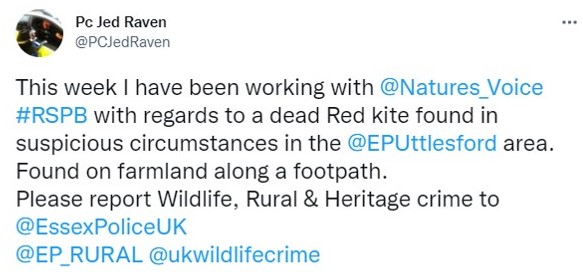
Essex Police is working with the RSPB to investigate the death of a red kite found in suspicious circumstances in the Uttlesford District.
Police wildlife crime officer Jed Raven posted the following photograph and tweet on Twitter this morning:
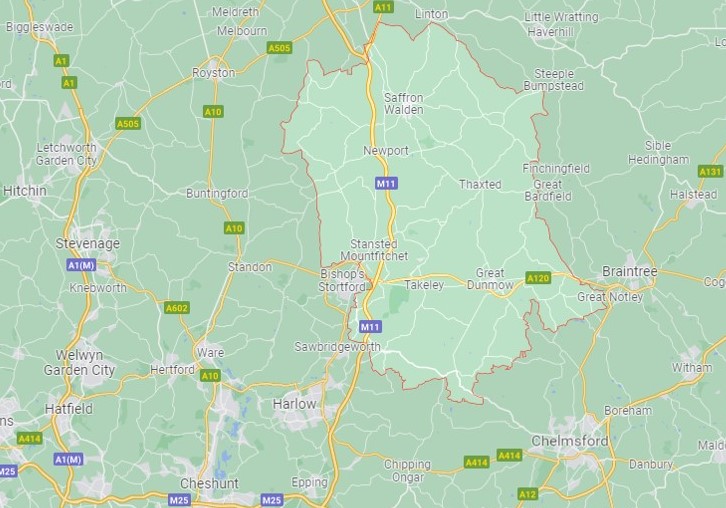
This is a map showing the Uttlesford district in Essex:
There aren’t any further details at the moment.
It’s good to see yet another example of partnership working between the RSPB and the police. What was it that Lord Masham, the poorly-informed Chair of the Moorland Association said a couple of weeks ago?
Ah yes, that the RSPB ‘seem to avoid the police and the authorities and the law‘ (see here).
Had he been paying attention he’d have known that the RSPB has been working with police forces across the UK in a series of multi-agency raids relating to suspected raptor killing (e.g. see here).
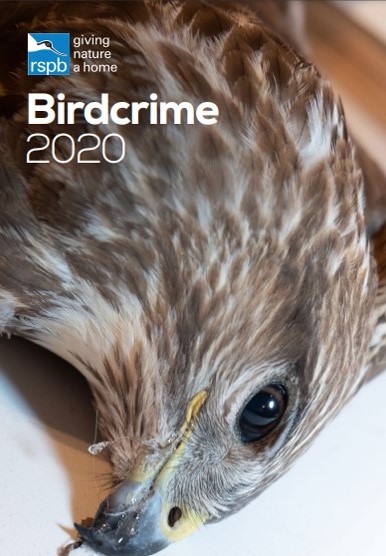
It’s not really that Lord Masham is poorly-informed. I don’t think he is at all. I think rather his statement was a deliberate attempt to try and discredit the reputation of the RSPB and thus undermine the credibility of the RSPB’s latest damning Birdcrime report, which showed that 2020 was the ‘worst year on record’ for bird of prey persecution in the UK, with more than half of the crimes linked to land managed for game bird shooting.
If a post-mortem reveals that this latest red kite has been illegally killed, let’s hope the joint Police & RSPB investigation leads to a heightened level of public awareness in the local area, if not a prosecution.
A gamekeeper is due in court on Monday 8th November accused of poisoning a buzzard.
He has already pleaded guilty to a number of firearms offences and a number of pesticide storage offences.
At an earlier hearing in August, the gamekeeper pleaded not guilty to poisoning the buzzard so the case was sent for trial.
This case stems from a multi-agency raid, led by Suffolk Police, at a property last January (see here).
[Police officers seized a number of firearms during the raid. Photo via Suffolk Police]
Please note, as this is a live case no further detail will be provided here until the case has concluded or there is official commentary from the court. Comments on this particular blog also won’t be accepted until the case concludes so as not to prejudice proceedings. Thanks for your understanding.
UPDATE 9th November 2021: Gamekeeper convicted for pesticide and firearms offences but buzzard-poisoning charge is dropped (here)
Last week the RSPB published its latest annual Birdcrime report which showed that 2020 was the ‘worst year on record’ for confirmed crimes against birds of prey in the UK (see here).
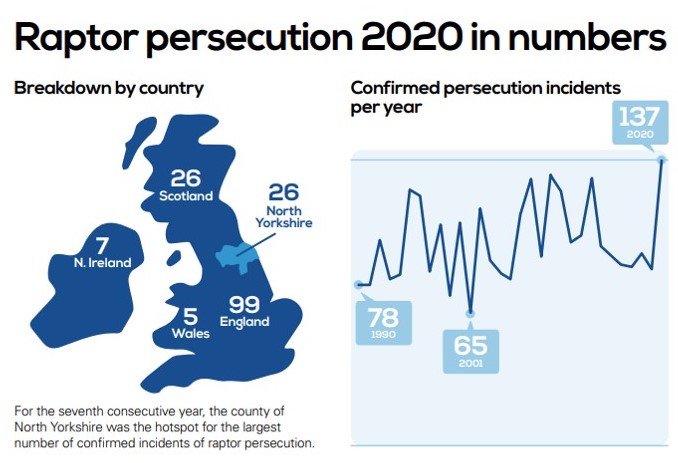
For the seventh year in a row, North Yorkshire had more confirmed raptor persecution crimes than any other county in the UK. Twenty-six of the 137 confirmed UK incidents occurred in North Yorkshire. Of these two thirds were directly related to grouse shooting and a further four incidents to other types of shooting. Victims in the county included 16 buzzards, two peregrine falcons, two red kites and one goshawk.
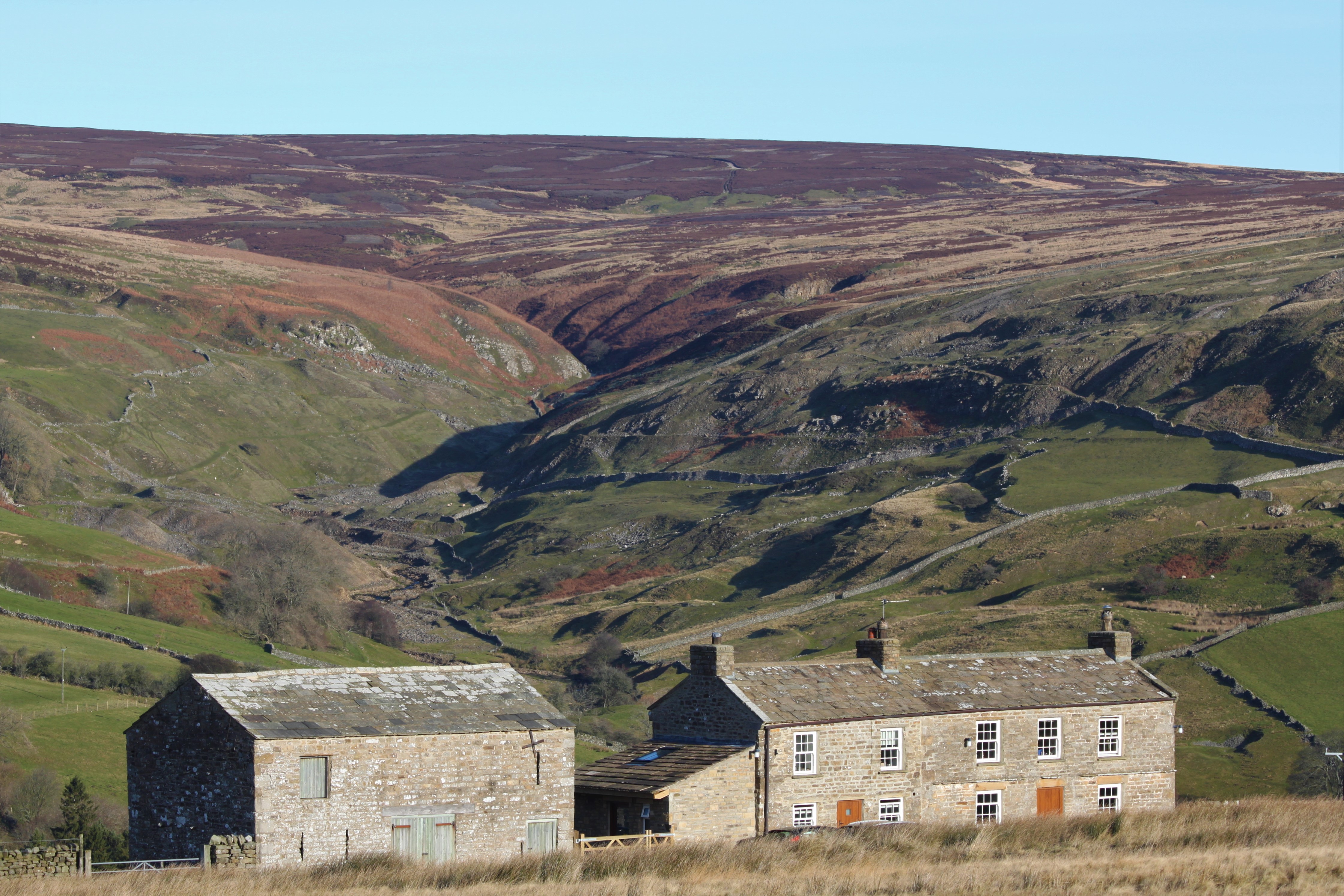
[Grouse moor landscape in the Yorkshire Dales National Park. Photo by Ruth Tingay]
In response to the damning Birdcrime report, the Yorkshire Dales National Park Authority has issued this pretty unequivocal statement:
YORKSHIRE DALES NATIONAL PARK AUTHORITY REACTION TO LATEST RSPB BIRDCRIME REPORT
Commenting on the RSPB Birdcrime Report 2020, Yorkshire Dales National Park Authority Chief Executive David Butterworth said:
“This report makes grim reading for all landscape authorities, landowners, managers and other partners who are working hard to call out and tackle illegal raptor persecution, and it’s embarrassing and humiliating to see North Yorkshire yet again topping the league table with the highest number of confirmed incidents.
“As we’ve said before, the continuing issue of bird of prey persecution in North Yorkshire demands maximum exposure, as do the activities of those who take part in this criminality. People need to know what is happening here and the devastating impact this is having on our protected species. This report lays that bare.
”The Yorkshire Dales National Park Authority condemns raptor persecution in the strongest possible terms and, as highlighted in this report, we will continue to work closely with partners and others to stamp out this crime once and for all.
“I would appeal to anyone, local or visitor, who witnesses any suspicious activity while they’re out and about in the countryside, or anyone who is made aware of it through their networks, to contact the Police”.
The Yorkshire Dales National Park Management Plan objective C5 on illegal persecution of raptors can be viewed here.
For concerns about a possible wildlife crime, you should call 101. If you witness a suspected wildlife crime in action, call 999 immediately and ask for the Police. Finally, you can speak in confidence about raptor persecution directly with the RSPB on 0300 9990101
The Off Road Bike Team located 2 gralloched Deer & 3 dead Buzzards on Doncaster patch today. Having spoken to landowners the deer have been poached, & buzzards killed illegally. The team will be extending our patrols into the night‘.
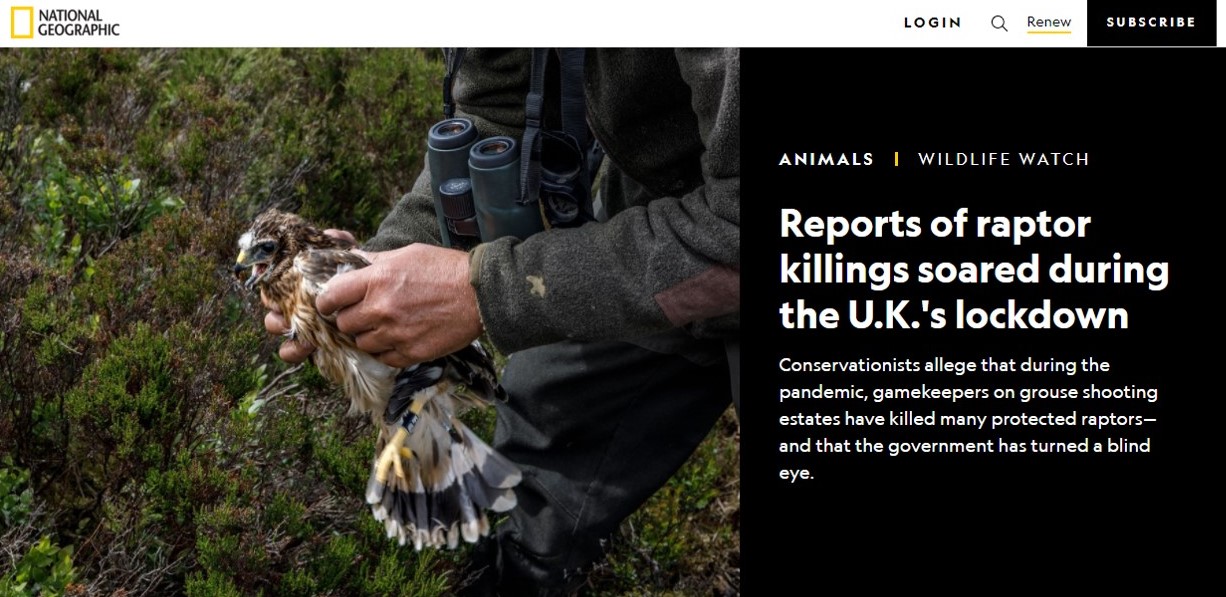
Timed to publish on the same day as the RSPB’s Birdcrime report, documenting how 2020 was the ‘worst year on record’ for crimes against birds of prey in the UK (see here), National Geographic has just published a lengthy article, written by journalist Rene Ebersole who visited the UK earlier this year specifically to research the subject of raptor persecution on grouse moors.
Rene visited quite a few field sites and interviewed a lot of people for this piece, including Mark Thomas (RSPB Investigations), Mark Avery (Wild Justice), Caroline Middleton Gordon (Moorland Association), Matt Hagen (North Yorkshire Police and RPPDG), Mark Cunliffe-Lister (Swinton Estate & Moorland Association), Steve Downing (Northern England Raptor Forum), the witness who saw ‘gamekeepers’ shooting buzzards on the Bransdale Estate last year, and some others.
I could spend a long time analysing the contributions from these people but unfortunately I don’t have the time today. I will try and come back to it at some point though, because some of it, especially Cunliffe-Lister’s comments, deserve ripping to shreds. If you’re going to read the article, and I’d urge you to because it’s very, very good, I’d recommend you don’t have a hot drink anywhere nearby when you read Cunliffe-Lister’s predictable denials and diversions. For example:
“Grouse shooting had some bad times when raptors were being controlled illegally historically, but now we’re all being responsible and working a way forward, so we can still keep somebody living in this house and working up here, rather than giving up“.
What a prat. It’s these constant denials from senior figures in the shooting industry, in the face of decades worth of overwhelming science and evidence, that provide the raptor killers with the confidence to continue their crimes on the shooting estates, safe in the knowledge they’re probably going to be protected.
North Yorkshire Police Inspector Matt Hagen deserves a medal simply for being prepared to stand up and say it how he sees it, at great risk to his personal and professional life knowing how the nasty brigade has turned on previous officers who’ve dared to form and express an opinion based on evidence and experience.
He talks about knowing the identity of the Nidderdale poisoner, of how the Bransdale gamekeepers all gave ‘no comment’ interviews when questioned about the five shot buzzards found buried on the estate, how ‘shocked and disgusted’ he is about the high level of raptor persecution in the UK, how it’s ‘more likely than not‘ that hen harrier River was shot on the Swinton Estate, despite the ridiculous and largely implausible explanations of estate owner Cunliffe-Lister, and how gamekeepers “all know what is going on, and they cover it up“.
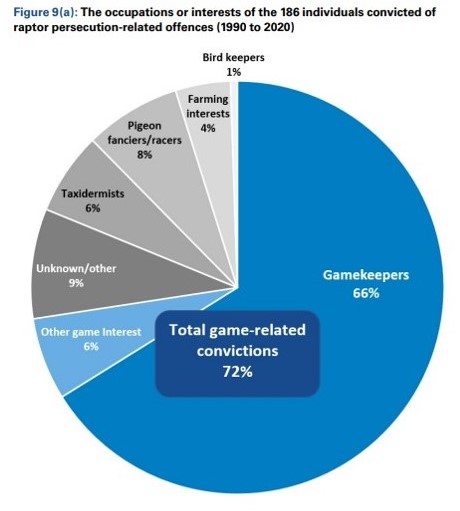
He’s not wrong. This pie chart from the latest RSPB Birdcrime report shows that almost three-quarters of those convicted of raptor persecution crimes in the last 30 years worked in, or had connections to, the game-shooting industry.
The National Geographic article is free and open access. You can read it HERE
Well done, journalist Rene Ebersole and her photographer Anastasia Taylor-Lind – it’s a very good piece and it’s excellent that these disgraceful crimes are being featured by a highly respected organisation such as National Geographic, being exposed to a much wider international audience.
UPDATE: A PDF of the article can now be downloaded here:
The RSPB’s Birdcrime 2020 report has revealed 137 known, confirmed incidents of bird of prey persecution last year – the highest number recorded in 30 years.
Produced annually by the RSPB’s Investigations unit, Birdcrime is the UK’s only full data set on confirmed incidents of raptor persecution – namely the illegal shooting, trapping and poisoning of birds of prey.
There were 137 confirmed incidents in 2020: the highest total since recording began in 1990. The overall rise in numbers can be attributed to the unprecedented number of incidents detected in England (99) during 2020, many of which occurred during Covid-19 lockdown.
The victims included 58 buzzards, 20 red kites, 16 peregrines, six sparrowhawks, three goshawks and other protected birds of prey including rare hen harriers and golden eagles. Based on population studies for significant species, it’s believed that the true number killed is far greater, with many crimes going undetected and unreported.
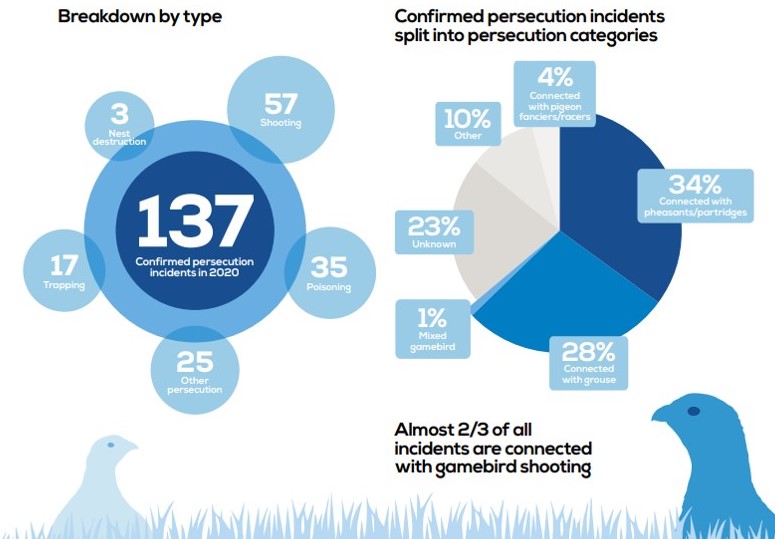
The crimes took place across a variety of land uses. However, a minimum of 85 (62%) of all confirmed incidents were in connection with land managed for or connected to gamebird shooting. Bird of prey persecution shows a clear link to pheasant, partridge and grouse shooting, with incidents being more widespread in lowland areas and more concentrated in upland areas. In addition to Birdcrime data, peer-reviewed scientific studies based on satellite tagging and bird of prey populations, crime data and court convictions, show that raptor persecution has the most negative conservation impact on driven grouse moors. A Government study in 2019, identified criminal persecution by humans as the main factor suppressing the UK population of hen harriers: a red-listed bird species which nests on heather moorland.
North Yorkshire is the worst place for birdcrime in the UK for the seventh year in a row. Twenty-six of the 137 confirmed incidents occurred in North Yorkshire. Of these two thirds were directly related to grouse shooting and a further four incidents to other types of shooting. Victims in the county included 16 buzzards, two peregrine falcons, two red kites and one goshawk.
All birds of prey are protected by the Wildlife and Countryside Act 1981. To intentionally kill or injure one is a criminal offence and could result in an unlimited fine or up to six months in jail. Yet in 2020, there were only two prosecutions for raptor persecution offences.
The RSPB is calling on the governments of the UK to act now and implement a system of licensing for driven grouse shooting, to create greater accountability and ensure all estates operate to legal and high environmental standards. Failure to comply with licensing requirements should result in licence revocation for a defined period and therefore removal of the right to shoot as a meaningful deterrent to illegal behaviours.
The wildlife conservation charity is also urging for action to end other associated environmentally damaging land management practices, including a ban on burning on deep peat. The RSPB would also like to see a significant reduction in the numbers of non-native pheasants and red-legged partridges, currently millions, released into the countryside each year as there is growing evidence of environmental harm.
Mark Thomas, the RSPB’s Head of Investigations said “Although we have become used to the illegal killing of birds of prey, the figure for 2020 is truly shocking.
“We are in a climate and nature emergency. All land must be managed legally and sustainably for people and for nature, and not accelerate the worrying loss of UK wildlife we are already experiencing.
“The RSPB welcomes the announcement by the Scottish Government to licence driven grouse moors there, but this has to happen now in England as well. Licensing should be conditional on compliance with wildlife protection laws, and if breached, should result in removal of the right to shoot. Those shoot operators who behave legally and responsibly should have nothing to fear from this sanction”.
Chief Inspector Kevin Kelly, Head of the National Wildlife Crime Unit (NWCU) said “Raptor Persecution is a National Wildlife Crime Priority. This report puts an emphasis on why it’s a priority and why it will remain a priority for years to come. I am disappointed in such a significant rise in incidents as the crime figures go a long way to undermine the hard work that’s done daily to tackle raptor persecution. I feel the Priority Delivery Group holds the key to success, this has gone through a period of change, bringing leadership, accountability and some fresh positive partners in. That said, the hard work lays ahead of us and we will be judged on our actions, not our words.”
ENDS
The RSPB 2020 Birdcrime report can be downloaded here:
So you know when the game-shooting organisations say that raptor persecution is in decline, it was an historical issue but it’s no longer a thing, that the industry has a ‘zero tolerance policy’ towards raptor persecution and it’s now just the work of a rogue keeper or two?
They’re lying.
2020 was the worst year on record.
Just think about that.
UPDATE 16.00hrs: “They all know what is going on, and they cover it up” – police inspector’s view on gamekeepers and raptor killing (here)





 Raptor Persecution UK