Gamekeeper due in court next week accused of poisoning a buzzard

A gamekeeper is due in court on Monday 8th November accused of poisoning a buzzard.

He has already pleaded guilty to a number of firearms offences and a number of pesticide storage offences.

At an earlier hearing in August, the gamekeeper pleaded not guilty to poisoning the buzzard so the case was sent for trial.

This case stems from a multi-agency raid, led by Suffolk Police, at a property last January (see here).

[Police officers seized a number of firearms during the raid. Photo via Suffolk Police]

Please note, as this is a live case no further detail will be provided here until the case has concluded or there is official commentary from the court. Comments on this particular blog also won’t be accepted until the case concludes so as not to prejudice proceedings. Thanks for your understanding.

UPDATE 9th November 2021: Gamekeeper convicted for pesticide and firearms offences but buzzard-poisoning charge is dropped (here)

Yorkshire Dales National Park Authority reacts to 2020 being ‘worst year on record’ for raptor persecution crimes

Last week the RSPB published its latest annual Birdcrime report which showed that 2020 was the ‘worst year on record’ for confirmed crimes against birds of prey in the UK (see here).

For the seventh year in a row, North Yorkshire had more confirmed raptor persecution crimes than any other county in the UK. Twenty-six of the 137 confirmed UK incidents occurred in North Yorkshire. Of these two thirds were directly related to grouse shooting and a further four incidents to other types of shooting. Victims in the county included 16 buzzards, two peregrine falcons, two red kites and one goshawk.

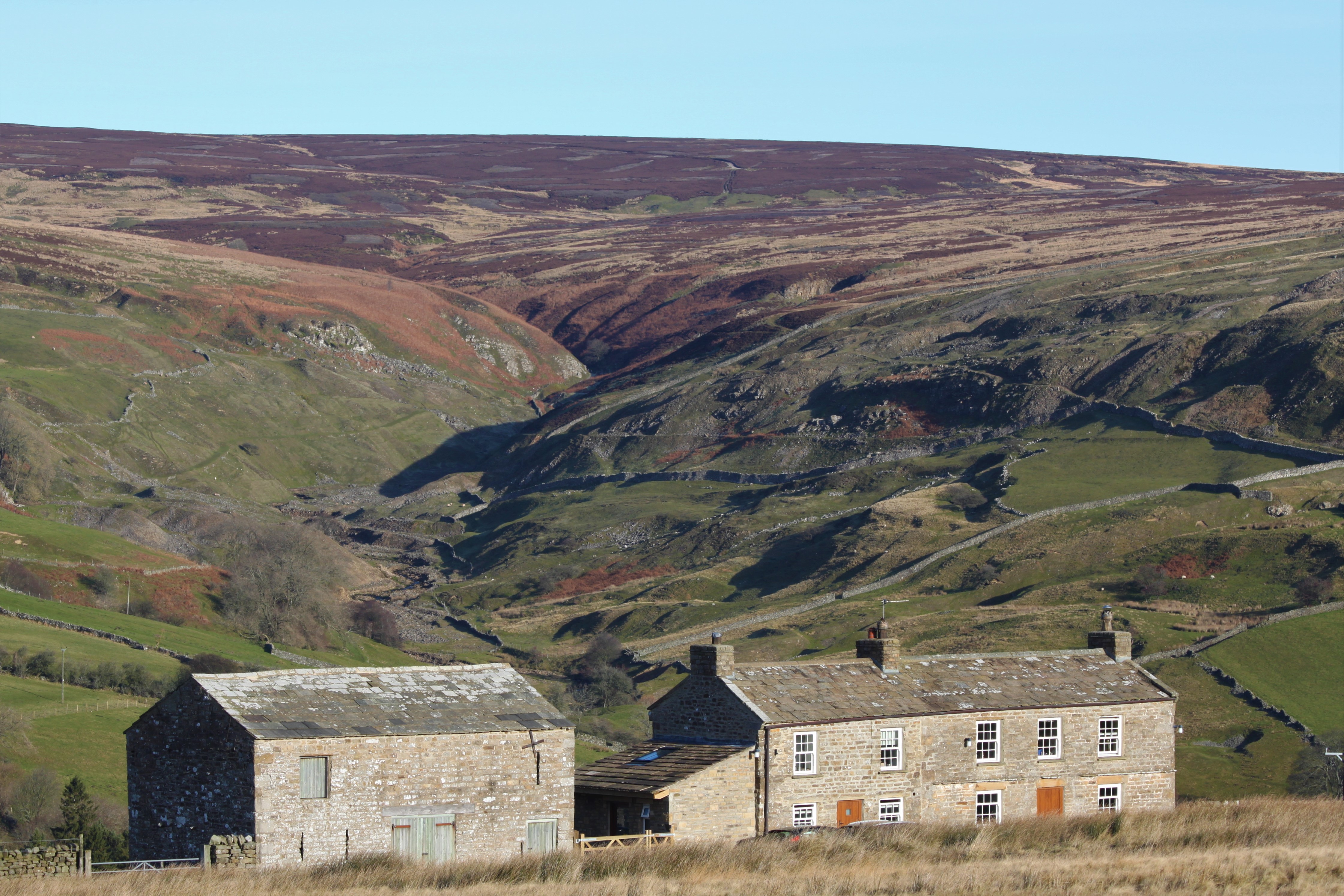
[Grouse moor landscape in the Yorkshire Dales National Park. Photo by Ruth Tingay]

In response to the damning Birdcrime report, the Yorkshire Dales National Park Authority has issued this pretty unequivocal statement:

YORKSHIRE DALES NATIONAL PARK AUTHORITY REACTION TO LATEST RSPB BIRDCRIME REPORT

Commenting on the RSPB Birdcrime Report 2020, Yorkshire Dales National Park Authority Chief Executive David Butterworth said:

“This report makes grim reading for all landscape authorities, landowners, managers and other partners who are working hard to call out and tackle illegal raptor persecution, and it’s embarrassing and humiliating to see North Yorkshire yet again topping the league table with the highest number of confirmed incidents.

“As we’ve said before, the continuing issue of bird of prey persecution in North Yorkshire demands maximum exposure, as do the activities of those who take part in this criminality. People need to know what is happening here and the devastating impact this is having on our protected species. This report lays that bare.

”The Yorkshire Dales National Park Authority condemns raptor persecution in the strongest possible terms and, as highlighted in this report, we will continue to work closely with partners and others to stamp out this crime once and for all.

“I would appeal to anyone, local or visitor, who witnesses any suspicious activity while they’re out and about in the countryside, or anyone who is made aware of it through their networks, to contact the Police”.

The Yorkshire Dales National Park Management Plan objective C5 on illegal persecution of raptors can be viewed here.

For concerns about a possible wildlife crime, you should call 101. If you witness a suspected wildlife crime in action, call 999 immediately and ask for the Police. Finally, you can speak in confidence about raptor persecution directly with the RSPB on 0300 9990101

ENDS

Three buzzards ‘killed illegally’ says South Yorkshire Police

South Yorkshire Police tweeted this yesterday:

The Off Road Bike Team located 2 gralloched Deer & 3 dead Buzzards on Doncaster patch today. Having spoken to landowners the deer have been poached, & buzzards killed illegally. The team will be extending our patrols into the night‘.

There aren’t any further details.

“They all know what is going on, and they cover it up” – police inspector’s view on gamekeepers & raptor killing

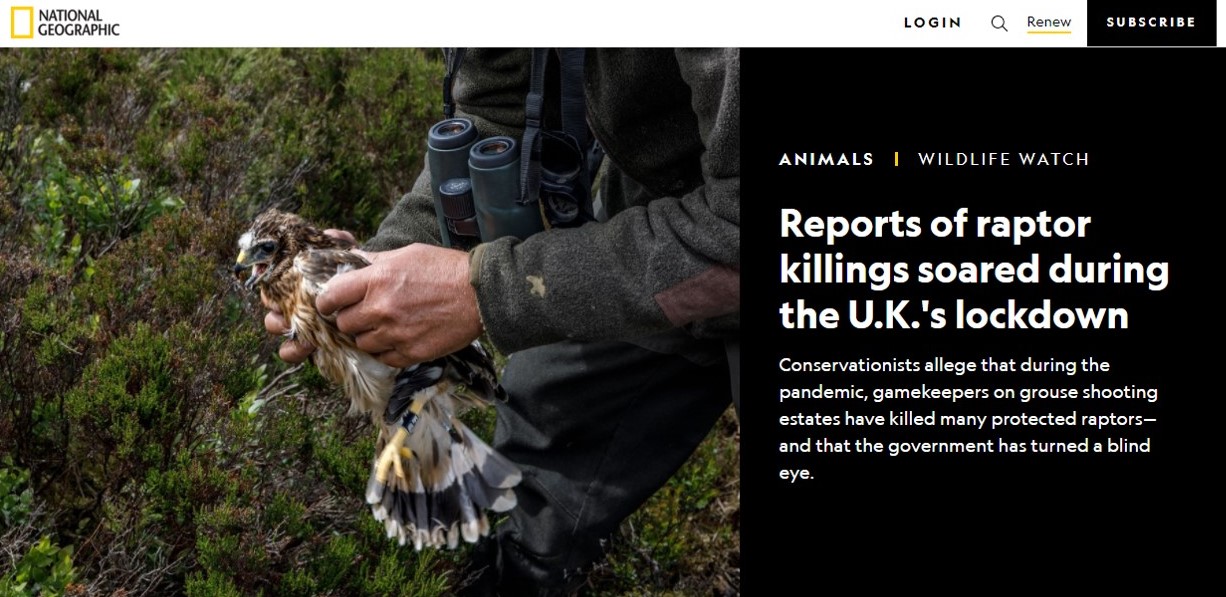
Timed to publish on the same day as the RSPB’s Birdcrime report, documenting how 2020 was the ‘worst year on record’ for crimes against birds of prey in the UK (see here), National Geographic has just published a lengthy article, written by journalist Rene Ebersole who visited the UK earlier this year specifically to research the subject of raptor persecution on grouse moors.

Rene visited quite a few field sites and interviewed a lot of people for this piece, including Mark Thomas (RSPB Investigations), Mark Avery (Wild Justice), Caroline Middleton Gordon (Moorland Association), Matt Hagen (North Yorkshire Police and RPPDG), Mark Cunliffe-Lister (Swinton Estate & Moorland Association), Steve Downing (Northern England Raptor Forum), the witness who saw ‘gamekeepers’ shooting buzzards on the Bransdale Estate last year, and some others.

I could spend a long time analysing the contributions from these people but unfortunately I don’t have the time today. I will try and come back to it at some point though, because some of it, especially Cunliffe-Lister’s comments, deserve ripping to shreds. If you’re going to read the article, and I’d urge you to because it’s very, very good, I’d recommend you don’t have a hot drink anywhere nearby when you read Cunliffe-Lister’s predictable denials and diversions. For example:

Grouse shooting had some bad times when raptors were being controlled illegally historically, but now we’re all being responsible and working a way forward, so we can still keep somebody living in this house and working up here, rather than giving up“.

What a prat. It’s these constant denials from senior figures in the shooting industry, in the face of decades worth of overwhelming science and evidence, that provide the raptor killers with the confidence to continue their crimes on the shooting estates, safe in the knowledge they’re probably going to be protected.

North Yorkshire Police Inspector Matt Hagen deserves a medal simply for being prepared to stand up and say it how he sees it, at great risk to his personal and professional life knowing how the nasty brigade has turned on previous officers who’ve dared to form and express an opinion based on evidence and experience.

He talks about knowing the identity of the Nidderdale poisoner, of how the Bransdale gamekeepers all gave ‘no comment’ interviews when questioned about the five shot buzzards found buried on the estate, how ‘shocked and disgusted’ he is about the high level of raptor persecution in the UK, how it’s ‘more likely than not‘ that hen harrier River was shot on the Swinton Estate, despite the ridiculous and largely implausible explanations of estate owner Cunliffe-Lister, and how gamekeepers “all know what is going on, and they cover it up“.

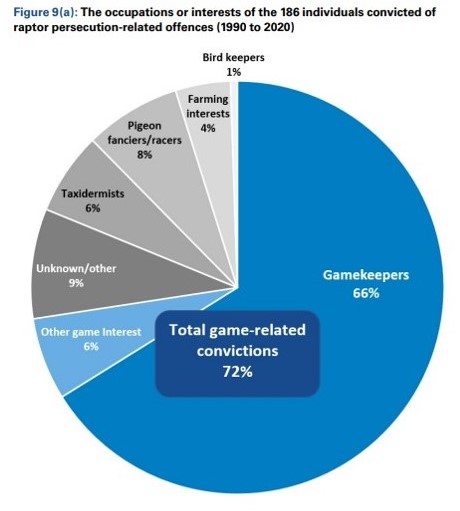
He’s not wrong. This pie chart from the latest RSPB Birdcrime report shows that almost three-quarters of those convicted of raptor persecution crimes in the last 30 years worked in, or had connections to, the game-shooting industry.

The National Geographic article is free and open access. You can read it HERE

Well done, journalist Rene Ebersole and her photographer Anastasia Taylor-Lind – it’s a very good piece and it’s excellent that these disgraceful crimes are being featured by a highly respected organisation such as National Geographic, being exposed to a much wider international audience.

UPDATE: A PDF of the article can now be downloaded here:

2020 was ‘worst year on record’ for persecution of birds of prey in UK, says new RSPB report

Press release from RSPB (27th October 2021)

The RSPB’s Birdcrime 2020 report has revealed 137 known, confirmed incidents of bird of prey persecution last year – the highest number recorded in 30 years.

Produced annually by the RSPB’s Investigations unit, Birdcrime is the UK’s only full data set on confirmed incidents of raptor persecution – namely the illegal shooting, trapping and poisoning of birds of prey.

There were 137 confirmed incidents in 2020: the highest total since recording began in 1990. The overall rise in numbers can be attributed to the unprecedented number of incidents detected in England (99) during 2020, many of which occurred during Covid-19 lockdown.

The victims included 58 buzzards, 20 red kites, 16 peregrines, six sparrowhawks, three goshawks and other protected birds of prey including rare hen harriers and golden eagles. Based on population studies for significant species, it’s believed that the true number killed is far greater, with many crimes going undetected and unreported.

The crimes took place across a variety of land uses. However, a minimum of 85 (62%) of all confirmed incidents were in connection with land managed for or connected to gamebird shooting. Bird of prey persecution shows a clear link to pheasant, partridge and grouse shooting, with incidents being more widespread in lowland areas and more concentrated in upland areas. In addition to Birdcrime data, peer-reviewed scientific studies based on satellite tagging and bird of prey populations, crime data and court convictions, show that raptor persecution has the most negative conservation impact on driven grouse moors. A Government study in 2019, identified criminal persecution by humans as the main factor suppressing the UK population of hen harriers: a red-listed bird species which nests on heather moorland.

North Yorkshire is the worst place for birdcrime in the UK for the seventh year in a row. Twenty-six of the 137 confirmed incidents occurred in North Yorkshire. Of these two thirds were directly related to grouse shooting and a further four incidents to other types of shooting. Victims in the county included 16 buzzards, two peregrine falcons, two red kites and one goshawk.

All birds of prey are protected by the Wildlife and Countryside Act 1981. To intentionally kill or injure one is a criminal offence and could result in an unlimited fine or up to six months in jail. Yet in 2020, there were only two prosecutions for raptor persecution offences.

The RSPB is calling on the governments of the UK to act now and implement a system of licensing for driven grouse shooting, to create greater accountability and ensure all estates operate to legal and high environmental standards. Failure to comply with licensing requirements should result in licence revocation for a defined period and therefore removal of the right to shoot as a meaningful deterrent to illegal behaviours.

The wildlife conservation charity is also urging for action to end other associated environmentally damaging land management practices, including a ban on burning on deep peat. The RSPB would also like to see a significant reduction in the numbers of non-native pheasants and red-legged partridges, currently millions, released into the countryside each year as there is growing evidence of environmental harm.

Mark Thomas, the RSPB’s Head of Investigations said “Although we have become used to the illegal killing of birds of prey, the figure for 2020 is truly shocking.

We are in a climate and nature emergency. All land must be managed legally and sustainably for people and for nature, and not accelerate the worrying loss of UK wildlife we are already experiencing.

The RSPB welcomes the announcement by the Scottish Government to licence driven grouse moors there, but this has to happen now in England as well. Licensing should be conditional on compliance with wildlife protection laws, and if breached, should result in removal of the right to shoot. Those shoot operators who behave legally and responsibly should have nothing to fear from this sanction”.

Chief Inspector Kevin Kelly, Head of the National Wildlife Crime Unit (NWCU) said “Raptor Persecution is a National Wildlife Crime Priority. This report puts an emphasis on why it’s a priority and why it will remain a priority for years to come. I am disappointed in such a significant rise in incidents as the crime figures go a long way to undermine the hard work that’s done daily to tackle raptor persecution. I feel the Priority Delivery Group holds the key to success, this has gone through a period of change, bringing leadership, accountability and some fresh positive partners in. That said, the hard work lays ahead of us and we will be judged on our actions, not our words.”

ENDS

The RSPB 2020 Birdcrime report can be downloaded here:

The Birdcrime 2020 appendices (breakdown of data) can be downloaded here:

So you know when the game-shooting organisations say that raptor persecution is in decline, it was an historical issue but it’s no longer a thing, that the industry has a ‘zero tolerance policy’ towards raptor persecution and it’s now just the work of a rogue keeper or two?

They’re lying.

2020 was the worst year on record.

Just think about that.

UPDATE 16.00hrs: “They all know what is going on, and they cover it up” – police inspector’s view on gamekeepers and raptor killing (here)

Moorland Association Chair in poor attempt to undermine RSPB ahead of damning Birdcrime report

Last week the RSPB revealed that yet another satellite-tagged hen harrier, this one called ‘Reiver’, had disappeared in suspicious circumstances in September on a grouse moor in Northumberland (see here).

Reiver is the 57th hen harrier known to have been killed or disappeared in suspicious circumstances on or close to a grouse moor since 2018 (see here). And actually there are more than 57, it’s just that some of the cases have yet to be made public by the police. There hasn’t been a single prosecution for any of these.

The suspicious disappearance of Reiver has attracted significant media coverage, although I didn’t see any of the shooting organisations posting an appeal for information on their websites – which speaks volumes in itself.

Part of the media coverage included an item on BBC Radio Newcastle on Weds 20th October, where radio broadcaster Alfie Joey interviewed Howard Jones (RSPB Investigations Team) and Mark Cunliffe-Lister (Lord Masham of Swinton Estate, also current Chair of the Moorland Association and with a reputation for being a forgetful silly billy, here).

The interview is only available for another 25 days so if you intend to listen do so sooner rather than later, although to be honest you’ll not be missing very much at all. It’s just a repeat of the usual strategy from the Moorland Association – deny everything and do as much as possible to divert attention from the ongoing killing of raptors on grouse moors, preferably by slagging off the RSPB and trying to undermine their status and authority on this issue.

In fact, the last time I heard the Moorland Association on BBC Radio Newcastle the then Moorland Assoc secretary claimed there was ‘no evidence’ of gamekeepers being involved in the persecution of hen harriers (yes, really – see here). Eight years on and not much has changed, with Lord Masham arguing with a straight face that there is still a need to ‘try and understand the cause of these crimes’ and claiming that ‘…clearly as an industry we’re all about welcoming hen harriers and working with them…’

You can listen to the latest radio interview here, starts at 1:39:07

Here are a few other choice quotes from Lord Masham:

The problem is, the RSPB will just do their own investigations, publish their own information online, with their own conclusions, which is not helping anybody

and

I would suggest that we work better with the police and the authorities, try and understand the cause of these crimes, then to take action with them, rather than trying to go out independently as the RSPB seem to do, do their own investigations, publish all their stuff online and seem to avoid the police and the authorities and the law“.

I like listening to radio interviews because it’s fun trying to spot the key words and phrases that the interviewee is trying to shoehorn in to the discussion, no matter what conversational contortions this requires. It tells you quite clearly what the interviewee thinks is the most important, take-home message to get across to listeners.

Some interviewees are seasoned professionals and have mastered this trick with ease. Others, not so much. The funniest example I’ve heard was Nick Halfhide, then Director of Sustainable Development at SNH, who had clearly been briefed to deflect attention from the raven-killing licence SNH had issued and instead talk about saving waders. It was hilariously bad – see here.

In a similar vein, Lord Masham’s obvious intention during this interview was to undermine the work of the RSPB’s investigations team. Unfortunately for him, his disingenuous claim that the RSPB ‘seem to avoid the police and the authorities and the law‘ is not only unfounded, but is easily dismantled with masses of available evidence.

Anyone who has been following this blog recently will have seen the string of multi-agency police-led raids this year, jointly investigating, with the RSPB, suspected raptor persecution crimes on land managed for gamebird shooting, up and down the country (e.g. see here). Indeed, RSPB Investigator Guy Shorrock has just written a blog (here) where he says that in his 30-year career with the RSPB’s investigations team:

I have to say the partnership working during the last 12 months or so to tackle raptor persecution has been some of the best I can ever remember. We have had fantastic responses from many police forces including Cheshire, Dorset, Devon, Durham, Lincolnshire, Norfolk, Nottinghamshire, North Yorkshire, North Wales, Suffolk, West Mercia, Wiltshire, and Police Scotland.

Some of the work by police Wildlife Crime Officers in these cases has been outstanding, and the support from the NWCU, Natural England, Welsh Government, CPS and HSE has been genuinely heart-warming. RSPB have been supporting all these enquiries, and have indeed generated several of them, and most are now progressing to court. They include some very serious allegations of extensive persecution which will no doubt cause significant public alarm when the full details and graphic imagery come to light‘.

Does that sound like the RSPB is ‘avoiding working with the police, the authorities and the law’?

No, it doesn’t.

So just what is Lord Masham’s game?

Could it be that the RSPB’s annual Birdcrime report is due to be published any day now, and this latest report will cover the period of lockdown in 2020 when the RSPB has previously reported ‘a surge’ in raptor persecution crimes (e.g. here and here)?

Could it be that the Moorland Association, knowing full well that the damning content of this new report will expose the shooting industry’s so-called claim of ‘zero tolerance for raptor persecution’ as the pathetic, untruthful marketing ploy we all know it to be, is now desperately trying to portray the RSPB as an unreliable source to try and diminish the impact of the new Birdcrime report?

Game-shooting industry silent about short-eared owl found shot on North Pennines grouse moor

Earlier this week I blogged about the discovery of a short-eared owl that had been found shot on a grouse moor on the Wemmergill Estate in the North Pennines AONB (see here).

This is the same estate where two short-eared owls were found shot and stuffed into a hole in 2015 (here) and where a satellite-tagged hen harrier called Marc had ‘disappeared’ in suspicious circumstances in 2018 (here).

Those of us interested in stamping out illegal raptor persecution have made sure that Durham Constabulary’s appeal for information about this latest victim has been distributed far and wide (e.g. see blog here by Chris Woodley-Stewart, Director of the North Pennines AONB partnership, and blog here by the Northern England Raptor Forum).

Unfortunately, the leading game-shooting organisations, some of whose members have been and/or are currently under investigation for various raptor persecution crimes, have once again failed to publicise or condemn this crime. I’ve just looked at the websites of the National Gamekeepers Organisation, BASC, Countryside Alliance and the Moorland Association and not one of them has published the police appeal or issued their own appeal.

It’s worth remembering that these organisations also serve on the Raptor Persecution Priority Delivery Group (RPPDG), along with Government officials, police and NGOs. One of the roles of the RPPDG is apparently to raise awareness of ongoing raptor persecution crimes.

I’m not sure how staying silent meets this objective.

On the subject of the RPPDG, I’ve written to the Head of the National Wildlife Crime Unit and asked whether the Countryside Alliance representative, former Police Inspector Phil Davies, will be removed from the RPPDG following his participation in a webinar where criminal information was disseminated about persecuting wildlife and avoiding prosecution (see here). I await a response with interest.

UPDATE 25th October 2021: Police boot off Countryside Alliance rep from all wildlife crime priority delivery groups after hunting webinar trial (here)

Short-eared owl confirmed shot in Teesdale grouse moor area where two short-eared owls previously found shot

Article published in the Northern Echo yesterday:

Short-eared owl shot and killed in Teesdale

POLICE are appealing for information after a short-eared owl was shot down in Teesdale earlier this year.

A post-mortem on the bird has confirmed the likely cause of its death was being shot with a shot gun.

The owl was found by the side of the road in May.

PC Lorraine Nelson said: “Persecuting birds of prey is never acceptable and we will always do everything we can to work with partners to act on information received about alleged criminal activity.

We would encourage anyone with information on this incident to get in touch.”

Jack Ashton-Booth, RSPB Investigations Officer, said: “Short-eared owls are declining nationally as a species.

Yet they are still widely targeted in our UK uplands: this is the third shot short-eared owl we are aware of in this area in the last six years.

In 2015 two dead short-eared owls, both of which had been shot, were found in a hole on moorland just over 1km away.

Each of those birds could have gone on to have three, four or five chicks, had they been allowed to live.

When I think of the scale of even just one area of moorland, and its array of nooks and crannies… how many more of these stunning birds could have been shot and concealed down holes or buried under peat?

It’s impossible to know.

This illegal killing must stop.

I urge any of you who may have information regarding individuals targeting these birds to come forward and call them out.”

If you have any information, call 101 and ask to speak to PC Nelson.

Alternatively, call the RSPB confidential hotline on 0300 999 0101.

ENDS

This short-eared owl was found shot in May close to the Selset Reservoir in Teesdale, which is an area dominated by land managed for driven grouse shooting, as you can see from this Google map showing the tell-tale rectangular strips of burned heather:

According to RSPB Investigations Officer Jack Ashton-Booth, the latest victim was discovered just over 1km from where two short-eared owls had been found shot and buried in potholes on the Wemmergill Estate in 2015 (see here). Nobody was prosecuted for those two offences, just as nobody will be prosecuted for this latest wildlife crime.

Wemmergill Estate is also the last known location of satellite-tagged hen harrier Marc, who vanished in suspicious circumstances on this grouse moor in 2018 (see here).

The article published yesterday in the Northern Echo was presumably based on information from Durham Constabulary, and claims that the police are appealing for information. I can’t find anything about the crime, investigation or subsequent appeal on the Durham Constabulary website or the police’s Facebook page. If it is there, it’s well hidden.

And once again, it has taken five months for this ‘appeal’ to emerge. I suppose that’s an improvement on the seven months it took Durham Constabulary to appeal for information after the discovery of the two shot owls found in 2015.

Yesterday’s article in the Northern Echo states that:

A post-mortem on the bird has confirmed the likely cause of its death was being shot with a shot gun‘.

My understanding is that the post-mortem report confirmed the owl had been shot and that was the cause of its death shortly afterwards.

There may be more news to come about this latest crime. I will update the blog if/when I receive further information.

UPDATE 18.00hrs:

The RSPB investigations team has confirmed on Twitter that this latest shot short-eared owl was found dead on a grouse moor (estate unnamed but believed to be the same estate (Wemmergill) where two short-eared owls were found shot and shoved down a pothole in 2015.

Also, Chris Woodley-Stewart, Director of the North Pennines AONB Partnership has written a blog on the AONB website to draw attention to this latest crime (see here). Well done, Chris.

‘Star lot’ in GWCT’s auction is a day’s shooting at an estate currently at centre of police investigation into shot red kite

It’s always interesting to look at the auction lots in the shooting world’s regular fundraising drives. I think it’s useful, and quite telling, to see who’s supporting who and it can often explain a great deal about why many shooting organisations refuse to call out the criminals when yet another raptor persecution crime is uncovered and instead simply pretend not to have noticed that anything’s happened (also known as wilful blindness).

In the era of a so-called ‘zero tolerance’ approach to raptor persecution, repeatedly declared by the large shooting organisations but yet to be effectively demonstrated in any meaningful way (because it’s all just a blatant publicity stunt in my opinion (e.g. see here)) it’s even funnier to scrutinise the auction booklets and see ‘who’s doing who’.

The latest auction from the Game and Wildlife Conservation Trust (GWCT) reveals an interesting donor, hailed as the auction’s ‘star lot’ on the GWCT website.

This ‘star lot’ comprises a 250-bird mixed pheasant and partridge day for eight guns at the ‘renowned’ Salperton Park in January 2022.

Does Salperton Park ring any bells to anyone? It does to me. This is where a red kite was found in March this year with multiple injuries caused by someone blasting the bird with a shotgun. The extent of the kite’s injuries, with serial fractures, is an indication that it was shot very close to where it was found, critically injured, on the estate (see here and here).

Gloucestershire Constabulary opened a criminal investigation focusing on Salperton Estate and local area, although PC Ash Weller was quoted in the local press:

We are exploring all avenues as this could have been someone travelling through the area rather than someone local to the area“.

Yeah, righto, PC Weller, it wasn’t as if the county was in a Tier 4 ‘stay at home’ lockdown period or anything, or that other alleged persecution incidents had been reported previously at this location, or indeed that raptor persecution has demonstrable links to the game shooting industry. Yeah, let’s focus on the least plausible explanation and go from there.

Needless to say, nobody has yet been charged or prosecuted and nor are they likely to be because the evidence required to link a named individual to this wildlife crime is virtually impossible to attain, even when the police are looking in the right direction.

Where does that leave us?

The sporting agency, Mark Osborne’s William Powell, can continue to advertise the estate as ‘one of the country’s most celebrated partridge shoots”, sporting clients can continue to fork out for shoot days on the estate, and the GWCT can trouser thousands of pounds worth of funds from their auction’s ‘star lot’.

Tremendous.

Buzzard caught in primitive illegal trap set inside pheasant pen in Shropshire

Video footage has emerged, filmed in mid-September, of two primitive and illegal traps that had been set inside a pheasant pen in woodland near the village of Chelmarsh, just south of Bridgnorth, Shropshire.

One of the traps had been triggered and had caught a buzzard. The other trap had been baited with a dead pheasant but had not been triggered.

[Screen grab from the video, showing the trapped buzzard inside the illegal trap]

[A photo of the second illegal trap, baited with the dead pheasant. The map shows the location:

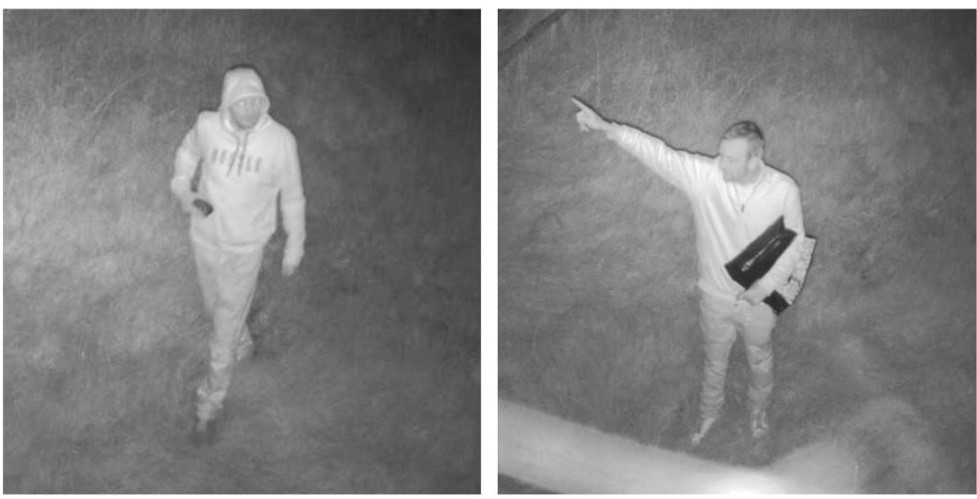
The trapped buzzard was released by a member of the public and subsequent covert video evidence shows a man entering the pheasant pen, attending the trap and removing all evidence of it.

I understand that a report has been made to the police.

There is a write-up about this criminal activity on the Hunt Saboteurs Association website (here), where it is claimed the man attending the trap is a gamekeeper. I don’t have any information that can support or refute that claim.

The video can be watched here: